
Svenja Leiber
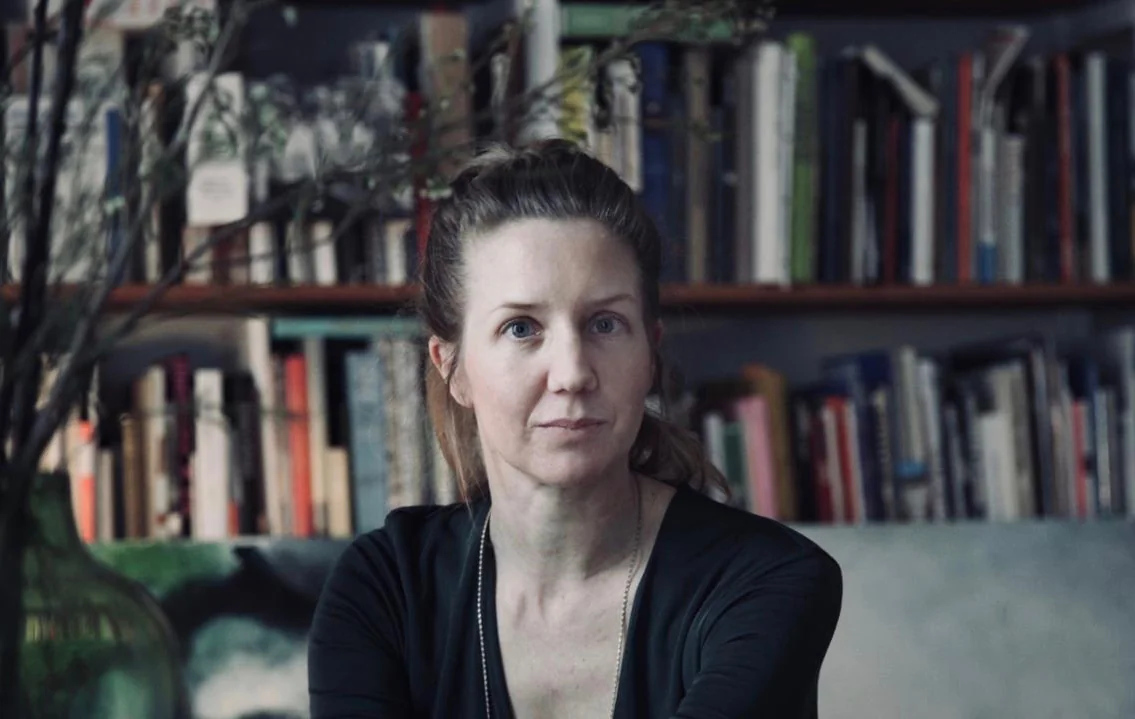
Image from Wikipedia
Image from Wikipedia
Svenja Leiber: Linguistically Powerful Contemporary Literature between Memory, Research, and Poetic Precision
An author who brings historical spaces to life with literary intensity
Svenja Leiber is one of the most distinctive voices in contemporary German-language literature. Born in 1975 in Hamburg, raised in Northern Germany, and spending some time as a child in Saudi Arabia, she combines biographical movement with a pronounced sensitivity to history, origin, and societal fault lines. Her work showcases an author who does not simply describe spaces but linguistically condenses them, charges them atmospherically, and transforms them into literary tension. ([suhrkamp.de](https://www.suhrkamp.de/person/svenja-leiber-p-12691?utm_source=openai))
Biography and Education: A Foundation of Philosophy, History, and Art History
Leiber studied philosophy, literary studies, history, and art history; this academic diversity continues to shape her writing today. The choice of her subjects already demonstrates the approach of an author who is as interested in modes of thinking and perception as in historical depths. In Berlin and later in the literary scene, she developed a perspective that brings together analytical sharpness and narrative finesse. ([suhrkamp.de](https://www.suhrkamp.de/person/svenja-leiber-p-12691?utm_source=openai))
After her studies, she worked as a freelance writer and has published prose since 2005 that is early characterized by linguistic density and psychological precision. Literaturport also describes her collaboration on art projects and cultural initiatives, highlighting her closeness to interdisciplinary modes of thought. This early networking with art and culture reflects in her later literary practice: carefully researched, formally controlled, and simultaneously open to emotional depth. ([literaturport.de](https://www.literaturport.de/Svenja.Leiber/?utm_source=openai))
The Literary Breakthrough: From "Büchsenlicht" to Major Novels
Her literary debut was marked by the short story collection Büchsenlicht in 2005. This was followed by the novel Schipino in 2010, before Leiber further developed her prose and expanded thematically with Das letzte Land (2014), Staub (2018), and Kazimira (2021). Suhrkamp clearly situates these publications at the center of her oeuvre, illustrating that Leiber has gradually built an independent, consistent body of work. ([suhrkamp.de](https://www.suhrkamp.de/person/svenja-leiber-p-12691?utm_source=openai))
Her more recent novel Nelka continues this trajectory and is part of the current literary debate. The Literaturhaus Köln describes the novel as a sensitive, penetrating engagement with the history of violence, while SRF highlighted it as a worthy read in 2026, emphasizing the character portrayal against simplistic perpetrator-victim schemas. Here, Leiber once again shows her strength: historical experience is not narrated illustratively but transformed into a multifaceted, literarily controlled form. ([literaturhaus-koeln.de](https://literaturhaus-koeln.de/programm/svenja-leiber-nelka/?utm_source=openai))
Themes and Style: Historical Condensation Instead of Mere Chronicle
Svenja Leiber's prose employs condensation, perspective shifts, and a language that conveys atmosphere. This is particularly evident in the novels intertwining historical landscapes, familial constellations, and political upheavals. Der Tagesspiegel praised Kazimira as a linguistically powerful exploration of a “bloody century,” highlighting the impressive descriptive energy of the novel. ([tagesspiegel.de](https://www.tagesspiegel.de/kultur/svenja-leibers-roman-kazimira-frauen-bernstein-und-das-blutige-jahrhundert-315079.html?utm_source=openai))
The author does not pursue a quick narrative economy but rather a literature of precision. Her texts emerge from research, observation, and formal discipline; at the same time, they possess a poetic tension that immediately engages readers. Particularly in Staub, this method is evident as Leiber makes visible the material and emotional fabric of places within extensive historical contexts. ([literaturfestival.com](https://literaturfestival.com/authors/svenja-leiber/?utm_source=openai))
Awards, Resonance, and Literary Authority
Leiber's work has been honored with numerous awards. Among the documented accolades are the Bremer Literature Prize's Promotion Prize and the Arno-Reinfrank Literature Prize; she has also received further scholarships and recognitions for her stories and novels. These awards affirm an author whose literary quality is recognized by critics, institutions, and award juries alike. ([literaturfestival.com](https://literaturfestival.com/authors/svenja-leiber/?utm_source=openai))
In 2023, she was awarded the Johann-Friedrich-von-Cotta Literature and Translation Prize by the state capital Stuttgart, further solidifying her status in German-language literature. Suhrkamp and the international literature festival berlin recognize her as a significant contemporary author with translations into several languages. Thus, Leiber belongs to those voices whose relevance arises not only from individual books but from a steadily growing body of work. ([suhrkamp.de](https://www.suhrkamp.de/person/svenja-leiber-p-12691?utm_source=openai))
Current Projects and Presence: “Nelka” and Literary Presence 2025/2026
In the current literary landscape, Leiber remains present. Suhrkamp refers to readings of Nelka, including an event in February 2026 in Munich, which showcases the ongoing resonance of her new novel. The official author page and the publisher indicate a writer whose work does not seem complete but continues to unfold in dialogue with the present, the audience, and criticism. ([svenjaleiber.de](https://www.svenjaleiber.de/?utm_source=openai))
Recent reviews also point to sustained interest in her work. The Literaturhaus Köln and SRF emphasize the literary power of Nelka, particularly the finely balanced depiction of vulnerability, memory, and the history of violence. Leiber thus remains an author who does not repeat her themes but intensifies them with each publication. ([literaturhaus-koeln.de](https://literaturhaus-koeln.de/programm/svenja-leiber-nelka/?utm_source=openai))
Cultural Influence and Placement in Contemporary Literature
Svenja Leiber writes literature that does not musealize historical experience but makes it contemporary. Her novels and stories open spaces where family history, geopolitical conflicts, and individual perception intersect. Her cultural value lies precisely in this: she makes visible how grand history seeps into intimate life narratives and how language makes these connections audible and readable. ([literaturfestival.com](https://literaturfestival.com/authors/svenja-leiber/?utm_source=openai))
Her work represents a demanding, sustainable form of contemporary literature that relies neither on trends nor on simple intensifications. Leiber combines historical research with literary creativity, psychological accuracy, and a distinctive tone. Those who read her books encounter an author who does not merely tell stories but constructs a literary world. ([suhrkamp.de](https://www.suhrkamp.de/person/svenja-leiber-p-12691?utm_source=openai))
Conclusion: An Author with Great Narrative Power
Svenja Leiber captivates with a rare blend of linguistic precision, historical insight, and poetic condensation. Her work demonstrates how powerful literature can be when it combines research, empathy, and awareness of form. Anyone seeking contemporary literature with depth, atmosphere, and intellectual ambition should definitely read Svenja Leiber and experience her readings live. ([suhrkamp.de](https://www.suhrkamp.de/person/svenja-leiber-p-12691?utm_source=openai))
Official Channels of Svenja Leiber:
- Instagram: No official profile found
- Facebook: No official profile found
- YouTube: No official profile found
- Spotify: No official profile found
- TikTok: No official profile found
Sources:
Upcoming Events
Svenja Leiber: Nelka – Reading in Braunschweig
Svenja Leiber reads from »Nelka«