
Sebastian Scobel
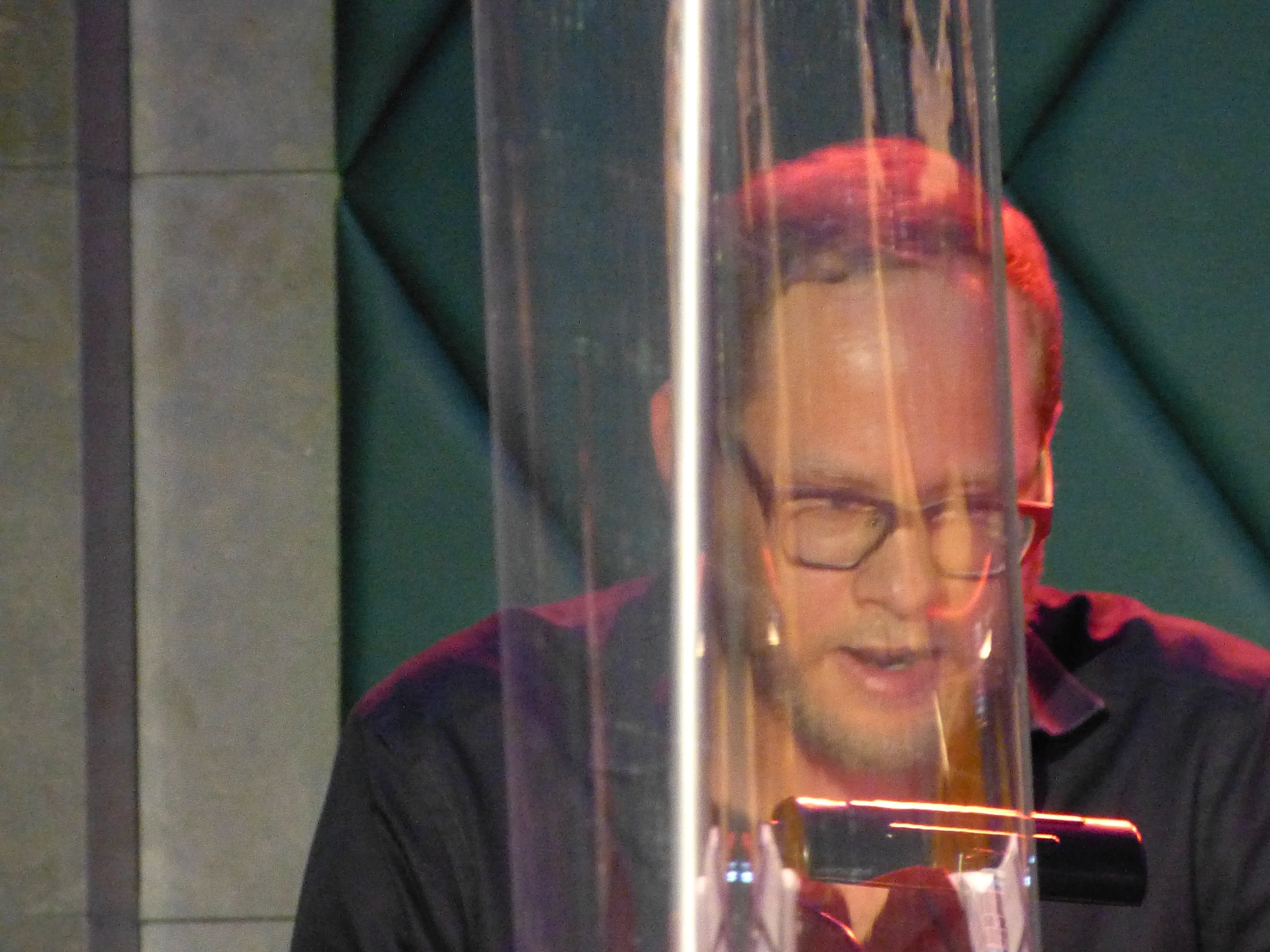
Image from Wikipedia
Image from Wikipedia
Sebastian Scobel – the resonant jazz pianist between Cologne, Germany, and the European improvisation scene
An artist portrait of Sebastian Scobel: Jazz piano, Hammond organ, and musical versatility
Sebastian Scobel belongs to that generation of German jazz musicians who are not only technically excellently trained but also understand their sound as an expression of a consistent artistic development. Born in 1987 in Dresden, he grew up in a musical family and made the decision to pursue jazz piano at the age of ten. His career spans from the Saxon music tradition through Cologne to the present day of German and European jazz. (sebastianscobel.de)
Biography: From Dresden's young talent to a defining voice of Cologne jazz
Scobel's early training began at the Heinrich Schütz Conservatory in Dresden and was deepened at the Saxon State High School for Music, where classical piano, chamber music, and jazz piano coexisted. This dual training continues to shape his musicality today: structural thinking from the classical school meets spontaneous improvisational power. Early on, he showed an unusual determination that later made him a sought-after pianist, organist, and arranger. (nrwjazz.net)
In 2008 and 2009, Scobel moved to Cologne and studied jazz piano at the Hochschule für Musik und Tanz Köln. During this phase, central projects such as the Mengamo Trio, the Filippa Gojo Quartet, and the Subway Jazz Orchestra emerged, which opened up a platform for him between modern jazz, chamber musical finesse, and energetic band work. He was concurrently accepted into the Federal Jazz Orchestra, toured in the USA, and received the Steinway Förderung Jazz NRW award. (sebastianscobel.de)
Career: Awards, ensembles, and the step into the professional elite scene
The actual breakthrough did not come from a single hit album but rather through a series of convincing ensemble performances and accolades. With the Filippa Gojo Quartet, Scobel won the New German Jazz Award in 2015, and later received the same award with the Tamara Lukasheva Quartet. In 2019, his duo with trumpeter Heidi Bayer was honored with the Folkwang Jazz Award. These awards not only signify recognition but also document his place in a scene that values interaction, sound culture, and formal precision. (sebastianscobel.de)
Scobel's artistic identity has always developed at the intersection of band work, arrangement, and pedagogical communication. He studied for his Master's in Composition, Arrangement, and Hammond Organ at the Rhythmic Music Conservatory in Copenhagen and worked with artists such as Larry Goldings, Dr. Lonnie Smith, and Kresten Osgood. Here lies a core of his music career: Scobel thinks of jazz not just as a solo art but as the architecture of interplay, as sound dramaturgy, and as a living practice. (sebastianscobel.de)
Musical development: Between piano, Hammond organ, and synthesizer
As an instrumentalist, Sebastian Scobel confidently moves between piano, Hammond organ, synthesizer, and arrangement. This makes him particularly versatile within the German jazz landscape, as he is not limited to a purely pianistic role. His work in jazz thrives on transparency, rhythmic flexibility, and a sense of harmonic tension, which supports both trio and larger ensemble settings. (nrwjazz.net)
Especially the organ expands his sound language to include a warm, grooving depth that is rooted in the traditions of soul jazz and modern European jazz. At the same time, his playing remains open to the freedom of contemporary improvisation. His joy of playing was particularly highlighted with the Osgood-Scobel Quintet; the Frankfurter Allgemeine Zeitung described him as a musician with great openness who allows chords to change and emphasizes inventiveness. (die-fabrik-frankfurt.de)
Discography and documented works: concise milestones instead of big mainstream charts
Scobel's discography is closely linked to his most important ensembles. On nrwjazz.net, the album magisches u by flaura & phona from 2009 and Nahaufnahme by the Filippa Gojo Quartet from 2012 are mentioned, among others. Additionally, numerous recordings and productions as a bandleader and sideman sharpen his profile as a prominent and productive scene musician. His body of work is rooted in collaborative contexts rather than a single star solo project. (nrwjazz.net)
Further milestones showcase his presence on important platforms in the jazz scene: his Mengamo Trio performed at the Cologne Open, he was involved in projects with the WDR Big Band, and his duo with Heidi Bayer received accolades. Later concerts, such as the Osgood-Scobel Quintet in January 2026 in Frankfurt, attest to his ongoing activity in high-caliber live formats. This is not a loud but a sustainable discography in the best sense: artistically interconnected, stylistically aware, and continuously documented. (sebastianscobel.de)
Current projects: Cologne's contemporary scene, festival presence, and new contexts
According to his official website, current projects include the Filippa Gojo Quartet, the Bayer-Scobel duo, the Mengamo Trio, the Subway Jazz Orchestra, the Christine Corvisier Quintet, Ian Alexander Griffiths’ Night Shapes, the Mammone-Scobel duo, as well as his work as musical director for Patricia Kelly. This list showcases the broad scope of Scobel's musical endeavors: from lyrical jazz to orchestral formats to genre-blending productions. (sebastianscobel.de)
The present of his career remains marked by high-profile performances. He is announced for January 2026 in the Osgood-Scobel Quintet with Theresia Philipp, Uli Kempendorff, Hans Glawischnig, and Kresten Osgood, a format that underscores his stylistic openness and his anchoring in improvised music. Additionally, concert announcements and press references document that Scobel is perceived as an active part of the jazz scene in Cologne, the Rhineland, and far beyond. (die-fabrik-frankfurt.de)
Artistic significance and cultural influence
Sebastian Scobel represents a concept of jazz that connects education, curiosity, and collective sound creation. His work as a lecturer in piano, rhythm groups, arrangement, improvisation, and songwriting shows that he excels not only on stage but also imparts knowledge and shapes the development of the scene. Especially in Cologne, where he lives and teaches, he has established himself as a musician with a keen intuition for ensemble culture. (sebastianscobel.de)
His cultural influence arises from precision rather than spectacle. He operates at the intersection of jazz tradition and contemporary openness, between German educational rigor and international exchange. This balance makes him exciting for music lovers as it illustrates how vibrant German jazz can sound in the hands of a reflective, well-connected artist. (sebastianscobel.de)
Conclusion: Why Sebastian Scobel remains so exciting
Sebastian Scobel is a musician who does not rely on quick effects but on substance, ensemble intelligence, and a distinctive sound. His career combines early discipline with creative flexibility, and his projects range from intimate duo performances to orchestral and band-oriented formats. Anyone looking for modern jazz with attitude, depth, and vibrant stage presence should experience Sebastian Scobel live. (sebastianscobel.de)
Official channels of Sebastian Scobel:
- Instagram: no official profile found
- Facebook: no official profile found
- YouTube: no official profile found
- Spotify: no official profile found
- TikTok: no official profile found