
Dana von Suffrin
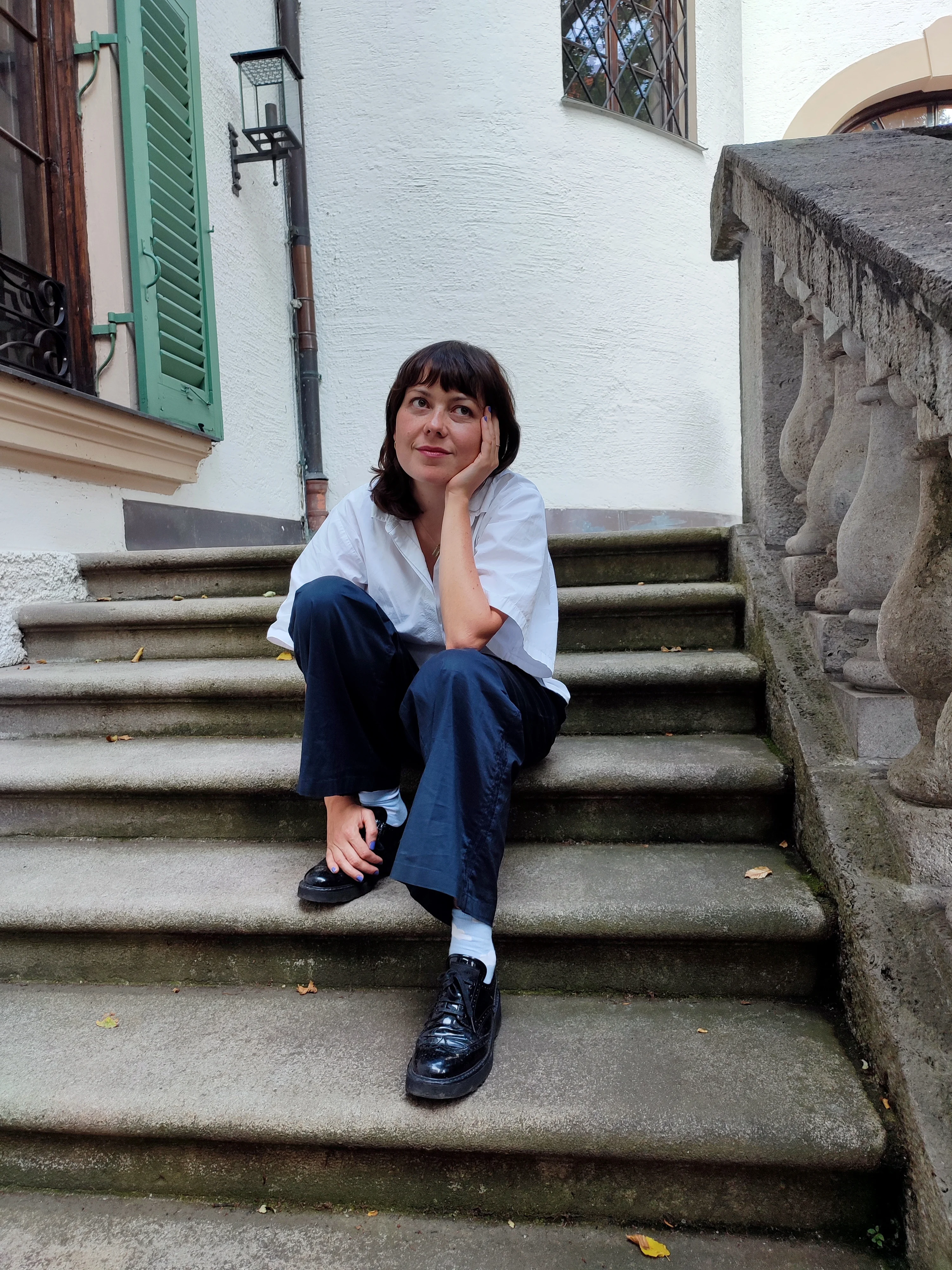
Image from Wikipedia
Image from Wikipedia
Dana von Suffrin – the precise storyteller with dark humor, literary power, and a Jewish perspective
An author who connects present, memory, and family history with linguistic energy
Dana von Suffrin was born in 1985 in Munich and belongs to those German writers whose work cannot be reduced to a simple formula. Her novels combine historical depth, Jewish family stories, political awareness, and a dry, often surprisingly comedic tone that resonates long after. Those who engage with her art discover an author who shapes a distinctive voice from biography, memory, and contemporary literature.
Von Suffrin's literary development is closely linked to her academic path: she studied in Munich, Naples, and Jerusalem, and received her doctorate in 2017 with a thesis on the role of science and ideology in early Zionism. This intellectual influence is clearly felt in her writing, as her texts intertwine narrative precision with historical reflection and a confident observation of societal tensions. Thus, literature emerges that is personal, political, and stylistically independent at the same time.
Biographical foundations: Munich, Jerusalem, and the question of origin
The biography of Dana von Suffrin is strongly characterized by movement and shifts in perspective. Growing up in Munich and furthering her academic education in various cultural and intellectual spaces, she developed an early sensitivity to multilingualism, difference, and the complexity of Jewish identity. This very experience also shapes her literary work, which often tells of German-Jewish families, layers of memory, and the repercussions of the 20th century.
Her public engagement with Judaism and anti-Semitism adds additional relevance to her authorship. Dana von Suffrin does not write from a distance, but from a position of historical and societal awareness that grants authority to her texts. This gives rise to a literary stance that is neither didactic nor complacent, but uncompromisingly explores the friction between private experience and collective history.
The breakthrough with “Otto”: Family novel, historical consciousness, and power
Dana von Suffrin became well-known with her debut novel “Otto” in 2019, which was quickly recognized as a significant literary event. The novel tells the story of a German-Jewish family and is much more than a linear family chronicle: it is a reflection on origin, guilt, memory, and the fragile fabric of family ties. The book received critical attention not only for its subject but also for its tone, which intriguingly intertwines tragedy and comedy.
“Otto” made it clear how adept Dana von Suffrin is with structure, rhythm, and perspective. Her language is pointed, her observations sharp, and her characters are not merely carriers of a theme, but living, contradictory personalities. The fact that the novel was awarded several prizes underscores its significance within contemporary German-language literature and marks an early highlight of her musical career – metaphorically speaking of an artistic path that impresses with strong stage presence and unmistakable tonality.
“Nochmal von vorne”: Condensation, family conflict, and literary maturity
With “Nochmal von vorne,” Dana von Suffrin continued her journey as a novelist in 2024, confirming her reputation as a keen storyteller. The novel once again tells of a German-Jewish family, affected by violence, displacement, and generational experiences, while simultaneously focusing on the dynamics of two sisters. The language remains powerful, the dark humor persists, but the narrative style feels even more condensed and controlled than in her debut.
The nomination for the Deutscher Buchpreis 2024 shows that Dana von Suffrin has already arrived at the center of literary debate. “Nochmal von vorne” was read as a powerful family novel that makes the long-term effects of historical traumas visible without becoming heavy-handed. This balance of emotional intensity and formal clarity makes her artistic development particularly compelling.
Narrative stance and style: Dark humor as a form of insight
A central characteristic of Dana von Suffrin's writing is her dark humor. It is not a decorative means but an instrument of insight that makes repression, self-deception, and family entanglements visible. In her novels and radio plays, comedic exaggeration meets historical weight, creating a tension that simultaneously challenges and captivates readers.
The composition of her texts also follows a pronounced literary logic. Dana von Suffrin works with tempo, contrast, and precise arrangement of scenes and voices. Her prose feels compact and musical at the same time, in terms of rhythm, variation, and repetition. This ability to bring complex content into a clear, readable form is one of the reasons her books resonate with both critics and audiences.
Critical reception, awards, and literary authority
The awards for Dana von Suffrin speak a clear language: Klaus-Michael-Kühne-Preis, Ernst-Hoferichter-Preis, Förderpreis des Friedrich-Hölderlin-Preises, Tukan-Preis, and Chamisso-Preis mark an impressive award biography. Such honors not only point to literary quality but also to a special cultural relevance. Von Suffrin is one of the voices that expand contemporary German-language literature with historical depth and Jewish perspectives.
Critics repeatedly highlight her ability to tackle heavy themes with ease, irony, and linguistic precision. Her balance of analytical sharpness and narrative approach is particularly appreciated. Her texts are regarded as contributions to a literature that does not museumize memory but translates it into a vibrant, conflict-ridden present.
Cultural influence: Jewish family stories in the literary present
Dana von Suffrin represents a literature that does not smooth over historical breaks but displays them in their contradictions. Her work broadens the space of German narrative prose with themes such as Jewish self-location, the familial transmission of trauma, and the question of how history continues to influence everyday life and language. It is precisely in this connection between political awareness and aesthetic sovereignty that her cultural influence lies.
Even beyond her novels, she is present: radio plays, readings, discussions, and literary events showcase an author who not only writes her texts but also conveys them in the public sphere. This creates a profile based on intellectual authority, literary precision, and strong presence. For readers seeking contemporary literature with a stance, Dana von Suffrin is an important address.
Current projects and literary presence
In 2024, Dana von Suffrin released a new novel, “Nochmal von vorne,” and another work, “Toxibaby,” that confirms her thematic and stylistic range. The publishing announcements and current reviews indicate an author who remains productive and continues to sharpen her literary signature. Her recent publications revolve around relationships, familial conflicts, and the question of how people deal with the demands of their past.
Additionally, Dana von Suffrin will be present in the literary sector in 2025 and 2026, with events, readings, and further invitations to the German-speaking cultural space. This continuity speaks to an author whose work does not function as a finished snapshot but as an ongoing artistic development. Anyone wishing to observe contemporary German-language literature cannot afford to overlook her.
Conclusion: An author with stance, tempo, and narrative independence
Dana von Suffrin is exciting because she combines historical depth, family novels, black-humored exaggeration, and clear language into an unmistakable literary fingerprint. Her books offer not only material but also a stance; not just action but also reflection. This strength lies precisely in her ability to write literature that entertains, challenges, and lingers.
Those who read Dana von Suffrin or meet her at a reading experience an author with intellectual presence, fine timing, and great narrative sovereignty. Her books show how lively and current literature can be when it does not separate memory, identity, and society but unites them in a strong form. An evening with Dana von Suffrin is always worthwhile – live, her language reveals a whole new effect.
Official channels of Dana von Suffrin:
- Instagram: No official profile found
- Facebook: No official profile found
- YouTube: No official profile found
- Spotify: No official profile found
- TikTok: No official profile found
Sources:
- Kiepenheuer & Witsch – Dana von Suffrin
- Rowohlt Verlag – Dana von Suffrin
- Wikipedia – Dana von Suffrin
- Literaturhaus München – Dana von Suffrin
- Literaturhaus München – Dagegen
- NDR Kultur – Dana von Suffrin: “There is a demand for types like Toxi”
- Monacensia Mon Mag – Dana von Suffrin
- Fondation Jan Michalski – Dana von Suffrin
- Deutsche Digitale Bibliothek – Dana von Suffrin
- Wikipedia: Image and text source
Upcoming Events

Toxibaby
Dana von Suffrin reads from Toxibaby in Potsdam