
Chris Gall
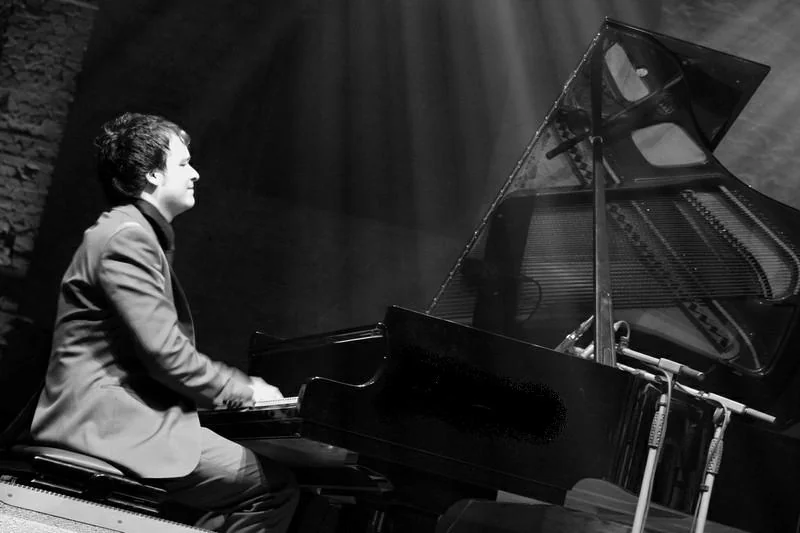
Image from Wikipedia
Image from Wikipedia
Chris Gall – Jazz Pianist, Composer, Sound Architect
In the Sound Space Between Impressionism and Jazz: The Captivating Journey of Pianist Chris Gall
Chris Gall, born on July 11, 1975, in Bad Aibling, is one of Germany's most prominent jazz pianists. His music career combines virtuosic piano playing, artistic development, and an insatiable curiosity that explores genre boundaries with unconventional ideas. Influenced by classical piano tradition and the contemporary jazz vocabulary, Gall creates touching soundscapes that pulse between intricate composition, form-conscious improvisation, and atmospheric production. As a soloist, bandleader, and sought-after collaborator, he has impressed audiences at renowned festivals and established a distinctive signature with his releases.
Early Influence and Education: From Bad Aibling to Berklee
The foundation for Gall's stage presence and detail-oriented sound thinking was laid through an intensive educational journey. After a classical piano education, his pursuit of stylistic diversity led him to the Berklee College of Music in Boston, where he completed his jazz studies in 1998. The connection between harmony, arrangement, and ensemble work that he internalized there continues to shape his playing today: structurally aware left-hand figurations, sonically nuanced voicings, and unobtrusively refined time. Even at this stage, it was clear that Gall perceives jazz not as a closed form but as an open practice between composition and improvisation.
Breakthrough with the Trio and ACT Era: Climbing Up and Hello Stranger
Gall marked his first significant milestones in his discography with the Chris Gall Trio. In 2008, Climbing Up was released, followed by Hello Stranger in 2010 – both on the ACT label. The sound of the trio combined hymn-like hook lines and dense groove architectures with pointed interaction. Critics highlighted Gall's dynamic attack culture and dramaturgical sense of form. The albums established him as a musician who unites melodic immediacy with complex rhythm and transparent arrangement thinking – a fingerprint that shapes his further artistic development.
Solo Aesthetics and Sound Poetry: Piano Solo and Room of Silence
With Piano Solo (GLM, 2015), Gall placed the intimate relationship between sound, space, and silence at the center. The repertoire oscillated between original compositions and careful adaptations from the classical-romantic and impressionistic canon. In 2018, Room of Silence (GLM) followed – an album that magnifies quiet tones: pedalized color fields, minimalist patterns, and long, sweeping arcs. The production works with subtle background noises of the instrument, creating a tactile closeness. Reviews praised the blend of reduction and narrative tension; the album found its place in best-of lists and positioned Gall as a solo pianist with a distinctive sound direction.
Award-Winning Collaborations and Orchestral Projects
Alongside his solo work, Gall expanded his scope as a composer and arranger. In 2015, he traveled to Buenos Aires with the multiple ECHO award-winning group Quadro Nuevo; their collaborative album Tango! was honored with the Platinum Jazz Award from the German Phono Industry. Additionally, Gall wrote arrangements for the Munich Radio Orchestra (Volkslied reloaded), among others. His orchestral signature is evident in the balance of chamber-music transparency, jazz-idiomatic harmony, and cinematic color dramaturgy – an aesthetic that seamlessly prepares for his later film music.
Festivals, Stages, Performative Aspects
Live, Gall's music is a performative exploration: themes are opened, rhythmic cells are modulated, and microtonal shades are illuminated. At festivals such as the Montreux Jazz Festival or JazzBaltica, his trio playing and solo performances shone, where he brings sound gestures and silence into an intense interplay. His stage presence thrives on controlled energy and a structural breath that architecturally shapes improvisation – jazz as clearly composed openness.
Between Film Composition and Concert Hall: Checker Tobi and Beethoven Reimagined
After completing a master's degree in film composition (Berklee, 2022), Gall realized the orchestral soundtrack for Checker Tobi and the Journey to the Flying Rivers in 2023. The film became one of the most successful German family films in 2024 and won the Bavarian Film Award (Family Entertainment). Already in 2021, Gall reimagined Beethoven's 1st Piano Concerto: a jazzy interpretation that links classical form with improvisational freedom. Both projects showcase his expertise in the interplay of composition, orchestration, dramaturgy, and live interpretation.
Current Projects 2024/2025: Prepared – Module and Impressionists Improvised
2025 marks a dual fork in Gall's artistic development. In January, Prepared – Module debuted, heralding the arrival of his new acoustic chamber music trio on Compost Records: minimal music meets motoric groove; polyrhythmic layers create a hypnotic pull. In March 2025, the solo album Impressionists Improvised (GLM) followed, a poetic encounter with Debussy, Ravel, and Satie, brought into the present through jazz improvisation and contemporary phrasing logic. Both releases depict Gall as a boundary crosser between jazz, neoclassicism, and modern production aesthetics.
Discography – Curated Selection and Classification
– Climbing Up (ACT, 2008): Trio statement with angular energy and melodic focus; early signature of Gall's narrative piano playing.
– Hello Stranger (ACT, 2010): Differentiation of trio language; stronger illumination of dynamic progressions and motivic density.
– Piano Solo (GLM, 2015): Reduced, sound-intimate solo approach between original works and impressionistic influences.
– Room of Silence (GLM, 2018): Solo album with articulatory finesse; quiet tones, grand dramaturgy, aesthetic coherence.
– Cosmic Playground (GLM/Edition Collage, 2018): Trio album highlighted by the press as a hot jazz highlight of the year; rhythmic agility, clear theme architecture.
– Myriad (with Bernhard Schimpelsberger, GLM, 2020): World music and rhythmic dialogues; percussive textures and modal colors.
– Prepared – Module (Compost Records, 2025): Trio in chamber music formation; repetitive patterns, polyrhythmic overlays, club-compatible motorics.
– Impressionists Improvised (GLM, 2025): Homage and transformation; classical material as a starting point for improvisational reinterpretation.
Style, Technique, and Production: Navigating Between Keys, Time, and Space
Gall's playing merges a clear, often song-like melodic approach with subtle voice-leading. His sensitivity to register dramaturgy is striking: bass figures with bouncy time, mid-range chord colors, and singing upper voices. In composition, he favors modular forms that utilize repetition as a tension tool while surprising harmonic turns constantly invigorate the flow. His production approaches the piano as an acoustic body: resonances, pedal noise, key mechanics – all part of the narrated sound world. The result is not sensationalism but a consciously crafted sound image that establishes intimacy.
Cultural Influence and Reception
Critics appreciate Gall's ability to combine jazz and pop aesthetics without clichés. Awards and mentions in international media underline the authority of his work. That his music functions in both the concentrated spaces of solo piano and the interactive structure of a trio or larger orchestra points to an artistic development that combines experience, expertise, and trust in one's own language. His work inspires pianists to rethink the relationship between composition, improvisation, and sound direction.
Selected Collaborations and Stage Moments
As a versatile pianist, Gall has collaborated with ensembles and artists that merge different idioms. His work with Quadro Nuevo showcased him as an agile dialogue partner who organically combines folk colors, modal scales, and jazzy harmonies. His trio play demonstrates physical presence and communicative awareness; his solo evenings open contemplative spaces where motif, silence, and resonance become equal storytelling elements. This range makes his concerts equally sensual and intellectual experiences.
Conclusion: Why You Should Listen to and Experience Chris Gall Live
Chris Gall combines pianistic mastery with visionary sound poetry. He interprets jazz as a laboratory for color, form, and time – demonstrating how vibrant this genre sounds when tradition is viewed as a resource rather than a limit. Whether through impressionistic miniatures in solo format or pulsating chamber grooves in a trio: Gall's music possesses depth, emotional directness, and a distinctive signature. Anyone wanting to experience jazz in its open, contemporary form should listen to this artist live – where breath, space, and moment become composition.
Official Channels of Chris Gall:
- Instagram: No official profile found
- Facebook: No official profile found
- YouTube: No official profile found
- Spotify: No official profile found
- TikTok: No official profile found
Sources:
- Chris Gall – Official Website
- GLM Music – Artist Profile Chris Gall
- GLM Music – Impressionists Improvised
- Jazzfuel – Project Presentation "Impressionists Improvised," 2025
- Apple Music – Room of Silence (2018)
- All About Jazz – Review "Room of Silence"
- LikeHiFi – Article on "Cosmic Playground"
- Wikipedia: Chris Gall – Biography, Discography
Upcoming Events
Chris Gall meets Peter Gall in Munich: Jazz Dialogue at the Pasinger Fabrik
Chris Gall – Piano Solo at the Cultural Forum Klosterkirche
Chris Gall Piano Solo – Kulturforum Klosterkirche