
Böhse Onkelz
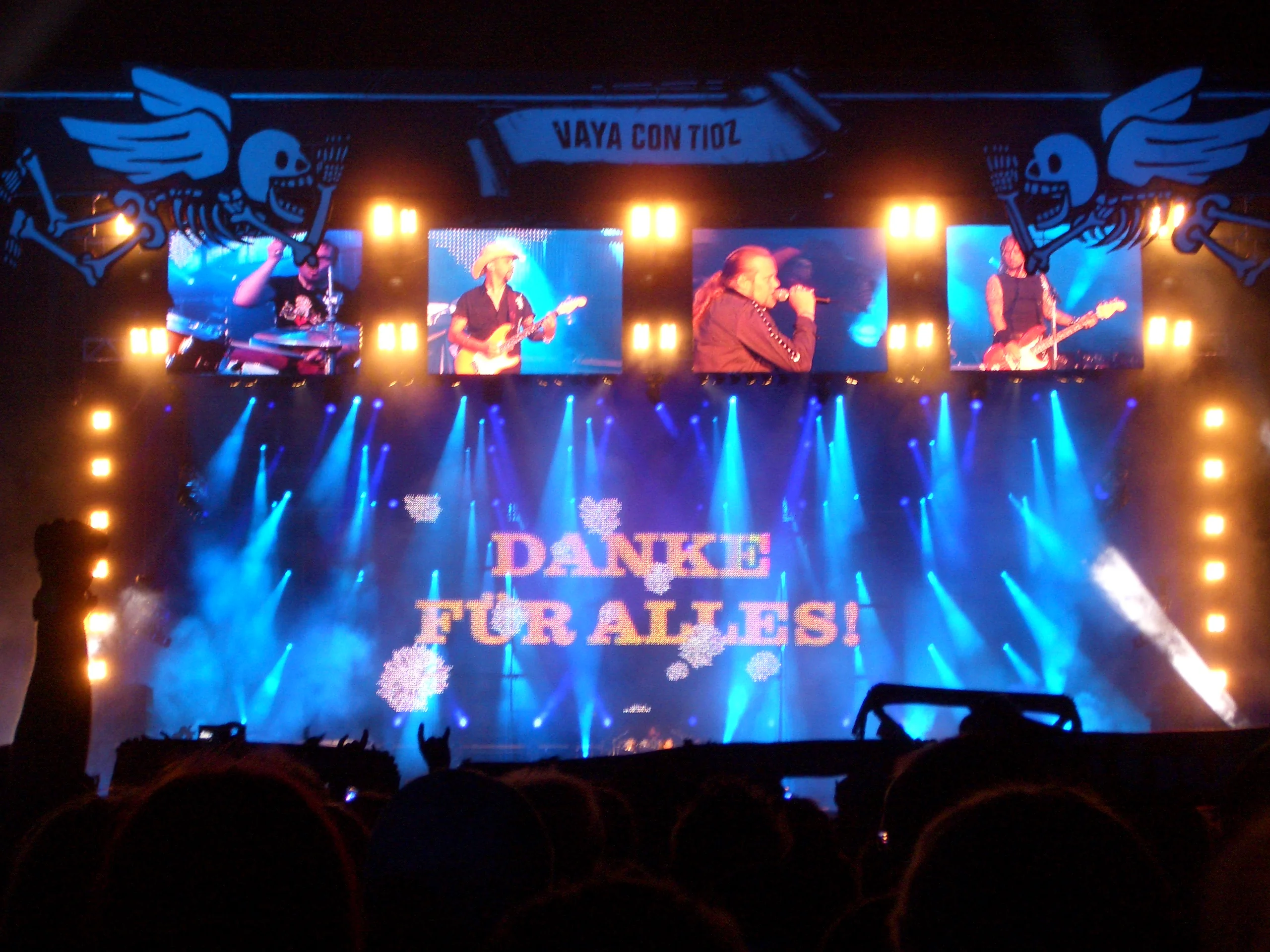
Image from Wikipedia
Image from Wikipedia
Böhse Onkelz – the German rock band between scandal, cult, and stadium size
A band history full of friction, maturity, and massive stage moments
Böhse Onkelz is one of the most influential and at the same time controversial rock bands in Germany. Emerging from a youthful punk gang, they became an independent rock formation starting in 1981, emancipating themselves from their early years, which were debated in relation to right-wing rock, and later becoming one of the country's largest live phenomena with a series of number-one albums, sold-out stadium shows, and an exceptionally loyal fanbase. The band itself describes this development as a journey from the bottom to the top, a story of hardness, change, and perseverance. ([onkelz.de](https://www.onkelz.de/band/))
From Hösbach to Frankfurt: the early years and the first break with the public
The origins of Böhse Onkelz date back to the autumn of 1980, when the later band members met in Hösbach near Aschaffenburg. The official band chronicle paints a picture of a wild, searching youth, where punk, provocation, and a sense of belonging to a scene set the tone. This early phase particularly shaped the band's later reputation, as the proximity to right-wing rock in the early 1980s remained a historical stigma that the group could never completely shake off. ([onkelz.de](https://www.onkelz.de/band/))
Musically, the band underwent a radical opening early on. With the arrival of Matthias “Gonzo” Röhr, the formation gained instrumental quality and transformed, according to its own account, from a punk band into a proper band. This development marked the transition from raw scene energy to a significantly more focused rock language that would later combine hardness, melody, and catchy choruses. ([onkelz.de](https://www.onkelz.de/band/))
Scandals, distancing, and the long path to artistic independence
The debut album Der nette Mann from 1984 was initially indexed by the Federal Review Board for Youth-Endangering Media and shortly thereafter confiscated; this episode still represents the problematic early phase of the band. In the following years, Böhse Onkelz gradually distanced themselves from the ideological fringes of their early days and shaped a repertoire that increasingly defined itself through personal conflicts, anger, defiance, loyalty, and self-assertion. The band itself describes this phase as a transition from "bad people" and "bad songs" to a mature, independent understanding of rock.
Particularly important in this context is the clear breakthrough from the early 1990s onwards. The band emphasizes on the official website that musically and personally, relevance has increased and that anger has turned into creativity. This self-positioning explains why the Onkelz are still perceived not only as a rock band but also as a cultural touchstone: They exemplify how closely artistic development, image, and public evaluation can be interwoven. ([onkelz.de](https://www.onkelz.de/band/))
The commercial breakthrough: from cult to chart power
The actual breakthrough occurred in the 1990s. With Wir ham’ noch lange nicht genug, Heilige Lieder, and later Hier sind die Onkelz, the band cemented their position in German rock. According to the official discography, Viva los Tioz reached number one in the German album charts for the first time in 1998; since that album, six studio albums in a row hit number one. This series established Böhse Onkelz as one of the most successful German rock bands of their generation. ([onkelz.de](https://www.onkelz.de/diskographie/))
The myth also grew live. The band refers to sold-out venues, the Hockenheimring, and a fanbase that embodies an almost sociological dimension of loyalty. The reunion concerts in 2014 drew a total of 200,000 fans, and the four Hockenheim shows in 2015 attracted nearly 400,000 nieces and nephews, underscoring the magnitude of this phenomenon after such a long hiatus. ([onkelz.de](https://www.onkelz.de/timeline/))
Discography with weight: albums, re-recordings, and live documents
The discography of Böhse Onkelz is much more than just a mere collection of studio albums. It includes early, controversial releases, the stylistic maturation process of the 1990s, late comeback works, and a notable number of live albums, box sets, and re-recordings. On the official discography page, the band documents, among others, Memento as the first album after over ten years of absence, Dopamin as an important work from 2002, and Böhse Onkelz from 2020 as a late statement in a celebratory context. ([onkelz.de](https://www.onkelz.de/diskographie/))
Additionally, reinterpretations and collector's editions continuously reframe the catalog. The double-LP releases of E.I.N.S., Viva los Tioz, Es ist soweit, or Kneipenterroristen demonstrate how strongly the band maintains its own canon. This characteristic defines their career: The Onkelz treat their discography not as an archive but as a living, constantly updated collection of songs, memories, and identity. ([onkelz.de](https://www.onkelz.de/diskographie/))
Style, production, and the language of German hard rock
Stylistically, Böhse Onkelz move between hard rock, German stadium rock, and raw, sometimes almost anthemic street rock. The sound thrives on massive guitars, straightforward arrangements, and a sense for large, singable hooks. Particularly in the 1990s, the band gained clarity in production without denying their edgy origins, developing an expressive form that fused hardness and catchiness. ([onkelz.de](https://www.onkelz.de/band/))
The official band history articulates this self-understanding with remarkable clarity: From hate came anger, from anger creativity, and from despair a more determined tone. For many fans, it is precisely this mixture of authenticity, resistance, and emotional directness that forms the core of the Onkelz sound. In the German-speaking rock landscape, they occupy a unique position between working-class romanticism, self-mythology, and massive live charisma. ([onkelz.de](https://www.onkelz.de/band/))
Cultural influence and public controversy
Hardly any other German rock band has been so intensely negotiated between adoration and rejection. The early proximity to right-wing rock, later attempts at distancing, and the massive boost in popularity in subsequent years made Böhse Onkelz a perennial topic in music press and cultural commentary. This friction continues to contribute to the band’s cultural importance because it exemplifies how pop culture, political memory, and youth cultural identity intersect. ([onkelz.de](https://www.onkelz.de/band/))
At the same time, a passionate, cross-generational fanbase has developed around the band, which sees itself as a scene with its own language and rituals. The Onkelz refer to fans as nephews and nieces, speak of common paths, and of a phenomenon that would never have emerged without the fans. This close interaction between the band and the audience explains why their concerts are perceived not just as shows but as collective events. ([onkelz.de](https://www.onkelz.de/band/))
Current projects, tours, and new releases
The band remains active in the present. The official website announces the MITTEN UNTER EUCH TOUR 2026 for 2026, with stops in Leipzig, Vienna, Nuremberg, Frankfurt, and Gelsenkirchen; several dates were already sold out before the tour even began. Moreover, the band released the live recording 40 Jahre Onkelz – Live im Waldstadion in 2024, documenting the anniversary year and underscoring the live relevance of the group. ([onkelz.de](https://www.onkelz.de/boehse-onkelz-open-air-tour-2024/))
As early as 2024, the band accompanied the open-air phase with extensive concert reports and new merchandise and live hints. The website thus reflects a project understanding that goes far beyond classical album cycles: Böhse Onkelz operate their career as a continuous total work of art encompassing music, stage, archive, fan engagement, and their own label ecosystem. ([onkelz.de](https://www.onkelz.de/neues/))
Conclusion: Why Böhse Onkelz continues to fascinate
Böhse Onkelz remain intriguing because their history does not run smoothly but is full of breaks, reactions, and new beginnings. Hardly any other band in the German-speaking world combines so much controversy, commercial success, and intense live impact. Those who want to understand how a peripheral phenomenon could develop into a stadium phenomenon will find one of the most striking chapters in German rock history here. ([onkelz.de](https://www.onkelz.de/band/))
Especially live, this band unfolds its full strength: powerful, loud, direct, and supported by a fanbase that knows every line. To truly understand the Onkelz, one must experience them not only through their discography but on stage, where the past becomes the present and songs become collective memory. ([onkelz.de](https://www.onkelz.de/timeline/))
Official channels of Böhse Onkelz:
- Instagram: https://www.instagram.com/boehseonkelz_offiziell
- Facebook: https://www.facebook.com/boehseonkelzoffiziell
- YouTube: https://www.youtube.com/onkelzoffiziell
- Spotify: No official profile found
- TikTok: No official profile found
Sources:
- Böhse Onkelz – Official Website, Band
- Böhse Onkelz – Official Website, Discography
- Böhse Onkelz – Official Website, Timeline
- Böhse Onkelz – Official Website, News
- Böhse Onkelz – Official Website, Tour 2026
- Böhse Onkelz – Official Website, Archive Document
- Ticketmaster / Biography PDF
- Onkelz Archive: Press Release “WIR”
- Wikipedia: Böhse Onkelz
- Wikipedia: 40 Jahre Onkelz – Live im Waldstadion
Upcoming Events
The Big Onkelz Night in Ingolstadt
Böhse Onkelz - Tour Final in the Veltins-Arena
Böhse Onkelz - Tour Finale in Gelsenkirchen
Böhse Onkelz Concert Finale 'Mitten Unter Euch'
Onkelznacht Dessau
Onkelznacht Dessau
The Great Neubrandenburg Onkelz Night
OnkelzNight: Böhse Onkelz Tribute Concert