
Alfred Dorfer
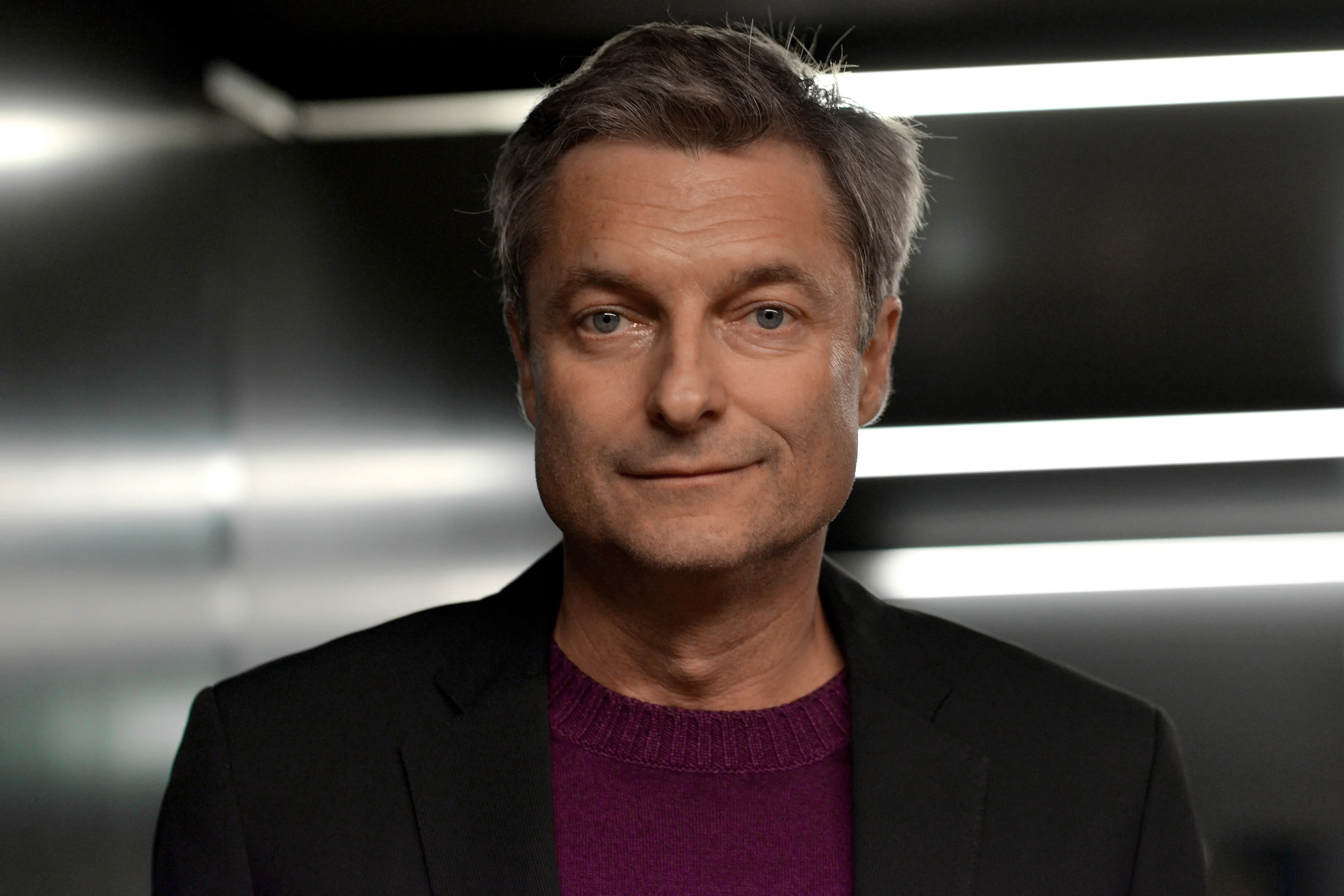
Image from Wikipedia
Image from Wikipedia
Alfred Dorfer: The Sharp-Tongued Master of Austrian Cabaret Between Stage, Film, and Satire
Alfred Dorfer – An Artist Who Shaped Cabaret in Austria
Alfred Dorfer, born on October 11, 1961, in Vienna, is considered one of the most influential voices in Austrian cabaret. As an author, actor, and cabaret artist, he has been combining pointed language, precise observation, and a pronounced stage presence into a distinctive artistic style for decades. He first became known with Schlabarett and later through his collaboration with Josef Hader, before gaining wide recognition beyond Austria with his film and stage works surrounding Indien. ([de.wikipedia.org](https://de.wikipedia.org/wiki/Alfred_Dorfer))
Biography: From Vienna's Public Housing to Professional Theatre
Dorfer grew up in Vienna, graduated from high school in 1980, and began studying theatre science and German studies at the University of Vienna after not passing the entrance exam for the Reinhardt Seminar. Two years later, he dropped out of this program and chose to pursue acting training with Herwig Seeböck and Reinhard Tötschinger. This early phase already indicates the direction of his later music career in an extended sense: Dorfer always thought in terms of staging, rhythms, and transitions, which shape the musical timing of his programs. ([de.wikipedia.org](https://de.wikipedia.org/wiki/Alfred_Dorfer))
His path led him in 1983 to the Theater in der Josefstadt, later to the Wiener Festwochen and various other theatre projects. From this practice emerged the blend of acting, text work, and satirical precision that made his later cabaret so impactful. It is precisely this combination of stage, composition, and language that explains why Dorfer should never be seen merely as a "cabaret artist," but as a creator with pronounced dramaturgical thinking. ([de.wikipedia.org](https://de.wikipedia.org/wiki/Alfred_Dorfer))
Schlabarett and the Breakthrough with a New Cabaret Language
In 1984, Dorfer founded the cabaret group Schlabarett, which, according to contemporary retrospectives, founded a new form of cabaret. The group sharpened his perception of collective comedy, role changes, and satirical acuteness; concurrently, a tone emerged that intertwines Austrian everyday language, political observation, and absurd wit. With Josef Hader, he performed in the joint program Freizeitmesse in 1989 and firmly established himself among the top tier of domestic cabaret. ([de.wikipedia.org](https://de.wikipedia.org/wiki/Alfred_Dorfer))
The big breakthrough came through television. The transition from ensemble to solo artist was not a rupture but a consistent expansion of his repertoire. Dorfer eventually earned his living from acting, as his work on stage and television gained traction. At this point, his artistic development becomes particularly interesting: he translates social observations into a form that functions both literarily, physically, and rhythmically. ([diepresse.com](https://www.diepresse.com/4696049/alfred-dorfer-immer-alles-da-was-wir-brauchten))
The Film Indien: The Role That Made Him Known Nationwide
Dorfer gained national recognition alongside Josef Hader as the lead actor in the film Indien. The work is based on the eponymous stage play that Dorfer and Hader co-wrote and exemplifies his ability to translate stage material into viable film compositions. The fact that Dorfer not only acted but also contributed to the screenplay emphasizes his authorship and precise control over tone, character development, and punchline placement. ([de.wikipedia.org](https://de.wikipedia.org/wiki/Alfred_Dorfer))
In subsequent years, Dorfer remained closely connected to Austrian cinema and television. The Austrian Cabaret Archive cites works such as Muttertag, Freispiel, wanted, Ravioli, and Freigesprochen as significant milestones in his film career. These works show him as an artist who does not separate cabaret, film, and authorship but thinks within a shared creative system. ([kabarettarchiv.at](https://www.kabarettarchiv.at/Biografie-Alfred-Dorfer))
Solo Programs: From Alles Gute to GLEICH
Starting in 1993, Dorfer began his solo career with the programs Alles Gute, Ohne Netz, and Badeschluß. This was followed by heim.at, fremd, bisjetzt, und..., as well as the cabaret one-man theater GLEICH, which premiered on February 29, 2024, at the Lustspielhaus in Munich and was shown in Vienna in October of the same year. This chronology demonstrates a remarkable continuity: Dorfer renews his themes without sacrificing his stance. ([de.wikipedia.org](https://de.wikipedia.org/wiki/Alfred_Dorfer))
His programs employ precise dramaturgy, role shifts, and linguistic densification. Critics emphasize how Dorfer effortlessly jumps from character to character, intertwining social clichés, personal memories, and the current political landscape. A summary from the press particularly highlights the early life world he brings to the stage: childhood, public housing, school, military service, contemporary history, and Austrian mentality become the material for a broader satire. ([diepresse.com](https://www.diepresse.com/5305378/alfred-dorfer-will-nicht-mehr-beissen))
Musical Dimension: Band, Singing, and Dramatic Sound
Since 1993, Dorfer has worked with a band consisting of Günther Paal, Lothar Scherpe, and Peter Herrmann. In his first solo performance, he presented himself as a singer for the first time, stating that music and theatre form a unity for him. Music is not merely an accompaniment but part of the concept; therein lies a central quality of his art: he thinks of timing, text, and sound as a coherent composition. ([oe1.orf.at](https://oe1.orf.at/artikel/211025/Das-erste-Solo-von-Alfred-Dorfer))
According to Wikipedia, his works have been released in almost all formats on VHS, DVD, or CD; there are also two best-of CDs titled Eins and Zwei. Additionally, music CDs were released for the films Muttertag and Freispiel, in which Dorfer was involved in production. For readers seeking a classic discography in the pop or rock sense, it's essential to differentiate: Dorfer is not a musician with studio albums but a cabaret artist whose work is also documented through recordings and musically composed stage forms. ([de.wikipedia.org](https://de.wikipedia.org/wiki/Alfred_Dorfer))
Current Projects and Live Presence in 2026
On his official website, Dorfer is present in 2026 with an extensive tour schedule, including dates in Vienna, Munich, Perchtoldsdorf, Salzburg, Linz, Klagenfurt, and other locations. The site also refers to his current program, documenting an active stage career that goes far beyond a nostalgic best-of. Anyone following the development of this artist sees not a retreat but an ongoing dense live presence in the German-speaking world. ([dorfer.at](https://www.dorfer.at/))
In the film sector, Wikipedia lists Hubert ohne Staller – Dem Himmel ganz nah for 2024 and Kommissar Rex for 2026. This also indicates Dorfer's continued visibility in television and popular entertainment while preserving his cabaret stylistic fingerprint. The strength of this dual profile lies in the balance between mass appeal and artistic independence. ([de.wikipedia.org](https://de.wikipedia.org/wiki/Alfred_Dorfer))
Style, Impact, and Cultural Influence
Dorfer is considered one of the most renowned cabaret artists in Austria, not least because of his work in film and television productions. Critics depict his satirical sharpness as relentless, his view of language and society as revealing. It is precisely this tone that has made him an important reference point for modern Austrian cabaret: he combines intellectual precision with popular accessibility. ([de.wikipedia.org](https://de.wikipedia.org/wiki/Alfred_Dorfer))
Content-wise, Dorfer also works with remarkable consistency. The press highlights how he distances himself from daily politics while weaving contemporary history into his programs. The result is a satire that does not merely react to headlines but uncovers deeper societal patterns: language, adaptation, self-deception, and Austrian sensibility become his core themes. ([diepresse.com](https://www.diepresse.com/624464/kabarett-dorfers-revue-des-deja-vu))
Awards and Recognition
Dorfer's artistic achievements have been recognized with multiple awards. In 2002, he received the Deutscher Kleinkunstpreis, in 2008 the Bayerischer Kabarettpreis, in 2016 the Schweizer Kabarett-Preis Cornichon, and in 2017 the main prize of the Deutscher Kabarettpreis 2016. These honors confirm not only his popularity but also his lasting influence on the German-speaking cabaret scene. ([de.wikipedia.org](https://de.wikipedia.org/wiki/Alfred_Dorfer))
Why Alfred Dorfer Remains Exciting Today
Alfred Dorfer remains exciting because he has never allowed himself to be reduced to a single role. He is a cabaret artist, actor, author, satirist, and precise chronicler of Austrian mentalities all at once. His work shows how powerful language can be when combined with theatrical experience, musical thinking, and a keen sensitivity to societal contradictions. Those who experience him live see not just a purveyor of punchlines but an artist who transforms the stage into thought. ([de.wikipedia.org](https://de.wikipedia.org/wiki/Alfred_Dorfer))
For this reason, attending an Alfred Dorfer evening is still worthwhile: due to the energy, precision, and rare ability to connect laughter with insight. His programs act like concentrated seismographs of a society that enjoys expressing itself elegantly while often revealing more than it would like. Dorfer remains one of the most reliable addresses for intelligent, pointed, and simultaneously deeply human cabaret in the German-speaking world. ([kulturzeitschrift.at](https://www.kulturzeitschrift.at/kritiken/kleinkunst-kabarett/alfred-dorfer-im-tak-ein-mittfuenfziger-mit-vielen-eigenschaften))
Official Channels of Alfred Dorfer:
- Instagram: No official profile found
- Facebook: No official profile found
- YouTube: No official profile found
- Spotify: No official profile found
- TikTok: No official profile found
Sources:
- Wikipedia – Alfred Dorfer
- Austrian Cabaret Archive – Biography of Alfred Dorfer
- Alfred Dorfer – Official Website
- ORF Ö1 – The First Solo of Alfred Dorfer
- Die Presse – Cabaret: Dorfer's Revue of Déjà-vu
- Die Presse – Alfred Dorfer No Longer Wants to Bite
- Die Presse – Alfred Dorfer: Always Everything We Needed
- Magazine for Culture and Society – Alfred Dorfer at TAK
Upcoming Events
Alfred Dorfer – GLEICH in Munich
Alfred Dorfer – GLEICH in Munich
Alfred Dorfer live - GLEICH Augsburg 2026