
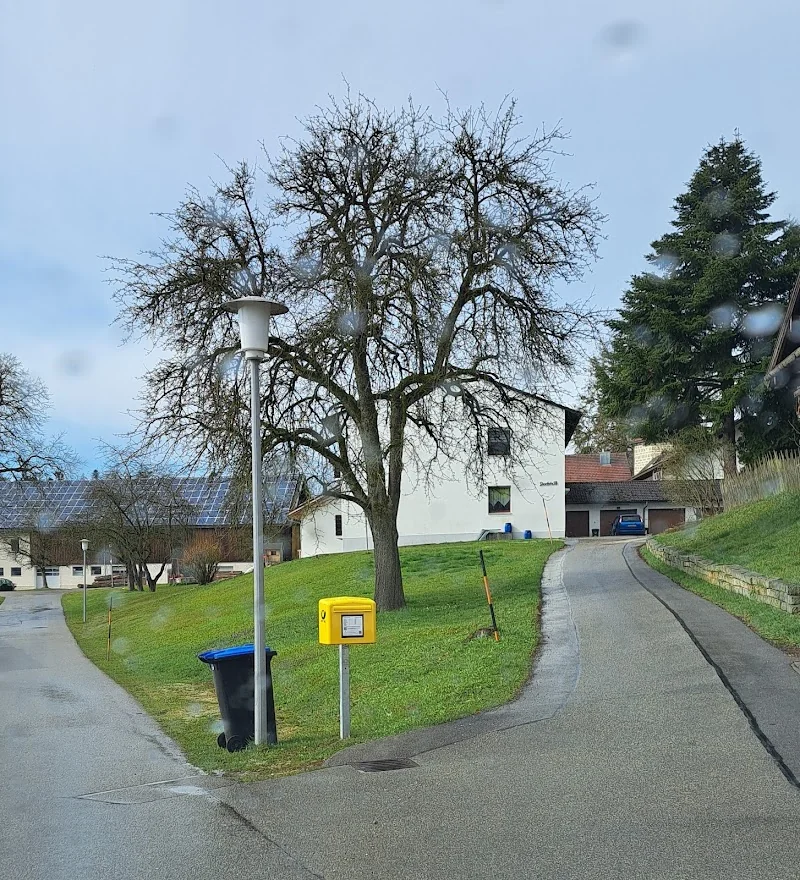
Trostberg-Tinning
83308 Trostberg-Tinning, Germany
Tinning | Access & Oberfeldkirchen
The keyword search around Tinning immediately shows how strongly two different topics overlap: On one side are search queries for Tinning in Trostberg, and on the other side are the well-known terms around Tinninger See in Riedering. For a clean SEO strategy, this separation is important, as both places are not in the same geographical context. The Tinninger See is a moor water body near Riedering and is described by the municipality as a destination with bathing areas, while Tinning in Trostberg must primarily be understood as a local residential and community area in the vicinity of Oberfeldkirchen. Therefore, someone searching for Tinning in Trostberg needs different information than someone who wants to hike, swim, or find a circular path at Tinninger See. ([riedering.de](https://www.riedering.de/tinninger-see?utm_source=openai))
For the content orientation of this page, this means: The focus is consistently on Tinning as part of the Trostberg environment. Trostberg itself is located in the northern Chiemgau in the Alz valley and is described by the city as a small town with around 11,500 inhabitants. The official city information also emphasizes that Trostberg today forms a developed urban area with the three districts of Heiligkreuz, Lindach, and Oberfeldkirchen. It is precisely within this framework that Tinning becomes visible in municipal documents, such as in planning documents, address directories, and in the traffic development around Oberfeldkirchen. Thus, Tinning is not a major tourist location, but rather a clearly local district and residential area with practical benefits for access, local transport, sports, and municipal orientation. ([trostberg.de](https://www.trostberg.de/stadt-buerger/stadtportrait/?utm_source=openai))
Tinninger See or Tinning? Correctly classify search intent
The first keywords from the dataset sound like leisure and nature topics: Tinninger See, kiosk, swimming, hiking, or circular path. However, this search intent belongs to a different place. The municipality of Riedering describes the Tinninger See as a moor water body located about 2 kilometers outside of Riedering. Additionally, the municipal website refers to further information about the facilities and offerings of the lake. Therefore, anyone looking for a lake, a bathing area, or a circular path ends up at a completely different excursion destination than Tinning in Trostberg. For page planning, this separation is crucial because incorrect associations can quickly lead to disappointed visitors and poorer user signals. ([riedering.de](https://www.riedering.de/tinninger-see?utm_source=openai))
For Tinning in Trostberg, the search terms related to the lake are therefore more of an indication of the breadth of the keyword mix than of the actual character of the place. In the official documents of the city of Trostberg, Tinning is located in the vicinity of Oberfeldkirchen, in a rural settlement structure with sports facilities, economic paths, and adjacent agricultural areas. This means: Anyone creating a local page for Tinning should not artificially invent lake or bathing content but should describe the real local environment. This is where the SEO value of such pages lies: They reliably answer the specific local question and prevent a user with false expectations from being directed to a page about another place. ([trostberg.de](https://www.trostberg.de/wp-content/uploads/2025/03/01_Begruendung_Vorhabenbezogener-Bebauungsplan-Nr.-43-Freiflaechen-PV-Anlage-bei-Tinning.pdf?utm_source=openai))
Access to Tinning: City bus, Tinning West, and Tinning East
The practically most important information for visitors and residents is accessibility. The city bus Trostberg lists the stops Tinning West and Tinning East in its timetable. This officially integrates Tinning into the municipal bus network. For local orientation, this is valuable because seekers often do not ask for a single address but for the nearest stop. The official timetable file also makes it clear that Tinning is not a peripheral name without connection but actually appears in the traffic logic of the city bus network. Especially for small districts or settlement areas, the availability of clearly named stops often determines whether the place is perceived as accessible. ([trostberg.de](https://www.trostberg.de/wp-content/uploads/2024/01/RVO_9434_101223_Ri1.pdf.pdf?utm_source=openai))
The overarching location is also clearly documented: In planning documents of the city of Trostberg, the location Tinning is described in connection with the district road TS 36, the Tinninger Straße, and the area between Tinning and Oberfeldkirchen. It is also stated that the location does not generate additional traffic during ongoing operations and that existing infrastructure is sufficient. This statement is very useful for a local page because it shows the character of the area: Tinning is not a high-traffic junction but a rural area with existing paths and clear local development. Therefore, anyone looking for access, orientation, or quiet accessibility gets a realistic picture of the location here. ([trostberg.de](https://www.trostberg.de/wp-content/uploads/2025/03/01_Begruendung_Vorhabenbezogener-Bebauungsplan-Nr.-43-Freiflaechen-PV-Anlage-bei-Tinning.pdf?utm_source=openai))
Sports facilities and community center in the vicinity of Oberfeldkirchen
A central reference point in the immediate vicinity is the sports facility of SV Oberfeldkirchen. The city of Trostberg lists it under the address Tinninger Str. 13 and mentions a multipurpose hall as well as a shooting range. Additionally, a sports field on Tinninger Straße with a lawn and tennis courts is recorded at the same location. For seekers looking for Tinning in Trostberg, Tinninger Straße, or sports meeting points, this is one of the clearest and most reliable anchor points. The official address information shows that the area not only consists of residential areas but also has functional leisure and club infrastructure. ([trostberg.de](https://www.trostberg.de/adressen/sportanlagen-des-sv-oberfeldkirchen/?utm_source=openai))
Community life is also present in this environment. The city of Trostberg explicitly invites citizens to community meetings in the multipurpose hall or community center in Oberfeldkirchen. This is more than just a formal note: It shows that Oberfeldkirchen and the immediate vicinity of Tinning are used as a place for gatherings, exchange, and local public life. Those who understand the area not only geographically but also socially recognize the actual added value of such local pages. They not only show streets and buildings but also make visible where everyday life takes place, what meeting points are available, and how the local community is organized. ([trostberg.de](https://www.trostberg.de/veranstaltung/buergerversammlung-oberfeldkrichen/?utm_source=openai))
Landscape between Tinning and Oberfeldkirchen
The official environmental and land-use planning paints a clear picture of the landscape around Tinning. In the municipal documents, the location is described as characterized by agricultural land, supplemented by the sports facilities of SV Oberfeldkirchen, smaller and larger wooded areas, as well as the villages of Tinning and Oberfeldkirchen. It is also noted that a gentle ridge runs in the northern part, resulting in a height difference of about 13 meters over a length of approximately 160 meters, which corresponds to an incline of about 8 percent. Such information is extremely valuable for a local description because it not only states that the area appears rural but also makes this effect professionally comprehensible. ([trostberg.de](https://www.trostberg.de/wp-content/uploads/2025/03/02_01_Umweltbericht_Vorhabenbezogener-Bebauungsplan-Nr.-43-Freiflaechen-PV-Anlage-bei-Tinning.pdf?utm_source=openai))
Additionally, the planning documents describe the handling of this landscape very soberly and realistically. For the planned open-space PV facility near Tinning, it is noted that existing infrastructure is used, no additional development system is necessary, and neither drinking water connection nor wastewater disposal is required for use. This is a technical finding, but it says a lot about the place: Tinning is not a dense urban area but a region where agriculture, paths, sports areas, and residential areas coexist. This mixture defines the character of the area and explains why search queries about access, location, and surroundings are significantly more relevant here than classic event or tourism terms. ([trostberg.de](https://www.trostberg.de/wp-content/uploads/2025/03/01_Begruendung_Vorhabenbezogener-Bebauungsplan-Nr.-43-Freiflaechen-PV-Anlage-bei-Tinning.pdf?utm_source=openai))
History, city archive, and local background
To understand Tinning in a larger historical context, one must also consider Trostberg and especially the district of Oberfeldkirchen. The city of Trostberg describes its own profile with a historically grown old town in the Inn-Salzach area and an urban image that connects tradition and progress. For Tinning, it is especially important that the city archive also preserves the archives of the formerly independent municipalities of Heiligkreuz, Lindach, and Oberfeldkirchen, which were incorporated in the 1970s. This shows that the local background consists not only of current land-use plans but is also based on an administrative and settlement history. For local research, this is a crucial hint because older documents, maps, and regulations are not just anywhere but are systematically preserved in the city archive. ([trostberg.de](https://www.trostberg.de/stadt-buerger/stadtportrait/?utm_source=openai))
The land-use planning of the city of Trostberg also confirms this connection. On the official page for land-use planning, changes to the land use plan are listed, among other things, for Oberfeldkirchen, Nunbichl, Lindach, Dieding, and other areas. This makes it clear that Tinning cannot be viewed in isolation but appears as part of a municipal development area within the city of Trostberg. For users looking for historical details, planning processes, or the development of the local image, the city archive is the logical next step. It is the place where historical documents, old local references, and documented administrative development can be thought together. The actual message for the page is: Tinning is not a detached name but a place with archived municipal history in the vicinity of Oberfeldkirchen and the city of Trostberg. ([trostberg.de](https://www.trostberg.de/leben-wohnen/bauen/bauleitplanung/?utm_source=openai))
Practical orientation for visitors, families, and leisure seekers
For the practical use of the page, it is especially important what expectation the visitor brings. Those searching for Tinning in Trostberg usually want to know how to find the place, where the next bus stops, where sports and community take place, and what the surroundings look like. The official information is precisely suitable for this: The city bus mentions Tinning West and Tinning East, the sports facilities of SV Oberfeldkirchen are located at Tinninger Straße 13, and the municipal meetings take place in the community center or in the multipurpose hall in Oberfeldkirchen. Together, this creates a very useful picture for everyday life, family visits, and local appointments. Tinning is thus primarily a place of short distances, everyday function, and immediate neighborhood. ([trostberg.de](https://www.trostberg.de/wp-content/uploads/2024/01/RVO_9434_101223_Ri1.pdf.pdf?utm_source=openai))
On the other hand, those expecting nature experiences, swimming, kiosks, or circular paths will very likely end up at Tinninger See in Riedering and not at Tinning in Trostberg. There, the municipality describes a moor lake with bathing areas and refers to tourist additional information. This difference is not only geographically important but also from an SEO perspective: A good local page must clearly resolve the search intent and must not make content promises that the place itself does not fulfill. Tinning in Trostberg is therefore best understood as a clear local location with sports, traffic, and administrative context, not as a lake or excursion destination. This honesty ensures that visitors receive the correct information and that search engines can classify the page as relevant and precise. ([riedering.de](https://www.riedering.de/tinninger-see?utm_source=openai))
Sources:
- City of Trostberg - City Portrait
- City of Trostberg - Sports Facilities of SV Oberfeldkirchen
- City Bus Trostberg 9434 - Timetable PDF
- City of Trostberg - City Archive
- City of Trostberg - Land Use Planning
- City of Trostberg - Environmental Report Open-Space PV Facility near Tinning
- Municipality of Riedering - Tinninger See
- Municipality of Riedering - Geographical Location
Mehr anzeigenWeniger anzeigen
Tinning | Access & Oberfeldkirchen
The keyword search around Tinning immediately shows how strongly two different topics overlap: On one side are search queries for Tinning in Trostberg, and on the other side are the well-known terms around Tinninger See in Riedering. For a clean SEO strategy, this separation is important, as both places are not in the same geographical context. The Tinninger See is a moor water body near Riedering and is described by the municipality as a destination with bathing areas, while Tinning in Trostberg must primarily be understood as a local residential and community area in the vicinity of Oberfeldkirchen. Therefore, someone searching for Tinning in Trostberg needs different information than someone who wants to hike, swim, or find a circular path at Tinninger See. ([riedering.de](https://www.riedering.de/tinninger-see?utm_source=openai))
For the content orientation of this page, this means: The focus is consistently on Tinning as part of the Trostberg environment. Trostberg itself is located in the northern Chiemgau in the Alz valley and is described by the city as a small town with around 11,500 inhabitants. The official city information also emphasizes that Trostberg today forms a developed urban area with the three districts of Heiligkreuz, Lindach, and Oberfeldkirchen. It is precisely within this framework that Tinning becomes visible in municipal documents, such as in planning documents, address directories, and in the traffic development around Oberfeldkirchen. Thus, Tinning is not a major tourist location, but rather a clearly local district and residential area with practical benefits for access, local transport, sports, and municipal orientation. ([trostberg.de](https://www.trostberg.de/stadt-buerger/stadtportrait/?utm_source=openai))
Tinninger See or Tinning? Correctly classify search intent
The first keywords from the dataset sound like leisure and nature topics: Tinninger See, kiosk, swimming, hiking, or circular path. However, this search intent belongs to a different place. The municipality of Riedering describes the Tinninger See as a moor water body located about 2 kilometers outside of Riedering. Additionally, the municipal website refers to further information about the facilities and offerings of the lake. Therefore, anyone looking for a lake, a bathing area, or a circular path ends up at a completely different excursion destination than Tinning in Trostberg. For page planning, this separation is crucial because incorrect associations can quickly lead to disappointed visitors and poorer user signals. ([riedering.de](https://www.riedering.de/tinninger-see?utm_source=openai))
For Tinning in Trostberg, the search terms related to the lake are therefore more of an indication of the breadth of the keyword mix than of the actual character of the place. In the official documents of the city of Trostberg, Tinning is located in the vicinity of Oberfeldkirchen, in a rural settlement structure with sports facilities, economic paths, and adjacent agricultural areas. This means: Anyone creating a local page for Tinning should not artificially invent lake or bathing content but should describe the real local environment. This is where the SEO value of such pages lies: They reliably answer the specific local question and prevent a user with false expectations from being directed to a page about another place. ([trostberg.de](https://www.trostberg.de/wp-content/uploads/2025/03/01_Begruendung_Vorhabenbezogener-Bebauungsplan-Nr.-43-Freiflaechen-PV-Anlage-bei-Tinning.pdf?utm_source=openai))
Access to Tinning: City bus, Tinning West, and Tinning East
The practically most important information for visitors and residents is accessibility. The city bus Trostberg lists the stops Tinning West and Tinning East in its timetable. This officially integrates Tinning into the municipal bus network. For local orientation, this is valuable because seekers often do not ask for a single address but for the nearest stop. The official timetable file also makes it clear that Tinning is not a peripheral name without connection but actually appears in the traffic logic of the city bus network. Especially for small districts or settlement areas, the availability of clearly named stops often determines whether the place is perceived as accessible. ([trostberg.de](https://www.trostberg.de/wp-content/uploads/2024/01/RVO_9434_101223_Ri1.pdf.pdf?utm_source=openai))
The overarching location is also clearly documented: In planning documents of the city of Trostberg, the location Tinning is described in connection with the district road TS 36, the Tinninger Straße, and the area between Tinning and Oberfeldkirchen. It is also stated that the location does not generate additional traffic during ongoing operations and that existing infrastructure is sufficient. This statement is very useful for a local page because it shows the character of the area: Tinning is not a high-traffic junction but a rural area with existing paths and clear local development. Therefore, anyone looking for access, orientation, or quiet accessibility gets a realistic picture of the location here. ([trostberg.de](https://www.trostberg.de/wp-content/uploads/2025/03/01_Begruendung_Vorhabenbezogener-Bebauungsplan-Nr.-43-Freiflaechen-PV-Anlage-bei-Tinning.pdf?utm_source=openai))
Sports facilities and community center in the vicinity of Oberfeldkirchen
A central reference point in the immediate vicinity is the sports facility of SV Oberfeldkirchen. The city of Trostberg lists it under the address Tinninger Str. 13 and mentions a multipurpose hall as well as a shooting range. Additionally, a sports field on Tinninger Straße with a lawn and tennis courts is recorded at the same location. For seekers looking for Tinning in Trostberg, Tinninger Straße, or sports meeting points, this is one of the clearest and most reliable anchor points. The official address information shows that the area not only consists of residential areas but also has functional leisure and club infrastructure. ([trostberg.de](https://www.trostberg.de/adressen/sportanlagen-des-sv-oberfeldkirchen/?utm_source=openai))
Community life is also present in this environment. The city of Trostberg explicitly invites citizens to community meetings in the multipurpose hall or community center in Oberfeldkirchen. This is more than just a formal note: It shows that Oberfeldkirchen and the immediate vicinity of Tinning are used as a place for gatherings, exchange, and local public life. Those who understand the area not only geographically but also socially recognize the actual added value of such local pages. They not only show streets and buildings but also make visible where everyday life takes place, what meeting points are available, and how the local community is organized. ([trostberg.de](https://www.trostberg.de/veranstaltung/buergerversammlung-oberfeldkrichen/?utm_source=openai))
Landscape between Tinning and Oberfeldkirchen
The official environmental and land-use planning paints a clear picture of the landscape around Tinning. In the municipal documents, the location is described as characterized by agricultural land, supplemented by the sports facilities of SV Oberfeldkirchen, smaller and larger wooded areas, as well as the villages of Tinning and Oberfeldkirchen. It is also noted that a gentle ridge runs in the northern part, resulting in a height difference of about 13 meters over a length of approximately 160 meters, which corresponds to an incline of about 8 percent. Such information is extremely valuable for a local description because it not only states that the area appears rural but also makes this effect professionally comprehensible. ([trostberg.de](https://www.trostberg.de/wp-content/uploads/2025/03/02_01_Umweltbericht_Vorhabenbezogener-Bebauungsplan-Nr.-43-Freiflaechen-PV-Anlage-bei-Tinning.pdf?utm_source=openai))
Additionally, the planning documents describe the handling of this landscape very soberly and realistically. For the planned open-space PV facility near Tinning, it is noted that existing infrastructure is used, no additional development system is necessary, and neither drinking water connection nor wastewater disposal is required for use. This is a technical finding, but it says a lot about the place: Tinning is not a dense urban area but a region where agriculture, paths, sports areas, and residential areas coexist. This mixture defines the character of the area and explains why search queries about access, location, and surroundings are significantly more relevant here than classic event or tourism terms. ([trostberg.de](https://www.trostberg.de/wp-content/uploads/2025/03/01_Begruendung_Vorhabenbezogener-Bebauungsplan-Nr.-43-Freiflaechen-PV-Anlage-bei-Tinning.pdf?utm_source=openai))
History, city archive, and local background
To understand Tinning in a larger historical context, one must also consider Trostberg and especially the district of Oberfeldkirchen. The city of Trostberg describes its own profile with a historically grown old town in the Inn-Salzach area and an urban image that connects tradition and progress. For Tinning, it is especially important that the city archive also preserves the archives of the formerly independent municipalities of Heiligkreuz, Lindach, and Oberfeldkirchen, which were incorporated in the 1970s. This shows that the local background consists not only of current land-use plans but is also based on an administrative and settlement history. For local research, this is a crucial hint because older documents, maps, and regulations are not just anywhere but are systematically preserved in the city archive. ([trostberg.de](https://www.trostberg.de/stadt-buerger/stadtportrait/?utm_source=openai))
The land-use planning of the city of Trostberg also confirms this connection. On the official page for land-use planning, changes to the land use plan are listed, among other things, for Oberfeldkirchen, Nunbichl, Lindach, Dieding, and other areas. This makes it clear that Tinning cannot be viewed in isolation but appears as part of a municipal development area within the city of Trostberg. For users looking for historical details, planning processes, or the development of the local image, the city archive is the logical next step. It is the place where historical documents, old local references, and documented administrative development can be thought together. The actual message for the page is: Tinning is not a detached name but a place with archived municipal history in the vicinity of Oberfeldkirchen and the city of Trostberg. ([trostberg.de](https://www.trostberg.de/leben-wohnen/bauen/bauleitplanung/?utm_source=openai))
Practical orientation for visitors, families, and leisure seekers
For the practical use of the page, it is especially important what expectation the visitor brings. Those searching for Tinning in Trostberg usually want to know how to find the place, where the next bus stops, where sports and community take place, and what the surroundings look like. The official information is precisely suitable for this: The city bus mentions Tinning West and Tinning East, the sports facilities of SV Oberfeldkirchen are located at Tinninger Straße 13, and the municipal meetings take place in the community center or in the multipurpose hall in Oberfeldkirchen. Together, this creates a very useful picture for everyday life, family visits, and local appointments. Tinning is thus primarily a place of short distances, everyday function, and immediate neighborhood. ([trostberg.de](https://www.trostberg.de/wp-content/uploads/2024/01/RVO_9434_101223_Ri1.pdf.pdf?utm_source=openai))
On the other hand, those expecting nature experiences, swimming, kiosks, or circular paths will very likely end up at Tinninger See in Riedering and not at Tinning in Trostberg. There, the municipality describes a moor lake with bathing areas and refers to tourist additional information. This difference is not only geographically important but also from an SEO perspective: A good local page must clearly resolve the search intent and must not make content promises that the place itself does not fulfill. Tinning in Trostberg is therefore best understood as a clear local location with sports, traffic, and administrative context, not as a lake or excursion destination. This honesty ensures that visitors receive the correct information and that search engines can classify the page as relevant and precise. ([riedering.de](https://www.riedering.de/tinninger-see?utm_source=openai))
Sources:
- City of Trostberg - City Portrait
- City of Trostberg - Sports Facilities of SV Oberfeldkirchen
- City Bus Trostberg 9434 - Timetable PDF
- City of Trostberg - City Archive
- City of Trostberg - Land Use Planning
- City of Trostberg - Environmental Report Open-Space PV Facility near Tinning
- Municipality of Riedering - Tinninger See
- Municipality of Riedering - Geographical Location
Tinning | Access & Oberfeldkirchen
The keyword search around Tinning immediately shows how strongly two different topics overlap: On one side are search queries for Tinning in Trostberg, and on the other side are the well-known terms around Tinninger See in Riedering. For a clean SEO strategy, this separation is important, as both places are not in the same geographical context. The Tinninger See is a moor water body near Riedering and is described by the municipality as a destination with bathing areas, while Tinning in Trostberg must primarily be understood as a local residential and community area in the vicinity of Oberfeldkirchen. Therefore, someone searching for Tinning in Trostberg needs different information than someone who wants to hike, swim, or find a circular path at Tinninger See. ([riedering.de](https://www.riedering.de/tinninger-see?utm_source=openai))
For the content orientation of this page, this means: The focus is consistently on Tinning as part of the Trostberg environment. Trostberg itself is located in the northern Chiemgau in the Alz valley and is described by the city as a small town with around 11,500 inhabitants. The official city information also emphasizes that Trostberg today forms a developed urban area with the three districts of Heiligkreuz, Lindach, and Oberfeldkirchen. It is precisely within this framework that Tinning becomes visible in municipal documents, such as in planning documents, address directories, and in the traffic development around Oberfeldkirchen. Thus, Tinning is not a major tourist location, but rather a clearly local district and residential area with practical benefits for access, local transport, sports, and municipal orientation. ([trostberg.de](https://www.trostberg.de/stadt-buerger/stadtportrait/?utm_source=openai))
Tinninger See or Tinning? Correctly classify search intent
The first keywords from the dataset sound like leisure and nature topics: Tinninger See, kiosk, swimming, hiking, or circular path. However, this search intent belongs to a different place. The municipality of Riedering describes the Tinninger See as a moor water body located about 2 kilometers outside of Riedering. Additionally, the municipal website refers to further information about the facilities and offerings of the lake. Therefore, anyone looking for a lake, a bathing area, or a circular path ends up at a completely different excursion destination than Tinning in Trostberg. For page planning, this separation is crucial because incorrect associations can quickly lead to disappointed visitors and poorer user signals. ([riedering.de](https://www.riedering.de/tinninger-see?utm_source=openai))
For Tinning in Trostberg, the search terms related to the lake are therefore more of an indication of the breadth of the keyword mix than of the actual character of the place. In the official documents of the city of Trostberg, Tinning is located in the vicinity of Oberfeldkirchen, in a rural settlement structure with sports facilities, economic paths, and adjacent agricultural areas. This means: Anyone creating a local page for Tinning should not artificially invent lake or bathing content but should describe the real local environment. This is where the SEO value of such pages lies: They reliably answer the specific local question and prevent a user with false expectations from being directed to a page about another place. ([trostberg.de](https://www.trostberg.de/wp-content/uploads/2025/03/01_Begruendung_Vorhabenbezogener-Bebauungsplan-Nr.-43-Freiflaechen-PV-Anlage-bei-Tinning.pdf?utm_source=openai))
Access to Tinning: City bus, Tinning West, and Tinning East
The practically most important information for visitors and residents is accessibility. The city bus Trostberg lists the stops Tinning West and Tinning East in its timetable. This officially integrates Tinning into the municipal bus network. For local orientation, this is valuable because seekers often do not ask for a single address but for the nearest stop. The official timetable file also makes it clear that Tinning is not a peripheral name without connection but actually appears in the traffic logic of the city bus network. Especially for small districts or settlement areas, the availability of clearly named stops often determines whether the place is perceived as accessible. ([trostberg.de](https://www.trostberg.de/wp-content/uploads/2024/01/RVO_9434_101223_Ri1.pdf.pdf?utm_source=openai))
The overarching location is also clearly documented: In planning documents of the city of Trostberg, the location Tinning is described in connection with the district road TS 36, the Tinninger Straße, and the area between Tinning and Oberfeldkirchen. It is also stated that the location does not generate additional traffic during ongoing operations and that existing infrastructure is sufficient. This statement is very useful for a local page because it shows the character of the area: Tinning is not a high-traffic junction but a rural area with existing paths and clear local development. Therefore, anyone looking for access, orientation, or quiet accessibility gets a realistic picture of the location here. ([trostberg.de](https://www.trostberg.de/wp-content/uploads/2025/03/01_Begruendung_Vorhabenbezogener-Bebauungsplan-Nr.-43-Freiflaechen-PV-Anlage-bei-Tinning.pdf?utm_source=openai))
Sports facilities and community center in the vicinity of Oberfeldkirchen
A central reference point in the immediate vicinity is the sports facility of SV Oberfeldkirchen. The city of Trostberg lists it under the address Tinninger Str. 13 and mentions a multipurpose hall as well as a shooting range. Additionally, a sports field on Tinninger Straße with a lawn and tennis courts is recorded at the same location. For seekers looking for Tinning in Trostberg, Tinninger Straße, or sports meeting points, this is one of the clearest and most reliable anchor points. The official address information shows that the area not only consists of residential areas but also has functional leisure and club infrastructure. ([trostberg.de](https://www.trostberg.de/adressen/sportanlagen-des-sv-oberfeldkirchen/?utm_source=openai))
Community life is also present in this environment. The city of Trostberg explicitly invites citizens to community meetings in the multipurpose hall or community center in Oberfeldkirchen. This is more than just a formal note: It shows that Oberfeldkirchen and the immediate vicinity of Tinning are used as a place for gatherings, exchange, and local public life. Those who understand the area not only geographically but also socially recognize the actual added value of such local pages. They not only show streets and buildings but also make visible where everyday life takes place, what meeting points are available, and how the local community is organized. ([trostberg.de](https://www.trostberg.de/veranstaltung/buergerversammlung-oberfeldkrichen/?utm_source=openai))
Landscape between Tinning and Oberfeldkirchen
The official environmental and land-use planning paints a clear picture of the landscape around Tinning. In the municipal documents, the location is described as characterized by agricultural land, supplemented by the sports facilities of SV Oberfeldkirchen, smaller and larger wooded areas, as well as the villages of Tinning and Oberfeldkirchen. It is also noted that a gentle ridge runs in the northern part, resulting in a height difference of about 13 meters over a length of approximately 160 meters, which corresponds to an incline of about 8 percent. Such information is extremely valuable for a local description because it not only states that the area appears rural but also makes this effect professionally comprehensible. ([trostberg.de](https://www.trostberg.de/wp-content/uploads/2025/03/02_01_Umweltbericht_Vorhabenbezogener-Bebauungsplan-Nr.-43-Freiflaechen-PV-Anlage-bei-Tinning.pdf?utm_source=openai))
Additionally, the planning documents describe the handling of this landscape very soberly and realistically. For the planned open-space PV facility near Tinning, it is noted that existing infrastructure is used, no additional development system is necessary, and neither drinking water connection nor wastewater disposal is required for use. This is a technical finding, but it says a lot about the place: Tinning is not a dense urban area but a region where agriculture, paths, sports areas, and residential areas coexist. This mixture defines the character of the area and explains why search queries about access, location, and surroundings are significantly more relevant here than classic event or tourism terms. ([trostberg.de](https://www.trostberg.de/wp-content/uploads/2025/03/01_Begruendung_Vorhabenbezogener-Bebauungsplan-Nr.-43-Freiflaechen-PV-Anlage-bei-Tinning.pdf?utm_source=openai))
History, city archive, and local background
To understand Tinning in a larger historical context, one must also consider Trostberg and especially the district of Oberfeldkirchen. The city of Trostberg describes its own profile with a historically grown old town in the Inn-Salzach area and an urban image that connects tradition and progress. For Tinning, it is especially important that the city archive also preserves the archives of the formerly independent municipalities of Heiligkreuz, Lindach, and Oberfeldkirchen, which were incorporated in the 1970s. This shows that the local background consists not only of current land-use plans but is also based on an administrative and settlement history. For local research, this is a crucial hint because older documents, maps, and regulations are not just anywhere but are systematically preserved in the city archive. ([trostberg.de](https://www.trostberg.de/stadt-buerger/stadtportrait/?utm_source=openai))
The land-use planning of the city of Trostberg also confirms this connection. On the official page for land-use planning, changes to the land use plan are listed, among other things, for Oberfeldkirchen, Nunbichl, Lindach, Dieding, and other areas. This makes it clear that Tinning cannot be viewed in isolation but appears as part of a municipal development area within the city of Trostberg. For users looking for historical details, planning processes, or the development of the local image, the city archive is the logical next step. It is the place where historical documents, old local references, and documented administrative development can be thought together. The actual message for the page is: Tinning is not a detached name but a place with archived municipal history in the vicinity of Oberfeldkirchen and the city of Trostberg. ([trostberg.de](https://www.trostberg.de/leben-wohnen/bauen/bauleitplanung/?utm_source=openai))
Practical orientation for visitors, families, and leisure seekers
For the practical use of the page, it is especially important what expectation the visitor brings. Those searching for Tinning in Trostberg usually want to know how to find the place, where the next bus stops, where sports and community take place, and what the surroundings look like. The official information is precisely suitable for this: The city bus mentions Tinning West and Tinning East, the sports facilities of SV Oberfeldkirchen are located at Tinninger Straße 13, and the municipal meetings take place in the community center or in the multipurpose hall in Oberfeldkirchen. Together, this creates a very useful picture for everyday life, family visits, and local appointments. Tinning is thus primarily a place of short distances, everyday function, and immediate neighborhood. ([trostberg.de](https://www.trostberg.de/wp-content/uploads/2024/01/RVO_9434_101223_Ri1.pdf.pdf?utm_source=openai))
On the other hand, those expecting nature experiences, swimming, kiosks, or circular paths will very likely end up at Tinninger See in Riedering and not at Tinning in Trostberg. There, the municipality describes a moor lake with bathing areas and refers to tourist additional information. This difference is not only geographically important but also from an SEO perspective: A good local page must clearly resolve the search intent and must not make content promises that the place itself does not fulfill. Tinning in Trostberg is therefore best understood as a clear local location with sports, traffic, and administrative context, not as a lake or excursion destination. This honesty ensures that visitors receive the correct information and that search engines can classify the page as relevant and precise. ([riedering.de](https://www.riedering.de/tinninger-see?utm_source=openai))
Sources:
- City of Trostberg - City Portrait
- City of Trostberg - Sports Facilities of SV Oberfeldkirchen
- City Bus Trostberg 9434 - Timetable PDF
- City of Trostberg - City Archive
- City of Trostberg - Land Use Planning
- City of Trostberg - Environmental Report Open-Space PV Facility near Tinning
- Municipality of Riedering - Tinninger See
- Municipality of Riedering - Geographical Location
Upcoming Events
No events found
Frequently Asked Questions
Reviews
No reviews found