
Traunstein
Salinenstraße 2, 83278 Traunstein, Deutschland
Salinenkapelle St. Rupert und Maximilian | History & Photos
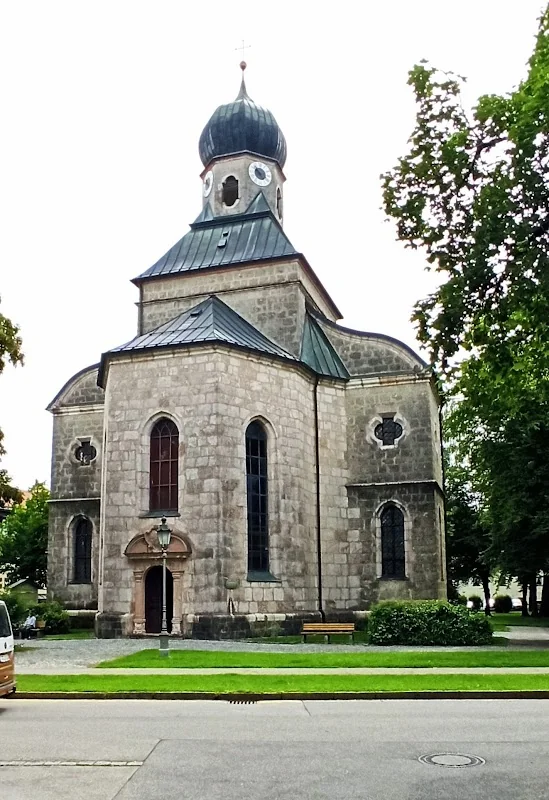
The Salinenkapelle St. Rupert und Maximilian is one of the most impressive places in Traunstein, as it is not only a sacred building but also a visible memory of the entire salt history of the city. Those searching for salinenkapelle traunstein, salinenkapelle photos, or st rupert and st maximilian will find a structure that tells much more than just church history. The city of Traunstein describes the chapel as the largest sacred building in the city and the largest chapel in Germany; at the same time, it was the spiritual center of the independent Traunstein saltworks. This dual role is what makes it so appealing: religious function, industrial background, art historical significance, and its continued vibrant use intertwine here. The building is located in the historic salt district, which is the part of Traunstein that has been shaped by salt for centuries, and its traces can be vividly read today in the chapel, salt houses, salt park, and the paths through the meadows. ([traunstein.de](https://www.traunstein.de/tourismus-freizeit/traunsteiner-sehenswuerdigkeiten/salinenkapelle-st-rupert-und-maximilian/))
It is precisely the connection of place, name, and function that makes the chapel interesting for visitors who are not only interested in architecture but also in the history of the city of Traunstein and the brine pipeline from Bad Reichenhall to Traunstein. The official information makes it clear that the chapel dates back to the time of the saltworks and is still understood today as a key location in the history of salt and the city. The view of the current services also shows that the building is not a museum in the classical sense, but a still-used spiritual space. This is particularly relevant for those searching for salinenkapelle history, salinenkapelle services, and salinenkapelle opening hours because here historical significance and current practice coincide. Therefore, anyone planning a visit should not only think of photos but also of the special character of a place that has changed its role multiple times over nearly four centuries while still preserving its identity. ([stadtkirche-traunstein.de](https://www.stadtkirche-traunstein.de/))
Why the Salinenkapelle St. Rupert and Maximilian Tells Traunstein's Salt History
The history of the Salinenkapelle is closely linked to the development of Traunstein as a salt town. The city of Traunstein states that the chapel was built in 1630/31 by the local master mason Wolf König according to the plans of the Munich court master mason Isaak Bader. It was not consecrated until 1671, dedicated to the salt saint Rupert and the founder of the saltworks, Elector Maximilian. This gave the building its still-effective double symbolism: Rupert stands for the religious and regional anchoring in the salt region of Salzburg and Bavaria, while Maximilian represents the territorial and economic power that developed Traunstein as a salt location. Therefore, the chapel is not just a pretty church building but a key to the city's history. Those searching for salinenkapelle bad reichenhall will find exactly this historical connection: The brine came from the area of Bad Reichenhall, and Traunstein's salt production was part of a larger technical and economic network. ([traunstein.de](https://www.traunstein.de/tourismus-freizeit/traunsteiner-sehenswuerdigkeiten/salinenkapelle-st-rupert-und-maximilian/))
It is particularly significant that the chapel did not arise in isolation but as the spiritual center of an entire saltworks facility. The city explicitly describes it as the spiritual center of the independent Traunstein saltworks. In connection with salt production, not only was there work, storage, and transport, but also prayer, interpretation, and representation. The official historical account also emphasizes that the saltworks in Traunstein operated from 1619 to 1912, and the chapel is one of the few buildings to have survived this era. Thus, it is a rare, directly readable testimony of an economic system that has shaped the city for centuries. Precisely because the building makes the role of salt in Traunstein visible, it is worthwhile for anyone wanting to learn more about salt history, the architecture of the salt district, and the development of the city. The Salinenkapelle is therefore not only a sight but also a historical narrative space. ([traunstein.de](https://www.traunstein.de/tourismus-freizeit/das-salz-in-traunstein/schauplaetze-der-saline/salinenkapelle/?utm_source=openai))
The spatial situation in today's urban landscape is also part of this narrative. According to the city of Traunstein, the salt park was opened in 2019 to celebrate the 400th anniversary of the salt town and makes the architectural testimonies of the salt era once again experienceable. The information boards and exhibits in the park focus on the brine pipeline from Bad Reichenhall to Traunstein, which is precisely the infrastructure within which the chapel was created. This makes it understandable why users searching for salinenkapelle traunstein or salinenkapelle salt history do not limit themselves to a single church but to a historical ensemble. The chapel is part of a whole path through the city's history, where salt houses, parks, old factory and residential buildings, as well as views of the former production landscape belong together. For the visitor, this means: one does not only experience an architectural point here but a developed system of religion, work, power, and memory. ([traunstein.de](https://www.traunstein.de/tourismus-freizeit/das-salz-in-traunstein/salinenpark-traunstein/?utm_source=openai))
Architecture, Floor Plan, and Furnishings: The Special View of the Altar
Architecturally, the Salinenkapelle is unusually clear and simultaneously multi-layered. The city of Traunstein describes it as an almost cruciform building with a square central space; the monument data indicates that it is a cruciform building with a tower above the square central space. The key idea is the free view of the altar: According to tradition, Elector Maximilian stipulated that every man should be able to see the altar. Therefore, the central building was designed without supports, meaning without any structures that would obstruct the view. This solution makes the space particularly impressive to this day, as one immediately perceives the altar as the center of the entire building. Additionally, there is the materiality: The city and the Bavarian State Office for Monument Preservation explicitly refer to the building as a Nagelfluh construction or as a sacred building mostly made of Nagelfluh. This creates an appearance that seems historically strict, spatially open, and regionally very distinctive. ([traunstein.de](https://www.traunstein.de/kultur-brauchtum/stadtgeschichte/qr-code-stadtspaziergang/salinenkapelle/))
The official description of the furnishings makes it clear why the chapel is worth seeing not only from the outside but especially from the inside. A large part of the furnishings and many items date back to the time of its creation around 1630. Particularly important is the altar painting by Ulrich Loth from 1631. It depicts Saint Maximilian and Saint Rupert, thus directly linking the patrons of the chapel to the liturgical center of the space. The city also emphasizes that the altar is accompanied by the apostles Paul and Andrew. The left side altar shows the baptism of an Indian by Saint Francis Xavier, while the right shows Saint John of Nepomuk in a special devotional representation. It is precisely these image programs that make the chapel art historically interesting, as they bring together piety, mission, saint veneration, and regional salt history in one space. Therefore, those searching for salinenkapelle altar painting will find here a world of furnishings closely connected to the time of its creation and which has retained its significance despite many centuries. ([traunstein.de](https://www.traunstein.de/kultur-brauchtum/stadtgeschichte/qr-code-stadtspaziergang/salinenkapelle/))
Another architectural peculiarity is the mixture of different styles. The city of Traunstein states that the chapel combines elements of Gothic, Renaissance, and early Baroque. This is not only a stylistic observation but also shapes the spatial feeling. The building does not appear as a smooth, uniform church but as a developed ensemble of forms that visibly makes the transition from older to newer building ideas. The Bavarian State Office for Monument Preservation classifies the chapel in the monument list and describes it as a cruciform building with a tower, built in 1630/31, with furnishings. Additionally, the church music documentation of the Archdiocese refers to the historical organ of the Salinenkapelle, whose restoration was completed in 2003. Therefore, those visiting the chapel experience not only a historical floor plan but a total sound of architecture, furnishings, and musical tradition. This is precisely why it is also attractive for search queries like salinenkapelle photos or salinenkapelle largest chapel in Germany: The building offers numerous impressive perspectives, from the exterior to the tower to the altar area. ([traunstein.de](https://www.traunstein.de/media/9025/anlage-4_kdk-teil-1-fotodokumentation.pdf?utm_source=openai))
Services, Confession Opportunities, and Current Use of the Salinenkapelle
The Salinenkapelle is today not only a historical monument but a living liturgical place. The website of the Stadtkirche Traunstein regularly lists services in the Salinenkapelle. These include masses in the extraordinary form of the Roman Rite as well as rosary and confession opportunities. This is important for visitors because the chapel thus has a different character than pure exhibition spaces or pure photographic motifs. Those interested in salinenkapelle services should check the current service schedule of the Stadtkirche, as the times are currently published and continuously adjusted. For a visit, this also means that one should perceive the place respectfully and with regard to its ecclesiastical use. It is precisely this living connection that makes the chapel attractive for believers, cultural travelers, and those interested in history alike. ([stadtkirche-traunstein.de](https://www.stadtkirche-traunstein.de/))
The current use also underscores how closely the chapel is integrated into the church life of Traunstein. It belongs to the Stadtkirche Traunstein, whose portal not only consolidates services but also parish news and church events. For practical planning, this is important because the chapel is not located in a closed museum operation but in an active pastoral context. The city of Traunstein also mentions city tours and the city walk as ways to explore the historic district. This makes the chapel particularly accessible for all those searching for salinenkapelle access, salinenkapelle opening hours, or a tour through salt history. Therefore, those visiting the chapel can combine religious use with a historical city tour and experience the salt district as a coherent space. This mixture of liturgy, monument preservation, and urban experience gives the place its special tension and explains why it is regularly visited by both locals and guests. ([stadtkirche-traunstein.de](https://www.stadtkirche-traunstein.de/))
Another interesting aspect is the connection of service, art, and music. The historical organ was restored and re-consecrated in 2003; this shows that the sacred use of the chapel is maintained to the present day. Additionally, the artistic furnishings with altar painting and side altars not only have a decorative effect in liturgical everyday life but also structure the space spiritually. Therefore, those seeking a quiet moment will find here a special connection of sacred tradition and historical atmosphere. For photographs and visits, it is important to observe the current service times, as the chapel is an active church space. For those searching for salinenkapelle photos or salinenkapelle opening hours, this is a helpful hint: The best time to visit is often when no liturgy is taking place or when a guided tour is offered. This keeps the impression of the place authentic and respectful at the same time. ([erzbistum-muenchen.de](https://www.erzbistum-muenchen.de/ordinariat/ressort-4-seelsorge-und-kirchliches-leben/Kirchenmusik/orgeln/cont/75285?utm_source=openai))
Access, Location, and Parking Around Salinenkapelle, Karl-Theodor-Platz, and Salinenstraße
The location of the Salinenkapelle is very convenient for planning visits, as it is situated in a historically clearly readable district. The monument data lists the location as Karl-Theodor-Platz 1, and the entire area belongs to the salt ensemble in the Au district. For orientation, it is important to note that the chapel is in close proximity to the salt park, the salt houses, and the paths of the city walk. The city of Traunstein describes this route as leading from the town square down through the city center into the Au to the Salinenkapelle, the salt houses, and the salt park. This allows for a good connection between the access and a walk. Therefore, those searching for salinenkapelle access should not only keep an eye on the immediate address but also the entire historic district. This is precisely what makes the visit pleasant: One does not drive or walk to an isolated point but to an ensemble that makes the salt history spatially comprehensible. ([traunstein.de](https://www.traunstein.de/media/9024/anlage-3_kdk-teil-1-denkmalliste.pdf?utm_source=openai))
There are also specific guidelines for parking. The city of Traunstein mentions the Karl-Theodor parking lot in its informational material regarding the salt houses and the salt district. Furthermore, the municipal page on parking in Traunstein points out time regulations in the city center; special provisions for electric vehicles are noted there, including at the Karl-Theodor parking lot. Those coming from the city center also benefit from the fact that the salt district is easily accessible via the city walk and path guidance. This is practical for visitors because a detour to the chapel can be combined with other destinations such as the salt park, the baroque facades of the ensemble, and the historical brine pipeline. This combination is particularly helpful for search queries like salinenkapelle parking or salinenkapelle bad reichenhall: One is not only planning a single appointment but a cultural historical tour through the salt quarter. ([traunstein.de](https://www.traunstein.de/tourismus-freizeit/traunsteiner-sehenswuerdigkeiten/salinenhaeuser/?utm_source=openai))
The historic salt district has been further enhanced in recent years by the salt park. The city of Traunstein explains that the park was opened in 2019 and makes the architectural testimonies of the salt era once again experienceable. Exhibits and information boards are dedicated to the brine pipeline from Bad Reichenhall to Traunstein, and the park is freely accessible and open all the time. This makes visiting the Salinenkapelle even more attractive, as one can take a walk through the park before or after visiting the chapel. For access, this means: Those who have time should plan the entire historic area between the town square, Au, Salinenkapelle, and salt park. Thus, a short stop becomes a complete impression of Traunstein's salt history. Especially in sunny weather or for photo tours, this route is highly recommended, as architecture, green space, and historical facades are in direct proximity. ([traunstein.de](https://www.traunstein.de/tourismus-freizeit/das-salz-in-traunstein/salinenpark-traunstein/?utm_source=openai))
Photos, Highlights, and Practical Tips for Visiting Traunstein
Those searching for salinenkapelle photos should prepare for a place with many strong motifs. Even the exterior view is remarkable, as the building, being a cruciform central building with a tower and square central space, creates a very clear, almost strictly symmetrical effect. The Nagelfluh facade, the historical location in the salt district, and the proximity to the former salt buildings offer numerous perspectives for detailed shots. Inside, especially the altar painting, the column-free space, and the historical furnishings from the time of creation are strong photographic motifs. The city points out that a large part of the furnishings still dates back to around 1630. Therefore, those wanting to photograph architecture, art, and spatial effects will find here not only a beautiful background but a dense historical narrative. Particularly in conjunction with the salt park, photos emerge that do not seem arbitrary but make the connection between salt industry, sacred building, and urban development visible. ([traunstein.de](https://www.traunstein.de/tourismus-freizeit/das-salz-in-traunstein/schauplaetze-der-saline/salinenkapelle/))
Among the highlights is undoubtedly the altar painting by Ulrich Loth. The official description explicitly mentions Saint Maximilian and Saint Rupert in the image, along with the apostles Paul and Andrew. This iconographic composition is a central reason why the chapel is so interesting from an art historical perspective. Additionally, the side altars feature the baptism of an Indian by Saint Francis Xavier and the depiction of Saint John of Nepomuk. Those interested in salinenkapelle history should not overlook these details, as they tell of piety, representation, and mission ideas of the early modern period. The historical material and the form of the building complement each other ideally: The space does not appear overloaded but focused, and it is precisely through this that the individual artworks stand out clearly. Therefore, it is advisable for visitors to take enough time instead of just quickly taking a souvenir photo. ([traunstein.de](https://www.traunstein.de/kultur-brauchtum/stadtgeschichte/qr-code-stadtspaziergang/salinenkapelle/))
A practical tip for anyone planning a visit: Combine the chapel with the city walk and the salt park. The city of Traunstein has expressly designed this route so that one can reach the Salinenkapelle from the town square through the historical stations into the Au. This not only reveals the chapel itself but also its surroundings with the salt houses, the history of salt production, and the uncovering of the historic district. For guests who want to combine photos, architecture, and real local history, this is the best form of visit. Especially if one is interested in salinenkapelle traunstein, salinenkapelle bad reichenhall, or salinenkapelle largest chapel in Germany, the ensemble as a whole is more important than a single motif. One then understands why the chapel is so formative for Traunstein: it is a religious space, a place of remembrance, and part of a historical urban landscape that has remained very readable to this day. ([traunstein.de](https://www.traunstein.de/tourismus-freizeit/traunsteiner-stadtfuehrungen/stadtrundgaenge-auf-eigene-faust/stadtspaziergang-ein-rundweg-durch-traunstein/?utm_source=openai))
Sources: The information on history, construction, furnishings, use, and classification comes from the official pages of the city of Traunstein, the Stadtkirche Traunstein, as well as from the monument documentation of the Bavarian State Office for Monument Preservation. For practical visit planning, the municipal guidelines on salt park, city walk, and parking have also been consulted. This creates a reliable picture of a place that is perceived in Traunstein as a sight, a place of worship, and a testimony to salt history. ([traunstein.de](https://www.traunstein.de/tourismus-freizeit/traunsteiner-sehenswuerdigkeiten/salinenkapelle-st-rupert-und-maximilian/))
Sources:
- City of Traunstein - Salinenkapelle St. Rupert and Maximilian
- City of Traunstein - Salinenkapelle and Salt History
- City of Traunstein - City Walk: Salinenkapelle
- Stadtkirche Traunstein - Services & Dates
- Bavarian State Office for Monument Preservation - Monument List Traunstein
- City of Traunstein - Parking in Traunstein
Mehr anzeigenWeniger anzeigen
Salinenkapelle St. Rupert und Maximilian | History & Photos
The Salinenkapelle St. Rupert und Maximilian is one of the most impressive places in Traunstein, as it is not only a sacred building but also a visible memory of the entire salt history of the city. Those searching for salinenkapelle traunstein, salinenkapelle photos, or st rupert and st maximilian will find a structure that tells much more than just church history. The city of Traunstein describes the chapel as the largest sacred building in the city and the largest chapel in Germany; at the same time, it was the spiritual center of the independent Traunstein saltworks. This dual role is what makes it so appealing: religious function, industrial background, art historical significance, and its continued vibrant use intertwine here. The building is located in the historic salt district, which is the part of Traunstein that has been shaped by salt for centuries, and its traces can be vividly read today in the chapel, salt houses, salt park, and the paths through the meadows. ([traunstein.de](https://www.traunstein.de/tourismus-freizeit/traunsteiner-sehenswuerdigkeiten/salinenkapelle-st-rupert-und-maximilian/))
It is precisely the connection of place, name, and function that makes the chapel interesting for visitors who are not only interested in architecture but also in the history of the city of Traunstein and the brine pipeline from Bad Reichenhall to Traunstein. The official information makes it clear that the chapel dates back to the time of the saltworks and is still understood today as a key location in the history of salt and the city. The view of the current services also shows that the building is not a museum in the classical sense, but a still-used spiritual space. This is particularly relevant for those searching for salinenkapelle history, salinenkapelle services, and salinenkapelle opening hours because here historical significance and current practice coincide. Therefore, anyone planning a visit should not only think of photos but also of the special character of a place that has changed its role multiple times over nearly four centuries while still preserving its identity. ([stadtkirche-traunstein.de](https://www.stadtkirche-traunstein.de/))
Why the Salinenkapelle St. Rupert and Maximilian Tells Traunstein's Salt History
The history of the Salinenkapelle is closely linked to the development of Traunstein as a salt town. The city of Traunstein states that the chapel was built in 1630/31 by the local master mason Wolf König according to the plans of the Munich court master mason Isaak Bader. It was not consecrated until 1671, dedicated to the salt saint Rupert and the founder of the saltworks, Elector Maximilian. This gave the building its still-effective double symbolism: Rupert stands for the religious and regional anchoring in the salt region of Salzburg and Bavaria, while Maximilian represents the territorial and economic power that developed Traunstein as a salt location. Therefore, the chapel is not just a pretty church building but a key to the city's history. Those searching for salinenkapelle bad reichenhall will find exactly this historical connection: The brine came from the area of Bad Reichenhall, and Traunstein's salt production was part of a larger technical and economic network. ([traunstein.de](https://www.traunstein.de/tourismus-freizeit/traunsteiner-sehenswuerdigkeiten/salinenkapelle-st-rupert-und-maximilian/))
It is particularly significant that the chapel did not arise in isolation but as the spiritual center of an entire saltworks facility. The city explicitly describes it as the spiritual center of the independent Traunstein saltworks. In connection with salt production, not only was there work, storage, and transport, but also prayer, interpretation, and representation. The official historical account also emphasizes that the saltworks in Traunstein operated from 1619 to 1912, and the chapel is one of the few buildings to have survived this era. Thus, it is a rare, directly readable testimony of an economic system that has shaped the city for centuries. Precisely because the building makes the role of salt in Traunstein visible, it is worthwhile for anyone wanting to learn more about salt history, the architecture of the salt district, and the development of the city. The Salinenkapelle is therefore not only a sight but also a historical narrative space. ([traunstein.de](https://www.traunstein.de/tourismus-freizeit/das-salz-in-traunstein/schauplaetze-der-saline/salinenkapelle/?utm_source=openai))
The spatial situation in today's urban landscape is also part of this narrative. According to the city of Traunstein, the salt park was opened in 2019 to celebrate the 400th anniversary of the salt town and makes the architectural testimonies of the salt era once again experienceable. The information boards and exhibits in the park focus on the brine pipeline from Bad Reichenhall to Traunstein, which is precisely the infrastructure within which the chapel was created. This makes it understandable why users searching for salinenkapelle traunstein or salinenkapelle salt history do not limit themselves to a single church but to a historical ensemble. The chapel is part of a whole path through the city's history, where salt houses, parks, old factory and residential buildings, as well as views of the former production landscape belong together. For the visitor, this means: one does not only experience an architectural point here but a developed system of religion, work, power, and memory. ([traunstein.de](https://www.traunstein.de/tourismus-freizeit/das-salz-in-traunstein/salinenpark-traunstein/?utm_source=openai))
Architecture, Floor Plan, and Furnishings: The Special View of the Altar
Architecturally, the Salinenkapelle is unusually clear and simultaneously multi-layered. The city of Traunstein describes it as an almost cruciform building with a square central space; the monument data indicates that it is a cruciform building with a tower above the square central space. The key idea is the free view of the altar: According to tradition, Elector Maximilian stipulated that every man should be able to see the altar. Therefore, the central building was designed without supports, meaning without any structures that would obstruct the view. This solution makes the space particularly impressive to this day, as one immediately perceives the altar as the center of the entire building. Additionally, there is the materiality: The city and the Bavarian State Office for Monument Preservation explicitly refer to the building as a Nagelfluh construction or as a sacred building mostly made of Nagelfluh. This creates an appearance that seems historically strict, spatially open, and regionally very distinctive. ([traunstein.de](https://www.traunstein.de/kultur-brauchtum/stadtgeschichte/qr-code-stadtspaziergang/salinenkapelle/))
The official description of the furnishings makes it clear why the chapel is worth seeing not only from the outside but especially from the inside. A large part of the furnishings and many items date back to the time of its creation around 1630. Particularly important is the altar painting by Ulrich Loth from 1631. It depicts Saint Maximilian and Saint Rupert, thus directly linking the patrons of the chapel to the liturgical center of the space. The city also emphasizes that the altar is accompanied by the apostles Paul and Andrew. The left side altar shows the baptism of an Indian by Saint Francis Xavier, while the right shows Saint John of Nepomuk in a special devotional representation. It is precisely these image programs that make the chapel art historically interesting, as they bring together piety, mission, saint veneration, and regional salt history in one space. Therefore, those searching for salinenkapelle altar painting will find here a world of furnishings closely connected to the time of its creation and which has retained its significance despite many centuries. ([traunstein.de](https://www.traunstein.de/kultur-brauchtum/stadtgeschichte/qr-code-stadtspaziergang/salinenkapelle/))
Another architectural peculiarity is the mixture of different styles. The city of Traunstein states that the chapel combines elements of Gothic, Renaissance, and early Baroque. This is not only a stylistic observation but also shapes the spatial feeling. The building does not appear as a smooth, uniform church but as a developed ensemble of forms that visibly makes the transition from older to newer building ideas. The Bavarian State Office for Monument Preservation classifies the chapel in the monument list and describes it as a cruciform building with a tower, built in 1630/31, with furnishings. Additionally, the church music documentation of the Archdiocese refers to the historical organ of the Salinenkapelle, whose restoration was completed in 2003. Therefore, those visiting the chapel experience not only a historical floor plan but a total sound of architecture, furnishings, and musical tradition. This is precisely why it is also attractive for search queries like salinenkapelle photos or salinenkapelle largest chapel in Germany: The building offers numerous impressive perspectives, from the exterior to the tower to the altar area. ([traunstein.de](https://www.traunstein.de/media/9025/anlage-4_kdk-teil-1-fotodokumentation.pdf?utm_source=openai))
Services, Confession Opportunities, and Current Use of the Salinenkapelle
The Salinenkapelle is today not only a historical monument but a living liturgical place. The website of the Stadtkirche Traunstein regularly lists services in the Salinenkapelle. These include masses in the extraordinary form of the Roman Rite as well as rosary and confession opportunities. This is important for visitors because the chapel thus has a different character than pure exhibition spaces or pure photographic motifs. Those interested in salinenkapelle services should check the current service schedule of the Stadtkirche, as the times are currently published and continuously adjusted. For a visit, this also means that one should perceive the place respectfully and with regard to its ecclesiastical use. It is precisely this living connection that makes the chapel attractive for believers, cultural travelers, and those interested in history alike. ([stadtkirche-traunstein.de](https://www.stadtkirche-traunstein.de/))
The current use also underscores how closely the chapel is integrated into the church life of Traunstein. It belongs to the Stadtkirche Traunstein, whose portal not only consolidates services but also parish news and church events. For practical planning, this is important because the chapel is not located in a closed museum operation but in an active pastoral context. The city of Traunstein also mentions city tours and the city walk as ways to explore the historic district. This makes the chapel particularly accessible for all those searching for salinenkapelle access, salinenkapelle opening hours, or a tour through salt history. Therefore, those visiting the chapel can combine religious use with a historical city tour and experience the salt district as a coherent space. This mixture of liturgy, monument preservation, and urban experience gives the place its special tension and explains why it is regularly visited by both locals and guests. ([stadtkirche-traunstein.de](https://www.stadtkirche-traunstein.de/))
Another interesting aspect is the connection of service, art, and music. The historical organ was restored and re-consecrated in 2003; this shows that the sacred use of the chapel is maintained to the present day. Additionally, the artistic furnishings with altar painting and side altars not only have a decorative effect in liturgical everyday life but also structure the space spiritually. Therefore, those seeking a quiet moment will find here a special connection of sacred tradition and historical atmosphere. For photographs and visits, it is important to observe the current service times, as the chapel is an active church space. For those searching for salinenkapelle photos or salinenkapelle opening hours, this is a helpful hint: The best time to visit is often when no liturgy is taking place or when a guided tour is offered. This keeps the impression of the place authentic and respectful at the same time. ([erzbistum-muenchen.de](https://www.erzbistum-muenchen.de/ordinariat/ressort-4-seelsorge-und-kirchliches-leben/Kirchenmusik/orgeln/cont/75285?utm_source=openai))
Access, Location, and Parking Around Salinenkapelle, Karl-Theodor-Platz, and Salinenstraße
The location of the Salinenkapelle is very convenient for planning visits, as it is situated in a historically clearly readable district. The monument data lists the location as Karl-Theodor-Platz 1, and the entire area belongs to the salt ensemble in the Au district. For orientation, it is important to note that the chapel is in close proximity to the salt park, the salt houses, and the paths of the city walk. The city of Traunstein describes this route as leading from the town square down through the city center into the Au to the Salinenkapelle, the salt houses, and the salt park. This allows for a good connection between the access and a walk. Therefore, those searching for salinenkapelle access should not only keep an eye on the immediate address but also the entire historic district. This is precisely what makes the visit pleasant: One does not drive or walk to an isolated point but to an ensemble that makes the salt history spatially comprehensible. ([traunstein.de](https://www.traunstein.de/media/9024/anlage-3_kdk-teil-1-denkmalliste.pdf?utm_source=openai))
There are also specific guidelines for parking. The city of Traunstein mentions the Karl-Theodor parking lot in its informational material regarding the salt houses and the salt district. Furthermore, the municipal page on parking in Traunstein points out time regulations in the city center; special provisions for electric vehicles are noted there, including at the Karl-Theodor parking lot. Those coming from the city center also benefit from the fact that the salt district is easily accessible via the city walk and path guidance. This is practical for visitors because a detour to the chapel can be combined with other destinations such as the salt park, the baroque facades of the ensemble, and the historical brine pipeline. This combination is particularly helpful for search queries like salinenkapelle parking or salinenkapelle bad reichenhall: One is not only planning a single appointment but a cultural historical tour through the salt quarter. ([traunstein.de](https://www.traunstein.de/tourismus-freizeit/traunsteiner-sehenswuerdigkeiten/salinenhaeuser/?utm_source=openai))
The historic salt district has been further enhanced in recent years by the salt park. The city of Traunstein explains that the park was opened in 2019 and makes the architectural testimonies of the salt era once again experienceable. Exhibits and information boards are dedicated to the brine pipeline from Bad Reichenhall to Traunstein, and the park is freely accessible and open all the time. This makes visiting the Salinenkapelle even more attractive, as one can take a walk through the park before or after visiting the chapel. For access, this means: Those who have time should plan the entire historic area between the town square, Au, Salinenkapelle, and salt park. Thus, a short stop becomes a complete impression of Traunstein's salt history. Especially in sunny weather or for photo tours, this route is highly recommended, as architecture, green space, and historical facades are in direct proximity. ([traunstein.de](https://www.traunstein.de/tourismus-freizeit/das-salz-in-traunstein/salinenpark-traunstein/?utm_source=openai))
Photos, Highlights, and Practical Tips for Visiting Traunstein
Those searching for salinenkapelle photos should prepare for a place with many strong motifs. Even the exterior view is remarkable, as the building, being a cruciform central building with a tower and square central space, creates a very clear, almost strictly symmetrical effect. The Nagelfluh facade, the historical location in the salt district, and the proximity to the former salt buildings offer numerous perspectives for detailed shots. Inside, especially the altar painting, the column-free space, and the historical furnishings from the time of creation are strong photographic motifs. The city points out that a large part of the furnishings still dates back to around 1630. Therefore, those wanting to photograph architecture, art, and spatial effects will find here not only a beautiful background but a dense historical narrative. Particularly in conjunction with the salt park, photos emerge that do not seem arbitrary but make the connection between salt industry, sacred building, and urban development visible. ([traunstein.de](https://www.traunstein.de/tourismus-freizeit/das-salz-in-traunstein/schauplaetze-der-saline/salinenkapelle/))
Among the highlights is undoubtedly the altar painting by Ulrich Loth. The official description explicitly mentions Saint Maximilian and Saint Rupert in the image, along with the apostles Paul and Andrew. This iconographic composition is a central reason why the chapel is so interesting from an art historical perspective. Additionally, the side altars feature the baptism of an Indian by Saint Francis Xavier and the depiction of Saint John of Nepomuk. Those interested in salinenkapelle history should not overlook these details, as they tell of piety, representation, and mission ideas of the early modern period. The historical material and the form of the building complement each other ideally: The space does not appear overloaded but focused, and it is precisely through this that the individual artworks stand out clearly. Therefore, it is advisable for visitors to take enough time instead of just quickly taking a souvenir photo. ([traunstein.de](https://www.traunstein.de/kultur-brauchtum/stadtgeschichte/qr-code-stadtspaziergang/salinenkapelle/))
A practical tip for anyone planning a visit: Combine the chapel with the city walk and the salt park. The city of Traunstein has expressly designed this route so that one can reach the Salinenkapelle from the town square through the historical stations into the Au. This not only reveals the chapel itself but also its surroundings with the salt houses, the history of salt production, and the uncovering of the historic district. For guests who want to combine photos, architecture, and real local history, this is the best form of visit. Especially if one is interested in salinenkapelle traunstein, salinenkapelle bad reichenhall, or salinenkapelle largest chapel in Germany, the ensemble as a whole is more important than a single motif. One then understands why the chapel is so formative for Traunstein: it is a religious space, a place of remembrance, and part of a historical urban landscape that has remained very readable to this day. ([traunstein.de](https://www.traunstein.de/tourismus-freizeit/traunsteiner-stadtfuehrungen/stadtrundgaenge-auf-eigene-faust/stadtspaziergang-ein-rundweg-durch-traunstein/?utm_source=openai))
Sources: The information on history, construction, furnishings, use, and classification comes from the official pages of the city of Traunstein, the Stadtkirche Traunstein, as well as from the monument documentation of the Bavarian State Office for Monument Preservation. For practical visit planning, the municipal guidelines on salt park, city walk, and parking have also been consulted. This creates a reliable picture of a place that is perceived in Traunstein as a sight, a place of worship, and a testimony to salt history. ([traunstein.de](https://www.traunstein.de/tourismus-freizeit/traunsteiner-sehenswuerdigkeiten/salinenkapelle-st-rupert-und-maximilian/))
Sources:
- City of Traunstein - Salinenkapelle St. Rupert and Maximilian
- City of Traunstein - Salinenkapelle and Salt History
- City of Traunstein - City Walk: Salinenkapelle
- Stadtkirche Traunstein - Services & Dates
- Bavarian State Office for Monument Preservation - Monument List Traunstein
- City of Traunstein - Parking in Traunstein
Salinenkapelle St. Rupert und Maximilian | History & Photos
The Salinenkapelle St. Rupert und Maximilian is one of the most impressive places in Traunstein, as it is not only a sacred building but also a visible memory of the entire salt history of the city. Those searching for salinenkapelle traunstein, salinenkapelle photos, or st rupert and st maximilian will find a structure that tells much more than just church history. The city of Traunstein describes the chapel as the largest sacred building in the city and the largest chapel in Germany; at the same time, it was the spiritual center of the independent Traunstein saltworks. This dual role is what makes it so appealing: religious function, industrial background, art historical significance, and its continued vibrant use intertwine here. The building is located in the historic salt district, which is the part of Traunstein that has been shaped by salt for centuries, and its traces can be vividly read today in the chapel, salt houses, salt park, and the paths through the meadows. ([traunstein.de](https://www.traunstein.de/tourismus-freizeit/traunsteiner-sehenswuerdigkeiten/salinenkapelle-st-rupert-und-maximilian/))
It is precisely the connection of place, name, and function that makes the chapel interesting for visitors who are not only interested in architecture but also in the history of the city of Traunstein and the brine pipeline from Bad Reichenhall to Traunstein. The official information makes it clear that the chapel dates back to the time of the saltworks and is still understood today as a key location in the history of salt and the city. The view of the current services also shows that the building is not a museum in the classical sense, but a still-used spiritual space. This is particularly relevant for those searching for salinenkapelle history, salinenkapelle services, and salinenkapelle opening hours because here historical significance and current practice coincide. Therefore, anyone planning a visit should not only think of photos but also of the special character of a place that has changed its role multiple times over nearly four centuries while still preserving its identity. ([stadtkirche-traunstein.de](https://www.stadtkirche-traunstein.de/))
Why the Salinenkapelle St. Rupert and Maximilian Tells Traunstein's Salt History
The history of the Salinenkapelle is closely linked to the development of Traunstein as a salt town. The city of Traunstein states that the chapel was built in 1630/31 by the local master mason Wolf König according to the plans of the Munich court master mason Isaak Bader. It was not consecrated until 1671, dedicated to the salt saint Rupert and the founder of the saltworks, Elector Maximilian. This gave the building its still-effective double symbolism: Rupert stands for the religious and regional anchoring in the salt region of Salzburg and Bavaria, while Maximilian represents the territorial and economic power that developed Traunstein as a salt location. Therefore, the chapel is not just a pretty church building but a key to the city's history. Those searching for salinenkapelle bad reichenhall will find exactly this historical connection: The brine came from the area of Bad Reichenhall, and Traunstein's salt production was part of a larger technical and economic network. ([traunstein.de](https://www.traunstein.de/tourismus-freizeit/traunsteiner-sehenswuerdigkeiten/salinenkapelle-st-rupert-und-maximilian/))
It is particularly significant that the chapel did not arise in isolation but as the spiritual center of an entire saltworks facility. The city explicitly describes it as the spiritual center of the independent Traunstein saltworks. In connection with salt production, not only was there work, storage, and transport, but also prayer, interpretation, and representation. The official historical account also emphasizes that the saltworks in Traunstein operated from 1619 to 1912, and the chapel is one of the few buildings to have survived this era. Thus, it is a rare, directly readable testimony of an economic system that has shaped the city for centuries. Precisely because the building makes the role of salt in Traunstein visible, it is worthwhile for anyone wanting to learn more about salt history, the architecture of the salt district, and the development of the city. The Salinenkapelle is therefore not only a sight but also a historical narrative space. ([traunstein.de](https://www.traunstein.de/tourismus-freizeit/das-salz-in-traunstein/schauplaetze-der-saline/salinenkapelle/?utm_source=openai))
The spatial situation in today's urban landscape is also part of this narrative. According to the city of Traunstein, the salt park was opened in 2019 to celebrate the 400th anniversary of the salt town and makes the architectural testimonies of the salt era once again experienceable. The information boards and exhibits in the park focus on the brine pipeline from Bad Reichenhall to Traunstein, which is precisely the infrastructure within which the chapel was created. This makes it understandable why users searching for salinenkapelle traunstein or salinenkapelle salt history do not limit themselves to a single church but to a historical ensemble. The chapel is part of a whole path through the city's history, where salt houses, parks, old factory and residential buildings, as well as views of the former production landscape belong together. For the visitor, this means: one does not only experience an architectural point here but a developed system of religion, work, power, and memory. ([traunstein.de](https://www.traunstein.de/tourismus-freizeit/das-salz-in-traunstein/salinenpark-traunstein/?utm_source=openai))
Architecture, Floor Plan, and Furnishings: The Special View of the Altar
Architecturally, the Salinenkapelle is unusually clear and simultaneously multi-layered. The city of Traunstein describes it as an almost cruciform building with a square central space; the monument data indicates that it is a cruciform building with a tower above the square central space. The key idea is the free view of the altar: According to tradition, Elector Maximilian stipulated that every man should be able to see the altar. Therefore, the central building was designed without supports, meaning without any structures that would obstruct the view. This solution makes the space particularly impressive to this day, as one immediately perceives the altar as the center of the entire building. Additionally, there is the materiality: The city and the Bavarian State Office for Monument Preservation explicitly refer to the building as a Nagelfluh construction or as a sacred building mostly made of Nagelfluh. This creates an appearance that seems historically strict, spatially open, and regionally very distinctive. ([traunstein.de](https://www.traunstein.de/kultur-brauchtum/stadtgeschichte/qr-code-stadtspaziergang/salinenkapelle/))
The official description of the furnishings makes it clear why the chapel is worth seeing not only from the outside but especially from the inside. A large part of the furnishings and many items date back to the time of its creation around 1630. Particularly important is the altar painting by Ulrich Loth from 1631. It depicts Saint Maximilian and Saint Rupert, thus directly linking the patrons of the chapel to the liturgical center of the space. The city also emphasizes that the altar is accompanied by the apostles Paul and Andrew. The left side altar shows the baptism of an Indian by Saint Francis Xavier, while the right shows Saint John of Nepomuk in a special devotional representation. It is precisely these image programs that make the chapel art historically interesting, as they bring together piety, mission, saint veneration, and regional salt history in one space. Therefore, those searching for salinenkapelle altar painting will find here a world of furnishings closely connected to the time of its creation and which has retained its significance despite many centuries. ([traunstein.de](https://www.traunstein.de/kultur-brauchtum/stadtgeschichte/qr-code-stadtspaziergang/salinenkapelle/))
Another architectural peculiarity is the mixture of different styles. The city of Traunstein states that the chapel combines elements of Gothic, Renaissance, and early Baroque. This is not only a stylistic observation but also shapes the spatial feeling. The building does not appear as a smooth, uniform church but as a developed ensemble of forms that visibly makes the transition from older to newer building ideas. The Bavarian State Office for Monument Preservation classifies the chapel in the monument list and describes it as a cruciform building with a tower, built in 1630/31, with furnishings. Additionally, the church music documentation of the Archdiocese refers to the historical organ of the Salinenkapelle, whose restoration was completed in 2003. Therefore, those visiting the chapel experience not only a historical floor plan but a total sound of architecture, furnishings, and musical tradition. This is precisely why it is also attractive for search queries like salinenkapelle photos or salinenkapelle largest chapel in Germany: The building offers numerous impressive perspectives, from the exterior to the tower to the altar area. ([traunstein.de](https://www.traunstein.de/media/9025/anlage-4_kdk-teil-1-fotodokumentation.pdf?utm_source=openai))
Services, Confession Opportunities, and Current Use of the Salinenkapelle
The Salinenkapelle is today not only a historical monument but a living liturgical place. The website of the Stadtkirche Traunstein regularly lists services in the Salinenkapelle. These include masses in the extraordinary form of the Roman Rite as well as rosary and confession opportunities. This is important for visitors because the chapel thus has a different character than pure exhibition spaces or pure photographic motifs. Those interested in salinenkapelle services should check the current service schedule of the Stadtkirche, as the times are currently published and continuously adjusted. For a visit, this also means that one should perceive the place respectfully and with regard to its ecclesiastical use. It is precisely this living connection that makes the chapel attractive for believers, cultural travelers, and those interested in history alike. ([stadtkirche-traunstein.de](https://www.stadtkirche-traunstein.de/))
The current use also underscores how closely the chapel is integrated into the church life of Traunstein. It belongs to the Stadtkirche Traunstein, whose portal not only consolidates services but also parish news and church events. For practical planning, this is important because the chapel is not located in a closed museum operation but in an active pastoral context. The city of Traunstein also mentions city tours and the city walk as ways to explore the historic district. This makes the chapel particularly accessible for all those searching for salinenkapelle access, salinenkapelle opening hours, or a tour through salt history. Therefore, those visiting the chapel can combine religious use with a historical city tour and experience the salt district as a coherent space. This mixture of liturgy, monument preservation, and urban experience gives the place its special tension and explains why it is regularly visited by both locals and guests. ([stadtkirche-traunstein.de](https://www.stadtkirche-traunstein.de/))
Another interesting aspect is the connection of service, art, and music. The historical organ was restored and re-consecrated in 2003; this shows that the sacred use of the chapel is maintained to the present day. Additionally, the artistic furnishings with altar painting and side altars not only have a decorative effect in liturgical everyday life but also structure the space spiritually. Therefore, those seeking a quiet moment will find here a special connection of sacred tradition and historical atmosphere. For photographs and visits, it is important to observe the current service times, as the chapel is an active church space. For those searching for salinenkapelle photos or salinenkapelle opening hours, this is a helpful hint: The best time to visit is often when no liturgy is taking place or when a guided tour is offered. This keeps the impression of the place authentic and respectful at the same time. ([erzbistum-muenchen.de](https://www.erzbistum-muenchen.de/ordinariat/ressort-4-seelsorge-und-kirchliches-leben/Kirchenmusik/orgeln/cont/75285?utm_source=openai))
Access, Location, and Parking Around Salinenkapelle, Karl-Theodor-Platz, and Salinenstraße
The location of the Salinenkapelle is very convenient for planning visits, as it is situated in a historically clearly readable district. The monument data lists the location as Karl-Theodor-Platz 1, and the entire area belongs to the salt ensemble in the Au district. For orientation, it is important to note that the chapel is in close proximity to the salt park, the salt houses, and the paths of the city walk. The city of Traunstein describes this route as leading from the town square down through the city center into the Au to the Salinenkapelle, the salt houses, and the salt park. This allows for a good connection between the access and a walk. Therefore, those searching for salinenkapelle access should not only keep an eye on the immediate address but also the entire historic district. This is precisely what makes the visit pleasant: One does not drive or walk to an isolated point but to an ensemble that makes the salt history spatially comprehensible. ([traunstein.de](https://www.traunstein.de/media/9024/anlage-3_kdk-teil-1-denkmalliste.pdf?utm_source=openai))
There are also specific guidelines for parking. The city of Traunstein mentions the Karl-Theodor parking lot in its informational material regarding the salt houses and the salt district. Furthermore, the municipal page on parking in Traunstein points out time regulations in the city center; special provisions for electric vehicles are noted there, including at the Karl-Theodor parking lot. Those coming from the city center also benefit from the fact that the salt district is easily accessible via the city walk and path guidance. This is practical for visitors because a detour to the chapel can be combined with other destinations such as the salt park, the baroque facades of the ensemble, and the historical brine pipeline. This combination is particularly helpful for search queries like salinenkapelle parking or salinenkapelle bad reichenhall: One is not only planning a single appointment but a cultural historical tour through the salt quarter. ([traunstein.de](https://www.traunstein.de/tourismus-freizeit/traunsteiner-sehenswuerdigkeiten/salinenhaeuser/?utm_source=openai))
The historic salt district has been further enhanced in recent years by the salt park. The city of Traunstein explains that the park was opened in 2019 and makes the architectural testimonies of the salt era once again experienceable. Exhibits and information boards are dedicated to the brine pipeline from Bad Reichenhall to Traunstein, and the park is freely accessible and open all the time. This makes visiting the Salinenkapelle even more attractive, as one can take a walk through the park before or after visiting the chapel. For access, this means: Those who have time should plan the entire historic area between the town square, Au, Salinenkapelle, and salt park. Thus, a short stop becomes a complete impression of Traunstein's salt history. Especially in sunny weather or for photo tours, this route is highly recommended, as architecture, green space, and historical facades are in direct proximity. ([traunstein.de](https://www.traunstein.de/tourismus-freizeit/das-salz-in-traunstein/salinenpark-traunstein/?utm_source=openai))
Photos, Highlights, and Practical Tips for Visiting Traunstein
Those searching for salinenkapelle photos should prepare for a place with many strong motifs. Even the exterior view is remarkable, as the building, being a cruciform central building with a tower and square central space, creates a very clear, almost strictly symmetrical effect. The Nagelfluh facade, the historical location in the salt district, and the proximity to the former salt buildings offer numerous perspectives for detailed shots. Inside, especially the altar painting, the column-free space, and the historical furnishings from the time of creation are strong photographic motifs. The city points out that a large part of the furnishings still dates back to around 1630. Therefore, those wanting to photograph architecture, art, and spatial effects will find here not only a beautiful background but a dense historical narrative. Particularly in conjunction with the salt park, photos emerge that do not seem arbitrary but make the connection between salt industry, sacred building, and urban development visible. ([traunstein.de](https://www.traunstein.de/tourismus-freizeit/das-salz-in-traunstein/schauplaetze-der-saline/salinenkapelle/))
Among the highlights is undoubtedly the altar painting by Ulrich Loth. The official description explicitly mentions Saint Maximilian and Saint Rupert in the image, along with the apostles Paul and Andrew. This iconographic composition is a central reason why the chapel is so interesting from an art historical perspective. Additionally, the side altars feature the baptism of an Indian by Saint Francis Xavier and the depiction of Saint John of Nepomuk. Those interested in salinenkapelle history should not overlook these details, as they tell of piety, representation, and mission ideas of the early modern period. The historical material and the form of the building complement each other ideally: The space does not appear overloaded but focused, and it is precisely through this that the individual artworks stand out clearly. Therefore, it is advisable for visitors to take enough time instead of just quickly taking a souvenir photo. ([traunstein.de](https://www.traunstein.de/kultur-brauchtum/stadtgeschichte/qr-code-stadtspaziergang/salinenkapelle/))
A practical tip for anyone planning a visit: Combine the chapel with the city walk and the salt park. The city of Traunstein has expressly designed this route so that one can reach the Salinenkapelle from the town square through the historical stations into the Au. This not only reveals the chapel itself but also its surroundings with the salt houses, the history of salt production, and the uncovering of the historic district. For guests who want to combine photos, architecture, and real local history, this is the best form of visit. Especially if one is interested in salinenkapelle traunstein, salinenkapelle bad reichenhall, or salinenkapelle largest chapel in Germany, the ensemble as a whole is more important than a single motif. One then understands why the chapel is so formative for Traunstein: it is a religious space, a place of remembrance, and part of a historical urban landscape that has remained very readable to this day. ([traunstein.de](https://www.traunstein.de/tourismus-freizeit/traunsteiner-stadtfuehrungen/stadtrundgaenge-auf-eigene-faust/stadtspaziergang-ein-rundweg-durch-traunstein/?utm_source=openai))
Sources: The information on history, construction, furnishings, use, and classification comes from the official pages of the city of Traunstein, the Stadtkirche Traunstein, as well as from the monument documentation of the Bavarian State Office for Monument Preservation. For practical visit planning, the municipal guidelines on salt park, city walk, and parking have also been consulted. This creates a reliable picture of a place that is perceived in Traunstein as a sight, a place of worship, and a testimony to salt history. ([traunstein.de](https://www.traunstein.de/tourismus-freizeit/traunsteiner-sehenswuerdigkeiten/salinenkapelle-st-rupert-und-maximilian/))
Sources:
- City of Traunstein - Salinenkapelle St. Rupert and Maximilian
- City of Traunstein - Salinenkapelle and Salt History
- City of Traunstein - City Walk: Salinenkapelle
- Stadtkirche Traunstein - Services & Dates
- Bavarian State Office for Monument Preservation - Monument List Traunstein
- City of Traunstein - Parking in Traunstein
Upcoming Events
No events found
Frequently Asked Questions
Reviews
Holger Schlagehan
4. February 2025
Here in the Traunsteiner Au stands the Salinenkapelle St. Rupert and St. Maximilian, the largest chapel in Germany. This early Baroque sacred building was completed in 1631 and features Gothic and Renaissance elements with its tower and onion dome. The magnificent altar painting depicts the two patrons, the "Salt Saint" Rupertus, and Saint Maximilian, the patron saint of families, journalists, and the media. On the right side of the chapel, there is an information board detailing the salt history of Traunstein from 1619 to 1912. Extremely interesting. Would love to come back...
Marco
6. December 2024
Such a lovely little church with a long history. The largest chapel in Germany has been here in the Au for over 400 years and is/was the spiritual center of the former salt town. This Baroque gem in Traunstein is beautiful to look at and historically significant, with an impressive altar painting.
Yeti Plus
14. August 2025
I recommend visiting the market square, where you'll find a very nice church.
Erik Esotherik
14. February 2025
I don't believe in God, but I do believe in urban green spaces. So this isn't really my thing. But anyone who believes in Jesus will surely be happy here.
Eva Anneliese Langenwalter
25. December 2018
This is not a church🕍. This is the largest chapel in Germany. It was built by the workers of the salt works that stood in the Au at Karl-Theodor-Platz for their church visits.