
Traunstein
Maxpl., 83278 Traunstein, Deutschland
Maxplatz Traunstein | Underground Garage & Parking
The Maxplatz in Traunstein is not just any name on the map, but a place where city center, mobility, quality of stay, and urban life come together. Those looking for the square will find themselves in the historic core of the large district town, west of the town square and in close proximity to important routes between the train station, old town, and the adjacent streets. This location makes the Maxplatz so interesting: it serves as a traffic space, meeting point, and stage for what characterizes Traunstein in everyday life and during festivals. After the redesign in 2024, the square will feature more greenery, more seating, a water feature, and a significantly quieter, pedestrian-friendly character. At the same time, it remains a functional part of the city center, as car traffic, delivery traffic, and short stopping options have been integrated into the new design. ([traunstein.de](https://www.traunstein.de/stadt-buerger/aemter-und-dienststellen/planenbauen/abteilungen-im-rathaus/sanierung-des-maxplatzes/))
For visitors, the Maxplatz is primarily a place of orientation. Those seeking information about parking, access, underground garage, or the direct route to the center will quickly come across it or the neighboring offers such as the Karl-Theodor-Platz and the parking garage there. Those interested in events, markets, or traditions experience the Maxplatz as a place with an urban atmosphere and local highlights. The square exemplifies how a city center can not only function but also appear inviting: green, barrier-free, traffic-calmed, and yet central. The fact that the Maxplatz is described as fit for future generations after the renovation is more than just a PR statement. It shows that Traunstein has consciously developed its urban space as a vibrant center. ([traunstein.de](https://www.traunstein.de/stadt-buerger/aemter-und-dienststellen/planenbauen/abteilungen-im-rathaus/sanierung-des-maxplatzes/))
Parking, Underground Garage, and Access at Maxplatz
When people search for Maxplatz Traunstein, they often have the same practical question: How do I get there, and where do I park my car? That is why parking and access are among the most important topics surrounding this square. The city of Traunstein publishes an overview of parking garages and large parking lots for the city center. Among other things, this includes the P1 train station parking tunnel with 170 parking spaces, the P2 town hall-center underground garage, and the area P2 center/Karl-Theodor-Platz with 310 parking spaces. Additionally, there is the P3 festival area on Siegsdorfer Straße with 500 parking spaces. This structure shows that the Maxplatz should not be viewed in isolation but in the context of a well-connected city center and parking network. ([traunstein.de](https://www.traunstein.de/tourismus-freizeit/anreise-informationen/parken-in-traunstein/parkhaeuser-und-grossparkplaetze/))
Particularly relevant is the connection to Karl-Theodor-Platz, as the city points out free parking for vehicles with electric license plates for up to three hours. At the same time, the maximum parking durations in the city center and train station area remain: two hours in the city center, 30 minutes at the train station. These rules are important for anyone who wants to combine a visit to the Maxplatz with errands, a market visit, or a walk through the old town. The Heimathaus complements the orientation from a visitor's perspective with the information that it takes about ten minutes to walk from the Traunstein train station to the city center and that there are car and bus parking spaces at Karl-Theodor-Platz along with the parking garage. So, those coming from the train station have a clear, short route; those arriving by car will find several official options in close proximity. ([traunstein.de](https://www.traunstein.de/tourismus-freizeit/einkaufen-shopping/parken-in-traunstein/))
Additionally, the Maxplatz, due to its location in the urban traffic structure, is also suitable for short stays. As part of the renovation, the city has provided a delivery and short-term parking zone to ensure that shops, gastronomy, and deliveries can function. This is particularly important for people who do not spend the whole day in the city center but only want to pick something up briefly, attend an appointment, or spontaneously have a coffee. The Maxplatz is therefore not just a replacement for a parking lot but part of a finely tuned urban space where parking, walking, and lingering are considered together. Those looking for an underground garage nearby will find the best orientation not directly at the square itself, but in the surrounding official parking offers that complement the Maxplatz very well. ([traunstein.de](https://www.traunstein.de/stadt-buerger/aemter-und-dienststellen/planenbauen/abteilungen-im-rathaus/sanierung-des-maxplatzes/))
Renovation and New Quality of Stay at Maxplatz
The new design of the Maxplatz is the result of an extensive urban renewal that Traunstein implemented in 2024. According to the city, the green space has been opened up so that it is better usable for everyone, and a water feature provides cooling on hot summer days. Pedestrians and cyclists also benefit significantly, as the traffic space has been calmed and the square overall appears quieter. The official description also emphasizes that gastronomy retains its place and a pleasant lighting rounds off the character of the square in the evening. Such interventions are urbanistically important because they transform an area previously dominated by traffic into a place with a longer stay duration. This has been achieved at the Maxplatz: from a functional transit area, it has become a center with quality of stay. ([traunstein.de](https://www.traunstein.de/stadt-buerger/aemter-und-dienststellen/planenbauen/abteilungen-im-rathaus/sanierung-des-maxplatzes/))
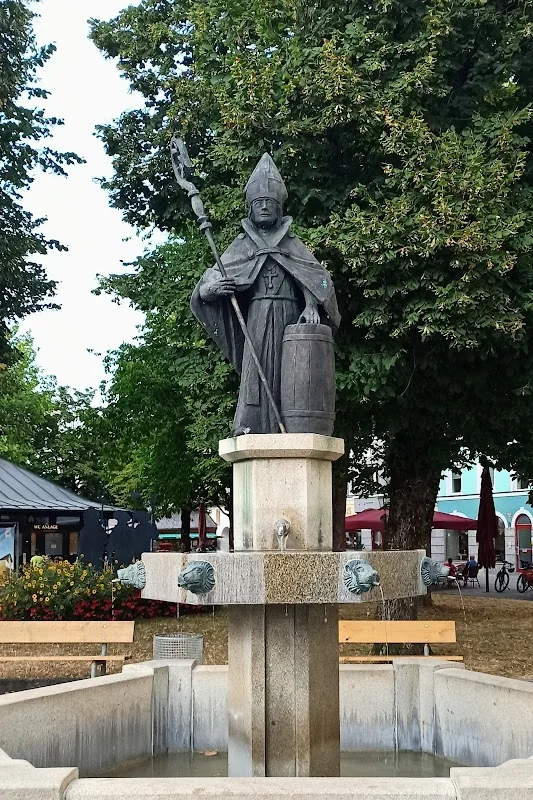
Among the specific changes are several points that are immediately noticeable in the city center. The lanes for motor vehicle traffic have been reduced from three to one, which has calmed the traffic flow. At the same time, the pedestrian traffic light has been removed, making the square appear visually and functionally more open. Accessibility is also particularly important: According to the city, the curbs have disappeared, the Maxplatz can now be crossed barrier-free, and users move in a traffic-calmed area. In addition, new seating options around green islands, the rebuilt Rupertus fountain in the vicinity of the saline chapel, and a renewed environment of the kiosk with new window elements and renovated toilet facilities have been added. The measure therefore aims not only at aesthetics but also at practicality, comfort, and quality of stay. ([traunstein.de](https://www.traunstein.de/stadt-buerger/aemter-und-dienststellen/planenbauen/abteilungen-im-rathaus/sanierung-des-maxplatzes/))
Financially, the redesign was also a significant project. The city estimates its own share at around 1.9 million euros and simultaneously refers to state funding. The government of Upper Bavaria announced in February 2024 that around 2.4 million euros in funding had been approved and that the total costs of the measure are around 4.3 million euros. Such figures show that the Maxplatz has not only undergone a small cosmetic enhancement but was a strategic city center project. The ecological component is also particularly noteworthy: six trees were removed, one tree was transplanted elsewhere, and 16 new trees were planted, so that in the end there are more trees in the square than before. Those walking through the square today experience a newly ordered interplay of traffic, greenery, light, and freedom of movement. This is precisely what defines the quality of stay that has been consciously strengthened in Traunstein. ([traunstein.de](https://www.traunstein.de/stadt-buerger/aemter-und-dienststellen/planenbauen/abteilungen-im-rathaus/sanierung-des-maxplatzes/))
Events, Markets, and Traditions at and around Maxplatz
The Maxplatz is not only a beautifully designed city center square in Traunstein but also a real event space. This is particularly evident during traditional and city festivals, where the square plays a central role. A good example is the Traunstein Krampus run: According to the official city website, the groups start in Maxstraße, move to Maxplatz, are introduced there, and then continue to celebrate with a Kramperl party right at the square. This makes the Maxplatz a place where tradition and public life meet directly. The atmosphere of such evenings is an important feature of the square, as it functions not only during the day but is also used for significant emotional city moments. ([traunstein.de](https://www.traunstein.de/kultur-brauchtum/kultur/konzertreihen-veranstaltungen/traunsteiner-krampuslauf/))
Another example is the inauguration of the Maxplatz in May 2025. The city invited people to a street festival in Maxstraße from the afternoon, with activities, children's programs, culinary offerings, music, and later live music at Maxplatz itself. Such formats make it visible how much the square is intended as a connection between commerce, gastronomy, culture, and community. Markets are also part of the picture: The city’s weekly market regulations explicitly provide for flea markets on the town square as well as parts of Schaumburgerstraße and Maxplatz. Furthermore, the autumn market shows that the Maxplatz can be part of the flea market route during major city center events. Thus, the square is embedded in an urban market and festival culture that enlivens the entire city center and is not limited to a single area. ([traunstein.de](https://www.traunstein.de/kultur-brauchtum/kultur/konzertreihen-veranstaltungen/einweihung-maxplatz/?utm_source=openai))
For the search intent behind terms like Maxplatz Traunstein or Maxplatz underground garage, this event context is important because many visitors are not only looking for the address but also for concrete experiences. The Maxplatz exemplifies the kind of places that are particularly valuable in smaller towns: they serve as transit and stay areas in everyday life but transform into markets, festivals, and parades into a stage for the community. The fact that the city held a ceremonial inauguration for the square in 2025 and that the square regularly appears in market and tradition culture shows its strong social function. So, anyone asking what one can experience at Maxplatz receives a simple answer: it is one of the places where Traunstein makes itself visible. ([traunstein.de](https://www.traunstein.de/kultur-brauchtum/kultur/konzertreihen-veranstaltungen/traunsteiner-krampuslauf/))
Location in the Traunstein Center and Orientation on Site
The Maxplatz is located in a position that is particularly helpful for orientation in Traunstein. The Heimathaus describes it as an important traffic hub in the city center, while the official city representation locates it in close proximity to the central axes of urban pedestrian and cycling traffic. The square is located west of the town square, opposite St. Oswald Church or in its vicinity, thus forming a kind of hinge between the historic old town, train station direction, and the western city center areas. For visitors, this is practical because the Maxplatz can easily be integrated into a city walk: from the train station, from the town square, or as a stop between shopping, coffee breaks, and further walking through the old town. ([heimathaus-traunstein.de](https://www.heimathaus-traunstein.de/besuch/anfahrt.html))
The cycling and path guidance also underscores this central location. The city points out that a bicycle ring road is being created in the city center, which leads from Ludwig-Thoma-Straße via Marienstraße to Maxplatz and further into Bahnhofstraße. The route reconnects to the southern connections via Pinerolostraße. This shows that the Maxplatz is not only a beautiful square but a hub in the mobility network of the city center. Those walking benefit from the short distance to the train station; those arriving by bike find connections to the central route; and those arriving by car can use the parking options in the vicinity. This multifunctionality makes the Maxplatz particularly relevant for users who are looking for not just a place but a specific arrival situation. ([traunstein.de](https://www.traunstein.de/stadtentwicklung-wirtschaft/stadtentwicklung/fahrradstadt-traunstein/fahrradstrasse/marienstrasse/?utm_source=openai))
Orientation also includes the relationship of the Maxplatz to the adjacent places and sights. The Heimathaus is located directly at the edge of the square, the saline chapel and the Lourdes chapel are part of the nearby historic surroundings, and the square itself is embedded in the old town that characterizes Traunstein. Those walking through this area experience a city center where history, everyday use, and tourism overlap. This is important for seekers because the Maxplatz is not an isolated event space but an urban reference point in a closely interconnected urban space. This makes it suitable for both quick Google searches for parking and access as well as for longer visits where one wants to discover the city step by step. ([heimathaus-traunstein.de](https://www.heimathaus-traunstein.de/besuch/anfahrt.html))
History and Urban Significance of Maxplatz
The historical significance of the Maxplatz goes deeper than one might initially suspect. In an urban analysis of the city of Traunstein, it is stated that in the area of today’s Maxplatz, a large salt warehouse was built in the 16th century, and the leveling of the ditch located west of the core city marked the first expansion of the city to the west. This is a crucial hint: the Maxplatz is not only a modern traffic and stay area but part of those development axes that have early expanded Traunstein beyond the medieval core city. Thus, the square is in line with the economic and spatial development of the city, which was strongly characterized by trade, salt, and urban pathways. ([traunstein.de](https://www.traunstein.de/media/9023/anlage-1_kdk-teil-1-text.pdf))
The city description also makes it clear that Traunstein underwent a continuous urban densification in the area of the historic core city, the suburbs, and later western developments. For today’s Maxplatz, this means: it is located in a space that has been repeatedly reorganized, utilized, and adapted. This adaptability is still visible today. In the past, goods handling, markets, and urban developments characterized the center; today, quality of stay, mobility, and public use shape the area. The transition from a more traffic-dominated square to a greener, more open urban space is therefore not a random measure but the continuation of a long history of urban change. Especially in a city with a historic old town, it is important that such places do not become museum-like but are developed in a contemporary manner. This is exactly what is happening at Maxplatz. ([traunstein.de](https://www.traunstein.de/media/9023/anlage-1_kdk-teil-1-text.pdf))
The significance of the square is also evident in the fact that the city explicitly speaks of the enhancement of the axis train station-Maxplatz in its retail and development concept. There, the quality of stay is described in connection with trade, urban life, and duration of stay. Thus, from the city’s perspective, the Maxplatz is not just a place for transit or a stopover but a building block in the overall picture of city center development. In this sense, it is an example of how cities modernize their historic centers without losing their character. Those visiting the square today see not only paving, trees, and lighting but a piece of lived urban history that has evolved and continues to change. ([traunstein.de](https://www.traunstein.de/media/9204/traunstein_ehk_230519.pdf))
Sources:
- Large District Town of Traunstein – Renovation of Maxplatz
- Large District Town of Traunstein – Parking Garages and Large Parking Lots
- Heimathaus Traunstein – Access and Parking
- Large District Town of Traunstein – Traunstein Krampus Run
- Government of Upper Bavaria – Urban Development Funding for Traunstein
- Large District Town of Traunstein – Urban Analysis of Maxplatz and Surroundings
Mehr anzeigenWeniger anzeigen
Maxplatz Traunstein | Underground Garage & Parking
The Maxplatz in Traunstein is not just any name on the map, but a place where city center, mobility, quality of stay, and urban life come together. Those looking for the square will find themselves in the historic core of the large district town, west of the town square and in close proximity to important routes between the train station, old town, and the adjacent streets. This location makes the Maxplatz so interesting: it serves as a traffic space, meeting point, and stage for what characterizes Traunstein in everyday life and during festivals. After the redesign in 2024, the square will feature more greenery, more seating, a water feature, and a significantly quieter, pedestrian-friendly character. At the same time, it remains a functional part of the city center, as car traffic, delivery traffic, and short stopping options have been integrated into the new design. ([traunstein.de](https://www.traunstein.de/stadt-buerger/aemter-und-dienststellen/planenbauen/abteilungen-im-rathaus/sanierung-des-maxplatzes/))
For visitors, the Maxplatz is primarily a place of orientation. Those seeking information about parking, access, underground garage, or the direct route to the center will quickly come across it or the neighboring offers such as the Karl-Theodor-Platz and the parking garage there. Those interested in events, markets, or traditions experience the Maxplatz as a place with an urban atmosphere and local highlights. The square exemplifies how a city center can not only function but also appear inviting: green, barrier-free, traffic-calmed, and yet central. The fact that the Maxplatz is described as fit for future generations after the renovation is more than just a PR statement. It shows that Traunstein has consciously developed its urban space as a vibrant center. ([traunstein.de](https://www.traunstein.de/stadt-buerger/aemter-und-dienststellen/planenbauen/abteilungen-im-rathaus/sanierung-des-maxplatzes/))
Parking, Underground Garage, and Access at Maxplatz
When people search for Maxplatz Traunstein, they often have the same practical question: How do I get there, and where do I park my car? That is why parking and access are among the most important topics surrounding this square. The city of Traunstein publishes an overview of parking garages and large parking lots for the city center. Among other things, this includes the P1 train station parking tunnel with 170 parking spaces, the P2 town hall-center underground garage, and the area P2 center/Karl-Theodor-Platz with 310 parking spaces. Additionally, there is the P3 festival area on Siegsdorfer Straße with 500 parking spaces. This structure shows that the Maxplatz should not be viewed in isolation but in the context of a well-connected city center and parking network. ([traunstein.de](https://www.traunstein.de/tourismus-freizeit/anreise-informationen/parken-in-traunstein/parkhaeuser-und-grossparkplaetze/))
Particularly relevant is the connection to Karl-Theodor-Platz, as the city points out free parking for vehicles with electric license plates for up to three hours. At the same time, the maximum parking durations in the city center and train station area remain: two hours in the city center, 30 minutes at the train station. These rules are important for anyone who wants to combine a visit to the Maxplatz with errands, a market visit, or a walk through the old town. The Heimathaus complements the orientation from a visitor's perspective with the information that it takes about ten minutes to walk from the Traunstein train station to the city center and that there are car and bus parking spaces at Karl-Theodor-Platz along with the parking garage. So, those coming from the train station have a clear, short route; those arriving by car will find several official options in close proximity. ([traunstein.de](https://www.traunstein.de/tourismus-freizeit/einkaufen-shopping/parken-in-traunstein/))
Additionally, the Maxplatz, due to its location in the urban traffic structure, is also suitable for short stays. As part of the renovation, the city has provided a delivery and short-term parking zone to ensure that shops, gastronomy, and deliveries can function. This is particularly important for people who do not spend the whole day in the city center but only want to pick something up briefly, attend an appointment, or spontaneously have a coffee. The Maxplatz is therefore not just a replacement for a parking lot but part of a finely tuned urban space where parking, walking, and lingering are considered together. Those looking for an underground garage nearby will find the best orientation not directly at the square itself, but in the surrounding official parking offers that complement the Maxplatz very well. ([traunstein.de](https://www.traunstein.de/stadt-buerger/aemter-und-dienststellen/planenbauen/abteilungen-im-rathaus/sanierung-des-maxplatzes/))
Renovation and New Quality of Stay at Maxplatz
The new design of the Maxplatz is the result of an extensive urban renewal that Traunstein implemented in 2024. According to the city, the green space has been opened up so that it is better usable for everyone, and a water feature provides cooling on hot summer days. Pedestrians and cyclists also benefit significantly, as the traffic space has been calmed and the square overall appears quieter. The official description also emphasizes that gastronomy retains its place and a pleasant lighting rounds off the character of the square in the evening. Such interventions are urbanistically important because they transform an area previously dominated by traffic into a place with a longer stay duration. This has been achieved at the Maxplatz: from a functional transit area, it has become a center with quality of stay. ([traunstein.de](https://www.traunstein.de/stadt-buerger/aemter-und-dienststellen/planenbauen/abteilungen-im-rathaus/sanierung-des-maxplatzes/))
Among the specific changes are several points that are immediately noticeable in the city center. The lanes for motor vehicle traffic have been reduced from three to one, which has calmed the traffic flow. At the same time, the pedestrian traffic light has been removed, making the square appear visually and functionally more open. Accessibility is also particularly important: According to the city, the curbs have disappeared, the Maxplatz can now be crossed barrier-free, and users move in a traffic-calmed area. In addition, new seating options around green islands, the rebuilt Rupertus fountain in the vicinity of the saline chapel, and a renewed environment of the kiosk with new window elements and renovated toilet facilities have been added. The measure therefore aims not only at aesthetics but also at practicality, comfort, and quality of stay. ([traunstein.de](https://www.traunstein.de/stadt-buerger/aemter-und-dienststellen/planenbauen/abteilungen-im-rathaus/sanierung-des-maxplatzes/))
Financially, the redesign was also a significant project. The city estimates its own share at around 1.9 million euros and simultaneously refers to state funding. The government of Upper Bavaria announced in February 2024 that around 2.4 million euros in funding had been approved and that the total costs of the measure are around 4.3 million euros. Such figures show that the Maxplatz has not only undergone a small cosmetic enhancement but was a strategic city center project. The ecological component is also particularly noteworthy: six trees were removed, one tree was transplanted elsewhere, and 16 new trees were planted, so that in the end there are more trees in the square than before. Those walking through the square today experience a newly ordered interplay of traffic, greenery, light, and freedom of movement. This is precisely what defines the quality of stay that has been consciously strengthened in Traunstein. ([traunstein.de](https://www.traunstein.de/stadt-buerger/aemter-und-dienststellen/planenbauen/abteilungen-im-rathaus/sanierung-des-maxplatzes/))
Events, Markets, and Traditions at and around Maxplatz
The Maxplatz is not only a beautifully designed city center square in Traunstein but also a real event space. This is particularly evident during traditional and city festivals, where the square plays a central role. A good example is the Traunstein Krampus run: According to the official city website, the groups start in Maxstraße, move to Maxplatz, are introduced there, and then continue to celebrate with a Kramperl party right at the square. This makes the Maxplatz a place where tradition and public life meet directly. The atmosphere of such evenings is an important feature of the square, as it functions not only during the day but is also used for significant emotional city moments. ([traunstein.de](https://www.traunstein.de/kultur-brauchtum/kultur/konzertreihen-veranstaltungen/traunsteiner-krampuslauf/))
Another example is the inauguration of the Maxplatz in May 2025. The city invited people to a street festival in Maxstraße from the afternoon, with activities, children's programs, culinary offerings, music, and later live music at Maxplatz itself. Such formats make it visible how much the square is intended as a connection between commerce, gastronomy, culture, and community. Markets are also part of the picture: The city’s weekly market regulations explicitly provide for flea markets on the town square as well as parts of Schaumburgerstraße and Maxplatz. Furthermore, the autumn market shows that the Maxplatz can be part of the flea market route during major city center events. Thus, the square is embedded in an urban market and festival culture that enlivens the entire city center and is not limited to a single area. ([traunstein.de](https://www.traunstein.de/kultur-brauchtum/kultur/konzertreihen-veranstaltungen/einweihung-maxplatz/?utm_source=openai))
For the search intent behind terms like Maxplatz Traunstein or Maxplatz underground garage, this event context is important because many visitors are not only looking for the address but also for concrete experiences. The Maxplatz exemplifies the kind of places that are particularly valuable in smaller towns: they serve as transit and stay areas in everyday life but transform into markets, festivals, and parades into a stage for the community. The fact that the city held a ceremonial inauguration for the square in 2025 and that the square regularly appears in market and tradition culture shows its strong social function. So, anyone asking what one can experience at Maxplatz receives a simple answer: it is one of the places where Traunstein makes itself visible. ([traunstein.de](https://www.traunstein.de/kultur-brauchtum/kultur/konzertreihen-veranstaltungen/traunsteiner-krampuslauf/))
Location in the Traunstein Center and Orientation on Site
The Maxplatz is located in a position that is particularly helpful for orientation in Traunstein. The Heimathaus describes it as an important traffic hub in the city center, while the official city representation locates it in close proximity to the central axes of urban pedestrian and cycling traffic. The square is located west of the town square, opposite St. Oswald Church or in its vicinity, thus forming a kind of hinge between the historic old town, train station direction, and the western city center areas. For visitors, this is practical because the Maxplatz can easily be integrated into a city walk: from the train station, from the town square, or as a stop between shopping, coffee breaks, and further walking through the old town. ([heimathaus-traunstein.de](https://www.heimathaus-traunstein.de/besuch/anfahrt.html))
The cycling and path guidance also underscores this central location. The city points out that a bicycle ring road is being created in the city center, which leads from Ludwig-Thoma-Straße via Marienstraße to Maxplatz and further into Bahnhofstraße. The route reconnects to the southern connections via Pinerolostraße. This shows that the Maxplatz is not only a beautiful square but a hub in the mobility network of the city center. Those walking benefit from the short distance to the train station; those arriving by bike find connections to the central route; and those arriving by car can use the parking options in the vicinity. This multifunctionality makes the Maxplatz particularly relevant for users who are looking for not just a place but a specific arrival situation. ([traunstein.de](https://www.traunstein.de/stadtentwicklung-wirtschaft/stadtentwicklung/fahrradstadt-traunstein/fahrradstrasse/marienstrasse/?utm_source=openai))
Orientation also includes the relationship of the Maxplatz to the adjacent places and sights. The Heimathaus is located directly at the edge of the square, the saline chapel and the Lourdes chapel are part of the nearby historic surroundings, and the square itself is embedded in the old town that characterizes Traunstein. Those walking through this area experience a city center where history, everyday use, and tourism overlap. This is important for seekers because the Maxplatz is not an isolated event space but an urban reference point in a closely interconnected urban space. This makes it suitable for both quick Google searches for parking and access as well as for longer visits where one wants to discover the city step by step. ([heimathaus-traunstein.de](https://www.heimathaus-traunstein.de/besuch/anfahrt.html))
History and Urban Significance of Maxplatz
The historical significance of the Maxplatz goes deeper than one might initially suspect. In an urban analysis of the city of Traunstein, it is stated that in the area of today’s Maxplatz, a large salt warehouse was built in the 16th century, and the leveling of the ditch located west of the core city marked the first expansion of the city to the west. This is a crucial hint: the Maxplatz is not only a modern traffic and stay area but part of those development axes that have early expanded Traunstein beyond the medieval core city. Thus, the square is in line with the economic and spatial development of the city, which was strongly characterized by trade, salt, and urban pathways. ([traunstein.de](https://www.traunstein.de/media/9023/anlage-1_kdk-teil-1-text.pdf))
The city description also makes it clear that Traunstein underwent a continuous urban densification in the area of the historic core city, the suburbs, and later western developments. For today’s Maxplatz, this means: it is located in a space that has been repeatedly reorganized, utilized, and adapted. This adaptability is still visible today. In the past, goods handling, markets, and urban developments characterized the center; today, quality of stay, mobility, and public use shape the area. The transition from a more traffic-dominated square to a greener, more open urban space is therefore not a random measure but the continuation of a long history of urban change. Especially in a city with a historic old town, it is important that such places do not become museum-like but are developed in a contemporary manner. This is exactly what is happening at Maxplatz. ([traunstein.de](https://www.traunstein.de/media/9023/anlage-1_kdk-teil-1-text.pdf))
The significance of the square is also evident in the fact that the city explicitly speaks of the enhancement of the axis train station-Maxplatz in its retail and development concept. There, the quality of stay is described in connection with trade, urban life, and duration of stay. Thus, from the city’s perspective, the Maxplatz is not just a place for transit or a stopover but a building block in the overall picture of city center development. In this sense, it is an example of how cities modernize their historic centers without losing their character. Those visiting the square today see not only paving, trees, and lighting but a piece of lived urban history that has evolved and continues to change. ([traunstein.de](https://www.traunstein.de/media/9204/traunstein_ehk_230519.pdf))
Sources:
- Large District Town of Traunstein – Renovation of Maxplatz
- Large District Town of Traunstein – Parking Garages and Large Parking Lots
- Heimathaus Traunstein – Access and Parking
- Large District Town of Traunstein – Traunstein Krampus Run
- Government of Upper Bavaria – Urban Development Funding for Traunstein
- Large District Town of Traunstein – Urban Analysis of Maxplatz and Surroundings
Maxplatz Traunstein | Underground Garage & Parking
The Maxplatz in Traunstein is not just any name on the map, but a place where city center, mobility, quality of stay, and urban life come together. Those looking for the square will find themselves in the historic core of the large district town, west of the town square and in close proximity to important routes between the train station, old town, and the adjacent streets. This location makes the Maxplatz so interesting: it serves as a traffic space, meeting point, and stage for what characterizes Traunstein in everyday life and during festivals. After the redesign in 2024, the square will feature more greenery, more seating, a water feature, and a significantly quieter, pedestrian-friendly character. At the same time, it remains a functional part of the city center, as car traffic, delivery traffic, and short stopping options have been integrated into the new design. ([traunstein.de](https://www.traunstein.de/stadt-buerger/aemter-und-dienststellen/planenbauen/abteilungen-im-rathaus/sanierung-des-maxplatzes/))
For visitors, the Maxplatz is primarily a place of orientation. Those seeking information about parking, access, underground garage, or the direct route to the center will quickly come across it or the neighboring offers such as the Karl-Theodor-Platz and the parking garage there. Those interested in events, markets, or traditions experience the Maxplatz as a place with an urban atmosphere and local highlights. The square exemplifies how a city center can not only function but also appear inviting: green, barrier-free, traffic-calmed, and yet central. The fact that the Maxplatz is described as fit for future generations after the renovation is more than just a PR statement. It shows that Traunstein has consciously developed its urban space as a vibrant center. ([traunstein.de](https://www.traunstein.de/stadt-buerger/aemter-und-dienststellen/planenbauen/abteilungen-im-rathaus/sanierung-des-maxplatzes/))
Parking, Underground Garage, and Access at Maxplatz
When people search for Maxplatz Traunstein, they often have the same practical question: How do I get there, and where do I park my car? That is why parking and access are among the most important topics surrounding this square. The city of Traunstein publishes an overview of parking garages and large parking lots for the city center. Among other things, this includes the P1 train station parking tunnel with 170 parking spaces, the P2 town hall-center underground garage, and the area P2 center/Karl-Theodor-Platz with 310 parking spaces. Additionally, there is the P3 festival area on Siegsdorfer Straße with 500 parking spaces. This structure shows that the Maxplatz should not be viewed in isolation but in the context of a well-connected city center and parking network. ([traunstein.de](https://www.traunstein.de/tourismus-freizeit/anreise-informationen/parken-in-traunstein/parkhaeuser-und-grossparkplaetze/))
Particularly relevant is the connection to Karl-Theodor-Platz, as the city points out free parking for vehicles with electric license plates for up to three hours. At the same time, the maximum parking durations in the city center and train station area remain: two hours in the city center, 30 minutes at the train station. These rules are important for anyone who wants to combine a visit to the Maxplatz with errands, a market visit, or a walk through the old town. The Heimathaus complements the orientation from a visitor's perspective with the information that it takes about ten minutes to walk from the Traunstein train station to the city center and that there are car and bus parking spaces at Karl-Theodor-Platz along with the parking garage. So, those coming from the train station have a clear, short route; those arriving by car will find several official options in close proximity. ([traunstein.de](https://www.traunstein.de/tourismus-freizeit/einkaufen-shopping/parken-in-traunstein/))
Additionally, the Maxplatz, due to its location in the urban traffic structure, is also suitable for short stays. As part of the renovation, the city has provided a delivery and short-term parking zone to ensure that shops, gastronomy, and deliveries can function. This is particularly important for people who do not spend the whole day in the city center but only want to pick something up briefly, attend an appointment, or spontaneously have a coffee. The Maxplatz is therefore not just a replacement for a parking lot but part of a finely tuned urban space where parking, walking, and lingering are considered together. Those looking for an underground garage nearby will find the best orientation not directly at the square itself, but in the surrounding official parking offers that complement the Maxplatz very well. ([traunstein.de](https://www.traunstein.de/stadt-buerger/aemter-und-dienststellen/planenbauen/abteilungen-im-rathaus/sanierung-des-maxplatzes/))
Renovation and New Quality of Stay at Maxplatz
The new design of the Maxplatz is the result of an extensive urban renewal that Traunstein implemented in 2024. According to the city, the green space has been opened up so that it is better usable for everyone, and a water feature provides cooling on hot summer days. Pedestrians and cyclists also benefit significantly, as the traffic space has been calmed and the square overall appears quieter. The official description also emphasizes that gastronomy retains its place and a pleasant lighting rounds off the character of the square in the evening. Such interventions are urbanistically important because they transform an area previously dominated by traffic into a place with a longer stay duration. This has been achieved at the Maxplatz: from a functional transit area, it has become a center with quality of stay. ([traunstein.de](https://www.traunstein.de/stadt-buerger/aemter-und-dienststellen/planenbauen/abteilungen-im-rathaus/sanierung-des-maxplatzes/))
Among the specific changes are several points that are immediately noticeable in the city center. The lanes for motor vehicle traffic have been reduced from three to one, which has calmed the traffic flow. At the same time, the pedestrian traffic light has been removed, making the square appear visually and functionally more open. Accessibility is also particularly important: According to the city, the curbs have disappeared, the Maxplatz can now be crossed barrier-free, and users move in a traffic-calmed area. In addition, new seating options around green islands, the rebuilt Rupertus fountain in the vicinity of the saline chapel, and a renewed environment of the kiosk with new window elements and renovated toilet facilities have been added. The measure therefore aims not only at aesthetics but also at practicality, comfort, and quality of stay. ([traunstein.de](https://www.traunstein.de/stadt-buerger/aemter-und-dienststellen/planenbauen/abteilungen-im-rathaus/sanierung-des-maxplatzes/))
Financially, the redesign was also a significant project. The city estimates its own share at around 1.9 million euros and simultaneously refers to state funding. The government of Upper Bavaria announced in February 2024 that around 2.4 million euros in funding had been approved and that the total costs of the measure are around 4.3 million euros. Such figures show that the Maxplatz has not only undergone a small cosmetic enhancement but was a strategic city center project. The ecological component is also particularly noteworthy: six trees were removed, one tree was transplanted elsewhere, and 16 new trees were planted, so that in the end there are more trees in the square than before. Those walking through the square today experience a newly ordered interplay of traffic, greenery, light, and freedom of movement. This is precisely what defines the quality of stay that has been consciously strengthened in Traunstein. ([traunstein.de](https://www.traunstein.de/stadt-buerger/aemter-und-dienststellen/planenbauen/abteilungen-im-rathaus/sanierung-des-maxplatzes/))
Events, Markets, and Traditions at and around Maxplatz
The Maxplatz is not only a beautifully designed city center square in Traunstein but also a real event space. This is particularly evident during traditional and city festivals, where the square plays a central role. A good example is the Traunstein Krampus run: According to the official city website, the groups start in Maxstraße, move to Maxplatz, are introduced there, and then continue to celebrate with a Kramperl party right at the square. This makes the Maxplatz a place where tradition and public life meet directly. The atmosphere of such evenings is an important feature of the square, as it functions not only during the day but is also used for significant emotional city moments. ([traunstein.de](https://www.traunstein.de/kultur-brauchtum/kultur/konzertreihen-veranstaltungen/traunsteiner-krampuslauf/))
Another example is the inauguration of the Maxplatz in May 2025. The city invited people to a street festival in Maxstraße from the afternoon, with activities, children's programs, culinary offerings, music, and later live music at Maxplatz itself. Such formats make it visible how much the square is intended as a connection between commerce, gastronomy, culture, and community. Markets are also part of the picture: The city’s weekly market regulations explicitly provide for flea markets on the town square as well as parts of Schaumburgerstraße and Maxplatz. Furthermore, the autumn market shows that the Maxplatz can be part of the flea market route during major city center events. Thus, the square is embedded in an urban market and festival culture that enlivens the entire city center and is not limited to a single area. ([traunstein.de](https://www.traunstein.de/kultur-brauchtum/kultur/konzertreihen-veranstaltungen/einweihung-maxplatz/?utm_source=openai))
For the search intent behind terms like Maxplatz Traunstein or Maxplatz underground garage, this event context is important because many visitors are not only looking for the address but also for concrete experiences. The Maxplatz exemplifies the kind of places that are particularly valuable in smaller towns: they serve as transit and stay areas in everyday life but transform into markets, festivals, and parades into a stage for the community. The fact that the city held a ceremonial inauguration for the square in 2025 and that the square regularly appears in market and tradition culture shows its strong social function. So, anyone asking what one can experience at Maxplatz receives a simple answer: it is one of the places where Traunstein makes itself visible. ([traunstein.de](https://www.traunstein.de/kultur-brauchtum/kultur/konzertreihen-veranstaltungen/traunsteiner-krampuslauf/))
Location in the Traunstein Center and Orientation on Site
The Maxplatz is located in a position that is particularly helpful for orientation in Traunstein. The Heimathaus describes it as an important traffic hub in the city center, while the official city representation locates it in close proximity to the central axes of urban pedestrian and cycling traffic. The square is located west of the town square, opposite St. Oswald Church or in its vicinity, thus forming a kind of hinge between the historic old town, train station direction, and the western city center areas. For visitors, this is practical because the Maxplatz can easily be integrated into a city walk: from the train station, from the town square, or as a stop between shopping, coffee breaks, and further walking through the old town. ([heimathaus-traunstein.de](https://www.heimathaus-traunstein.de/besuch/anfahrt.html))
The cycling and path guidance also underscores this central location. The city points out that a bicycle ring road is being created in the city center, which leads from Ludwig-Thoma-Straße via Marienstraße to Maxplatz and further into Bahnhofstraße. The route reconnects to the southern connections via Pinerolostraße. This shows that the Maxplatz is not only a beautiful square but a hub in the mobility network of the city center. Those walking benefit from the short distance to the train station; those arriving by bike find connections to the central route; and those arriving by car can use the parking options in the vicinity. This multifunctionality makes the Maxplatz particularly relevant for users who are looking for not just a place but a specific arrival situation. ([traunstein.de](https://www.traunstein.de/stadtentwicklung-wirtschaft/stadtentwicklung/fahrradstadt-traunstein/fahrradstrasse/marienstrasse/?utm_source=openai))
Orientation also includes the relationship of the Maxplatz to the adjacent places and sights. The Heimathaus is located directly at the edge of the square, the saline chapel and the Lourdes chapel are part of the nearby historic surroundings, and the square itself is embedded in the old town that characterizes Traunstein. Those walking through this area experience a city center where history, everyday use, and tourism overlap. This is important for seekers because the Maxplatz is not an isolated event space but an urban reference point in a closely interconnected urban space. This makes it suitable for both quick Google searches for parking and access as well as for longer visits where one wants to discover the city step by step. ([heimathaus-traunstein.de](https://www.heimathaus-traunstein.de/besuch/anfahrt.html))
History and Urban Significance of Maxplatz
The historical significance of the Maxplatz goes deeper than one might initially suspect. In an urban analysis of the city of Traunstein, it is stated that in the area of today’s Maxplatz, a large salt warehouse was built in the 16th century, and the leveling of the ditch located west of the core city marked the first expansion of the city to the west. This is a crucial hint: the Maxplatz is not only a modern traffic and stay area but part of those development axes that have early expanded Traunstein beyond the medieval core city. Thus, the square is in line with the economic and spatial development of the city, which was strongly characterized by trade, salt, and urban pathways. ([traunstein.de](https://www.traunstein.de/media/9023/anlage-1_kdk-teil-1-text.pdf))
The city description also makes it clear that Traunstein underwent a continuous urban densification in the area of the historic core city, the suburbs, and later western developments. For today’s Maxplatz, this means: it is located in a space that has been repeatedly reorganized, utilized, and adapted. This adaptability is still visible today. In the past, goods handling, markets, and urban developments characterized the center; today, quality of stay, mobility, and public use shape the area. The transition from a more traffic-dominated square to a greener, more open urban space is therefore not a random measure but the continuation of a long history of urban change. Especially in a city with a historic old town, it is important that such places do not become museum-like but are developed in a contemporary manner. This is exactly what is happening at Maxplatz. ([traunstein.de](https://www.traunstein.de/media/9023/anlage-1_kdk-teil-1-text.pdf))
The significance of the square is also evident in the fact that the city explicitly speaks of the enhancement of the axis train station-Maxplatz in its retail and development concept. There, the quality of stay is described in connection with trade, urban life, and duration of stay. Thus, from the city’s perspective, the Maxplatz is not just a place for transit or a stopover but a building block in the overall picture of city center development. In this sense, it is an example of how cities modernize their historic centers without losing their character. Those visiting the square today see not only paving, trees, and lighting but a piece of lived urban history that has evolved and continues to change. ([traunstein.de](https://www.traunstein.de/media/9204/traunstein_ehk_230519.pdf))
Sources:
- Large District Town of Traunstein – Renovation of Maxplatz
- Large District Town of Traunstein – Parking Garages and Large Parking Lots
- Heimathaus Traunstein – Access and Parking
- Large District Town of Traunstein – Traunstein Krampus Run
- Government of Upper Bavaria – Urban Development Funding for Traunstein
- Large District Town of Traunstein – Urban Analysis of Maxplatz and Surroundings
Upcoming Events
No events found
Frequently Asked Questions
Reviews
No reviews found