
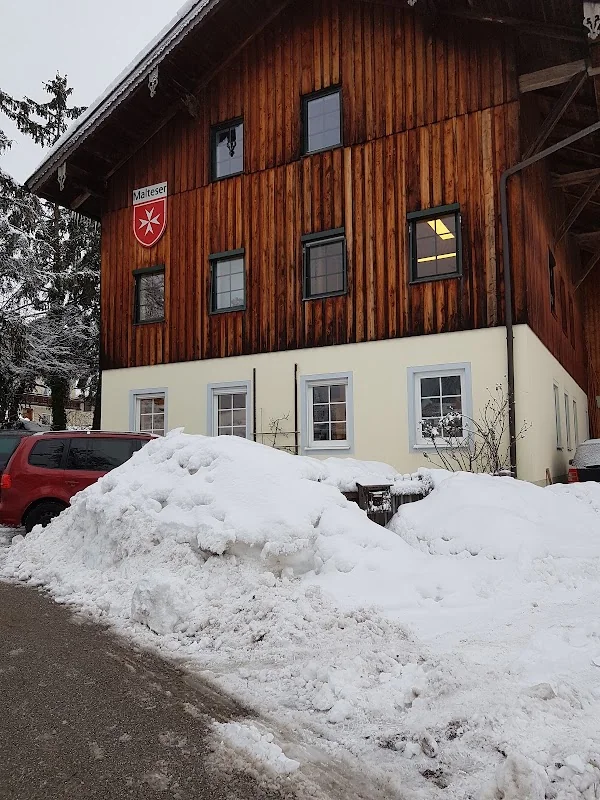
Traunstein
Axdorfer Str. 3A, 83278 Traunstein-Axdorf, Deutschland
Malteser Hilfsdienst Traunstein | Address & Services
The Malteser Hilfsdienst in Traunstein is a local point of contact for individuals, families, businesses, associations, and volunteers seeking support, training, or advice in the social and medical fields. The district office is located at Axdorfer Straße 3a in 83278 Traunstein. From here, various services and offerings in the district are coordinated, including first aid training, disaster relief, emergency call service, transportation service, meal service, visitation services, as well as offerings for children, teenagers, elderly people, and individuals in need of support.
Those looking for the address of the Malteser Hilfsdienst gemeinnützige GmbH, the contact information for the Malteser in Traunstein, or specific Malteser services will find important regional information at this location. The office can be reached by phone at 0861 986600 and by email at malteser.traunstein@malteser.org. The Malteser do not see themselves as a classic event or concert venue. Therefore, there is no public seating plan, no seating categories, and no cultural program like in a town hall. The focus is on assistance services, courses, readiness for deployment, counseling, and voluntary engagement.
The following information provides a detailed overview of the location, its tasks, and the most important search topics related to address, contact, offerings, and participation. Since course times, contact persons, and individual services may change, specific dates and organizational details should be confirmed directly with the office before a visit.
Malteser Hilfsdienst gemeinnützige GmbH Address and Contact in Traunstein
The Malteser district office Traunstein is located at Axdorfer Straße 3a, 83278 Traunstein. This address is the central regional reference point for many offerings of the Malteser Hilfsdienst in the district. Those wishing to book a first aid course, inquire about a social service, volunteer, or reach a personal contact person can initially contact the office. The central phone number is 0861 986600. The email address is malteser.traunstein@malteser.org.
For orientation, it is important to distinguish between the local district office and overarching Malteser structures. The address in Traunstein belongs to the regional network of the Malteser in the district of East Upper Bavaria. In Bavaria, there are also district, diocesan, regional, and state offices. Questions closely related to Traunstein should preferably be directed to the local office, while regional concerns may be forwarded to a responsible Bavarian or nationwide office.
The official location representation names Andreas Eder as district manager and Maximilian Rauecker as district representative. Additionally, there is a regional press contact for the district of East Upper Bavaria for press inquiries. The respective areas of responsibility show that the address in Traunstein is not just an administrative office. It serves as an organizational center for full-time employees, volunteer helpers, training offerings, and regional deployment structures.
Those wishing to visit the Malteser in person should clarify in advance whether the desired service is offered at Axdorfer Straße or whether another meeting point applies. Not every service is permanently available in the rooms of the district office. Courses may take place at different locations depending on the target group and date. Social offerings, deployments, and consultations can also be conducted by appointment or in cooperation with schools, institutions, municipalities, and other partners.
To prepare for a contact, it is advisable to describe the concern as precisely as possible. For a first aid course, for example, the desired type of course and the timeframe are important. For the emergency call service, it is about the living situation, health requirements, and desired accessibility. For a transportation service, the occasion, route, mobility, and necessary support should be mentioned. A clear inquiry makes it easier for the office to convey the appropriate contact person or the suitable offering.
Malteser Traunstein Services for Everyday Life, Safety, and Participation
The service offerings of the Malteser in Traunstein are diverse and combine medical assistance, social support, training, and voluntary engagement. The regional location page lists, among other things, first aid courses, emergency call service, transportation service, meal service, visitation services, youth and senior work, integration and inclusion offerings, as well as tasks in rescue and disaster relief. Thus, the office is not only aimed at people in acute emergencies but also at individuals who need more safety, mobility, or social closeness in everyday life.
The emergency call service is particularly relevant for elderly people and individuals with health risks. The offering aims to enable independent living in one's own home and to request quick support in emergencies. The specific technical equipment, accessibility, and further processes depend on the respective contract and personal situation. Therefore, individual counseling is important. Relatives can also obtain information if they are looking for a reliable solution for parents, grandparents, or other close individuals.
The transportation service supports individuals who need additional help for trips to medical, social, or everyday destinations. Which trips are possible depends on the regional capacities, requirements, and the respective booking. The meal service can also provide practical relief if regular shopping or cooking is temporarily or permanently difficult. Visitation services complement the practical offerings through personal, telephone, or animal-assisted contacts, provided a corresponding regional offering is available.
For children and teenagers, the Malteser are involved in schools, kindergartens, and daycare centers. The goal is to support young people in everyday life and promote their independent participation. Inclusion and integration offerings can help to break down barriers and organize individual support. Which specific service is available in Traunstein should be clarified directly with the office, as the scope and implementation depend on the needs and regional structures.
The Malteser also work with volunteers, supporting members, donors, and various institutions. Many offerings would not be possible to the same extent without voluntary involvement and financial support. Those who wish to engage can inquire about opportunities in training, visitation services, care, deployment services, youth groups, or social projects. Companies and associations can also contact the Malteser if they need first aid training, medical services, or information on emergency preparedness.
First Aid Courses and Training with the Malteser in Traunstein
The first aid training is one of the best-known tasks of the Malteser Hilfsdienst. In Traunstein and the surrounding region, courses and training offerings for different target groups are organized. This can include classic first aid courses for driver's license applicants, company first responders, associations, schools, educational institutions, and interested private individuals. The specific course selection, duration, participation requirements, and upcoming dates should always be checked via the current Malteser page or directly with the office.
A first aid course conveys practical basics for situations where quick help is necessary. Typical contents include recognizing acute dangers, making an emergency call, caring for injured persons, measures in case of unconsciousness, and resuscitation. Participants learn not only theoretical processes but also practice important techniques. This is intended to lower the threshold for actually helping in emergencies. The courses are also aimed at individuals without medical prior knowledge.
For businesses, training company first responders is an important topic. Companies must ensure that sufficient trained first responders are available, depending on size, risk assessment, and work organization. The Malteser can provide suitable course offerings and organizational information for this. Responsible persons should plan early so that first responder training, refreshers, and certifications can be organized in time.
Schools, daycare centers, and associations can also benefit from tailored courses. Children and teenagers need age-appropriate content, while educational professionals or trainers may have different focal points. In sports clubs, for example, injuries and quick first aid are the focus. In care facilities, the care of children who require special observation may play a larger role. The exact design should be coordinated with the respective course provider.
In addition to classic first aid topics, the Malteser are developing further educational offerings. The location page refers, among other things, to courses on first aid in mental emergencies and offerings on resilience and self-protection. Such training expands the view of emergencies because they do not only consider physical injuries. Especially in times of stress, crises, extreme weather, or societal burdens, knowledge about self-protection, communication, and psychological support can be helpful.
Those wishing to attend a course in Traunstein should pay attention to the exact course location when registering. The address of the district office is not automatically the venue for every single course. Depending on the date, the training may take place in the rooms of the Malteser or at another suitable location. Current information on dates, prices, available places, and participation certificates can be obtained directly from the respective course offering.
Disaster Relief, Medical Services, and Readiness in Traunstein
The Malteser in Traunstein also take on tasks in disaster and civil protection. The regional service page lists a rapid deployment group for care, a rapid deployment group for catering, a rapid deployment group for logistics and technology, as well as a specialist group for information and communication. These units can be alerted when additional forces and special skills are needed in larger damage situations.
The care group can support people in emergencies who have had to leave their homes or cannot be independently cared for temporarily. Depending on the situation, this includes organizing a care facility, providing necessary information, and assisting with accommodation. A catering unit can provide food and drinks to emergency personnel and affected individuals during longer deployments. The specific task always depends on the reason for the alert, the situation, and the deployment order.
Logistics and technology form an important basis for functioning assistance. Deployment materials must be transported, set up, operated, and later returned. Power supply, lighting, communication tools, and technical infrastructure can be crucial in deployment situations. The specialist group for information and communication supports the flow of information between emergency personnel, control centers, and involved organizations. Especially in larger or longer-lasting events, reliable communication is an essential part of coordination.
The Malteser do not work in civil protection in isolation. Deployments occur in cooperation with authorities, fire departments, rescue services, police, other aid organizations, and municipal offices. Regional aid contingents enable support to be provided outside one's own district in special situations. Volunteers must be trained, equipped, and regularly trained in processes and collaboration for this.
For citizens, disaster protection is often invisible as long as no extraordinary event occurs. However, readiness arises through regular training, material maintenance, exercises, and the willingness of volunteers to contribute their time. Those who wish to engage with the Malteser can inquire about entry opportunities. Depending on interest, activities in medical services, care, catering, logistics, communication, or youth work are possible.
Event organizers, associations, and institutions can also ask questions about medical services. For larger events, medical coverage may be required or advisable. Whether a service can be offered depends on the date, location, size, risk situation, and available personnel. Therefore, an early inquiry is recommended. The Malteser can then check what the needs are and what conditions need to be considered.
Emergency Call Service, Transportation Service, Meal Service, and Social Offerings
The social services of the Malteser in Traunstein support people in various life situations. A central idea is to offer help as close to home and as oriented to everyday life as possible. Not every support need is a medical emergency. Sometimes it is about living safely at home, reaching a doctor's appointment, regularly receiving a meal, or having more contact with other people. Many offerings address exactly this intersection between everyday life, care, health, and social participation.
The emergency call service can create a sense of security when people living alone fear they cannot call for help in an emergency in time. Through an emergency call system, a connection can be established to an emergency call center or to agreed contact persons. Which technology and process are used will be discussed individually. Interested parties should clarify whether an emergency call device, a mobile addition, or other options are needed. The Malteser provide information on requirements, costs, and possible subsidies.
The transportation service can assist people with limited mobility with necessary trips. Depending on the regional offering, trips to doctor's offices, clinics, therapies, authorities, or other important destinations may be possible. The specific implementation depends on the person's mobility, the required vehicle, the route, and the appointment situation. Timely registration is particularly important if aids, accompaniment, or special entry support are required.
The meal service is aimed at individuals who wish for regular provision of meals or cannot organize this themselves in everyday life. For some individuals, it is a temporary relief after an illness, while for others, it is a permanent support. Information on meal selection, delivery area, ordering deadlines, and prices may vary regionally. Therefore, interested parties should inquire about the current conditions directly with the responsible Malteser contact person.
Visitation services can reduce loneliness and promote social contacts. The Malteser mention personal, telephone, and visit-based offerings with dogs as possible forms. Whether such a service is available in Traunstein depends on local projects and volunteer capacities. A visitation service does not replace care or medical services. However, it can be a valuable addition when regular conversations, shared time, or small activities are desired.
Further focuses are on supporting families, children, teenagers, seniors, and individuals with disabilities or migration backgrounds. Individual support can take place, for example, in daycare centers or schools. Integration and inclusion work aims to enable participation and reduce existing barriers. Those seeking support should openly describe their personal situation. This way, it can be better assessed whether the Malteser can help themselves or whether a referral to another specialized agency makes sense.
Malteser in Bavaria, Traunstein, and Regional Cooperation
The Traunstein location is part of a larger Bavarian Malteser network. The Malteser name more than 120 locations in Bavaria, around 9,000 volunteers, and about 7,000 employees. The focuses include rescue and medical services, disaster and civil protection, first aid training, youth and senior work, transportation service, integration and inclusion work, emergency call service, meal service, and visitation services. The local office brings these overarching tasks into the Traunstein region.
In Bavaria, there are various organizational levels. These include the state and regional offices, diocesan offices, district offices, and individual district offices or service points. For Traunstein, the district of East Upper Bavaria is particularly relevant. The regional structure includes, among others, locations in Berchtesgadener Land, Rosenheim, Mühldorf, Ebersberg, Erding, Freising, and Traunstein. This cooperation facilitates the connection of expertise, deployment resources, and experiences across individual locations.
The Malteser also collaborate with municipal offices, social institutions, clinics, schools, kindergartens, businesses, associations, and other aid organizations. A social service rarely functions alone. For good provision, information must be shared, responsibilities clarified, and offerings coordinated. The district office can serve as the first orientation when a person does not yet know which service or institution is responsible.
The Malteser are organized both full-time and voluntarily. Full-time employees take on administration, counseling, deployment planning, training, and professional tasks. Volunteers engage, for example, in disaster protection, visitation services, events, youth work, or social projects. This mix enables continuity and personal closeness. However, it also means that individual offerings depend on available professionals, volunteers, and financial resources.
For the Traunstein location, it is therefore sensible to choose direct contact for current concerns. Opening hours, course dates, responsibilities, and available places may change. The official website of the location provides current information on services and contact persons. For press inquiries, donations, voluntary engagement, or specific assistance offerings, different contact persons may be responsible. A short phone call or written inquiry prevents unnecessary trips.
Those looking for reviews, photos, or entries regarding the Malteser Hilfsdienst gemeinnützige GmbH should also pay attention to whether the information actually refers to the district office in Traunstein. The Malteser have many locations in Germany and Bavaria. Search results for Cologne, Munich, Ingolstadt, Augsburg, Nuremberg, Regensburg, Berlin, or other cities may be organizationally connected to the Malteser but do not automatically describe the offerings in Traunstein. For regional information, the official location page, the imprint, and direct contact are the most reliable reference points.
Practical Tips for Visits, Inquiries, and Engagement
Before a visit to Axdorfer Straße 3a, the concern should be as concrete as possible. Those who only need general information can initially contact by phone or email. For courses, date, course type, and participation certificate are important details. For social services, information about the personal situation, support needs, and desired timeframe is helpful. For voluntary engagement, interested parties should indicate what time slots, skills, and interests they bring.
For individuals with mobility restrictions, it is advisable to inquire in advance about barrier-free access, parking options, and the suitable meeting point. The publicly available location information provides the address and contact details but does not contain detailed information about parking, building entrance, or spatial arrangements for every situation. Such details may change or depend on the respective offering. Therefore, a direct inquiry is more reliable than a general assumption.
The designation Malteser Hilfsdienst gemeinnützige GmbH can also lead to search queries. In regional imprint and location information, both the Malteser Hilfsdienst e.V. and the gemeinnützige GmbH sometimes appear. Both designations are related to the organization but may describe different legal or organizational tasks. In contracts, donations, course bookings, or official correspondence, the specific provider designation stated in the respective offering should always be used.
Those wishing to donate can inquire about the appropriate donation purpose and the responsible regional organization. Specific projects, such as crisis intervention, social services, or disaster protection, may have separate guidelines. A designated donation should be clearly labeled. For larger contributions or questions about donation receipts, direct coordination with the responsible Malteser office is advisable.
For companies and institutions, the Malteser can be contact persons for first aid training, medical services, emergency preparedness, and social cooperation. Schools and daycare centers can inquire about offerings for children, teenagers, and professionals. Associations may need support for training or events. Relatives can obtain information about emergency call service, transportation service, meal service, and visitation services. The appropriate solution often only emerges after a short conversation, as the requirements vary from person to person.
The Malteser Hilfsdienst in Traunstein thus stands for a combination of practical help, professional training, readiness for deployment, and human closeness. The address at Axdorfer Straße 3a is the regional starting point, but many services extend beyond that throughout the district. Those seeking help, wishing to book a course, wanting to engage, or needing social support will find a suitable first point of contact there. It is crucial to directly describe the specific concern and obtain current information on dates, responsibilities, and requirements.
Sources:
- Malteser in Traunstein – official location
- Services of the Malteser in Traunstein
- Malteser Traunstein – Imprint and Contact
- Malteser Locations in Bavaria
- Malteser in the Archdiocese of Munich and Freising – Local Locations
- Malteser in Bavaria – Tasks and Network
- Crisis Intervention in the Rescue Service Traunstein – Imprint
- Crisis Intervention in the Rescue Service Traunstein – Contact
Mehr anzeigenWeniger anzeigen
Malteser Hilfsdienst Traunstein | Address & Services
The Malteser Hilfsdienst in Traunstein is a local point of contact for individuals, families, businesses, associations, and volunteers seeking support, training, or advice in the social and medical fields. The district office is located at Axdorfer Straße 3a in 83278 Traunstein. From here, various services and offerings in the district are coordinated, including first aid training, disaster relief, emergency call service, transportation service, meal service, visitation services, as well as offerings for children, teenagers, elderly people, and individuals in need of support.
Those looking for the address of the Malteser Hilfsdienst gemeinnützige GmbH, the contact information for the Malteser in Traunstein, or specific Malteser services will find important regional information at this location. The office can be reached by phone at 0861 986600 and by email at malteser.traunstein@malteser.org. The Malteser do not see themselves as a classic event or concert venue. Therefore, there is no public seating plan, no seating categories, and no cultural program like in a town hall. The focus is on assistance services, courses, readiness for deployment, counseling, and voluntary engagement.
The following information provides a detailed overview of the location, its tasks, and the most important search topics related to address, contact, offerings, and participation. Since course times, contact persons, and individual services may change, specific dates and organizational details should be confirmed directly with the office before a visit.
Malteser Hilfsdienst gemeinnützige GmbH Address and Contact in Traunstein
The Malteser district office Traunstein is located at Axdorfer Straße 3a, 83278 Traunstein. This address is the central regional reference point for many offerings of the Malteser Hilfsdienst in the district. Those wishing to book a first aid course, inquire about a social service, volunteer, or reach a personal contact person can initially contact the office. The central phone number is 0861 986600. The email address is malteser.traunstein@malteser.org.
For orientation, it is important to distinguish between the local district office and overarching Malteser structures. The address in Traunstein belongs to the regional network of the Malteser in the district of East Upper Bavaria. In Bavaria, there are also district, diocesan, regional, and state offices. Questions closely related to Traunstein should preferably be directed to the local office, while regional concerns may be forwarded to a responsible Bavarian or nationwide office.
The official location representation names Andreas Eder as district manager and Maximilian Rauecker as district representative. Additionally, there is a regional press contact for the district of East Upper Bavaria for press inquiries. The respective areas of responsibility show that the address in Traunstein is not just an administrative office. It serves as an organizational center for full-time employees, volunteer helpers, training offerings, and regional deployment structures.
Those wishing to visit the Malteser in person should clarify in advance whether the desired service is offered at Axdorfer Straße or whether another meeting point applies. Not every service is permanently available in the rooms of the district office. Courses may take place at different locations depending on the target group and date. Social offerings, deployments, and consultations can also be conducted by appointment or in cooperation with schools, institutions, municipalities, and other partners.
To prepare for a contact, it is advisable to describe the concern as precisely as possible. For a first aid course, for example, the desired type of course and the timeframe are important. For the emergency call service, it is about the living situation, health requirements, and desired accessibility. For a transportation service, the occasion, route, mobility, and necessary support should be mentioned. A clear inquiry makes it easier for the office to convey the appropriate contact person or the suitable offering.
Malteser Traunstein Services for Everyday Life, Safety, and Participation
The service offerings of the Malteser in Traunstein are diverse and combine medical assistance, social support, training, and voluntary engagement. The regional location page lists, among other things, first aid courses, emergency call service, transportation service, meal service, visitation services, youth and senior work, integration and inclusion offerings, as well as tasks in rescue and disaster relief. Thus, the office is not only aimed at people in acute emergencies but also at individuals who need more safety, mobility, or social closeness in everyday life.
The emergency call service is particularly relevant for elderly people and individuals with health risks. The offering aims to enable independent living in one's own home and to request quick support in emergencies. The specific technical equipment, accessibility, and further processes depend on the respective contract and personal situation. Therefore, individual counseling is important. Relatives can also obtain information if they are looking for a reliable solution for parents, grandparents, or other close individuals.
The transportation service supports individuals who need additional help for trips to medical, social, or everyday destinations. Which trips are possible depends on the regional capacities, requirements, and the respective booking. The meal service can also provide practical relief if regular shopping or cooking is temporarily or permanently difficult. Visitation services complement the practical offerings through personal, telephone, or animal-assisted contacts, provided a corresponding regional offering is available.
For children and teenagers, the Malteser are involved in schools, kindergartens, and daycare centers. The goal is to support young people in everyday life and promote their independent participation. Inclusion and integration offerings can help to break down barriers and organize individual support. Which specific service is available in Traunstein should be clarified directly with the office, as the scope and implementation depend on the needs and regional structures.
The Malteser also work with volunteers, supporting members, donors, and various institutions. Many offerings would not be possible to the same extent without voluntary involvement and financial support. Those who wish to engage can inquire about opportunities in training, visitation services, care, deployment services, youth groups, or social projects. Companies and associations can also contact the Malteser if they need first aid training, medical services, or information on emergency preparedness.
First Aid Courses and Training with the Malteser in Traunstein
The first aid training is one of the best-known tasks of the Malteser Hilfsdienst. In Traunstein and the surrounding region, courses and training offerings for different target groups are organized. This can include classic first aid courses for driver's license applicants, company first responders, associations, schools, educational institutions, and interested private individuals. The specific course selection, duration, participation requirements, and upcoming dates should always be checked via the current Malteser page or directly with the office.
A first aid course conveys practical basics for situations where quick help is necessary. Typical contents include recognizing acute dangers, making an emergency call, caring for injured persons, measures in case of unconsciousness, and resuscitation. Participants learn not only theoretical processes but also practice important techniques. This is intended to lower the threshold for actually helping in emergencies. The courses are also aimed at individuals without medical prior knowledge.
For businesses, training company first responders is an important topic. Companies must ensure that sufficient trained first responders are available, depending on size, risk assessment, and work organization. The Malteser can provide suitable course offerings and organizational information for this. Responsible persons should plan early so that first responder training, refreshers, and certifications can be organized in time.
Schools, daycare centers, and associations can also benefit from tailored courses. Children and teenagers need age-appropriate content, while educational professionals or trainers may have different focal points. In sports clubs, for example, injuries and quick first aid are the focus. In care facilities, the care of children who require special observation may play a larger role. The exact design should be coordinated with the respective course provider.
In addition to classic first aid topics, the Malteser are developing further educational offerings. The location page refers, among other things, to courses on first aid in mental emergencies and offerings on resilience and self-protection. Such training expands the view of emergencies because they do not only consider physical injuries. Especially in times of stress, crises, extreme weather, or societal burdens, knowledge about self-protection, communication, and psychological support can be helpful.
Those wishing to attend a course in Traunstein should pay attention to the exact course location when registering. The address of the district office is not automatically the venue for every single course. Depending on the date, the training may take place in the rooms of the Malteser or at another suitable location. Current information on dates, prices, available places, and participation certificates can be obtained directly from the respective course offering.
Disaster Relief, Medical Services, and Readiness in Traunstein
The Malteser in Traunstein also take on tasks in disaster and civil protection. The regional service page lists a rapid deployment group for care, a rapid deployment group for catering, a rapid deployment group for logistics and technology, as well as a specialist group for information and communication. These units can be alerted when additional forces and special skills are needed in larger damage situations.
The care group can support people in emergencies who have had to leave their homes or cannot be independently cared for temporarily. Depending on the situation, this includes organizing a care facility, providing necessary information, and assisting with accommodation. A catering unit can provide food and drinks to emergency personnel and affected individuals during longer deployments. The specific task always depends on the reason for the alert, the situation, and the deployment order.
Logistics and technology form an important basis for functioning assistance. Deployment materials must be transported, set up, operated, and later returned. Power supply, lighting, communication tools, and technical infrastructure can be crucial in deployment situations. The specialist group for information and communication supports the flow of information between emergency personnel, control centers, and involved organizations. Especially in larger or longer-lasting events, reliable communication is an essential part of coordination.
The Malteser do not work in civil protection in isolation. Deployments occur in cooperation with authorities, fire departments, rescue services, police, other aid organizations, and municipal offices. Regional aid contingents enable support to be provided outside one's own district in special situations. Volunteers must be trained, equipped, and regularly trained in processes and collaboration for this.
For citizens, disaster protection is often invisible as long as no extraordinary event occurs. However, readiness arises through regular training, material maintenance, exercises, and the willingness of volunteers to contribute their time. Those who wish to engage with the Malteser can inquire about entry opportunities. Depending on interest, activities in medical services, care, catering, logistics, communication, or youth work are possible.
Event organizers, associations, and institutions can also ask questions about medical services. For larger events, medical coverage may be required or advisable. Whether a service can be offered depends on the date, location, size, risk situation, and available personnel. Therefore, an early inquiry is recommended. The Malteser can then check what the needs are and what conditions need to be considered.
Emergency Call Service, Transportation Service, Meal Service, and Social Offerings
The social services of the Malteser in Traunstein support people in various life situations. A central idea is to offer help as close to home and as oriented to everyday life as possible. Not every support need is a medical emergency. Sometimes it is about living safely at home, reaching a doctor's appointment, regularly receiving a meal, or having more contact with other people. Many offerings address exactly this intersection between everyday life, care, health, and social participation.
The emergency call service can create a sense of security when people living alone fear they cannot call for help in an emergency in time. Through an emergency call system, a connection can be established to an emergency call center or to agreed contact persons. Which technology and process are used will be discussed individually. Interested parties should clarify whether an emergency call device, a mobile addition, or other options are needed. The Malteser provide information on requirements, costs, and possible subsidies.
The transportation service can assist people with limited mobility with necessary trips. Depending on the regional offering, trips to doctor's offices, clinics, therapies, authorities, or other important destinations may be possible. The specific implementation depends on the person's mobility, the required vehicle, the route, and the appointment situation. Timely registration is particularly important if aids, accompaniment, or special entry support are required.
The meal service is aimed at individuals who wish for regular provision of meals or cannot organize this themselves in everyday life. For some individuals, it is a temporary relief after an illness, while for others, it is a permanent support. Information on meal selection, delivery area, ordering deadlines, and prices may vary regionally. Therefore, interested parties should inquire about the current conditions directly with the responsible Malteser contact person.
Visitation services can reduce loneliness and promote social contacts. The Malteser mention personal, telephone, and visit-based offerings with dogs as possible forms. Whether such a service is available in Traunstein depends on local projects and volunteer capacities. A visitation service does not replace care or medical services. However, it can be a valuable addition when regular conversations, shared time, or small activities are desired.
Further focuses are on supporting families, children, teenagers, seniors, and individuals with disabilities or migration backgrounds. Individual support can take place, for example, in daycare centers or schools. Integration and inclusion work aims to enable participation and reduce existing barriers. Those seeking support should openly describe their personal situation. This way, it can be better assessed whether the Malteser can help themselves or whether a referral to another specialized agency makes sense.
Malteser in Bavaria, Traunstein, and Regional Cooperation
The Traunstein location is part of a larger Bavarian Malteser network. The Malteser name more than 120 locations in Bavaria, around 9,000 volunteers, and about 7,000 employees. The focuses include rescue and medical services, disaster and civil protection, first aid training, youth and senior work, transportation service, integration and inclusion work, emergency call service, meal service, and visitation services. The local office brings these overarching tasks into the Traunstein region.
In Bavaria, there are various organizational levels. These include the state and regional offices, diocesan offices, district offices, and individual district offices or service points. For Traunstein, the district of East Upper Bavaria is particularly relevant. The regional structure includes, among others, locations in Berchtesgadener Land, Rosenheim, Mühldorf, Ebersberg, Erding, Freising, and Traunstein. This cooperation facilitates the connection of expertise, deployment resources, and experiences across individual locations.
The Malteser also collaborate with municipal offices, social institutions, clinics, schools, kindergartens, businesses, associations, and other aid organizations. A social service rarely functions alone. For good provision, information must be shared, responsibilities clarified, and offerings coordinated. The district office can serve as the first orientation when a person does not yet know which service or institution is responsible.
The Malteser are organized both full-time and voluntarily. Full-time employees take on administration, counseling, deployment planning, training, and professional tasks. Volunteers engage, for example, in disaster protection, visitation services, events, youth work, or social projects. This mix enables continuity and personal closeness. However, it also means that individual offerings depend on available professionals, volunteers, and financial resources.
For the Traunstein location, it is therefore sensible to choose direct contact for current concerns. Opening hours, course dates, responsibilities, and available places may change. The official website of the location provides current information on services and contact persons. For press inquiries, donations, voluntary engagement, or specific assistance offerings, different contact persons may be responsible. A short phone call or written inquiry prevents unnecessary trips.
Those looking for reviews, photos, or entries regarding the Malteser Hilfsdienst gemeinnützige GmbH should also pay attention to whether the information actually refers to the district office in Traunstein. The Malteser have many locations in Germany and Bavaria. Search results for Cologne, Munich, Ingolstadt, Augsburg, Nuremberg, Regensburg, Berlin, or other cities may be organizationally connected to the Malteser but do not automatically describe the offerings in Traunstein. For regional information, the official location page, the imprint, and direct contact are the most reliable reference points.
Practical Tips for Visits, Inquiries, and Engagement
Before a visit to Axdorfer Straße 3a, the concern should be as concrete as possible. Those who only need general information can initially contact by phone or email. For courses, date, course type, and participation certificate are important details. For social services, information about the personal situation, support needs, and desired timeframe is helpful. For voluntary engagement, interested parties should indicate what time slots, skills, and interests they bring.
For individuals with mobility restrictions, it is advisable to inquire in advance about barrier-free access, parking options, and the suitable meeting point. The publicly available location information provides the address and contact details but does not contain detailed information about parking, building entrance, or spatial arrangements for every situation. Such details may change or depend on the respective offering. Therefore, a direct inquiry is more reliable than a general assumption.
The designation Malteser Hilfsdienst gemeinnützige GmbH can also lead to search queries. In regional imprint and location information, both the Malteser Hilfsdienst e.V. and the gemeinnützige GmbH sometimes appear. Both designations are related to the organization but may describe different legal or organizational tasks. In contracts, donations, course bookings, or official correspondence, the specific provider designation stated in the respective offering should always be used.
Those wishing to donate can inquire about the appropriate donation purpose and the responsible regional organization. Specific projects, such as crisis intervention, social services, or disaster protection, may have separate guidelines. A designated donation should be clearly labeled. For larger contributions or questions about donation receipts, direct coordination with the responsible Malteser office is advisable.
For companies and institutions, the Malteser can be contact persons for first aid training, medical services, emergency preparedness, and social cooperation. Schools and daycare centers can inquire about offerings for children, teenagers, and professionals. Associations may need support for training or events. Relatives can obtain information about emergency call service, transportation service, meal service, and visitation services. The appropriate solution often only emerges after a short conversation, as the requirements vary from person to person.
The Malteser Hilfsdienst in Traunstein thus stands for a combination of practical help, professional training, readiness for deployment, and human closeness. The address at Axdorfer Straße 3a is the regional starting point, but many services extend beyond that throughout the district. Those seeking help, wishing to book a course, wanting to engage, or needing social support will find a suitable first point of contact there. It is crucial to directly describe the specific concern and obtain current information on dates, responsibilities, and requirements.
Sources:
- Malteser in Traunstein – official location
- Services of the Malteser in Traunstein
- Malteser Traunstein – Imprint and Contact
- Malteser Locations in Bavaria
- Malteser in the Archdiocese of Munich and Freising – Local Locations
- Malteser in Bavaria – Tasks and Network
- Crisis Intervention in the Rescue Service Traunstein – Imprint
- Crisis Intervention in the Rescue Service Traunstein – Contact
Frequently Asked Questions
Reviews
No reviews found