
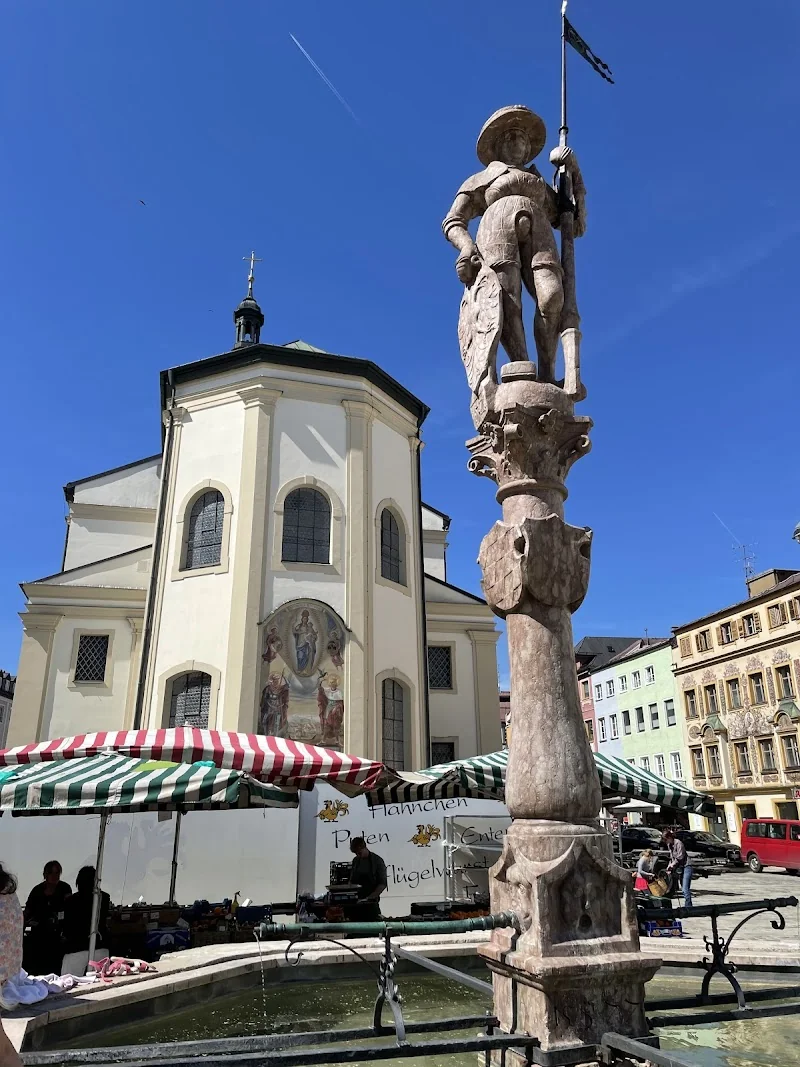
Stadtpl., Traunstein
Stadtpl., 83278 Traunstein, Germany
Lindlbrunnen | History & Parking
The Lindlbrunnen is one of the places in Traunstein where city history is not only explained but also immediately visible. In the middle of the town square stands the city's landmark as a distinctive meeting point between the historic old town, cafés, shops, and the paths of many visitors. The life-sized knight figure made of red Ruhpolding marble dates back to 1526 and makes the fountain an impressive monument with high identification power. At the same time, the Lindlbrunnen is more than just a beautiful photo opportunity: it represents the long tradition of fountains in the town square, the development of Traunstein as a historical trading place, and the special connection between urban image, memory, and everyday life. Therefore, those who visit the fountain do not simply stand at a decorative water point, but at a place where the history of the city has condensed over centuries. This is precisely why many people search for terms like Lindlbrunnen Traunstein, Lindlbrunnen history, town square Traunstein, or directions and parking when they want to better understand the place and meaningfully incorporate it into their city stroll. ([traunstein.de](https://www.traunstein.de/kultur-brauchtum/stadtgeschichte/wahrzeichen/lindlbrunnen/))
History of the Lindlbrunnen in Traunstein
The history of the Lindlbrunnen does not begin with the current figure but with a long series of fountains in the Traunstein town square. Until the 19th century, three fountains supplied the citizens with water and were also important places for communication and social life. In early documents, they were simply referred to as the upper, middle, and lower fountain. The Lindlbrunnen is the middle one and the only one of this historical group that has been preserved. Its current figure was created in 1526; according to current research, the sculptor is very likely to be identical to the Landshut master Stephan Rottaler. The material is red Ruhpolding marble, which gives the figure its special effect. The knight wears a Maximilian armor and thus represents a confident image of urban order and representation in the 16th century. The four coat of arms shields on the shaft clearly show how strongly the fountain was integrated into the political and cultural symbolism of its time. The name Lindl is also interesting: it only became established in the 19th century and originally referred generally to a male secular statue. This linguistic explanation is simple but fitting for a monument that appears both sober and impressive. The Lindlbrunnen is thus not just any decorative object but a historical sign that has taken on new meanings over centuries. ([traunstein.de](https://www.traunstein.de/kultur-brauchtum/stadtgeschichte/wahrzeichen/lindlbrunnen/))
Equally important is the architectural development of the fountain. The fountain chamber and the surrounding area were initially made of oak wood but were replaced by a stone solution in 1646. The fountain body, as it presents itself today, is therefore the result of several epochs. Particularly exciting is that the fountain system cannot be viewed in isolation but is part of the entire history of the town square. According to historical sources, the town square was reorganized and renovated in 1999; in this context, the current continuation of the fountain tradition was also created. The city describes this redesign as an important quality leap because it has made the square a lively center with appealing architecture, cafés, and shops. This is precisely where the special charm of the Lindlbrunnen lies: it is old yet present in the active urban space. Those who visit it experience history not behind barriers but in the everyday life of the city. This also explains why the term Lindlbrunnen Traunstein is so often combined with themes like town square, attraction, history, and old town. The fountain is a symbol, a meeting point, and a monument at the same time. ([traunstein.de](https://www.traunstein.de/kultur-brauchtum/stadtgeschichte/wahrzeichen/lindlbrunnen/))
Lindlbrunnen at the Town Square: Location, Directions, and Parking
For visitors, the location of the Lindlbrunnen is one of its greatest advantages. It stands directly at the town square, in the heart of Traunstein, making it very easy to incorporate into a tour of the city center. Traunstein is accessible by train from many parts of Germany, and for drivers, the city offers around 3,000 centrally located parking spaces in parking garages, underground garages, and public parking lots. Additionally, elevators make the journey from the lower-lying town to the center easier. This infrastructure makes visiting the Lindlbrunnen uncomplicated, even if one does not arrive directly in the pedestrian zone. The specific parking options are particularly helpful: the parking tunnel at the train station is designated as P1, the town hall center underground garage as P2, and the parking lot center or Karl-Theodor-Platz as another central option. In the city center, a maximum parking duration of two hours usually applies, 30 minutes at the train station; for vehicles with an electric license plate, up to three hours are free at Karl-Theodor-Platz. Therefore, anyone wishing to visit the Lindlbrunnen can comfortably reach the town square with little walking distance. This is a practical advantage if one wants to combine the visit with a café visit, a city tour, or a shopping trip. ([traunstein.de](https://www.traunstein.de/stadtentwicklung-wirtschaft/wirtschaftsstandort/verkehr-infrastruktur/))
Especially for search intentions related to Lindlbrunnen directions, Lindlbrunnen parking, or town square Traunstein, this location is crucial. The fountain is not located at a peripheral attraction but in the central axis of urban life. Upon arrival, one finds oneself immediately in an environment characterized by historical buildings, public life, and tourist orientation. The city recommends centrally located parking spaces because from there one can quickly walk into the city center. Public transport is also a good option, as Traunstein is well connected. For many guests, the simplest process is: park at the train station or in the city center, walk the short distance to the town square, and use the Lindlbrunnen as a starting point for further discoveries. Those traveling with children or planning a barrier-free day trip also benefit from this central location, as the place can be reached without long preparation. Especially in connection with city tours or the weekly market, the fountain reveals its character as a place right in the midst of life. Thus, a simple attraction becomes a well-accessible focal point for the entire visit to Traunstein. ([traunstein.de](https://www.traunstein.de/tourismus-freizeit/einkaufen-shopping/parken-in-traunstein/))
The Historical Draw Well Under the Lindl
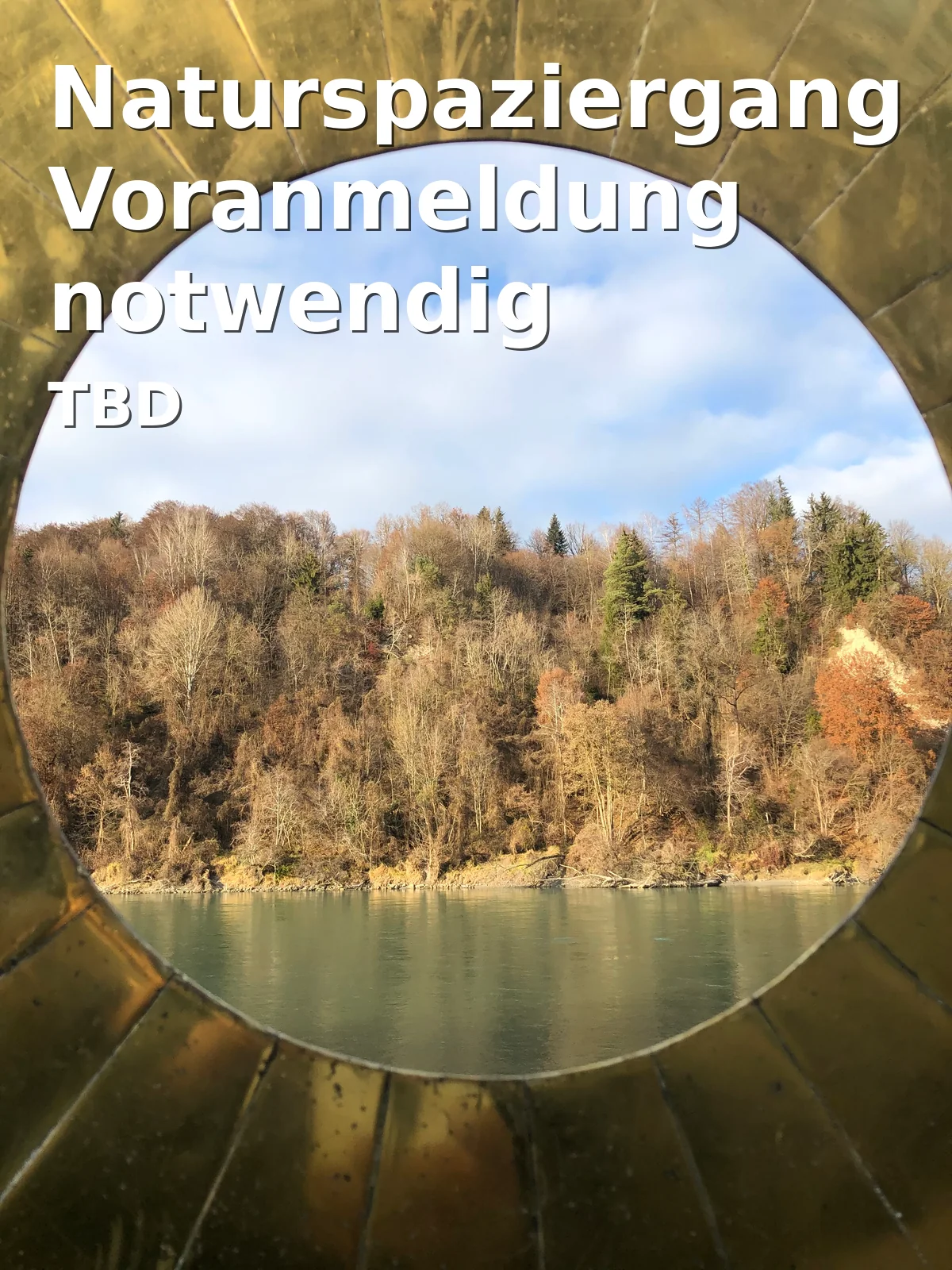
A special charm of the Lindlbrunnen lies in the fact that it not only has a visible surface but also an archaeological depth. During the renovation of the town square in 1998, a shaft was discovered that is considered a draw or extraction well from the time of the city's founding around 1300. Thus, a very early predecessor of the current fountain has been preserved, which had long been hidden and is now regarded as a small sensation in the city's history. The structure of this older fountain was demolished in 1525, and the shaft itself later served for a long time as a quiet reserve and was apparently also used as a deposition site in the 17th and 18th centuries. This makes the find so exciting: its contents included everyday objects, coins, and food waste from the early modern period, which provide direct insights into the bourgeois life of past centuries. Such finds tell history not abstractly but very concretely about what people owned, consumed, and discarded. Today, a bronze cylinder with a glass cover protects the late medieval shaft and makes the depth visible to visitors. The Lindlbrunnen is therefore not only a beautiful monument at street level but also a place where archaeology, urban development, and memory come together in a special way. For search terms like historical draw well, Lindlbrunnen history, or Lindlbrunnen Traunstein, this aspect is crucial. ([traunstein.de](https://www.traunstein.de/kultur-brauchtum/stadtgeschichte/wahrzeichen/lindlbrunnen/))
When one views the fountain in the urban landscape, one sees only a part of its history. The actual added value lies in the fact that the city has made a historical layering visible at this point: the medieval origin, the early modern redesign, the modern archaeological securing, and the current use as a landmark. This is a strong example of how a public space connects multiple temporal levels. The Lindlbrunnen tells of water supply, of social interaction in the square, of urban representation, and of a present that does not obscure historical traces but consciously integrates them into the urban image. The combination of the knight figure and the visible shaft makes the place memorable for many visitors. One immediately recognizes: This is not just about aesthetics but about substance. For this reason, the Lindlbrunnen can be excellently incorporated into a tour where one not only looks at the old town but understands it in its historical depth. Those interested in city history receive a particularly compact and vivid access to Traunstein at this point. ([traunstein.de](https://www.traunstein.de/kultur-brauchtum/stadtgeschichte/wahrzeichen/lindlbrunnen/))
City Walks, Attractions, and Tours Around the Lindlbrunnen
The Lindlbrunnen is not only an attraction in itself but also a starting and orientation point for further discoveries in Traunstein. The official city walk begins at the town square with the parish church of St. Oswald, the Lindlbrunnen, and the Jacklturm. From there, the circular route continues past the cultural forum monastery church towards the city park and finally down to the Au to the saline chapel, the saline houses, and the saline park established in 2019. This makes it clear how strongly the fountain is integrated into the city's tourist narrative. It is not just an individual motif but part of a path along which Traunstein's history unfolds from the medieval city through the salt history to the modern park landscape. For search queries like Traunstein attractions, city walk Traunstein, or Lindlbrunnen town square, this is an important context. Therefore, when visiting the fountain, one can take away multiple levels: the historic city center, the sacred and defensive architecture, the salt past, and the present city design. This gives the place much more significance than just a fountain square. It becomes the starting point of an entire urban image that can be experienced very well on foot. ([traunstein.de](https://www.traunstein.de/tourismus-freizeit/traunsteiner-stadtfuehrungen/stadtrundgaenge-auf-eigene-faust/stadtspaziergang-ein-rundweg-durch-traunstein/))
The history of the city itself also adds depth to the walk. Traunstein was first mentioned in a document in 1245 and finally became part of Bavaria in 1275. The city is historically closely linked to the salt trade, and this past still shapes the appearance of the center today. When standing at the Lindlbrunnen, one is at a place where medieval development, urban self-assertion, and modern use come together directly. The city tours make this interplay consciously visible: the Lindlbrunnen is the first eye-catcher but not the last. It connects the stations of the old town, city park, and saline area into a comprehensible route. For visitors, this is particularly pleasant because one can learn a lot about Traunstein without complicated planning. At the same time, the path is well suited for breaks: the center invites with shops and cafés to linger, and the town square has been described as a pleasant place to stay after its redesign. Therefore, whether one uses the Lindlbrunnen as a photo destination, starting point, or historical focal point, one experiences Traunstein in a way that is both compact and rich in content. ([traunstein.de](https://www.traunstein.de/tourismus-freizeit/traunsteiner-stadtfuehrungen/stadtrundgaenge-auf-eigene-faust/stadtspaziergang-ein-rundweg-durch-traunstein/))
Lindl Quiz, Tours, and Vibrant Urban Culture
Around the Lindlbrunnen, there is not only history to be found but also a lively offer for families and guests. The Lindl Quiz of the city of Traunstein invites children to discover the city on their own. Equipped with a special map and colored pencils, which are available for free at the tourist information, they explore Traunstein on a round tour with 13 stations and solve a riddle at each point. The city explicitly emphasizes that the Lindl, as a landmark, accompanies the children through the city. This makes the fountain a sympathetic starting point for a family outing where learning and movement go hand in hand. Those traveling with children can therefore easily combine the visit to the Lindlbrunnen with a playful city exploration. The nature walk also relies on this meeting point: there, the Lindlbrunnen at the town square is the official starting point, and participants explore the old town, the Traun meadows, and the wine slope from there. Additionally, there is a suitable city walk with information about the attractions so that adults are not left out. For search terms like Lindl Quiz Traunstein, nature walk Traunstein, or city tour Traunstein, the fountain is therefore a clear anchor point in the city's tourist offerings. ([traunstein.de](https://www.traunstein.de/tourismus-freizeit/traunsteiner-sehenswuerdigkeiten/lindl-quiz/))
Furthermore, the name Lindl also continues culturally in Traunstein. The city awards the Traunsteiner Lindl folk music hiking prize every year, which stands for genuine and unadulterated folk music. Thus, the Lindl is not only a fountain figure and monument but also a cultural symbol that is still used today. This connection between landmark and music prize shows how strongly the term Lindl has become rooted in Traunstein. It stands for home, memory, and regional identity. This is precisely what is interesting for SEO and visitor guidance: those searching for Lindlbrunnen, Traunsteiner Lindl, or Lindl Traunstein often want not just an address but a contextualization in the local context. The fountain is part of a cultural network of city tours, historical walks, family offerings, and recurring events. This makes it a place that goes far beyond its architectural function. It is a symbol filled with life and a meeting point where one understands Traunstein on multiple levels. ([traunstein.de](https://www.traunstein.de/kultur-brauchtum/kultur/konzertreihen-veranstaltungen/traunsteiner-lindl/?utm_source=openai))
Visiting Tips for the Lindlbrunnen in the Center of Traunstein
For a successful visit, it is worthwhile to plan the Lindlbrunnen as part of a larger city center experience. Due to its location at the town square, it can be very well combined with a stroll through the old town. The city describes the newly designed square as a place with appealing architecture, cafés, and shops, making the fountain an ideal meeting point. It is particularly pleasant to combine the visit with a city walk or simply to pause briefly on the way between the train station, town hall center, and old town. Those who enjoy visiting markets will also find an additional reason at the town square: every Friday from 9 a.m. to 3 p.m., the farmers' market takes place there. This gives the square an everyday liveliness that fits well with a landmark that has emerged from the use of public space. The Lindlbrunnen therefore does not appear museum-like and isolated but is right in the midst of urban life. This is what makes it so interesting for guests seeking an authentic city center atmosphere. The place is suitable for both a quick photo and a longer historical discovery. Those who arrive early can experience the square in peace; those who come later will experience it as part of a vibrant urban event. ([traunstein.de](https://www.traunstein.de/stadtentwicklung-wirtschaft/wirtschaftsstandort/verkehr-infrastruktur/))
It is particularly sensible to connect the visit with a clear route. Those arriving by car should choose one of the centrally located parking options and keep an eye on the respective maximum parking duration. Those walking can easily reach the fountain from the train station, tourist information, or the pedestrian zone. Families benefit from the Lindl Quiz, nature lovers from the nature walk, and history enthusiasts from the city walk with its stations around the church, tower, and saline area. Thus, the Lindlbrunnen becomes a hub where different interests meet. It is a monument, a point of orientation, and a place of identity at the same time. Those who visit it discover not only a fountain but a significant slice of Traunstein's history and present. Especially for travelers seeking attractions with short walking distances and high historical density, the Lindlbrunnen is a worthwhile destination. It offers the rare advantage of learning a lot about the city within a few minutes without long distances or complicated planning. This makes it a particularly practical landmark that works very well both locally and touristically. ([traunstein.de](https://www.traunstein.de/tourismus-freizeit/einkaufen-shopping/parken-in-traunstein/))
Sources:
Mehr anzeigenWeniger anzeigen
Lindlbrunnen | History & Parking
The Lindlbrunnen is one of the places in Traunstein where city history is not only explained but also immediately visible. In the middle of the town square stands the city's landmark as a distinctive meeting point between the historic old town, cafés, shops, and the paths of many visitors. The life-sized knight figure made of red Ruhpolding marble dates back to 1526 and makes the fountain an impressive monument with high identification power. At the same time, the Lindlbrunnen is more than just a beautiful photo opportunity: it represents the long tradition of fountains in the town square, the development of Traunstein as a historical trading place, and the special connection between urban image, memory, and everyday life. Therefore, those who visit the fountain do not simply stand at a decorative water point, but at a place where the history of the city has condensed over centuries. This is precisely why many people search for terms like Lindlbrunnen Traunstein, Lindlbrunnen history, town square Traunstein, or directions and parking when they want to better understand the place and meaningfully incorporate it into their city stroll. ([traunstein.de](https://www.traunstein.de/kultur-brauchtum/stadtgeschichte/wahrzeichen/lindlbrunnen/))
History of the Lindlbrunnen in Traunstein
The history of the Lindlbrunnen does not begin with the current figure but with a long series of fountains in the Traunstein town square. Until the 19th century, three fountains supplied the citizens with water and were also important places for communication and social life. In early documents, they were simply referred to as the upper, middle, and lower fountain. The Lindlbrunnen is the middle one and the only one of this historical group that has been preserved. Its current figure was created in 1526; according to current research, the sculptor is very likely to be identical to the Landshut master Stephan Rottaler. The material is red Ruhpolding marble, which gives the figure its special effect. The knight wears a Maximilian armor and thus represents a confident image of urban order and representation in the 16th century. The four coat of arms shields on the shaft clearly show how strongly the fountain was integrated into the political and cultural symbolism of its time. The name Lindl is also interesting: it only became established in the 19th century and originally referred generally to a male secular statue. This linguistic explanation is simple but fitting for a monument that appears both sober and impressive. The Lindlbrunnen is thus not just any decorative object but a historical sign that has taken on new meanings over centuries. ([traunstein.de](https://www.traunstein.de/kultur-brauchtum/stadtgeschichte/wahrzeichen/lindlbrunnen/))
Equally important is the architectural development of the fountain. The fountain chamber and the surrounding area were initially made of oak wood but were replaced by a stone solution in 1646. The fountain body, as it presents itself today, is therefore the result of several epochs. Particularly exciting is that the fountain system cannot be viewed in isolation but is part of the entire history of the town square. According to historical sources, the town square was reorganized and renovated in 1999; in this context, the current continuation of the fountain tradition was also created. The city describes this redesign as an important quality leap because it has made the square a lively center with appealing architecture, cafés, and shops. This is precisely where the special charm of the Lindlbrunnen lies: it is old yet present in the active urban space. Those who visit it experience history not behind barriers but in the everyday life of the city. This also explains why the term Lindlbrunnen Traunstein is so often combined with themes like town square, attraction, history, and old town. The fountain is a symbol, a meeting point, and a monument at the same time. ([traunstein.de](https://www.traunstein.de/kultur-brauchtum/stadtgeschichte/wahrzeichen/lindlbrunnen/))
Lindlbrunnen at the Town Square: Location, Directions, and Parking
For visitors, the location of the Lindlbrunnen is one of its greatest advantages. It stands directly at the town square, in the heart of Traunstein, making it very easy to incorporate into a tour of the city center. Traunstein is accessible by train from many parts of Germany, and for drivers, the city offers around 3,000 centrally located parking spaces in parking garages, underground garages, and public parking lots. Additionally, elevators make the journey from the lower-lying town to the center easier. This infrastructure makes visiting the Lindlbrunnen uncomplicated, even if one does not arrive directly in the pedestrian zone. The specific parking options are particularly helpful: the parking tunnel at the train station is designated as P1, the town hall center underground garage as P2, and the parking lot center or Karl-Theodor-Platz as another central option. In the city center, a maximum parking duration of two hours usually applies, 30 minutes at the train station; for vehicles with an electric license plate, up to three hours are free at Karl-Theodor-Platz. Therefore, anyone wishing to visit the Lindlbrunnen can comfortably reach the town square with little walking distance. This is a practical advantage if one wants to combine the visit with a café visit, a city tour, or a shopping trip. ([traunstein.de](https://www.traunstein.de/stadtentwicklung-wirtschaft/wirtschaftsstandort/verkehr-infrastruktur/))
Especially for search intentions related to Lindlbrunnen directions, Lindlbrunnen parking, or town square Traunstein, this location is crucial. The fountain is not located at a peripheral attraction but in the central axis of urban life. Upon arrival, one finds oneself immediately in an environment characterized by historical buildings, public life, and tourist orientation. The city recommends centrally located parking spaces because from there one can quickly walk into the city center. Public transport is also a good option, as Traunstein is well connected. For many guests, the simplest process is: park at the train station or in the city center, walk the short distance to the town square, and use the Lindlbrunnen as a starting point for further discoveries. Those traveling with children or planning a barrier-free day trip also benefit from this central location, as the place can be reached without long preparation. Especially in connection with city tours or the weekly market, the fountain reveals its character as a place right in the midst of life. Thus, a simple attraction becomes a well-accessible focal point for the entire visit to Traunstein. ([traunstein.de](https://www.traunstein.de/tourismus-freizeit/einkaufen-shopping/parken-in-traunstein/))
The Historical Draw Well Under the Lindl
A special charm of the Lindlbrunnen lies in the fact that it not only has a visible surface but also an archaeological depth. During the renovation of the town square in 1998, a shaft was discovered that is considered a draw or extraction well from the time of the city's founding around 1300. Thus, a very early predecessor of the current fountain has been preserved, which had long been hidden and is now regarded as a small sensation in the city's history. The structure of this older fountain was demolished in 1525, and the shaft itself later served for a long time as a quiet reserve and was apparently also used as a deposition site in the 17th and 18th centuries. This makes the find so exciting: its contents included everyday objects, coins, and food waste from the early modern period, which provide direct insights into the bourgeois life of past centuries. Such finds tell history not abstractly but very concretely about what people owned, consumed, and discarded. Today, a bronze cylinder with a glass cover protects the late medieval shaft and makes the depth visible to visitors. The Lindlbrunnen is therefore not only a beautiful monument at street level but also a place where archaeology, urban development, and memory come together in a special way. For search terms like historical draw well, Lindlbrunnen history, or Lindlbrunnen Traunstein, this aspect is crucial. ([traunstein.de](https://www.traunstein.de/kultur-brauchtum/stadtgeschichte/wahrzeichen/lindlbrunnen/))
When one views the fountain in the urban landscape, one sees only a part of its history. The actual added value lies in the fact that the city has made a historical layering visible at this point: the medieval origin, the early modern redesign, the modern archaeological securing, and the current use as a landmark. This is a strong example of how a public space connects multiple temporal levels. The Lindlbrunnen tells of water supply, of social interaction in the square, of urban representation, and of a present that does not obscure historical traces but consciously integrates them into the urban image. The combination of the knight figure and the visible shaft makes the place memorable for many visitors. One immediately recognizes: This is not just about aesthetics but about substance. For this reason, the Lindlbrunnen can be excellently incorporated into a tour where one not only looks at the old town but understands it in its historical depth. Those interested in city history receive a particularly compact and vivid access to Traunstein at this point. ([traunstein.de](https://www.traunstein.de/kultur-brauchtum/stadtgeschichte/wahrzeichen/lindlbrunnen/))
City Walks, Attractions, and Tours Around the Lindlbrunnen
The Lindlbrunnen is not only an attraction in itself but also a starting and orientation point for further discoveries in Traunstein. The official city walk begins at the town square with the parish church of St. Oswald, the Lindlbrunnen, and the Jacklturm. From there, the circular route continues past the cultural forum monastery church towards the city park and finally down to the Au to the saline chapel, the saline houses, and the saline park established in 2019. This makes it clear how strongly the fountain is integrated into the city's tourist narrative. It is not just an individual motif but part of a path along which Traunstein's history unfolds from the medieval city through the salt history to the modern park landscape. For search queries like Traunstein attractions, city walk Traunstein, or Lindlbrunnen town square, this is an important context. Therefore, when visiting the fountain, one can take away multiple levels: the historic city center, the sacred and defensive architecture, the salt past, and the present city design. This gives the place much more significance than just a fountain square. It becomes the starting point of an entire urban image that can be experienced very well on foot. ([traunstein.de](https://www.traunstein.de/tourismus-freizeit/traunsteiner-stadtfuehrungen/stadtrundgaenge-auf-eigene-faust/stadtspaziergang-ein-rundweg-durch-traunstein/))
The history of the city itself also adds depth to the walk. Traunstein was first mentioned in a document in 1245 and finally became part of Bavaria in 1275. The city is historically closely linked to the salt trade, and this past still shapes the appearance of the center today. When standing at the Lindlbrunnen, one is at a place where medieval development, urban self-assertion, and modern use come together directly. The city tours make this interplay consciously visible: the Lindlbrunnen is the first eye-catcher but not the last. It connects the stations of the old town, city park, and saline area into a comprehensible route. For visitors, this is particularly pleasant because one can learn a lot about Traunstein without complicated planning. At the same time, the path is well suited for breaks: the center invites with shops and cafés to linger, and the town square has been described as a pleasant place to stay after its redesign. Therefore, whether one uses the Lindlbrunnen as a photo destination, starting point, or historical focal point, one experiences Traunstein in a way that is both compact and rich in content. ([traunstein.de](https://www.traunstein.de/tourismus-freizeit/traunsteiner-stadtfuehrungen/stadtrundgaenge-auf-eigene-faust/stadtspaziergang-ein-rundweg-durch-traunstein/))
Lindl Quiz, Tours, and Vibrant Urban Culture
Around the Lindlbrunnen, there is not only history to be found but also a lively offer for families and guests. The Lindl Quiz of the city of Traunstein invites children to discover the city on their own. Equipped with a special map and colored pencils, which are available for free at the tourist information, they explore Traunstein on a round tour with 13 stations and solve a riddle at each point. The city explicitly emphasizes that the Lindl, as a landmark, accompanies the children through the city. This makes the fountain a sympathetic starting point for a family outing where learning and movement go hand in hand. Those traveling with children can therefore easily combine the visit to the Lindlbrunnen with a playful city exploration. The nature walk also relies on this meeting point: there, the Lindlbrunnen at the town square is the official starting point, and participants explore the old town, the Traun meadows, and the wine slope from there. Additionally, there is a suitable city walk with information about the attractions so that adults are not left out. For search terms like Lindl Quiz Traunstein, nature walk Traunstein, or city tour Traunstein, the fountain is therefore a clear anchor point in the city's tourist offerings. ([traunstein.de](https://www.traunstein.de/tourismus-freizeit/traunsteiner-sehenswuerdigkeiten/lindl-quiz/))
Furthermore, the name Lindl also continues culturally in Traunstein. The city awards the Traunsteiner Lindl folk music hiking prize every year, which stands for genuine and unadulterated folk music. Thus, the Lindl is not only a fountain figure and monument but also a cultural symbol that is still used today. This connection between landmark and music prize shows how strongly the term Lindl has become rooted in Traunstein. It stands for home, memory, and regional identity. This is precisely what is interesting for SEO and visitor guidance: those searching for Lindlbrunnen, Traunsteiner Lindl, or Lindl Traunstein often want not just an address but a contextualization in the local context. The fountain is part of a cultural network of city tours, historical walks, family offerings, and recurring events. This makes it a place that goes far beyond its architectural function. It is a symbol filled with life and a meeting point where one understands Traunstein on multiple levels. ([traunstein.de](https://www.traunstein.de/kultur-brauchtum/kultur/konzertreihen-veranstaltungen/traunsteiner-lindl/?utm_source=openai))
Visiting Tips for the Lindlbrunnen in the Center of Traunstein
For a successful visit, it is worthwhile to plan the Lindlbrunnen as part of a larger city center experience. Due to its location at the town square, it can be very well combined with a stroll through the old town. The city describes the newly designed square as a place with appealing architecture, cafés, and shops, making the fountain an ideal meeting point. It is particularly pleasant to combine the visit with a city walk or simply to pause briefly on the way between the train station, town hall center, and old town. Those who enjoy visiting markets will also find an additional reason at the town square: every Friday from 9 a.m. to 3 p.m., the farmers' market takes place there. This gives the square an everyday liveliness that fits well with a landmark that has emerged from the use of public space. The Lindlbrunnen therefore does not appear museum-like and isolated but is right in the midst of urban life. This is what makes it so interesting for guests seeking an authentic city center atmosphere. The place is suitable for both a quick photo and a longer historical discovery. Those who arrive early can experience the square in peace; those who come later will experience it as part of a vibrant urban event. ([traunstein.de](https://www.traunstein.de/stadtentwicklung-wirtschaft/wirtschaftsstandort/verkehr-infrastruktur/))
It is particularly sensible to connect the visit with a clear route. Those arriving by car should choose one of the centrally located parking options and keep an eye on the respective maximum parking duration. Those walking can easily reach the fountain from the train station, tourist information, or the pedestrian zone. Families benefit from the Lindl Quiz, nature lovers from the nature walk, and history enthusiasts from the city walk with its stations around the church, tower, and saline area. Thus, the Lindlbrunnen becomes a hub where different interests meet. It is a monument, a point of orientation, and a place of identity at the same time. Those who visit it discover not only a fountain but a significant slice of Traunstein's history and present. Especially for travelers seeking attractions with short walking distances and high historical density, the Lindlbrunnen is a worthwhile destination. It offers the rare advantage of learning a lot about the city within a few minutes without long distances or complicated planning. This makes it a particularly practical landmark that works very well both locally and touristically. ([traunstein.de](https://www.traunstein.de/tourismus-freizeit/einkaufen-shopping/parken-in-traunstein/))
Sources:
Lindlbrunnen | History & Parking
The Lindlbrunnen is one of the places in Traunstein where city history is not only explained but also immediately visible. In the middle of the town square stands the city's landmark as a distinctive meeting point between the historic old town, cafés, shops, and the paths of many visitors. The life-sized knight figure made of red Ruhpolding marble dates back to 1526 and makes the fountain an impressive monument with high identification power. At the same time, the Lindlbrunnen is more than just a beautiful photo opportunity: it represents the long tradition of fountains in the town square, the development of Traunstein as a historical trading place, and the special connection between urban image, memory, and everyday life. Therefore, those who visit the fountain do not simply stand at a decorative water point, but at a place where the history of the city has condensed over centuries. This is precisely why many people search for terms like Lindlbrunnen Traunstein, Lindlbrunnen history, town square Traunstein, or directions and parking when they want to better understand the place and meaningfully incorporate it into their city stroll. ([traunstein.de](https://www.traunstein.de/kultur-brauchtum/stadtgeschichte/wahrzeichen/lindlbrunnen/))
History of the Lindlbrunnen in Traunstein
The history of the Lindlbrunnen does not begin with the current figure but with a long series of fountains in the Traunstein town square. Until the 19th century, three fountains supplied the citizens with water and were also important places for communication and social life. In early documents, they were simply referred to as the upper, middle, and lower fountain. The Lindlbrunnen is the middle one and the only one of this historical group that has been preserved. Its current figure was created in 1526; according to current research, the sculptor is very likely to be identical to the Landshut master Stephan Rottaler. The material is red Ruhpolding marble, which gives the figure its special effect. The knight wears a Maximilian armor and thus represents a confident image of urban order and representation in the 16th century. The four coat of arms shields on the shaft clearly show how strongly the fountain was integrated into the political and cultural symbolism of its time. The name Lindl is also interesting: it only became established in the 19th century and originally referred generally to a male secular statue. This linguistic explanation is simple but fitting for a monument that appears both sober and impressive. The Lindlbrunnen is thus not just any decorative object but a historical sign that has taken on new meanings over centuries. ([traunstein.de](https://www.traunstein.de/kultur-brauchtum/stadtgeschichte/wahrzeichen/lindlbrunnen/))
Equally important is the architectural development of the fountain. The fountain chamber and the surrounding area were initially made of oak wood but were replaced by a stone solution in 1646. The fountain body, as it presents itself today, is therefore the result of several epochs. Particularly exciting is that the fountain system cannot be viewed in isolation but is part of the entire history of the town square. According to historical sources, the town square was reorganized and renovated in 1999; in this context, the current continuation of the fountain tradition was also created. The city describes this redesign as an important quality leap because it has made the square a lively center with appealing architecture, cafés, and shops. This is precisely where the special charm of the Lindlbrunnen lies: it is old yet present in the active urban space. Those who visit it experience history not behind barriers but in the everyday life of the city. This also explains why the term Lindlbrunnen Traunstein is so often combined with themes like town square, attraction, history, and old town. The fountain is a symbol, a meeting point, and a monument at the same time. ([traunstein.de](https://www.traunstein.de/kultur-brauchtum/stadtgeschichte/wahrzeichen/lindlbrunnen/))
Lindlbrunnen at the Town Square: Location, Directions, and Parking
For visitors, the location of the Lindlbrunnen is one of its greatest advantages. It stands directly at the town square, in the heart of Traunstein, making it very easy to incorporate into a tour of the city center. Traunstein is accessible by train from many parts of Germany, and for drivers, the city offers around 3,000 centrally located parking spaces in parking garages, underground garages, and public parking lots. Additionally, elevators make the journey from the lower-lying town to the center easier. This infrastructure makes visiting the Lindlbrunnen uncomplicated, even if one does not arrive directly in the pedestrian zone. The specific parking options are particularly helpful: the parking tunnel at the train station is designated as P1, the town hall center underground garage as P2, and the parking lot center or Karl-Theodor-Platz as another central option. In the city center, a maximum parking duration of two hours usually applies, 30 minutes at the train station; for vehicles with an electric license plate, up to three hours are free at Karl-Theodor-Platz. Therefore, anyone wishing to visit the Lindlbrunnen can comfortably reach the town square with little walking distance. This is a practical advantage if one wants to combine the visit with a café visit, a city tour, or a shopping trip. ([traunstein.de](https://www.traunstein.de/stadtentwicklung-wirtschaft/wirtschaftsstandort/verkehr-infrastruktur/))
Especially for search intentions related to Lindlbrunnen directions, Lindlbrunnen parking, or town square Traunstein, this location is crucial. The fountain is not located at a peripheral attraction but in the central axis of urban life. Upon arrival, one finds oneself immediately in an environment characterized by historical buildings, public life, and tourist orientation. The city recommends centrally located parking spaces because from there one can quickly walk into the city center. Public transport is also a good option, as Traunstein is well connected. For many guests, the simplest process is: park at the train station or in the city center, walk the short distance to the town square, and use the Lindlbrunnen as a starting point for further discoveries. Those traveling with children or planning a barrier-free day trip also benefit from this central location, as the place can be reached without long preparation. Especially in connection with city tours or the weekly market, the fountain reveals its character as a place right in the midst of life. Thus, a simple attraction becomes a well-accessible focal point for the entire visit to Traunstein. ([traunstein.de](https://www.traunstein.de/tourismus-freizeit/einkaufen-shopping/parken-in-traunstein/))
The Historical Draw Well Under the Lindl
A special charm of the Lindlbrunnen lies in the fact that it not only has a visible surface but also an archaeological depth. During the renovation of the town square in 1998, a shaft was discovered that is considered a draw or extraction well from the time of the city's founding around 1300. Thus, a very early predecessor of the current fountain has been preserved, which had long been hidden and is now regarded as a small sensation in the city's history. The structure of this older fountain was demolished in 1525, and the shaft itself later served for a long time as a quiet reserve and was apparently also used as a deposition site in the 17th and 18th centuries. This makes the find so exciting: its contents included everyday objects, coins, and food waste from the early modern period, which provide direct insights into the bourgeois life of past centuries. Such finds tell history not abstractly but very concretely about what people owned, consumed, and discarded. Today, a bronze cylinder with a glass cover protects the late medieval shaft and makes the depth visible to visitors. The Lindlbrunnen is therefore not only a beautiful monument at street level but also a place where archaeology, urban development, and memory come together in a special way. For search terms like historical draw well, Lindlbrunnen history, or Lindlbrunnen Traunstein, this aspect is crucial. ([traunstein.de](https://www.traunstein.de/kultur-brauchtum/stadtgeschichte/wahrzeichen/lindlbrunnen/))
When one views the fountain in the urban landscape, one sees only a part of its history. The actual added value lies in the fact that the city has made a historical layering visible at this point: the medieval origin, the early modern redesign, the modern archaeological securing, and the current use as a landmark. This is a strong example of how a public space connects multiple temporal levels. The Lindlbrunnen tells of water supply, of social interaction in the square, of urban representation, and of a present that does not obscure historical traces but consciously integrates them into the urban image. The combination of the knight figure and the visible shaft makes the place memorable for many visitors. One immediately recognizes: This is not just about aesthetics but about substance. For this reason, the Lindlbrunnen can be excellently incorporated into a tour where one not only looks at the old town but understands it in its historical depth. Those interested in city history receive a particularly compact and vivid access to Traunstein at this point. ([traunstein.de](https://www.traunstein.de/kultur-brauchtum/stadtgeschichte/wahrzeichen/lindlbrunnen/))
City Walks, Attractions, and Tours Around the Lindlbrunnen
The Lindlbrunnen is not only an attraction in itself but also a starting and orientation point for further discoveries in Traunstein. The official city walk begins at the town square with the parish church of St. Oswald, the Lindlbrunnen, and the Jacklturm. From there, the circular route continues past the cultural forum monastery church towards the city park and finally down to the Au to the saline chapel, the saline houses, and the saline park established in 2019. This makes it clear how strongly the fountain is integrated into the city's tourist narrative. It is not just an individual motif but part of a path along which Traunstein's history unfolds from the medieval city through the salt history to the modern park landscape. For search queries like Traunstein attractions, city walk Traunstein, or Lindlbrunnen town square, this is an important context. Therefore, when visiting the fountain, one can take away multiple levels: the historic city center, the sacred and defensive architecture, the salt past, and the present city design. This gives the place much more significance than just a fountain square. It becomes the starting point of an entire urban image that can be experienced very well on foot. ([traunstein.de](https://www.traunstein.de/tourismus-freizeit/traunsteiner-stadtfuehrungen/stadtrundgaenge-auf-eigene-faust/stadtspaziergang-ein-rundweg-durch-traunstein/))
The history of the city itself also adds depth to the walk. Traunstein was first mentioned in a document in 1245 and finally became part of Bavaria in 1275. The city is historically closely linked to the salt trade, and this past still shapes the appearance of the center today. When standing at the Lindlbrunnen, one is at a place where medieval development, urban self-assertion, and modern use come together directly. The city tours make this interplay consciously visible: the Lindlbrunnen is the first eye-catcher but not the last. It connects the stations of the old town, city park, and saline area into a comprehensible route. For visitors, this is particularly pleasant because one can learn a lot about Traunstein without complicated planning. At the same time, the path is well suited for breaks: the center invites with shops and cafés to linger, and the town square has been described as a pleasant place to stay after its redesign. Therefore, whether one uses the Lindlbrunnen as a photo destination, starting point, or historical focal point, one experiences Traunstein in a way that is both compact and rich in content. ([traunstein.de](https://www.traunstein.de/tourismus-freizeit/traunsteiner-stadtfuehrungen/stadtrundgaenge-auf-eigene-faust/stadtspaziergang-ein-rundweg-durch-traunstein/))
Lindl Quiz, Tours, and Vibrant Urban Culture
Around the Lindlbrunnen, there is not only history to be found but also a lively offer for families and guests. The Lindl Quiz of the city of Traunstein invites children to discover the city on their own. Equipped with a special map and colored pencils, which are available for free at the tourist information, they explore Traunstein on a round tour with 13 stations and solve a riddle at each point. The city explicitly emphasizes that the Lindl, as a landmark, accompanies the children through the city. This makes the fountain a sympathetic starting point for a family outing where learning and movement go hand in hand. Those traveling with children can therefore easily combine the visit to the Lindlbrunnen with a playful city exploration. The nature walk also relies on this meeting point: there, the Lindlbrunnen at the town square is the official starting point, and participants explore the old town, the Traun meadows, and the wine slope from there. Additionally, there is a suitable city walk with information about the attractions so that adults are not left out. For search terms like Lindl Quiz Traunstein, nature walk Traunstein, or city tour Traunstein, the fountain is therefore a clear anchor point in the city's tourist offerings. ([traunstein.de](https://www.traunstein.de/tourismus-freizeit/traunsteiner-sehenswuerdigkeiten/lindl-quiz/))
Furthermore, the name Lindl also continues culturally in Traunstein. The city awards the Traunsteiner Lindl folk music hiking prize every year, which stands for genuine and unadulterated folk music. Thus, the Lindl is not only a fountain figure and monument but also a cultural symbol that is still used today. This connection between landmark and music prize shows how strongly the term Lindl has become rooted in Traunstein. It stands for home, memory, and regional identity. This is precisely what is interesting for SEO and visitor guidance: those searching for Lindlbrunnen, Traunsteiner Lindl, or Lindl Traunstein often want not just an address but a contextualization in the local context. The fountain is part of a cultural network of city tours, historical walks, family offerings, and recurring events. This makes it a place that goes far beyond its architectural function. It is a symbol filled with life and a meeting point where one understands Traunstein on multiple levels. ([traunstein.de](https://www.traunstein.de/kultur-brauchtum/kultur/konzertreihen-veranstaltungen/traunsteiner-lindl/?utm_source=openai))
Visiting Tips for the Lindlbrunnen in the Center of Traunstein
For a successful visit, it is worthwhile to plan the Lindlbrunnen as part of a larger city center experience. Due to its location at the town square, it can be very well combined with a stroll through the old town. The city describes the newly designed square as a place with appealing architecture, cafés, and shops, making the fountain an ideal meeting point. It is particularly pleasant to combine the visit with a city walk or simply to pause briefly on the way between the train station, town hall center, and old town. Those who enjoy visiting markets will also find an additional reason at the town square: every Friday from 9 a.m. to 3 p.m., the farmers' market takes place there. This gives the square an everyday liveliness that fits well with a landmark that has emerged from the use of public space. The Lindlbrunnen therefore does not appear museum-like and isolated but is right in the midst of urban life. This is what makes it so interesting for guests seeking an authentic city center atmosphere. The place is suitable for both a quick photo and a longer historical discovery. Those who arrive early can experience the square in peace; those who come later will experience it as part of a vibrant urban event. ([traunstein.de](https://www.traunstein.de/stadtentwicklung-wirtschaft/wirtschaftsstandort/verkehr-infrastruktur/))
It is particularly sensible to connect the visit with a clear route. Those arriving by car should choose one of the centrally located parking options and keep an eye on the respective maximum parking duration. Those walking can easily reach the fountain from the train station, tourist information, or the pedestrian zone. Families benefit from the Lindl Quiz, nature lovers from the nature walk, and history enthusiasts from the city walk with its stations around the church, tower, and saline area. Thus, the Lindlbrunnen becomes a hub where different interests meet. It is a monument, a point of orientation, and a place of identity at the same time. Those who visit it discover not only a fountain but a significant slice of Traunstein's history and present. Especially for travelers seeking attractions with short walking distances and high historical density, the Lindlbrunnen is a worthwhile destination. It offers the rare advantage of learning a lot about the city within a few minutes without long distances or complicated planning. This makes it a particularly practical landmark that works very well both locally and touristically. ([traunstein.de](https://www.traunstein.de/tourismus-freizeit/einkaufen-shopping/parken-in-traunstein/))
Sources:
Frequently Asked Questions
Reviews
steppi
20. September 2022
A fountain that does what it's supposed to!
Eva Anneliese Langenwalter
14. October 2020
Unknown, mysterious Traunstein knight Lindl made of red Ruhpolding marble ⛰️!
Naser Sido
11. October 2024
Beautiful
ivica lasic
20. April 2024
Danny Rudolph
1. January 2026