
Traunstein
Kohlbrennerstraße, 83278 Traunstein, Deutschland
Pharmacy Garden Traunstein | Photos & Opening Hours
The Pharmacy Garden Traunstein is not a classic event venue with ticket counters, seating plans, and capacity information, but a freely accessible garden and experience area in the Salinenpark. Those heading to Kohlbrennerstraße in the district of Au will find a place where medicinal plants, local history, and a quiet park area come together. The Salinenpark was opened in 2019 to celebrate the 400th anniversary of the salt town and is open all the time. This is exactly what makes the Pharmacy Garden so attractive for walkers, families, culture enthusiasts, and plant lovers: one can visit the place without much planning, simply arrive, and absorb the atmosphere. ([traunstein.de](https://www.traunstein.de/tourismus-freizeit/das-salz-in-traunstein/salinenpark-traunstein/?utm_source=openai))
For the SEO analysis, it quickly becomes clear which search intent dominates here: visitors want to know where the Pharmacy Garden is located, how to get there, where to park, if there are opening hours, and what makes the garden special. In Traunstein, the answer is not on a stage, but outdoors: the place is part of a deliberately designed Salinenpark that makes the historical salt history of the town visible while simultaneously creating a modern, quiet space for relaxation. The combination of medicinal herbs, barrier-free paths, historical facades, and free access is the true unique selling point. ([traunstein.de](https://www.traunstein.de/stadtentwicklung-wirtschaft/stadtentwicklung/salinenpark/?utm_source=openai))
Where is the Pharmacy Garden located in Salinenpark Traunstein?
The Pharmacy Garden is located in Salinenpark Traunstein on Kohlbrennerstraße in the district of Au. Thus, it is situated in a part of the town that is closely connected to the old salt landscape and where the historical character is still very present today. The official city website describes the Salinenpark as freely accessible and open all the time; the Pharmacy Garden is embedded as an independent area within this park complex. So, anyone looking for a place that can be experienced without an entrance fee and without fixed visiting times will find here the right mix of relaxed accessibility and substantive depth. ([traunstein.de](https://www.traunstein.de/tourismus-freizeit/das-salz-in-traunstein/salinenpark-traunstein/?utm_source=openai))
Particularly important is the location in the context of the entire salt district. The park was designed so that the architectural testimonies from the salt era can be experienced again. One looks at the facades of the historical ensemble, moves between green spaces and orientation points, and simultaneously experiences how consciously the place was conceived as part of the town's history. For inquiries about directions, photos, or sights, this point is central: the Pharmacy Garden is not isolated but part of a larger narrative space where Traunstein brings together its salt past, its health history, and its park culture. ([traunstein.de](https://www.traunstein.de/stadtentwicklung-wirtschaft/stadtentwicklung/salinenpark/?utm_source=openai))
The fact that the garden was initiated by the Homeopathy House Traunstein and numerous Traunstein pharmacists adds a local, community-oriented dimension to it. It is therefore not just a municipal project but also a collective sign of commitment from the health and pharmacy community. This creates a special credibility for visitors: the garden does not appear artificially decorated but is motivated by expertise and history. It is precisely this connection of place, theme, and stakeholders that makes the Pharmacy Garden a destination that can be perceived both as a quiet walk and as an informative cultural stop. ([traunstein.de](https://www.traunstein.de/stadtentwicklung-wirtschaft/stadtentwicklung/salinenpark/?utm_source=openai))
Medicinal Plants, Plant Concept, and Botanical Specialties
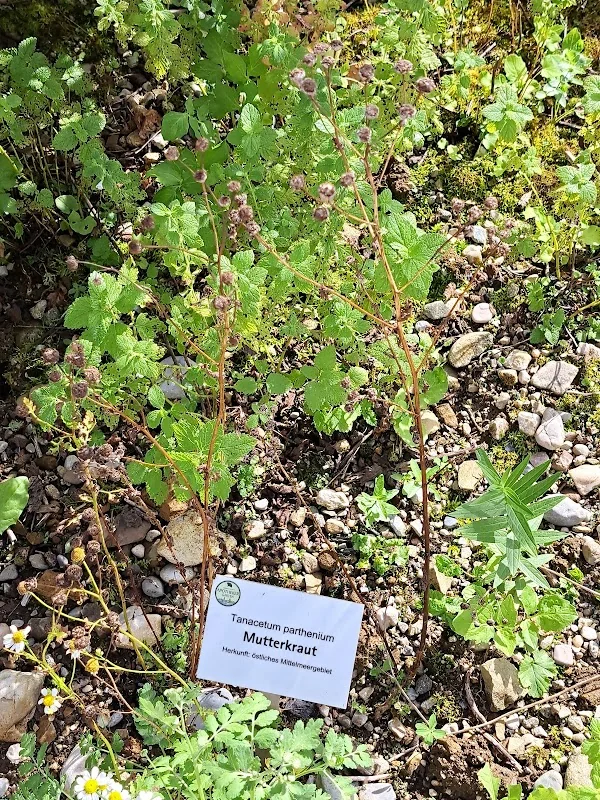
At the center of the Pharmacy Garden are about 200 different species of medicinal plants. A large part of these plants comes from the Botanical Garden in Munich, which gives the garden a particularly careful and professionally shaped quality. The city describes the selection of plants as sorted according to phytosociological criteria, meaning not randomly mixed but classified according to natural habitats and soil requirements. This is where a significant appeal lies: the garden is not only beautiful to look at but also explains through its structure why certain plants thrive in certain locations. ([traunstein.de](https://www.traunstein.de/stadtentwicklung-wirtschaft/stadtentwicklung/salinenpark/?utm_source=openai))
The design is reminiscent of historical monastery gardens, where utility, healing effects, and sensory experience were closely linked. Those who stroll slowly through the garden therefore recognize more than just individual beds. One sees groups that respond to similar light conditions, soils, and site requirements, and can understand the garden as a living teaching space. This concept fits well with search terms related to establishing a pharmacy garden and planting a pharmacy garden, as the layout in Traunstein shows how a medicinal plant garden can be sensibly structured: with a system, knowledge of site requirements, and a clear view of the effect of a plant in the overall picture. ([traunstein.de](https://www.traunstein.de/stadtentwicklung-wirtschaft/stadtentwicklung/salinenpark/?utm_source=openai))
For visitors, the interplay of information and atmosphere is particularly interesting. The Pharmacy Garden is not a strictly museum-like place but a walkable garden where one can see plants up close, absorb scents, and experience the combination of meadows, blossoms, and historical facades. As the city describes the facility as a reminder of Traunstein's long tradition as a health center, each step in the garden takes on additional significance: it is not just about botany but about cultural history, medical knowledge, and the question of how plants have helped and can still help in people's everyday lives. ([traunstein.de](https://www.traunstein.de/stadtentwicklung-wirtschaft/stadtentwicklung/salinenpark/?utm_source=openai))
History, Development, and Significance for Traunstein
The Salinenpark, in which the Pharmacy Garden is embedded, was created for locals and guests to make the architectural testimonies from the salt era experienceable again. Detailed planning began in 2017, the site was cleared in the first half of 2018, and landscape construction work started in July 2018. In 2019, the park finally opened in the spirit of the 400th anniversary of the salt town Traunstein. This chronological sequence shows that a park was not simply replanted here but that a historical urban space was consciously made readable again. ([traunstein.de](https://www.traunstein.de/stadtentwicklung-wirtschaft/stadtentwicklung/salinenpark/?utm_source=openai))
In the park itself, visitors encounter several strongly shaping elements. The main attractions include the reconstructed Reiffenstuel pump with a water wheel and the original preserved and still functional Reichenbach water column machine from the 19th century. Additionally, the park provides information with display boards about the history of salt in Traunstein and the transport of brine. In a media room on the ground floor of the Albertistock, films are shown and further exhibits are presented. Thus, the Pharmacy Garden is not just a green backdrop but part of a small open-air museum that tells the history of the town through plants, technology, and architecture. ([traunstein.de](https://www.traunstein.de/stadtentwicklung-wirtschaft/stadtentwicklung/salinenpark/?utm_source=openai))
The historical embedding is particularly strong because the park allows for an unobstructed view of the baroque facades of the salt ensemble. From an area that was previously characterized by buildings and restricted sightlines, an open urban space with a connection between past and present has been created. The city also points out that the exhibits document the history of the so-called first pipeline in the world, the brine pipeline from 1619 between Bad Reichenhall and Traunstein. For the visitor, this means: the Pharmacy Garden is interesting not only because of its plants but also because it is embedded in a narrative about salt, trade, technology, and urban identity. ([traunstein.de](https://www.traunstein.de/tourismus-freizeit/das-salz-in-traunstein/salinenpark-traunstein/?utm_source=openai))
Directions, Parking, and Barrier-Free Paths around the Pharmacy Garden
Those wishing to visit the Pharmacy Garden benefit from its good integration into the Traunstein city center. The city describes a new diagonal path relationship from the intersection at Reiffenstuelstraße towards Karl-Theodor-Platz, which shortens the route from Bürgerwaldstraße into the city center. The path along the Pharmacy Garden has been executed with a water-bound surface, while the remaining paths have a durable surface that was explicitly chosen with regard to accessibility. This is important because the Pharmacy Garden is not intended as an isolated special area but as an open and as pleasant as possible walkable part of the entire park system. ([traunstein.de](https://www.traunstein.de/stadtentwicklung-wirtschaft/stadtentwicklung/salinenpark/?utm_source=openai))
The topic of parking is also clearly regulated. In Traunstein, there is P2 Zentrum/Karl-Theodor-Platz with 310 parking spaces, P3 Festplatz on Siegsdorfer Straße with 500 parking spaces, and additionally around 700 street parking spaces in the city center. For vehicles with electric license plates, as of April 1, 2025, there is a free parking time of up to three hours in public parking areas in Traunstein, which explicitly applies to Karl-Theodor parking lot. In the city center, the maximum parking duration remains two hours, and at the train station, it is 30 minutes. So, those coming by car have several options but should pay attention to the respective parking zone. ([traunstein.de](https://www.traunstein.de/tourismus-freizeit/anreise-informationen/parken-in-traunstein/))
It is also practical for visitors that the city clearly designates Karl-Theodor-Platz and the surrounding areas as part of inner-city parking. For a garden visit in Salinenpark, this means: one can easily combine the walk with a short trip to the old town. Those who prefer to walk can reach not only the Pharmacy Garden via the paths in the park but also other parts of the salt ensemble. This connection makes the place so pleasant: it is suitable both for a targeted detour and as a station on a longer city tour. ([traunstein.de](https://www.traunstein.de/tourismus-freizeit/anreise-informationen/parken-in-traunstein/))
Photos, Atmosphere, and Attractions in the Surroundings
The high interest in photos of the Pharmacy Garden is easily understandable. The garden is situated amidst flower meadows, fruit trees, and the historic buildings of Salinenpark. This creates numerous perspectives that appear both natural and historical. The official city website emphasizes the unobstructed view of the baroque facades of the salt ensemble, and these sightlines are particularly valuable for pictures. Those looking for calm, tidy motifs with plenty of greenery, architecture, and light will find here a combination that goes far beyond an ordinary city park. ([traunstein.de](https://www.traunstein.de/tourismus-freizeit/das-salz-in-traunstein/salinenpark-traunstein/?utm_source=openai))
Additionally, there is the subtle lighting of the park. The city has had the main paths illuminated discreetly, highlighting the water wheel and pump, as well as benches, water features, and facades. This significantly changes the mood depending on the time of day: during the day, the openness of the green space dominates, while in the evening, the atmospheric calm with targeted light points prevails. For pictures, this means a special variety, as the Pharmacy Garden functions not only as a summer bloom backdrop but also as an evening promenade area with quiet reflections and clear lines. ([traunstein.de](https://www.traunstein.de/stadtentwicklung-wirtschaft/stadtentwicklung/salinenpark/?utm_source=openai))
Those wishing to extend their visit can easily combine the Pharmacy Garden with other attractions in the city. These include the salt houses, the salt chapel, and the general theme of salt history, which is present in many places in Traunstein. The city itself points out that the Salinenpark serves as an open-air museum for the history of the brine pipeline. Furthermore, the series “Art in the Park” has been extended to Salinenpark, so that time-limited art actions additionally enliven the green space. Thus, the Pharmacy Garden is not only a place for plant lovers but also a good starting point for a small cultural and photo tour through Traunstein. ([traunstein.de](https://www.traunstein.de/kultur-brauchtum/kultur/sehenswuerdigkeiten-museen/?utm_source=openai))
Guided Tours, Events, and Practical Visiting Tips
Even though the Pharmacy Garden itself is not a classic event venue with a fixed schedule, guided tours and special dates show that the place also functions as a learning space. A concrete example was the tour on June 25, 2025, as part of an event by VdK Bayern. There, Stefan Köhler, chairman of the Traunstein Gardening Association and a doctor as well as herbal expert, guided through the Pharmacy Garden and explained the healing and soothing effects of nature. This illustrates very well how the garden is used: not just for viewing but also for explaining and understanding. ([bayern.vdk.de](https://bayern.vdk.de/vor-ort/veranstaltungen-kv-ov/fuehrung-apothekergarten-salinenpark/?utm_source=openai))
For the typical visit, two groups are particularly important. The first group consists of people interested in medicinal plants, herb gardens, and garden concepts. For them, the Pharmacy Garden is particularly attractive due to its approximately 200 plant species, its botanical order, and its historical embedding. The second group consists of visitors who are simply looking for a quiet, easily accessible place in Traunstein where they can combine short walks with interesting impressions. The garden is therefore suitable both for a conscious detour and for a relaxed stop on a tour through the city. ([traunstein.de](https://www.traunstein.de/stadtentwicklung-wirtschaft/stadtentwicklung/salinenpark/?utm_source=openai))
Another advantage is the simple visiting logic: no ticket, no fixed seating, no complicated booking. One arrives, enters the freely accessible Salinenpark, and can experience the Pharmacy Garden at their own pace. Those who prepare can combine the walk with photos, a look at the historical facades, and a detour to other salt attractions. Those who are spontaneous will also quickly find orientation, as location, parking options, and paths are well developed. This mix of naturalness, history, and easy accessibility is what makes the Pharmacy Garden Traunstein so pleasant for many visitors. ([traunstein.de](https://www.traunstein.de/tourismus-freizeit/das-salz-in-traunstein/salinenpark-traunstein/?utm_source=openai))
Sources:
Mehr anzeigenWeniger anzeigen
Pharmacy Garden Traunstein | Photos & Opening Hours
The Pharmacy Garden Traunstein is not a classic event venue with ticket counters, seating plans, and capacity information, but a freely accessible garden and experience area in the Salinenpark. Those heading to Kohlbrennerstraße in the district of Au will find a place where medicinal plants, local history, and a quiet park area come together. The Salinenpark was opened in 2019 to celebrate the 400th anniversary of the salt town and is open all the time. This is exactly what makes the Pharmacy Garden so attractive for walkers, families, culture enthusiasts, and plant lovers: one can visit the place without much planning, simply arrive, and absorb the atmosphere. ([traunstein.de](https://www.traunstein.de/tourismus-freizeit/das-salz-in-traunstein/salinenpark-traunstein/?utm_source=openai))
For the SEO analysis, it quickly becomes clear which search intent dominates here: visitors want to know where the Pharmacy Garden is located, how to get there, where to park, if there are opening hours, and what makes the garden special. In Traunstein, the answer is not on a stage, but outdoors: the place is part of a deliberately designed Salinenpark that makes the historical salt history of the town visible while simultaneously creating a modern, quiet space for relaxation. The combination of medicinal herbs, barrier-free paths, historical facades, and free access is the true unique selling point. ([traunstein.de](https://www.traunstein.de/stadtentwicklung-wirtschaft/stadtentwicklung/salinenpark/?utm_source=openai))
Where is the Pharmacy Garden located in Salinenpark Traunstein?
The Pharmacy Garden is located in Salinenpark Traunstein on Kohlbrennerstraße in the district of Au. Thus, it is situated in a part of the town that is closely connected to the old salt landscape and where the historical character is still very present today. The official city website describes the Salinenpark as freely accessible and open all the time; the Pharmacy Garden is embedded as an independent area within this park complex. So, anyone looking for a place that can be experienced without an entrance fee and without fixed visiting times will find here the right mix of relaxed accessibility and substantive depth. ([traunstein.de](https://www.traunstein.de/tourismus-freizeit/das-salz-in-traunstein/salinenpark-traunstein/?utm_source=openai))
Particularly important is the location in the context of the entire salt district. The park was designed so that the architectural testimonies from the salt era can be experienced again. One looks at the facades of the historical ensemble, moves between green spaces and orientation points, and simultaneously experiences how consciously the place was conceived as part of the town's history. For inquiries about directions, photos, or sights, this point is central: the Pharmacy Garden is not isolated but part of a larger narrative space where Traunstein brings together its salt past, its health history, and its park culture. ([traunstein.de](https://www.traunstein.de/stadtentwicklung-wirtschaft/stadtentwicklung/salinenpark/?utm_source=openai))
The fact that the garden was initiated by the Homeopathy House Traunstein and numerous Traunstein pharmacists adds a local, community-oriented dimension to it. It is therefore not just a municipal project but also a collective sign of commitment from the health and pharmacy community. This creates a special credibility for visitors: the garden does not appear artificially decorated but is motivated by expertise and history. It is precisely this connection of place, theme, and stakeholders that makes the Pharmacy Garden a destination that can be perceived both as a quiet walk and as an informative cultural stop. ([traunstein.de](https://www.traunstein.de/stadtentwicklung-wirtschaft/stadtentwicklung/salinenpark/?utm_source=openai))
Medicinal Plants, Plant Concept, and Botanical Specialties
At the center of the Pharmacy Garden are about 200 different species of medicinal plants. A large part of these plants comes from the Botanical Garden in Munich, which gives the garden a particularly careful and professionally shaped quality. The city describes the selection of plants as sorted according to phytosociological criteria, meaning not randomly mixed but classified according to natural habitats and soil requirements. This is where a significant appeal lies: the garden is not only beautiful to look at but also explains through its structure why certain plants thrive in certain locations. ([traunstein.de](https://www.traunstein.de/stadtentwicklung-wirtschaft/stadtentwicklung/salinenpark/?utm_source=openai))
The design is reminiscent of historical monastery gardens, where utility, healing effects, and sensory experience were closely linked. Those who stroll slowly through the garden therefore recognize more than just individual beds. One sees groups that respond to similar light conditions, soils, and site requirements, and can understand the garden as a living teaching space. This concept fits well with search terms related to establishing a pharmacy garden and planting a pharmacy garden, as the layout in Traunstein shows how a medicinal plant garden can be sensibly structured: with a system, knowledge of site requirements, and a clear view of the effect of a plant in the overall picture. ([traunstein.de](https://www.traunstein.de/stadtentwicklung-wirtschaft/stadtentwicklung/salinenpark/?utm_source=openai))
For visitors, the interplay of information and atmosphere is particularly interesting. The Pharmacy Garden is not a strictly museum-like place but a walkable garden where one can see plants up close, absorb scents, and experience the combination of meadows, blossoms, and historical facades. As the city describes the facility as a reminder of Traunstein's long tradition as a health center, each step in the garden takes on additional significance: it is not just about botany but about cultural history, medical knowledge, and the question of how plants have helped and can still help in people's everyday lives. ([traunstein.de](https://www.traunstein.de/stadtentwicklung-wirtschaft/stadtentwicklung/salinenpark/?utm_source=openai))
History, Development, and Significance for Traunstein
The Salinenpark, in which the Pharmacy Garden is embedded, was created for locals and guests to make the architectural testimonies from the salt era experienceable again. Detailed planning began in 2017, the site was cleared in the first half of 2018, and landscape construction work started in July 2018. In 2019, the park finally opened in the spirit of the 400th anniversary of the salt town Traunstein. This chronological sequence shows that a park was not simply replanted here but that a historical urban space was consciously made readable again. ([traunstein.de](https://www.traunstein.de/stadtentwicklung-wirtschaft/stadtentwicklung/salinenpark/?utm_source=openai))
In the park itself, visitors encounter several strongly shaping elements. The main attractions include the reconstructed Reiffenstuel pump with a water wheel and the original preserved and still functional Reichenbach water column machine from the 19th century. Additionally, the park provides information with display boards about the history of salt in Traunstein and the transport of brine. In a media room on the ground floor of the Albertistock, films are shown and further exhibits are presented. Thus, the Pharmacy Garden is not just a green backdrop but part of a small open-air museum that tells the history of the town through plants, technology, and architecture. ([traunstein.de](https://www.traunstein.de/stadtentwicklung-wirtschaft/stadtentwicklung/salinenpark/?utm_source=openai))
The historical embedding is particularly strong because the park allows for an unobstructed view of the baroque facades of the salt ensemble. From an area that was previously characterized by buildings and restricted sightlines, an open urban space with a connection between past and present has been created. The city also points out that the exhibits document the history of the so-called first pipeline in the world, the brine pipeline from 1619 between Bad Reichenhall and Traunstein. For the visitor, this means: the Pharmacy Garden is interesting not only because of its plants but also because it is embedded in a narrative about salt, trade, technology, and urban identity. ([traunstein.de](https://www.traunstein.de/tourismus-freizeit/das-salz-in-traunstein/salinenpark-traunstein/?utm_source=openai))
Directions, Parking, and Barrier-Free Paths around the Pharmacy Garden
Those wishing to visit the Pharmacy Garden benefit from its good integration into the Traunstein city center. The city describes a new diagonal path relationship from the intersection at Reiffenstuelstraße towards Karl-Theodor-Platz, which shortens the route from Bürgerwaldstraße into the city center. The path along the Pharmacy Garden has been executed with a water-bound surface, while the remaining paths have a durable surface that was explicitly chosen with regard to accessibility. This is important because the Pharmacy Garden is not intended as an isolated special area but as an open and as pleasant as possible walkable part of the entire park system. ([traunstein.de](https://www.traunstein.de/stadtentwicklung-wirtschaft/stadtentwicklung/salinenpark/?utm_source=openai))
The topic of parking is also clearly regulated. In Traunstein, there is P2 Zentrum/Karl-Theodor-Platz with 310 parking spaces, P3 Festplatz on Siegsdorfer Straße with 500 parking spaces, and additionally around 700 street parking spaces in the city center. For vehicles with electric license plates, as of April 1, 2025, there is a free parking time of up to three hours in public parking areas in Traunstein, which explicitly applies to Karl-Theodor parking lot. In the city center, the maximum parking duration remains two hours, and at the train station, it is 30 minutes. So, those coming by car have several options but should pay attention to the respective parking zone. ([traunstein.de](https://www.traunstein.de/tourismus-freizeit/anreise-informationen/parken-in-traunstein/))
It is also practical for visitors that the city clearly designates Karl-Theodor-Platz and the surrounding areas as part of inner-city parking. For a garden visit in Salinenpark, this means: one can easily combine the walk with a short trip to the old town. Those who prefer to walk can reach not only the Pharmacy Garden via the paths in the park but also other parts of the salt ensemble. This connection makes the place so pleasant: it is suitable both for a targeted detour and as a station on a longer city tour. ([traunstein.de](https://www.traunstein.de/tourismus-freizeit/anreise-informationen/parken-in-traunstein/))
Photos, Atmosphere, and Attractions in the Surroundings
The high interest in photos of the Pharmacy Garden is easily understandable. The garden is situated amidst flower meadows, fruit trees, and the historic buildings of Salinenpark. This creates numerous perspectives that appear both natural and historical. The official city website emphasizes the unobstructed view of the baroque facades of the salt ensemble, and these sightlines are particularly valuable for pictures. Those looking for calm, tidy motifs with plenty of greenery, architecture, and light will find here a combination that goes far beyond an ordinary city park. ([traunstein.de](https://www.traunstein.de/tourismus-freizeit/das-salz-in-traunstein/salinenpark-traunstein/?utm_source=openai))
Additionally, there is the subtle lighting of the park. The city has had the main paths illuminated discreetly, highlighting the water wheel and pump, as well as benches, water features, and facades. This significantly changes the mood depending on the time of day: during the day, the openness of the green space dominates, while in the evening, the atmospheric calm with targeted light points prevails. For pictures, this means a special variety, as the Pharmacy Garden functions not only as a summer bloom backdrop but also as an evening promenade area with quiet reflections and clear lines. ([traunstein.de](https://www.traunstein.de/stadtentwicklung-wirtschaft/stadtentwicklung/salinenpark/?utm_source=openai))
Those wishing to extend their visit can easily combine the Pharmacy Garden with other attractions in the city. These include the salt houses, the salt chapel, and the general theme of salt history, which is present in many places in Traunstein. The city itself points out that the Salinenpark serves as an open-air museum for the history of the brine pipeline. Furthermore, the series “Art in the Park” has been extended to Salinenpark, so that time-limited art actions additionally enliven the green space. Thus, the Pharmacy Garden is not only a place for plant lovers but also a good starting point for a small cultural and photo tour through Traunstein. ([traunstein.de](https://www.traunstein.de/kultur-brauchtum/kultur/sehenswuerdigkeiten-museen/?utm_source=openai))
Guided Tours, Events, and Practical Visiting Tips
Even though the Pharmacy Garden itself is not a classic event venue with a fixed schedule, guided tours and special dates show that the place also functions as a learning space. A concrete example was the tour on June 25, 2025, as part of an event by VdK Bayern. There, Stefan Köhler, chairman of the Traunstein Gardening Association and a doctor as well as herbal expert, guided through the Pharmacy Garden and explained the healing and soothing effects of nature. This illustrates very well how the garden is used: not just for viewing but also for explaining and understanding. ([bayern.vdk.de](https://bayern.vdk.de/vor-ort/veranstaltungen-kv-ov/fuehrung-apothekergarten-salinenpark/?utm_source=openai))
For the typical visit, two groups are particularly important. The first group consists of people interested in medicinal plants, herb gardens, and garden concepts. For them, the Pharmacy Garden is particularly attractive due to its approximately 200 plant species, its botanical order, and its historical embedding. The second group consists of visitors who are simply looking for a quiet, easily accessible place in Traunstein where they can combine short walks with interesting impressions. The garden is therefore suitable both for a conscious detour and for a relaxed stop on a tour through the city. ([traunstein.de](https://www.traunstein.de/stadtentwicklung-wirtschaft/stadtentwicklung/salinenpark/?utm_source=openai))
Another advantage is the simple visiting logic: no ticket, no fixed seating, no complicated booking. One arrives, enters the freely accessible Salinenpark, and can experience the Pharmacy Garden at their own pace. Those who prepare can combine the walk with photos, a look at the historical facades, and a detour to other salt attractions. Those who are spontaneous will also quickly find orientation, as location, parking options, and paths are well developed. This mix of naturalness, history, and easy accessibility is what makes the Pharmacy Garden Traunstein so pleasant for many visitors. ([traunstein.de](https://www.traunstein.de/tourismus-freizeit/das-salz-in-traunstein/salinenpark-traunstein/?utm_source=openai))
Sources:
Pharmacy Garden Traunstein | Photos & Opening Hours
The Pharmacy Garden Traunstein is not a classic event venue with ticket counters, seating plans, and capacity information, but a freely accessible garden and experience area in the Salinenpark. Those heading to Kohlbrennerstraße in the district of Au will find a place where medicinal plants, local history, and a quiet park area come together. The Salinenpark was opened in 2019 to celebrate the 400th anniversary of the salt town and is open all the time. This is exactly what makes the Pharmacy Garden so attractive for walkers, families, culture enthusiasts, and plant lovers: one can visit the place without much planning, simply arrive, and absorb the atmosphere. ([traunstein.de](https://www.traunstein.de/tourismus-freizeit/das-salz-in-traunstein/salinenpark-traunstein/?utm_source=openai))
For the SEO analysis, it quickly becomes clear which search intent dominates here: visitors want to know where the Pharmacy Garden is located, how to get there, where to park, if there are opening hours, and what makes the garden special. In Traunstein, the answer is not on a stage, but outdoors: the place is part of a deliberately designed Salinenpark that makes the historical salt history of the town visible while simultaneously creating a modern, quiet space for relaxation. The combination of medicinal herbs, barrier-free paths, historical facades, and free access is the true unique selling point. ([traunstein.de](https://www.traunstein.de/stadtentwicklung-wirtschaft/stadtentwicklung/salinenpark/?utm_source=openai))
Where is the Pharmacy Garden located in Salinenpark Traunstein?
The Pharmacy Garden is located in Salinenpark Traunstein on Kohlbrennerstraße in the district of Au. Thus, it is situated in a part of the town that is closely connected to the old salt landscape and where the historical character is still very present today. The official city website describes the Salinenpark as freely accessible and open all the time; the Pharmacy Garden is embedded as an independent area within this park complex. So, anyone looking for a place that can be experienced without an entrance fee and without fixed visiting times will find here the right mix of relaxed accessibility and substantive depth. ([traunstein.de](https://www.traunstein.de/tourismus-freizeit/das-salz-in-traunstein/salinenpark-traunstein/?utm_source=openai))
Particularly important is the location in the context of the entire salt district. The park was designed so that the architectural testimonies from the salt era can be experienced again. One looks at the facades of the historical ensemble, moves between green spaces and orientation points, and simultaneously experiences how consciously the place was conceived as part of the town's history. For inquiries about directions, photos, or sights, this point is central: the Pharmacy Garden is not isolated but part of a larger narrative space where Traunstein brings together its salt past, its health history, and its park culture. ([traunstein.de](https://www.traunstein.de/stadtentwicklung-wirtschaft/stadtentwicklung/salinenpark/?utm_source=openai))
The fact that the garden was initiated by the Homeopathy House Traunstein and numerous Traunstein pharmacists adds a local, community-oriented dimension to it. It is therefore not just a municipal project but also a collective sign of commitment from the health and pharmacy community. This creates a special credibility for visitors: the garden does not appear artificially decorated but is motivated by expertise and history. It is precisely this connection of place, theme, and stakeholders that makes the Pharmacy Garden a destination that can be perceived both as a quiet walk and as an informative cultural stop. ([traunstein.de](https://www.traunstein.de/stadtentwicklung-wirtschaft/stadtentwicklung/salinenpark/?utm_source=openai))
Medicinal Plants, Plant Concept, and Botanical Specialties
At the center of the Pharmacy Garden are about 200 different species of medicinal plants. A large part of these plants comes from the Botanical Garden in Munich, which gives the garden a particularly careful and professionally shaped quality. The city describes the selection of plants as sorted according to phytosociological criteria, meaning not randomly mixed but classified according to natural habitats and soil requirements. This is where a significant appeal lies: the garden is not only beautiful to look at but also explains through its structure why certain plants thrive in certain locations. ([traunstein.de](https://www.traunstein.de/stadtentwicklung-wirtschaft/stadtentwicklung/salinenpark/?utm_source=openai))
The design is reminiscent of historical monastery gardens, where utility, healing effects, and sensory experience were closely linked. Those who stroll slowly through the garden therefore recognize more than just individual beds. One sees groups that respond to similar light conditions, soils, and site requirements, and can understand the garden as a living teaching space. This concept fits well with search terms related to establishing a pharmacy garden and planting a pharmacy garden, as the layout in Traunstein shows how a medicinal plant garden can be sensibly structured: with a system, knowledge of site requirements, and a clear view of the effect of a plant in the overall picture. ([traunstein.de](https://www.traunstein.de/stadtentwicklung-wirtschaft/stadtentwicklung/salinenpark/?utm_source=openai))
For visitors, the interplay of information and atmosphere is particularly interesting. The Pharmacy Garden is not a strictly museum-like place but a walkable garden where one can see plants up close, absorb scents, and experience the combination of meadows, blossoms, and historical facades. As the city describes the facility as a reminder of Traunstein's long tradition as a health center, each step in the garden takes on additional significance: it is not just about botany but about cultural history, medical knowledge, and the question of how plants have helped and can still help in people's everyday lives. ([traunstein.de](https://www.traunstein.de/stadtentwicklung-wirtschaft/stadtentwicklung/salinenpark/?utm_source=openai))
History, Development, and Significance for Traunstein
The Salinenpark, in which the Pharmacy Garden is embedded, was created for locals and guests to make the architectural testimonies from the salt era experienceable again. Detailed planning began in 2017, the site was cleared in the first half of 2018, and landscape construction work started in July 2018. In 2019, the park finally opened in the spirit of the 400th anniversary of the salt town Traunstein. This chronological sequence shows that a park was not simply replanted here but that a historical urban space was consciously made readable again. ([traunstein.de](https://www.traunstein.de/stadtentwicklung-wirtschaft/stadtentwicklung/salinenpark/?utm_source=openai))
In the park itself, visitors encounter several strongly shaping elements. The main attractions include the reconstructed Reiffenstuel pump with a water wheel and the original preserved and still functional Reichenbach water column machine from the 19th century. Additionally, the park provides information with display boards about the history of salt in Traunstein and the transport of brine. In a media room on the ground floor of the Albertistock, films are shown and further exhibits are presented. Thus, the Pharmacy Garden is not just a green backdrop but part of a small open-air museum that tells the history of the town through plants, technology, and architecture. ([traunstein.de](https://www.traunstein.de/stadtentwicklung-wirtschaft/stadtentwicklung/salinenpark/?utm_source=openai))
The historical embedding is particularly strong because the park allows for an unobstructed view of the baroque facades of the salt ensemble. From an area that was previously characterized by buildings and restricted sightlines, an open urban space with a connection between past and present has been created. The city also points out that the exhibits document the history of the so-called first pipeline in the world, the brine pipeline from 1619 between Bad Reichenhall and Traunstein. For the visitor, this means: the Pharmacy Garden is interesting not only because of its plants but also because it is embedded in a narrative about salt, trade, technology, and urban identity. ([traunstein.de](https://www.traunstein.de/tourismus-freizeit/das-salz-in-traunstein/salinenpark-traunstein/?utm_source=openai))
Directions, Parking, and Barrier-Free Paths around the Pharmacy Garden
Those wishing to visit the Pharmacy Garden benefit from its good integration into the Traunstein city center. The city describes a new diagonal path relationship from the intersection at Reiffenstuelstraße towards Karl-Theodor-Platz, which shortens the route from Bürgerwaldstraße into the city center. The path along the Pharmacy Garden has been executed with a water-bound surface, while the remaining paths have a durable surface that was explicitly chosen with regard to accessibility. This is important because the Pharmacy Garden is not intended as an isolated special area but as an open and as pleasant as possible walkable part of the entire park system. ([traunstein.de](https://www.traunstein.de/stadtentwicklung-wirtschaft/stadtentwicklung/salinenpark/?utm_source=openai))
The topic of parking is also clearly regulated. In Traunstein, there is P2 Zentrum/Karl-Theodor-Platz with 310 parking spaces, P3 Festplatz on Siegsdorfer Straße with 500 parking spaces, and additionally around 700 street parking spaces in the city center. For vehicles with electric license plates, as of April 1, 2025, there is a free parking time of up to three hours in public parking areas in Traunstein, which explicitly applies to Karl-Theodor parking lot. In the city center, the maximum parking duration remains two hours, and at the train station, it is 30 minutes. So, those coming by car have several options but should pay attention to the respective parking zone. ([traunstein.de](https://www.traunstein.de/tourismus-freizeit/anreise-informationen/parken-in-traunstein/))
It is also practical for visitors that the city clearly designates Karl-Theodor-Platz and the surrounding areas as part of inner-city parking. For a garden visit in Salinenpark, this means: one can easily combine the walk with a short trip to the old town. Those who prefer to walk can reach not only the Pharmacy Garden via the paths in the park but also other parts of the salt ensemble. This connection makes the place so pleasant: it is suitable both for a targeted detour and as a station on a longer city tour. ([traunstein.de](https://www.traunstein.de/tourismus-freizeit/anreise-informationen/parken-in-traunstein/))
Photos, Atmosphere, and Attractions in the Surroundings
The high interest in photos of the Pharmacy Garden is easily understandable. The garden is situated amidst flower meadows, fruit trees, and the historic buildings of Salinenpark. This creates numerous perspectives that appear both natural and historical. The official city website emphasizes the unobstructed view of the baroque facades of the salt ensemble, and these sightlines are particularly valuable for pictures. Those looking for calm, tidy motifs with plenty of greenery, architecture, and light will find here a combination that goes far beyond an ordinary city park. ([traunstein.de](https://www.traunstein.de/tourismus-freizeit/das-salz-in-traunstein/salinenpark-traunstein/?utm_source=openai))
Additionally, there is the subtle lighting of the park. The city has had the main paths illuminated discreetly, highlighting the water wheel and pump, as well as benches, water features, and facades. This significantly changes the mood depending on the time of day: during the day, the openness of the green space dominates, while in the evening, the atmospheric calm with targeted light points prevails. For pictures, this means a special variety, as the Pharmacy Garden functions not only as a summer bloom backdrop but also as an evening promenade area with quiet reflections and clear lines. ([traunstein.de](https://www.traunstein.de/stadtentwicklung-wirtschaft/stadtentwicklung/salinenpark/?utm_source=openai))
Those wishing to extend their visit can easily combine the Pharmacy Garden with other attractions in the city. These include the salt houses, the salt chapel, and the general theme of salt history, which is present in many places in Traunstein. The city itself points out that the Salinenpark serves as an open-air museum for the history of the brine pipeline. Furthermore, the series “Art in the Park” has been extended to Salinenpark, so that time-limited art actions additionally enliven the green space. Thus, the Pharmacy Garden is not only a place for plant lovers but also a good starting point for a small cultural and photo tour through Traunstein. ([traunstein.de](https://www.traunstein.de/kultur-brauchtum/kultur/sehenswuerdigkeiten-museen/?utm_source=openai))
Guided Tours, Events, and Practical Visiting Tips
Even though the Pharmacy Garden itself is not a classic event venue with a fixed schedule, guided tours and special dates show that the place also functions as a learning space. A concrete example was the tour on June 25, 2025, as part of an event by VdK Bayern. There, Stefan Köhler, chairman of the Traunstein Gardening Association and a doctor as well as herbal expert, guided through the Pharmacy Garden and explained the healing and soothing effects of nature. This illustrates very well how the garden is used: not just for viewing but also for explaining and understanding. ([bayern.vdk.de](https://bayern.vdk.de/vor-ort/veranstaltungen-kv-ov/fuehrung-apothekergarten-salinenpark/?utm_source=openai))
For the typical visit, two groups are particularly important. The first group consists of people interested in medicinal plants, herb gardens, and garden concepts. For them, the Pharmacy Garden is particularly attractive due to its approximately 200 plant species, its botanical order, and its historical embedding. The second group consists of visitors who are simply looking for a quiet, easily accessible place in Traunstein where they can combine short walks with interesting impressions. The garden is therefore suitable both for a conscious detour and for a relaxed stop on a tour through the city. ([traunstein.de](https://www.traunstein.de/stadtentwicklung-wirtschaft/stadtentwicklung/salinenpark/?utm_source=openai))
Another advantage is the simple visiting logic: no ticket, no fixed seating, no complicated booking. One arrives, enters the freely accessible Salinenpark, and can experience the Pharmacy Garden at their own pace. Those who prepare can combine the walk with photos, a look at the historical facades, and a detour to other salt attractions. Those who are spontaneous will also quickly find orientation, as location, parking options, and paths are well developed. This mix of naturalness, history, and easy accessibility is what makes the Pharmacy Garden Traunstein so pleasant for many visitors. ([traunstein.de](https://www.traunstein.de/tourismus-freizeit/das-salz-in-traunstein/salinenpark-traunstein/?utm_source=openai))
Sources:
Upcoming Events
No events found
Frequently Asked Questions
Reviews
No reviews found