
Schumann-Fest
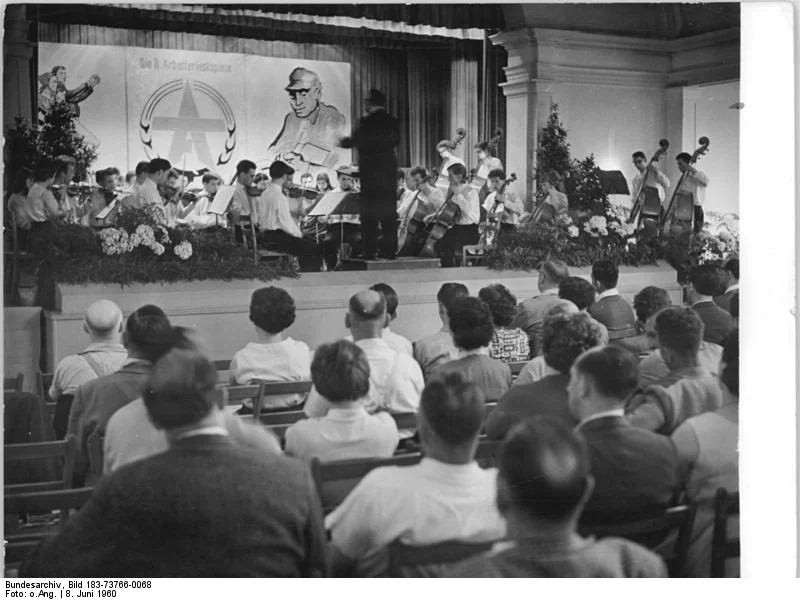
Image from Wikipedia
Image from Wikipedia
Schumann Festival Zwickau: A Resonant Tribute to Robert Schumann
A Traditional Music Festival Bridging Romantic Heritage, City History, and Vibrant Present
The Schumann Festival in Zwickau is much more than a date on the cultural calendar: it is a musical institution with extraordinary historical depth that has shaped the birthplace of Robert Schumann for generations. Held almost annually, the festival is considered one of the oldest music festivals dedicated to a single composer, tracing back to traditions that date back to 1847. In Zwickau, it not only cherishes a great name but embodies a living culture of remembrance that connects music history, urban identity, and contemporary concert practice. ([de.wikipedia.org](https://de.wikipedia.org/wiki/Schumann-Fest?utm_source=openai))
The Roots: Why Zwickau Remains Indispensable for Schumann
When discussing the Schumann Festival, one inevitably talks about the place where Robert Schumann was born on June 8, 1810. Over the decades, Zwickau has developed into a center for the preservation of Schumann's legacy, where concert operations, museums, research, and musical education intertwine. The festival draws from this local grounding, gaining its credibility from it: here, Schumann is not just repertoire but a part of urban present. ([schumann-zwickau.de](https://www.schumann-zwickau.de/))
The historical line is remarkably clear. According to official accounts, the first Schumann Festival took place in Zwickau in 1847, initiated by the Zwickau high school teacher Emanuel Klitzsch. Thus, a form of musical remembrance emerged during Schumann's lifetime that did not set itself apart with museum-like distance, but focused on performance, interaction, and the immediate presence of his music. This early tradition explains why the festival is still perceived today as an identity-forming event. ([schumann-zwickau.de](https://www.schumann-zwickau.de/en/schumannfest.php?utm_source=openai))
The Schumann Festival as the Cultural Memory of the City
The festival reflects Zwickau’s special approach to its romantic heritage. Around the Robert Schumann House and in the city’s cultural scene, programs are developed that connect historical depth with contemporary relevance. In addition to concerts, thematic series, educational offerings, and accompanying events are integral to the profile of the Schumann Festival, setting the event distinctly apart from a mere string of concerts. ([schumann-zwickau.de](https://www.schumann-zwickau.de/))
Particularly in the 2025 European Capital of Culture year, this attitude was particularly evident. The Schumann Festival was themed “Clara & Co. – Women Composers from 5 Centuries” and consciously highlighted often-overlooked female musicians. The city of Zwickau thus emphasized its aim to make the undiscovered and rarely perceived visible and audible. This keeps the festival historically grounded while remaining open to new perspectives on music history. ([schumann-zwickau.de](https://www.schumann-zwickau.de/de/aktuelles/pressemitteilungen/2025/02/072.php?utm_source=openai))
Program Design Between Romantic Canon and Fresh Perspectives
The program structure of the Schumann Festival demonstrates how thoughtfully a traditional festival can be curated today. In addition to works by Robert Schumann, compositions by female composers, chamber music formats, and thematic connections regularly take center stage. The official festival flyer for 2025, for example, points to concerts featuring works by Fanny Hensel, Clara Schumann, and other female musicians, making the Schumann Festival not only interpretative but also historically informative. ([schumann-zwickau.de](https://www.schumann-zwickau.de/media/download/2025Schumann-Fest-Flyer-DIN-lang.pdf?utm_source=openai))
The current festival announcement for 2026 continues this approach. The next Schumann Festival will take place from June 4 to 14, 2026, in Zwickau under the title “Schumann’s Poets.” This title already signals a programmatic focus on the literary and poetic environment surrounding Schumann, showcasing the intellectual sphere where his compositions often express their strongest emotional and formal power. ([schumann-zwickau.de](https://www.schumann-zwickau.de/de/schumannfest.php))
Support for Young Talent, Mediation, and Musical Education
A key feature of the festival is its grounding in musical education. According to official press information, masterclasses have been held since 2019 as part of the Schumann Festival, forming a pillar of the promotion of young talent within the city’s Schumann preservation efforts. As a result, the festival becomes not only a place for listening but also for learning, technical growth, and artistic development. ([schumann-zwickau.de](https://www.schumann-zwickau.de/de/aktuelles/pressemitteilungen/2025/02/072.php?utm_source=openai))
The connection between concerts and educational offerings strengthens the festival's authority within the musical life. Young interpreters meet an audience that understands Schumann’s work not as a stone tradition but as a living practice. This blend of expertise, historical continuity, and educational commitment makes the Schumann Festival a cultural model in the German-speaking world. ([schumann-zwickau.de](https://www.schumann-zwickau.de/de/aktuelles/pressemitteilungen/2025/02/072.php?utm_source=openai))
Historical Significance: From Commemorative Festival to Institution
The Schumann Festival's standing as one of the oldest music festivals dedicated to a single composer gives it a special place in festival history. The long continuity creates a rare connection between memory and presence, between local pride and international resonance. The original idea of celebrating Schumann's music in his birthplace has transformed over the decades into a durable institution. ([de.wikipedia.org](https://de.wikipedia.org/wiki/Schumann-Fest?utm_source=openai))
This historical depth is not just a cultural-political byproduct but the real capital of the festival. The Schumann Festival demonstrates how a single composer can shape a city over generations through the interplay of musical care, public performance, and curatorial intelligence. In Zwickau, Schumann is not merely honored but continuously reinterpreted. ([schumann-zwickau.de](https://www.schumann-zwickau.de/))
Style and Profile: Why the Festival Feels So Unique
Musically, the Schumann Festival thrives on a balance between the romantic core repertoire and programmatic openness. The name commits to Robert Schumann, but the thematic focus often extends beyond his works, opening spaces for Clara Schumann, contemporaries, repertoire rarities, and thematic contrasts. This mixture gives the festival its unique sound character, fueled by curation, historical awareness, and artistic curiosity. ([schumann-zwickau.de](https://www.schumann-zwickau.de/media/download/2025Schumann-Fest-Flyer-DIN-lang.pdf?utm_source=openai))
Furthermore, the atmosphere of the location adds to the experience. Zwickau is not just a backdrop but part of the narrative: the Robert Schumann House, city history, connections to Romanticism, and the close relationship between public space and concert hall. This creates a festival profile that emphasizes cultural density over event mechanics. For music lovers, this is the allure: here, not only does music play, but music history becomes tangible. ([schumann-zwickau.de](https://www.schumann-zwickau.de/))
Current Projects and Outlook for 2026
Recent announcements show a festival that maintains its tradition while actively shaping its present. 2025 highlighted “Clara & Co.,” complemented by a rich concert and educational program. For 2026, “Schumann’s Poets” has already been announced as a new thematic framework that emphasizes the poetic references in the composer’s work. This keeps the Schumann Festival thematically precise while remaining open to new interpretations. ([schumann-zwickau.de](https://www.schumann-zwickau.de/de/aktuelles/pressemitteilungen/2025/02/072.php?utm_source=openai))
The infrastructure of the Robert Schumann House also underscores continuity. The house serves as a museum, concert hall, and research center, providing the organizational backbone of the festival. Thus, the Schumann Festival is not an isolated event but part of an enduring cultural ecosystem that remains perceptible throughout the year in Zwickau. ([schumann-zwickau.de](https://www.schumann-zwickau.de/))
Conclusion: A Festival with Soul, Depth, and Radiance
The Schumann Festival Zwickau captivates because it does not merely preserve tradition but brings it to life. It combines historical authority, careful program design, and a clear cultural mission into a festival that holds significance far beyond regional interest. For those who appreciate music history, romantic soundscapes, and intelligent festival dramaturgy, this place offers rare substance. A visit is worthwhile not only as a concert evening but as an encounter with a musical legacy that continues to resonate today. ([de.wikipedia.org](https://de.wikipedia.org/wiki/Schumann-Fest?utm_source=openai))
Official Channels of Schumann Festival Zwickau:
- Instagram: No official profile found
- Facebook: https://www.facebook.com/schumanninzwickau/
- YouTube: https://www.youtube.com/channel/UC4mUVys8ExRG-EO7UUzenoA
- Spotify: No official profile found
- TikTok: No official profile found
Sources:
- Schumann Festival Zwickau – Official Website
- Schumann Festival – Official Website (English)
- City of Zwickau – Press Release: June 5-15, 2025: Schumann Festival in Zwickau
- City of Zwickau – Press Release: Unexpectedly Worth Hearing: Zwickau Schumann Festival is Dedicated to Female Artists
- Schumann Festival 2025 – Flyer/PDF
- Wikipedia: Schumann Festival