
Pippo Pollina
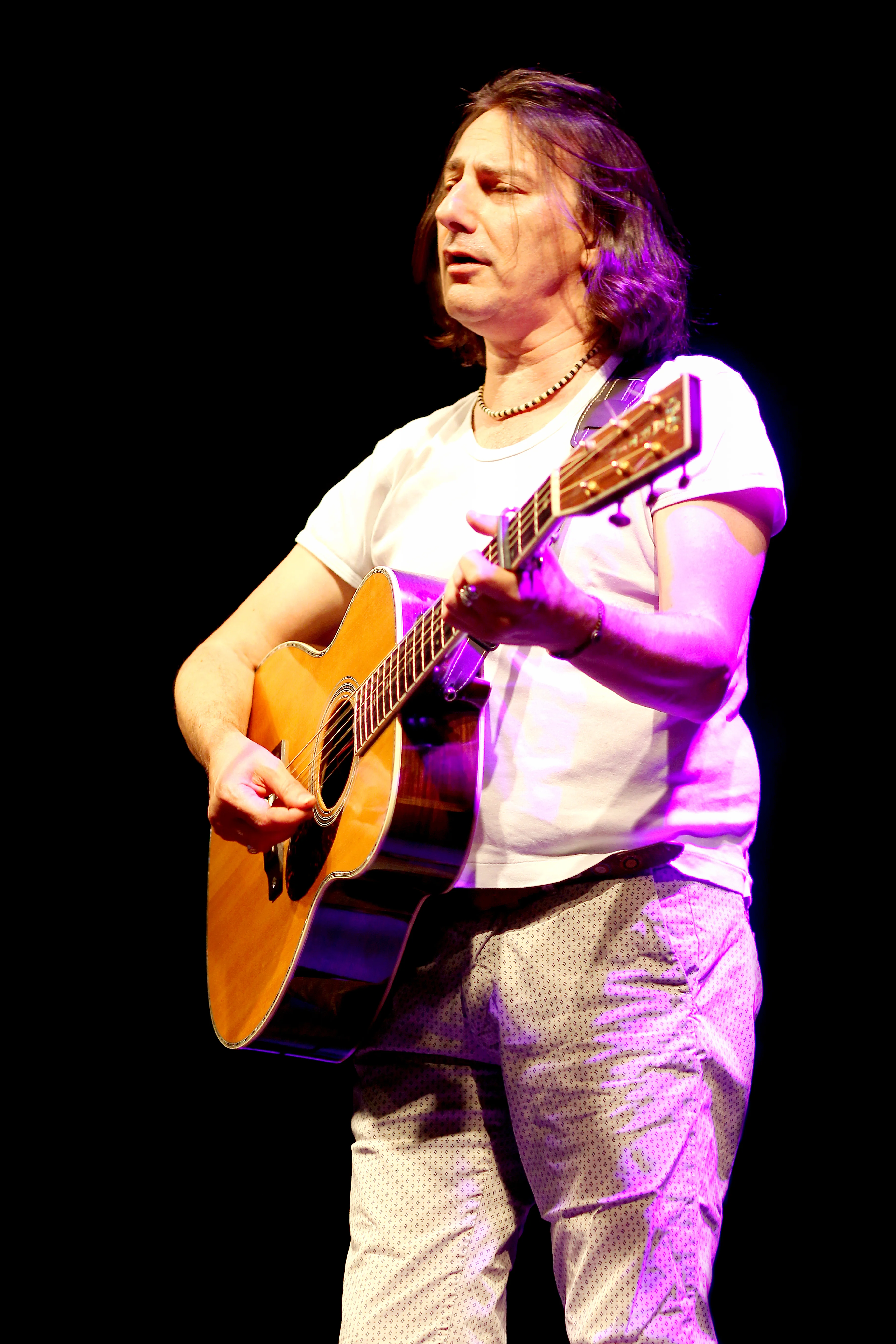
Image from Wikipedia
Image from Wikipedia
Pippo Pollina – The Sicilian Cantautore Between Protest, Poetry, and European Stage Power
An Artist with Stance, Voice, and History
Giuseppe “Pippo” Pollina, born on May 18, 1963, in Palermo, is one of the most distinctive Italian cantautori of his generation. His music career is closely linked to political awareness, literary language, and an unusually broad European perspective. From his Sicilian roots, through the experiences of the 1980s, and a consistent artistic development, he has created a body of work that goes far beyond classical singer-songwriter artistry. ([pippopollina.com](https://www.pippopollina.com/it/biografia/?utm_source=openai))
Pollina represents a form of songwriting where composition, lyrics, voice, and social observation form a unity. He is a musician, author, and chronicler all at once, intertwining personal biography and collective history. This mixture makes him exciting for music lovers who seek not only melodies in songs but also attitude, context, and emotional depth. ([pippopollina.com](https://www.pippopollina.com/de/werk/buch/verse-fuer-die-freiheit-mein-leben-meine-lieder/))
From Palermo to the World: Biographical Roots and Early Influences
Pollina's journey begins in Palermo, but his artistic identity emerges in the tension between home and departure. In the mid-1980s, he leaves the city because life in Sicily becomes unbearable under the pressure of the Mafia. This biographical turning point profoundly shapes his later work: freedom, responsibility, exile, memory, and civil courage become recurring themes in his lyrics. ([pippopollina.com](https://www.pippopollina.com/de/werk/buch/verse-fuer-die-freiheit-mein-leben-meine-lieder/))
An important early milestone is his brief journalistic work for the monthly magazine I Siciliani under Giuseppe Fava, whose murder in 1984 in Catania became part of Italian contemporary history. Even at this stage, Pollina shows his closeness to political public life and cultural resistance. Not coincidentally, his own biography later describes him as an artist who uses words as a weapon. ([pippopollina.com](https://www.pippopollina.com/de/biografie/))
After leaving Palermo, the young Sicilian travels for more than two years across Europe without a fixed destination, from Hungary to the GDR, and on to France, England, Austria, the Netherlands, Germany, Switzerland, and Scandinavia. These years of wandering are crucial for his music career, as they broaden Pollina's horizons and open a European resonance space where he can later work with different languages, audiences, and musical traditions. ([pippopollina.com](https://www.pippopollina.com/de/biografie/))
The Path to Cantautore: Debut, Development, and Artistic Maturity
Pollina makes his appearance with Agricantus as early as 1983, later developing an independent career as a cantautore. His first album Aspettando che sia Mattino is released in 1986, followed by early works such as Sulle Orme Del Re Minosse and Nuovi giorni di settembre. The chronology of his discography shows an artist who does not rely on quick effects but builds a cohesive, steadily growing oeuvre over decades. ([pippopollina.com](https://www.pippopollina.com/de/biografie/))
In the 1990s, his profile sharpens. With Le Pietre di Montsegur, Dodici lettere d’amore, Rossocuore, and Il Giorno del Falco, Pollina expands his palette of expression between acoustic intimacy, poetic narration, and political reflection. His work remains closely tied to the tradition of Italian singer-songwriter music while also being open to European influences, multilingualism, and dialogical forms. ([pippopollina.com](https://www.pippopollina.com/de/werk/cd/nellattimo/))
A significant turning point follows in 2001 with Versi per la libertà. The album receives strong critical acclaim; music magazines such as Rockstar, Mucchio Selvaggio, and Rockerilla praise it, while major daily newspapers regard Pollina as an important heir to Italian singer-songwriter music. Thus, he firmly establishes himself as a voice that combines artistic substance with social relevance. ([pippopollina.com](https://www.pippopollina.com/de/biografie/))
International Stage and Major Tours
Pollina's stage history is characterized by extensive tours. Notably, the L’appartenenza tour with the Palermo Acoustic Quintet becomes a European success: 250 concerts in 18 months take him through Switzerland, Germany, Italy, Liechtenstein, France, and the Czech Republic. These numbers refer not only to reach but also to the exceptional live presence of an artist who connects with his audience across language and borders. ([pippopollina.com](https://www.pippopollina.com/de/biografie/))
The album L’appartenenza itself enters the Swiss and German charts immediately, reaching number 19 in Switzerland for three weeks and remaining in the Top 100 in Germany for two weeks. For an Italian singer-songwriter in the German-speaking world, this is a remarkable success that underscores Pollina's unique position between the Mediterranean and Central Europe. Additionally, the album was chosen as one of the 50 best albums of the year by the Premio Tenco in 2014. ([pippopollina.com](https://www.pippopollina.com/de/biografie/))
The spectacular conclusion of this phase is Süden Grande Finale, documenting the trilogy and the associated concert dramaturgy in the Arena of Verona. Later, in 2015, a festive conclusion follows at the Zürich Hallenstadion before 8,000 spectators, with guests like Schmidbauer & Kälberer, Franco Battiato, Konstantin Wecker, Linard Bardill, Etta Scollo, Giorgio Conte, and other companions. Here, Pollina demonstrates his ability to forge musical networks and work across generations. ([pippopollina.com](https://www.pippopollina.com/de/biografie/))
Discography: A Work Bridging Song, Live Moments, and Literary Ambition
Pollina's discography is extensive and dramaturgically structured. Key milestones include Il Giorno del Falco (1997), Versi per la libertà (2001), Bar Casablanca (2005), Racconti e Canzoni (2006), Süden (2012), L’appartenenza (2014), I Fiori Del Male (2016), Il Sole che verrà (2017), Süden II (2019), Canzoni Segrete (2021), Nell’attimo (2024), and Fra guerra e pace (2025). This sequence not only shows productivity but also a densely layered aesthetic handwriting developed over decades. ([pippopollina.com](https://www.pippopollina.com/de/werk/cd/nellattimo/))
Especially noteworthy is Pollina's work with live formats and special projects. Grande Finale – Live in der Arena di Verona and Live at Hallenstadion capture key moments of his stage artistry, while his work also includes books such as Der Andere and Verse für die Freiheit: Mein Leben, meine Lieder. This expands the classic singer-songwriter model with literary and narrative dimensions. ([pippopollina.com](https://www.pippopollina.com/de/werk/cd/nellattimo/))
His recent releases also demonstrate artistic consistency. Nell’attimo was released in 2024 and contains twelve tracks, including both songs and instrumental pieces. The album Fra guerra e pace, released in 2025, addresses the theme of war and peace, combining personal and historical perspectives while utilizing great instrumental diversity. Thus, Pollina remains thematically relevant and musically open to new shades. ([pippopollina.com](https://www.pippopollina.com/de/werk/cd/nellattimo/))
Style, Language, and Musical Signature
Pollina's style thrives on the connection of acoustic warmth, clear melody, and thematic density. His songs often possess a narrative structure that resembles literary miniatures more than quick pop formulas. In production, he emphasizes instrumental variety without losing sight of the core of the song; this makes his work exciting for an audience that appreciates musical depth and lyrical quality. ([pippopollina.com](https://www.pippopollina.com/de/news/fra-guerra-e-pace-die-neue-cd-erscheint-am-05-dezember/))
Equally significant is his multilingualism and cultural mediation efforts. Pollina sings in Italian but has worked in a European context for decades, where German, Swiss, Italian, and other influences intersect. His stage presence is thus not provincial but dialogical: he tells local stories with internationally understandable emotion. ([pippopollina.com](https://www.pippopollina.com/de/biografie/))
Collaboration with orchestras further emphasizes this openness. For 2025, Pollina announced a few selected concerts with the Zurich Conservatory's Symphony Orchestra and the Swiss Youth Symphony Orchestra, supplemented by additional musicians on clarinet, percussion, and double bass. This points to an artist who does not view his compositions as static studio objects but as living forms that continuously breathe anew in arrangement. ([pippopollina.com](https://www.pippopollina.com/de/orchester2025/?utm_source=openai))
Current Projects, Awards, and Reception
Pollina remains active in the present. In 2025, the orchestral project was announced with concerts in Germany, Austria, Switzerland, Italy, and France; his website also reported a tour in Switzerland, Germany, and Austria for early 2026 to promote the album Fra guerra e pace. This shows an artist who does not linger in the past but continues his music career with clear, current projects. ([pippopollina.com](https://www.pippopollina.com/de/orchester2025/?utm_source=openai))
Additionally, there are official recognitions such as the award in Freiburg in January 2014 and the Premio Archimede in the summer of 2015. The chart placements of L’appartenenza and Il Sole che verrà also confirm Pollina's relevance in the European market. Together with critical acknowledgment from the press, a picture emerges of an artist whose quality is not claimed but has been proven over decades. ([pippopollina.com](https://www.pippopollina.com/de/biografie/))
Conclusion: Why Pippo Pollina Continues to Fascinate Today
Pippo Pollina combines biographical experience, political awareness, and musical maturity into a rare artistic unity. His work speaks of flight and homeland, dignity and resistance, love and loss, Europe and Sicily. Those who listen to him encounter not just a singer, but a storyteller with conviction, a voice with depth, and a cantautore with international appeal. ([pippopollina.com](https://www.pippopollina.com/de/werk/buch/verse-fuer-die-freiheit-mein-leben-meine-lieder/))
It is precisely in this tension that his relevance lies: Pollina remains pertinent because he never separates the personal from the political and the poetic from the concrete. His concerts are not merely nostalgia nights but living encounters with a mature body of work. Anyone who loves Italian songwriting, intelligent lyrics, and strong stage presence should experience Pippo Pollina live. ([pippopollina.com](https://www.pippopollina.com/de/biografie/))
Official Channels of Pippo Pollina:
- Instagram: No official profile found
- Facebook: No official profile found
- YouTube: No official profile found
- Spotify: https://open.spotify.com/artist/5npjIDoA8dath4yVEVmKhZ
- TikTok: No official profile found
Sources:
Upcoming Events
Pippo Pollina & Quartetto Acustico
Pippo Pollina live in Bonn - Pantheon Concert 2026
LaSoNA-OpenAir: Pippo Pollina and Palermo Acoustic Quintet
Pippo Pollina and Palermo Acoustic Quintet - In Concert 2026
Palazzo Festival - Pippo Pollina & Palermo Acoustic Quintett
Pippo Pollina & Palermo Acoustic Quintet
Pippo Pollina – Life is beautiful just the way it is