
Philipp Weber (Kabarettist)
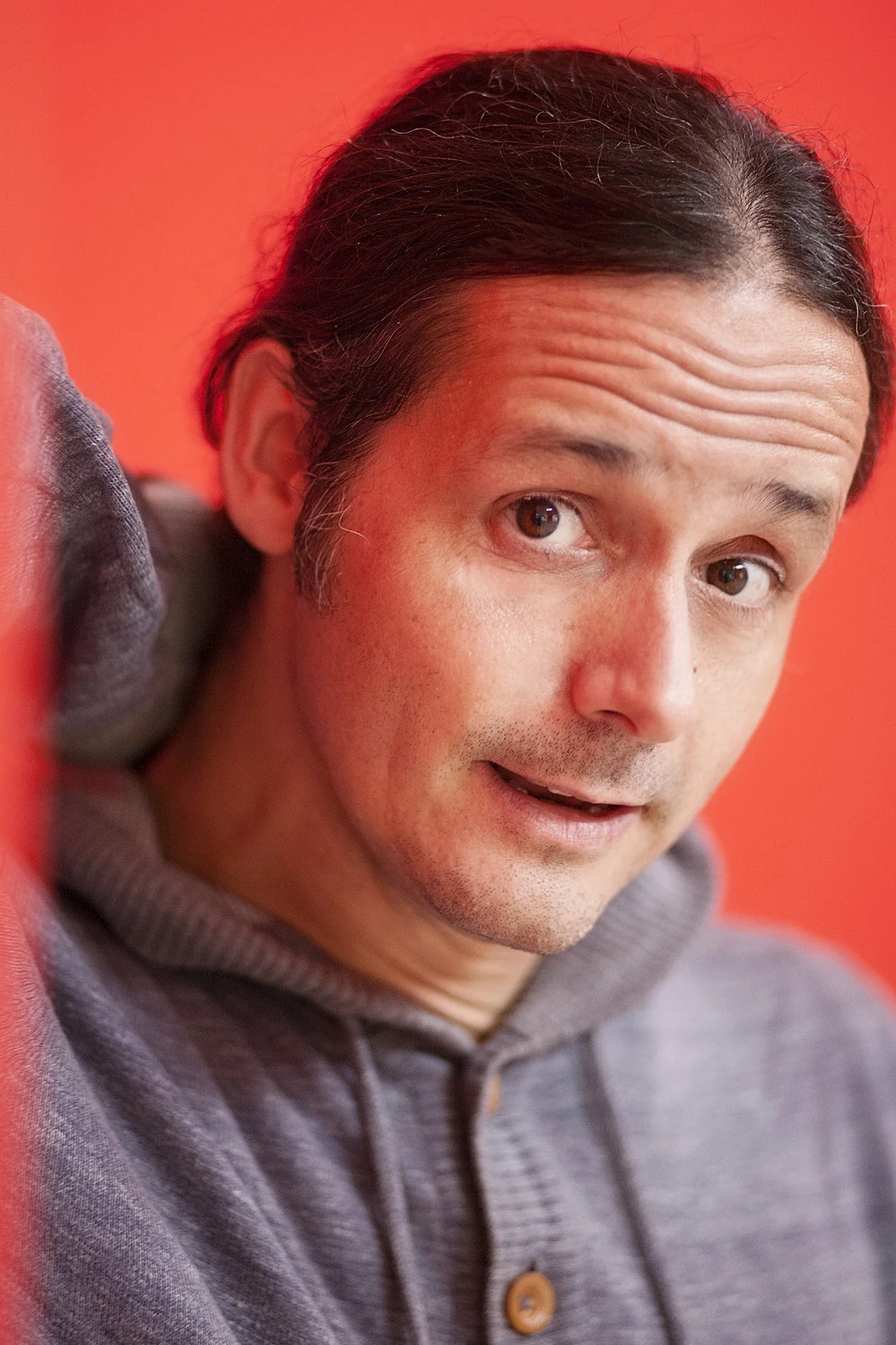
Image from Wikipedia
Image from Wikipedia
Philipp Weber (Cabaret Artist) – Biography, Programs, Awards
Between Sharp Insight and Joy of Performance: Why Philipp Weber Sets Standards on Stage
Philipp Weber, born on July 22, 1974, in Miltenberg, is a German cabaret artist and author who has steadily refined his music career in a broader sense as a stage performer since the late 1990s. His artistic development is rooted in solid knowledge: The trained biologist and chemist merges scientific precision on stage with humorous storytelling and pointed social criticism. His stage presence balances tempo, timing, and tone – sometimes analytically sharp, sometimes playful, always close to the audience. Since 2004, Weber has been devoted full-time to cabaret and has established a firm place in the German-speaking cabaret landscape with award-winning programs and striking themes – from consumer protection to democracy.
Early Years and Beginnings: From Lecture Hall to Small-Scale Stages
Growing up in the Odenwald, Weber moved to Tübingen in 1996 to study, where he initially explored various subjects before switching to biology and chemistry in 1998 and passing the First State Examination in 2003. His early performances in Tübingen laid the foundation for his career: From scientific curiosity sprang cabaret energy. Even in his first solo pieces, he linked everyday observations with fact-based punchlines – a tone that later matured into his trademark. The professional turn came in 2004: Since then, Weber has been touring continuously, regularly updating content, and maintaining several programs in his repertoire – an artistic strategy that ensures flexibility and relevance.
The Breakthrough: Awards, Profiles, and the Formation of a Unique Style
It became evident early on that Weber stands for precise language and dense composition. As early as 2002, he received the Passauer Scharfrichterbeil; 2004 saw him awarded the Baden-Württemberg Cabaret Prize. With the promotion prize of the German Cabaret Prize in 2008, the scene underscored his position as the voice of an enlightened, fact-oriented satire. The jury's rationales repeatedly emphasize the same quality markers: imaginative texts, reflective attitudes, and intelligent arrangements of knowledge and wit. In the following years, Weber intensified this line and won further renowned awards – from the Salzburger Stier (with ensemble) to the German Cabaret Prize (with ensemble). This award biography reflects not only recognition but also continuity in his aspirations.
Programs as Discography: Thematic Range and Dramatic Development
Weber operates programmatically like a conceptual artist: Each program focuses on a socially charged theme, whose facets he shapes with narrative economy and cabaret improvisation into a tension arc. His central solo works include among others FUTTER – strict digestibility (consumer protection and food policy), DURST – Waiting for Merlot (a satirical cultural history of drinking), WEBER N°5: I Love Him! (marketing, manipulation, and consumption), as well as KI: Künstliche Idioten (digitalization and artificial intelligence). With POWER TO THE POPEL: Democracy for Newcomers, he also addresses a core question of our time: How can democratic culture be defended with humor without denying complexity? The production aesthetics of his shows – from the composition of punchlines to the rhythmic arrangement – is evident: A red thread runs through clearly structured chapters, in which he tests theses, sharpens examples, and breaks expectations.
Current Projects 2024–2026: AI, Democracy, and the Art of Enjoyment
Between 2024 and 2026, Weber positions himself with two strong axes: political education and technology assessment. KI: Künstliche Idioten dissects the everyday life of digitalization – from operating logic to control fantasies – and shows how satire functions as a critical resonance space. Simultaneously, POWER TO THE POPEL: Democracy for Newcomers runs, an invitation to humorous self-reflection in tense times. He achieves thematic expansion even beyond the stage: With the book Kunst Essen, Weber connects cookbook, art history, and food photography into an interdisciplinary work that dialogically intertwines culinary culture and pictorial traditions. His current tour practice confirms his stage presence: Weber continuously performs in theaters, cultural houses, and festivals, updates references, and responds to current diagnostics – a dynamic repertoire that makes relevance an aesthetic principle.
Awards and Career Milestones: A Canon of Recognition
Weber has received numerous awards documenting his artistic development: From the Passauer Scharfrichterbeil (2002) to jury awards like the Obernburger Mühlstein (2003) to the Baden-Württemberg Cabaret Prize (2004), a chain of accolades spans. With the German Cabaret Prize (Promotion Prize, 2008) and honors like the Leipzig Dandelion (Laughter Festival) and the “Gaul von Niedersachsen” (for WEBER N°5), he solidified his authority in the scene. These awards are not just laurels, but signatures of a stance: They mark moments when his demands on research, argumentation, and artistic sharpening visibly struck a nerve – with the audience as well as in the specialist press.
Style, Language, Attitude: The Tools of a Universalist
Weber works with the grammar of comedy – contrast, condensation, perspective shifts – and links it with expertise from biology and chemistry. In practice, this means: He develops humorous scenes from concepts, data, and studies that sharpen perception instead of obscuring it. His compositions utilize guiding motives (e.g., promises of consumption), which he tests for their absurdity in ever new arrangements. Tone color and articulation are precisely set: Balancing between teaching piece and burst of laughter, he maintains a dialogical basic attitude that addresses the audience as fellow thinkers. Thus, a style emerges that combines a love of facts with a joy of performance – cabaret enlightenment without dogma.
Cultural Influence and Media Presence: Cabaret as a Resonance Space
Weber engages with the interfaces of stage and media. TV appearances in formats like Schlachthof, Die Anstalt, 3sat Festival, or BR-/3sat Cabaret Evenings broaden the reach of his themes. On-site – from small cabaret houses to big stages – he fosters direct contact that fits his approach: first observe, then organize, finally sharpen. Press reports from various regions underline the lasting audience resonance of his tours. In total, a profile emerges that makes cabaret visible as a socially relevant, artistically autonomous genre – with Weber as an author and arranger who curates content and condenses experiences.
Writing and Sound: Books, Recordings, and Award Ceremonies
As an author, Weber publishes on topics related to food and consumption. Titles like Essen kann jeder! and Ragout vom Mammut demonstrate his engagement with everyday culture and science. Furthermore, there are recordings and collections documenting award evenings – such as the gala for the German Cabaret Prize in 2008. Such publications function like an acoustic discography of the scene: They preserve the atmosphere and show how pointed language emerges in vibrant performances. For Weber, the archive is not just a retrospective but a tool – a resource from which he continuously sharpens repertoire and new works.
Reception and Critique: Precision, Tempo, Audience Proximity
Cultural sections and regional press honor Weber's analytical sharpness and his ability to comically distill complex issues. Critics emphasize the elegant intertwining of research, rhythm, and rhetoric. Programs like WEBER N°5 or KI: Künstliche Idioten are read as entertaining yet substantially argued discussions of the present – cabaret as an art of knowledge. His stage presence, in particular, is highlighted: Weber switches confidently between narrative arcs, character voices, and anecdotal interjections; the dramaturgy remains clear, and the finale hits home. Thus, a performance emerges that resonates in memory.
Voices of the Fans
The reactions of fans clearly show: Philipp Weber captivates people across the German-speaking world. On Instagram, a visitor raves: “The blend of knowledge and wit is unique – please more of this!” On Facebook, a listener writes: “Rarely have I laughed so much and learned at the same time.” On YouTube, a comment states: “Punchlines at lightning speed and still close to real life – amazing!” These responses mark what distinguishes his performances: an intense dialogue between stage and hall that resonates further online.
Conclusion: Cabaret with a Compass – Why Experience Philipp Weber Live?
Philipp Weber combines expertise and empathy, research and willingness to take risks. His programs are precisely composed evenings with a perspective: They open spaces for thought without lecturing and invite laughter about personal certainties. Anyone following his artistic development recognizes an author-performer who continuously works on form and statement – from consumer protection to democracy, from science to everyday life. Live, the full quality is revealed: timing, text, temperament. Those who take cabaret seriously as contemporary art should experience Weber on stage – where humor becomes the cleverest virtue of democracy.
Official Channels of Philipp Weber:
- Instagram: https://www.instagram.com/weberkabarett/
- Facebook: https://www.facebook.com/PhilippWeber.Kabarettist
- YouTube: https://www.youtube.com/user/PhilippWeberKabarett
- Spotify: No official profile found
- TikTok: No official profile found
Sources:
- Philipp Weber – Official Website
- Wikipedia – Philipp Weber (Cabaret Artist)
- Frankfurter Neue Presse – "Philipp Weber is Waiting for Merlot," May 20, 2025
- Passauer Neue Presse – German Cabaret Prize (Background Report), September 30, 2025
- Tagesspiegel – German Cabaret Prize 2008 (Report), January 2009
- nmz – Small Arts Prize Baden-Württemberg 2004
- German Digital Library – Work Directory/Author
- Donaukurier – Announcement "WEBER N°5: I Love Him," February 5, 2026
- OVB Heimatzeitungen – "Cabaret Artist Philipp Weber on AI," January 12, 2026
- YouTube – Philipp Weber (Channel)
- Wikipedia: Image and Text Source
Upcoming Events
Philipp Weber – Power to the Popel
Philipp Weber – Power to the Popel
Philipp Weber – Power to the Popel: Democracy for Career Changers
Cabaret: Philipp Weber – Power to the Popel