
Megadeth
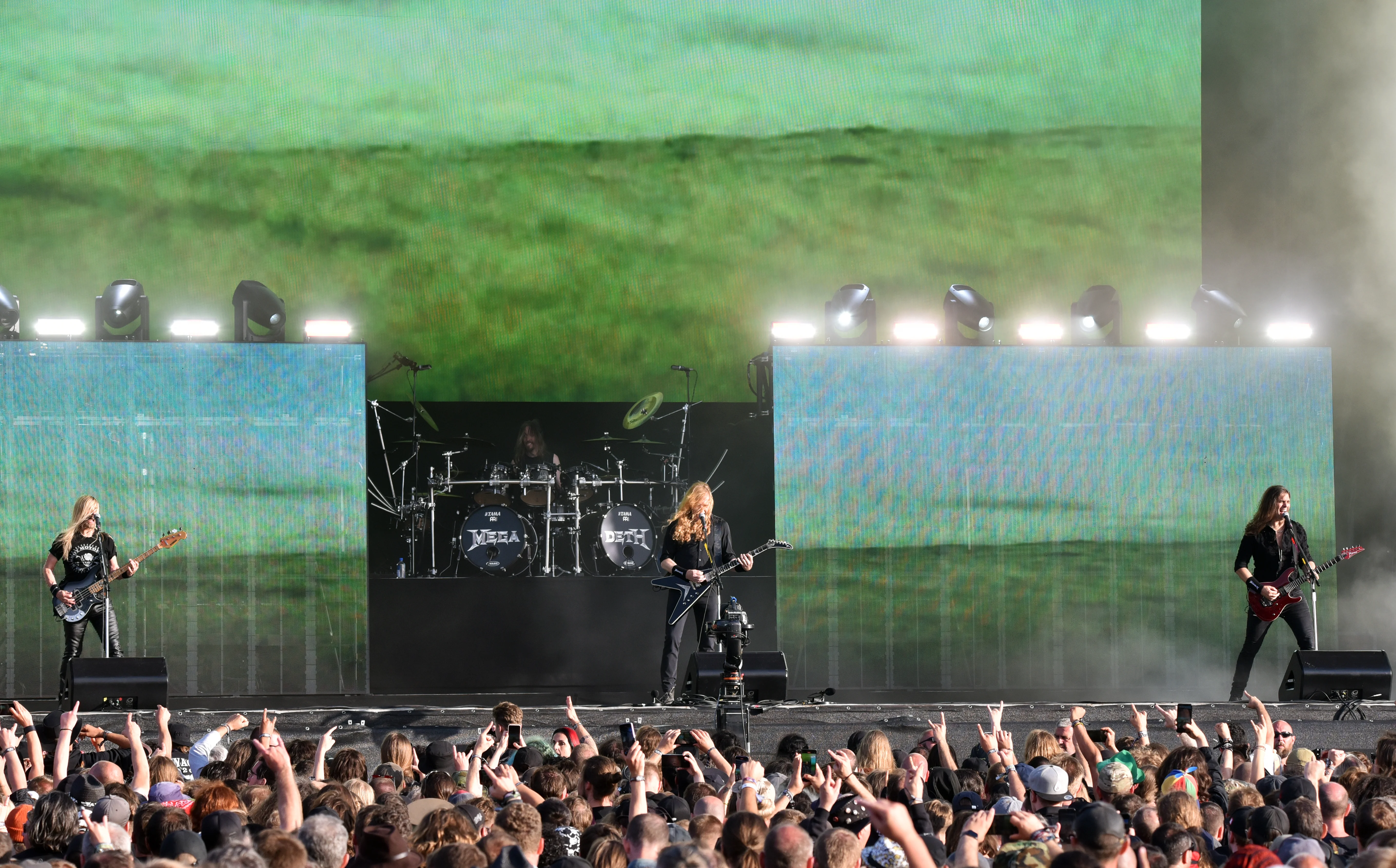
Image from Wikipedia
Image from Wikipedia
Megadeth: The Uncompromising Thrash Metal Force Led by Dave Mustaine
A band that redefined metal and continues to perform with precision, power, and attitude
Megadeth is one of the most influential names in heavy metal history. The American band was founded in 1983 by Dave Mustaine after his departure from Metallica and quickly developed into one of the sharpest voices in thrash metal. With complex riffs, high tempos, and politically charged lyrics, the group created a sound that has shaped generations of metal fans. ([en.wikipedia.org](https://en.wikipedia.org/wiki/Megadeth_%28album%29?utm_source=openai))
What makes Megadeth special is the combination of technical virtuosity and aggressive directness. The band is part of the “Big Four” of thrash metal, alongside Metallica, Slayer, and Anthrax, and has stood for precision, artistic ambition, and maximum stage presence for decades. With over 25 million albums sold worldwide and a discography that now includes 15 studio albums up to the announced final work, Megadeth has secured its place in the metal canon permanently. ([en.wikipedia.org](https://en.wikipedia.org/wiki/Megadeth_%28album%29?utm_source=openai))
The Beginnings: From Rebellion to a Unique Musical Universe
Megadeth emerged from a creative friction that became central to the band's future style. After his time with Metallica, Dave Mustaine brought not only experience but also a clear aesthetic vision: the new band should sound fast, hard, intricate, and melodic. Together with Greg Handevidt, David Ellefson, and Dijon Carruthers, he laid the foundation for a project that aimed to not only reproduce thrash metal but to push it forward. ([en.wikipedia.org](https://en.wikipedia.org/wiki/Megadeth_%28album%29?utm_source=openai))
Even in its early years, the distinctive style that made Megadeth recognizable began to crystallize: cutting guitar work, complex song structures, and an almost obsessive demand for precision. After some initial lineup changes, Kerry King briefly joined the band before focusing on Slayer again just before their first concert. This early phase illustrates how closely intertwined the paths of the thrash pioneers were and how much Megadeth grew out of the metal eruption of that time. ([en.wikipedia.org](https://en.wikipedia.org/wiki/Megadeth_%28album%29?utm_source=openai))
The Breakthrough: From Scene Institution to International Reference Point
The real breakthrough came with albums that are still considered style references today. Particularly the lineup from 1990 to 1998, featuring Mustaine, David Ellefson, Nick Menza, and Marty Friedman, is regarded as the band's most successful phase. This lineup produced works like Rust in Peace, Youthanasia, and Countdown to Extinction, the latter of which achieved double platinum status and finally propelled Megadeth to the forefront of metal. ([en.wikipedia.org](https://en.wikipedia.org/wiki/Megadeth_%28album%29?utm_source=openai))
This era combined technical sophistication with catchy hooks and clearer songwriting. Megadeth sharpened its identity during this time, balancing progressive complexity with massive live impact. Notably, Rust in Peace and Countdown to Extinction are still regarded as milestones because they elevated thrash metal to a new level with musical discipline, virtuosic solos, and precise political expression. ([en.wikipedia.org](https://en.wikipedia.org/wiki/Megadeth_%28album%29?utm_source=openai))
Musical Development: Hardness, Technique, and Socially Critical Lyrics
Megadeth stands for a particularly dense form of metal craftsmanship. The band is known for technically sophisticated instrumental passages, tightly interwoven guitar riffs, and fast, melodic solos that often feel like a duel between precision and chaos. Mustaine's vocals and lyrics have always addressed political conflicts, war, religion, and social tensions, giving the music a distinct argumentative sharpness. ([en.wikipedia.org](https://en.wikipedia.org/wiki/Megadeth_%28album%29?utm_source=openai))
This combination of virtuosity and attitude provides the band with its authority. Megadeth has never been just a loud metal band, but a project with a clear aesthetic line and high compositional discipline. In the history of metal, the group occupies a unique position: less raw than some contemporaries, yet often more complex, analytical, and structurally refined. ([en.wikipedia.org](https://en.wikipedia.org/wiki/Megadeth_%28album%29?utm_source=openai))
Breaks, Dissolution, and Return: The Story of an Unshakable Band
The history of Megadeth is marked by constant lineup changes, yet Dave Mustaine remained the constant center. After a dissolution due to an arm injury in 2002, the band returned in 2004 with The System Has Failed. The album reached number 18 on the Billboard Top 200 and was mostly well received for its return to form. ([en.wikipedia.org](https://en.wikipedia.org/wiki/Megadeth_%28album%29?utm_source=openai))
With United Abominations and later Endgame, Megadeth continued this renaissance. In particular, Endgame from 2009 was often heralded as the strongest album since the great 1990s phase. During this time, it became evident that Megadeth was not living off nostalgia but was still capable of combining contemporary production, tight songwriting, and technical finesse into a credible statement about the present. ([en.wikipedia.org](https://en.wikipedia.org/wiki/Megadeth_%28album%29?utm_source=openai))
Current Projects: The Last Album and the Grand Farewell
In August 2025, Megadeth announced that the upcoming studio album would be the band's last. The self-titled album Megadeth was released on January 23, 2026, and was published through Dave Mustaine's Tradecraft imprint in partnership with BLKIIBLK from Frontiers Label Group. The release was accompanied by the singles “Tipping Point,” “I Don’t Care,” “Let There Be Shred!” and “Puppet Parade.” ([megadeth.com](https://www.megadeth.com/pages/timeline?utm_source=openai))
The band worked again in 2025 with producer Chris Rakestraw, who had already produced the previous albums The Sick, The Dying... And The Dead! and Dystopia. Official band announcements also linked the album to a worldwide farewell tour scheduled for 2026. This brings the journey full circle, highlighting Megadeth as a live band once more. ([megadeth.com](https://www.megadeth.com/pages/timeline?utm_source=openai))
Discography, Successes, and Critical Reception
To date, Megadeth's discography includes 15 studio albums, four live albums, four compilations, 26 singles, two EPs, and 32 music videos. The commercially successful releases include those albums that received multiple platinum certifications in the 1990s. The band has a total of five consecutive albums that have been certified platinum or multi-platinum, an indicator of their extraordinary breadth in the metal market. ([en.wikipedia.org](https://en.wikipedia.org/wiki/Megadeth_%28album%29?utm_source=openai))
The reception of the recent phase has also been respectable. The System Has Failed was praised for its reboot, and Endgame is considered by many observers to be a return to form. In 2026, the final album was described in the press as energetic, focused, and unusually powerful for a farewell, while achieving major chart successes, including number 1 on the Billboard 200 as well as high placements in several countries. ([apnews.com](https://apnews.com/article/eefefa8a64f89d6ad6c8f1123642c559?utm_source=openai))
Cultural Influence: Why Megadeth Remains Relevant Today
Megadeth has not only shaped thrash metal but has redefined it. The band represents a school of metal where speed, attention to detail, and thematic sharpness coexist equally. Younger generations of guitarists and metal fans continue to discover in Megadeth the connection between technical challenge and emotional intensity. ([en.wikipedia.org](https://en.wikipedia.org/wiki/Megadeth_%28album%29?utm_source=openai))
The cultural value of the band also lies in its long-distance impact. Megadeth embodies the idea that extreme metal can be more than just pure hardness: a place for composition, attitude, and musical precision. That the band will end in 2026 with a final studio album and farewell tour only reinforces the status of this catalog as a piece of metal history of extraordinary density. ([musicradar.com](https://www.musicradar.com/artists/dave-mustaine-announces-megadeth-final-studio-album-and-2026-farewell-tour?utm_source=openai))
Conclusion: A Legend that is Not Just Heard, but Experienced
Megadeth remains exciting because the band has connected constant renewal with a clear identity for over four decades. Between virtuosic guitar lines, political sharpness, and uncompromising live energy, the group has created a body of work that takes a firm place in metal history. Anyone wanting to understand how thrash metal can be technically challenging, melodic, and ruthless cannot overlook Megadeth. ([en.wikipedia.org](https://en.wikipedia.org/wiki/Megadeth_%28album%29?utm_source=openai))
Right now, in the shadow of the announced farewell, the band feels as compelling as ever. Megadeth is a chapter of music history that should be experienced on stage one last time before the curtain finally falls. ([musicradar.com](https://www.musicradar.com/artists/dave-mustaine-announces-megadeth-final-studio-album-and-2026-farewell-tour?utm_source=openai))
Official Channels of Megadeth:
- Instagram: https://www.instagram.com/davemustaine/?hl=en
- Facebook: https://www.facebook.com/davemustaine/
- YouTube: https://www.youtube.com/@davemustaine4720?app=desktop
- Spotify: https://open.spotify.com/artist/1Yox196W7bzVNZI7RBaPnf
- TikTok: https://www.tiktok.com/@davemustaine?lang=en
Sources:
Upcoming Events
Megadeth - Concert at the Amphitheater Gelsenkirchen
Megadeth - Support: Mammoth
Megadeth Concert