
Carmen Maura
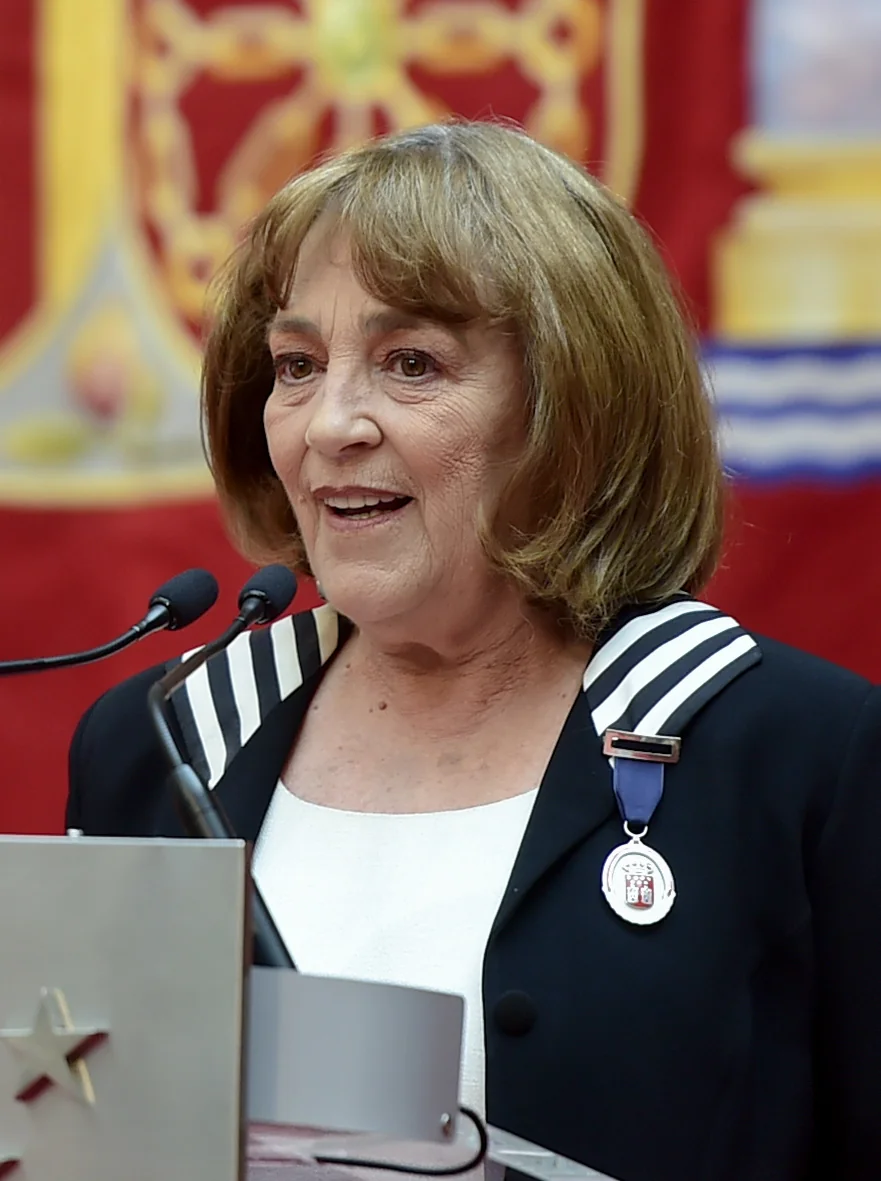
Image from Wikipedia
Image from Wikipedia
Carmen Maura – The Great Spanish Actress Between Comedy, Tension, and European Film History
An Exceptional Phenomenon of Spanish Cinema
Carmen Maura is one of the most influential actresses in Europe. Born on September 15, 1945, in Madrid, she has developed over six decades into an artist whose name is inseparably linked to Spanish auteur cinema. Her career spans from the beginnings in cabaret to early film roles, culminating in international accolades and a filmography that combines both comedic energy and dramatic depth. ([en.wikipedia.org](https://en.wikipedia.org/wiki/Carmen_Maura))
Her artistic profile is closely associated with Pedro Almodóvar, whose early films would be nearly unthinkable without Maura. At the same time, her significance extends far beyond this partnership: Carmen Maura has become the embodiment of the versatility of European cinema, an actress with sharp timing, a boldness for exaggeration, and a distinctive eye for human fractures. ([en.wikipedia.org](https://en.wikipedia.org/wiki/Carmen_Maura))
Biography: From Madrid to Paris and onto the Screen
Maura studied philosophy and literature at the École des Beaux-Arts in Paris, bringing with her a cultural influence that would visibly impact her later work: attention to language, character depth, and social observation. Before breaking into film, she worked as a cabaret singer, which laid an early foundation for her stage presence and sense of rhythm. This mix of intellectual background and performative experience made her an extraordinarily versatile personality from a young age. ([en.wikipedia.org](https://en.wikipedia.org/wiki/Carmen_Maura))
Her personal circumstances were not without crises, yet it was precisely from this that her focused and resilient aura emerged, often making her roles so credible. Biographical sources describe how private disappointments and financial setbacks did not distance her from art but, rather, strengthened her resolve to assert film as her artistic refuge. ([en.wikipedia.org](https://en.wikipedia.org/wiki/Carmen_Maura))
Career Beginnings and the Breakthrough with Almodóvar
The actual start of her film career came in 1970 with a role in The Man in Hiding, before she received a larger role in 1977 with Tigres de papel. However, it was her collaboration with Pedro Almodóvar that brought her into the cultural memory, starting with Pepi, Luci, Bom y otras chicas del montón in 1980. Throughout the 1980s, several films followed that established Maura as a vibrant, bold, and comedically precise presence. ([en.wikipedia.org](https://en.wikipedia.org/wiki/Carmen_Maura))
The international breakthrough came with Mujeres al borde de un ataque de nervios / Women on the Verge of a Nervous Breakdown. For her role as Pepa, Maura won the first European Film Award for Best Actress in 1988; the same production also granted her enormous visibility beyond Spain. The British and European press still emphasizes the electrifying tension of her performance: a character that hovers between control and overwhelm, revealing her greatness precisely therein. ([en.wikipedia.org](https://en.wikipedia.org/wiki/Carmen_Maura))
Maturity, Breaks, and the Return to Major Roles
After her initial phase with Almodóvar, there was a longer silence, but Maura returned to the director's universe in 2006 with Volver. The film marked not only an artistic reunion but also a late triumph, as the ensemble won the Best Actress Award at Cannes. This return underscored how much Maura had become the ideal bearer of complex female figures, even beyond individual aesthetics. ([en.wikipedia.org](https://en.wikipedia.org/wiki/Carmen_Maura))
Throughout her career, she has worked with numerous significant directors, including Francis Ford Coppola, Carlos Saura, Álex de la Iglesia, Amos Gitai, and Étienne Chatiliez. This breadth clearly shows her extraordinary adaptability: Maura was able to impress in both auteur films and more popular productions, in tragedies as well as in comedies. Therefore, her filmography also reads as a panorama of European film culture over the past decades. ([en.wikipedia.org](https://en.wikipedia.org/wiki/Carmen_Maura))
Awards, Recognition, and Cultural Significance
The list of her honors is impressive. Carmen Maura holds the record for the most Goya Awards for Best Actress with three wins and has a total of four Goya Awards. Additionally, she has won a César Award, a Cannes Prize, and the Lifetime Achievement Award from the European Film Academy in 2019. This history of awards documents not only success but a rare continuity of artistic excellence. ([en.wikipedia.org](https://en.wikipedia.org/wiki/Carmen_Maura))
Institutionally, she also holds great weight: On the website of the European Film Academy, her contributions are recognized as part of European film history, while Cannes documents her presence in the competition. That she is described as a cine-icon, a strong female figure, and even a gay idol refers to the cultural reach of her roles, which have often had effects far beyond the respective film. ([en.wikipedia.org](https://en.wikipedia.org/wiki/Carmen_Maura))
Style and Acting Craft: Comedy with an Edge, Drama with Precision
Maura is not an actress of smooth expression but of controlled instability. Her characters often embody nervousness, obstinacy, and energy without ever tipping into pure caricature. In her best roles, comedic timing, psychological accuracy, and an almost musical precision in the rhythm of the dialogues merge seamlessly. ([en.wikipedia.org](https://en.wikipedia.org/wiki/Carmen_Maura))
This style is particularly visible in Almodóvar's films: Maura plays women who assert themselves, stumble, attack, love, and survive. International critics have repeatedly praised her ability to endure extremes while still remaining human. Her presence transforms scenes into small furnaces where emotion, humor, and social observation converge. ([en.wikipedia.org](https://en.wikipedia.org/wiki/Carmen_Maura))
Late Projects and Continuing Relevance
Even in her later years, Carmen Maura remains a sought-after actress. In 2025, she was seen in Calle Málaga, a drama by Maryam Touzani, which has been described in reports as a significant work with a strong leading role. In parallel, industry media reported other projects, including the Netflix production La cuidadora directed by Álex de la Iglesia. This indicates that her career is not a completed monument but a vibrant part of contemporary cinema. ([about.netflix.com](https://about.netflix.com/news/alex-de-la-iglesia-carmen-maura-and-blanca-suarez-together-in-a-new-project?utm_source=openai))
The reception of new works shows that Maura still stands as a name synonymous with quality, presence, and individuality. Whether in festival films or streaming productions: she brings experience, authority, and a rare screen intelligence that instantly elevates any character. It is precisely in this lies her enduring brilliance. ([about.netflix.com](https://about.netflix.com/news/alex-de-la-iglesia-carmen-maura-and-blanca-suarez-together-in-a-new-project?utm_source=openai))
Conclusion: Why Carmen Maura Remains So Compelling
Carmen Maura fascinates because she breathes life into European auteur cinema. She embodies courage, self-assertion, and an unusually wide emotional spectrum ranging from sharp comedy to deep vulnerability. Those who wish to experience great acting will find in her a benchmark-setting artist whose films still resonate. ([en.wikipedia.org](https://en.wikipedia.org/wiki/Carmen_Maura))
Her career speaks of transformation, resilience, and enduring artistic curiosity. For this reason, it is worthwhile to rediscover her films and experience them on screen, where her stage presence and consummate acting craft resonate strongest. ([en.wikipedia.org](https://en.wikipedia.org/wiki/Carmen_Maura))
Official Channels of Carmen Maura:
- Instagram: No official profile found
- Facebook: No official profile found
- YouTube: No official profile found
- Spotify: No official profile found
- TikTok: No official profile found
Sources:
- Wikipedia – Carmen Maura
- Wikipedia – Carmen Maura (English)
- European Film Academy – _Underscore: Spain
- European Film Academy – Carmen Maura
- Festival de Cannes – Carmen Maura
- La Vanguardia – La edad de oro de Carmen Maura
- About Netflix – Alex de la Iglesia, Carmen Maura and Blanca Suárez Together in a New Project
- El País – Carmen Maura habla de su primer desnudo en el cine
Upcoming Events
Calle Málaga - A Home in Tangier
Calle Málaga - A Home in Tangier
Calle Málaga - A Home in Tangier
Calle Málaga - A Home in Tangier
Calle Málaga - A Home in Tangier
Calle Málaga - A Home in Tangier
Calle Málaga - A Home in Tangier