
Alexander von Zemlinsky
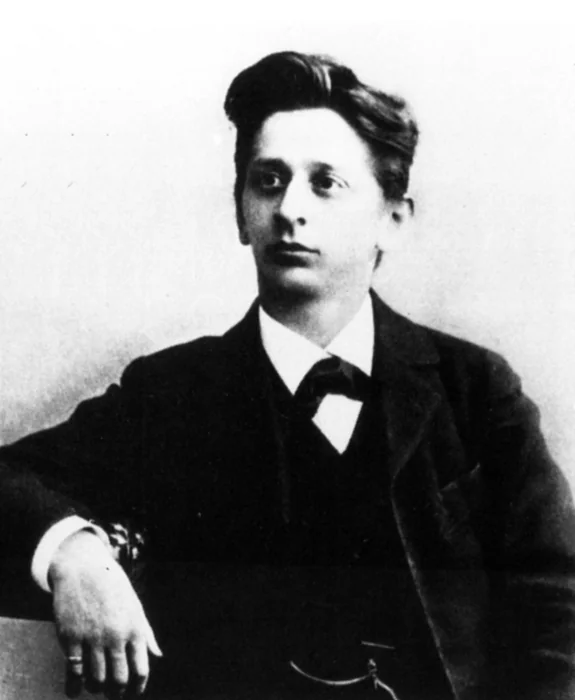
Image from Wikipedia
Image from Wikipedia
Alexander von Zemlinsky – the elegant border crosser between late Romanticism, modernity, and the opera stage
A composer who shaped Viennese music history with fine instinct, dramatic power, and a distinctive sound language
Alexander von Zemlinsky, born on October 14, 1871, in Vienna and died on March 15, 1942, in Larchmont near New York, is one of the great names in music history whose fame long faded behind that of his contemporaries, despite the extraordinary quality of his art. As an Austrian composer and conductor, he stood at the intersection of the romantic tradition of the 19th century and the stylistic upheavals of modernity. His works are now regarded as authentic testimonies of a tumultuous era between 1890 and 1940. ([zemlinsky.at](https://www.zemlinsky.at/de/biographie))
His biography itself tells of a life between center and periphery, recognition and being overlooked. Zemlinsky moved in the great musical circles of Vienna, Prague, and Berlin, worked as a conductor, teacher, and opera composer, and was accompanied by significant colleagues such as Johannes Brahms, Gustav Mahler, and Arnold Schönberg. It was only with the rediscovery of his music from the 1970s onward that his profile as an independent master of musical psychology and music theater re-emerged. ([zemlinsky.at](https://www.zemlinsky.at/de/biographie))
Early years in Vienna: Education, Brahms, and the first compositional signatures
Zemlinsky grew up in Leopoldstadt, a part of Vienna marked by Jewish life, and came into contact with literature, language, and music at an early age. As a teenager, he studied at the Vienna Conservatory of the Society of Friends of Music, where he studied until 1892 and wrote his first works, which were clearly influenced by his model Johannes Brahms. The proximity to Brahms was crucial for his development, not least because Brahms supported and recognized him at a young age. ([zemlinsky.at](https://www.zemlinsky.at/en/biography/vienna-1871-1882?utm_source=openai))
During these years, Zemlinsky carefully shaped his compositional handwriting. He wrote chamber music, songs, and early orchestral works, and won a competition by the Tonkünstlervereins in 1896 with his clarinet trio. Nevertheless, he sought no solo career as a pianist but established himself as a versatile musician who combined talent, craftsmanship, and analytical thinking. ([zemlinsky.at](https://www.zemlinsky.at/de/biographie/wien-1895-1911))
Vienna as a laboratory of modernity
The years in Vienna around 1900 became an artistic laboratory for Zemlinsky. He was a member of several musical societies, co-founded the "Vereinigung schaffender Tonkünstler" with Schönberg in 1904, and met central figures in the vibrant art scene, such as Mahler, Schreker, Hofmannsthal, and Julius Korngold. At the same time, the big breakthrough eluded him, not least due to difficult external circumstances and his rather reserved temperament. ([zemlinsky.at](https://www.zemlinsky.at/de/biographie/wien-1895-1911))
This constellation made him a composer of transition: he was in the midst of the Viennese modernity without ever fully submitting to a radical camp. It was precisely from this tension that the character of his music emerged, which combines late Romantic fullness with an often surprisingly concentrated dramaturgy. In Zemlinsky's work, a sound world develops from this balance that appears both opulent and controlled. ([zemlinsky.at](https://www.zemlinsky.at/de/biographie))
Conducting career and opera art: Prague as an artistic highlight
After 1900, Zemlinsky solidified his position as a composer and conductor in Vienna, initially at the Carl-Theater and the Theater an der Wien, where he primarily conducted operettas. From 1904 on, he was allowed to work on the theater repertoire of the Volksoper and for one season at the Hofoper, which opened the door to more demanding tasks. However, his true focus remained on music theater, to which he devoted himself with increasing intensity. ([zemlinsky.at](https://www.zemlinsky.at/de/biographie))
In 1911, he moved to Prague and became the musical director of the Deutsches Landestheater, where he worked until 1927. There, he celebrated his greatest successes as a conductor, particularly with interpretations of Mozart, Wagner, Mahler, and Schönberg, and his name became associated with natural, witty, and music-serving musical performances. At the same time, some of his central compositions were created there, including the Second and Third String Quartets, the Lyrical Symphony, as well as the two Oscar Wilde one-act plays A Florentine Tragedy and The Dwarf. ([zemlinsky.at](https://www.zemlinsky.at/de/biographie))
Operas that combine character drama and sonic refinement
Zemlinsky proved to be an opera composer of remarkable versatility. Sources emphasize that with the Wilde one-act operas, he solidified his reputation as one of the most skilled and adaptable opera composers of his time. His other stage works also display a strong sense for psychological intensity, vocal line development, and orchestral colors, which are never merely decorative but always serve a dramatic function. ([zemlinsky.at](https://www.zemlinsky.at/en/creativity/the-opera-composer-II?utm_source=openai))
His opera Der Kreidekreis encountered a politically charged environment contemporaneously and was eventually withdrawn due to the climate in Germany; at the same time, critics praised the artistic quality of the subdued music. Such reactions highlight how Zemlinsky's work stood between aesthetic recognition and ideological rejection. This represents an important part of his significance in music history. ([orelfoundation.org](https://orelfoundation.org/journal/journalArticle/alexander_zemlinsky_and_der_kreidekreis_in_berlin1))
Late works and exile: Berlin years, return to Vienna, and New York
In 1927, Zemlinsky moved to Berlin and worked at the Kroll-Oper, where he conducted interesting productions but remained overshadowed by younger conductors like Otto Klemperer, Georg Szell, and Erich Kleiber. In 1931, he received a teaching position at the Musikhochschule, which he had to abandon after the Nazi takeover and the employment ban for Jews. His career was abruptly interrupted as a result. ([zemlinsky.at](https://www.zemlinsky.at/de/biographie))
In 1933, he returned to Vienna, which had now become an exile for him. There, he continued to compose and worked on his late works, with the opera Der König Kandaules at its center. After the annexation of Austria in 1938, the family fled via Prague to New York; Zemlinsky arrived in the USA physically and mentally scarred and could hardly find his footing. ([zemlinsky.at](https://www.zemlinsky.at/de/biographie))
A work between loss and concentration
The late works show a composer who further condensed his language without simplifying it. In addition to the unfinished opera, the Sinfonietta and several other late pieces are particularly important because they mark the transition from the large late Romantic form to a clearer, leaner expressiveness. Zemlinsky remained a master of transition, not of pose. ([en.wikipedia.org](https://en.wikipedia.org/wiki/Alexander_von_Zemlinsky?utm_source=openai))
His death in 1942 in Larchmont did not mark the end but only the temporary silencing of his impact. It was only decades later that the true reception of his work unfolded. This late recognition is now part of the identity of the composer as much as his works themselves. ([zemlinsky.at](https://www.zemlinsky.at/de/biographie))
Discography, reception, and rediscovery
For today's perception of Zemlinsky, the discography is of central importance. Official and label catalogs show that his music is primarily represented in recordings of the Lyrical Symphony, The Mermaid, Sinfonietta, The Dwarf, and other orchestral and stage works. Warner Classics features several current releases in its catalog, including recordings with James Conlon, Armin Jordan, Gabriele Ferro, and other performers. ([warnerclassics.com](https://www.warnerclassics.com/artist/alexander-zemlinsky/releases))
The critical reception consistently highlights his position between tradition and progress. Research describes the tension of originality, modernity, and craftsmanship as the core of his impact, while the OREL Foundation and other specialized sources refer to the historical neglect and later rehabilitation of his oeuvre. Today, Zemlinsky is regarded as a composer with a distinctive voice, whose music encapsulates an entire soundscape of the early 20th century. ([academic.oup.com](https://academic.oup.com/ml/article-pdf/93/2/257/3317223/gcs011.pdf?utm_source=openai))
The international rediscovery also took concrete forms: The premiere of Der König Kandaules in 1996 in Hamburg is officially marked as the culmination of this renaissance. Thus, Zemlinsky is no longer merely a "composer in the shadows" but a fixture in the repertoire of opera houses, orchestras, and labels that dedicate themselves to the expanded canon of modernity. ([zemlinsky.at](https://www.zemlinsky.at/de/biographie))
Musical style and cultural influence
Zemlinsky's music combines late Romantic harmony with dense motivic work, elegant orchestration, and a great affinity for the human voice. In his best scores, a sonic image emerges that is emotionally charged but never becomes vague. It is this controlled intensity that makes his compositions so captivating for today’s listeners. ([zemlinsky.at](https://www.zemlinsky.at/de/biographie))
His cultural significance extends beyond individual works. In Prague, Zemlinsky promoted the presence of Mahler, Schönberg, Bartók, Schreker, Berg, Webern, Korngold, Busoni, Janáček, Milhaud, and Krenek in Europe through his programming, thereby acting as a mediator of modernity. As a conductor and teacher, he not only shaped his own repertoire but also the musical horizons of his time. ([zemlinsky.at](https://www.zemlinsky.at/en/biography/prague-1911%E2%80%931927?utm_source=openai))
Conclusion: A master of transition worth re-listening to
Alexander von Zemlinsky remains captivating because his music embodies the full tension of an era: late Romanticism, emerging modernity, Viennese cultural history, opera drama, and the experience of exile. He is a composer of high density, stylistic elegance, and unmistakable expressiveness. Those who listen to his works discover an artist who did not stand loudly in the foreground but rather impressed with depth, refinement, and soulful precision. ([zemlinsky.at](https://www.zemlinsky.at/de/biographie))
Especially in live performances, his scores reveal their full effect: in the interplay of orchestral colors, vocal intensity, and dramatic tension. Zemlinsky is well worth every reunion and every new performance because his music is not only historically important but also touches one directly. Anyone who engages with him experiences one of the most fascinating border crossers in music history. ([zemlinsky.at](https://www.zemlinsky.at/de/biographie))
Official channels of Alexander von Zemlinsky:
- Instagram: No official profile found
- Facebook: No official profile found
- YouTube: No official profile found
- Spotify: No official profile found
- TikTok: No official profile found
Sources:
- Alexander Zemlinsky – Biography (official website of the Alexander Zemlinsky Foundation)
- Alexander Zemlinsky – His Life, His Work (official website of the Alexander Zemlinsky Foundation)
- German Biography – Zemlinsky, Alexander von
- Warner Classics – Alexander Zemlinsky Releases
- Music Restored – Alexander Zemlinsky and Der Kreidekreis in Berlin
- Alexander-Zemlinsky-Fonds – Fund & Prize
- Catalogue of Compositions – Alexander Zemlinsky
- Wikipedia: Alexander von Zemlinsky