Adrian Goiginger
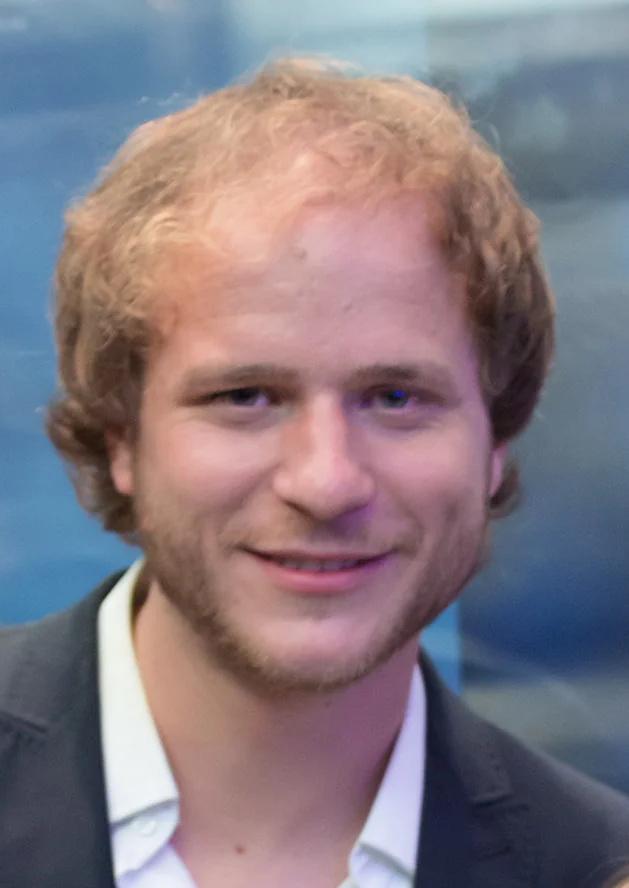
Image from Wikipedia
Image from Wikipedia
Adrian Goiginger: The Salzburg Filmmaker Between Autobiography, Cinematic Emotion, and Precise Observation
A Director Who Transforms Personal Stories into Grand Cinematic Images
Adrian Goiginger, born on February 22, 1991, in Salzburg, is regarded as one of the most distinctive voices in contemporary Austrian cinema. His work combines personal experience, emotional directness, and strong formal clarity to create films that feel both intimate and close to the audience. Even with his feature film Die beste aller Welten, it was clear that Goiginger sees autobiographical storytelling not as an end in itself, but as a way to make societal reality visible in a precise and touching manner. The film was awarded the Compass Perspective Prize at the Berlinale in 2017, introducing him to a broader international audience. ([filminstitut.at](https://filminstitut.at/wp-content/uploads/2020/03/die_beste_aller_welten.pdf?utm_source=openai))
Biography: Salzburg as the Starting Point of an Extraordinary Film Career
Goiginger grew up in Salzburg and early on developed a distinct style marked by observation, empathy, and a keen sense for characters. From the early years of his career, it became clear that he is not interested in smooth hero stories, but rather in fractures, social margins, and familial tensions. He created works in his environment that draw on personal experiences without tipping into mere self-indulgence. This is precisely where the special quality of his artistic development lies: he shapes cinematic tension from closeness. ([filminstitut.at](https://filminstitut.at/wp-content/uploads/2020/03/die_beste_aller_welten.pdf?utm_source=openai))
In 2012, Goiginger founded the film production company 2010 Entertainment, strengthening his role not only as a director but also as a producer and co-creator of his projects. This production base allows him to develop material in the long term and closely intertwine content and aesthetic decisions. While he does not have a conventional music career, he works as a filmmaker with a strong sense of rhythm that structures many of his scenes. This combination of authorship, production, and direction is what defines his profile. ([filminstitut.at](https://filminstitut.at/wp-content/uploads/2020/03/die_beste_aller_welten.pdf?utm_source=openai))
The Breakthrough with "Die beste aller Welten"
With Die beste aller Welten, Goiginger achieved an artistic breakthrough. The feature film, based on personal experiences, was recognized internationally and awarded the Compass Perspective Prize at the Berlinale in 2017. The film also garnered significant attention from the press because it strikes a rare tone: hard in observation, yet gentle in its approach to characters. This very tension drew interest from critics and festival audiences. ([filminstitut.at](https://filminstitut.at/wp-content/uploads/2020/03/die_beste_aller_welten.pdf?utm_source=openai))
Reception quickly showed that Goiginger is not just a talented emerging director, but a storyteller with a recognizable style. His cinema operates with emotional openness without becoming melodramatic, and with a visual language that does not decorate social realities but makes them palpable. This combination of authenticity and stylistic discipline remains a core aspect of his directorial work. It explains why his films are consistently recognized in the Austrian film landscape. ([filminstitut.at](https://filminstitut.at/wp-content/uploads/2020/03/die_beste_aller_welten.pdf?utm_source=openai))
Career Development: From Personal Story to Broad Public
Following his early success, Goiginger consistently developed his thematic world further. Der Fuchs became another important work that solidified his reputation as a director with a strong historical and emotional approach. The film received numerous accolades and is regularly mentioned as a central work in his recent filmography within the Austrian context. This confirmed that his cinema does not hinge on a single autobiographical debut but has grown into a recognizable body of work. ([imdb.com](https://www.imdb.com/name/nm4393512/?utm_source=openai))
Rickerl also underscores this development. The film, released in Austrian and German cinemas in 2024, was directed by Goiginger and opened the Max Ophüls Preis Film Festival 2024. The press notably highlighted that the film connects music, environment, and father-son dynamics without falling into a smooth success narrative. The collaboration with Voodoo Jürgens demonstrates Goiginger's sensitivity for characters living between art, everyday life, and social vulnerability. ([de.wikipedia.org](https://de.wikipedia.org/wiki/Rickerl_%E2%80%93_Musik_is_h%C3%B6chstens_a_Hobby?utm_source=openai))
Current Projects: "Vier minus drei" and the Next Stage
Among Goiginger's current projects is Vier minus drei, his fifth feature film, based on the SPIEGEL bestseller by Barbara Pachl-Eberhart. The film is set to be shown at the Berlinale in early 2026 and has been announced for theatrical release on March 6, 2026, by Polyfilm. Thematically, the work revolves around love, loss, hope, and the possibilities and limits of art. This continues Goiginger's trend of telling existential themes through concrete life stories. ([polyfilm.at](https://www.polyfilm.at/film/vier-minus-drei/?utm_source=openai))
Current coverage also shows that Goiginger remains prominently present in festival and cinema contexts. Austrian and regional media covered the premiere and emphasized the personal significance of the project for the director. The Austrian Film Institute also included the film in its current prize and festival overviews, highlighting Goiginger's ongoing relevance in both domestic and international arthouse circles. His artistic development thus remains focused not on the past, but clearly directed towards the present and new material. ([salzburg24.at](https://www.salzburg24.at/news/salzburg/stadt/vier-minus-drei-premiere-fuer-adrian-goigingers-neuen-film-art-319012?utm_source=openai))
Filmography and Critical Reception: Awards, Resonance, Reach
Goiginger's filmography includes several key Austrian cinema projects, including Die beste aller Welten, Der Fuchs, Rickerl, and Vier minus drei. Die beste aller Welten was awarded the Compass Perspective Prize; Der Fuchs received strong attention in the context of Austrian and German film awards; Rickerl was honored with multiple trophies at the Austrian Film Awards, according to the press. In discussions about contemporary Austrian cinema, Goiginger has long been a fixed presence. ([film.mfg.de](https://film.mfg.de/news/details/4376-rohrbach/?utm_source=openai))
The critical reception consistently highlights his ability to connect personal materials with a broader cultural resonance. His films function simultaneously as character studies, milieu observations, and emotional experiences. The trade press particularly appreciates that he does not create a distance between the viewer and the characters, but instead generates an immediate, often very human closeness. This authority in storytelling makes his work sustainable. ([kurier.at](https://kurier.at/kultur/interview-mit-adrian-goiginger-und-vodoo-juergens-zum-kinofilm-rickerl/402740968?utm_source=openai))
Style and Signature: Authenticity Over Showmanship
Goiginger's directorial style is characterized by precision, empathy, and a keen sense of tonality. He prefers to work with realistic characters whose conflicts arise from family, background, social environment, and inner contradictions. Rather than staging in a flashy manner, he builds tension through careful observation, strong casting, and clear dramaturgy. The result is films that remain close to humanity while possessing a distinct artistic form. ([filminstitut.at](https://filminstitut.at/wp-content/uploads/2020/03/die_beste_aller_welten.pdf?utm_source=openai))
In his later works, there is a noticeable expanded understanding of cinema as a space for transformation. Goiginger is interested in characters who fail in life realities, reorient themselves, or draw strength from loss. This not only gives his films emotional depth but also cultural value. In a time when many productions prioritize speed and superficiality, he adheres to condensation, precision, and human ambivalence. ([polyfilm.at](https://www.polyfilm.at/film/vier-minus-drei/?utm_source=openai))
Cultural Influence: An Important Name in Contemporary Austrian Cinema
Adrian Goiginger represents cinema that derives societal relevance from personal stories. His works bridge the world of festivals and a broader public, connecting Austrian narrative tradition with international visibility. The fact that his films premiere at festivals, win awards, and remain prominent in public discussions speaks to their lasting impact. He belongs to a generation of filmmakers who renew domestic cinema with emotional intelligence and stylistic independence. ([film.mfg.de](https://film.mfg.de/news/details/4376-rohrbach/?utm_source=openai))
His path thus far shows a remarkable consistency: Goiginger does not build works for short-term effects, but an oeuvre with a clear signature. Autobiographical elements, social accuracy, and a fine sense of acting carry his films through various genres and themes. This is precisely why his name remains exciting for cinephiles, critics, and festival audiences alike. Anyone looking to understand contemporary Austrian cinema cannot overlook him. ([filminstitut.at](https://filminstitut.at/wp-content/uploads/2020/03/die_beste_aller_welten.pdf?utm_source=openai))
Conclusion: A Director Who Connects Proximity, Truth, and Cinematic Emotion
Adrian Goiginger fascinates because he develops cinema from biographical closeness that is not narrow, but open. His films speak of loss, origin, family, and hope with a rare mix of tenderness and precision. Those who experience his work live on the screen see not only good direction but a director who translates human experience into powerful images. This is where his special radiance lies. ([filminstitut.at](https://filminstitut.at/wp-content/uploads/2020/03/die_beste_aller_welten.pdf?utm_source=openai))
Official Channels of Adrian Goiginger:
- Instagram: no official profile found
- Facebook: no official profile found
- YouTube: no official profile found
- Spotify: no official profile found
- TikTok: no official profile found
Sources:
- Wikipedia: Adrian Goiginger – Image and Text Source
- Austrian Film Institute – Die beste aller Welten
- MFG Film Funding – Günter Rohrbach Filmpreis 2024
- Polyfilm – Vier minus drei
- Austrian Film Institute – Märzengrund
- ORF Salzburg – Coverage on Vier minus drei
- Kurier – Interview on Rickerl
- IMDb – Adrian Goiginger
Upcoming Events
Four Minus Three
Four Minus Three