Discover Spiritual Places & Meditation in Traunstein
Spiritual Places & Meditation in Traunstein: Ideas & Plan for Your Next Days (from Fall 2026)
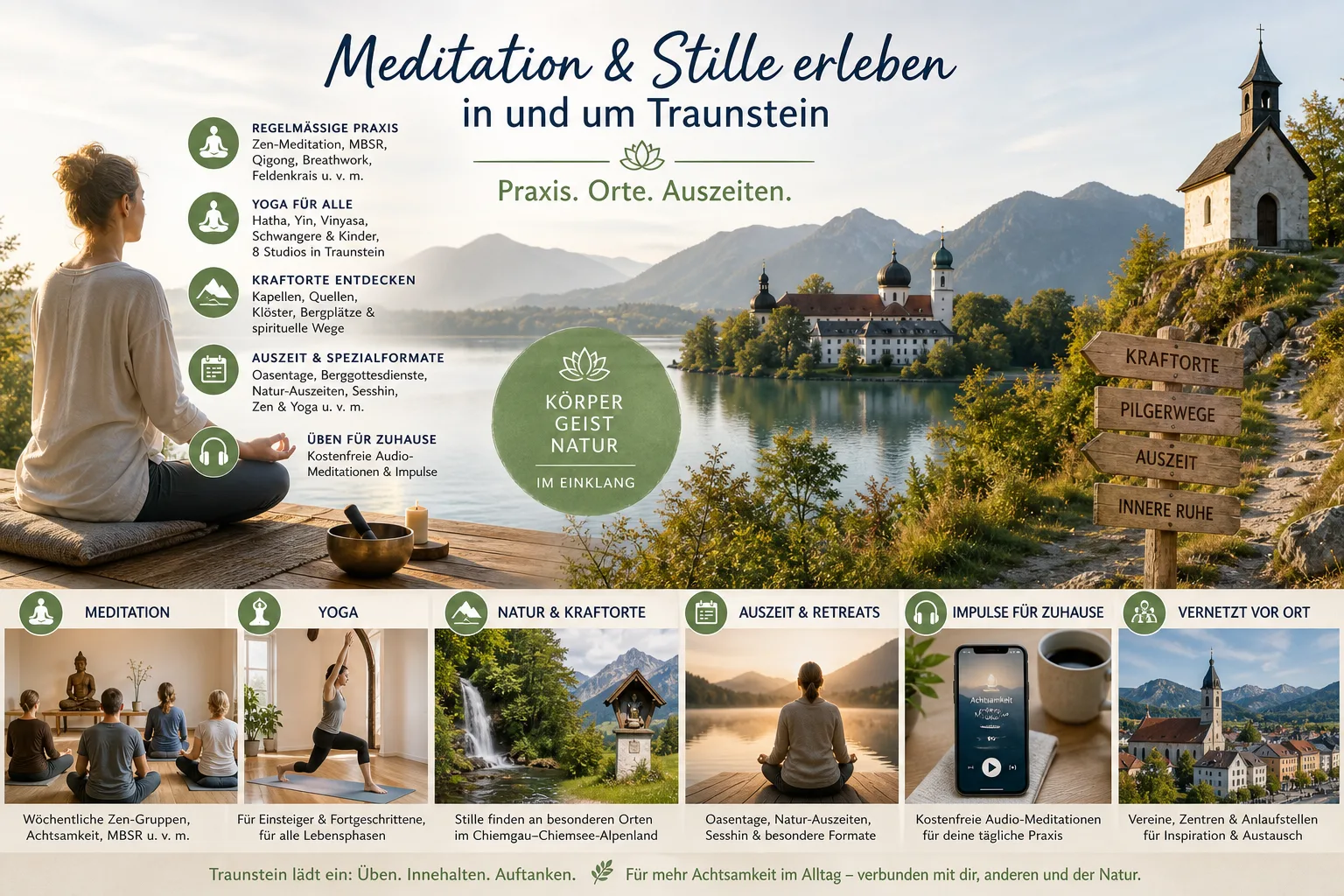
If you want to consciously find more peace in Traunstein (or the Chiemgau region) from onwards, you can specifically design your next days so that meditation, mindfulness, nature, and quiet church visits fit together. This article is deliberately future-oriented: It helps you find upcoming dates and plan your own little time-out in the coming weeks.
Weekend Plan (Example): Silence, Movement & Nature
The following plan is an example for an upcoming weekend that you can implement at any time from now on. It is designed so that it works without special prior knowledge and can be adapted to the weather and dates in Traunstein.
Saturday (future day of your choice)
-
Morning: 20–30 Minutes Walking Meditation
Choose a quiet route (park, riverside path, or a loop on the outskirts). Walk slower than usual and keep bringing your attention back to your feet and your breath. -
Midday: Gentle Body Practice
Schedule a quiet session for early afternoon (e.g., Yin- or Hatha-oriented). If you want to attend a class, look for the next suitable date in the weekend program of a studio or course room. -
Late Afternoon: 10 Minutes Sitting in Silence
Sit comfortably (a chair is enough). Choose a simple focus: counting breaths or listening to sounds without following them. -
Evening: Digital Quiet
Plan a media-light evening. A short note (3 sentences) can help: “What calmed me today? What stressed me? What will be my little focus tomorrow?”
Sunday (future day of your choice)
-
Morning: Breath Check-in (5–8 Minutes)
Breathe calmly in and out through your nose. If you want to try breathwork, choose a gentle version in the future (no forced intensive techniques without guidance). -
Late Morning to Noon: Nature Time as Mindfulness Training
Plan a light hike or a longer walk in the Chiemgau region. Decide in advance at which point you will take a “silence break” (3–5 minutes): sit down, look, listen, breathe. -
Late Afternoon: Reflection & Next Booking
If you crave more structure, Sunday is a good time to book the next date (e.g., MBSR start, meditation group, introductory evening, Qigong class).
Quiet Church and Monastery Times: How to Integrate Them into Your Daily Routine
For your next days, a short visit to a sacred space can be a very simple form of “guided silence”: You don’t have to be able to do anything, don’t have to achieve anything, and the place automatically supports a calm tone.
- Plan a short duration: 5–15 minutes is completely sufficient.
- Choose a clear practice: e.g., sitting in silence, saying a prayer (if you wish), or doing a breathing meditation.
- Respect the space: Follow notes on opening hours and behavior; during ongoing services/celebrations, your own meditation takes a back seat.
If you are specifically looking for a “quiet time” in the coming weeks, look for words like devotion, retreat, Taizé, vespers, or meditation evening in the event announcements. These formats are often designed so that visitors without prior experience can easily follow along.
Your Next Pilgrimage or Mindfulness Hike Around Traunstein
A pilgrimage route or a quiet hike can become a moving meditation during your upcoming free days. To make sure it doesn’t remain just an idea, concrete preparation helps:
- Choose a realistic route: For beginners, 60–120 minutes of walking time is ideal.
- Set a single theme: e.g., “gratitude”, “letting go”, “courage”, or simply “breath”.
- Include two fixed stops: a viewpoint (looking) and a quiet place (sitting).
- Finish with a mini-ritual: e.g., three conscious breaths at the destination or a short sentence in your notebook.
If you want to experience a guided spiritual hike or a mountain service in the next few months, refer to the regional event and church calendars. Such dates are usually announced seasonally (especially in the hiking-friendly months).
Safety & Boundaries: Breathwork, Meditation, and Mental Health
Meditation, yoga, and breathwork can be very beneficial in the coming weeks, but are not equally suitable for every situation. For safe practice, the following applies:
- Start gently: Especially with breathwork, calm, non-forced breathing exercises are sensible for beginners.
- If you are mentally burdened (e.g., panic, trauma consequences, acute crises): Prefer to practice with qualified guidance in the future and seek professional support if needed.
- If you have health risks (e.g., cardiovascular diseases, pregnancy): Clarify more intensive breathing or movement forms with a doctor beforehand.
Note: This article serves as orientation for your future planning and does not replace medical, psychotherapeutic, or pastoral advice.