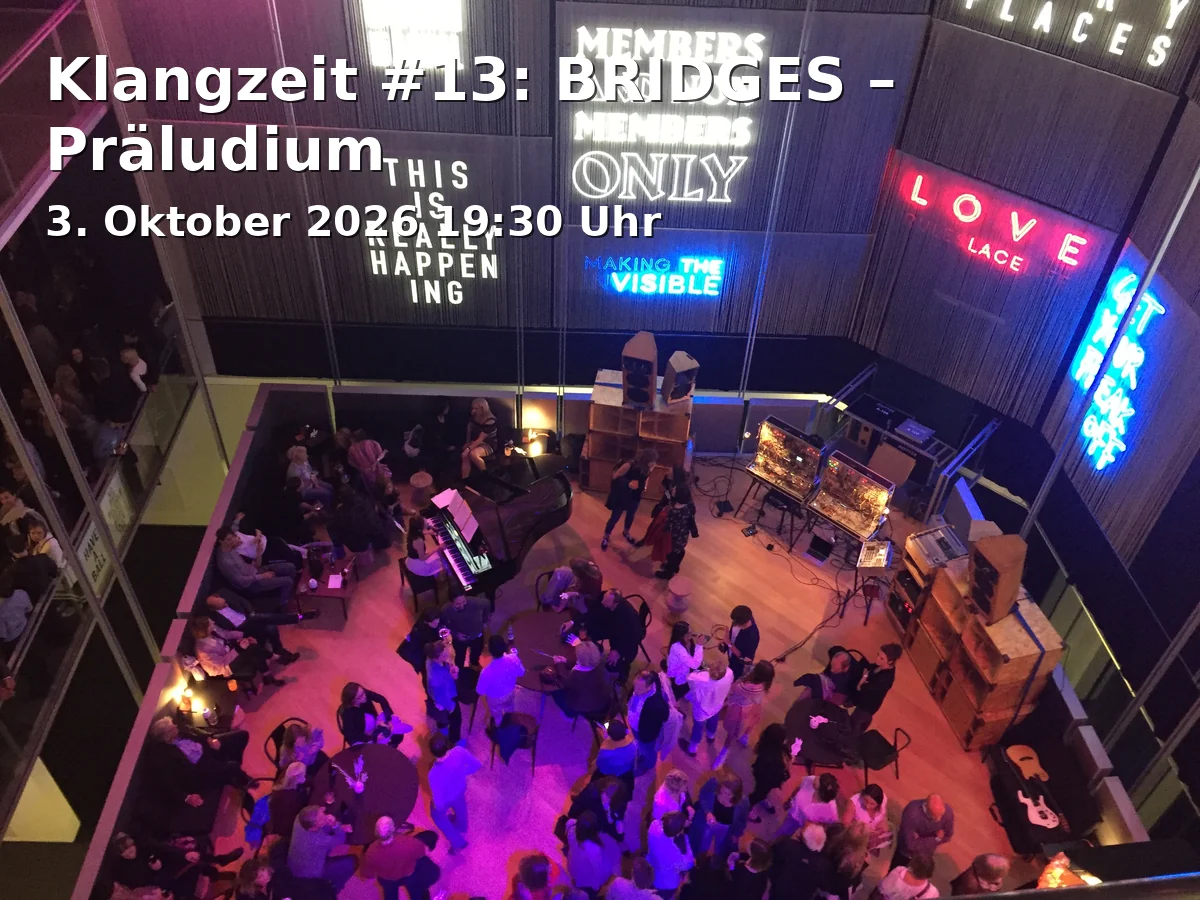
Steve Reich
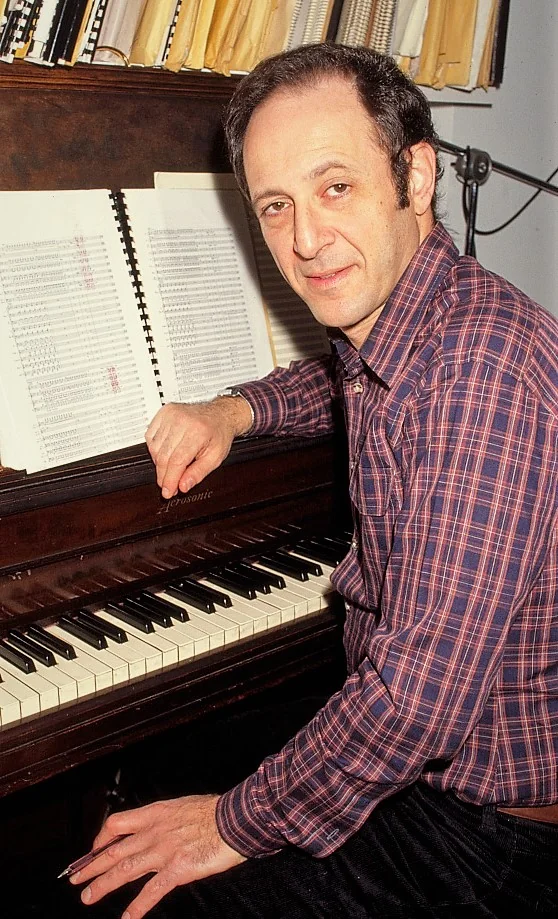
Image from Wikipedia
Image from Wikipedia
Steve Reich: The Architect of Pulsating Sound and Pioneer of Minimal Music
A composer who rethought time, rhythm, and perception
Steve Reich, born on October 3, 1936, in New York City as Stephen Michael Reich, is one of the most influential composers of the 20th and 21st centuries and is regarded as one of the great pioneers of American Minimal Music. His work has sustainably shaped contemporary music because he understands rhythm not as accompaniment but as the dramatic center. In his artistic development, he combined early tape experiments, phasing structures, and micro-precise repetition into a distinctive musical language. ([britannica.com](https://www.britannica.com/biography/Steve-Reich?utm_source=openai))
Biographical roots: New York, years of study, and the path to his own language
Reich grew up in New York and studied philosophy at Cornell as well as music at Mills College; he was early interested in composition, percussion, and piano. His later oeuvre emerged from a radical break with traditional forms and an intense study of sound organization, perception, and repetition. As early as the 1960s, he began with tape works that transformed spoken language, loops, and shifts into musical material. These early works marked the beginning of a career in which analytical rigor and physical immediacy reinforce each other. ([en.wikipedia.org](https://en.wikipedia.org/wiki/Steve_Reich?utm_source=openai))
The breakthrough with phasing, tape music, and early minimal experiments
The international breakthrough came with pieces like It’s Gonna Rain and Come Out, in which Reich shifted fragments of speech on tape and developed a new sense of musical time. This phasing technique became a hallmark of his early aesthetic and made him a key figure in Minimal Music. Soon followed works like Piano Phase and Clapping Music, where Reich transferred the idea of small shifts into purely instrumental processes. Notably, Clapping Music showcases his radical clarity: a simple pattern evolves into a complex listening experience as one part is gradually displaced. ([stevereich.com](https://stevereich.com/composition/clapping-music/?utm_source=openai))
Steve Reich and Musicians: Ensemble culture as an artistic laboratory
With the founding of his own ensemble, Steve Reich and Musicians, a phase began where composition and performance intertwined closely. Reich increasingly worked with precisely coordinated groups of instruments, percussion, voices, woodwinds, organs, and later electronics and samplers. His approach was never merely abstract: the music thrives on physicality, breath, pulse, and the energy of collective playing. Particularly the large-scale Drumming marked a turning point as it combined African-inspired drumming processes, vocal textures, and instrumental precision into an exhilarating form. ([en.wikipedia.org](https://en.wikipedia.org/wiki/Steve_Reich?utm_source=openai))
From pure repetition to extended forms of expression
Although Reich became famous as a minimalist, he moved away from a purist understanding of the style in later works. His music opened up more to language, harmony, historical references, and larger formal spans. Works like Tehillim, Different Trains, The Cave, and Three Tales demonstrate how Reich integrated minimalism with vocal polyphony, documentary material, and multimedia thinking. Thus, the former experimenter became a composer with a broadly varied, mature expression that still never lost the pulse of his beginnings. ([britannica.com](https://www.britannica.com/biography/Steve-Reich?utm_source=openai))
Musical development: A style between Africa, Gamelan, Baroque, and avant-garde
Reich's sources of inspiration range from African drumming music and Balinese Gamelan to electronic processes and phasing, as well as Baroque, Renaissance, and medieval music. At the same time, he drew upon jazz, psychedelic rock, and 20th-century composers, consciously not positioning the classical and serial traditions as a central reference point. This openness makes his work so distinctive: Reich works with repetition, but never statically; with harmony, but never conventionally; with form, but never academically frozen. The sound remains in motion, as if it is permanently recalibrating. ([en.wikipedia.org](https://en.wikipedia.org/wiki/Steve_Reich?utm_source=openai))
Orchestral works, vocal compositions, and multimedia formats
The oeuvre includes vocal works, orchestral pieces, quartets, chamber music, solo compositions, and multimedia performances. The connection of voice and instrument, text and structure, document and abstraction gives Reich's work a special depth. In pieces like Music for 18 Musicians or Different Trains, rhythmic processes merge with an almost hypnotic colorfulness that is both analytical and emotional. Thus, Reich's music is less a stylistic niche than an acoustic model for time, perception, and concentration. ([en.wikipedia.org](https://en.wikipedia.org/wiki/Music_for_18_Musicians_%28album%29?utm_source=openai))
Discography and key works: The essentials of a century composer
Among the best-known works are It’s Gonna Rain, Come Out, Piano Phase, Drumming, Music for 18 Musicians, Tehillim, Different Trains, The Cave, Three Tales, and Clapping Music. The discography shows a consistent expansion of the musical vocabulary: from the analog tape experiment to ensemble-based minimalism to reflective, text- and image-supported large forms. Especially Music for 18 Musicians is regarded as a key work and was released in 1978 on ECM New Series; it still stands today as the epitome of Reich's pulsating, richly shaded sound architecture. ([en.wikipedia.org](https://en.wikipedia.org/wiki/Music_for_18_Musicians_%28album%29?utm_source=openai))
Reception, awards, and canonical status
Reich has often been described as one of the most significant living composers, among others as “the greatest living composer in America” and as “the most original musical thinker of our time.” His music has received high acclaim in the press and concert scene, while important recordings have won several awards. The Third Coast Percussion recording of Reich's works won a GRAMMY Award in 2017; furthermore, Reich himself received the Gold Medal in Music from the American Academy of Arts and Letters in 2012. These awards confirm a status that long goes beyond the avant-garde label: Reich is part of the core of modern music history. ([stevereich.com](https://stevereich.com/all-reich-album-wins-2017-grammy-award/?utm_source=openai))
Current projects and new releases
Even at an advanced age, Reich remains present and productive. In 2025, Nonesuch released the 27-disc box set Steve Reich – Collected Works, which collects six decades of his work from It’s Gonna Rain to the newer works Jacob’s Ladder and Traveler’s Prayer. In July 2025, the world premiere recordings of these two pieces were also released; on Reich's official website, current performances, festival projects, and a vibrant concert life for 2024/2025 are documented. This shows an artist whose catalog does not appear museum-like but continues to work in the present. ([stevereich.com](https://stevereich.com/steve-reich-collected-works/?utm_source=openai))
Cultural influence: Reich as a driving force far beyond new music
Steve Reich's influence extends deeply into pop, indie, and electronic music landscapes. Critical and journalistic voices point out that artists like Brian Eno, David Byrne, David Bowie, and many other musicians have benefited from Reich's way of thinking; even Wikipedia and professional profiles note a broad impact on rock, ambient, and experimental club music. In concert culture, on the other hand, Reich's music has become a test for precision, endurance, and collective intelligence, as it forces musicians to embody rhythm rather than merely count it. His work is thus at once composition, study of perception, and cultural resonance space. ([wired.com](https://www.wired.com/1997/10/steve-reich/?utm_source=openai))
Why Steve Reich remains so compelling today
Steve Reich fascinates because his music creates the rare connection of strict construction and immediate effect. It is intellectually demanding but never merely theoretical; it is structurally precise but emotionally open; it has historical depth yet sounds ultra-modern. Those who experience Reich live hear not just a composition, but an event: layers set in motion, pulses shift, time condenses. That is precisely where his greatness lies. ([britannica.com](https://www.britannica.com/biography/Steve-Reich?utm_source=openai))
Conclusion: A master of pulse who continues to shape the present
Steve Reich is one of those artists who have defined a musical century. His biography tells of curiosity, discipline, and the courage to transform simple processes into art of the highest complexity. From the early tape pieces to the grand ensemble and orchestral works, his oeuvre remains an indispensable reference point for Minimal Music, contemporary composition, and musical thinking as a whole. Those who wish to understand the fascination of Steve Reich should experience his works in the concert hall, where his pulsating sound body unfolds in full force. ([britannica.com](https://www.britannica.com/biography/Steve-Reich?utm_source=openai))
Official channels of Steve Reich:
- Instagram: No official profile found
- Facebook: No official profile found
- YouTube: No official profile found
- Spotify: No official profile found
- TikTok: No official profile found
Sources:
- Steve Reich Composer - Official Website
- Steve Reich Composer - Collected Works
- Steve Reich Composer - Biography
- Steve Reich Composer - Clapping Music
- Nonesuch Records - Steve Reich
- Britannica - Steve Reich
- Wikipedia - Steve Reich
- Nonesuch Records - Steve Reich Videos
- Steve Reich Composer - All-Reich Album Wins 2017 GRAMMY Award
- Wikipedia: Image and text source
Upcoming Events
Drumming – Concert of the Drumming Class for Steve Reich's 90th Birthday
Steve Reich 'Drumming' at Redoutensaal