
Siegfried Wagner
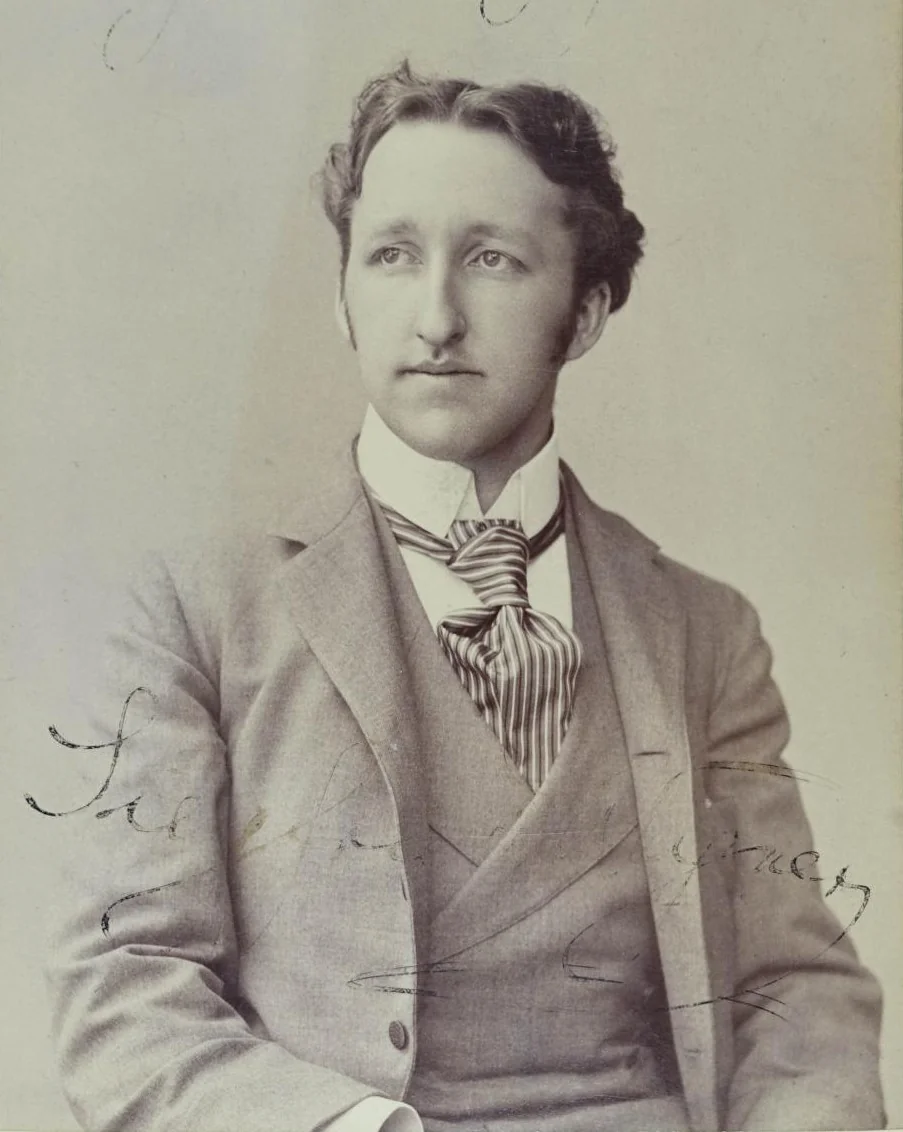
Image from Wikipedia
Image from Wikipedia
Siegfried Wagner – the Composer Who Led Bayreuth into Modernity
A Fascinating Artist Caught Between Family Legacy, Independence, and Festival History
Siegfried Wagner was much more than the son of Richard Wagner: he became a defining composer, conductor, librettist, and festival director, responsible for the Bayreuth Festival from 1908 until his death in 1930. Born on June 6, 1869, in Tribschen near Lucerne and died on August 4, 1930, in Bayreuth, his life represents an extraordinary musical career at the intersection of tradition, renewal, and familial expectations. His biography connects the world of musical theater with a distinctive compositional style that is still being rediscovered today. ([en.wikipedia.org](https://en.wikipedia.org/wiki/Siegfried_Wagner))
Background, Education, and Early Influences
Siegfried Helferich Richard Wagner grew up in one of the most famous musical families in Europe. He was the son of Richard Wagner and Cosima Wagner and thus the grandson of Franz Liszt; he received early musical influences in the Bayreuth and Wahnfried environments. Although he studied composition under Engelbert Humperdinck and was already engaged in compositional attempts as a teenager, he was initially more drawn to architecture, which he studied in Berlin and Karlsruhe, before ultimately deciding on music in 1892. ([en.wikipedia.org](https://en.wikipedia.org/wiki/Siegfried_Wagner))
This phase of life is central to understanding his artistic development: Siegfried Wagner was not merely an heir who comfortably fitted into a role, but a seeker who had to earn his place in the shadow of his father. During a trip to Asia with Clement Harris, he sketched his first official work, the symphonic poem Sehnsucht, in 1892, thereby signaling his early compositional independence. The shift from architecture to music marks the true beginning of his artistic identity. ([en.wikipedia.org](https://en.wikipedia.org/wiki/Siegfried_Wagner))
The Path to Bayreuth: Conductor, Director, and Festival Leader
His career in Bayreuth began in 1894 as an assistant conductor; by 1896 he became Associate Conductor and shared the leadership of the Ring cycle with Felix Mottl and Hans Richter. When Cosima Wagner stepped down from the leadership of the festival in 1908, Siegfried Wagner took over the artistic responsibility and led Bayreuth until 1930. He thus became a key figure in a transition: he preserved the legacy while simultaneously opening the festival to new forms of direction and a more modern performance practice. ([en.wikipedia.org](https://en.wikipedia.org/wiki/Siegfried_Wagner))
The International Siegfried Wagner Society continues to describe him as a festival director who introduced numerous innovations and did not shy away from modern directing concepts or new stylistic influences. The official chronicle of the society also emphasizes that Bayreuth entered a new phase under his leadership and continues to serve as a reference point for research, performance practices, and reception to this day. His work as a director and festival leader makes him one of the most interesting figures in the Wagner legacy. ([siegfried-wagner.org](https://www.siegfried-wagner.org/html/kurzbiographie.html?utm_source=openai))
The Operatic World of Siegfried Wagner
As a composer, Siegfried Wagner left behind an extensive catalog of works, including operas, symphonic music, songs, and arrangements. His early and central stage works include Der Bärenhäuter op. 1, Herzog Wildfang op. 2, Der Kobold op. 3, Bruder Lustig op. 4, Sternengbot op. 5, Banadietrich op. 6, and Schwarzschwanenreich op. 7. Later works such as Der Heidenkönig, Der Schmied von Marienburg, and the unfinished late work Walamund demonstrate the breadth of his musical spectrum. ([siegfried-wagner.org](https://siegfried-wagner.org/werkverzeichnis-chronologisch/))
The works reflect a romantic, often fairy-tale-like, and dramatically charged language that oscillates between late romantic operatic tradition, narrative fantasy, and motivic density. The works chronicle by the ISWG not only documents the scores but also performances, analyses, CD and DVD recordings, as well as numerous rediscoveries since 1975. In this way, it becomes clear that Siegfried Wagner is not a peripheral composer but an independent opera author with an increasing repertoire value. ([siegfried-wagner.org](https://siegfried-wagner.org/werkverzeichnis-chronologisch/))
Style, Composition, and Musical Language
Siegfried Wagner's style combines romantic narrative power with a strong sense of theatrical impact, color, and motivic organization. His operas feature fairy-tale subjects, historical themes, and psychologically intense scenes that reveal a clear tendency toward programmatic elements. The society frequently describes his works as “fairy-tale-like, dark, and haunting” – an apt formula for the emotional temperature of many scores. ([siegfried-wagner.org](https://siegfried-wagner.org/werkverzeichnis-chronologisch/))
Even in smaller formats, his compositional signature is evident: songs like Abend auf dem Meere, Frühlingsglaube, or the choral O Jesu, süßes Licht highlight his mastery of melody, text interpretation, and compositional technique. Additionally, symphonic poems and arrangements demonstrate his closeness to the late romantic tradition as well as his ability to transfer musical motifs across different genres. This versatility strengthens his profile as a composer with genuine breadth of work. ([siegfried-wagner.org](https://siegfried-wagner.org/werkverzeichnis-chronologisch/))
Cultural Influence and Reception to This Day
Siegfried Wagner is once again visible today: The International Siegfried Wagner Society has been providing the most comprehensive online information about his life and work since 2001, continuously updating announcements, dates, catalogues, and receptions. For 2024 and 2025, the society documents lectures, concerts, exhibitions, and revivals that show how lively the engagement with his oeuvre remains. This ongoing presence in the musical life illustrates his cultural resonance far beyond Bayreuth. ([siegfried-wagner.org](https://siegfried-wagner.org/))
Recent events particularly underline that Siegfried Wagner is not just a historical topic for Wagner research but also a vibrant source of inspiration for concert programs and musicological discussions. Current receptions range from lectures about his role as a festival director to concerts featuring organ transcriptions and songs. His position in music history remains multifaceted: he is heir, innovator, opera composer, and cultural mediator in one person. ([siegfried-wagner.org](https://siegfried-wagner.org/werkverzeichnis-chronologisch/))
Conclusion: Why Siegfried Wagner Remains Exciting Today
Siegfried Wagner fascinates because his life's work encapsulates the major lines of music history: the legacy of the Wagner dynasty, the development of late romantic opera, the leadership of one of the world's most legendary festivals, and the constant struggle for an independent voice. His operas and songs deserve to be heard anew, especially because they unfold an unmistakable world between fairy-tale fantasy and musical substance. Those who experience Siegfried Wagner live or in a carefully prepared performance encounter a composer who not only managed Bayreuth but profoundly shaped it. ([en.wikipedia.org](https://en.wikipedia.org/wiki/Siegfried_Wagner))
Official Channels of Siegfried Wagner:
- Instagram: no official profile found
- Facebook: no official profile found
- YouTube: no official profile found
- Spotify: no official profile found
- TikTok: no official profile found
Sources:
- International Siegfried Wagner Society – Official Website
- International Siegfried Wagner Society – Work Directory (Chronological)
- International Siegfried Wagner Society – On the Controversy Surrounding Siegfried Wagner
- Wikipedia – Siegfried Wagner
- Britannica Kids – Siegfried Wagner
- Operabase – Siegfried Wagner
- Musica International – Siegfried Wagner
Upcoming Events
Exhibition "No Festival for the Anniversary Year?"
No Festival in the Anniversary Year?
Wagner's Son and Contemporaries
Wagner's Son and Contemporaries in Bayreuth
Wagner's Son and Contemporaries