
Sabine Zurmühl
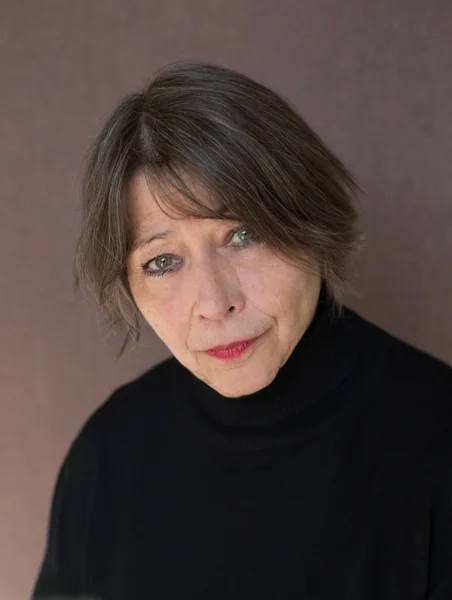
Image from Wikipedia
Image from Wikipedia
Sabine Zurmühl: Journalistic Clarity, Feminist Pioneering Work, and Literary Precision
A Defining Voice Between the Women's Movement, Contemporary History, and Cultural Journalistic Authority
Sabine Zurmühl is one of those German journalists whose work extends far beyond individual texts. Born in 1947 in Berlin, she grew up in the post-war years in an environment marked by scarcity, new beginnings, and cultural longing. From this biographical foundation, she developed a mode of work that connects observational skills, linguistic precision, and a social stance.
Her career spans central stages of media and cultural life in West Germany: radio, television hosting, literary criticism, documentary filmmaking, mediation, and political journalism. A particularly formative moment was her co-founding of the feminist magazine COURAGE in 1976, which became an important voice of the West German women's movement. Zurmühl thus embodies a form of journalistic authority that derives from experience, historical context, and a clear stance.
Biographical Beginnings: Berlin, Post-War Period, and an Early Hunger for Language
The early life circumstances of Sabine Zurmühl are inextricably linked to the destroyed Berlin of the post-war period. Her father, originally an actor from Silesia, was war-injured; her mother supported the family on little money, along with an older sister, in an environment where reading, music, and literature provided both comfort and challenge. It is precisely from this tension between deprivation and intellectual curiosity that a biographical horizon emerged, significantly shaping her later work.
After graduating from high school in Berlin, Zurmühl completed radio apprenticeships at RIAS Berlin and Westdeutscher Rundfunk. She then studied German studies, Romance studies, and theater studies, graduating with a Master's degree and a state examination. This academic and media training laid the foundation for a career that maintained a clear claim to language and form, bridging journalistic practice and cultural analysis.
The Path to Journalism: Radio, Moderation, and Literary Criticism
Sabine Zurmühl began working early and consistently as a freelance author in radio, undertaking literary reviews and moderation in both radio and television. These activities illustrate a profile not limited to a single role but demonstrating the same care across various media forms. Her approach to topics is never purely descriptive but always commentative, contextualizing, and informed by social issues.
Documentary works further expanded her journalistic reach. It is particularly in the intersection of media practice and cultural-historical research that Zurmühl's work excels: she considers individuals and developments not in isolation but as part of larger historical dynamics. This results in portraits that transcend mere biographies and illuminate cultural connections.
COURAGE and the Feminist Public Sphere
A central chapter of her biography begins in 1976 with the founding of the feminist magazine COURAGE. Together with other women, Sabine Zurmühl created an autonomous, self-managed project of the West Berlin student and women's movement, which existed until 1984. This publication provided space for topics that were only marginally or distortedly addressed in established media, opening discussions to a broader audience for the first time.
Zurmühl describes the Courage era as intense, contradictory, and rich in learning. This characterization points to a practice that was not merely journalistic work but also political self-empowerment. In the feminist journalism of the Federal Republic, she played a shaping role, simultaneously sharpening her awareness of power relations, language, and representation.
Between Journalism, Mediation, and Social Responsibility
Later, Sabine Zurmühl expanded her field of activity to include mediation and institutional responsibility. She completed training as a certified mediator, served as managing director of the Federal Association for Family Mediation, and trained at the Berlin Institute for Mediation. This was complemented by her own practice as a family mediator and engagements in committees and juries.
This development shows remarkable continuity: even in mediation, Zurmühl's work remains focused on communication, conflict understanding, and structural mediation. Her journalistic experience and social perspective merge here with a practical form of social responsibility. It is precisely this blend of analytical distance and human closeness that makes her profile so credible.
Biographical Books and Cultural-Historical Perspective
Among the focal points of her writing career are women's political and contemporary historical topics. This is particularly evident in her biographical works, such as those on Maxie Wander and Cosima Wagner. Both areas require not only research but also stylistic sensitivity, historical context, and a keen instinct for complex biographies.
Deutschlandfunk praised her biography of Maxie Wander as meticulously researched and a valuable addition to existing sources. This showcases how Zurmühl portrays individuals not as monuments but as multifaceted figures with contradictions and biographical fractures. Her strength lies in the precise elucidation of ambivalences without losing respect for the portrayed person.
Cosima Wagner: Research, Readings, and Resonance
With her book on Cosima Wagner, Sabine Zurmühl re-emerged as a cultural mediator with a pronounced historical consciousness. Readings and book presentations in Leipzig, Bayreuth, and other locations demonstrated that her work resonates in Wagner-related contexts and is perceived as nuanced. Her focus is not on hagiographic glorification but on psychological penetration and social context.
The reactions from the Wagner cult and music culture underline the authority of her depiction. Depth, richness of detail, and linguistic brilliance in her work were particularly highlighted. This shapes the image of an author who does not simplify historical figures but renders them legible through their tensions.
Style, Themes, and Journalistic Signature
Sabine Zurmühl's style combines journalistic clarity with cultural-historical accuracy. Her texts and lectures employ precise observation, a keen awareness of social power relations, and a language that is neither dry nor sensationalistic. It is this balance that lends her work high credibility and lasting readability.
Thematically, a common thread runs through her career: women’s movement, biography, culture of remembrance, media history, and mediation. In her work, she expresses an understanding of journalism as a form of cultural responsibility. Thus, she stands not only for information but for context, placement, and intellectual integrity.
Cultural Influence and Significance
Sabine Zurmühl may not be an artist in the narrower musical sense, but she has been active for decades in cultural spaces where language, public discourse, and interpretative authority play central roles. Her involvement with COURAGE made her a significant figure in the history of feminist media. Her later books and lectures solidified her position as a distinguished biographer and cultural mediator.
Her influence lies in the connection of political experience, journalistic discipline, and historical curiosity. Those who delve into the women's movement, German post-war history, or the biographies of significant cultural figures encounter an author who does not merely collect material but structures, interprets, and brings it to life. This is her enduring value for readers and those interested in cultural history.
Conclusion: A Voice for Memory, Precision, and Stance
Sabine Zurmühl impresses with a rare blend of journalistic experience, feminist pioneering work, and literary precision. Her career illustrates how a biographical imprint, expertise, and social engagement can create a distinct journalistic authority. Readers of her books or attendees of her lectures meet an author who does not merely recount history but makes it understandable, engaging, and relevant.
This connection of thinking, writing, and mediating is what makes Sabine Zurmühl so remarkable. She remains an intriguing personality for all who are interested in the women’s movement, contemporary history, and cultural biography. Those who experience her work live sense the energy of a journalist who captivates with clarity, depth, and conviction.
Official Channels of Sabine Zurmühl:
- Instagram: no official profile found
- Facebook: no official profile found
- YouTube: no official profile found
- Spotify: no official profile found
- TikTok: no official profile found