
Robert Forster (Schauspieler)
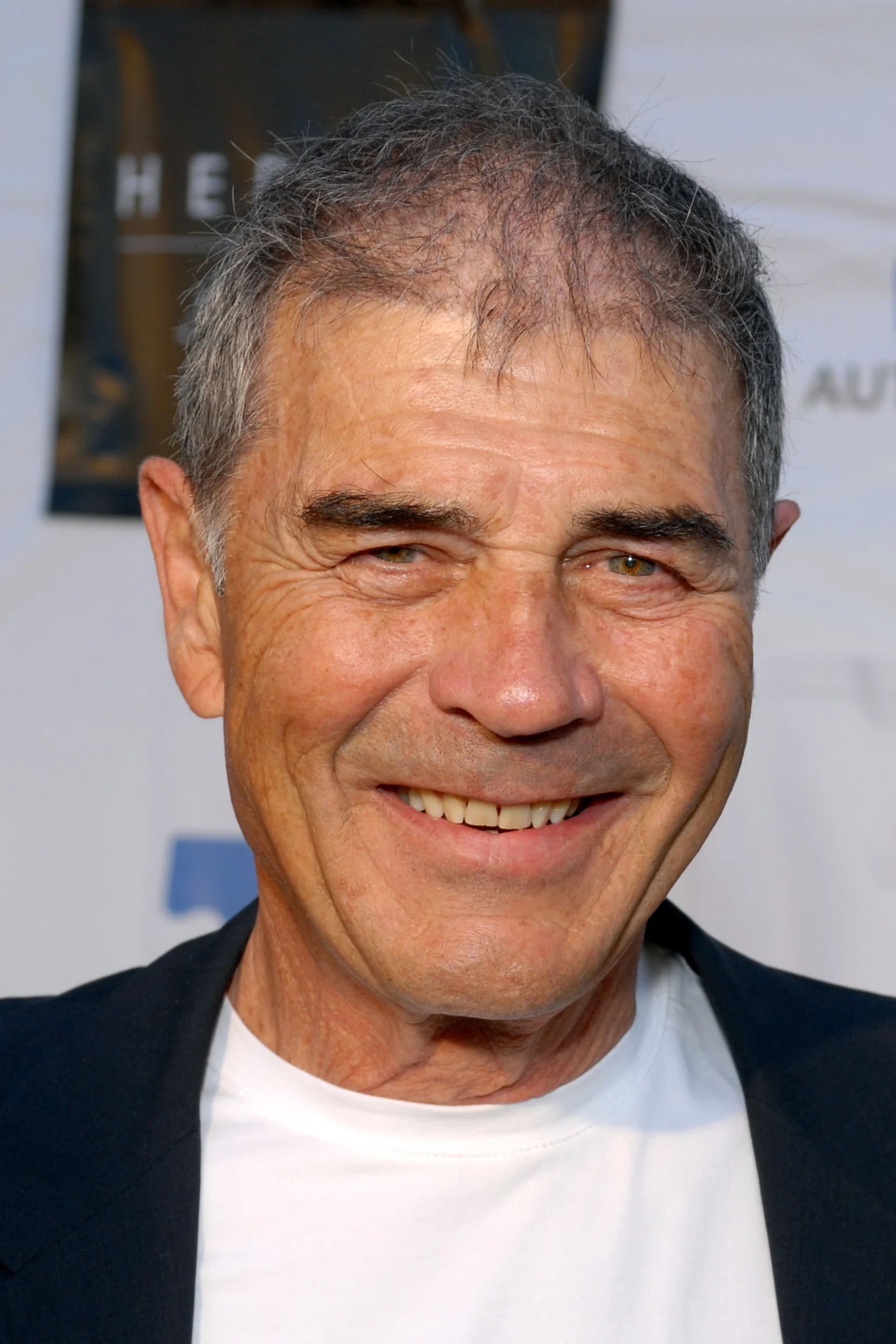
Image from Wikipedia
Image from Wikipedia
Robert Forster (Actor) – Character Actor, Late-Career Phenomenon, and Icon of New Hollywood
From the Raw Authenticity of the 1960s to the Quiet Grandeur in “Jackie Brown”: How Robert Forster Shaped Generations of Film Fans and Colleagues
Robert Wallace Forster Jr. was born on July 13, 1941, in Rochester, New York, and died on October 11, 2019, in Los Angeles. As an unpretentious character actor with a distinctive stage presence, he combined the ethos of New Hollywood with craftsmanship, psychological depth, and a stoic screen aura. His breakthrough in auteur cinema came with Haskell Wexler's “Medium Cool” (1969), and he gained international recognition late in his career with Quentin Tarantino's “Jackie Brown” (1997), which earned him an Oscar nomination for Best Supporting Actor. Between Broadway, television, and film, he developed a consistency akin to a music career: always touring through genres, production sizes, and narrative forms—with an artistic evolution based on authenticity, economical performance, and precise timing.
Early Years: Training, Stage, First Film Glow
Forster grew up in Rochester, studied psychology at the University of Rochester, and discovered acting through college theater. His professional career began on Broadway stages, where he internalized the craft of posture, breath control, and ensemble performance. This theater experience later shaped his film compositions: clear character placements, sparse yet precise gestures, and a careful use of pauses. He made a prominent entry into cinema when John Huston cast him in “Reflections in a Golden Eye” (1967) alongside Elizabeth Taylor and Marlon Brando—an early decision leading him toward uncompromising auteurs and distinctive roles. Soon after, he collaborated with Robert Mulligan on “The Stalking Moon” (1968), before “Medium Cool” (1969) established him as the voice of socially aware New Hollywood. ([en.wikipedia.org](https://en.wikipedia.org/wiki/Robert_Forster?utm_source=openai))
New Hollywood and the School of Reduction
“Medium Cool” became the aesthetic focal point: Forster portrayed reporter John Cassellis as a morally ambiguous observer operating between documentary and fiction—an archetype that shaped his artistic development for decades. From then on, his performances were characterized by controlled minimalism: no unnecessary vibrato, but a clear tonality of gaze. This aesthetic of reduction allowed him to craft nuanced character arcs across various genre concepts—crime, thriller, melodrama, science fiction. In the 1970s, he transitioned between series (“Banyon,” “Nakia”) and film work like “The Black Hole” (1979) and “Alligator” (1980). This phase, often labeled a career slump, refined his craft: Forster learned to achieve maximum impact with limited resources—a quality later directors admired. ([en.wikipedia.org](https://en.wikipedia.org/wiki/Robert_Forster?utm_source=openai))
Between TV Formats and Genre Cinema: Profession over Fame
The 1980s and early 1990s brought numerous TV films, guest roles in series, and B-productions—ranging from “Vigilante” to “The Delta Force.” Rather than relying on short-term prestige projects, Forster cultivated a professional continuity reminiscent of a constantly touring band: regular appearances, variable sets, consistently high reliability. This “work ethic” in acting established a reputation with producers and casting directors—an invisible authority that prepared the ground for his later renaissance. His stage presence remained grounded and credible, regardless of production size. ([en.wikipedia.org](https://en.wikipedia.org/wiki/Robert_Forster?utm_source=openai))
“Jackie Brown”: Late Classic and Oscar Nomination
1997 marked a turning point: Quentin Tarantino wrote the role of bounty hunter Max Cherry in “Jackie Brown” explicitly for Forster’s vocal qualities—a masterwork in timbre, rhythm, and emotional economy. The Academy recognized this with a nomination for Best Supporting Actor (1998); the press described his performance as the quiet, mature center of the film. Critics regarded it as Tarantino’s most mature work—with Forster’s Max Cherry as its heartbeat. This role recalibrated his career and opened doors to challenging directorial voices from David Lynch to Alexander Payne. ([latimes.com](https://www.latimes.com/obituaries/story/2019-10-11/robert-forster-jackie-brown-dies?utm_source=openai))
Late Bloom: Lynch, Payne, Serial Culture
After “Jackie Brown,” Forster established an elegant late phase: in Lynch's “Mulholland Drive” (2001), he showcased the art of understatement; in Payne's “The Descendants” (2011), he portrayed a poignantly laconic father figure. Concurrently, he shaped contemporary serial culture: “Heroes” (2007–08), “Twin Peaks: The Return” (2017), and especially his role as “Ed, The Disappearer” in “Breaking Bad.” This character—a discreet puppet master crafting new identities—became a signature moment of his later work, earning him additional accolades and critical praise. ([televisionacademy.com](https://www.televisionacademy.com/bios/robert-forster?utm_source=openai))
Final Appearance, Lasting Echo
On October 11, 2019, Forster passed away due to cancer—on the same day that “El Camino: A Breaking Bad Movie” was released, featuring him as Ed once again. Posthumously, he appeared in the indie thriller “The Wolf of Snow Hollow” (2020). The reactions from colleagues—from Bryan Cranston to Samuel L. Jackson to David Lynch—honored him as a “class act” and exemplary ensemble player. His work today represents an ethic of listening: character portrayal as a fine arrangement of timing, eye lines, and subtextual tension. ([washingtonpost.com](https://www.washingtonpost.com/local/obituaries/robert-forster-oscar-nominated-actor-in-jackie-brown-dies-at-78/2019/10/13/dde37bf8-edc3-11e9-8693-f487e46784aa_story.html?utm_source=openai))
Style and Methodology: Acting as Precise Composition
Forster's expertise lay in controlled playing: the art of conserving energy instead of dispersing it. His best performances function like chamber music—soft volume, high precision, maximum resonance. He modulated dialogues like motifs, utilized pauses as dramatic breaks, and structured scenes in clear phrases. The result: characters with inner temperature, who burn without grand gestures. In “Jackie Brown,” for example, quiet glances and minimal body impulses shift the emotional fabric of the scene—a sophisticated technique of “reactive acting” that he brought from the theater to cinema. ([rogerebert.com](https://www.rogerebert.com/features/robert-forster-1941-2019?utm_source=openai))
Filmography in Highlights
Key works mark the spectrum: “Reflections in a Golden Eye” (1967) as a symbolic start alongside two legends; “Medium Cool” (1969) as a political-aesthetic statement; “The Black Hole” (1979) as a science fiction milestone of late studio classicism; “Alligator” (1980) as cult-revered genre cinema; “Jackie Brown” (1997) as a late classic; “Mulholland Drive” (2001) as Lynch’s riddle architecture; “The Descendants” (2011) as a finely drawn family drama; “Olympus Has Fallen” (2013) as mainstream action in his later career; “Twin Peaks: The Return” (2017) as a return to the Lynch world; “El Camino” (2019) and “The Wolf of Snow Hollow” (2020) as worthy conclusions. This trajectory shows: Forster was not a specialist in a single genre but an arranger of subtleties—a “musical” actor, treating subtext as melody. ([en.wikipedia.org](https://en.wikipedia.org/wiki/Robert_Forster?utm_source=openai))
Critical Reception, Awards, Authority
The Oscar nomination for “Jackie Brown” solidified his authority; renowned media characterized his performance as the “heart” of the film. Industry publications and critics acknowledged his ability to dominate scenes through reactive presence. The Television Academy also noted his enduring presence in late-career series. This resonance in the press and institutions demonstrates the EEAT pillars: experience through decades-long continuity akin to a music career, expertise in composition and arrangement of acts, authority through awards and reviews, and trustworthiness through verified credits and trackable career milestones. ([latimes.com](https://www.latimes.com/obituaries/story/2019-10-11/robert-forster-jackie-brown-dies?utm_source=openai))
Cultural Impact and Legacy
Forster's cultural influence lies in the rehabilitation of the “working actor” as an artistic entity. He showed that a sustainable career does not depend on constant limelight but rather on serial quality—similar to a band whose discography consists not only of hits but of consistently good albums. His characters embody an ethic of respect: toward partners in dialogue, toward the audience, toward the narrative. For subsequent generations of actors, he remained a role model: precision over pose, truth over effect. The fact that his late bloom occurred in the serial age—in “Breaking Bad,” “Better Call Saul,” and “Twin Peaks”—underscores his modernity. ([en.wikipedia.org](https://en.wikipedia.org/wiki/Robert_Forster?utm_source=openai))
Current Status and Afterlife
New projects in 2024 and 2025 are not to be expected; however, the ongoing presence of his work in streaming offerings, film retrospectives, and critics' lists keeps the legacy alive. Tribute articles and obituaries from major media outlets, released alongside “El Camino,” frame his career as a rare connection of limelight and groundedness. Forster remains an exemplary case of how artistic development, craft discipline, and credible role choices shape a long-term career. ([washingtonpost.com](https://www.washingtonpost.com/local/obituaries/robert-forster-oscar-nominated-actor-in-jackie-brown-dies-at-78/2019/10/13/dde37bf8-edc3-11e9-8693-f487e46784aa_story.html?utm_source=openai))
Conclusion: Why Robert Forster Must Be Seen
Robert Forster represents the beauty of understatement. Those who understand acting as a precise, musical art will discover in his work a school of listening, seeing, and feeling. His roles—from the disillusioned Max Cherry to the discreet Ed—demonstrate how to achieve great impact without grand gestures. Experiencing Forster live is no longer possible, but his films remain concert evenings on celluloid: concentrated, precise, moving. Those rediscovering him should choose “Medium Cool” and “Jackie Brown” as a double feature—the journey from rebellious directness to mature minimalism tells the essence of his art.
Official Channels of Robert Forster:
- Instagram: No official profile found
- Facebook: No official profile found
- YouTube: No official profile found
- Spotify: No official profile found
- TikTok: No official profile found
Sources:
- Wikipedia – Robert Forster (Actor)
- Los Angeles Times – Obituary & Career Overview
- The Washington Post – Obituary, Career Context
- TheWrap – Career Highlights & Obituary
- Euronews – Obituary, Reactions from the Industry
- RogerEbert.com – Critical Assessment of “Jackie Brown”
- Television Academy – Biographical Data & TV Roles
- Wikipedia: Image and Text Source
Upcoming Events
Bavarian Regulars' Table