Nikolaus Habjan
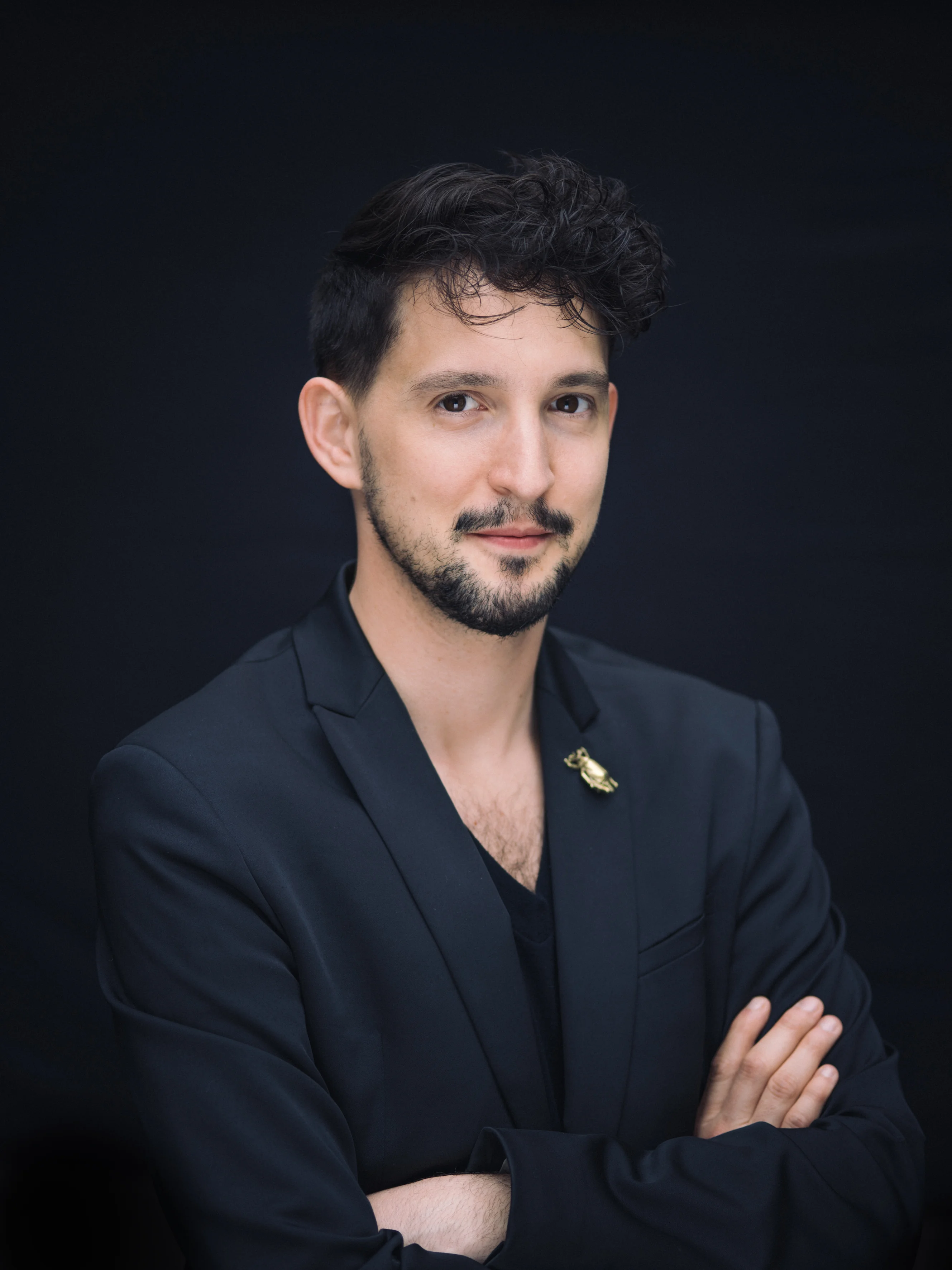
Image from Wikipedia
Image from Wikipedia
Nikolaus Habjan
Between Opera, Puppetry, and Whistling: Nikolaus Habjan Enthralls as Director, Puppeteer, and Whistler
Nikolaus Habjan, born on September 24, 1987, in Graz, is one of the exceptional figures in the German-speaking music and theater scene. The Austrian director, puppeteer, and whistler combines musical theater, puppetry, and scenic fantasy into distinctive stage images. He is known for his precise stage presence, clever arrangements, and an eye for the poetic and political power of theater. His artistic development took him from early productions at the Wiener Schubert Theater to major opera houses and prestigious festivals, where he excels both as a musical theater director and performer.
Biography: Education and First Artistic Steps
Music and theater have influenced his musical career from an early age: After initial musical training and violin lessons, Habjan deepened his interest in puppetry and learned to manipulate marionettes in 2003 from the Australian puppeteer Neville Tranter, whose technique he perfected over the years. In parallel, he studied music theater direction at the University of Music and Performing Arts Vienna from 2006 to 2010, graduating with honors—a foundation that significantly sharpened his later expertise in composition, scenic arrangement, and production in music theater. During his studies, he created his first works that tested the interplay of puppetry, direction, and musical theater.
Breakthrough in Vienna: Schubert Theater, "F. Zawrel," and the Nestroy Award
Habjan's artistic breakthrough occurred in the off-theater scene of Vienna. He was active as a director's assistant and evening performance director at the Schubert Theater from 2008, later serving as co-director from 2009 to 2016. Here, he developed the signature style that informs his work today: precise timing, a dual perspective of puppet and human, and a careful musical dramaturgy. The puppetry play "F. Zawrel – genetically and socially inferior" was awarded the Nestroy Prize for "Best Off Production" in 2012 and has been on tour regularly since then—demonstrating Habjan's enduring stage impact and his sensitivity to delicate historical materials, which he imbues with artistic integrity. This success paved the way for his entrance into larger venues and showcased the potential of his unique theatrical aesthetics.
Directing at Opera and Theater Houses: From "Oberon" to "Fidelio"
Since then, Habjan has worked as an opera director at leading stages in the German-speaking world. His stylistic range is notable: from Carl Maria von Weber's "Oberon" (including the Munich Opera Festival, Theater an der Wien) to "Salome" and Offenbach's "La Périchole," which was awarded the Austrian Music Theater Prize (Best Operette) in 2024. As house director at the Oper Dortmund (2020/21–2023/24), he shaped a distinctive repertoire with works like "Die Entführung aus dem Serail," "Tosca," "Die Zauberflöte," and "Orpheus in der Unterwelt." At the end of 2025, he made his house debut at the Vienna State Opera with "Fidelio"—a new production for an anniversary that drew attention in interviews for its clear positions on the opera text and questions of music theater. These milestones document his authority in direction, conception, and musical interpretation of large scores.
Stage Presence as a Puppeteer: Projects, Awards, Repertoire
In addition to directing, Habjan remains active as a puppeteer and narrator. He embodies characters on stage that fluctuate between satire, empathy, and scenic commentary, using the puppet as a musical-dramaturgical instrument. In Graz and Berlin, he regularly performs solo pieces like "F. Zawrel"; at the Deutsches Theater, he continues productions such as "Böhm," which received sustained resonance over more than 60 performances. His adaptations of Jelinek and Shakespeare sonnets also benefit from his dual perspective of physical theater and sound dramaturgy. His artistic development demonstrates a will to conceive theater as an acoustic-visual total artwork—with the puppet acting as a catalyst within the interplay of text, rhythm, and scene.
Cultural Whistler: Virtuosity Between Aria and Earworm
As a whistler, Habjan revives a rarely practiced tradition today, translating opera and operetta melodies into the delicate medium of whistling. Programs like "Heiße Luft" present well-known arias in a new sonic light, blending virtuosic breath technique, phrasing, and articulation with charming moderation. This specialty, which shone on Viennese variety stages in the 19th century, he invigorates with modern musicality and a sense of dramatic balance—creating a performance that focuses the ear and guides the melody as a narrative thread. For the audience, a different access to bel canto, operetta, and song opens up, making the fine mechanics of tone production and line shaping audible.
Collaborations with Franui and Song Dramaturgical Formats
A formative partnership connects Habjan with the music band Franui. Together with bass-baritone Florian Boesch, they realize scenic song projects that intertwine classical and folk music colors with puppetry. In 2025, Schubert's cycle "Die schöne Müllerin" was featured at the Wiener Konzerthaus—a night where the great lyricism of the 19th century corresponded with Habjan's puppetry, thereby opening a contemporary perspective on romantic narrative. The lyrical dramaturgical depth, the ensemble arrangement among tuba, dulcimer, and harp, and the use of life-sized puppets showcase his expertise in musical direction that extends beyond opera scores into art songs.
Discography: “Kreisler-Lieder” with Franui
Habjan is also present on recordings. In 2022, the album "Kreisler-Lieder" was released by col legno with the music band Franui. This recording serves as a tribute to Georg Kreisler and presents his sharp-tongued chansons within a colorful, chamber-music soundscape. The production and arrangement reflect the dual perspective of music and scene: the songs gain contour through finely tuned instrumentation, articulation, and a dramaturgy that frames the album as an arc. From a music journalism perspective, the album impresses with sonic transparency, expressive phrasing, and a clearly audible joy of play, respecting and updating Kreisler's satirical impact.
Style and Signature: Aesthetic Between Music Theater and Puppetry
Habjan's style combines precise musical interpretations with the visually rich logic of puppetry. His direction utilizes the puppet as a reflective surface: characters become commentators on the stage events, unleash subtexts, and allow for rapid perspective shifts. In production, music, language, and movement unfold as a synesthetic unity. Technically, he works with clear lighting, rhythmic scene sequences, and a "speaking" set design that structures the score. Historically, he references traditions of Viennese entertainment theater, operetta, and chanson—always with a sense of contemporary relevance. In "Fidelio," for example, he emphasizes the dialogue dramaturgy, while in Franui projects, he highlights the song dramaturgy; both demonstrate his understanding of composition as a theater text that is interpreted scenically.
Critical Reception, Awards, and Authority
The music press recognizes Habjan's work as innovative and precisely executed. Early acclaim came with the Nestroy Prize in 2012 for "F. Zawrel." This was followed by audience awards and the festival prize at the Munich Opera Festival in 2017 for "Oberon." In 2024, the Austrian Music Theater Prize honored the "La Périchole" production as "Best Operetta"—a testament to his authority in opera practice. Interviews and portraits place him as a director who avoids realistic illusion in favor of theatrical truth and understands music as a source of scenic energy. This blend of experience, expertise, and artistic risk-taking leads to productions that resonate with both audiences and critics alike.
Current Projects and Dates
The most recent season marked Habjan's presence at top venues: with "Fidelio" at the Vienna State Opera, he made his debut in December 2025 with a traditional work from operatic history. In parallel, he continued his collaboration with Franui and presented "Die schöne Müllerin" at the Wiener Konzerthaus in November 2025. His official calendar also points to premieres and revivals—including "BY(E) STRAUSS" at the Theater an der Wien for the New Year 2025/26—as well as guest performances and co-productions at the Deutsches Theater in Berlin for 2026. Thus, the continuum of opera, song format, and puppetry remains programmatic.
Conclusion: Why Nikolaus Habjan is Fascinating
Nikolaus Habjan combines musical expertise with a unique physical language of theater. He conducts large scores with dramaturgical clarity, utilizes the puppet as a conceptual figure on stage, and cultivates a virtuosity as a whistler that makes melodies experienceable in their essence. His works possess cultural value because they infuse the past—from Biedermeier songs to operetta—with contemporary energy. For those who wish to hear and see opera and music theater anew, Habjan illuminates how musical structure becomes scenic language. Recommendation: experience live—whether in opera, an evening of scenic songs, or in an intimate solo performance where sound, text, and form create a precise, moving unity.
Official Channels of Nikolaus Habjan:
- Instagram: No official profile found
- Facebook: No official profile found
- YouTube: No official profile found
- Spotify: No official profile found
- TikTok: No official profile found
Sources:
- Wikipedia – Nikolaus Habjan
- Official Website – Nikolaus Habjan
- Deutsches Theater Berlin – Artist Profile and Dates
- Staatskapelle Berlin – Artist Profile
- Salzburg Cultural Association – Program "Heiße Luft"
- WienTourismus – Musicbanda Franui & Nikolaus Habjan (Die schöne Müllerin)
- Machreich Artists – Announcement "Die schöne Müllerin" (Wiener Konzerthaus, 09.11.2025)
- Apple Music – Franui & Nikolaus Habjan: "Kreisler-Lieder" (2022)
- Die Presse – Interview about "Fidelio" (11.12.2025)
- SWR2 – Portrait "About the Person" (23.07.2023)
- Wikipedia: Image and text source
Upcoming Events
Hot Air – A Whistling Concert with Nikolaus Habjan
Storytime with St. Nicholas in Weiden