
Nikolaus Geyrhalter
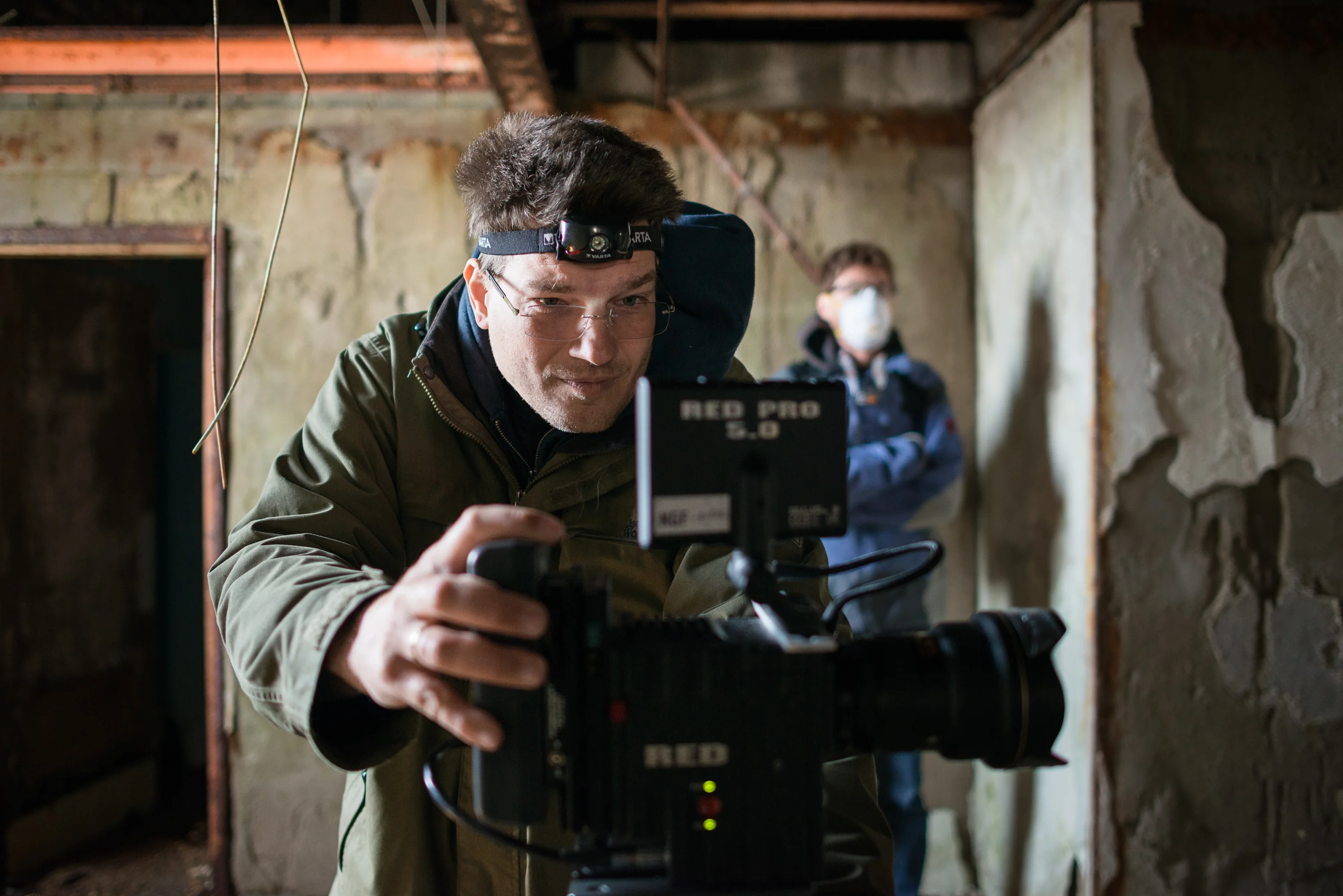
Image from Wikipedia
Image from Wikipedia
Nikolaus Geyrhalter: A Precise Look at the World, Work, and Reality
An Austrian documentary filmmaker who transforms landscapes, systems, and human traces into compelling cinematic experiences
Nikolaus Geyrhalter, born in 1972 in Vienna, is one of the most distinctive voices in contemporary documentary filmmaking in the German-speaking world. His work combines cool observation with great visual care and a unique sensitivity to the quiet, often overlooked structures of everyday life. From early on, it was clear that cinema captures his interest not merely as a means to tell stories, but as a precise measurement of reality.
The self-taught filmmaker founded his own production company at the age of 22 and developed a remarkably independent artistic signature from it. Geyrhalter works as a director, producer, and cameraman, shaping his films from a rare blend of distance, patience, and formal rigor. This is precisely where the enduring fascination of his work lies: His films may not shout, but they resonate long after viewing.
Biographical Beginnings: Vienna, Self-Teaching, and the Step to Independent Film Production
Geyrhalter grew up in Vienna and entered the film world without an academic detour, yet with a keen instinct for image composition, observation, and rhythm. In 1994, alongside his first production Angeschwemmt, he founded the Nikolaus Geyrhalter Filmproduktion, a move that secured his independence early on. This decision was more than an organizational act: it laid the groundwork for a career that developed consistently outside standardized television and production logics.
The early independence also shaped his working style. Geyrhalter opted for subjects that make societal processes visible without resorting to didactic sharpness. His films do not seek quick theses, but rely on slow observation as a method and the power of editing. This quickly earned him recognition in the international documentary scene.
The International Breakthrough with Documentaries of Precise Impact
By the time of Das Jahr nach Dayton, Pripyat, Elsewhere, and Our Daily Bread, Geyrhalter established himself as a filmmaker with a distinctive profile. These works demonstrate how consistently he captures societal and spatial systems as visual experiential spaces. His camera often remains calm, almost distant, and it is precisely this serenity that gives the images a strong emotional and political resonance.
Pripyat is a particularly striking example of this method: a look at the proximity to the Chernobyl exclusion zone, at everyday life under conditions of historical burden. Our Daily Bread, on the other hand, focuses on mechanized food production and reveals industrial processes as both highly aesthetic and disturbing. In these films, Geyrhalter merges documentary accuracy with an almost meditative view of systems that both sustain and alienate modern life.
Form, Style, and Artistic Development: Observation Instead of Commentary
Nikolaus Geyrhalter's artistic development shows remarkable consistency. His films largely forego explanatory voiceovers and focus instead on strong visual architecture, space, duration, and the presence of real situations. Wide shots, precise framing, and a restrained use of drama create a language that straddles filmic anthropology and poetic rigor.
This approach makes his work particularly influential in documentary filmmaking. Geyrhalter is interested in landscapes, infrastructures, workplaces, and liminal spaces—those sites where culture and economy, technology and body, nature and intervention intersect. His visual language creates a form of authority because it does not assert but makes visible. This is precisely where the depth of his films emerges.
Key Works and Thematic Lines in the Filmography
Central to his filmography are works such as Abendland, 7915 KM, Homo Sapiens, Über die Jahre, Die bauliche Maßnahme, and Erde. These films expand his thematic scope without abandoning the core: the measurement of human and technical living spaces. Abendland explores European night spaces and functional areas, while 7915 KM depicts the world of the Dakar Rally as a blend of speed, desert, and social periphery.
Homo Sapiens and Erde shift the focus more strongly onto civilization, materiality, and the state of the planet. In Erde, the human intervention into the soil, architecture, and landscape takes center stage, connecting the environmental question with a clear aesthetic language. This way, Geyrhalter made visible issues early on that possess even greater urgency in today's cultural discourse. His films are observations of the present, but also chronicles of a fragile progress.
Current Projects and Recent Works: MELT and Rebellion in the Brothel
With MELT, Geyrhalter continued his exploration of climate, landscape, and human use of nature in 2025. The film takes us from the Alps through Japan, Canada, Austria, and Iceland to a research station in Antarctica, examining a world where snow and ice are both backdrop, resource, and threatened reality. The synopsis describes the film as a journey into a seemingly white order, behind which the alarming transformation of ice worlds looms.
Rebellion in the Brothel is also among the more recent works from his production company, showcasing how strongly the Geyrhalter house continues to focus on historical, social, and cultural themes. The production side also hints at additional current and upcoming projects, including series and films in development. This highlights not only the ongoing productivity of the company but also the continuity of a documentary gaze that is both contemporary and long-term.
Discography? No: A Filmography with International Renown and Clear Awards
Although the term discography does not apply here, Geyrhalter's work boasts a cinematic overview of high density and historical significance. His films have received numerous awards, including those for Das Jahr nach Dayton, Pripyat, Elsewhere, and Our Daily Bread. The official filmography also lists a long line of additional honors, such as for Über die Jahre, Abendland, Homo Sapiens, Die bauliche Maßnahme, and Erde.
Noteworthy are awards like the Ecumenical Jury Award at the Berlinale Forum for Erde, the Grand Diagonal Prize for Best Austrian Documentaries, or the Austrian Film Award for Best Documentary. Such recognitions not only attest to festival success but also to the sustainable reception by expert juries, curators, and the international documentary scene. The production company also points out more than 200 awards received by its films in total.
Critical Reception and Cultural Influence
The critical reception of Nikolaus Geyrhalter is closely tied to his formal discipline. Press and festival programs regularly emphasize his calm, observant camera that does not push itself to the forefront but allows situations to be experienced in their entirety. This very restraint is often described as a strength, as it does not simplify societal questions but condenses them.
Culturally, Geyrhalter has made Austrian documentary filmmaking visible far beyond national borders. His works engage with globalization, labor, infrastructure, environment, and living spaces, all the while retaining the poetic dimension of the documentary form. He thus represents a form of cinema that merges insight and aesthetic experience. This makes him an important reference point for cinephile audiences and young documentary filmmakers alike.
Why Nikolaus Geyrhalter Remains So Exciting
Nikolaus Geyrhalter is exciting because he does not comment on the world but makes it readable through images. His films show how tightly human civilization is intertwined with landscape, technology, and work, and they do so with a rare visual consistency. Those who engage with his works experience cinema as precise observation, as cultural analysis, and as quiet, intense contemplation of the present.
Particularly in the context of live festivals or cinema, these films unfold their full impact, as the calm, grandeur, and concentration of his visual language become most palpable. Nikolaus Geyrhalter remains a director whose work not only documents but shapes, organizes, and compels viewing. Anyone who takes documentary film seriously as an art form should definitely experience him on the big screen.
Official Channels of Nikolaus Geyrhalter:
- Instagram: https://www.instagram.com/geyrhalterfilm/
- Facebook: https://www.facebook.com/geyrhalterfilm/
- YouTube: https://www.youtube.com/user/Geyrhalterfilm
- Spotify: no official profile found
- TikTok: no official profile found