
Johan Grimonprez
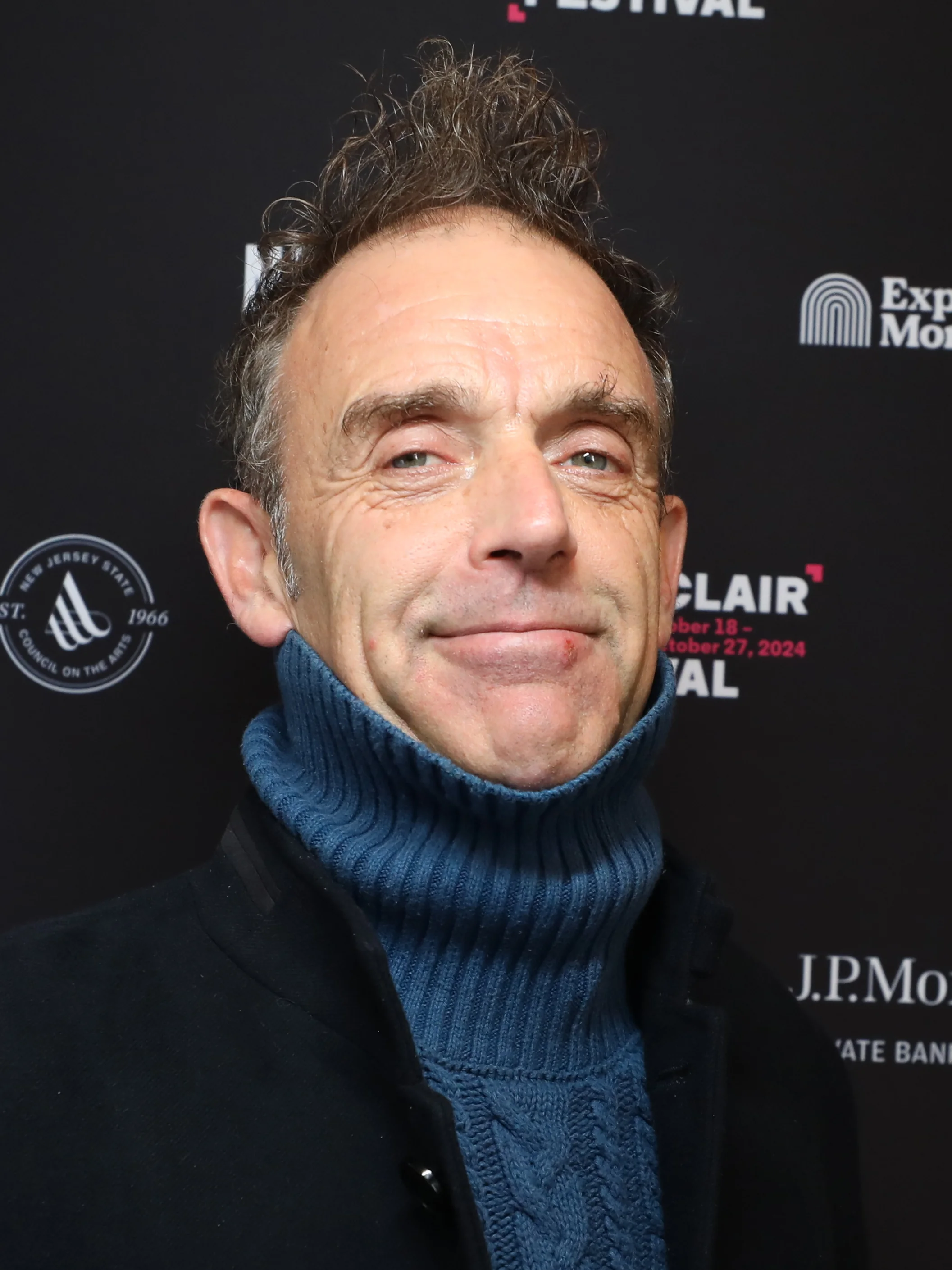
Image from Wikipedia
Image from Wikipedia
Johan Grimonprez
Essay Film, Archive Magic, and Political Sharpness: Why Johan Grimonprez Remontages the Images of Our Time
Johan Grimonprez, born in 1962 in Roeselare, Belgium, is one of the most influential voices at the intersection of film art, documentary, and media critique. In the strict sense, he does not have a music career – yet he structures his films like multifaceted compositions: with rhythmical montages, motif refrains, distinctive themes, and a stage where history, jazz, television, and politics come together to improvise. He gained prominence with dial H-I-S-T-O-R-Y (1997), an iconic essay film about plane hijackings and the media’s hunger for spectacle; followed by Double Take (2009) about Hitchcock, television, and the economy of fear, Shadow World (2016) on global arms trade, Blue Orchids (2017), and most recently Soundtrack to a Coup d’État (2024), whose international awards and nominations have led his artistic development to a new peak. He lives and works between Belgium, Ghent/Brussels, and New York – and has shaped the discourses of moving image art with his stage presence in exhibitions and festivals since the 1990s.
Early Years and Education: From Anthropology to Camera
Grimonprez's artistic development is rooted in an interdisciplinary background that combines anthropology, photography, and film production. After studying at KASK in Ghent and earning an MFA at the School of Visual Arts in New York, he sharpened his theoretical foundation in the Whitney Independent Study Program; stays at the Jan van Eyck Academie and DAAD scholarships further broadened his perspective. This early phase explains why his later works rely heavily on research, archival access, and precise arrangement: Each project acts like field research in the archives of modernity, where audiovisual composition – montage, found footage, voice-over, sound design – becomes a method of historical analysis. Even Kobarweng or Where Is Your Helicopter? (1992) shows his sensitivity to "first contacts" between cultures and images; the work circulates in renowned museum collections today and marks the birth of an essay filmmaker who organically connects ethnography, media archaeology, and artistic production.
Breakthrough in Video Art: dial H-I-S-T-O-R-Y (1997) as Medium Critique
With dial H-I-S-T-O-R-Y, Grimonprez achieves international acclaim. The essay film montages news images, reports, and literary quotes (including from Don DeLillo) into a complex composition about plane hijackings, public perception, and the spectacle of live reporting. Formal virtuosity meets precise media analysis here: Like in a score, the work unfolds through loops, staccato cuts, and refrains into a study of the "commodification" of history through television. This "sound" of his visual language – a pulse of archival images, commercials, and news commentary – shapes his artistic signature and sets benchmarks in European video art of the 1990s. Participation in exhibitions such as documenta X, international awards, and inclusion in canons of video and media art underline the authority of this work.
Hitchcock, Doppelgängers, and the Television Set: Double Take (2009)
Double Take combines fictional and documentary elements into a dense narrative about media fear and the "double bottom" of modernity. The starting point is a fictional encounter between Alfred Hitchcock and his older self, but the actual dramaturgy unfolds in the juxtaposition of Cold War rhetoric, advertising aesthetics, and the birth of the television age. Grimonprez’s composition uses motifs – Hitchcock cameos, ad breaks, musical references – like in a symphonic movement; each recurrence sharpens the theme of "fear as a commodity." Reception by cultural critics and specialist publications praised the film’s intellectual agility and its formal originality. For his artistic development, Double Take marks the consolidation of a style that intertwines historical icons, pop aesthetics, and discourse history within a precise filmic grammar.
Arms Trade as a Global System: Shadow World (2016) and Blue Orchids (2017)
With Shadow World, Grimonprez directs attention to the political and economic infrastructure of war. Based on Andrew Feinstein’s research, the film examines the interconnections of politics, industry, and lobbying – an "arrangement" of interviews, archives, and investigative elements that pulse with a dynamic sound design. The documentary approach is evident: meticulous research, clear argumentation, stringent dramaturgy. Blue Orchids continues this line by transforming exploitation relationships, power, and ethics into an essayistic form once more. These works exemplify Grimonprez’s authority as a filmmaker who combines documentary precision with an advanced artistic vocabulary – a rare mix of research competence, production insight, and aesthetic innovation.
Current Culmination: Soundtrack to a Coup d’État (2024–2026)
Soundtrack to a Coup d’État unfolds the Congo crisis of the early 1960s as a large-scale, polyphonic oratorio of jazz, geopolitics, and decolonization. Musical interludes – such as references to Abbey Lincoln or Max Roach – structure the filmic composition like a concept album, while archival images, speeches, and diplomatic documents condense the narrative harmony. The film celebrated a prominent festival premiere in 2024, won a special award for "Cinematic Innovation," and quickly became one of the most discussed essay documentaries of its time. In 2025, it received international accolades, top rankings, and an Academy Award nomination for Best Documentary (97th Academy Awards). Critics emphasize the polyphonic narrative style: The work links the aesthetics of jazz – freedom, call-and-response, syncopation – with a precise political score that dissects the mechanisms of colonialism, intelligence services, and resource politics. Thus, the soundtrack of the 20th century becomes audible as a political arrangement: art as a voice against realpolitik.
Installations, Curatorial Practice, and the "Zapping" as Aesthetic
Alongside his films, installations and curated video lounges shape Grimonprez’s oeuvre. Works like BED (2009) or interactive presentation formats create a performative stage presence in the exhibition space: Viewers "conduct" the flow using sensors, remotes, and movements – a participatory arrangement that makes media experience sensually tangible. Theoretically, Grimonprez frames this vocabulary as "Zapping Poetics": the apparent randomness of channel surfing becomes a precise montage technique that reveals hidden structures. This practice adds a spatial, almost theatrical layer to his filmography that addresses experience directly and anchors his work in the field of contemporary art.
Style, Composition, and Production: How Images Become Music
Grimonprez’s signature can be read like a score. The composition works with thematic riffs (television images, ad breaks, keywords) that are transposed and broken throughout. Arrangements of found footage are interwoven with new recordings, voice-over comments, and precise sound design; the production relies on thorough research, rights clearance, and international co-productions. Musically conceived, his editing often resembles the principle of variation: recurring motifs alter in function and tonality – sometimes ironically, sometimes elegiacally. This technique not only generates aesthetic density but also an epistemological effect: complex interrelations become audible and visible, without resorting to the didactics of classical elucidation. Thus, a rare combination of expertise, authority, and trustworthiness emerges: an artistic discourse that substantiates, questions, and convinces.
Cultural Influence and Reception: Canon Formation between Cinema and Art
The impact of Grimonprez’s films extends far beyond the festival circuit. Museums, collections, and art institutions showcase his works, and international cultural criticism places dial H-I-S-T-O-R-Y and Double Take within the history of the essay film. Shadow World intensified public debate on arms exports, lobbying, and the "privatization of violence"; Soundtrack to a Coup d’État updated discussions on decolonization and made the aesthetic-political power of jazz tangible for a new audience. Critics emphasize the ability of his films to "intonate" historical archives so that the present becomes comprehensible. In a time of information overload, his montage principle acts as a metronome that sorts sounds, reveals counterpoints, and forms a knowledge arrangement from them.
Awards, Festivals, Institutions
The list of awards, nominations, and festival participations is long and spans across continents. From documenta participations to museum acquisitions, to cinema and TV distributions, his career demonstrates a rare breadth between the art field and film industry. Particularly in the years 2024–2026, recognitions for Soundtrack to a Coup d’État intensified: festival awards, critics' lists, an Oscar nomination, and international press reviews affirm his authority as a director who merges complex political matter with formal virtuosity. Concurrently, installations and gallery networks (in New York and Paris, among others) remain important resonance spaces for his practice.
Filmography (Selection) and Publications
Feature films: dial H-I-S-T-O-R-Y (1997); Double Take (2009); Shadow World (2016); Blue Orchids (2017); Soundtrack to a Coup d’État (2024). Short and installation works range from Kobarweng or Where Is Your Helicopter? (1992) to recent video essays on language, love, and politics. Accompanying publications and catalogs (including with Hatje Cantz) document the artistic development, while lectures, discussion formats, and curatorial projects expand the discourse. This discography of the moving image – intentionally referred to as "filmography" – illustrates how consistently Grimonprez translates aesthetic research into public debate.
Conclusion: The Groove of History – Why You Must See Johan Grimonprez
Johan Grimonprez makes visible how power, media, and music structure history – and he does it with the precision of a composer. His artistic development reveals how media-critical intelligence, documentary care, and visual inventiveness merge into a distinctive style. Those who experience his films in cinemas, museums, or festival spaces feel the physical energy of their montage and the emotional weight of their arguments. Recommendation: Attend live screenings and exhibition formats – where the images breathe, the sound carries, and the debates leap into the audience.
Official Channels of Johan Grimonprez:
- Instagram: No official profile found
- Facebook: No official profile found
- YouTube: No official profile found
- Spotify: No official profile found
- TikTok: No official profile found
Sources:
- Johan Grimonprez – Official Website
- S.M.A.K. – Artist Profile Johan Grimonprez
- ZKM – Description of Work "BED"
- The Guardian – Feature on "Soundtrack to a Coup D'État," 13.11.2024
- Wikipedia (EN) – Artist Biography
- Wikipedia (EN) – Film Page "Soundtrack to a Coup d’État"
- BRUZZ – Interview on Oscar Nomination, 02.03.2025
- WGLT – Report and Review of "Soundtrack to a Coup d’État," 27.02.2025
- Rotten Tomatoes – Reviews of "Shadow World"
- Wikipedia: Image and text source