
Haindling (Band)
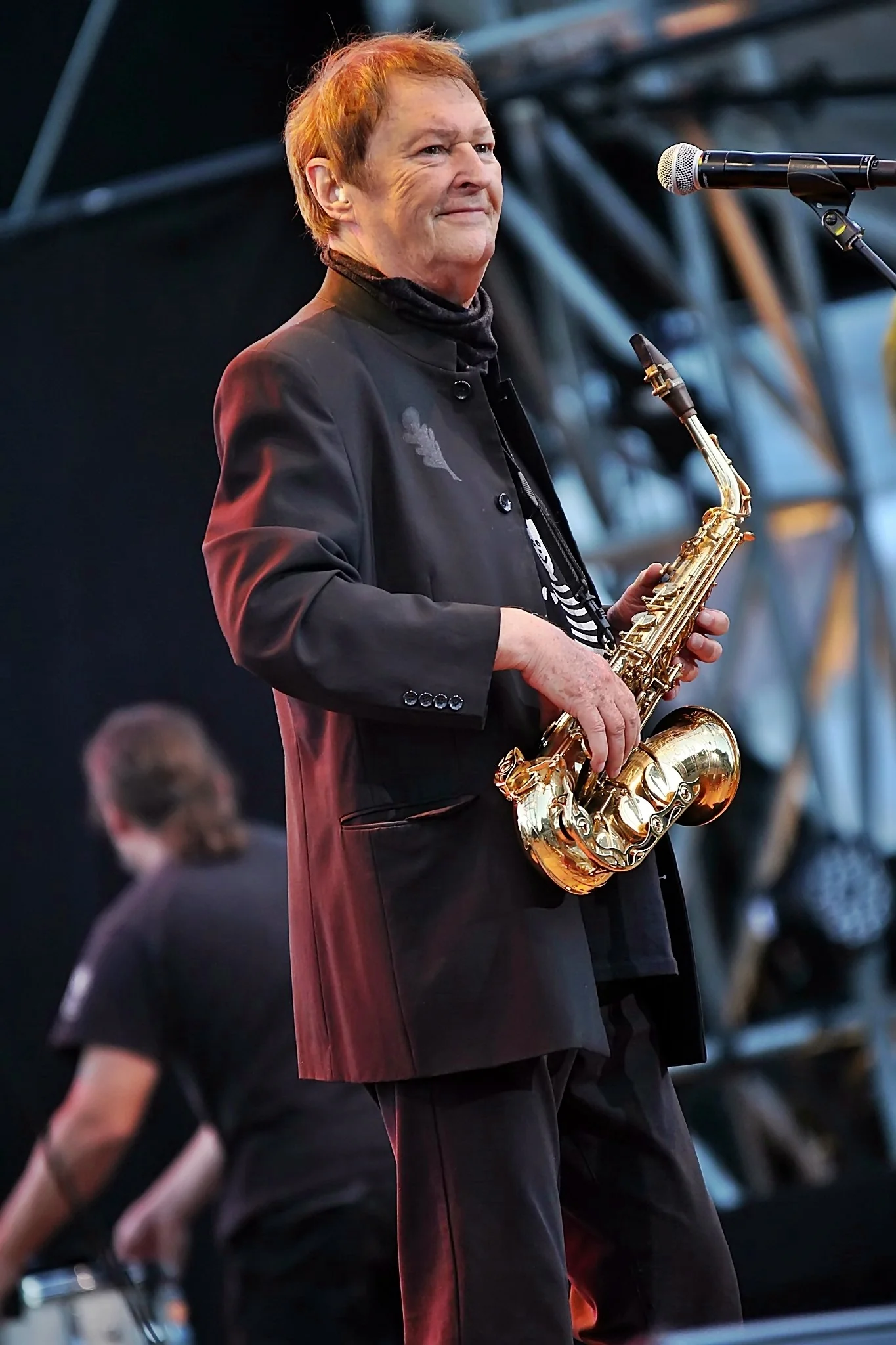
Image from Wikipedia
Image from Wikipedia
Haindling (Band) – Bavarian Sound Worlds Between New Folk Music, Jazz, and World Music
Haindling: The Cult Band from Lower Bavaria That Reinvents Folk Music and Connects Generations
Since the early 1980s, Haindling has been synonymous with a distinctive music culture from Bavaria: a rich sound mosaic of New Folk Music, Jazz, Pop, World Music, Ambient, and classical color, all shaped by the handwriting of composer, multi-instrumentalist, and bandleader Hans-Jürgen Buchner. Named after the small district of Haindling in the town of Geiselhöring, the group has developed a style that combines the dialect, melody, and instrumentation of Bavarian tradition with contemporary production, sophisticated composition, and a cinematic atmosphere. In Bavaria, Haindling enjoys cult status; moreover, the band's instrumental and film music has long since become a part of the auditory DNA of German-language television.
Biographical Roots: From Ceramic Master to Sound Architect of New Folk Music
The artistic development of Hans-Jürgen Buchner is a rare stroke of luck for German pop history. Born in 1944 in Bernau near Berlin and raised in Lower Bavaria, Buchner first completed an apprenticeship as a ceramist before his music career took off. In the early 1980s, he founded Haindling—initially as an artistic experiment, soon evolving into a distinctive band aesthetic. From the village inn in Haindling, he created sound spaces that designed a new tonal poetry between a jazz affinity and regional sound, using saxophones, tenor horns, trumpets, keyboards, synthesizers, exotic percussion instruments, and self-built sound sources. Buchner's stage presence, his self-taught virtuosity, and his consistent closeness to dialect early on established Haindling as an unmistakable brand of Bavarian pop modernity.
The Band as an Ensemble: Continuity and Polyphony
Since its founding in 1982, Haindling has transformed from a studio solo project into a reliable live ensemble with a distinct lineup. Alongside Buchner, musicians such as Michael Braun (reed instruments, keyboards), Peter Enderlein (drums, percussion), Wolfgang Gleixner (bass, tuba, guitar), and Reinhold Hoffmann (keyboards, oboe, saxophone) shaped the characteristic band framework for decades. This polyphony translated Buchner's sound ideas onto the stage: in arrangements that fluctuate between brass arrangements, ostinato grooves, atmospheric spaces, and humorous dialect textures, and in a live dynamic ranging from intimacy to fanfare jubilation.
Career Path and Breakthroughs: From “Lang scho nimmer g’seng” to “Paula”
Haindling's early surge in popularity was due to several singles and albums from the 1980s: with songs like “Lang scho nimmer g’seng,” “Du Depp,” or “Spinn i,” the band combined catchy qualities with dialectical punch. The debut “Haindling 1” (1982) programmatically marked the connection between synthesizer aesthetics, brass band sound, and jazz gestures. In the late 1980s and early 1990s, Haindling added further chapters with songs like “Paula,” “Liebe,” or “Leit hoit’s z’samm.” These titles still function today as cultural markers: they resonate with Bavaria without folkloric kitsch, with pop without triviality—representing identity-forming music that remains locally rooted and globally connected.
Film Music and Television: The Invisible Presence in Everyday Life
Alongside their album career, Haindling's significance as a composing team for film and television grew. Buchner's instinct for musical storytelling and dramatic economy significantly influenced series and TV movies—from “Irgendwie und Sowieso” to “Zur Freiheit” and “Café Meineid,” as well as film and television productions like “Madame Bäurin,” “Der Schandfleck,” or “Margarete Steiff.” The Haindling sound became iconic as the theme music for “Die Rosenheim-Cops.” These film scores showcase the compositional expertise of the group: themes with high recognition value, colorful orchestration, the organic interplay of acoustic and electronic layers, and a production that balances between sound painting and precision.
Current Phase: Farewell Tour, Charity, and Selective Return to the Stage
The recent band history combines reflection and presence. In 2023, Hans-Jürgen Buchner's health situation forced the cancellation of a planned summer tour, followed later by selected return dates. In 2024, Haindling performed in Munich at the Tollwood Festival as part of a farewell tour—an emotional journey with an open outlook on occasional solo concerts. In 2025, Buchner turned 80; the tributes underscored his status as a “Urbayer with a global reach” and a sound artist of rare originality. Simultaneously, individual summer dates in 2025 testified to the ongoing stage presence. For 2026, selective performances—such as in Kempten—are announced. This late phase combines experience, artistic development, and a conscious moderation of live activity.
Discography – Milestones and Repertoire Markers
Haindling's discography opens with the album “Haindling 1” (1982), which already fixes the stylistic signature: dialect songs, electronic-acoustic synthesis, striking brass arrangements, rhythmic motorik, and melodic catchiness. In the following years, additional albums were released that established repertoire pillars and shaped the public perception of the band. The 1980s delivered a canon of single highlights (“Lang scho nimmer g’sehn,” “Du Depp,” “Spinn i,” “Telefon,” “Paula”), while the 1990s saw releases like “Liebe” and “Leit hoit’s z’samm.” In addition, numerous soundtrack works were created, whose themes and motives established themselves as independent Haindling listening brands. Digitally, streaming numbers reflect the long-term impact: titles like “Bayern,” “Pfeif drauf,” “Lang scho nimmer g’sehn,” and “Paula” continue to hold leading positions in the catalog online.
Style and Sound Language: Composition, Arrangement, Production
Haindling embodies a rare triad of compositional handwriting, arranged polyphony, and striking production. Composed pieces often feature clear, modal themes combined with shifts between major-minor tonalities, pentatonic turns, and ostinato bass figures. Arrangements are layered: brass sections (saxophone, trumpet, tenor horn) intersect with synth basses, acoustic piano sketches meet percussion patterns—a texture that feels both earthy and cinematic. Aesthetic production saw Haindling early on embracing analog synthesizers (including Minimoog) and the collaging of their own sound sources. The result is a “Bavarian World Pop” that transforms folk music motifs rather than quoting them, and thanks to dynamic headroom design, energetically jumps off the stage.
Cultural Influence and Context
In the music history of the Federal Republic, Haindling marks a distinctive line: beyond the New German Wave, yet simultaneously utilizing its pop breakthrough; related to the movement of “New Folk Music,” but more strongly oriented towards jazz and film music; regionally anchored while also internationally compatible. The cultural influence manifests in several ways: first, in the sustainable popularity of individual songs in public spaces (from stadiums to TV identifications), second, in the elevation of Bavarian linguistic and music culture within pop production, and third, in a generation-spanning live community that experiences Haindling concerts as a ritual of Bavarian contemporary culture. Awards, state prizes, and honors for Buchner's linguistic and cultural preservation highlight the societal significance of this work.
Stage Presence: Musical Storytelling in Real Time
The live dynamics of Haindling thrive on dramaturgically clever arcs of tension. In the setlist, striking refrains are placed alongside instrumental vignettes; humorous dialect moments alternate with meditative sound breathing. Musical experience, timbral control, and the ability for spontaneous sound painting shape the stage. Thus, Haindling concerts function as musical narratives: they condense biography, repertoire, and regional identity into a collective experience, where silence, afterglow, and resonance also become part of the composition.
Engagement and Side Paths: Charity, Books, Home
Beyond the stage, Buchner has repeatedly engaged in social and cultural initiatives. A recent testament is the charity photo book "Live & Lem," whose proceeds benefit the children's cancer aid in East Bavaria. The close connection to Lower Bavaria—still the family's place of residence—manifests in art, language, thematic choices, and public appearances. Haindling does not describe home romantically but as a lived practice: critical, humorous, and people-friendly.
Conclusion: Why Haindling Remains
Haindling is more than a band—it is an artistic attitude. The music career of Hans-Jürgen Buchner and his ensemble shows how boldly conceived artistic development inspires regional culture without narrowing itself to folkloric clichés. In the discography, songcraft, arrangement finesse, and production sensibility consolidate into a voice that modernizes Bavaria's sound tradition and resonates equally in film, television, and concert halls. Anyone wanting to experience music that intertwines origin, craftsmanship, and heart should hear Haindling live—in those selected concerts that are now more precious than ever.
Official Channels of Haindling:
- Instagram: No official profile found
- Facebook: No official profile found
- YouTube: No official profile found
- Spotify: No official profile found
- TikTok: No official profile found
Sources:
- Wikipedia – Haindling (Band)
- Wikipedia (en) – Haindling
- Wikipedia – Hans-Jürgen Buchner
- neue musikzeitung – “Der Haindling ist 80 Jahre jung geworden” (01.02.2025)
- FAZ – “Haindling wird achtzig: Seid freundlich, hat er gesagt” (27.12.2024)
- Münchner Merkur – Concert Review Tollwood/Farewell Tour (19.07.2024)
- Süddeutsche Zeitung – Concert Cancellations 2023 (10.02.2023)
- WELT – Concert Cancellations 2023 (10.02.2023)
- idowa – Portrait for the 80th Birthday, Tour Preview 2025 (27.12.2024)
- Motion – Summer Concert 2025 Bayreuth
- Lineapp – Concert Announcement Kempten 28.06.2026
- hitparade.ch – Discography Overview, Singles, and Labels
- Apple Music – Haindling 1 (1982), Label Credits
- Kworb – Spotify Top Songs (Data Overview)
- Passauer Neue Presse – Charity Photo Book “Live & Lem” (06.06.2025)
- allmusic.de – Photo Book “Live & Lem” (Project Presentation)
- Haus der Bayerischen Geschichte – Biography Hans-Jürgen Buchner
- Wikipedia: Image and Text Source
Upcoming Events
Haindling Concert in Kempten
Experience Haindling live at the bigBOX Allgäu on June 28, 2026. Secure your tickets now and enjoy an evening full of music.
Haindling – Summer Concert in Kempten
Experience Haindling live on June 28, 2026, at bigBOX ALLGÄU. An evening full of musical surprises awaits you!
Haindling - Summer Concert Kempten
On June 28, 2026, Haindling will be live at the bigBOX Allgäu, Kempten. Experience Bavarian Pop in a special atmosphere.
Haindling Concert in Kempten
The unique concert by Haindling on June 28, 2026, at Kornhaus Kempten promises an evening full of musical diversity.
Haindling – Summer Concert
Visit the unforgettable Haindling summer concert in the bigBOX Allgäu on June 28, 2026. A musical delight!
Concert by Haindling in Kempten
Don't miss the live concert by Haindling in Kempten. An evening full of Bavarian pop-folk sounds awaits you at the bigBOX Allgäu.
Haindling - Summer Concert in Kempten
Look forward to the Haindling summer concert on June 28, 2026, in Kempten. An evening with unique music awaits you.
Haindling Summer Concert 2026
Be there as Haindling presents their unique sounds in the bigBOX Allgäu. Experience an unforgettable concert on June 28, 2026.
Haindling – Summer 2026
Don't miss Haindling at the bigBOX Allgäu, Kempten. An unforgettable evening full of music and fun!
Haindling Live at the bigBOX Allgäu
Experience Bavarian pop-folk by Haindling in the bigBOX Allgäu Kempten. A highlight of the summer tour 2026.