Gerold Rahmann
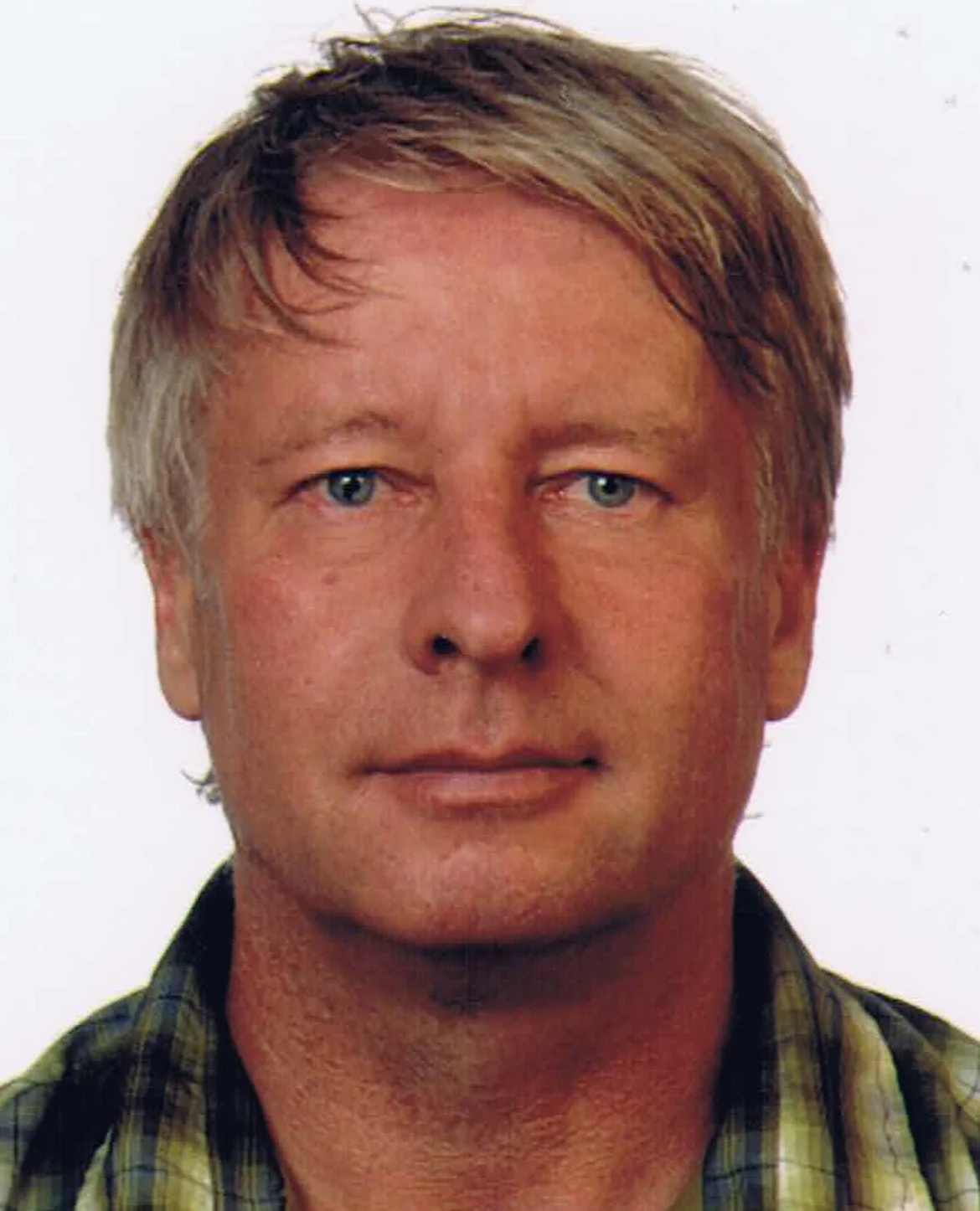
Image from Wikipedia
Image from Wikipedia
Gerold Rahmann: The Agricultural Economist between Ecology, Research, and Social Responsibility
A Versatile Scientist with a Clear Stance
Gerold Rahmann, born on April 29, 1962, in Wittmund, is one of the defining voices in German organic farming and agricultural economics. His biography narrates a story of scientific curiosity, political awareness, and a consistent interest in the connection between agriculture, animal husbandry, and sustainability. Anyone reviewing his career quickly sees: this is not merely a theoretical thinker but a researcher who consistently brings practice, politics, and research together. ([de.wikipedia.org](https://de.wikipedia.org/wiki/Gerold_Rahmann))
Rahmann grew up on a small dairy farm in Hesel, East Frisia, and became familiar with rural life and work environments early on. This background shapes his later academic career as well as his attitude towards organic farming and socially accepted animal husbandry. As a young man, he became politically and socially active, including during his civil service in Hanover and in the context of the anti-nuclear movement. ([de.wikipedia.org](https://de.wikipedia.org/wiki/Gerold_Rahmann))
Early Influences, Studies, and Scientific Curiosity
After graduating from Mariengymnasium in Jever, Rahmann left East Frisia for the first time in 1980 to perform civil service. He then completed an agricultural apprenticeship and studied agriculture at the University of Göttingen from 1984 to 1990, focusing on agricultural economics. Even at this early stage, his future profile became evident: he sought not abstraction for its own sake but application-oriented research with social relevance. ([de.wikipedia.org](https://de.wikipedia.org/wiki/Gerold_Rahmann))
His stays in India, Brazil, and Egypt were particularly formative, as well as his co-founding of a farm commune and an organic wine trade during his studies. These experiences broadened his perspective on agriculture as a global system in which local practices, ecological issues, and economic conditions are closely intertwined. His practical work on dairy farms in Switzerland and as a harvest helper in Germany also contributed to his understanding of agricultural processes. ([de.wikipedia.org](https://de.wikipedia.org/wiki/Gerold_Rahmann))
PhD, Habilitation, and Establishment as an Organic Farming Expert
After completing his studies, Rahmann conducted research at the Institute for Rural Development at the University of Göttingen and obtained his doctorate in 1993 in the field of socio-economics, focusing on nomadic animal husbandry under drought conditions in Sudan. His research was internationally oriented from the start, linking agricultural economic analysis with questions of resilience, resource scarcity, and the adaptability of agricultural systems. This set a significant tone that characterized his later career. ([de.wikipedia.org](https://de.wikipedia.org/wiki/Gerold_Rahmann))
In 1999, he habilitated in the field of habitat maintenance and animal husbandry, receiving the title of Privatdozent in agricultural ecology. His scientific development took him increasingly from classic agricultural economics towards systemic ecology, landscape care, and sustainable livestock management. Even here, the characteristic breadth of his work is evident: it ranges from the analysis of agricultural production systems to the question of how animals can be integrated into care and utilization concepts. ([de.wikipedia.org](https://de.wikipedia.org/wiki/Gerold_Rahmann))
Leadership Roles and Institutional Influence
In 2000, Rahmann was appointed Director and Professor of the newly founded Institute for Ecological Agriculture at the Federal Research Institute for Agriculture. There, he focused on environmentally and animal-friendly husbandry systems that should also be efficient and socially accepted. Central topics included milk production with cows, sheep, and goats, as well as issues of organic farming, which can also function without livestock. ([de.wikipedia.org](https://de.wikipedia.org/wiki/Gerold_Rahmann))
After the dissolution of the Federal Research Institute in late 2007, the institute was incorporated into the Thünen Institute for Ecological Agriculture, which is part of the research network of the Federal Ministry of Food and Agriculture. This kept Rahmann anchored in a central scientific environment, where he worked on the further development of organic agriculture conceived as experimental, empirical, and multifunctional. Even in 2026, he is listed by the Thünen Institute as the head of the Institute for Ecological Agriculture. ([de.wikipedia.org](https://de.wikipedia.org/wiki/Gerold_Rahmann))
Teaching, International Projects, and Global Perspectives
Since 2006, Gerold Rahmann has been an honorary professor at the University of Kassel in Witzenhausen. There, he teaches topics such as ecological sheep and goat husbandry, self-sufficiency, and research methods. This teaching role underscores his position as a scientist who not only publishes and leads but also imparts knowledge to the next generation of agricultural scientists. ([de.wikipedia.org](https://de.wikipedia.org/wiki/Gerold_Rahmann))
Between 2015 and 2017, Rahmann established a Green Innovation Center for Agriculture and Food in Ethiopia as part of the BMZ special initiative “One World Without Hunger.” His focus there was on transferring knowledge from organic farming to improve the production conditions of smallholder farmers. This work highlights his international reach and his ability to adapt ecological knowledge to very diverse agricultural contexts. ([de.wikipedia.org](https://de.wikipedia.org/wiki/Gerold_Rahmann))
Memberships, Expert Authority, and Scientific Networking
For many years, Rahmann has been active in international professional organizations, including serving as treasurer and later president of the International Society of Organic Agriculture Research, as well as a member of the World Board of the International Federation of Organic Agricultural Movements. Additionally, he is involved in the Research Institute for Organic Farming in Germany, the Board for Technology and Construction in Agriculture, and organizations such as Bioland and the Nature Conservation Association of Germany. This anchoring in professional associations and networks strengthens his authority as a voice for organic farming. ([de.wikipedia.org](https://de.wikipedia.org/wiki/Gerold_Rahmann))
He also plays a significant editorial role in scientific debates: from 2014 to 2021, Rahmann served as Editor in Chief of the Journal of Organic Agriculture at Springer Verlag and is an editor of the Journal of Sustainable and Organic Agricultural Systems. Such roles mark not only professional recognition but also influence over international knowledge production in the field of sustainable agriculture. ([de.wikipedia.org](https://de.wikipedia.org/wiki/Gerold_Rahmann))
Political Engagement and Social Perspective
Rahmann's academic career is closely intertwined with political engagement. The Chernobyl disaster in 1986 mobilized him politically; he joined the Greens and worked in local politics for many years in municipalities including Göttingen, Gleichen, Bad Oldesloe, and the Stormarn district. Since 2008, he has been a member of the Stormarn district council and chair of the environmental committee, with a brief interruption. This dual perspective from science and politics makes his biography particularly striking. ([de.wikipedia.org](https://de.wikipedia.org/wiki/Gerold_Rahmann))
His approach to agriculture is therefore never purely technical. He connects ecological efficiency with ethical questions, regional responsibility, and societal acceptance. This is precisely where the significance of his work lies: Rahmann conceptualizes agriculture as part of a larger system encompassing environment, nutrition, animal welfare, and regional development. ([de.wikipedia.org](https://de.wikipedia.org/wiki/Gerold_Rahmann))
Works, Themes, and Intellectual Range
The bibliography of Gerold Rahmann showcases an extraordinary range. It spans from scientific standard works like “Ecological Animal Husbandry” to his habilitation thesis on habitat maintenance, as well as more popular texts and novels such as “Hunger,” “Just Oldesloe Now,” and “Africa – Exodus, Exitus or What?” This mix points to an author who combines expertise with literary form and societal observation. ([de.wikipedia.org](https://de.wikipedia.org/wiki/Gerold_Rahmann))
It is precisely this versatility that makes him interesting to the agricultural science public. Rahmann moves among research, teaching, professional communication, and essay writing, thereby expanding the classic framework of an agricultural economist. His name stands for a science that does not solely reside in the laboratory or seminar room but also fully engages with rural realities, political debates, and global development issues. ([de.wikipedia.org](https://de.wikipedia.org/wiki/Gerold_Rahmann))
Conclusion: Why Gerold Rahmann Remains Fascinating
Gerold Rahmann captivates as a scientist because he does not treat organic farming as a niche topic but as a forward-looking social project. His career combines rural origins, international research, institutional responsibility, and political practice into a cohesive body of work. Those who want to understand how sustainable agriculture has developed in Germany and beyond will find in his biography a concentrated and credible approach. ([de.wikipedia.org](https://de.wikipedia.org/wiki/Gerold_Rahmann))
Rahmann remains intriguing also because his work brings together many levels: animal husbandry, biodiversity, education, international development, and scientific communication. This makes him a formative figure for all who understand agriculture not just as production but as a cultural and future issue. Those who take his topics seriously discover in him a researcher with a clear stance and high professional authority. ([de.wikipedia.org](https://de.wikipedia.org/wiki/Gerold_Rahmann))
A live performance in the context of classical concert or club logic is not central to Gerold Rahmann, but his lectures, discussion contributions, and scientific appearances have the same immediate impact: they make complex interconnections comprehensible and socially relevant. This is where the strength of his public presence lies. ([de.linkedin.com](https://de.linkedin.com/company/thuenen?utm_source=openai))
Official Channels of Gerold Rahmann:
- Instagram: no official profile found
- Facebook: no official profile found
- YouTube: no official profile found
- Spotify: no official profile found
- TikTok: no official profile found
Sources:
- Wikipedia - Gerold Rahmann
- DeWiki - Gerold Rahmann
- Thünen Institute - LinkedIn Company Page
- Wikipedia: Image and text source