
Deutsches Symphonie-Orchester Berlin
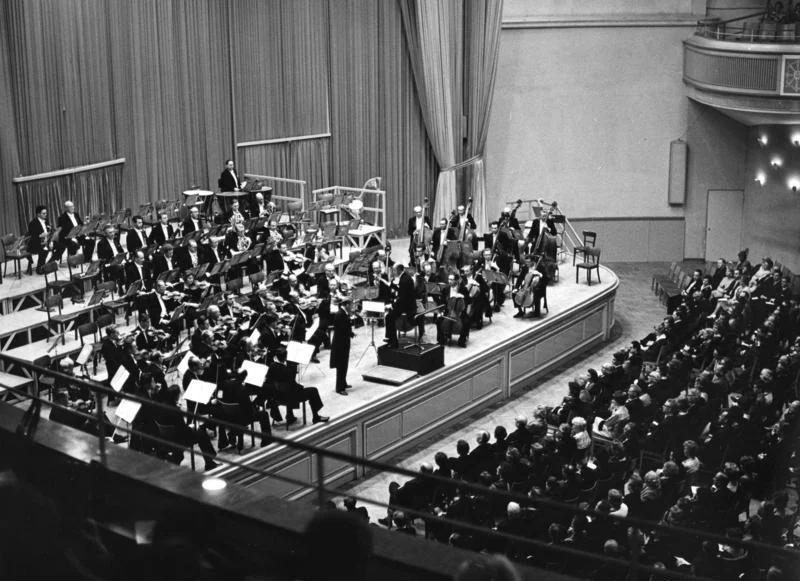
Image from Wikipedia
Image from Wikipedia
German Symphony Orchestra Berlin (DSO) – Sound Research from the Capital
An orchestra between tradition, experimentation, and international impact
The German Symphony Orchestra Berlin has stood for musical excellence, curiosity, and open-minded programming since 1946. Based in the Berlin Philharmonie, the orchestra began its musical career as a radio ensemble and has developed into a leading body with a distinctive stage presence. Its artistic development reflects the cultural history of the city and the European music landscape – from the post-war period through the division to the present. Today, the DSO impresses with thoughtfully curated programs, a diverse discography, and groundbreaking projects that intertwine classical music with contemporary art, electronics, and social themes.
Biography: From RIAS to DSO – a Berlin orchestra makes history
The ensemble was founded in 1946 as the RIAS Symphony Orchestra – Radio in the American Sector – an orchestra tasked with promoting musical quality and cultural exchange. In 1956, it was renamed the Radio Symphony Orchestra Berlin; since 1993, the ensemble has performed under its current name, German Symphony Orchestra Berlin. These name changes document the artistic evolution as well as the political and media contexts in which the orchestra has grown. Its venue is the Berlin Philharmonie, while administratively, the DSO is anchored in the rbb broadcast center – a structure that favors proximity to radio productions, recordings, and innovative formats. ([en.wikipedia.org](https://en.wikipedia.org/wiki/Deutsches_Symphonie-Orchester_Berlin))
Chief conductors and artistic signatures
The DSO is shaped by great conductor personalities. Ferenc Fricsay molded the ensemble's stylistic clarity and affinity for modernity after 1948. Lorin Maazel established a brilliant sound culture in the 1960s and 1970s, before Riccardo Chailly sharpened the symphonic profile from 1982 onward and created repertoire bridges between late Romanticism, modernity, and the present. Following him were Vladimir Ashkenazy and Kent Nagano, who expanded the discography on international labels and elevated the orchestra to the top tier. More recently, Ingo Metzmacher, Tugan Sokhiev, and Robin Ticciati provided accentuating impulses – from advanced programs to work on sound transparency and articulation. Starting from the 2026/27 season, Kazuki Yamada will take over as chief conductor; his appointment marks the next phase of development for an ensemble that sees change as an artistic constant. ([en.wikipedia.org](https://en.wikipedia.org/wiki/Deutsches_Symphonie-Orchester_Berlin))
Stage presence today: Program dramaturgy, premieres, and creative formats
The DSO curates its seasons with a focus on dramaturgical storytelling: classics and discoveries are newly illuminated in thematically sharpened evenings. Projects like the Casual Concerts connect concert experiences, moderation, and club atmosphere – a bridge between classical audiences and curious listeners. With the initiative "Symphonic Mob," the orchestra invites amateur musicians to participate each year, thus promoting cultural participation in the urban space. These formats reflect experience and expertise in music communication, production, and arrangement, expanding the stage presence beyond the Philharmonie into the city. ([dso-berlin.de](https://www.dso-berlin.de/en/orchestra/about-the-dso/biography/?utm_source=openai))
Current artistic development: 2024/25 focusing on diversity, democracy, and new voices
In the 2024/25 season, the DSO emphasizes cultural diversity and social themes – among other things, as a contribution to the campaign "Orchestra for Democracy." European premieres, such as Jessie Montgomery's "Hymn for Everyone" and Uri Caine's "The Passion of Octavius Catto," connect symphonic tradition with African American perspectives and improvisational energy. The orchestra acts as a platform for collaborative music creation and choral-symphonic sound spaces in collaboration with the Federal Youth Chorus. These projects demonstrate how the DSO connects artistic relevance with social dialogue. ([dso-berlin.de](https://www.dso-berlin.de/de/konzert/raphel-philharmonie-berlin-15-06-2025/?utm_source=openai))
International guest performances and prominent concert evenings
With high-profile soloists, the ensemble showcases its stylistic range. With Isabelle Faust, the DSO presented Shostakovich's Second Violin Concerto alongside Brahms' Third Symphony – a contrasting program that balances emotional depth with classical form discipline. Equally significant are appearances under guest conductors such as Elim Chan, who combined Rachmaninoff's Second Piano Concerto and Prokofiev's Fifth Symphony with pulsating energy and clear architecture. Such evenings demonstrate the DSO's ability to communicate poetically and analytically between late Romanticism, modernity, and the present. ([berliner-philharmoniker.de](https://www.berliner-philharmoniker.de/en/concert/calendar/56132/?utm_source=openai))
Discography: Labels, reference recordings, and awards
The DSO's discography includes productions with Deutsche Grammophon, Sony Classical, and Harmonia Mundi – a spectrum ranging from the core symphonic repertoire to vocal and opera projects. Under Kent Nagano, a highly acclaimed recording of Mahler's Eighth emerged, which was detailed in the press for its precision and sound clarity. In 2011, the orchestra received a Grammy Award for Kaija Saariaho's opera "L’amour de loin" – a milestone that underscored the international attention and authority of the ensemble in the music-dramatic field. Additionally, reviews in outlets like The Guardian document the critical reception of key releases and live moments of the DSO. ([en.wikipedia.org](https://en.wikipedia.org/wiki/Deutsches_Symphonie-Orchester_Berlin))
Critical reception and live reputation
Reviews from renowned media highlight the interpretative breadth and nuanced orchestral sound. At the BBC Proms, the DSO under Ingo Metzmacher was credited with a "revelatory" interpretation of Mahler – an interpretation that consolidated structural sharpness, atmospheric complexity, and stylistic modernity. Such live experiences sharpen the orchestra's profile as an ensemble willing to take interpretative risks, reading scores in the spirit of their time while also listening with contemporary ears. This attitude strengthens artistic authority and positions the DSO as a reference for ambitious programming. ([theguardian.com](https://www.theguardian.com/music/2010/aug/11/dsoberlin-metzmacher-proms-review))
Style and sound culture: Transparency, articulation, color
Characteristic of the DSO is a sound culture that combines precision and warmth. The strings excel in fine bowing and supported mid-range; the woodwinds introduce colorful solos with chamber music balance; the brass section articulates prominently without dominating the dynamic balance. In the production and arrangement of complex scores – for instance, contemporary works with expanded soundscapes – the orchestra emphasizes transparency and clear voice profiles. This stylistic signature is the result of a musical career that continuously intertwines studio experience, broadcasting tradition, and concert practice.
Cultural influence and education: Orchestra work as an urban laboratory
As a member of the Rundfunk Orchester und Chöre gGmbH (ROC), the DSO sees itself as an actor in a vibrant capital culture. Close cooperation with media partners and educational institutions enables innovative mediation formats – from moderated family concerts to workshops. With large projects like the "Symphonic Mob," the city becomes a stage, making the democratic idea of collaborative music-making tangible. This experience fosters trust and creates new access points to the symphonic literature, ensuring the orchestra's sustainable audience development and cultural visibility. ([dso-berlin.de](https://www.dso-berlin.de/de/presse/?id_presse=844))
Outlook: Chief conductor Kazuki Yamada and the future
With Kazuki Yamada, who will take over artistic leadership in fall 2026, the DSO is trusting a conductor known for precision, rhythmic vitality, and a deep sense of orchestral color. His guest conductings have already revealed the fruitful chemistry between podium and orchestra. The planned focus on repertoire bridges between classical, modern, and contemporary music promises exciting seasons that will delight both connoisseurs and curious newcomers. This generational shift builds on Robin Ticciati's legacy while simultaneously opening new spaces for composition, premieres, and international collaborations. ([dso-berlin.de](https://www.dso-berlin.de/de/presse/?id_presse=844))
Current projects and season highlights
The recent programs range from Mendelssohn's "Reformation Symphony" to European premieres that open new stylistic horizons for the orchestra. Collaborations with outstanding soloists – such as with Isabelle Faust – stand alongside evenings that contrast core symphonic repertoire with contemporary music. Popular concert formats like the "Casual Concert Lounge" demonstrate how the DSO extends concert dramaturgy into the after-concert space, thereby reaching an urban, diverse audience. ([berliner-philharmoniker.de](https://www.berliner-philharmoniker.de/en/concert/calendar/56132/?utm_source=openai))
Voices of the fans
The reactions from fans clearly show: The German Symphony Orchestra Berlin captivates audiences worldwide. On Instagram, a listener exclaims: "This transparency in orchestral sound makes every detail shine." On YouTube, a comment reads: "An evening filled with goosebumps – precision and emotion in perfect balance." On Facebook, a listener writes: "Program design that surprises and moves – we need more combinations like this!"
Conclusion
The German Symphony Orchestra Berlin unites tradition and innovation at the highest level. Its artistic development, distinguished discography, and bold programming make it an orchestra of international authority. Anyone wanting to experience how symphonic classics sound anew and how contemporary music captivates sensually should hear the DSO live at the Berlin Philharmonie – here, interpretative expertise meets a stage presence that fills the hall with ideas, colors, and emotions.
Official channels of the German Symphony Orchestra Berlin:
- Instagram: https://www.instagram.com/dsoberlin
- Facebook: https://www.facebook.com/dsoberlin
- YouTube: https://www.youtube.com/dsoberlin
- Spotify: No official profile found
- TikTok: No official profile found
Sources:
- German Symphony Orchestra Berlin – Official Website
- DSO Berlin – Biography
- DSO Berlin – Press Release: Kazuki Yamada becomes new chief conductor (April 25, 2025)
- German Music Information Center (miz) – DSO Berlin
- Berlin Philharmonic – Concert Calendar: DSO, Măcelaru, Faust (04.05.2025)
- Berlin Philharmonic – Concert Calendar: DSO, Raphel, Caine et al. (06.15.2025)
- Berlin Philharmonic – Concert Calendar: DSO, Elim Chan (03.28.2025)
- DSO Berlin – Concert Detail: European Premieres (06.15.2025)
- German Music Council – Federal Youth Chorus with the DSO (06.09.2025)
- The Guardian – Proms Review DSO/Metzmacher (08.11.2010)
- The Guardian – Review Mahler 8 / DSO / Nagano (03.10.2005)
- Wikipedia – German Symphony Orchestra Berlin
- Wikipedia: Image and text source
Upcoming Events
German Symphony Orchestra Berlin at the Max-Littmann Hall
Grand symphonic music in reference acoustics: DSO Berlin at the Max‑Littmann‑Hall Bad Kissingen. 14.01.2026, time/price to follow. Live atmosphere, goosebumps, top orchestra. Secure your tickets now! #BadKissingen
Berlin Symphony Orchestra
An evening filled with tension, brilliance, and grand orchestral colors: The DSO Berlin plays at the Isarphilharmonie Munich. Rachmaninoff, Berlioz, great live atmosphere. #Munich #Classical
German Symphony Orchestra Berlin in Bad Kissingen
Bad Kissingen gets a summer evening full of orchestral colors: The German Symphony Orchestra Berlin plays in the Max-Littmann Hall. 2.7.2026, from 27 euros. #Classical
Concert Introduction – Kissinger Summer 2026
In the Green Hall, your concert experience begins: lively introduction with sound knowledge, acoustic tips, and festival flair. Fri, 07/10/2026, 5:00 PM. Accessible, central location. Crown the evening now! #KissingerSummer
Berlin Symphony Orchestra Concert
Don't miss the Berlin Symphony Orchestra with Mahler and Boulanger at the Kissinger Sommer.
Concert of the German Symphony Orchestra Berlin
Enjoy a concert full of highlights from Mozart and French orchestral works. Live at Max-Littmann-Saal on July 12, 2026.