
Chloé Zhao
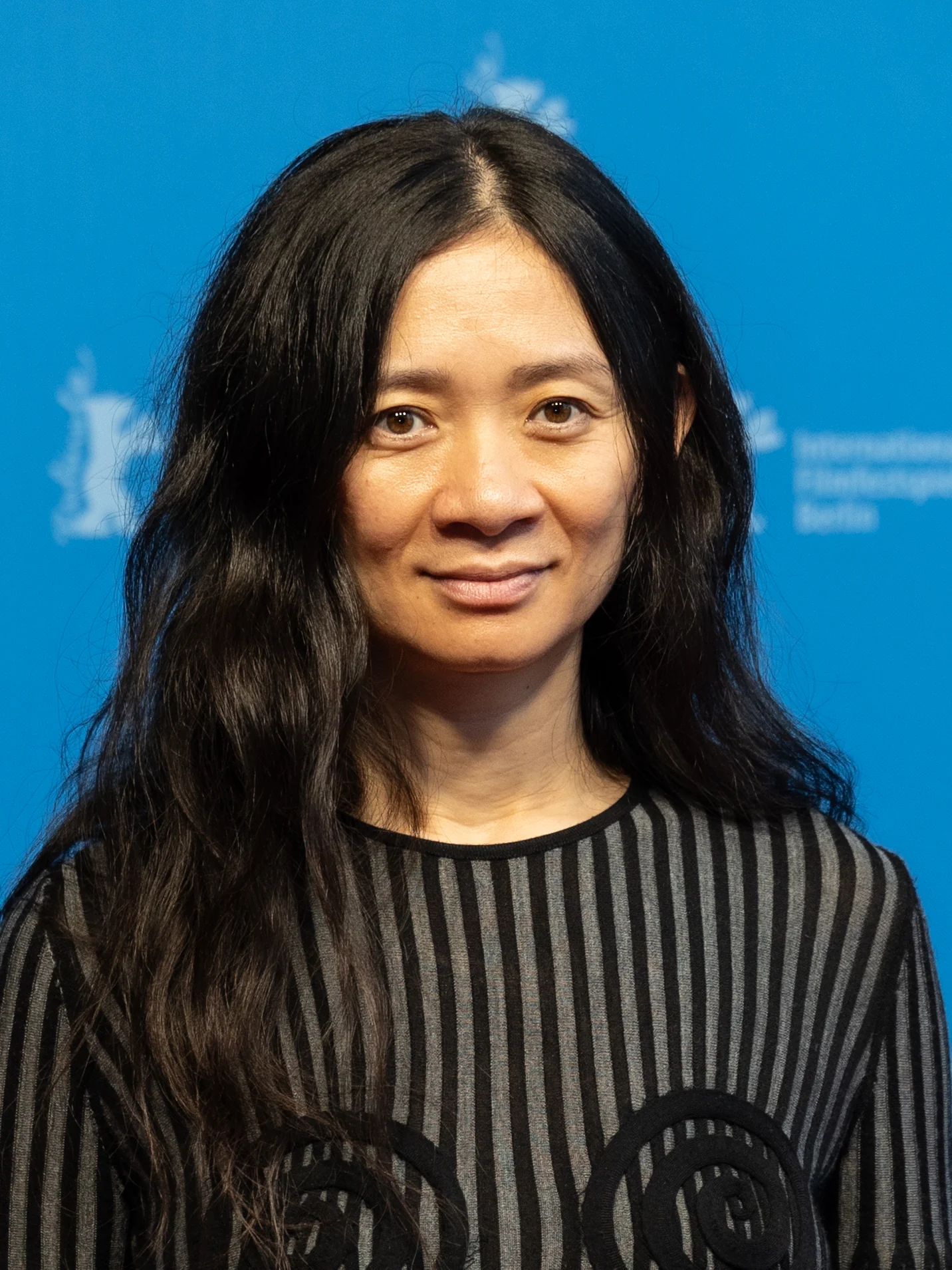
Image from Wikipedia
Image from Wikipedia
Chloé Zhao: The Quiet Power of Modern Author Cinema
A director who shapes great film art through observation, empathy, and visual clarity
Chloé Zhao, born on March 31, 1982, in Beijing, is one of the most influential voices in contemporary cinema. The Chinese filmmaker primarily works in the USA, bridging her film art with precisely observed reality, poetic imagery, and an unusually intimate narrative style. She gained international attention with Nomadland, for which she won an Oscar at the 2021 Academy Awards; five years later, she received another directing nomination for Hamnet. ([en.wikipedia.org](https://en.wikipedia.org/wiki/Chlo%C3%A9_Zhao?utm_source=openai))
Background and Artistic Influence
Zhao's biography is closely tied to a transcultural perspective on people, spaces, and life concepts. Born in Beijing, she grew up between China, England, and later the United States, which has profoundly shaped her sensitivity to belonging, migration, and identity. These experiences are reflected in her films as a quiet yet compelling search for human dignity. The personal perspective never remains private but transforms into a universal language of observation and understanding. ([britannica.com](https://www.britannica.com/biography/Chloe-Zhao?utm_source=openai))
The Path to Breakthrough: From Early Films to International Recognition
Her feature film debut Songs My Brothers Taught Me was made in 2015 and filmed on the Pine Ridge Indian Reservation in South Dakota. Here, Zhao showcased her commitment to working with non-professionals, real locations, and a restrained dramaturgy. The film made it clear that she does not need loud staging to create emotional truth. Instead of chasing effects, she builds her scenes through presence, observation, and the quiet authority of everyday life. ([sundance.org](https://www.sundance.org/blogs/oscar-winning-chloe-zhao-explored-her-filmmaking-heart-at-the-sundance-institute/?utm_source=openai))
With The Rider, Zhao further sharpened her signature style and established herself as a director who intertwines documentary accuracy with poetic fiction. Working with non-professional actors and her closeness to real-life worlds became trademarks of her direction. This form of realism gives her films an extraordinary emotional credibility. Zhao develops her stories not as distant constructs, but as finely balanced encounters with people on the fringes of the American dream. ([sundance.org](https://www.sundance.org/blogs/oscar-winning-chloe-zhao-explored-her-filmmaking-heart-at-the-sundance-institute/?utm_source=openai))
Nomadland: The Film That Made Her Cinema a Global Brand
The international breakthrough came with Nomadland. The film won the Golden Lion at Venice and later the Oscar for Best Picture; Zhao herself made history as the second woman and the first woman of color to win the directing Oscar. In the industry, her work was celebrated as a rare blend of social precision, lyrical visual storytelling, and emotional restraint. Nomadland definitively anchored Zhao's name in the canon of modern author cinema. ([en.wikipedia.org](https://en.wikipedia.org/wiki/77th_Venice_International_Film_Festival?utm_source=openai))
The critical response to Nomadland consistently emphasized the film's quiet power: the observation of work, loss, mobility, and survival in the present. Zhao employs a visual economy that allows spaces to breathe and restores dignity to her characters. This is where her authority as a director lies: she does not explain her characters; she accompanies them. The result is cinema of great gentleness and simultaneously great political and social sharpness. ([britannica.com](https://www.britannica.com/biography/Chloe-Zhao?utm_source=openai))
From Independent Cinema to Studio Film: Eternals and the Experience of Blockbusters
With Eternals, Zhao transitioned to a different production dimension, working within the Marvel universe. This step showcased her willingness to experiment with her aesthetic language under different industrial conditions. Even though the film received a more polarized reception compared to her independent works, it underscores her status as a director who navigates between personal signature and large studio architecture. Zhao remains a filmmaker whose name stands for artistic consistency, not formulaic repetition. ([britannica.com](https://www.britannica.com/biography/Chloe-Zhao?utm_source=openai))
Hamnet and the Current Creative Phase
Among Zhao's current projects is Hamnet, the adaptation of Maggie O’Farrell's novel, which premiered in 2025 and opened in the USA and Canada at the end of November 2025. Zhao co-wrote the screenplay with O’Farrell, again placing an intimate, emotionally complex story at the center. Several reports described the film as particularly vulnerable work in her career; at the same time, it was considered a significant title for the awards season in the fall of 2025 and early 2026. ([en.wikipedia.org](https://en.wikipedia.org/wiki/Hamnet_%28film%29?utm_source=openai))
Alongside this, Zhao attracted industry attention in 2025 when it was announced that she, along with producer Nicolas Gonda, founded Kodansha Studios to develop live-action adaptations of manga for films and series. This marks a new phase in her career: less as a pure director of a completed body of work but as a creative architect with entrepreneurial and cultural ambitions. Zhao thus extends her influence beyond individual films. She shapes production spaces where different narrative traditions intersect. ([blickpunktfilm.de](https://www.blickpunktfilm.de/kino/kodansha-studios-chloe-zhao-gruendet-firma-fuer-manga-adaptionen-6858ad39d5e42973c2583256d0d6fe04?utm_source=openai))
Film Style, Narrative Approach, and Artistic Development
Zhao's style is based on a blend of naturalism, poetic control, and great closeness to her characters. She prefers long observations, open landscapes, and dialogue-scarce moments where body language, gaze, and movement convey more than explanatory words. As a result, her films never feel over-staged, but rather immediate and human. Film critique often describes this form as a rare balance of empathy and formal clarity. ([britannica.com](https://www.britannica.com/biography/Chloe-Zhao?utm_source=openai))
Her keen sense for marginal spaces is particularly strong: places where people live between economic pressure, familial ties, and personal assertion. Zhao is interested in characters who do not adopt heroic poses but resist in their everyday lives. This perspective has made her films unmistakable in the international press landscape. Her artistic development shows a rare consistency: each work deepens the previous language rather than repeats it. ([britannica.com](https://www.britannica.com/biography/Chloe-Zhao?utm_source=openai))
Cultural Influence and Significance in International Cinema
Chloé Zhao represents a generation of female directors who are changing world cinema with quiet authority. Her success has visibly shifted the perception of Asian women in the Western film canon while simultaneously showing how personal perspectives can achieve global relevance. Winning the Oscar for Nomadland was therefore not just an award but a cultural historical marker. Zhao's work is now read as a reference for poetic realism, social accuracy, and transcultural storytelling. ([time.com](https://time.com/5959003/chloe-zhao-oscars-censorship/?utm_source=openai))
Her reception in the press and festival circuit underscores this significance. Venice, Toronto, Sundance, the Academy Awards, and the recent reactions to Hamnet reveal a career that does not thrive on hype but on continuous artistic substance. Zhao remains a director with a rare confidence in her images. It is from this that her enduring fascination arises. ([en.wikipedia.com](https://en.wikipedia.org/wiki/77th_Venice_International_Film_Festival?utm_source=openai))
Conclusion: Why Chloé Zhao is One of the Most Exciting Directing Voices of Our Time
Chloé Zhao combines personal experience, formal discipline, and cultural vision into cinema of extraordinary depth. Her films feel quiet yet resonate long after; they bear the signature of a director who perceives people not as characters but as complete worlds of life. Those interested in modern author cinema, precise observation, and emotional truthfulness will find in her work one of the strongest voices of the present. Experiencing Chloé Zhao live in a festival talk or at a film screening means listening to an artist who continually rethinks cinema with each new production. ([britannica.com](https://www.britannica.com/biography/Chloe-Zhao?utm_source=openai))
Official Channels of Chloé Zhao:
- Instagram: https://www.instagram.com/qijiazhao2002/
- Facebook: no official profile found
- YouTube: no official profile found
- Spotify: no official profile found
- TikTok: no official profile found
Sources:
Upcoming Events
Hamnet at filmforum Duisburg
Hamnet
Hamnet at filmforum Duisburg: Touching Cinema about Love, Loss, and Shakespeare
Hamnet
Hamnet at filmforum Duisburg
Hamnet