Astrid Lindgren
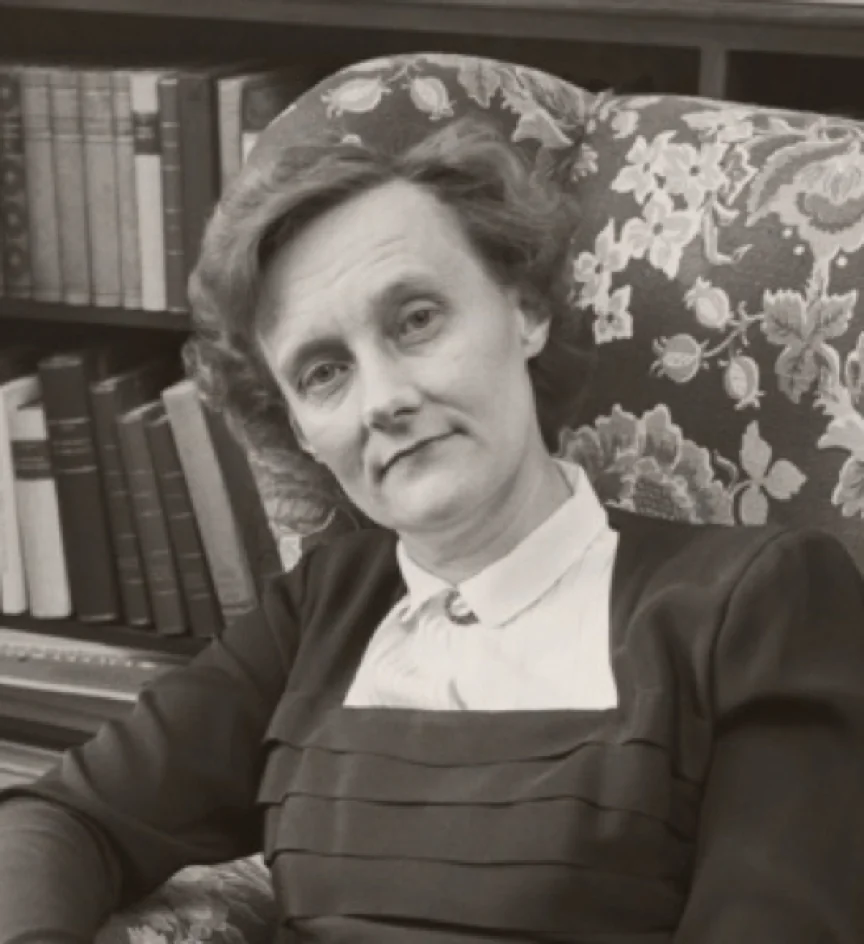
Image from Wikipedia
Image from Wikipedia
Astrid Lindgren: The Great Voice of Children's Literature, Shaping Generations to This Day
A Author Whose Characters Became World Literature
Astrid Lindgren is considered one of the most influential writers of the 20th century. Born on November 14, 1907, at the Näs farm near Vimmerby in Sweden, and passing away on January 28, 2002, in Stockholm, she became a global cultural icon with characters such as Pippi Longstocking, Emil of Lönneberga, Ronja the Robber's Daughter, and the children from Bullerbü. Her books have been published in over a hundred languages, totaling around 170 million copies sold; in Germany, she has been one of the most successful children's authors for decades. ([britannica.com](https://www.britannica.com/biography/Astrid-Lindgren?utm_source=openai))
Her work combines humor, a desire for freedom, a childlike perspective, and a clear moral stance into a narrative art that transcends children's literature. Astrid Lindgren did not just write stories for young readers; she created whole worlds: full of imagination, warmth, individuality, and resilience. This very mix explains why her characters remain alive in readings, productions, exhibitions, and new adaptations to this day. ([britannica.com](https://www.britannica.com/biography/Astrid-Lindgren?utm_source=openai))
From Småland to Stockholm: The Biographical Beginnings
Astrid Anna Emilia Ericsson grew up in Småland, in an environment that profoundly influenced her later storytelling. After school, she worked as a secretary in Stockholm and married Sture Lindgren in 1931. Her early experiences, rural childhood, the life between work, family, and responsibility, as well as her close connection to the fantasy world of children, significantly shaped her literary self-understanding. ([kids.britannica.com](https://kids.britannica.com/students/article/Astrid-Lindgren/315201?utm_source=openai))
The path to becoming a writer did not begin as a calculated career, but rather emerged from a very personal situation: Lindgren initially wrote for her daughter Karin, who wanted stories. From these tales, Pippi Longstocking arose, that rebellious children’s book myth which debuted in 1945 and marked Lindgren's breakthrough. Even this first major work displayed her ability to convey childlike autonomy, anarchic humor, and social boundary-crossing in a literarily precise form. ([kids.britannica.com](https://kids.britannica.com/students/article/Astrid-Lindgren/315201?utm_source=openai))
The Breakthrough with Pippi Longstocking
With Pippi Longstocking, Astrid Lindgren fundamentally changed children's literature. The character of a strong, independent, witty, and uncompromisingly free heroine contradicted the conventions of her time and was immediately loved. Britannica notes that Lindgren's immense popularity began in 1945 with the publication of Pippi Longstocking; the books were translated into numerous languages and adapted into films many times. ([britannica.com](https://www.britannica.com/biography/Astrid-Lindgren?utm_source=openai))
Pippi is much more than a literary character: she embodies an ideal of freedom that still feels modern today. In her humor, physical strength, and independence lies a social utopia that affirms children’s agency and reminds adults of their own norms. This is where Lindgren’s extraordinary authority lies: she wrote not pedagogically from a lofty position but from the child's perspective – with respect, humor, and psychological insight. ([britannica.com](https://www.britannica.com/biography/Astrid-Lindgren?utm_source=openai))
A Body of Work Full of Iconic Characters and Narrative Diversity
After Pippi, Lindgren developed an impressively diverse œuvre. Some of her most famous titles include the Bullerbü books, Kalle Blomquist, Mio, My Mio, Karlsson-on-the-Roof, The Brothers Lionheart, Ronja the Robber's Daughter, and Emil of Lönneberga. Britannica emphasizes that she successfully moved between realism, fantasy, folklore, and poetic narrative forms. ([britannica.com](https://www.britannica.com/biography/Astrid-Lindgren?utm_source=openai))
This literary range is at the core of her continued significance. Lindgren wrote about friendship, courage, loneliness, rebellion, grief, and the right to childhood dignity without slipping into sentimentality. Her books create spaces where adventure and emotional truth can coexist – a hallmark of great literature and an important reason for her international impact. ([britannica.com](https://www.britannica.com/biography/Astrid-Lindgren?utm_source=openai))
Later Years, Stance, and Social Engagement
After her major literary phase, Lindgren continued to work for many years as an editor in the children's book sector. At the same time, she increasingly appeared as a public intellectual, commenting on societal issues, including reforms and animal welfare. The official Lindgren site reminds us that her engagement shaped not only her work but also her public presence. ([kids.britannica.com](https://kids.britannica.com/students/article/Astrid-Lindgren/315201?utm_source=openai))
Her significance extended far beyond the book market. Lindgren received numerous awards, including the Hans Christian Andersen Award, the Peace Prize of the German Book Trade, the Gold Medal of the Swedish Academy, and other honors; in addition, the Astrid Lindgren Memorial Award was established in 2002 as an international literary prize in her name. These accolades affirm her status as an author of exceptional cultural-historical authority. ([kids.britannica.com](https://kids.britannica.com/students/article/Astrid-Lindgren/315201?utm_source=openai))
Current Relevance: New Adaptations and Ongoing Presence in 2024 and 2025
Even decades after her death, Astrid Lindgren remains present. The official website points to new activities surrounding Pippi, including weekly videos on Pippi's YouTube channel and upcoming anniversary activities in 2025 to celebrate the 80th anniversary of Pippi. Current projects include a new Madicken exhibition in Lund and a documentary review of Lindgren's war records. ([astridlindgren.com](https://www.astridlindgren.com/?utm_source=openai))
Her enduring relevance is particularly evident in new visual, stage, and series formats. The official site also mentions the continuation of Ronja Rövardotter and new connections to her work in exhibitions and digital offerings. Thus, Lindgren remains not only a classic but also living popular culture – in book form, on stage, on television, and online. ([astridlindgren.com](https://www.astridlindgren.com/?utm_source=openai))
Style, Language, and Cultural Influence
Astrid Lindgren's style is characterized by great clarity, rhythmic precision, and a remarkable closeness to a child's perception. Her narratives utilize pointed humor, strong dialogues, a vivid imagery, and a keen sense for drama. This very blend makes her texts accessible across generations and explains why she is among the most translated children's authors worldwide. ([britannica.com](https://www.britannica.com/biography/Astrid-Lindgren?utm_source=openai))
Her cultural influence is immense: many of her characters have become global symbols representing freedom, fantasy, and self-determination. At the same time, her work has changed the perception of how seriously children's literature can be taken. Lindgren demonstrates that stories for young people can contain literary depth, social critique, and emotional complexity – without losing their lightness. ([britannica.com](https://www.britannica.com/biography/Astrid-Lindgren?utm_source=openai))
Why Astrid Lindgren Remains Indispensable to This Day
Astrid Lindgren remains fascinating because she created literature that connects heart, mind, and stance. Her books tell of courage without pathos, of freedom without arbitrariness, and of childhood without idealization. Those who read her work or rediscover it on stage and in film encounter an author who stands for dignity, imagination, and zest for life with every sentence. ([britannica.com](https://www.britannica.com/biography/Astrid-Lindgren?utm_source=openai))
For this reason, it is worthwhile to experience Astrid Lindgren time and again – as a reader, viewer, family, or culturally interested person. Her stories are not nostalgic relics but living classics with contemporary energy. Anyone wishing to understand how children's literature becomes world literature cannot overlook Astrid Lindgren. ([britannica.com](https://www.britannica.com/biography/Astrid-Lindgren?utm_source=openai))
Official Channels of Astrid Lindgren:
- Instagram: https://instagram.com/astridlindgrenofficial/
- Facebook: https://facebook.com/AstridLindgrensSida
- YouTube: https://www.youtube.com/@pippi
- Spotify: no official profile found
- TikTok: no official profile found
Sources:
- Astrid Lindgren Company - Official Website
- Astrid Lindgren Company - Pippi Långstrump on YouTube
- Britannica - Astrid Lindgren
- Britannica - Pippi Longstocking
- sweden.se - Astrid Lindgren: a voice to be reckoned with
- Astrid Lindgren Company - Honours and awards
- Astrid Lindgren Company - Legacy
- Wikipedia: Astrid Lindgren
Upcoming Events
Astrid Lindgren - Humanity has lost its mind
Astrid Lindgren - Humanity Has Lost Its Mind
Pippi Longstocking's Adventures
Astrid Lindgren - Humanity Has Lost Its Mind
Pippi Longstocking's Adventures
Pippi Longstocking in Taka-Tuka-Land
Ronja The Robber's Daughter – Reading and Craft Workshop
Astrid Lindgren – Humanity Has Lost Its Mind
Mio, my Mio