
Antonio Tabucchi
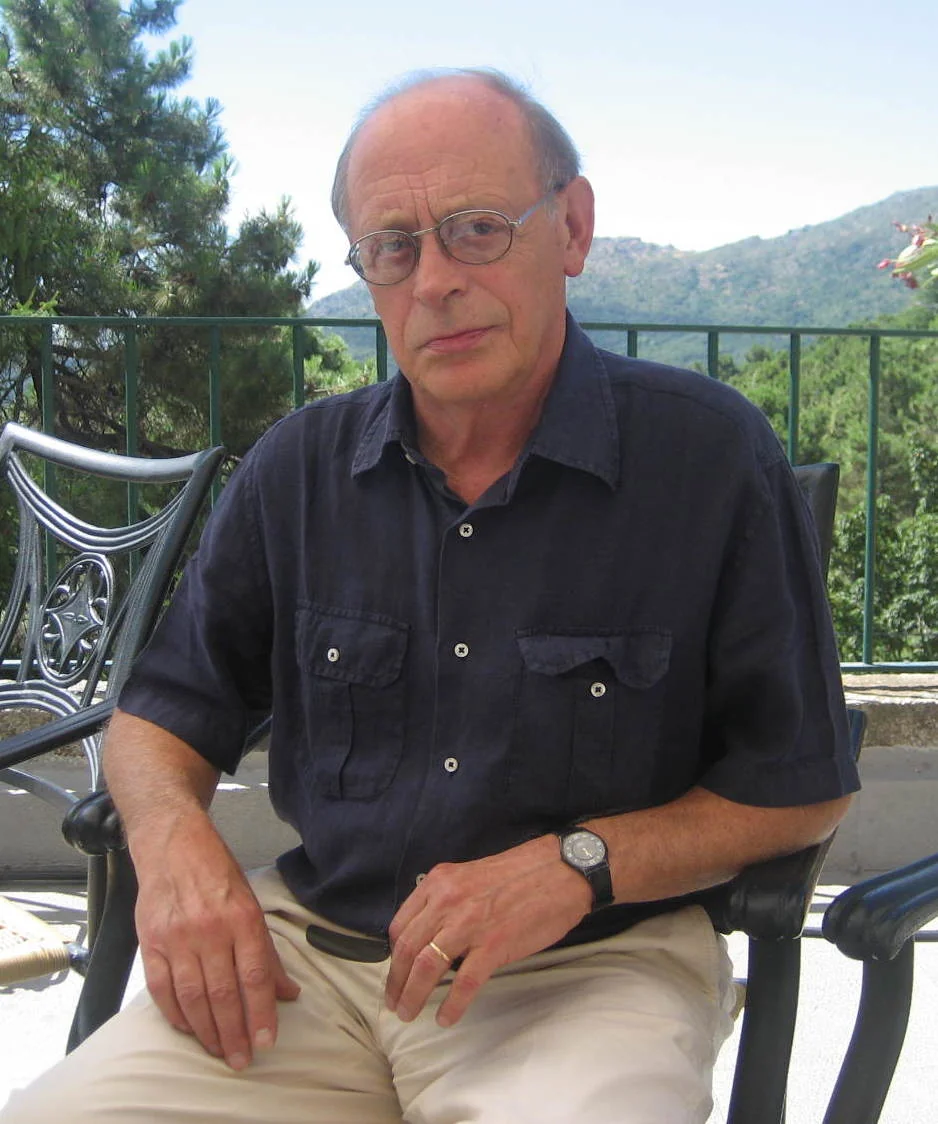
Image from Wikipedia
Image from Wikipedia
Antonio Tabucchi: The Literary Stylist between Portugal, Memory, and Political Stance
A Writer Who Measured Europe Literarily
Antonio Tabucchi was one of the most independent voices in Italian literature of the 20th and early 21st centuries. Born on September 24, 1943, in Vecchiano near Pisa and died on March 25, 2012, in Lisbon, he combined academic precision with poetic imagination and a deep fascination for Portugal, Fernando Pessoa, and the shimmering transitions between reality and fiction. As a writer, literary scholar, translator, and public intellectual, he shaped a body of work that extended far beyond Italy. ([en.wikipedia.org](https://en.wikipedia.org/wiki/Antonio_Tabucchi?utm_source=openai))
Early Influences: Pisa, Vecchiano, and the Discovery of Portugal
Tabucchi grew up in the environment of Pisa and Vecchiano, developing an early curiosity for European literatures, travel, and linguistic border spaces. During his studies, a formative encounter with the poetic world of Fernando Pessoa led him to the cultural center that would permanently shape his later work: Portugal. In Paris, he came across “Tabacaria,” written under one of Pessoa’s heteronyms, and recognized an intellectual and aesthetic resonance that remained crucial for the decades to follow. ([en.wikipedia.org](https://en.wikipedia.org/wiki/Antonio_Tabucchi?utm_source=openai))
This early encounter with Pessoa became not just a literary influence but a way of life. Tabucchi delved into the Portuguese language, modern poetry, and the idea that identity can be deconstructed, mirrored, and reassembled literarily. His scholarly engagement with surrealism in Portugal, on which he earned his Ph.D. in 1969, marked the beginning of a career where research and artistic practice remained closely intertwined. ([en.wikipedia.org](https://en.wikipedia.org/wiki/Antonio_Tabucchi?utm_source=openai))
Academic Career and Literary Breakthrough
Tabucchi's academic path took him to the University of Genoa and later to the University of Siena, where he taught Portuguese language and literature. This dual role as scholar and storyteller endowed his work with particular authority, as his novels and stories emerged from profound linguistic knowledge and a remarkable closeness to Portuguese culture. At the same time, he published literary works that quickly established him as a distinct author. ([en.wikipedia.org](https://en.wikipedia.org/wiki/Antonio_Tabucchi?utm_source=openai))
The actual breakthrough came with his novels and short story collections of the 1980s, including Notturno indiano, published in 1984 and later adapted into a film. Piccoli equivoci senza importanza and Il filo dell’orizzonte also clearly demonstrated how consistently Tabucchi employed the motif of search: His characters chase after missing persons, lost traces, or a hidden truth, continually confronting the fragility of their own selves. Thus, the moment of crime frequently transformed into an existential novel, from an external plot into an internal measurement of consciousness. ([pt.wikipedia.org](https://pt.wikipedia.org/wiki/Antonio_Tabucchi?utm_source=openai))
Fernando Pessoa as a Spiritual Reference Point
No other author influenced Tabucchi's work as profoundly as Fernando Pessoa. Together with his wife Maria José de Lancastre, Tabucchi translated numerous works of Pessoa into Italian and wrote his own essays and fiction that revolve around this great Portuguese modernist. For him, it was not about mere admiration but a productive literary kinship: Pessoa was a key to questions of identity, masking, longing, and multiple voices. ([en.wikipedia.org](https://en.wikipedia.org/wiki/Antonio_Tabucchi?utm_source=openai))
Tabucchi's fascination with Pessoa's heteronyms became a central narrative principle. His prose often navigates between spaces where certainties blur, and characters do not appear as fixed personalities but as fragile constructions. This is precisely where the strength of his literature lies: It transforms philosophical questions into accessible, atmospherically dense narratives, merging reflection with tension. ([en.wikipedia.org](https://en.wikipedia.org/wiki/Antonio_Tabucchi?utm_source=openai))
Important Works, Awards, and International Recognition
Some of Tabucchi's most renowned books include Notturno indiano, Piccoli equivoci senza importanza, Il gioco del rovescio, and especially Sostiene Pereira, published in 1994. This novel became one of his major successes and introduced him to a broad international audience. The Dublin Literary Award site lists among his central works Little Misunderstandings of No Importance, Requiem: A Hallucination, and Pereira Maintains, which have won multiple awards. ([dublinliteraryaward.ie](https://dublinliteraryaward.ie/the-library/authors/antonio-tabucchi/?utm_source=openai))
Throughout his career, Tabucchi received important awards, including the Prix Médicis étranger, the Premio Campiello, the Premio Viareggio, the Aristeion Prize, and the Nossack Prize. Additionally, he was nominated for the Man Booker International Prize in 2005 and 2009, underscoring the international reach of his work. His literary profile gained additional weight—not only as an Italian author but as a European storyteller of high stylistic precision. ([dublinliteraryaward.ie](https://dublinliteraryaward.ie/the-library/authors/antonio-tabucchi/?utm_source=openai))
Style and Themes: Memory, Politics, Identity
Tabucchi's prose is characterized by elegant, controlled language and a strong atmospheric density. His texts revolve around memory, disappearance, states of suspension, and the question of how people construct or lose their history. Readers often encounter characters who search for something without ever finding a simple answer. This is precisely where his literature derives its tension and melancholic power. ([en.wikipedia.org](https://en.wikipedia.org/wiki/Antonio_Tabucchi?utm_source=openai))
Moreover, a clear political dimension is present. Tabucchi frequently appeared as a critical intellectual in essays and newspaper articles, publicly opposing authoritarianism and advocating for freedom of expression. Deutschlandfunk describes him as a warning voice during the years of the Berlusconi government, while other obituaries highlighted his role as a combative writer and columnist. This stance adds depth to his work since aesthetic and civic responsibility converged within it. ([deutschlandfunk.de](https://www.deutschlandfunk.de/beitragstitel-10-todestag-von-antonio-tabucchi-100.html?utm_source=openai))
Cultural Influence and Legacy
Tabucchi has been translated into several languages, reaching readers far beyond the Italian-speaking world. His novels inspired film adaptations, literary debates, and a lasting engagement with Portuguese culture in European literary studies. This is also evidenced by institutions like the Associazione Culturale Antonio Tabucchi, which continue to nurture his intellectual legacy and emphasize his civic spirit. ([en.wikipedia.org](https://en.wikipedia.org/wiki/Antonio_Tabucchi?utm_source=openai))
In Sostiene Pereira, his impact is particularly condensed: The novel not only became a literary success but also a symbol of moral steadfastness and poetic clarity. In it, Tabucchi combined political experience, historical sensitivity, and narrative discipline into a work that remains a reference for sophisticated European prose today. His books remain relevant because they do not come across as fashionable or loud, but resonate with quiet intensity long after reading. ([dublinliteraryaward.ie](https://dublinliteraryaward.ie/the-library/authors/antonio-tabucchi/?utm_source=openai))
Conclusion: An Author of Rare Stature and Stylistic Elegance
Antonio Tabucchi was a writer who understood literature as a space for thought: open, politically aware, linguistically precise, and always searching for the next layer of reality. His career remarkably combines academic expertise, poetic imagination, and cultural mediation. Those who love contemporary European literature will find in him an author of lasting tension and great intellectual depth. His books deserve to be read, rediscovered, and continuously viewed in the light of their time. ([en.wikipedia.org](https://en.wikipedia.org/wiki/Antonio_Tabucchi?utm_source=openai))
Official Channels of Antonio Tabucchi:
- Instagram: No official profile found
- Facebook: No official profile found
- YouTube: No official profile found
- Spotify: No official profile found
- TikTok: No official profile found