
Anton Pawlowitsch Tschechow
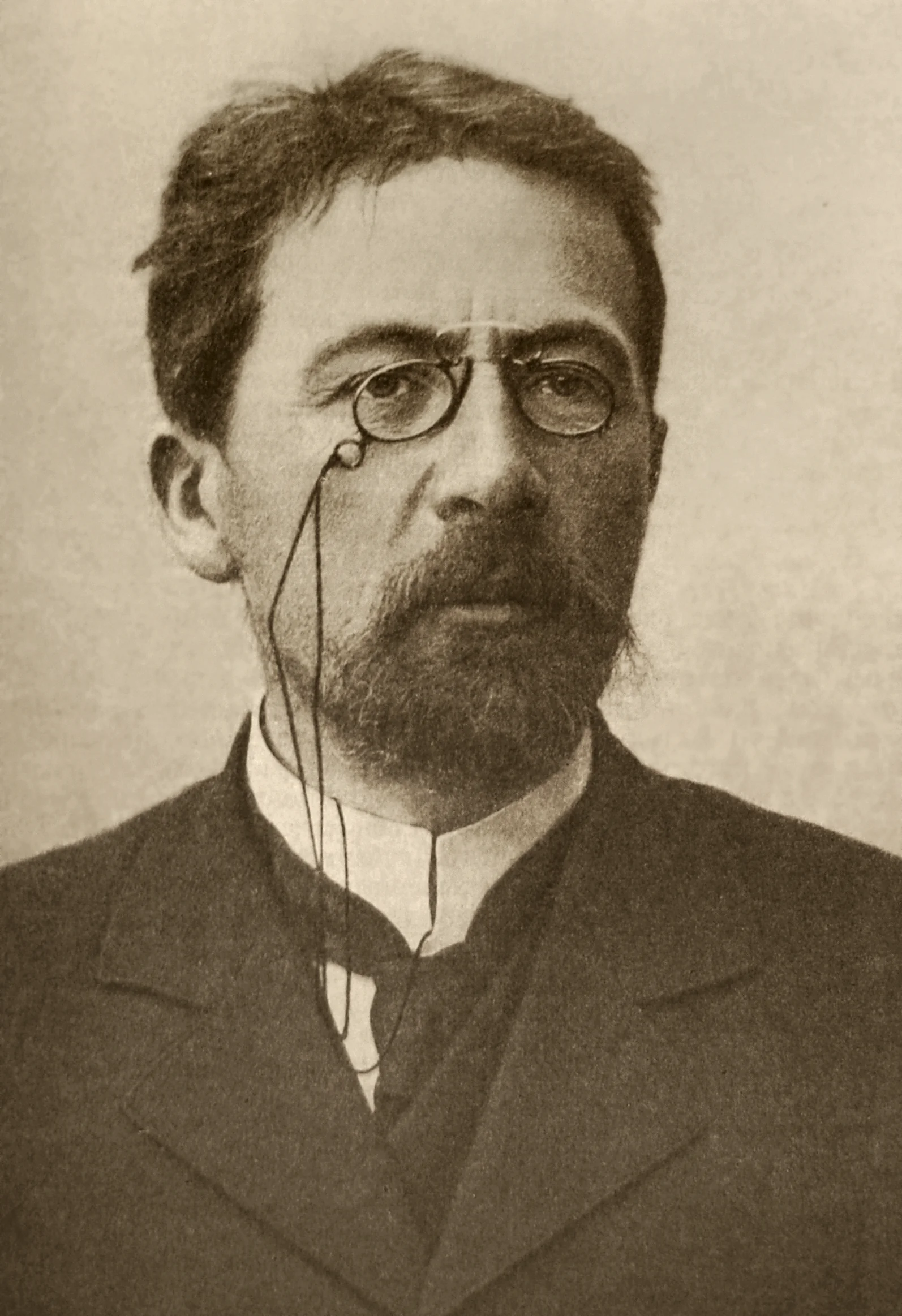
Image from Wikipedia
Image from Wikipedia
Anton Pavlovich Chekhov – The Master of Subtlety and the Grand Stage
An Author Who Transformed the Everyday into World Literature
Anton Pavlovich Chekhov is considered one of the most influential figures in Russian literature and is hailed as a master of the modern short story, as well as one of the most significant playwrights of the 19th and early 20th centuries. Born on January 29, 1860, in Taganrog and died on July 15, 1904, in Badenweiler, he combined literary precision with an unflinching ability to observe human weaknesses, desires, and quiet conflicts. His work focuses not on spectacular action, but on atmosphere, subtext, and psychological depth. ([britannica.com](https://www.britannica.com/biography/Anton-Chekhov))
Biography: Origins, Education, and the Path to Literature
Chekhov came from a middle-class family in the south of the Russian Empire. The strict upbringing, daily life in his father's shop, and early musical and academic training shaped his sensitivity to social hierarchies and familial tensions. When the family moved to Moscow, young Anton occasionally stayed behind alone in Taganrog, an experience that sharpened his independence and his perspective on isolation and inner distance. Alongside his literary development, he remained connected to medicine, working as a doctor starting in 1884. ([deutsche-tschechow-gesellschaft.de](https://www.deutsche-tschechow-gesellschaft.de/Anton-P.-Tschechow/Leben-und-Werk/Anton-Pawlowitsch-Tschechow-aus-dem-Leben-und-Werk-des-Schriftstellers))
The medical practice was not merely a profession for Chekhov, but a source of immediate life experience. He treated peasants for free, visited hospitals, and gathered observations that later infused his characters with rare authenticity. This very combination of empirical experience and art makes his style so distinctive: sober, precise, unpretentious, yet deeply humane. Between 1880 and 1903, he published over 600 literary works and developed into a voice that made Russian everyday life visible in a new tonal quality. ([deutsche-tschechow-gesellschaft.de](https://www.deutsche-tschechow-gesellschaft.de/Anton-P.-Tschechow/Leben-und-Werk/Anton-Pawlowitsch-Tschechow-aus-dem-Leben-und-Werk-des-Schriftstellers))
The Artistic Breakthrough: From Narrative to World Stage
The actual literary breakthrough came in 1888 with the story The Steppe, which is considered Chekhov's first major work. In the same year, he received the Pushkin Prize for his collection In the Twilight, an important recognition within the Russian literary world. With his journey to Sakhalin in 1890, he broadened his view of social conditions, penal colonies, and the harshness of imperial reality. From these experiences emerged The Island of Sakhalin, a work situated between reportage, ethics, and literary analysis. ([deutsche-tschechow-gesellschaft.de](https://www.deutsche-tschechow-gesellschaft.de/Anton-P.-Tschechow/Leben-und-Werk/Anton-Pawlowitsch-Tschechow-aus-dem-Leben-und-Werk-des-Schriftstellers))
His dramatic development also followed a consistent and independent path. Chekhov wrote plays that initially did not meet public expectations but have since secured a permanent place in the repertoire of world theaters. In his major dramas, he does not showcase loud conflict machines, but rather the slow fading of hopes, the drifting apart of families, and the exhaustion of a society in transition. This very restraint of effects has made him a classic of modern theater art. ([britannica.com](https://www.britannica.com/biography/Anton-Chekhov))
Major Works: Short Stories, Drama, and Psychological Depth
Some of Chekhov's most well-known plays include Three Sisters, The Seagull, and The Cherry Orchard. These works mark the peak of his dramatic language: an art of suggestion, pauses, and subtle shifts. In them, social upheaval is not announced, but felt; the characters speak a lot, yet reveal only a fraction of what moves them. The charm lies in the tension between external ordinariness and inner turmoil. ([britannica.com](https://www.britannica.com/biography/Anton-Chekhov))
Among his most influential stories are Ward No. 6, The Lady with the Dog, The Bear, and A Boring Story. Chekhov's prose works with reduction, economy of sight, and an extraordinary sensitivity to the unspoken. His texts are concise but never thin; they open spaces where social reality, irony, and existential fatigue overlap. In doing so, he shaped a narrative style that has significantly influenced 20th-century literature. ([britannica.com](https://www.britannica.com/biography/Anton-Chekhov))
Style and Handwriting: Laconic Precision Instead of Pathos
Chekhov's style is famous for its laconic precision. He described life not with rhetorical embellishments but with observant calm, making even the smallest gestures and incidental dialogues meaningful. This art of compression creates a unique tension: the action often seems unspectacular, yet beneath the surface works an enormous psychological energy. This is precisely where his modernity lies. ([britannica.com](https://www.britannica.com/biography/Anton-Chekhov))
In drama, Chekhov also pursued an aesthetic stance against exaggeration and effect. He explicitly understood his mature plays as comedies, while others often interpreted them as tragic or heavy. This tension between authorial intention and staging history is part of his enduring legacy: Chekhov demands lightness, precision, and musical rhythm in the dialogues, not psychological declamation. His plays thrive on timing, pauses, and the delicate arrangement of human relationships. ([britannica.com](https://www.britannica.com/biography/Anton-Chekhov/Melikhovo-period-1892-98))
Critical Reception and Cultural Influence
Even during his lifetime, Chekhov was highly regarded in Russia, but international fame came only after World War I, when translations made his texts known around the world. Later literary criticism particularly praised the openness of his form, the refusal of simple resolutions, and the ability to comprehend the seemingly trivial as central life material. His prose and drama became reference points for modern narrative literature and directorial theater. ([britannica.com](https://www.britannica.com/biography/Anton-Chekhov/Melikhovo-period-1892-98))
His cultural influence extends far beyond Russian literature. Chekhov profoundly shaped the understanding of scene construction, subtext, and character depiction, and his works remain established staples in international theater today. Scholarly research and publication history remain vibrant: The Anton Chekhov Foundation announced a comprehensive annotated English edition of his earliest stories for November 2025 and keeps his legacy present with projects, archival work, and cultural mediation. ([britannica.com](https://www.britannica.com/biography/Anton-Chekhov/Melikhovo-period-1892-98))
Current Impact and New Editions
Although Chekhov has not been alive since 1904, his work remains active in the present. New editions, translation projects, and cultural-historical initiatives keep attention directed towards his early stories, his letters, and his theatrical texts. The 2025 edition of his earliest stories shows how profoundly the engagement with his early work continues to grow. Chekhov remains not only a classic but also an author with enduring editorial and performative presence. ([antonchekhovfoundation.org](https://antonchekhovfoundation.org/))
Conclusion: Why Chekhov Continues to Fascinate
Anton Pavlovich Chekhov fascinates because he made the great visible in the small. His art thrives on a balance of observation, restraint, and deep humanity, from characters who never explain loudly, yet resonate all the more profoundly. Those who read him or experience him on stage encounter literature that transforms the everyday into existential truth. Chekhov remains an author one must not only read but rediscover time and again. ([britannica.com](https://www.britannica.com/biography/Anton-Chekhov))
Official Channels of Anton Pavlovich Chekhov:
- Instagram: No official profile found
- Facebook: No official profile found
- YouTube: No official profile found
- Spotify: No official profile found
- TikTok: No official profile found