
Anton Bruckner
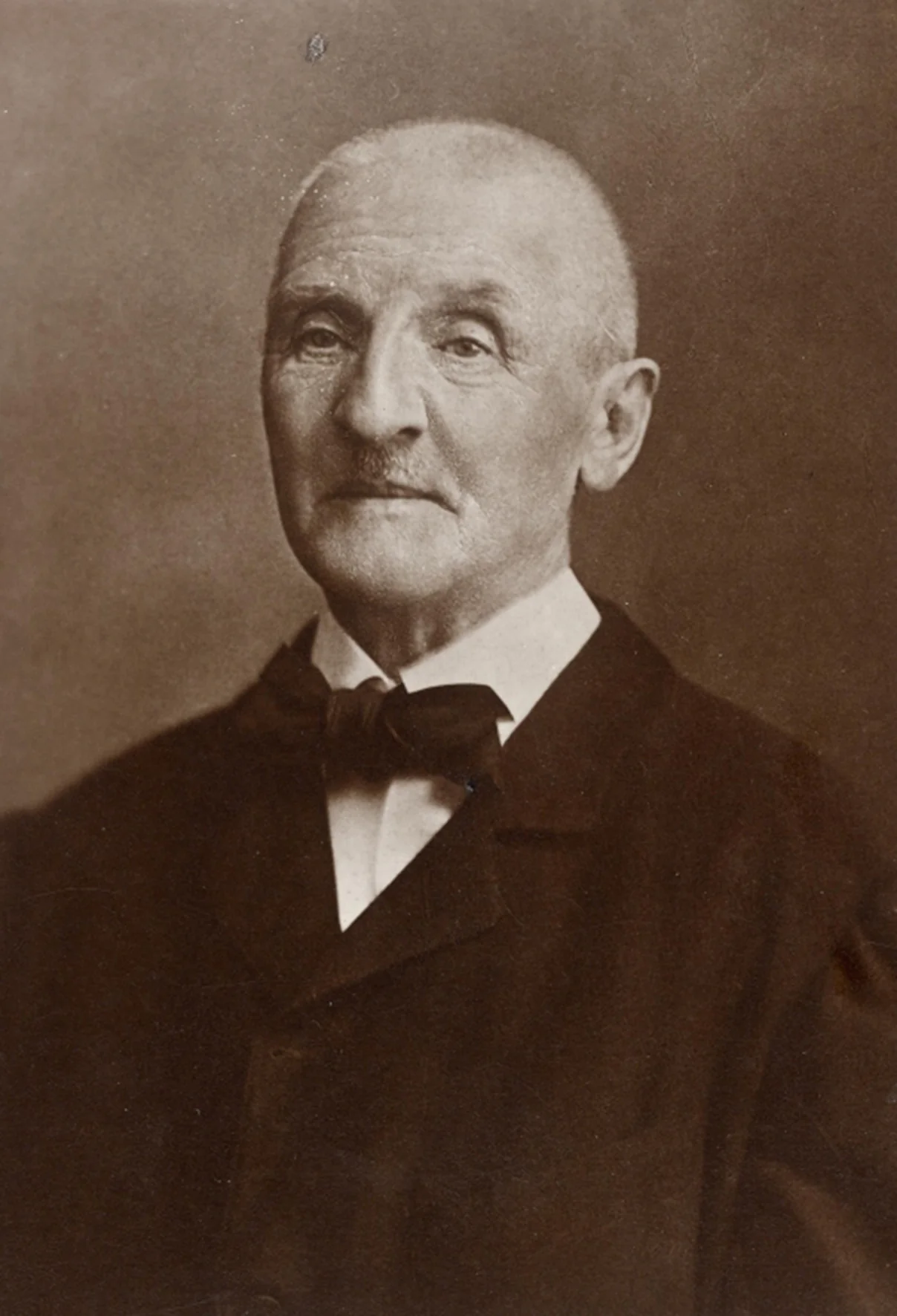
Image from Wikipedia
Image from Wikipedia
Anton Bruckner – The Architectural Visionary of Romanticism
An Artist Description Between Monumentality, Spirituality, and Musical Radicalism
Anton Bruckner is one of the most distinctive and significant composers of the Romantic era. Born on September 4, 1824, in Ansfelden and died on October 11, 1896, in Vienna, he combined deep religiosity with a monumentally grand musical language as a composer, organist, and teacher. His music still sounds as if sculpted from stone, yet remains in motion: grand, searching, devout, bold, and characterized by a unique emotional tension. ([britannica.com](https://www.britannica.com/biography/Anton-Bruckner))
From Village Boy to Master of Grand Form
Bruckner's path to music did not lead through the glamorous court life, but through school, church, and practical work. He was the son of a village teacher and organist, showed early talent on the violin and harpsichord, and already represented at the organ as a child. After his education in Linz, he worked as an assistant teacher and later returned to St. Florian as a trained primary school teacher, where he also served as the chief organist from 1848. This early background explains why his artistic development remained closely intertwined with liturgical practice, counterpoint, and ecclesiastical sound culture. ([britannica.com](https://www.britannica.com/biography/Anton-Bruckner))
St. Florian became the spiritual center of Bruckner's musical career. There, not only did his compositional thinking mature, but so did his understanding of space, resonance, and architectural tension arcs. During this phase, significant sacred works were created, such as a Requiem in D minor, showcasing his connection to tradition and personal musical language. His early years reveal an artist who achieved greatness through discipline and deep engagement. ([britannica.com](https://www.britannica.com/biography/Anton-Bruckner))
The Breakthrough in Linz and Vienna
In 1856, Bruckner became the cathedral organist in Linz and began an intensive distance study with Simon Sechter in harmony and counterpoint. He completed this training in 1861 with excellent performance and also impressed in Vienna with an organ examination. By the 1860s, his musical language had coalesced: he studied form and instrumentation with Otto Kitzler, discovered Liszt, Berlioz, and especially Wagner, and composed the Mass in D minor during this mature phase. ([britannica.com](https://www.britannica.com/biography/Anton-Bruckner))
In 1868, Bruckner took a professorship at the Vienna Conservatory, where he taught harmony and counterpoint, becoming popular among his students for his approachable and engaging manner. Nonetheless, his career did not proceed smoothly: he became embroiled in the bitter Wagner-Brahms controversy and faced harsh criticism from figures like Eduard Hanslick. This tension between artistic independence and public misinterpretation continues to shape the reception history of his work to this day. ([britannica.com](https://www.britannica.com/biography/Anton-Bruckner))
The Symphonies as Resonating Cathedrals
Bruckner owes his reputation as a great symphonist mainly to a unique symphonic output: eleven symphonies, including two early works without numbering and the unfinished Ninth. The Seventh, premiered in Leipzig under Arthur Nikisch, marked his first unequivocal triumph and was a turning point in his career. Later, his symphonies gained broader recognition in Germany and eventually in Vienna. ([britannica.com](https://www.britannica.com/biography/Anton-Bruckner))
Musically, Bruckner thinks in long time spans. His first movements often open quietly and develop in large waves; his slow movements reach nearly metaphysical intensity, and his scherzi possess a powerful, sometimes primitive grounding. The Fifth is seen as the crowning achievement of his symphonic model, while the Eighth and the unfinished Ninth push his monumental late style to its peak. His orchestration remains remarkably economical: groups are juxtaposed, contrasts are built, and sound spaces are created. ([britannica.com](https://www.britannica.com/biography/Anton-Bruckner))
Sacred Music, Choral Works, and the Art of Intimacy
Those who know Bruckner only as a symphonist overlook a significant part of his discography: the sacred works. Among his most notable compositions are four major masses, the Te Deum, the Mass in D minor, as well as significant motets and choral works. His church music combines Renaissance echoes, strict compositional techniques, and Romantic expressiveness into a sound language that is both solemn and intimate. ([open.spotify.com](https://open.spotify.com/artist/2bM3j1JQWBkmzuoZKu4zj2?utm_source=openai))
It is particularly in these works that Bruckner's ability to translate spirituality into musical form is evident. His love for the organ, improvisation, and polyphonic work permeates his entire oeuvre. For this reason, he is perceived not only as a symphonist but as a composer of extraordinary stylistic depth, whose work bridges Catholic devotion and compositional innovation. ([britannica.com](https://www.britannica.com/biography/Anton-Bruckner))
Style, Sound Language, and Artistic Development
Bruckner's musical development unfolds not explosively, but organically and gradually. Harmonies expand, forms grow, climaxes become more prolonged, and the dramaturgy of tension gains weight. His mature musical language is characterized by a rare blend of rigorous craftsmanship and visionary boldness, of contrapuntal discipline and expansive sound imagination. ([britannica.com](https://www.britannica.com/biography/Anton-Bruckner))
In music history, he occupies a unique position. Britannica describes his late maturity, his monumental conceptualization of form, and the deep originality of his symphonic work as central to his artistic profile. At the same time, today’s reception of Bruckner indicates how modern this music still feels: in its long arcs of tension, its abrupt dynamic contrasts, and its almost sacred aura. ([britannica.com](https://www.britannica.com/biography/Anton-Bruckner))
Cultural Influence and Modern Reception
Today, Bruckner is regarded as a composer with enormous influence on the history of music well into the 20th century. His works inspired later symphonists as well as conductors, orchestras, and musicologists who continually rediscover his versions, arrangements, and sound architectures. The fact that his symphonies have remained central concert works to this day demonstrates the enduring fascination with his musical language. ([britannica.com](https://www.britannica.com/biography/Anton-Bruckner?utm_source=openai))
The Bruckner Year 2024 has further highlighted this relevance: the OÖ KulturEXPO dedicated an extensive program to the composer’s birthday with publications, projects, and outreach formats, while the Berlin Philharmonic presented all symphonies over two concert seasons for the 200th birthday. Concurrent projects like BRUCKNER2024 are working to perform and record all symphonies in all versions, showing how alive Bruckner's legacy remains in the 21st century. ([anton-bruckner-2024.at](https://www.anton-bruckner-2024.at/en/))
Current Projects, Rediscoveries, and Anniversary Impulses
Even though Anton Bruckner as a historical figure has long been completed, the reception of his works continues to evolve. In 2025, BRUCKNER2024 will bring its major project into its final phase and announced that all symphonies in all versions will be made available on record. The OÖ KulturEXPO platform is also providing retrospectives, publications, and press downloads for the Bruckner Year, documenting the ongoing cultural impact of the anniversary. ([anton-bruckner-2024.at](https://www.anton-bruckner-2024.at/en/))
Bruckner remains present in concert and recording activities. The Berlin Philharmonic is focusing on his oeuvre in special programs, and BRUCKNER2024 is working on further releases and concert dates. For listeners, this means: Bruckner is not a museum piece, but a composer whose music is continually reinterpreted, measured, and experienced. ([berliner-philharmoniker.de](https://www.berliner-philharmoniker.de/en/bruckner-anniversary/))
Conclusion: Why Anton Bruckner Continues to Fascinate Today
Anton Bruckner fascinates because his music does not claim greatness, but creates it. It combines piety, form consciousness, and sonic boldness into an unmistakable signature that overwhelms in the symphonies as much as it touches in the sacred works. Those who listen to his works do not experience mere Romanticism, but musical architecture of extraordinary spiritual tension. ([britannica.com](https://www.britannica.com/biography/Anton-Bruckner))
It is precisely this connection of humility and monumentality that makes Bruckner unique. He remains a composer for concentrated listening, for grand concert halls, and for experiencing those slow, powerful climaxes in which his art unfolds most strongly. Experiencing Anton Bruckner live means encountering a sound space that extends far beyond his time. ([britannica.com](https://www.britannica.com/biography/Anton-Bruckner))
Official Channels of Anton Bruckner:
- Instagram: no official profile found
- Facebook: no official profile found
- YouTube: no official profile found
- Spotify: https://open.spotify.com/artist/2bM3j1JQWBkmzuoZKu4zj2
- TikTok: no official profile found
Sources:
Upcoming Events
6th Symphony Concert
6th Symphony Concert: Bruckner's Eighth