Traunstein in Portrait: Artists, Music & Culture
Traunstein in Portrait 2026: Artists, Musicians & Creative Minds – Preview of Upcoming Cultural Highlights
Which creative voices shape Traunstein and the district – and which formats are coming up next? This cultural guide bundles orientation, background on the creative industries, and concrete planning tips for the coming months.
Where does the creative energy in Traunstein come from – and how does it show itself in 2026?
Traunstein lies between Chiemsee and the Alps – geographically rather "manageable," but culturally surprisingly dense. In 2026, this density will be especially visible where people regularly come together: at concerts in halls, at cabaret evenings, at exhibitions in smaller spaces, as well as at courses and open formats that not only showcase creativity but also train it.
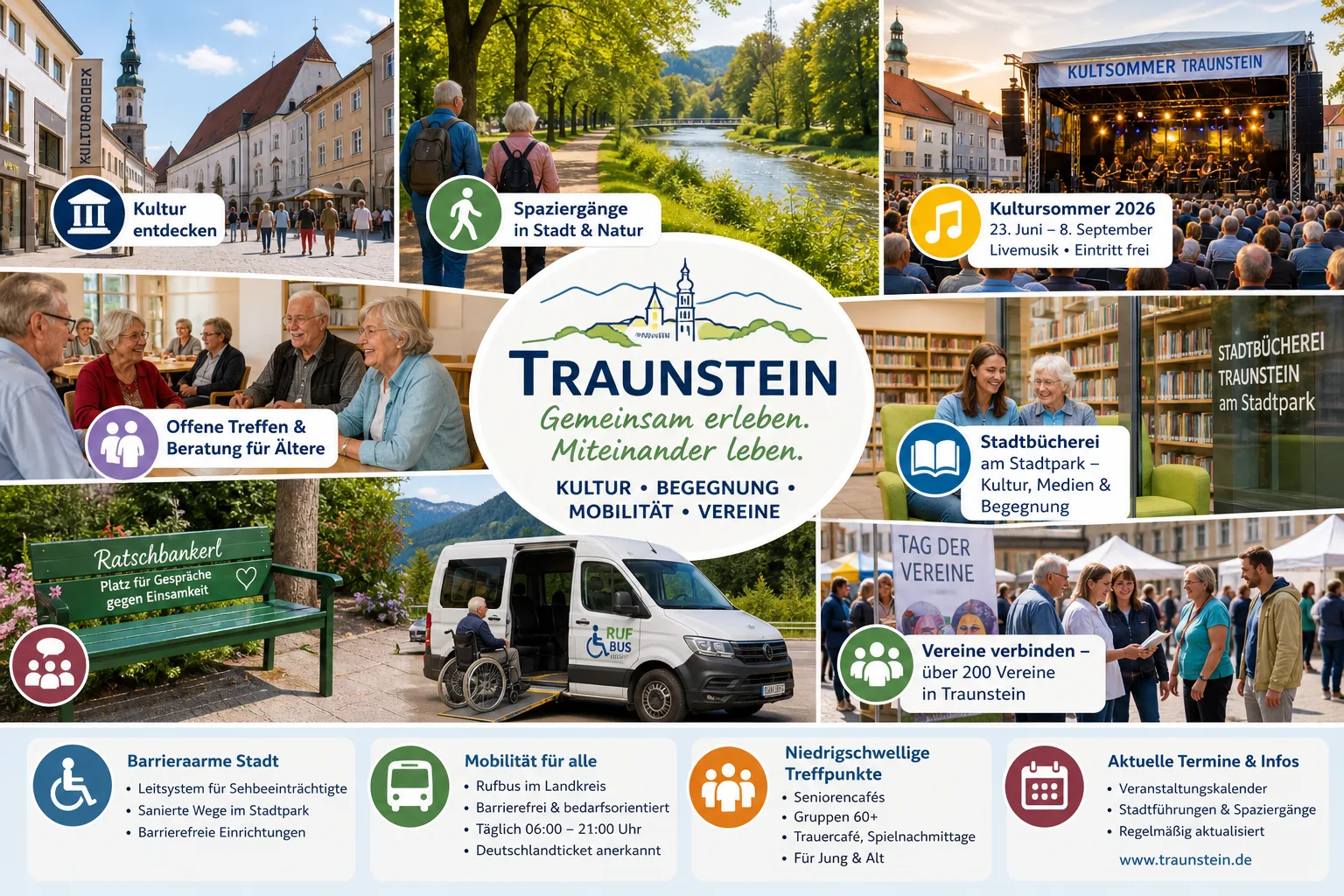
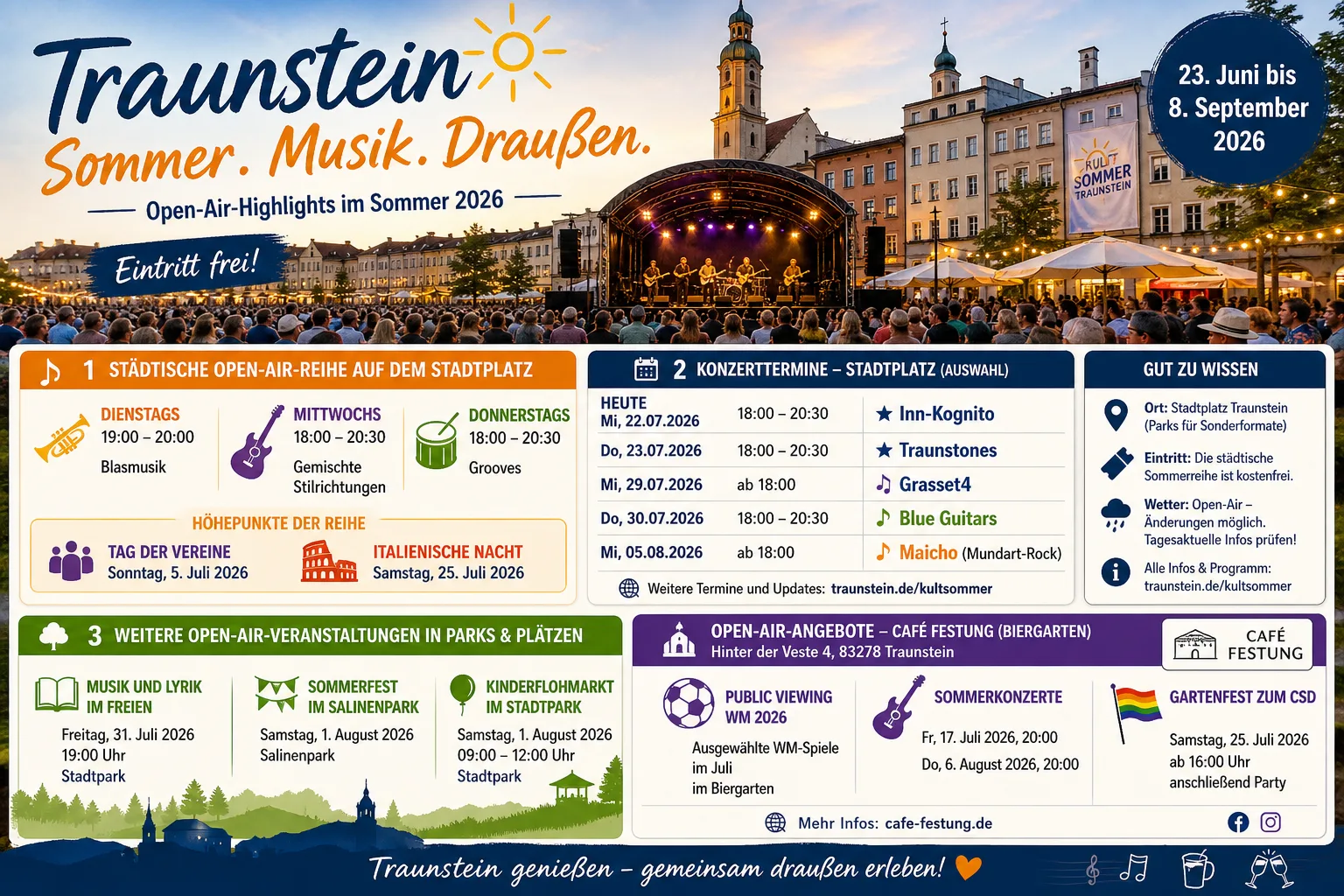
Anyone walking through the old town in the evenings over the coming months will typically come across signs that mark culture as part of everyday life: announcements for live music, posters for theater or reading formats, and invitations to vernissages. It is precisely this mix of professional programs and committed grassroots work that characterizes the scene.
Important for orientation: Instead of "the one big cultural institution," it is often the interplay of many actors in the region that carries the program—municipalities, associations, venues, musicians, museums, educational providers, and service providers.
Artists, Musicians, Creatives: Who Shapes the Region (Without Hype, With Context)
The creative scene in the Traunstein district will be visible in several fields in 2026—with a noticeable focus on music (from folk music to singer-songwriter to jazz and pop/rock formats). In addition, visual arts, photography/film, theater, and applied creative professions (design, communication, architecture) shape the picture.
For readers, the most practical question is often: How do I "find" these people and their work without insider knowledge? Three ways have proven effective:
- Program routes: Line-ups and announcements from local venues, cultural associations, and municipal calendars (they show who is currently performing or exhibiting).
- Project routes: Workshops, course programs, open studio days, and participatory formats (here you often meet creatives directly).
- Cooperation routes: Creative service providers (photo/video/audio/design) often bundle networks because they work with several acts and institutions.
This creates a realistic picture: not just "famous names," but a reliable network of people who regularly produce, perform, exhibit, or teach.
Upcoming Events: How to Reliably Find the Next Dates
This article deliberately does not mention individual, dated events, because cultural programs can be adjusted at short notice. Instead, you get a method that will quickly get you to the actual upcoming events in 2026—without outdated information.
1) Start with official calendars and programs
For the next weeks and months, the most reliable sources are usually:
- municipal event calendars (city/region),
- websites of venues (view program/archive separately),
- organizers' channels (newsletters, official social media accounts),
- regional ticket portals (use filters "Traunstein" and "future/upcoming").
2) Watch for format families (which are especially common in 2026)
In the region, recurring formats will typically be in high demand again in the coming months:
- Live music (singer-songwriter, band nights, jazz & trad-jazz, folk music formats),
- Cabaret (cabaret, solo formats, readings),
- Theater (stage evenings, guest performances, club and project productions),
- Exhibitions (local art, photography, themed shows),
- Participatory formats (workshops, open rehearsals, course weekends).
3) Check "upcoming" vs. "retrospective"
Many websites prominently display retrospectives. Therefore, pay attention to clear labeling ("dates," "program," "tickets") and filter options so that you only plan future events.
Creative Industries 2026: Why Culture is Also a Location Factor
When culture is discussed in Traunstein in 2026, it's not just about stages and museums, but also about value creation: Creative work generates income, commissions technology, printing, marketing, gastronomy, accommodation, and mobility. In Bavaria, the cultural and creative industries are regularly observed as an independent economic sector—with Upper Bavaria as a strong focus.
For Traunstein, this means in practice: Good framework conditions for creatives (performance venues, rehearsal spaces, visibility, networks, reliable funding and association structures) act like a magnet. They increase the likelihood that projects will emerge, collaborations will grow, and young talent will stay in or return to the region.
Cultural Education & Workshops: What is Especially Worthwhile in the Coming Months
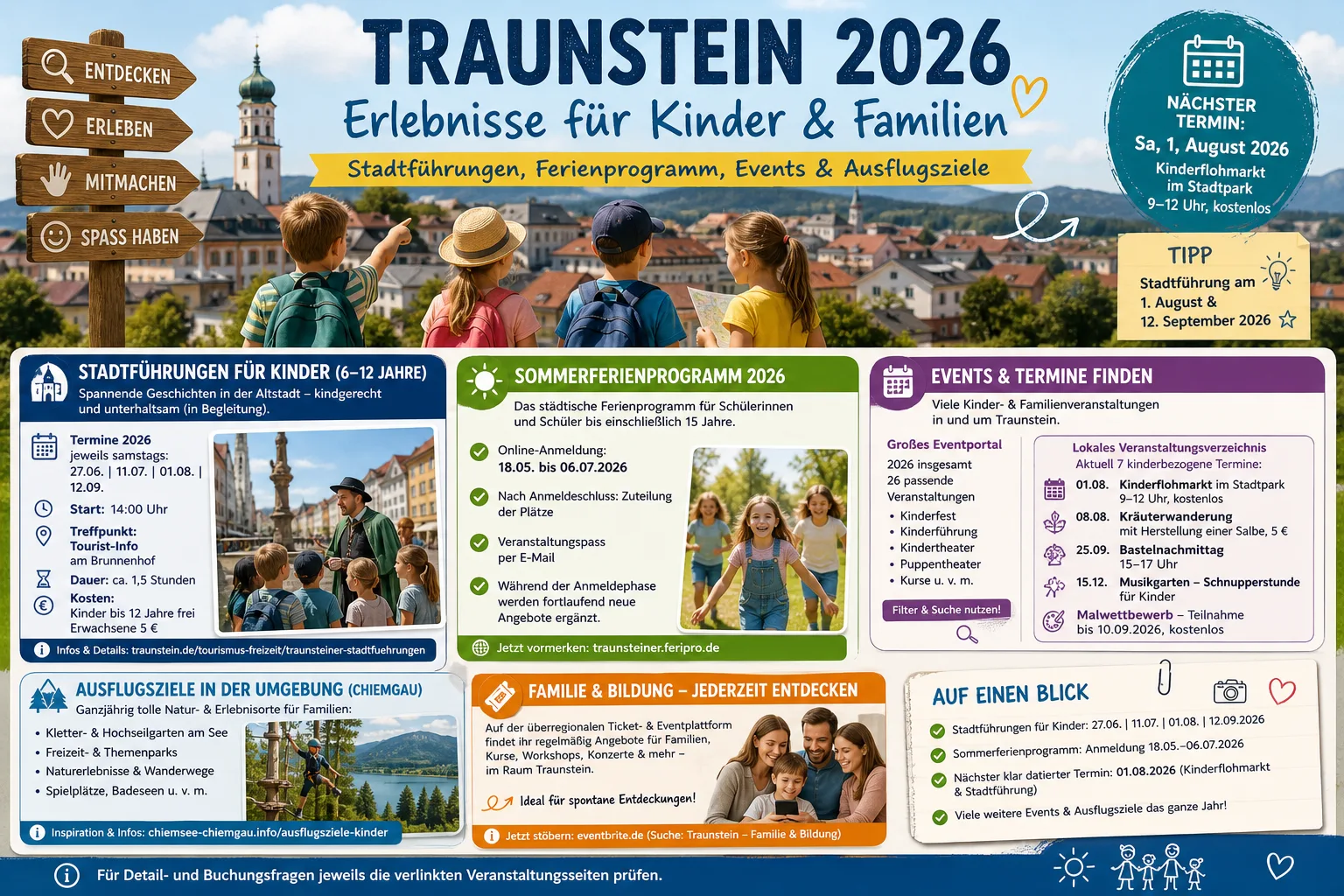
A vibrant cultural year is created not only by performances, but by spaces for learning and participation. In 2026, it is especially worthwhile in Traunstein and the district to pay attention to formats that build skills—because they strengthen the scene in the long term.
- Photo and video workshops: Ideal for beginners and advanced learners who want to document their projects more professionally.
- Music formats: Open rehearsals, ensemble offers, choir and band work—often low-threshold, but with a strong effect on community.
- Writing and stage courses: Readings and cabaret often benefit from local text and performance formats.
- Museum and mediation programs: Tours, talks, and programs that make art "readable"—important for audiences and young talent.
Practical tip: If you don't just want to watch, consciously choose a format with a clear course structure (duration, goal, material list) and transparent participation conditions. This increases the chance that you will really get involved.
Experience Traunstein: Practical Tips for Locals & Guests
- Plan with two time horizons: short-term (this week) via calendars/newsletters, medium-term (next 2–3 months) via program previews.
- Combine locations: An evening can consist of an exhibition plus a concert—this way you get to know different scenes more quickly.
- Talk to organizers: Many hints about upcoming projects are first found "analog" in the foyer, on notice boards, or in conversation.
- Consciously support locally: Tickets, course fees, memberships, and donations are often the most stable foundation for program continuity.
- Consider accessibility: Check in advance for information on seating, access, hearing support, or companion regulations—serious providers communicate this transparently.
Outlook 2026/2027: Which Trends Are Likely to Shape the Scene
For the coming months and up to 2027, similar developments are emerging in many regions, which may also affect Traunstein:
- More hybrid communication: Events remain live, but visibility is also created through video, audio, and social snippets.
- Cooperation instead of solo projects: Joint productions (e.g., shared technology, double evenings, joint exhibitions) are becoming more important to distribute effort.
- Young talent work as "cultural infrastructure": Workshops, mentoring, and mediation offers help determine how stable the program will remain in the future.
- Sustainability as a design issue: Choice of materials, travel, production, and space concepts are increasingly part of artistic decisions—not just "organization."
If you want to experience Traunstein culturally in 2026, this is the good news: The most exciting discoveries are often found where new collaborations emerge—between music, theater, visual arts, photography/film, and design.