People from Traunstein Who Shape Cultural Life
People from Traunstein Who Will Shape the Cultural Life in the Future
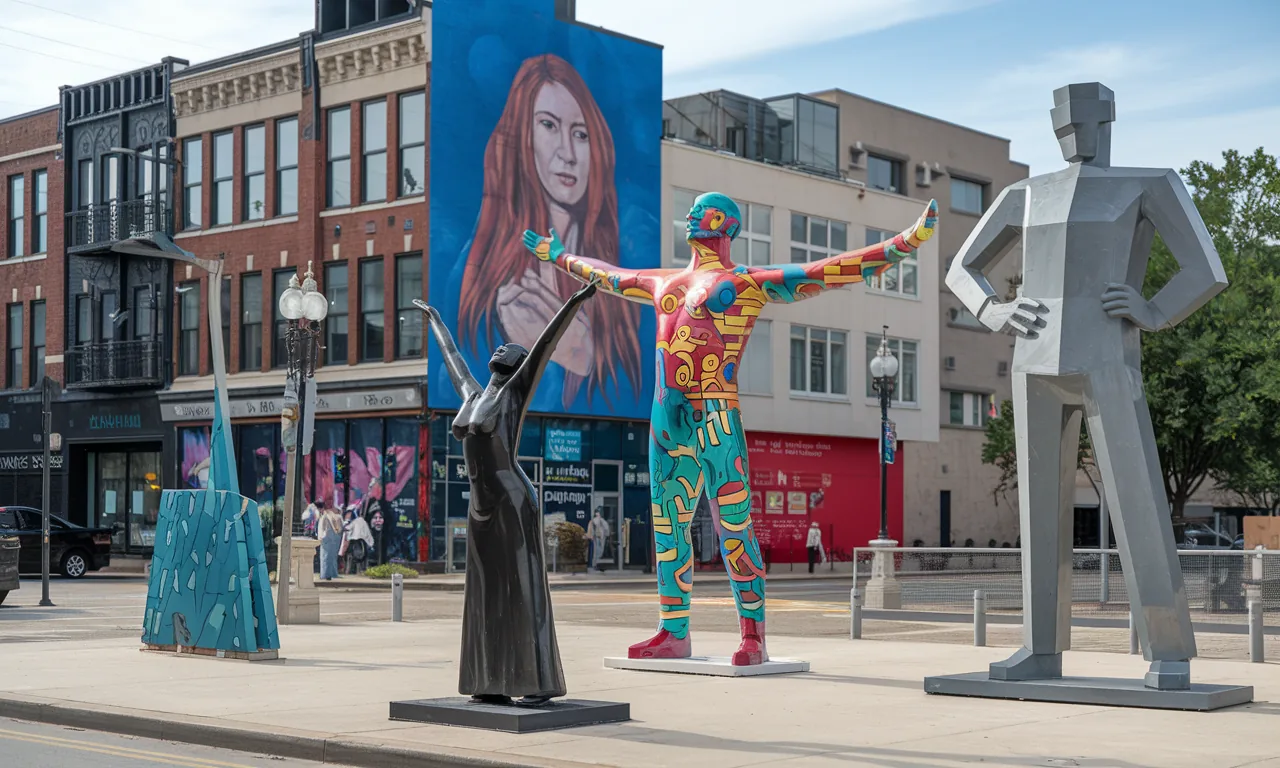
What makes a city vibrant: the buildings, the history – or the people who open doors today, spark conversations, and fill evenings with music, traditions, and art? In Traunstein, this question can be observed particularly well in the coming months and years: through open art formats, in municipal cultural work, and in initiatives that think of culture in a more inclusive way.
This article is designed as an outlook on upcoming dates, developments, and opportunities to participate. Specific dates and programs are published and continuously updated by the respective organizers.
Institutional Culture 2026+: The City as Networker and Program Engine
A central point of contact for upcoming exhibitions, talks, and educational formats is the municipal gallery. In Traunstein, such places are increasingly understood as spaces for encounters: In addition to art, exchange, context, and low-threshold access are at the center.
In local cultural work, people play a role who not only curate culture but also make it possible organizationally. In the near future, it will be especially important how cooperations between the city, associations, independent initiatives, and educational partners are further expanded – for example, through moderated formats, children’s and youth programs, and the removal of barriers.
- Exhibitions with accompanying programs (artist talks, guided tours, discussion evenings) as the standard rather than the exception
- Cooperation projects with regional artists and cultural initiatives
- Networking with supraregional cultural platforms and funding structures to bring new impulses to Traunstein
Independent Scene 2026+: Open Formats, Studios, and Project Spaces
Parallel to the institutions, the independent scene shapes what will be culturally possible in the coming years: open meetings, studio formats, and project spaces create opportunities where people can come into contact with art without fear of barriers – as an audience, in conversation, or directly as participants.
For upcoming program focuses, formats that take place regularly and thus build community are particularly interesting. These include open consultation hours, workshop evenings, pop-up exhibitions, or participatory actions in public spaces.
In Traunstein, the following names are mentioned in the cultural context, who may also appear in the future as contacts, initiators, or participants in local formats: Helmut Mühlbacher (art consultation hour), Robert Heigl (conceptual art/performance), Lisa Klauser (site-specific, participatory projects), Clemens Büntig (studio and discourse formats), Bernhard Straßer (literature/readings), and Johann Brunner (art and public debates).
If you want to discover the independent scene in the future, these three ways work particularly well:
- Check calendars: Compare programs of municipal institutions and cultural initiatives to find overlaps (art + music + conversation).
- Choose open formats: Consultation hours, open studios, and “bring-a-friend” evenings are ideal for getting started.
- Participate instead of just consuming: Many projects are looking for participants (e.g., in participatory actions in public spaces).
Between Tradition and Present: Sword Dance, Georgiritt, and Cultural Bridges
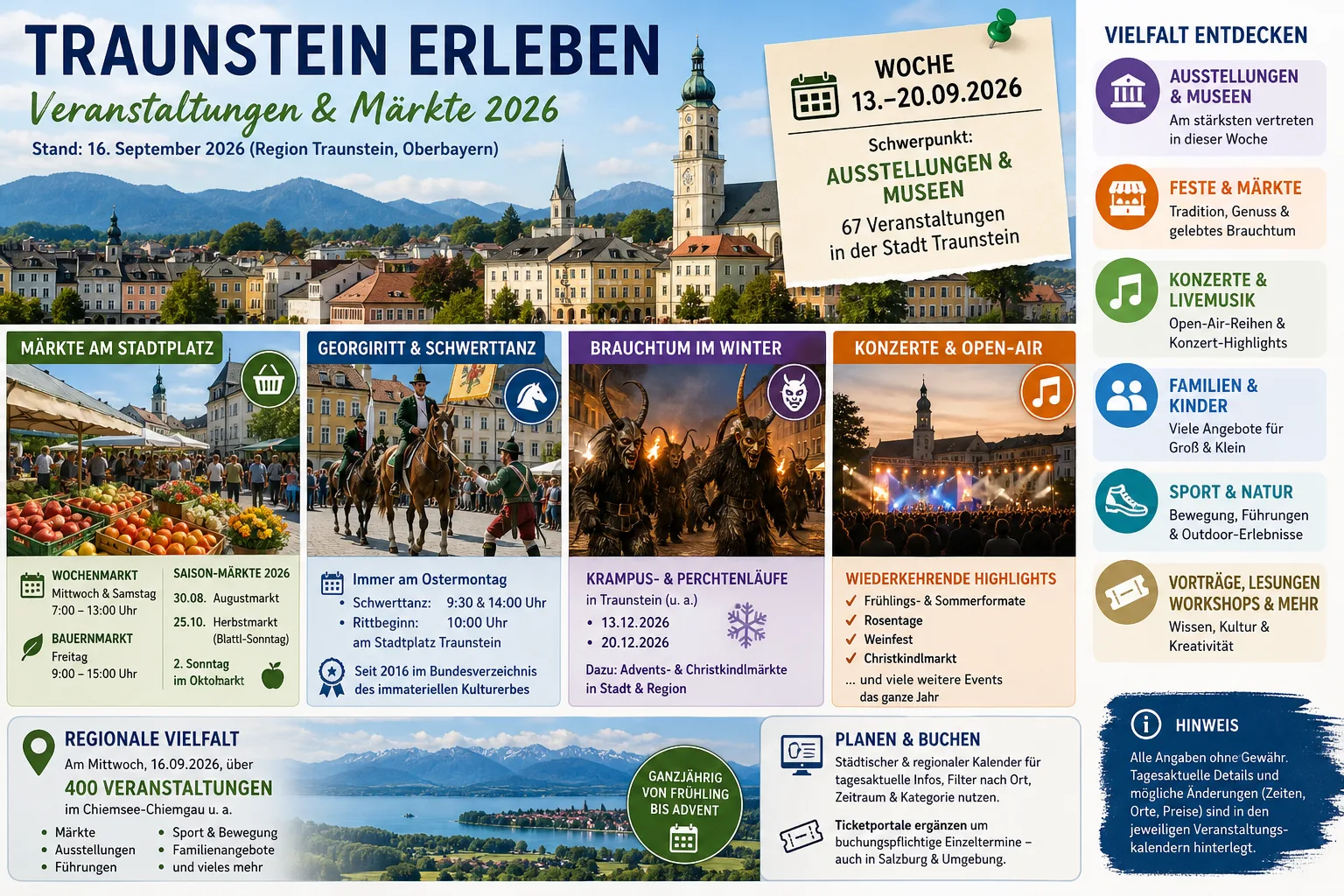
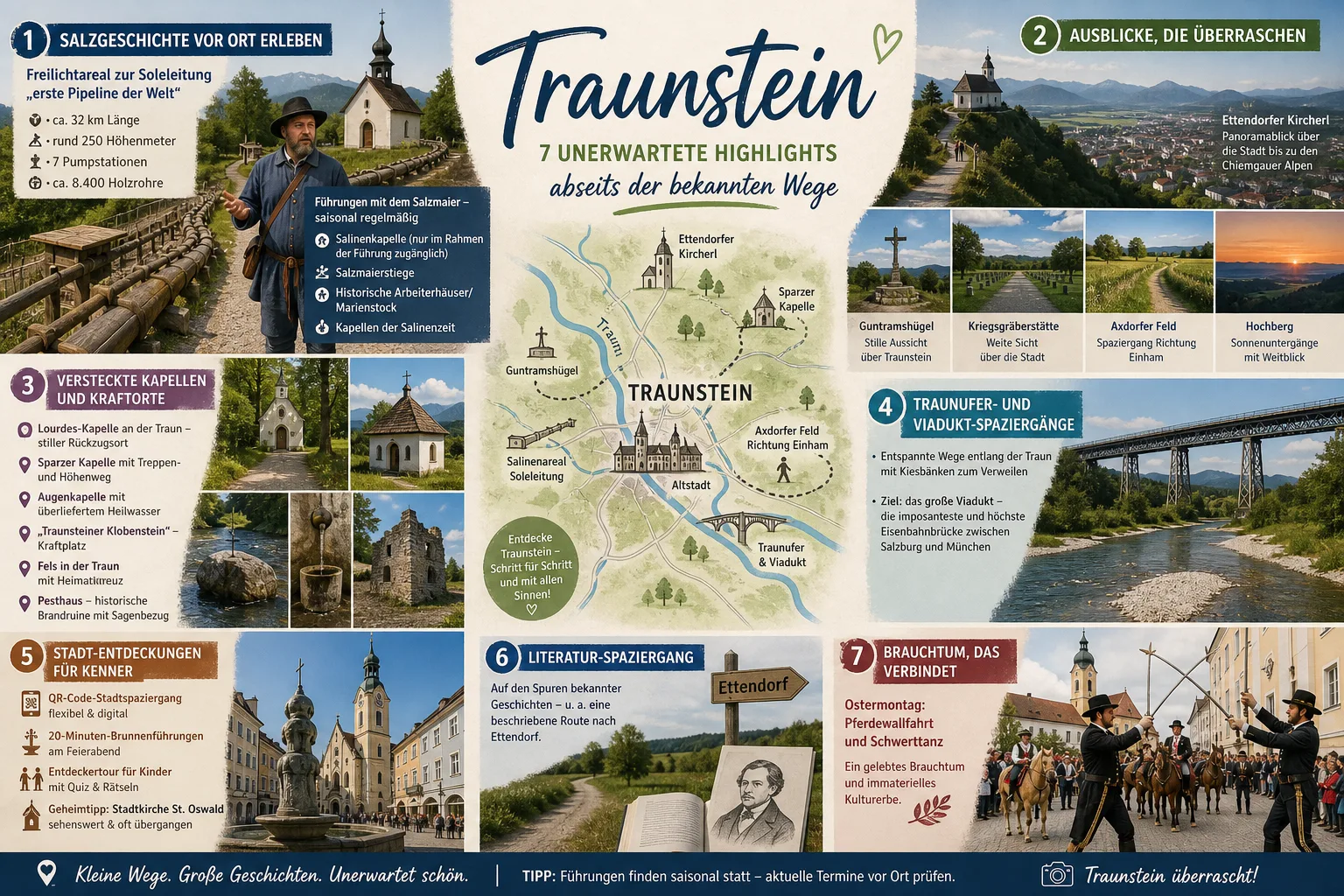
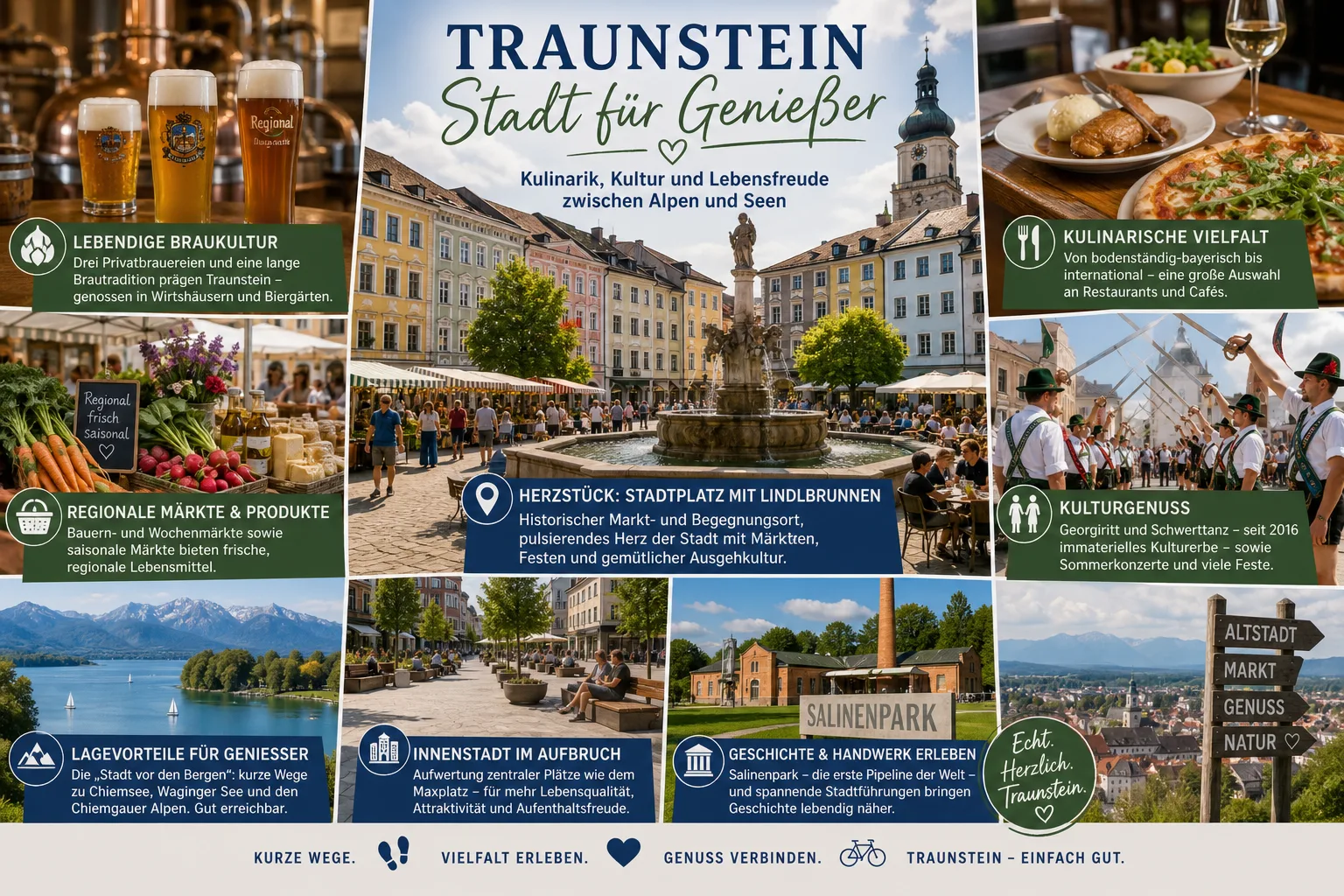
For many, Traunstein is associated with living tradition – including the Sword Dance and the Georgiritt, which are also expected to remain fixed points in the cultural calendar in the coming years. For the future, it will be particularly exciting to see how these traditions intertwine with contemporary formats.
More and more cities are focusing on developing framework programs around major traditional events: exhibitions, lectures, photo projects, concerts, or workshops that classify origin, change, and current significance. Such bridge formats make tradition connectable – without hollowing it out.
The museum plays an important role as a place that explains connections: Those who in the future not only want to “be there” but also understand will find in-depth perspectives there – for example, in special exhibitions and educational offers that connect history with current questions.
Participation, Inclusion, and Volunteering 2026+: Culture for More People
Culture will become stronger in the coming years if it reaches more life situations. In Traunstein, the idea is to design events so that people with support needs can also participate – for example, through calm settings, short program points, clear orientation, and trained support.
In the local environment, Florian Seestaller is mentioned as an initiator for networking culture, care, volunteering, and dementia-sensitive offers. Christian Hußmann is also mentioned in the context of regional cultural work and heritage preservation. Such roles are particularly important in the future because they enable coordination: between institutions, volunteers, and organizers.
For the near future, these development lines are especially realistic and helpful:
- More generation-friendly formats (e.g., early start times, short sets, break and retreat options)
- Qualification of volunteers for support, orientation, and calm assistance at cultural events
- Reliable communication: clear information on duration, volume, barriers, seating, and directions
The perspectives of cultural workers themselves will also remain important for the future – for example, when it comes to fair conditions for performances and planning reliability. In the regional discourse, Silke Aichhorn is mentioned as a voice from the professional music sector.
Subculture and Club Scene 2026+: Diversity, Young Talent, and New Audiences
Culture does not only take place in classic venues. In the coming years, Traunstein’s attractiveness will also depend on whether there are spaces for club culture, youth formats, and cross-genre evenings – where DJs, bands, spoken word, and performance meet.
In the Traunstein area, Christoph Schraufstetter is mentioned in connection with a local club stage and the organization of such evenings. Such places are relevant for the future because they:
- introduce new target groups to culture (especially younger people and occasional visitors)
- enable experiments that are harder to accommodate in large programs
- make local scenes visible and can attract guests from outside the region
In addition, awards and cultural prizes help make commitment visible. In the region, the “Chiemgauer Kulturpanther” is mentioned as an example of such recognition; in future editions, such prizes can provide orientation as to which projects and people are currently particularly influential – for example, Wolfgang Diem as a name mentioned in connection with the prize.
Outlook 2026–2028: How People Can Continue to Shape Traunstein’s Culture
For the coming years, three drivers are emerging that are likely to shape cultural life in Traunstein in particular: digitalization (better discoverability and hybrid formats), demographic change (more inclusive, generation-friendly offers) and new forms of volunteering (project-based, qualified, networked).
What will be decisive is how well the various levels work together: city and district, associations, independent scene, cultural venues, schools, and social institutions. If this cooperation succeeds, Traunstein can in the future both preserve tradition and enable innovation – and thus not only organize culture, but anchor it sustainably.
A good personal start for the near future is simple: Visit an exhibition with a conversation format, go to a concert in a small setting, or consciously choose an open participatory format. It is precisely there that contacts often arise from which new projects grow.