
Dorfpl. 1, Nußdorf
Dorfpl. 1, 83365 Nußdorf, Germany
St. Laurentius Nußdorf | History & Opening Hours
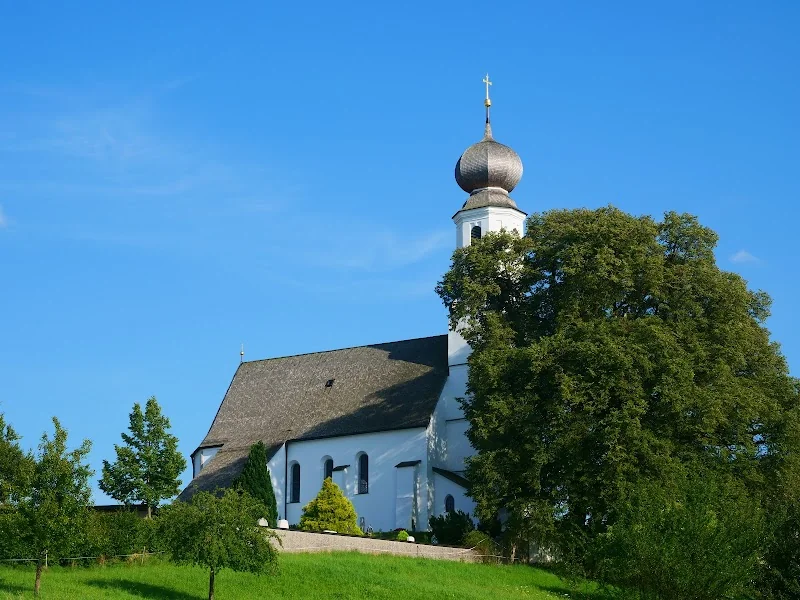
St. Laurentius Nußdorf is much more than a church in the village center: The house of worship shapes the image of the place, tells of centuries of religious and architectural development, and remains a vibrant meeting point for services, music, and quiet visits to this day. The parish church is located in Nußdorf am Inn at the village square and also elevated at the northern edge of the village in the walled cemetery. This location makes the first impression particularly strong, as the church is not coincidentally situated in the village, but visibly as a historical center that connects tradition and the present. Those interested in late Gothic architecture, local faith history, or simply an authentic place with atmosphere will find a remarkable destination here. The official church description mentions the consecration in 1491, the late Gothic spatial structure with net ribbed vaults, and a later regothization in the 19th century. Additionally, there are opening hours, renovations, and a lively parish life that goes far beyond mere monument preservation. ([erzbistum-muenchen.de](https://www.erzbistum-muenchen.de/pfarrei/pv-chieming/unsere-pfarreien/Pfarrei-Nussdorf/Kirche-Nussdorf))
History and Late Gothic Architecture of the Parish Church
The history of St. Laurentius Nußdorf begins in its current form with the consecration in 1491. The diocesan church description emphasizes that remnants of a predecessor building were likely integrated. This note is important for understanding the building, as it shows that St. Laurentius did not emerge as a completely new structure but as an evolved church with older roots. The still shaping late Gothic spatial structure with net ribbed vaults gives the interior a clear, rhythmic structure and creates that quiet dignity that many visitors appreciate in historical village churches. Later, Baroque altars were added before a regothization occurred in 1865. During this process, the church space received a completely new furnishing, including three new altars, a pulpit, and colored stained glass windows. The still existing Stations of the Cross also dates from this time and reminds us of how strongly the 19th century shaped the interior effect of the church. ([erzbistum-muenchen.de](https://www.erzbistum-muenchen.de/pfarrei/pv-chieming/unsere-pfarreien/Pfarrei-Nussdorf/Kirche-Nussdorf))
It is precisely these layers of late Gothic, Baroque, and Neo-Gothic that make the charm of St. Laurentius Nußdorf. It is not just a church with a date, but a building that visibly showcases change. The official site also describes that the Neo-Gothic elements gradually changed and reduced over the course of further renovations. For visitors, this means: One does not see a museum-like frozen object here, but a living space that has been repeatedly adapted to liturgical needs, monument protection, and practical requirements. The last interior renovation took place in 1983/84, while the exterior renovation with new wooden shingles occurred in 2013. This creates a very readable interplay of historical substance and careful maintenance. Those who love architectural details should pay attention to the vault, the spatial effect, the Stations of the Cross, and the external roof design during their visit, as these elements often tell the story of the house more clearly than grand words. ([erzbistum-muenchen.de](https://www.erzbistum-muenchen.de/pfarrei/pv-chieming/unsere-pfarreien/Pfarrei-Nussdorf/Kirche-Nussdorf))
Opening Hours and On-Site Visit
For a visit to St. Laurentius Nußdorf, the official opening hours are particularly helpful. According to the church's website, the church is accessible in summer from approximately 08:00 to 19:00 and in winter from approximately 08:00 to 16:30. Since the site explicitly points out possible changes due to weather conditions, a quick look at the daily schedule or local notices is worthwhile in uncertain weather. For travelers who like to arrive early in the day, this is as practical as for those who seek a quiet moment in the late afternoon. Especially in a church with a historical atmosphere, the time window is often part of the experience, as light and mood change significantly throughout the day. In the morning, the interior usually appears calmer and clearer, while in the evening hours, a softer, contemplative mood can arise. Thus, the visit becomes not just a visit to a place but a very personal moment between history and the present. ([erzbistum-muenchen.de](https://www.erzbistum-muenchen.de/pfarrei/pv-chieming/unsere-pfarreien/Pfarrei-Nussdorf/Kirche-Nussdorf))
The location further supports this impression. The parish church stands elevated at the northern edge of the village in the walled cemetery, making it appear shielded yet open. This combination makes the place so special: On one hand, it is embedded in the village; on the other hand, one feels the historical independence of a churchyard that has been a religious center for generations. The tourist entry lists the address as Dorfplatz 1, 83365 Nußdorf, which underscores its proximity to the village center. Therefore, anyone visiting St. Laurentius should take the time for a short walk to perceive not only the interior but also the external effect, the cemetery situation, and the integration into the village image. For a church of this type, the interplay of location, sightlines, and quiet surroundings is crucial. It creates a visit experience that is neither hectic nor arbitrary but clearly emphasizes tranquility, history, and dignity. ([erzbistum-muenchen.de](https://www.erzbistum-muenchen.de/pfarrei/pv-chieming/unsere-pfarreien/Pfarrei-Nussdorf/Kirche-Nussdorf))
Services, Church Choir, and Church Life in Nußdorf
St. Laurentius Nußdorf is not just a monument but an active place of faith. This is particularly evident in the musical and liturgical contributions that regularly take place there. The diocesan page for the church choir describes that the Nußdorf and Chieming church choir, under the direction of church musician Stephan Wahl, musically enhances the services in the parish church of St. Laurentius, especially the festive services at Christmas and Easter. The celebrations are usually designed in collaboration with the choir and orchestra. According to this source, the choir consists of about 20 singers and rehearses weekly on Wednesdays in the Nußdorf parish hall. This information shows that the church is not only significant on Sundays or during major festivals but is supported as an integral part of local community life. This is an important aspect for visitors who appreciate the sound and spatial effect of historical churches, as music sustainably alters the perception of the space. ([erzbistum-muenchen.de](https://www.erzbistum-muenchen.de/pfarrei/pv-chieming/machmit/Kirchenchor?utm_source=openai))
Traditions and special church occasions are also present in St. Laurentius. An Advent singing in the parish church, organized by the local costume association Nußdorf, was announced by regional media. Additionally, the press reported on a confirmation in the parish of St. Laurentius Nußdorf, during which a festive service took place in the church. Such events make it clear that the church serves as a stage for significant moments of community life far beyond the mere Sunday service. It connects sacraments, music, traditional costumes, customs, and local community in a way that is becoming increasingly rare in many places. Therefore, those wondering what defines St. Laurentius Nußdorf today should not only think of history but also of the vibrant present of the house. The church is a place of remembrance and at the same time a place of current encounters. This mixture ensures that it is not perceived as a silent relic but as an active center of a place that visibly nurtures its religious and cultural roots. ([pnp.de](https://www.pnp.de/lokales/landkreis-traunstein/der-krippmbarthl-20040430?utm_source=openai))
Location at the Village Square, Cemetery, and Surroundings of Nußdorf
The location of St. Laurentius Nußdorf is an essential part of its character. The tourist event entry lists the address as Dorfplatz 1, 83365 Nußdorf, and the diocesan church description locates the building elevated at the northern edge of the village in the walled cemetery. Thus, the church is situated in an area that is both central and quiet. This is typical for many old parish churches in the Bavarian region, but in Nußdorf, it is particularly well experienced because the building clearly stands out from the village structure while still being in close proximity to village life. For guests, this means: A short path from the village center leads directly into an environment shaped by history and silence. The site is not staged as an event area but as a lived church space with historical boundaries and clear dignity. This restraint makes the surroundings attractive for walkers, culture visitors, and people seeking a quiet place. ([erzbistum-muenchen.de](https://www.erzbistum-muenchen.de/pfarrei/pv-chieming/unsere-pfarreien/Pfarrei-Nussdorf/Kirche-Nussdorf))
The surroundings of Nußdorf am Inn further enhance this impression. The community describes its place in other contexts as rural and strongly connected to regional paths, village life, and traditional places. For St. Laurentius, this means in practical terms: The church can be easily integrated into a walk through the village without losing its independent character. Especially because it stands in the cemetery and elevated, it acts like a point of tranquility in the middle of the village. Those interested in photographic motifs will find a classic church view where the roof shape, cemetery wall, vault, and village location come together. Those coming for the ambiance experience a place that is neither overloaded nor touristically overformed. Precisely for this reason, St. Laurentius Nußdorf appeals to people seeking genuine atmosphere. The interplay of the village square, historical location, and carefully maintained church building makes the visit brief but impressive. ([erzbistum-muenchen.de](https://www.erzbistum-muenchen.de/pfarrei/pv-chieming/unsere-pfarreien/Pfarrei-Nussdorf/Kirche-Nussdorf))
Renovations, Furnishings, and Special Details
A particularly exciting aspect of St. Laurentius Nußdorf is the visible care of the building. The official church description mentions not only the late Gothic basic form and the regothization of 1865 but also later renovations that gradually changed and reduced the Neo-Gothic elements. The fact that the currently existing Stations of the Cross dates from the regothization period is a good example of how historical furnishings continue to have an impact in a living church space. The last interior renovation of 1983/84 is also among the information that makes the building interesting for those interested in cultural history. Such measures are crucial for the preservation of a village church, as they ensure the usability of the space while also preserving its unique radiance. Therefore, those who look closely will recognize in St. Laurentius not only an old sacred building but a well-maintained ensemble with many phases of renewal. ([erzbistum-muenchen.de](https://www.erzbistum-muenchen.de/pfarrei/pv-chieming/unsere-pfarreien/Pfarrei-Nussdorf/Kirche-Nussdorf))
Particularly defining is also the exterior renovation of 2013 with new wooden shingles. This measure not only gives the church a traditional appearance but also refers to the local building culture and the importance of handcrafted materials in historical village images. Together with the elevated location, the walled cemetery, and the late Gothic interior, a very cohesive overall picture emerges. This makes St. Laurentius Nußdorf attractive for culture-interested visitors, even if they only stay briefly. The church does not offer a spectacular modern staging but a quiet, credible authenticity. This is often the greatest strength in rural areas. One can tell that the building is not intended for quick effect but for liturgical use, remembrance, and continuity. Therefore, those who pay attention to details should focus on the vault shape, Stations of the Cross, roof covering, window effects, and the position in the cemetery. It is precisely there that the true uniqueness of St. Laurentius Nußdorf is revealed. ([erzbistum-muenchen.de](https://www.erzbistum-muenchen.de/pfarrei/pv-chieming/unsere-pfarreien/Pfarrei-Nussdorf/Kirche-Nussdorf))
Frequently Asked Questions about St. Laurentius Nußdorf
Many visitors first want to know practical things: Where is the church located, when is it open, and what makes it special? The answers are pleasantly clear. St. Laurentius Nußdorf is located in Nußdorf am Inn at the village square and at the northern edge of the village, making it easy to find in the village image while still being quietly situated. The church is open according to official information in summer from approximately 08:00 to 19:00 and in winter from approximately 08:00 to 16:30. Those interested in history receive a fixed anchor point with the year 1491, as that is when the church was consecrated. The late Gothic spatial structure with net ribbed vaults, the regothization in the 19th century, and the renovations in the 20th and 21st centuries make the building a vivid example of evolved sacred architecture in Upper Bavaria. ([erzbistum-muenchen.de](https://www.erzbistum-muenchen.de/pfarrei/pv-chieming/unsere-pfarreien/Pfarrei-Nussdorf/Kirche-Nussdorf))
The question of the church's current life can also be answered well: St. Laurentius is an active place with a choir, festive services, and traditions. The church choir regularly enhances the services and takes on important musical tasks, especially at Christmas and Easter. Additionally, there have been recent festive events in the church, such as a confirmation and an Advent singing. Therefore, anyone who wants to experience not just a historical building but a vibrant church place is in the right spot. St. Laurentius Nußdorf connects tranquility and community, monument and devotion, past and present. This connection makes the church so valuable for visitors. It is a place for brief visits as well as for longer quiet moments, for music as well as for remembrance, and it remains a fixed part of village life in Nußdorf. ([erzbistum-muenchen.de](https://www.erzbistum-muenchen.de/pfarrei/pv-chieming/machmit/Kirchenchor?utm_source=openai))
Sources:
- Archdiocese of Munich and Freising - Parish Church St. Laurentius Nußdorf
- Archdiocese of Munich and Freising - Church Choir Nußdorf and Chieming
- Passauer Neue Presse - Advent Singing in St. Laurentius Nußdorf
- Community Nußdorf am Inn - History of the Community
- Tourist Information Chieming - First Communion in the Parish Church St. Laurentius
Mehr anzeigenWeniger anzeigen
St. Laurentius Nußdorf | History & Opening Hours
St. Laurentius Nußdorf is much more than a church in the village center: The house of worship shapes the image of the place, tells of centuries of religious and architectural development, and remains a vibrant meeting point for services, music, and quiet visits to this day. The parish church is located in Nußdorf am Inn at the village square and also elevated at the northern edge of the village in the walled cemetery. This location makes the first impression particularly strong, as the church is not coincidentally situated in the village, but visibly as a historical center that connects tradition and the present. Those interested in late Gothic architecture, local faith history, or simply an authentic place with atmosphere will find a remarkable destination here. The official church description mentions the consecration in 1491, the late Gothic spatial structure with net ribbed vaults, and a later regothization in the 19th century. Additionally, there are opening hours, renovations, and a lively parish life that goes far beyond mere monument preservation. ([erzbistum-muenchen.de](https://www.erzbistum-muenchen.de/pfarrei/pv-chieming/unsere-pfarreien/Pfarrei-Nussdorf/Kirche-Nussdorf))
History and Late Gothic Architecture of the Parish Church
The history of St. Laurentius Nußdorf begins in its current form with the consecration in 1491. The diocesan church description emphasizes that remnants of a predecessor building were likely integrated. This note is important for understanding the building, as it shows that St. Laurentius did not emerge as a completely new structure but as an evolved church with older roots. The still shaping late Gothic spatial structure with net ribbed vaults gives the interior a clear, rhythmic structure and creates that quiet dignity that many visitors appreciate in historical village churches. Later, Baroque altars were added before a regothization occurred in 1865. During this process, the church space received a completely new furnishing, including three new altars, a pulpit, and colored stained glass windows. The still existing Stations of the Cross also dates from this time and reminds us of how strongly the 19th century shaped the interior effect of the church. ([erzbistum-muenchen.de](https://www.erzbistum-muenchen.de/pfarrei/pv-chieming/unsere-pfarreien/Pfarrei-Nussdorf/Kirche-Nussdorf))
It is precisely these layers of late Gothic, Baroque, and Neo-Gothic that make the charm of St. Laurentius Nußdorf. It is not just a church with a date, but a building that visibly showcases change. The official site also describes that the Neo-Gothic elements gradually changed and reduced over the course of further renovations. For visitors, this means: One does not see a museum-like frozen object here, but a living space that has been repeatedly adapted to liturgical needs, monument protection, and practical requirements. The last interior renovation took place in 1983/84, while the exterior renovation with new wooden shingles occurred in 2013. This creates a very readable interplay of historical substance and careful maintenance. Those who love architectural details should pay attention to the vault, the spatial effect, the Stations of the Cross, and the external roof design during their visit, as these elements often tell the story of the house more clearly than grand words. ([erzbistum-muenchen.de](https://www.erzbistum-muenchen.de/pfarrei/pv-chieming/unsere-pfarreien/Pfarrei-Nussdorf/Kirche-Nussdorf))
Opening Hours and On-Site Visit
For a visit to St. Laurentius Nußdorf, the official opening hours are particularly helpful. According to the church's website, the church is accessible in summer from approximately 08:00 to 19:00 and in winter from approximately 08:00 to 16:30. Since the site explicitly points out possible changes due to weather conditions, a quick look at the daily schedule or local notices is worthwhile in uncertain weather. For travelers who like to arrive early in the day, this is as practical as for those who seek a quiet moment in the late afternoon. Especially in a church with a historical atmosphere, the time window is often part of the experience, as light and mood change significantly throughout the day. In the morning, the interior usually appears calmer and clearer, while in the evening hours, a softer, contemplative mood can arise. Thus, the visit becomes not just a visit to a place but a very personal moment between history and the present. ([erzbistum-muenchen.de](https://www.erzbistum-muenchen.de/pfarrei/pv-chieming/unsere-pfarreien/Pfarrei-Nussdorf/Kirche-Nussdorf))
The location further supports this impression. The parish church stands elevated at the northern edge of the village in the walled cemetery, making it appear shielded yet open. This combination makes the place so special: On one hand, it is embedded in the village; on the other hand, one feels the historical independence of a churchyard that has been a religious center for generations. The tourist entry lists the address as Dorfplatz 1, 83365 Nußdorf, which underscores its proximity to the village center. Therefore, anyone visiting St. Laurentius should take the time for a short walk to perceive not only the interior but also the external effect, the cemetery situation, and the integration into the village image. For a church of this type, the interplay of location, sightlines, and quiet surroundings is crucial. It creates a visit experience that is neither hectic nor arbitrary but clearly emphasizes tranquility, history, and dignity. ([erzbistum-muenchen.de](https://www.erzbistum-muenchen.de/pfarrei/pv-chieming/unsere-pfarreien/Pfarrei-Nussdorf/Kirche-Nussdorf))
Services, Church Choir, and Church Life in Nußdorf
St. Laurentius Nußdorf is not just a monument but an active place of faith. This is particularly evident in the musical and liturgical contributions that regularly take place there. The diocesan page for the church choir describes that the Nußdorf and Chieming church choir, under the direction of church musician Stephan Wahl, musically enhances the services in the parish church of St. Laurentius, especially the festive services at Christmas and Easter. The celebrations are usually designed in collaboration with the choir and orchestra. According to this source, the choir consists of about 20 singers and rehearses weekly on Wednesdays in the Nußdorf parish hall. This information shows that the church is not only significant on Sundays or during major festivals but is supported as an integral part of local community life. This is an important aspect for visitors who appreciate the sound and spatial effect of historical churches, as music sustainably alters the perception of the space. ([erzbistum-muenchen.de](https://www.erzbistum-muenchen.de/pfarrei/pv-chieming/machmit/Kirchenchor?utm_source=openai))
Traditions and special church occasions are also present in St. Laurentius. An Advent singing in the parish church, organized by the local costume association Nußdorf, was announced by regional media. Additionally, the press reported on a confirmation in the parish of St. Laurentius Nußdorf, during which a festive service took place in the church. Such events make it clear that the church serves as a stage for significant moments of community life far beyond the mere Sunday service. It connects sacraments, music, traditional costumes, customs, and local community in a way that is becoming increasingly rare in many places. Therefore, those wondering what defines St. Laurentius Nußdorf today should not only think of history but also of the vibrant present of the house. The church is a place of remembrance and at the same time a place of current encounters. This mixture ensures that it is not perceived as a silent relic but as an active center of a place that visibly nurtures its religious and cultural roots. ([pnp.de](https://www.pnp.de/lokales/landkreis-traunstein/der-krippmbarthl-20040430?utm_source=openai))
Location at the Village Square, Cemetery, and Surroundings of Nußdorf
The location of St. Laurentius Nußdorf is an essential part of its character. The tourist event entry lists the address as Dorfplatz 1, 83365 Nußdorf, and the diocesan church description locates the building elevated at the northern edge of the village in the walled cemetery. Thus, the church is situated in an area that is both central and quiet. This is typical for many old parish churches in the Bavarian region, but in Nußdorf, it is particularly well experienced because the building clearly stands out from the village structure while still being in close proximity to village life. For guests, this means: A short path from the village center leads directly into an environment shaped by history and silence. The site is not staged as an event area but as a lived church space with historical boundaries and clear dignity. This restraint makes the surroundings attractive for walkers, culture visitors, and people seeking a quiet place. ([erzbistum-muenchen.de](https://www.erzbistum-muenchen.de/pfarrei/pv-chieming/unsere-pfarreien/Pfarrei-Nussdorf/Kirche-Nussdorf))
The surroundings of Nußdorf am Inn further enhance this impression. The community describes its place in other contexts as rural and strongly connected to regional paths, village life, and traditional places. For St. Laurentius, this means in practical terms: The church can be easily integrated into a walk through the village without losing its independent character. Especially because it stands in the cemetery and elevated, it acts like a point of tranquility in the middle of the village. Those interested in photographic motifs will find a classic church view where the roof shape, cemetery wall, vault, and village location come together. Those coming for the ambiance experience a place that is neither overloaded nor touristically overformed. Precisely for this reason, St. Laurentius Nußdorf appeals to people seeking genuine atmosphere. The interplay of the village square, historical location, and carefully maintained church building makes the visit brief but impressive. ([erzbistum-muenchen.de](https://www.erzbistum-muenchen.de/pfarrei/pv-chieming/unsere-pfarreien/Pfarrei-Nussdorf/Kirche-Nussdorf))
Renovations, Furnishings, and Special Details
A particularly exciting aspect of St. Laurentius Nußdorf is the visible care of the building. The official church description mentions not only the late Gothic basic form and the regothization of 1865 but also later renovations that gradually changed and reduced the Neo-Gothic elements. The fact that the currently existing Stations of the Cross dates from the regothization period is a good example of how historical furnishings continue to have an impact in a living church space. The last interior renovation of 1983/84 is also among the information that makes the building interesting for those interested in cultural history. Such measures are crucial for the preservation of a village church, as they ensure the usability of the space while also preserving its unique radiance. Therefore, those who look closely will recognize in St. Laurentius not only an old sacred building but a well-maintained ensemble with many phases of renewal. ([erzbistum-muenchen.de](https://www.erzbistum-muenchen.de/pfarrei/pv-chieming/unsere-pfarreien/Pfarrei-Nussdorf/Kirche-Nussdorf))
Particularly defining is also the exterior renovation of 2013 with new wooden shingles. This measure not only gives the church a traditional appearance but also refers to the local building culture and the importance of handcrafted materials in historical village images. Together with the elevated location, the walled cemetery, and the late Gothic interior, a very cohesive overall picture emerges. This makes St. Laurentius Nußdorf attractive for culture-interested visitors, even if they only stay briefly. The church does not offer a spectacular modern staging but a quiet, credible authenticity. This is often the greatest strength in rural areas. One can tell that the building is not intended for quick effect but for liturgical use, remembrance, and continuity. Therefore, those who pay attention to details should focus on the vault shape, Stations of the Cross, roof covering, window effects, and the position in the cemetery. It is precisely there that the true uniqueness of St. Laurentius Nußdorf is revealed. ([erzbistum-muenchen.de](https://www.erzbistum-muenchen.de/pfarrei/pv-chieming/unsere-pfarreien/Pfarrei-Nussdorf/Kirche-Nussdorf))
Frequently Asked Questions about St. Laurentius Nußdorf
Many visitors first want to know practical things: Where is the church located, when is it open, and what makes it special? The answers are pleasantly clear. St. Laurentius Nußdorf is located in Nußdorf am Inn at the village square and at the northern edge of the village, making it easy to find in the village image while still being quietly situated. The church is open according to official information in summer from approximately 08:00 to 19:00 and in winter from approximately 08:00 to 16:30. Those interested in history receive a fixed anchor point with the year 1491, as that is when the church was consecrated. The late Gothic spatial structure with net ribbed vaults, the regothization in the 19th century, and the renovations in the 20th and 21st centuries make the building a vivid example of evolved sacred architecture in Upper Bavaria. ([erzbistum-muenchen.de](https://www.erzbistum-muenchen.de/pfarrei/pv-chieming/unsere-pfarreien/Pfarrei-Nussdorf/Kirche-Nussdorf))
The question of the church's current life can also be answered well: St. Laurentius is an active place with a choir, festive services, and traditions. The church choir regularly enhances the services and takes on important musical tasks, especially at Christmas and Easter. Additionally, there have been recent festive events in the church, such as a confirmation and an Advent singing. Therefore, anyone who wants to experience not just a historical building but a vibrant church place is in the right spot. St. Laurentius Nußdorf connects tranquility and community, monument and devotion, past and present. This connection makes the church so valuable for visitors. It is a place for brief visits as well as for longer quiet moments, for music as well as for remembrance, and it remains a fixed part of village life in Nußdorf. ([erzbistum-muenchen.de](https://www.erzbistum-muenchen.de/pfarrei/pv-chieming/machmit/Kirchenchor?utm_source=openai))
Sources:
- Archdiocese of Munich and Freising - Parish Church St. Laurentius Nußdorf
- Archdiocese of Munich and Freising - Church Choir Nußdorf and Chieming
- Passauer Neue Presse - Advent Singing in St. Laurentius Nußdorf
- Community Nußdorf am Inn - History of the Community
- Tourist Information Chieming - First Communion in the Parish Church St. Laurentius
St. Laurentius Nußdorf | History & Opening Hours
St. Laurentius Nußdorf is much more than a church in the village center: The house of worship shapes the image of the place, tells of centuries of religious and architectural development, and remains a vibrant meeting point for services, music, and quiet visits to this day. The parish church is located in Nußdorf am Inn at the village square and also elevated at the northern edge of the village in the walled cemetery. This location makes the first impression particularly strong, as the church is not coincidentally situated in the village, but visibly as a historical center that connects tradition and the present. Those interested in late Gothic architecture, local faith history, or simply an authentic place with atmosphere will find a remarkable destination here. The official church description mentions the consecration in 1491, the late Gothic spatial structure with net ribbed vaults, and a later regothization in the 19th century. Additionally, there are opening hours, renovations, and a lively parish life that goes far beyond mere monument preservation. ([erzbistum-muenchen.de](https://www.erzbistum-muenchen.de/pfarrei/pv-chieming/unsere-pfarreien/Pfarrei-Nussdorf/Kirche-Nussdorf))
History and Late Gothic Architecture of the Parish Church
The history of St. Laurentius Nußdorf begins in its current form with the consecration in 1491. The diocesan church description emphasizes that remnants of a predecessor building were likely integrated. This note is important for understanding the building, as it shows that St. Laurentius did not emerge as a completely new structure but as an evolved church with older roots. The still shaping late Gothic spatial structure with net ribbed vaults gives the interior a clear, rhythmic structure and creates that quiet dignity that many visitors appreciate in historical village churches. Later, Baroque altars were added before a regothization occurred in 1865. During this process, the church space received a completely new furnishing, including three new altars, a pulpit, and colored stained glass windows. The still existing Stations of the Cross also dates from this time and reminds us of how strongly the 19th century shaped the interior effect of the church. ([erzbistum-muenchen.de](https://www.erzbistum-muenchen.de/pfarrei/pv-chieming/unsere-pfarreien/Pfarrei-Nussdorf/Kirche-Nussdorf))
It is precisely these layers of late Gothic, Baroque, and Neo-Gothic that make the charm of St. Laurentius Nußdorf. It is not just a church with a date, but a building that visibly showcases change. The official site also describes that the Neo-Gothic elements gradually changed and reduced over the course of further renovations. For visitors, this means: One does not see a museum-like frozen object here, but a living space that has been repeatedly adapted to liturgical needs, monument protection, and practical requirements. The last interior renovation took place in 1983/84, while the exterior renovation with new wooden shingles occurred in 2013. This creates a very readable interplay of historical substance and careful maintenance. Those who love architectural details should pay attention to the vault, the spatial effect, the Stations of the Cross, and the external roof design during their visit, as these elements often tell the story of the house more clearly than grand words. ([erzbistum-muenchen.de](https://www.erzbistum-muenchen.de/pfarrei/pv-chieming/unsere-pfarreien/Pfarrei-Nussdorf/Kirche-Nussdorf))
Opening Hours and On-Site Visit
For a visit to St. Laurentius Nußdorf, the official opening hours are particularly helpful. According to the church's website, the church is accessible in summer from approximately 08:00 to 19:00 and in winter from approximately 08:00 to 16:30. Since the site explicitly points out possible changes due to weather conditions, a quick look at the daily schedule or local notices is worthwhile in uncertain weather. For travelers who like to arrive early in the day, this is as practical as for those who seek a quiet moment in the late afternoon. Especially in a church with a historical atmosphere, the time window is often part of the experience, as light and mood change significantly throughout the day. In the morning, the interior usually appears calmer and clearer, while in the evening hours, a softer, contemplative mood can arise. Thus, the visit becomes not just a visit to a place but a very personal moment between history and the present. ([erzbistum-muenchen.de](https://www.erzbistum-muenchen.de/pfarrei/pv-chieming/unsere-pfarreien/Pfarrei-Nussdorf/Kirche-Nussdorf))
The location further supports this impression. The parish church stands elevated at the northern edge of the village in the walled cemetery, making it appear shielded yet open. This combination makes the place so special: On one hand, it is embedded in the village; on the other hand, one feels the historical independence of a churchyard that has been a religious center for generations. The tourist entry lists the address as Dorfplatz 1, 83365 Nußdorf, which underscores its proximity to the village center. Therefore, anyone visiting St. Laurentius should take the time for a short walk to perceive not only the interior but also the external effect, the cemetery situation, and the integration into the village image. For a church of this type, the interplay of location, sightlines, and quiet surroundings is crucial. It creates a visit experience that is neither hectic nor arbitrary but clearly emphasizes tranquility, history, and dignity. ([erzbistum-muenchen.de](https://www.erzbistum-muenchen.de/pfarrei/pv-chieming/unsere-pfarreien/Pfarrei-Nussdorf/Kirche-Nussdorf))
Services, Church Choir, and Church Life in Nußdorf
St. Laurentius Nußdorf is not just a monument but an active place of faith. This is particularly evident in the musical and liturgical contributions that regularly take place there. The diocesan page for the church choir describes that the Nußdorf and Chieming church choir, under the direction of church musician Stephan Wahl, musically enhances the services in the parish church of St. Laurentius, especially the festive services at Christmas and Easter. The celebrations are usually designed in collaboration with the choir and orchestra. According to this source, the choir consists of about 20 singers and rehearses weekly on Wednesdays in the Nußdorf parish hall. This information shows that the church is not only significant on Sundays or during major festivals but is supported as an integral part of local community life. This is an important aspect for visitors who appreciate the sound and spatial effect of historical churches, as music sustainably alters the perception of the space. ([erzbistum-muenchen.de](https://www.erzbistum-muenchen.de/pfarrei/pv-chieming/machmit/Kirchenchor?utm_source=openai))
Traditions and special church occasions are also present in St. Laurentius. An Advent singing in the parish church, organized by the local costume association Nußdorf, was announced by regional media. Additionally, the press reported on a confirmation in the parish of St. Laurentius Nußdorf, during which a festive service took place in the church. Such events make it clear that the church serves as a stage for significant moments of community life far beyond the mere Sunday service. It connects sacraments, music, traditional costumes, customs, and local community in a way that is becoming increasingly rare in many places. Therefore, those wondering what defines St. Laurentius Nußdorf today should not only think of history but also of the vibrant present of the house. The church is a place of remembrance and at the same time a place of current encounters. This mixture ensures that it is not perceived as a silent relic but as an active center of a place that visibly nurtures its religious and cultural roots. ([pnp.de](https://www.pnp.de/lokales/landkreis-traunstein/der-krippmbarthl-20040430?utm_source=openai))
Location at the Village Square, Cemetery, and Surroundings of Nußdorf
The location of St. Laurentius Nußdorf is an essential part of its character. The tourist event entry lists the address as Dorfplatz 1, 83365 Nußdorf, and the diocesan church description locates the building elevated at the northern edge of the village in the walled cemetery. Thus, the church is situated in an area that is both central and quiet. This is typical for many old parish churches in the Bavarian region, but in Nußdorf, it is particularly well experienced because the building clearly stands out from the village structure while still being in close proximity to village life. For guests, this means: A short path from the village center leads directly into an environment shaped by history and silence. The site is not staged as an event area but as a lived church space with historical boundaries and clear dignity. This restraint makes the surroundings attractive for walkers, culture visitors, and people seeking a quiet place. ([erzbistum-muenchen.de](https://www.erzbistum-muenchen.de/pfarrei/pv-chieming/unsere-pfarreien/Pfarrei-Nussdorf/Kirche-Nussdorf))
The surroundings of Nußdorf am Inn further enhance this impression. The community describes its place in other contexts as rural and strongly connected to regional paths, village life, and traditional places. For St. Laurentius, this means in practical terms: The church can be easily integrated into a walk through the village without losing its independent character. Especially because it stands in the cemetery and elevated, it acts like a point of tranquility in the middle of the village. Those interested in photographic motifs will find a classic church view where the roof shape, cemetery wall, vault, and village location come together. Those coming for the ambiance experience a place that is neither overloaded nor touristically overformed. Precisely for this reason, St. Laurentius Nußdorf appeals to people seeking genuine atmosphere. The interplay of the village square, historical location, and carefully maintained church building makes the visit brief but impressive. ([erzbistum-muenchen.de](https://www.erzbistum-muenchen.de/pfarrei/pv-chieming/unsere-pfarreien/Pfarrei-Nussdorf/Kirche-Nussdorf))
Renovations, Furnishings, and Special Details
A particularly exciting aspect of St. Laurentius Nußdorf is the visible care of the building. The official church description mentions not only the late Gothic basic form and the regothization of 1865 but also later renovations that gradually changed and reduced the Neo-Gothic elements. The fact that the currently existing Stations of the Cross dates from the regothization period is a good example of how historical furnishings continue to have an impact in a living church space. The last interior renovation of 1983/84 is also among the information that makes the building interesting for those interested in cultural history. Such measures are crucial for the preservation of a village church, as they ensure the usability of the space while also preserving its unique radiance. Therefore, those who look closely will recognize in St. Laurentius not only an old sacred building but a well-maintained ensemble with many phases of renewal. ([erzbistum-muenchen.de](https://www.erzbistum-muenchen.de/pfarrei/pv-chieming/unsere-pfarreien/Pfarrei-Nussdorf/Kirche-Nussdorf))
Particularly defining is also the exterior renovation of 2013 with new wooden shingles. This measure not only gives the church a traditional appearance but also refers to the local building culture and the importance of handcrafted materials in historical village images. Together with the elevated location, the walled cemetery, and the late Gothic interior, a very cohesive overall picture emerges. This makes St. Laurentius Nußdorf attractive for culture-interested visitors, even if they only stay briefly. The church does not offer a spectacular modern staging but a quiet, credible authenticity. This is often the greatest strength in rural areas. One can tell that the building is not intended for quick effect but for liturgical use, remembrance, and continuity. Therefore, those who pay attention to details should focus on the vault shape, Stations of the Cross, roof covering, window effects, and the position in the cemetery. It is precisely there that the true uniqueness of St. Laurentius Nußdorf is revealed. ([erzbistum-muenchen.de](https://www.erzbistum-muenchen.de/pfarrei/pv-chieming/unsere-pfarreien/Pfarrei-Nussdorf/Kirche-Nussdorf))
Frequently Asked Questions about St. Laurentius Nußdorf
Many visitors first want to know practical things: Where is the church located, when is it open, and what makes it special? The answers are pleasantly clear. St. Laurentius Nußdorf is located in Nußdorf am Inn at the village square and at the northern edge of the village, making it easy to find in the village image while still being quietly situated. The church is open according to official information in summer from approximately 08:00 to 19:00 and in winter from approximately 08:00 to 16:30. Those interested in history receive a fixed anchor point with the year 1491, as that is when the church was consecrated. The late Gothic spatial structure with net ribbed vaults, the regothization in the 19th century, and the renovations in the 20th and 21st centuries make the building a vivid example of evolved sacred architecture in Upper Bavaria. ([erzbistum-muenchen.de](https://www.erzbistum-muenchen.de/pfarrei/pv-chieming/unsere-pfarreien/Pfarrei-Nussdorf/Kirche-Nussdorf))
The question of the church's current life can also be answered well: St. Laurentius is an active place with a choir, festive services, and traditions. The church choir regularly enhances the services and takes on important musical tasks, especially at Christmas and Easter. Additionally, there have been recent festive events in the church, such as a confirmation and an Advent singing. Therefore, anyone who wants to experience not just a historical building but a vibrant church place is in the right spot. St. Laurentius Nußdorf connects tranquility and community, monument and devotion, past and present. This connection makes the church so valuable for visitors. It is a place for brief visits as well as for longer quiet moments, for music as well as for remembrance, and it remains a fixed part of village life in Nußdorf. ([erzbistum-muenchen.de](https://www.erzbistum-muenchen.de/pfarrei/pv-chieming/machmit/Kirchenchor?utm_source=openai))
Sources:
- Archdiocese of Munich and Freising - Parish Church St. Laurentius Nußdorf
- Archdiocese of Munich and Freising - Church Choir Nußdorf and Chieming
- Passauer Neue Presse - Advent Singing in St. Laurentius Nußdorf
- Community Nußdorf am Inn - History of the Community
- Tourist Information Chieming - First Communion in the Parish Church St. Laurentius
Upcoming Events
No events found
Frequently Asked Questions
Reviews
Eva Anneliese Langenwalter
10. October 2020
The "Spend" of Nußdorf in Chiemgau At this late Gothic church dedicated to Saint Lawrence, a rare custom has been practiced since at least 1433, and probably even earlier. This custom, known as the "Spend," dates back to pre-Christian times and is linked to the tradition of offering food to the dead on All Souls' Day, when "Seelenzöpfe" or "Seelenwecken" (soul braids) were baked and distributed to the poor throughout Bavaria. Fifteen farmers from Nußdorf were obligated to provide a donation in kind. In Traunstein alone, 2,500 loaves of bread (Seelen) were baked and distributed on the first of May each year in the cemetery to anyone who requested one. The lord of the nearby Amerang castle, the Traunstein bailiff, and the Haslach parish priest were present at this distribution. One farmer alone was required to contribute one hundred eggs, grain, two hens, and a pig to the "Spend." The hard-boiled eggs were given to the children, the pork was given to the poor at Carnival, and the lard (pork crackling) went to the Traunstein leper house.