
Oberkirchpl. 12, Cottbus
Oberkirchpl. 12, 03046 Cottbus, Germany
St. Nikolai Upper Church | Opening Hours & Parking
The St. Nikolai Upper Church is one of the most prominent places in Cottbus, impressively combining city history, sacred architecture, musical life, and everyday accessibility. When entering the old town around the Upper Church Square, one stands before a late Gothic brick church that sees itself as an open church and immediately presents its high tower, clear forms, and bright interior. The Upper Church is not only a monument of the city but also a place where services, devotions, concerts, and encounters naturally coexist. This mixture makes it particularly interesting for visitors: it is art historically significant, spiritually vibrant, and very present in the daily life of the city. The church community points out daily opening hours, the city of Cottbus describes the building as the largest place of worship in Lower Lusatia, and the surroundings are shaped by Upper Church Square, the weekly market, and the old town. ([cottbus.de](https://cottbus.de/kultur-und-tourismus/kirchen/oberkirche-st-nikolai/))
Opening Hours and Visiting the St. Nikolai Upper Church
The good news first: The St. Nikolai Upper Church is accessible daily as an open church. According to the church community, the summer hours are from 10 AM to 5 PM, and in winter from 11 AM to 4 PM. The book table in the church is not only a place for information but also an important part of visitor reception. Volunteer staff help with orientation, keep the church open, and are often available for tourist inquiries. The address at Upper Church Square 12 makes the location clear and easy to find, as the church is located directly in the historical center of Cottbus. So, anyone planning a tour of the old town can easily incorporate the Upper Church into their walk and, with a bit of luck, find a quiet moment in the nave before more activity returns to the square. The daily opening model shows that the Upper Church is not understood as a secluded museum object but as an open urban space. ([st-nikolai-cottbus.de](https://www.st-nikolai-cottbus.de/))
For visiting, it is important to know that regular visits are not possible during services. This is especially relevant if one stops by spontaneously and wants to experience the space in peace, not just take a quick look inside. According to the community, Sunday services begin at 10 AM, which further shows the Upper Church as an active community location. For visitors, this means: It is best to visit either before or after the liturgical times or on a weekday within the opening hours. Those wishing to visit the tower should also keep an eye on ongoing events, as the tower ascent is tied to the open times outside of events. This interplay of reliable visiting hours and vibrant use makes the Upper Church particularly attractive for short visits, city tours, and targeted photo stops. ([st-nikolai-cottbus.de](https://www.st-nikolai-cottbus.de/))
The direct urban context also contributes to practical visiting arguments. The weekly market traditionally takes place around Upper Church Square, on Tuesdays and Saturdays with up to 40 vendors in the city center. This allows a church visit to be easily combined with shopping, a café break, or a stroll through the old town. Thus, the Upper Church is not only a quiet place of devotion but also a natural destination in the daily life of the city. Those planning a short stay in Cottbus can experience architecture, history, and urban culture in concentrated form within a few minutes. This is exactly the kind of information relevant for inquiries about opening hours, visits, photos, and spontaneous visits: The church is accessible, open, and clearly integrated into the daily life of the city. ([cottbus-tourismus.de](https://cottbus-tourismus.de/de/sommer/cottbus-entdecken/einkaufen-und-parken/wochenmaerkte-verkaufsoffene-sonntage/artikel-wochenmarkt_auf_dem_oberkirchplatz_di_sa_-90.html?utm_source=openai))
Parking and Access to Upper Church Square in Cottbus
Those arriving by car will find very useful parking options in the immediate vicinity of the Upper Church. The CottbusTourismus portal mentions the Upper Church Square parking lot on Friedrich-Ludwig-Jahn-Straße with 210 parking spaces and 24-hour opening. For a city center location, this is an important advantage, as it allows planning a church visit without a long search for parking. At the same time, the square is located in the historical center, so one is immediately surrounded by the Old Market, Monastery Street, and Upper Church Square after getting out of the car. This makes the location very convenient for visitors: you park centrally and reach the church on foot in just a few steps. For those searching for parking or the Upper Church parking lot, this is very concrete guidance. ([cottbus-tourismus.de](https://cottbus-tourismus.de/de/cottbus-entdecken/einkaufen-und-parken/parkmoeglichkeiten.html?utm_source=openai))
The city of Cottbus additionally points out that cashless payment at parking meters was sometimes required at the parking lots near the Upper Church and on Friedrich-Ludwig-Jahn-Straße. While this is a detailed note from the city's traffic and parking information, it also shows that the parking area around Upper Church Square is actively managed and regularly organized by the city. Therefore, it is always advisable for visitors to take a quick look at current signage or parking information on-site. Those making their way can easily target the Upper Church as part of a tour of the old town: From Upper Church Square, one can directly reach the church building, the weekly market, and other destinations in the city center. The access is thus not complicated but rather typical of an inner-city area: central, well-signposted, and with several options for parking the vehicle. ([cottbus.de](https://cottbus.de/allgemein/eingeschraenkte-bargeldzahlung-an-parkscheinautomaten-in-cottbus-chosebuz/?utm_source=openai))
For additional practical orientation, the surrounding area itself provides helpful information. The city of Cottbus mentions a barrier-free restroom facility at Upper Church Square / Monastery Street, which can be very helpful for longer city stays or visits with children. Especially when wanting to connect the market, church, and old town, such details are often crucial. The proximity to the Old Market with its baroque townhouses and the Pharmacy Museum also supports the view that the Upper Church should not be seen in isolation but as part of a compact city center ensemble. Therefore, those exploring Cottbus can park without detours, visit the church, perhaps take in the tower, and then continue through the old town. For search intents related to parking, access, and practical tips, this is exactly the kind of information that makes the visit planable. ([cottbus.de](https://cottbus.de/aktuelle-informationen-der-bereiche/beauftragte/wc-orte-fuer-behinderte-in-cottbus/?utm_source=openai))
History and Brick Gothic of the St. Nikolai Upper Church
The history of the Upper Church dates back far into the past. The church community describes the site as documented as early as 1156, making it the earliest documented church in Lower Lusatia. Renovations also uncovered remnants of a hall church from the second half of the 13th century. The current building then developed in the 15th century: The beginning of the new hall church likely lies in the first half of the century, the choir was built first, and then the nave and extensions were continued. A city fire in 1468 damaged the construction during its erection, and later further changes followed after a fire in 1600. With the Reformation, the church became Protestant in 1537; in 1572 it received the additional designation Upper Church to mark its prominent position compared to the neighboring monastery church. This is not only church history but also city history in condensed form. ([st-nikolai-cottbus.de](https://www.st-nikolai-cottbus.de/die-oberkirche-st-nikolai/geschichte-und-architektur))
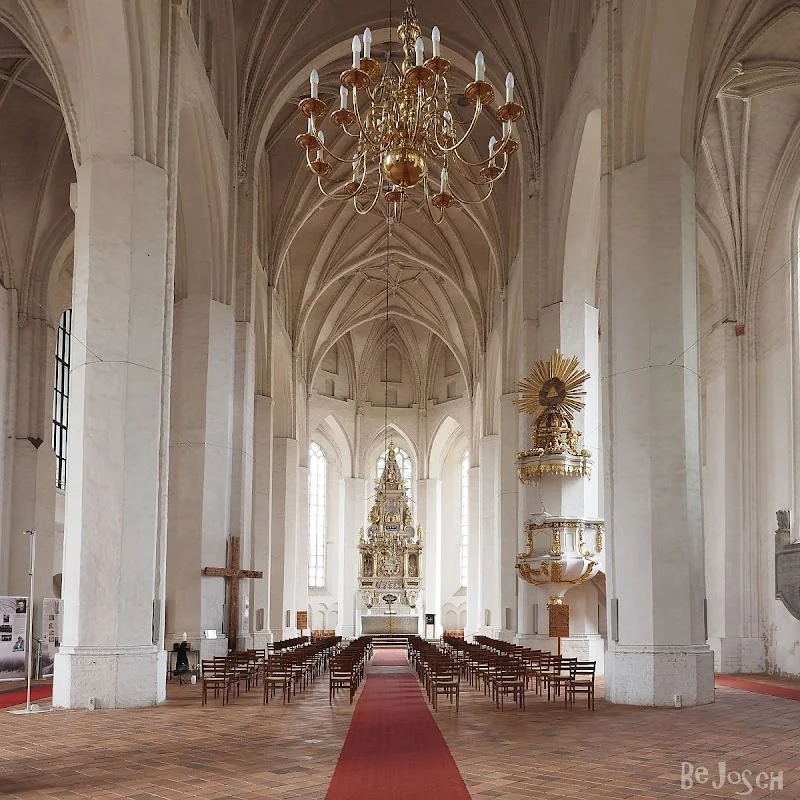
Architecturally, the Upper Church belongs to the large northeastern German city churches of Brick Gothic. The city of Cottbus describes it as a late Gothic, three-nave hall church made of brick and as the largest church in Lower Lusatia. The official architectural and historical image of the church community emphasizes the clear, high, and spacious effect of the interior as well as the special proportions of the building. The length is about three times the width, and the generous layout with strong pillars, high vaults, and a bright choir creates a surprisingly open impression upon entering. This is important for visitors because it explains why the church does not feel oppressive or heavy, even though it is medieval and large. Instead, a mixture of clarity, height, and spaciousness emerges, which distinguishes the Upper Church from many other city churches. ([st-nikolai-cottbus.de](https://www.st-nikolai-cottbus.de/die-oberkirche-st-nikolai/geschichte-und-architektur))
However, the history of the church is not just a sequence of construction phases but also of loss and reconstruction. The last war fire at the end of World War II led to severe destruction: vaults and roofs collapsed, almost all interior furnishings were lost, and the church had to be reorganized in many parts. The reconstruction consciously refrained from reconstructing older wooden fittings such as benches or side galleries. This resulted in the now-characteristic bright and open interior with a continuous white finish. This reduction gives the space dignity and concentration. Therefore, those visiting the Upper Church experience not only Gothic but also the visible history of a reclaimed city church that has grown from destruction, renewal, and modern community practice. ([st-nikolai-cottbus.de](https://www.st-nikolai-cottbus.de/die-oberkirche-st-nikolai/geschichte-und-architektur))
Services, Music, and Events at the Upper Church
The St. Nikolai Upper Church is not only a historical building but also a vibrant event venue. Services are held there on Sundays at 10 AM, and ecumenical services, musical services, and holiday services are also part of the regular profile. The church community and the city of Cottbus explicitly describe the church as a place of devotion, communication, and encounter. This is particularly relevant for SEO searches for services, programs, or events, as the Upper Church is not merely a tourist attraction but an active church space. The calendar regularly features events such as Easter services, Reformation Day concerts, end-of-week devotions from the Protestant Gymnasium, peace prayers, and various musical formats. This creates an annual cycle that connects liturgical, educational, and cultural uses. ([st-nikolai-cottbus.de](https://www.st-nikolai-cottbus.de/))
The Upper Church is particularly strong in the area of church music. The community's website features dedicated sections for organ music, choral music, choirs, organs, St. Nikolai music, brass choir, and the acoustic project. The city of Cottbus explicitly mentions oratorios, organ concerts, choral and chamber music, and even theater performances as cultural highlights at this location. Additionally, recurring formats such as Advent and Christmas music or concerts for the first Advent are included. For visitors, this means: those looking for concerts, music, or cultural programs will find a very wide range at the Upper Church. The church is thus not only an acoustic space but also a cultural center with a church character. Especially in a city like Cottbus, where the old town and community life are closely intertwined, this is an important part of its significance. ([st-nikolai-cottbus.de](https://www.st-nikolai-cottbus.de/))
Organizationally, church music is also clearly anchored on-site. The church music office is located in the tower of the Upper Church and is accessible via the staircase to the gallery. There, the contacts for musical projects are located, and the Friends of Musica Sacra e.V. support the musical work at the Upper Church. This structure explains why the church is regularly used as a venue for organ, choir, and ensemble projects. For visitors, this is interesting because it creates a lively exchange between liturgy, concerts, and community work. Therefore, those searching for the program of the St. Nikolai Upper Church will not find a single event but a continuous cultural presence throughout the church year. This is where the special attraction of this place lies. ([st-nikolai-cottbus.de](https://www.st-nikolai-cottbus.de/kontakte/kirchenmusik-buro))
Church Tower, Furnishings, and Special Works of Art
The church tower is one of the most striking features of the Upper Church. It is 55 meters high and can be climbed as an observation tower. The city of Cottbus and the church community emphasize the view over the green city that opens up from above. The construction history of the tower also involves much layering: an older lower section was retained, and later a baroque superstructure was added, which was reconstructed in 1988 after destruction in World War II. This connection of medieval substance with baroque form language and later restoration makes the tower very appealing for visitors, as it serves not only as a photographic motif but also as a historical document and viewpoint. Those planning the ascent will experience the church not only from the outside but also in its urban context with the old town, squares, and street network. ([de.wikipedia.org](https://de.wikipedia.org/wiki/Oberkirche_St._Nikolai))
Inside, the spacious hall is particularly impressive. Strong octagonal pillars support the high stepped hall, along with rich vault forms and a special elevation of the nave, which is described as unique in Lower Lusatia. The city also highlights star vaults, a richly decorated pulpit, and the high altar. This fits well with the effect of the space: bright, open, and yet densely art-historically significant. Especially when light falls through the windows, a calm, almost museum-like atmosphere is created without the church losing its liturgical character. Visitors interested in sacred architecture will find here not only beautiful views but also an exemplary place for late Gothic spatial effects in Brandenburg. ([cottbus.de](https://cottbus.de/kultur-und-tourismus/kirchen/oberkirche-st-nikolai/))
The high altar is one of the most significant works of art in the city. The church community attributes it to Andreas Schultze and describes it as a work from the 17th century; the city refers to a high altar from 1664 with alabaster carvings. What is certain is that the altar is baroque, visually striking, and of central importance to the church. Additional furnishings include the baroque pulpit, tomb monuments from the 16th and 17th centuries, and the organ as the acoustic centerpiece of the space. The main organ has a baroque prospect from 1759, the organ work in its current form dates from 1984 and has 50 registers. In the Bonhoeffer Chapel, there is also a Vleugels organ, and a small organ is located in the sacristy. This makes the Upper Church particularly interesting for music lovers and organ tourists. ([st-nikolai-cottbus.de](https://www.st-nikolai-cottbus.de/die-oberkirche-st-nikolai/geschichte-und-architektur))
Another special element is the antependium at the high altar, which the church community extensively describes as a sign of hope, resurrection, and remembrance. The page emphasizes the connection between Christian imagery, Jewish history, and the proximity to the Jewish community. This layering is remarkable for the Upper Church because it shows that the place not only works historically and musically but also reflects theologically and socially. The church thus does not stop at architecture but connects art, faith, and contemporary relevance. Therefore, those interested in the substantive depth of a city church will discover here much more than just a beautiful altar space: one encounters a place that consciously remembers history while remaining open for today's community. ([st-nikolai-cottbus.de](https://www.st-nikolai-cottbus.de/die-oberkirche-st-nikolai/das-antependium-am-hochaltar))
Weekly Market, Old Town, and Photos around the Upper Church
For many visitors, the location of the Upper Church is at least as interesting as the building itself. Upper Church Square is a central urban place where the weekly market traditionally takes place. According to CottbusTourismus, on Tuesdays and Saturdays, up to 40 vendors come to the city center, directly in the shadow of St. Nikolai Upper Church. This is particularly useful for search intents related to Upper Church Square, photos, and surroundings, as it directly connects church and city life. So, those searching for the church will find not only a monument but a spatial structure shaped by the market, passersby, and the daily life of the old town. This creates the typical impression of Cottbus: historical, vibrant, approachable. ([cottbus-tourismus.de](https://cottbus-tourismus.de/de/sommer/cottbus-entdecken/einkaufen-und-parken/wochenmaerkte-verkaufsoffene-sonntage/artikel-wochenmarkt_auf_dem_oberkirchplatz_di_sa_-90.html?utm_source=openai))
The surroundings of the church are also ideal for a short walk. The city describes the Upper Church as a landmark of the Cottbus old town, and the ADAC description mentions Upper Church Square near the Old Market with baroque townhouses and the Pharmacy Museum. This makes it clear that a church visit can be easily combined with a stroll through the old town. Those wanting to take pictures will get a strong mix of brick facade, tower, square space, and historical neighborhood. Even though the church itself is already very present, its integration into the square and the market makes it even stronger as part of the urban whole. For search queries like photos, old town, or sights, this environment is crucial. ([cottbus.de](https://cottbus.de/kultur-und-tourismus/kirchen/oberkirche-st-nikolai/))
In the end, St. Nikolai Upper Church shows why it is so highly sought after in Cottbus: it is historically significant, architecturally outstanding, culturally active, and firmly anchored in the daily life of the city. Those searching for opening hours, parking, history, services, or concerts will find here a true multipurpose location in the best sense of the word, albeit with a clearly ecclesiastical and heritage profile. That is precisely why it is worth planning the visit not just as a quick photo stop but as a conscious experience between the old town, tower, music, and market life. The Upper Church is a place that one visits once for the architecture, a second time for the music, and often a third time simply because the open church in the middle of Cottbus is so inviting. ([st-nikolai-cottbus.de](https://www.st-nikolai-cottbus.de/))
Sources:
- St. Nikolai Cottbus Church Community - Official Website
- St. Nikolai Upper Church - History and Architecture
- Church Music Office - St. Nikolai Upper Church
- The Antependium at the High Altar - St. Nikolai Upper Church
- City of Cottbus - St. Nikolai Upper Church
- CottbusTourismus - Parking Options in Cottbus
- CottbusTourismus - Weekly Market at Upper Church Square (Tue/Sat)
Show moreShow less
St. Nikolai Upper Church | Opening Hours & Parking
The St. Nikolai Upper Church is one of the most prominent places in Cottbus, impressively combining city history, sacred architecture, musical life, and everyday accessibility. When entering the old town around the Upper Church Square, one stands before a late Gothic brick church that sees itself as an open church and immediately presents its high tower, clear forms, and bright interior. The Upper Church is not only a monument of the city but also a place where services, devotions, concerts, and encounters naturally coexist. This mixture makes it particularly interesting for visitors: it is art historically significant, spiritually vibrant, and very present in the daily life of the city. The church community points out daily opening hours, the city of Cottbus describes the building as the largest place of worship in Lower Lusatia, and the surroundings are shaped by Upper Church Square, the weekly market, and the old town. ([cottbus.de](https://cottbus.de/kultur-und-tourismus/kirchen/oberkirche-st-nikolai/))
Opening Hours and Visiting the St. Nikolai Upper Church
The good news first: The St. Nikolai Upper Church is accessible daily as an open church. According to the church community, the summer hours are from 10 AM to 5 PM, and in winter from 11 AM to 4 PM. The book table in the church is not only a place for information but also an important part of visitor reception. Volunteer staff help with orientation, keep the church open, and are often available for tourist inquiries. The address at Upper Church Square 12 makes the location clear and easy to find, as the church is located directly in the historical center of Cottbus. So, anyone planning a tour of the old town can easily incorporate the Upper Church into their walk and, with a bit of luck, find a quiet moment in the nave before more activity returns to the square. The daily opening model shows that the Upper Church is not understood as a secluded museum object but as an open urban space. ([st-nikolai-cottbus.de](https://www.st-nikolai-cottbus.de/))
For visiting, it is important to know that regular visits are not possible during services. This is especially relevant if one stops by spontaneously and wants to experience the space in peace, not just take a quick look inside. According to the community, Sunday services begin at 10 AM, which further shows the Upper Church as an active community location. For visitors, this means: It is best to visit either before or after the liturgical times or on a weekday within the opening hours. Those wishing to visit the tower should also keep an eye on ongoing events, as the tower ascent is tied to the open times outside of events. This interplay of reliable visiting hours and vibrant use makes the Upper Church particularly attractive for short visits, city tours, and targeted photo stops. ([st-nikolai-cottbus.de](https://www.st-nikolai-cottbus.de/))
The direct urban context also contributes to practical visiting arguments. The weekly market traditionally takes place around Upper Church Square, on Tuesdays and Saturdays with up to 40 vendors in the city center. This allows a church visit to be easily combined with shopping, a café break, or a stroll through the old town. Thus, the Upper Church is not only a quiet place of devotion but also a natural destination in the daily life of the city. Those planning a short stay in Cottbus can experience architecture, history, and urban culture in concentrated form within a few minutes. This is exactly the kind of information relevant for inquiries about opening hours, visits, photos, and spontaneous visits: The church is accessible, open, and clearly integrated into the daily life of the city. ([cottbus-tourismus.de](https://cottbus-tourismus.de/de/sommer/cottbus-entdecken/einkaufen-und-parken/wochenmaerkte-verkaufsoffene-sonntage/artikel-wochenmarkt_auf_dem_oberkirchplatz_di_sa_-90.html?utm_source=openai))
Parking and Access to Upper Church Square in Cottbus
Those arriving by car will find very useful parking options in the immediate vicinity of the Upper Church. The CottbusTourismus portal mentions the Upper Church Square parking lot on Friedrich-Ludwig-Jahn-Straße with 210 parking spaces and 24-hour opening. For a city center location, this is an important advantage, as it allows planning a church visit without a long search for parking. At the same time, the square is located in the historical center, so one is immediately surrounded by the Old Market, Monastery Street, and Upper Church Square after getting out of the car. This makes the location very convenient for visitors: you park centrally and reach the church on foot in just a few steps. For those searching for parking or the Upper Church parking lot, this is very concrete guidance. ([cottbus-tourismus.de](https://cottbus-tourismus.de/de/cottbus-entdecken/einkaufen-und-parken/parkmoeglichkeiten.html?utm_source=openai))
The city of Cottbus additionally points out that cashless payment at parking meters was sometimes required at the parking lots near the Upper Church and on Friedrich-Ludwig-Jahn-Straße. While this is a detailed note from the city's traffic and parking information, it also shows that the parking area around Upper Church Square is actively managed and regularly organized by the city. Therefore, it is always advisable for visitors to take a quick look at current signage or parking information on-site. Those making their way can easily target the Upper Church as part of a tour of the old town: From Upper Church Square, one can directly reach the church building, the weekly market, and other destinations in the city center. The access is thus not complicated but rather typical of an inner-city area: central, well-signposted, and with several options for parking the vehicle. ([cottbus.de](https://cottbus.de/allgemein/eingeschraenkte-bargeldzahlung-an-parkscheinautomaten-in-cottbus-chosebuz/?utm_source=openai))
For additional practical orientation, the surrounding area itself provides helpful information. The city of Cottbus mentions a barrier-free restroom facility at Upper Church Square / Monastery Street, which can be very helpful for longer city stays or visits with children. Especially when wanting to connect the market, church, and old town, such details are often crucial. The proximity to the Old Market with its baroque townhouses and the Pharmacy Museum also supports the view that the Upper Church should not be seen in isolation but as part of a compact city center ensemble. Therefore, those exploring Cottbus can park without detours, visit the church, perhaps take in the tower, and then continue through the old town. For search intents related to parking, access, and practical tips, this is exactly the kind of information that makes the visit planable. ([cottbus.de](https://cottbus.de/aktuelle-informationen-der-bereiche/beauftragte/wc-orte-fuer-behinderte-in-cottbus/?utm_source=openai))
History and Brick Gothic of the St. Nikolai Upper Church
The history of the Upper Church dates back far into the past. The church community describes the site as documented as early as 1156, making it the earliest documented church in Lower Lusatia. Renovations also uncovered remnants of a hall church from the second half of the 13th century. The current building then developed in the 15th century: The beginning of the new hall church likely lies in the first half of the century, the choir was built first, and then the nave and extensions were continued. A city fire in 1468 damaged the construction during its erection, and later further changes followed after a fire in 1600. With the Reformation, the church became Protestant in 1537; in 1572 it received the additional designation Upper Church to mark its prominent position compared to the neighboring monastery church. This is not only church history but also city history in condensed form. ([st-nikolai-cottbus.de](https://www.st-nikolai-cottbus.de/die-oberkirche-st-nikolai/geschichte-und-architektur))
Architecturally, the Upper Church belongs to the large northeastern German city churches of Brick Gothic. The city of Cottbus describes it as a late Gothic, three-nave hall church made of brick and as the largest church in Lower Lusatia. The official architectural and historical image of the church community emphasizes the clear, high, and spacious effect of the interior as well as the special proportions of the building. The length is about three times the width, and the generous layout with strong pillars, high vaults, and a bright choir creates a surprisingly open impression upon entering. This is important for visitors because it explains why the church does not feel oppressive or heavy, even though it is medieval and large. Instead, a mixture of clarity, height, and spaciousness emerges, which distinguishes the Upper Church from many other city churches. ([st-nikolai-cottbus.de](https://www.st-nikolai-cottbus.de/die-oberkirche-st-nikolai/geschichte-und-architektur))
However, the history of the church is not just a sequence of construction phases but also of loss and reconstruction. The last war fire at the end of World War II led to severe destruction: vaults and roofs collapsed, almost all interior furnishings were lost, and the church had to be reorganized in many parts. The reconstruction consciously refrained from reconstructing older wooden fittings such as benches or side galleries. This resulted in the now-characteristic bright and open interior with a continuous white finish. This reduction gives the space dignity and concentration. Therefore, those visiting the Upper Church experience not only Gothic but also the visible history of a reclaimed city church that has grown from destruction, renewal, and modern community practice. ([st-nikolai-cottbus.de](https://www.st-nikolai-cottbus.de/die-oberkirche-st-nikolai/geschichte-und-architektur))
Services, Music, and Events at the Upper Church
The St. Nikolai Upper Church is not only a historical building but also a vibrant event venue. Services are held there on Sundays at 10 AM, and ecumenical services, musical services, and holiday services are also part of the regular profile. The church community and the city of Cottbus explicitly describe the church as a place of devotion, communication, and encounter. This is particularly relevant for SEO searches for services, programs, or events, as the Upper Church is not merely a tourist attraction but an active church space. The calendar regularly features events such as Easter services, Reformation Day concerts, end-of-week devotions from the Protestant Gymnasium, peace prayers, and various musical formats. This creates an annual cycle that connects liturgical, educational, and cultural uses. ([st-nikolai-cottbus.de](https://www.st-nikolai-cottbus.de/))
The Upper Church is particularly strong in the area of church music. The community's website features dedicated sections for organ music, choral music, choirs, organs, St. Nikolai music, brass choir, and the acoustic project. The city of Cottbus explicitly mentions oratorios, organ concerts, choral and chamber music, and even theater performances as cultural highlights at this location. Additionally, recurring formats such as Advent and Christmas music or concerts for the first Advent are included. For visitors, this means: those looking for concerts, music, or cultural programs will find a very wide range at the Upper Church. The church is thus not only an acoustic space but also a cultural center with a church character. Especially in a city like Cottbus, where the old town and community life are closely intertwined, this is an important part of its significance. ([st-nikolai-cottbus.de](https://www.st-nikolai-cottbus.de/))
Organizationally, church music is also clearly anchored on-site. The church music office is located in the tower of the Upper Church and is accessible via the staircase to the gallery. There, the contacts for musical projects are located, and the Friends of Musica Sacra e.V. support the musical work at the Upper Church. This structure explains why the church is regularly used as a venue for organ, choir, and ensemble projects. For visitors, this is interesting because it creates a lively exchange between liturgy, concerts, and community work. Therefore, those searching for the program of the St. Nikolai Upper Church will not find a single event but a continuous cultural presence throughout the church year. This is where the special attraction of this place lies. ([st-nikolai-cottbus.de](https://www.st-nikolai-cottbus.de/kontakte/kirchenmusik-buro))
Church Tower, Furnishings, and Special Works of Art
The church tower is one of the most striking features of the Upper Church. It is 55 meters high and can be climbed as an observation tower. The city of Cottbus and the church community emphasize the view over the green city that opens up from above. The construction history of the tower also involves much layering: an older lower section was retained, and later a baroque superstructure was added, which was reconstructed in 1988 after destruction in World War II. This connection of medieval substance with baroque form language and later restoration makes the tower very appealing for visitors, as it serves not only as a photographic motif but also as a historical document and viewpoint. Those planning the ascent will experience the church not only from the outside but also in its urban context with the old town, squares, and street network. ([de.wikipedia.org](https://de.wikipedia.org/wiki/Oberkirche_St._Nikolai))
Inside, the spacious hall is particularly impressive. Strong octagonal pillars support the high stepped hall, along with rich vault forms and a special elevation of the nave, which is described as unique in Lower Lusatia. The city also highlights star vaults, a richly decorated pulpit, and the high altar. This fits well with the effect of the space: bright, open, and yet densely art-historically significant. Especially when light falls through the windows, a calm, almost museum-like atmosphere is created without the church losing its liturgical character. Visitors interested in sacred architecture will find here not only beautiful views but also an exemplary place for late Gothic spatial effects in Brandenburg. ([cottbus.de](https://cottbus.de/kultur-und-tourismus/kirchen/oberkirche-st-nikolai/))
The high altar is one of the most significant works of art in the city. The church community attributes it to Andreas Schultze and describes it as a work from the 17th century; the city refers to a high altar from 1664 with alabaster carvings. What is certain is that the altar is baroque, visually striking, and of central importance to the church. Additional furnishings include the baroque pulpit, tomb monuments from the 16th and 17th centuries, and the organ as the acoustic centerpiece of the space. The main organ has a baroque prospect from 1759, the organ work in its current form dates from 1984 and has 50 registers. In the Bonhoeffer Chapel, there is also a Vleugels organ, and a small organ is located in the sacristy. This makes the Upper Church particularly interesting for music lovers and organ tourists. ([st-nikolai-cottbus.de](https://www.st-nikolai-cottbus.de/die-oberkirche-st-nikolai/geschichte-und-architektur))
Another special element is the antependium at the high altar, which the church community extensively describes as a sign of hope, resurrection, and remembrance. The page emphasizes the connection between Christian imagery, Jewish history, and the proximity to the Jewish community. This layering is remarkable for the Upper Church because it shows that the place not only works historically and musically but also reflects theologically and socially. The church thus does not stop at architecture but connects art, faith, and contemporary relevance. Therefore, those interested in the substantive depth of a city church will discover here much more than just a beautiful altar space: one encounters a place that consciously remembers history while remaining open for today's community. ([st-nikolai-cottbus.de](https://www.st-nikolai-cottbus.de/die-oberkirche-st-nikolai/das-antependium-am-hochaltar))
Weekly Market, Old Town, and Photos around the Upper Church
For many visitors, the location of the Upper Church is at least as interesting as the building itself. Upper Church Square is a central urban place where the weekly market traditionally takes place. According to CottbusTourismus, on Tuesdays and Saturdays, up to 40 vendors come to the city center, directly in the shadow of St. Nikolai Upper Church. This is particularly useful for search intents related to Upper Church Square, photos, and surroundings, as it directly connects church and city life. So, those searching for the church will find not only a monument but a spatial structure shaped by the market, passersby, and the daily life of the old town. This creates the typical impression of Cottbus: historical, vibrant, approachable. ([cottbus-tourismus.de](https://cottbus-tourismus.de/de/sommer/cottbus-entdecken/einkaufen-und-parken/wochenmaerkte-verkaufsoffene-sonntage/artikel-wochenmarkt_auf_dem_oberkirchplatz_di_sa_-90.html?utm_source=openai))
The surroundings of the church are also ideal for a short walk. The city describes the Upper Church as a landmark of the Cottbus old town, and the ADAC description mentions Upper Church Square near the Old Market with baroque townhouses and the Pharmacy Museum. This makes it clear that a church visit can be easily combined with a stroll through the old town. Those wanting to take pictures will get a strong mix of brick facade, tower, square space, and historical neighborhood. Even though the church itself is already very present, its integration into the square and the market makes it even stronger as part of the urban whole. For search queries like photos, old town, or sights, this environment is crucial. ([cottbus.de](https://cottbus.de/kultur-und-tourismus/kirchen/oberkirche-st-nikolai/))
In the end, St. Nikolai Upper Church shows why it is so highly sought after in Cottbus: it is historically significant, architecturally outstanding, culturally active, and firmly anchored in the daily life of the city. Those searching for opening hours, parking, history, services, or concerts will find here a true multipurpose location in the best sense of the word, albeit with a clearly ecclesiastical and heritage profile. That is precisely why it is worth planning the visit not just as a quick photo stop but as a conscious experience between the old town, tower, music, and market life. The Upper Church is a place that one visits once for the architecture, a second time for the music, and often a third time simply because the open church in the middle of Cottbus is so inviting. ([st-nikolai-cottbus.de](https://www.st-nikolai-cottbus.de/))
Sources:
- St. Nikolai Cottbus Church Community - Official Website
- St. Nikolai Upper Church - History and Architecture
- Church Music Office - St. Nikolai Upper Church
- The Antependium at the High Altar - St. Nikolai Upper Church
- City of Cottbus - St. Nikolai Upper Church
- CottbusTourismus - Parking Options in Cottbus
- CottbusTourismus - Weekly Market at Upper Church Square (Tue/Sat)
St. Nikolai Upper Church | Opening Hours & Parking
The St. Nikolai Upper Church is one of the most prominent places in Cottbus, impressively combining city history, sacred architecture, musical life, and everyday accessibility. When entering the old town around the Upper Church Square, one stands before a late Gothic brick church that sees itself as an open church and immediately presents its high tower, clear forms, and bright interior. The Upper Church is not only a monument of the city but also a place where services, devotions, concerts, and encounters naturally coexist. This mixture makes it particularly interesting for visitors: it is art historically significant, spiritually vibrant, and very present in the daily life of the city. The church community points out daily opening hours, the city of Cottbus describes the building as the largest place of worship in Lower Lusatia, and the surroundings are shaped by Upper Church Square, the weekly market, and the old town. ([cottbus.de](https://cottbus.de/kultur-und-tourismus/kirchen/oberkirche-st-nikolai/))
Opening Hours and Visiting the St. Nikolai Upper Church
The good news first: The St. Nikolai Upper Church is accessible daily as an open church. According to the church community, the summer hours are from 10 AM to 5 PM, and in winter from 11 AM to 4 PM. The book table in the church is not only a place for information but also an important part of visitor reception. Volunteer staff help with orientation, keep the church open, and are often available for tourist inquiries. The address at Upper Church Square 12 makes the location clear and easy to find, as the church is located directly in the historical center of Cottbus. So, anyone planning a tour of the old town can easily incorporate the Upper Church into their walk and, with a bit of luck, find a quiet moment in the nave before more activity returns to the square. The daily opening model shows that the Upper Church is not understood as a secluded museum object but as an open urban space. ([st-nikolai-cottbus.de](https://www.st-nikolai-cottbus.de/))
For visiting, it is important to know that regular visits are not possible during services. This is especially relevant if one stops by spontaneously and wants to experience the space in peace, not just take a quick look inside. According to the community, Sunday services begin at 10 AM, which further shows the Upper Church as an active community location. For visitors, this means: It is best to visit either before or after the liturgical times or on a weekday within the opening hours. Those wishing to visit the tower should also keep an eye on ongoing events, as the tower ascent is tied to the open times outside of events. This interplay of reliable visiting hours and vibrant use makes the Upper Church particularly attractive for short visits, city tours, and targeted photo stops. ([st-nikolai-cottbus.de](https://www.st-nikolai-cottbus.de/))
The direct urban context also contributes to practical visiting arguments. The weekly market traditionally takes place around Upper Church Square, on Tuesdays and Saturdays with up to 40 vendors in the city center. This allows a church visit to be easily combined with shopping, a café break, or a stroll through the old town. Thus, the Upper Church is not only a quiet place of devotion but also a natural destination in the daily life of the city. Those planning a short stay in Cottbus can experience architecture, history, and urban culture in concentrated form within a few minutes. This is exactly the kind of information relevant for inquiries about opening hours, visits, photos, and spontaneous visits: The church is accessible, open, and clearly integrated into the daily life of the city. ([cottbus-tourismus.de](https://cottbus-tourismus.de/de/sommer/cottbus-entdecken/einkaufen-und-parken/wochenmaerkte-verkaufsoffene-sonntage/artikel-wochenmarkt_auf_dem_oberkirchplatz_di_sa_-90.html?utm_source=openai))
Parking and Access to Upper Church Square in Cottbus
Those arriving by car will find very useful parking options in the immediate vicinity of the Upper Church. The CottbusTourismus portal mentions the Upper Church Square parking lot on Friedrich-Ludwig-Jahn-Straße with 210 parking spaces and 24-hour opening. For a city center location, this is an important advantage, as it allows planning a church visit without a long search for parking. At the same time, the square is located in the historical center, so one is immediately surrounded by the Old Market, Monastery Street, and Upper Church Square after getting out of the car. This makes the location very convenient for visitors: you park centrally and reach the church on foot in just a few steps. For those searching for parking or the Upper Church parking lot, this is very concrete guidance. ([cottbus-tourismus.de](https://cottbus-tourismus.de/de/cottbus-entdecken/einkaufen-und-parken/parkmoeglichkeiten.html?utm_source=openai))
The city of Cottbus additionally points out that cashless payment at parking meters was sometimes required at the parking lots near the Upper Church and on Friedrich-Ludwig-Jahn-Straße. While this is a detailed note from the city's traffic and parking information, it also shows that the parking area around Upper Church Square is actively managed and regularly organized by the city. Therefore, it is always advisable for visitors to take a quick look at current signage or parking information on-site. Those making their way can easily target the Upper Church as part of a tour of the old town: From Upper Church Square, one can directly reach the church building, the weekly market, and other destinations in the city center. The access is thus not complicated but rather typical of an inner-city area: central, well-signposted, and with several options for parking the vehicle. ([cottbus.de](https://cottbus.de/allgemein/eingeschraenkte-bargeldzahlung-an-parkscheinautomaten-in-cottbus-chosebuz/?utm_source=openai))
For additional practical orientation, the surrounding area itself provides helpful information. The city of Cottbus mentions a barrier-free restroom facility at Upper Church Square / Monastery Street, which can be very helpful for longer city stays or visits with children. Especially when wanting to connect the market, church, and old town, such details are often crucial. The proximity to the Old Market with its baroque townhouses and the Pharmacy Museum also supports the view that the Upper Church should not be seen in isolation but as part of a compact city center ensemble. Therefore, those exploring Cottbus can park without detours, visit the church, perhaps take in the tower, and then continue through the old town. For search intents related to parking, access, and practical tips, this is exactly the kind of information that makes the visit planable. ([cottbus.de](https://cottbus.de/aktuelle-informationen-der-bereiche/beauftragte/wc-orte-fuer-behinderte-in-cottbus/?utm_source=openai))
History and Brick Gothic of the St. Nikolai Upper Church
The history of the Upper Church dates back far into the past. The church community describes the site as documented as early as 1156, making it the earliest documented church in Lower Lusatia. Renovations also uncovered remnants of a hall church from the second half of the 13th century. The current building then developed in the 15th century: The beginning of the new hall church likely lies in the first half of the century, the choir was built first, and then the nave and extensions were continued. A city fire in 1468 damaged the construction during its erection, and later further changes followed after a fire in 1600. With the Reformation, the church became Protestant in 1537; in 1572 it received the additional designation Upper Church to mark its prominent position compared to the neighboring monastery church. This is not only church history but also city history in condensed form. ([st-nikolai-cottbus.de](https://www.st-nikolai-cottbus.de/die-oberkirche-st-nikolai/geschichte-und-architektur))
Architecturally, the Upper Church belongs to the large northeastern German city churches of Brick Gothic. The city of Cottbus describes it as a late Gothic, three-nave hall church made of brick and as the largest church in Lower Lusatia. The official architectural and historical image of the church community emphasizes the clear, high, and spacious effect of the interior as well as the special proportions of the building. The length is about three times the width, and the generous layout with strong pillars, high vaults, and a bright choir creates a surprisingly open impression upon entering. This is important for visitors because it explains why the church does not feel oppressive or heavy, even though it is medieval and large. Instead, a mixture of clarity, height, and spaciousness emerges, which distinguishes the Upper Church from many other city churches. ([st-nikolai-cottbus.de](https://www.st-nikolai-cottbus.de/die-oberkirche-st-nikolai/geschichte-und-architektur))
However, the history of the church is not just a sequence of construction phases but also of loss and reconstruction. The last war fire at the end of World War II led to severe destruction: vaults and roofs collapsed, almost all interior furnishings were lost, and the church had to be reorganized in many parts. The reconstruction consciously refrained from reconstructing older wooden fittings such as benches or side galleries. This resulted in the now-characteristic bright and open interior with a continuous white finish. This reduction gives the space dignity and concentration. Therefore, those visiting the Upper Church experience not only Gothic but also the visible history of a reclaimed city church that has grown from destruction, renewal, and modern community practice. ([st-nikolai-cottbus.de](https://www.st-nikolai-cottbus.de/die-oberkirche-st-nikolai/geschichte-und-architektur))
Services, Music, and Events at the Upper Church
The St. Nikolai Upper Church is not only a historical building but also a vibrant event venue. Services are held there on Sundays at 10 AM, and ecumenical services, musical services, and holiday services are also part of the regular profile. The church community and the city of Cottbus explicitly describe the church as a place of devotion, communication, and encounter. This is particularly relevant for SEO searches for services, programs, or events, as the Upper Church is not merely a tourist attraction but an active church space. The calendar regularly features events such as Easter services, Reformation Day concerts, end-of-week devotions from the Protestant Gymnasium, peace prayers, and various musical formats. This creates an annual cycle that connects liturgical, educational, and cultural uses. ([st-nikolai-cottbus.de](https://www.st-nikolai-cottbus.de/))
The Upper Church is particularly strong in the area of church music. The community's website features dedicated sections for organ music, choral music, choirs, organs, St. Nikolai music, brass choir, and the acoustic project. The city of Cottbus explicitly mentions oratorios, organ concerts, choral and chamber music, and even theater performances as cultural highlights at this location. Additionally, recurring formats such as Advent and Christmas music or concerts for the first Advent are included. For visitors, this means: those looking for concerts, music, or cultural programs will find a very wide range at the Upper Church. The church is thus not only an acoustic space but also a cultural center with a church character. Especially in a city like Cottbus, where the old town and community life are closely intertwined, this is an important part of its significance. ([st-nikolai-cottbus.de](https://www.st-nikolai-cottbus.de/))
Organizationally, church music is also clearly anchored on-site. The church music office is located in the tower of the Upper Church and is accessible via the staircase to the gallery. There, the contacts for musical projects are located, and the Friends of Musica Sacra e.V. support the musical work at the Upper Church. This structure explains why the church is regularly used as a venue for organ, choir, and ensemble projects. For visitors, this is interesting because it creates a lively exchange between liturgy, concerts, and community work. Therefore, those searching for the program of the St. Nikolai Upper Church will not find a single event but a continuous cultural presence throughout the church year. This is where the special attraction of this place lies. ([st-nikolai-cottbus.de](https://www.st-nikolai-cottbus.de/kontakte/kirchenmusik-buro))
Church Tower, Furnishings, and Special Works of Art
The church tower is one of the most striking features of the Upper Church. It is 55 meters high and can be climbed as an observation tower. The city of Cottbus and the church community emphasize the view over the green city that opens up from above. The construction history of the tower also involves much layering: an older lower section was retained, and later a baroque superstructure was added, which was reconstructed in 1988 after destruction in World War II. This connection of medieval substance with baroque form language and later restoration makes the tower very appealing for visitors, as it serves not only as a photographic motif but also as a historical document and viewpoint. Those planning the ascent will experience the church not only from the outside but also in its urban context with the old town, squares, and street network. ([de.wikipedia.org](https://de.wikipedia.org/wiki/Oberkirche_St._Nikolai))
Inside, the spacious hall is particularly impressive. Strong octagonal pillars support the high stepped hall, along with rich vault forms and a special elevation of the nave, which is described as unique in Lower Lusatia. The city also highlights star vaults, a richly decorated pulpit, and the high altar. This fits well with the effect of the space: bright, open, and yet densely art-historically significant. Especially when light falls through the windows, a calm, almost museum-like atmosphere is created without the church losing its liturgical character. Visitors interested in sacred architecture will find here not only beautiful views but also an exemplary place for late Gothic spatial effects in Brandenburg. ([cottbus.de](https://cottbus.de/kultur-und-tourismus/kirchen/oberkirche-st-nikolai/))
The high altar is one of the most significant works of art in the city. The church community attributes it to Andreas Schultze and describes it as a work from the 17th century; the city refers to a high altar from 1664 with alabaster carvings. What is certain is that the altar is baroque, visually striking, and of central importance to the church. Additional furnishings include the baroque pulpit, tomb monuments from the 16th and 17th centuries, and the organ as the acoustic centerpiece of the space. The main organ has a baroque prospect from 1759, the organ work in its current form dates from 1984 and has 50 registers. In the Bonhoeffer Chapel, there is also a Vleugels organ, and a small organ is located in the sacristy. This makes the Upper Church particularly interesting for music lovers and organ tourists. ([st-nikolai-cottbus.de](https://www.st-nikolai-cottbus.de/die-oberkirche-st-nikolai/geschichte-und-architektur))
Another special element is the antependium at the high altar, which the church community extensively describes as a sign of hope, resurrection, and remembrance. The page emphasizes the connection between Christian imagery, Jewish history, and the proximity to the Jewish community. This layering is remarkable for the Upper Church because it shows that the place not only works historically and musically but also reflects theologically and socially. The church thus does not stop at architecture but connects art, faith, and contemporary relevance. Therefore, those interested in the substantive depth of a city church will discover here much more than just a beautiful altar space: one encounters a place that consciously remembers history while remaining open for today's community. ([st-nikolai-cottbus.de](https://www.st-nikolai-cottbus.de/die-oberkirche-st-nikolai/das-antependium-am-hochaltar))
Weekly Market, Old Town, and Photos around the Upper Church
For many visitors, the location of the Upper Church is at least as interesting as the building itself. Upper Church Square is a central urban place where the weekly market traditionally takes place. According to CottbusTourismus, on Tuesdays and Saturdays, up to 40 vendors come to the city center, directly in the shadow of St. Nikolai Upper Church. This is particularly useful for search intents related to Upper Church Square, photos, and surroundings, as it directly connects church and city life. So, those searching for the church will find not only a monument but a spatial structure shaped by the market, passersby, and the daily life of the old town. This creates the typical impression of Cottbus: historical, vibrant, approachable. ([cottbus-tourismus.de](https://cottbus-tourismus.de/de/sommer/cottbus-entdecken/einkaufen-und-parken/wochenmaerkte-verkaufsoffene-sonntage/artikel-wochenmarkt_auf_dem_oberkirchplatz_di_sa_-90.html?utm_source=openai))
The surroundings of the church are also ideal for a short walk. The city describes the Upper Church as a landmark of the Cottbus old town, and the ADAC description mentions Upper Church Square near the Old Market with baroque townhouses and the Pharmacy Museum. This makes it clear that a church visit can be easily combined with a stroll through the old town. Those wanting to take pictures will get a strong mix of brick facade, tower, square space, and historical neighborhood. Even though the church itself is already very present, its integration into the square and the market makes it even stronger as part of the urban whole. For search queries like photos, old town, or sights, this environment is crucial. ([cottbus.de](https://cottbus.de/kultur-und-tourismus/kirchen/oberkirche-st-nikolai/))
In the end, St. Nikolai Upper Church shows why it is so highly sought after in Cottbus: it is historically significant, architecturally outstanding, culturally active, and firmly anchored in the daily life of the city. Those searching for opening hours, parking, history, services, or concerts will find here a true multipurpose location in the best sense of the word, albeit with a clearly ecclesiastical and heritage profile. That is precisely why it is worth planning the visit not just as a quick photo stop but as a conscious experience between the old town, tower, music, and market life. The Upper Church is a place that one visits once for the architecture, a second time for the music, and often a third time simply because the open church in the middle of Cottbus is so inviting. ([st-nikolai-cottbus.de](https://www.st-nikolai-cottbus.de/))
Sources:
- St. Nikolai Cottbus Church Community - Official Website
- St. Nikolai Upper Church - History and Architecture
- Church Music Office - St. Nikolai Upper Church
- The Antependium at the High Altar - St. Nikolai Upper Church
- City of Cottbus - St. Nikolai Upper Church
- CottbusTourismus - Parking Options in Cottbus
- CottbusTourismus - Weekly Market at Upper Church Square (Tue/Sat)
Frequently Asked Questions
Reviews
Francesco Prestini
2. August 2025
Impressive church
Doğa
26. December 2024
Nice church.
Taurus C.
2. August 2024
We were there on a Sunday and found a parking spot right next to the pretty church. Since it was open, we naturally went inside. It's quite lovely from the outside. The interior is bright and airy. I found it friendly and inviting. Worth seeing.
Piotr Piotrowski
31. May 2024
A beautiful Gothic church, completely destroyed during World War II. It was decided to rebuild it, and the original furnishings include a Mannerist altar. Inside, there are numerous preserved tombstones, magnificent epigraphic works. Inside, there's a Baroque baptismal font. Worth seeing.
Hans-Peter Staps
28. September 2024
The Upper Church in Cottbus is a late Gothic brick church in the city center. It is the largest medieval church in Lower Lusatia. It has been a listed building since the 1970s.