Passau
Bräugasse 17, 94032 Passau, Deutschland
MMK Passau - Museum of Modern Art Wörlen Passau | Museum & Café
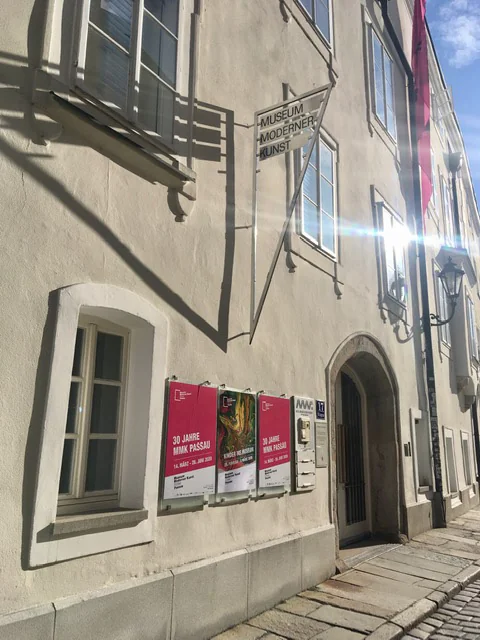
The MMK Passau – Museum of Modern Art Wörlen – combines modern and contemporary art with the special atmosphere of a historic old town ensemble. Located at Bräugasse 17, just a few minutes' walk from the Danube, Inn, and Ilz rivers, visitors experience art from the 20th and 21st centuries in lovingly restored spaces, as well as precisely curated temporary exhibitions. The core of the collection traces back to the painter and graphic artist Georg Philipp Wörlen, whose work and artistic network continue to shape the DNA of the institution today. The museum was founded in 1990 by architect and art patron Hanns Egon Wörlen, who acquired the building in the late 1980s and had it restored in accordance with heritage preservation standards. Today, guests can expect a clearly structured visitor service with reliable opening hours, fair admission prices, and a rich educational program of guided tours and workshops. Access is convenient by bus and car; parking is available at the Römerplatz parking garage, which serves as the main access point to the old town. In the same building complex, the Café Museum invites visitors to enjoy coffee and homemade cakes; in the evenings, one of Eastern Bavaria's most renowned jazz stages is hosted under late Gothic vaults. Thus, a visit to the MMK Passau becomes a multifaceted cultural moment between exhibition, architecture, and music – right in the heart of the Three Rivers City.
Current Exhibitions and Program at MMK Passau
The exhibition program of MMK Passau combines collection presentations with thematic shows and artistic positions of the present. Currently on display is the long-term collection presentation Discovering Treasures. Works from the Collection, which makes the core holdings of the Wörlen Foundation accessible in dialogical arrangements. The focus is on works by Georg Philipp Wörlen, the artist community Der Fels, and the Donau-Wald group. This is complemented by selected permanent loans, including iconic works such as the Mannequin-Migofs by Bernard Schultze. In the exhibition spaces, delicate, partially colored drawings by Alfred Kubin stand alongside graphic positions by Franz von Stuck, Paula Deppe, Paula Modersohn-Becker, and Egon Schiele. Through this selection, the exhibition opens a view into the development lines of European modernity – from expressionism through tendencies of New Objectivity to abstract forms of expression in the post-war period. For visitors, this means rediscovering well-known favorite works while simultaneously uncovering new facets of the collection profile.
Beyond the collection presentation, MMK sets accents with events and educational formats. Regular Sunday formats such as stART or thematic offerings under the title Ton in Ton take place, deepening individual positions or techniques and transforming the viewing experience into a dialogue. During the months around the turn of the year, the museum communicates special opening notes, such as closure days on December 24, 25, and 31, as well as special openings on December 26 or New Year's Day. At the same time, the preview of upcoming projects provides orientation: For the first quarter of 2026, a vernissage for the exhibition UN:REAL — LENA SCHABUS and accompanying artist talks are announced. Such advance notices support visit planning and clarify how the museum continuously mediates between collection care and contemporary relevance. Those who wish to visit specifically will find a planable framework in the clearly published dates and the reliable schedule from Tuesday to Sunday, 10 AM to 6 PM. The interplay of a long-running collection presentation, occasional special exhibitions, and dialogical educational formats positions the MMK as a lively place where the history and present of art become tangible, and the view of modernity is continuously sharpened.
Opening Hours, Tickets, and Prices – Explained in Brief
Transparent information facilitates the museum visit. The MMK Passau is open year-round from Tuesday to Sunday from 10:00 AM to 6:00 PM. Exceptions are clearly stated: closed on Good Friday, Christmas Eve, and New Year's Eve; open on Easter Monday and Whit Monday. This allows for good planning of visits even on holidays. The museum offers fair, family-friendly ticketing conditions. The regular admission fee is €10.00; reduced tickets are available for students, trainees, persons with disabilities, or recipients of ALG II for €7.00 upon presentation of a valid ID. Children up to 6 years have free admission. Particularly attractive for families is the family day ticket for €15.00, valid for two adults with children up to 16 years. For groups of five or more, the price is €7.00 per person, reduced to €5.00. Frequent visitors benefit from annual tickets: €40.00 regular, €30.00 reduced; family annual ticket €50.00 and a student annual ticket for €20.00. These clear pricing structures create planning security and lower the threshold for repeat visits.
The conditions for educational offerings are also clearly regulated. Guided tours typically last 45 to 60 minutes. The price per group is €60.00 during opening hours plus admission; outside regular hours, it is €100.00 plus admission. For student groups, MMK offers special conditions: €30.00 per group for guided tours; combined with a workshop, €60.00 per group, each plus reduced admission. Additionally, adult tours with workshops can be booked for €100.00 during opening hours. Teacher training sessions are free of charge, strengthening regional educational work. Inquiries can be made easily via email to the official contact address or by phone through the museum contact point. From a communicative perspective, it is important that the museum generally asks not to send unsolicited exhibition proposals, as personnel capacities for the multitude of inquiries are limited. At the same time, the team signals that submitted informational material will be reviewed attentively and considered when appropriate. This transparent, appreciative communication builds trust and underscores professional program planning.
Directions and Parking: How to Reach Bräugasse 17
The location of MMK Passau is one of its great advantages. The museum is located at Bräugasse 17 in the heart of the historic old town. Those arriving by public transport can use lines 1, 2, 3, or 4 as well as the city bus to the Römerplatz stop. From there, a short walk through the old town streets leads to Bräugasse. The route is intuitive, as Römerplatz is an established hub for both buses and visitors transitioning from the parking garage to the old town. For those arriving by car, the Römerplatz parking garage is recommended as the first choice. It is within walking distance and saves navigation through narrow old town streets. Those exploring the city on foot or by bike will appreciate the orientation points along the Danube: Between Donaukai and Bräugasse stretches a route that passes cafés, historic facades, and small shops. Nearby, detours such as the Dreiflüsseeck, where the Danube, Inn, and Ilz converge, or the fresco museum with Romanesque secco paintings from the 12th century across from the MMK are worthwhile. These neighborhoods make the museum visit part of a varied old town experience that can be well combined with a walk along the Danube quay.
Those with mobility impairments will typically find public short-term stopping and drop-off zones in the old town area; the step-free access to the museum is made possible by the barrier-conscious development of the building. For groups, it is advisable to plan the drop-off near Römerplatz and to make the short walk back together. The paths are flat, and the signage is clear. It is practical that there is also a café in the ensemble itself, making it easy to bridge waiting times before or after the museum visit. Thus, Bräugasse 17 is well connected to public transport and planable for all modes of arrival.
History of the House and Profile of the Wörlen Collection
The success story of MMK Passau is closely linked to the name Wörlen. Architect and art patron Hanns Egon Wörlen founded the Wörlen Foundation – Museum of Modern Art in 1988, acquired a historic old town house in Bräugasse 17 in need of renovation, and had it restored in accordance with heritage preservation standards. In June 1990, the museum opened its doors. The mission was clear and remains valid today: to make modern and contemporary art visible in Passau, to strengthen the cultural profile of the city, and to promote dialogue with the eastern neighboring countries. The idea of rapprochement between East and West has shaped the institution since its early years. The core of the collection comes from the artistic estate of painter and graphic artist Georg Philipp Wörlen, the father of the museum's founder. More than 1,500 works from all phases of creation demonstrate the range of a body of work that spans from expressionist beginnings through phases of New Objectivity to a distinctive abstract visual language. Wörlen was also centrally anchored in networks: In the 1920s, he was one of the founders of the artist community Der Fels, along with Franz Bronstert and Fritz Fuhrken; later, he was involved in the Donau-Wald group, which emerged in 1946 as an artistic new beginning in Eastern Bavaria. Therefore, the collection includes not only paintings, drawings, watercolors, and prints by Georg Philipp Wörlen but also numerous works by his artist friends – such as Carry Hauser or Reinhard Hilker – and correspondences that provide insights into the artistic relationships of the time.
Beyond the core, MMK has systematically built a newer collection that includes positions of post-war modernism and contemporary art. Notable works by Fritz Wotruba, Lothar Fischer, Arnulf Rainer, Hans Staudacher, Sandro Chia, Alfred Hrdlicka, Mel Ramos, Jürgen Brodwolf, Günther Uecker, Paul Flora, Stefan Szczesny, Sepp Auer, Erwin Reiter, Edda Seidl-Reiter, Alois Riedl, Annerose Riedl, and numerous artists from the region are included. This diversity makes the institution a place that transcends the local context. At the same time, the architecture itself reflects the layering of centuries: an old town house with Romanesque origins that has been repurposed multiple times throughout history, passed into private ownership in 1767, and served as a residential complex from 1870 before being transformed into a museum in the late 1980s. The careful restoration of the historical spatial structures and the integration of modern museum use into old walls shape the unique light, sightlines, and atmosphere of the spaces. This creates the tension that visitors experience directly: a house that does not isolate modernity in a white cube but presents it in dialogue with the layers of the city's history. This profile, supported by the Wörlen Foundation and organized since 2008 in the form of a non-profit GmbH, has enabled MMK Passau to host over 300 special exhibitions and established it as a reliable player in the regional and supra-regional art scene.
Café Museum in the Ensemble: Jazz Club, Stage, and Meeting Point
A special experience in the surroundings of the MMK is the Café Museum, located in the same building complex on the Danube quay. During the day, it is a café with a terrace and homemade cakes; in the evening, it transforms into one of the region's most prominent jazz clubs. International musicians perform under the late Gothic vaults; numerous concerts of all genres of jazz and world music take place each year, often focusing on chamber music and intimate formats. The café is not only a gastronomic stop for museum visitors but also an independent cultural venue that has repeatedly been recognized as one of the most notable addresses on Germany's jazz map. In the summer months, the Jazz Festival Passau extends the stage outdoors: open-air concerts against the backdrop of the old town make the cultural axis between Donaukai and Bräugasse accessible to both locals and guests. Those wishing to combine their museum visit with a concert should ideally plan a late afternoon at the museum followed by an evening at the café. The café's opening hours and program are communicated separately; on concert evenings, it is open in the evening, usually continuously on weekends until late hours. For culture-interested travelers, this creates a coherent overall package: art in the museum, music in the vault, a walk by the river – all in one place. This proximity also has organizational advantages: groups can flexibly set meeting points, comfortably bridge waiting times, and those reliant on barrier-free paths benefit from the short distances between the museum entrance and café access on the Danube quay.
Guided Tours, Accessibility, and Service Offers
MMK Passau places great importance on education and accessibility. Guided tours can be variably designed and are aimed at different target groups: adults, students, school classes, families, or seniors. A standard tour lasts 45 to 60 minutes and offers, depending on the current exhibition, a mix of overview and in-depth exploration of works. Workshops deepen techniques or contexts, for example, regarding printmaking, and connect to the collection. Pricing for the formats is transparent: €60.00 per group during opening hours, €100.00 outside; for students, €30.00 per group, with workshop €60.00, each plus admission. Teachers benefit from free training sessions, which strengthens the connection with regional educational institutions. For families, there are children's birthday offers with creative program points. Those wishing to book a tour can use the published contacts via email or phone; the museum team responds promptly and adjusts content and scope to the group.
Accessibility is also taken into account. Access to the building is possible via a ramp, the paths in the house are step-free, and a lift allows access to the exhibition levels. Service offers such as cloakroom, lockers, a museum shop, and informational materials support a comfortable visit. For conservation reasons, photography in the exhibition rooms is not permitted; this rule protects works on paper and sensitive surfaces from light and usage damage. Those wishing to engage more intensively with the collection profile can find background information on Georg Philipp Wörlen, the artist community Der Fels, and the Donau-Wald group on the information panels. Additionally, the museum collaborates with institutions in the region: holders of the MMK annual ticket and members of the friends' circle receive free admission to the Museum of Modern Art and the Rupertinum in Salzburg; members of the association also benefit from reduced admission to the Lentos Art Museum Linz and the Schütz Art Museum Engelhartszell. These networks underscore the bridging concept of the institution across city and state borders.
First-time visitors can orient themselves to a proven process: starting on the first floor with the collection rooms of Discovering Treasures, then thematically transitioning to other levels, depending on the duration of special exhibitions. Afterwards, a descent to the Café Museum or a short walk to the Danube quay is worthwhile. For return visitors, the annual ticket is a tip: it allows for spontaneous lunch breaks, inspiring stops, or shared afternoon programs with guests without additional costs. Thus, MMK establishes itself as a cultural venue in the everyday life of the people of Passau while remaining an attraction for the many visitors to the Three Rivers City.
Sources:
- MMK Passau – Visitor Information, Opening Hours, Prices
- MMK Passau – Collection of the Wörlen Foundation
- MMK Passau – Exhibition Discovering Treasures. Works from the Collection
- MMK Passau – Guided Tours and Conditions
- Passau Tourism – Museum of Modern Art Wörlen, Architecture and History
- Museums in Bavaria – Museum of Modern Art Wörlen Passau, Collection
- Wikipedia – Museum of Modern Art Passau, Foundation and Profile
- Café Museum Passau – Program, Opening Hours, Location
- Passau Tourism – Café Museum, Jazz Club in Passau
- museum.de – Equipment, Accessibility, and Services at MMK
Show moreShow less
MMK Passau - Museum of Modern Art Wörlen Passau | Museum & Café
The MMK Passau – Museum of Modern Art Wörlen – combines modern and contemporary art with the special atmosphere of a historic old town ensemble. Located at Bräugasse 17, just a few minutes' walk from the Danube, Inn, and Ilz rivers, visitors experience art from the 20th and 21st centuries in lovingly restored spaces, as well as precisely curated temporary exhibitions. The core of the collection traces back to the painter and graphic artist Georg Philipp Wörlen, whose work and artistic network continue to shape the DNA of the institution today. The museum was founded in 1990 by architect and art patron Hanns Egon Wörlen, who acquired the building in the late 1980s and had it restored in accordance with heritage preservation standards. Today, guests can expect a clearly structured visitor service with reliable opening hours, fair admission prices, and a rich educational program of guided tours and workshops. Access is convenient by bus and car; parking is available at the Römerplatz parking garage, which serves as the main access point to the old town. In the same building complex, the Café Museum invites visitors to enjoy coffee and homemade cakes; in the evenings, one of Eastern Bavaria's most renowned jazz stages is hosted under late Gothic vaults. Thus, a visit to the MMK Passau becomes a multifaceted cultural moment between exhibition, architecture, and music – right in the heart of the Three Rivers City.
Current Exhibitions and Program at MMK Passau
The exhibition program of MMK Passau combines collection presentations with thematic shows and artistic positions of the present. Currently on display is the long-term collection presentation Discovering Treasures. Works from the Collection, which makes the core holdings of the Wörlen Foundation accessible in dialogical arrangements. The focus is on works by Georg Philipp Wörlen, the artist community Der Fels, and the Donau-Wald group. This is complemented by selected permanent loans, including iconic works such as the Mannequin-Migofs by Bernard Schultze. In the exhibition spaces, delicate, partially colored drawings by Alfred Kubin stand alongside graphic positions by Franz von Stuck, Paula Deppe, Paula Modersohn-Becker, and Egon Schiele. Through this selection, the exhibition opens a view into the development lines of European modernity – from expressionism through tendencies of New Objectivity to abstract forms of expression in the post-war period. For visitors, this means rediscovering well-known favorite works while simultaneously uncovering new facets of the collection profile.
Beyond the collection presentation, MMK sets accents with events and educational formats. Regular Sunday formats such as stART or thematic offerings under the title Ton in Ton take place, deepening individual positions or techniques and transforming the viewing experience into a dialogue. During the months around the turn of the year, the museum communicates special opening notes, such as closure days on December 24, 25, and 31, as well as special openings on December 26 or New Year's Day. At the same time, the preview of upcoming projects provides orientation: For the first quarter of 2026, a vernissage for the exhibition UN:REAL — LENA SCHABUS and accompanying artist talks are announced. Such advance notices support visit planning and clarify how the museum continuously mediates between collection care and contemporary relevance. Those who wish to visit specifically will find a planable framework in the clearly published dates and the reliable schedule from Tuesday to Sunday, 10 AM to 6 PM. The interplay of a long-running collection presentation, occasional special exhibitions, and dialogical educational formats positions the MMK as a lively place where the history and present of art become tangible, and the view of modernity is continuously sharpened.
Opening Hours, Tickets, and Prices – Explained in Brief
Transparent information facilitates the museum visit. The MMK Passau is open year-round from Tuesday to Sunday from 10:00 AM to 6:00 PM. Exceptions are clearly stated: closed on Good Friday, Christmas Eve, and New Year's Eve; open on Easter Monday and Whit Monday. This allows for good planning of visits even on holidays. The museum offers fair, family-friendly ticketing conditions. The regular admission fee is €10.00; reduced tickets are available for students, trainees, persons with disabilities, or recipients of ALG II for €7.00 upon presentation of a valid ID. Children up to 6 years have free admission. Particularly attractive for families is the family day ticket for €15.00, valid for two adults with children up to 16 years. For groups of five or more, the price is €7.00 per person, reduced to €5.00. Frequent visitors benefit from annual tickets: €40.00 regular, €30.00 reduced; family annual ticket €50.00 and a student annual ticket for €20.00. These clear pricing structures create planning security and lower the threshold for repeat visits.
The conditions for educational offerings are also clearly regulated. Guided tours typically last 45 to 60 minutes. The price per group is €60.00 during opening hours plus admission; outside regular hours, it is €100.00 plus admission. For student groups, MMK offers special conditions: €30.00 per group for guided tours; combined with a workshop, €60.00 per group, each plus reduced admission. Additionally, adult tours with workshops can be booked for €100.00 during opening hours. Teacher training sessions are free of charge, strengthening regional educational work. Inquiries can be made easily via email to the official contact address or by phone through the museum contact point. From a communicative perspective, it is important that the museum generally asks not to send unsolicited exhibition proposals, as personnel capacities for the multitude of inquiries are limited. At the same time, the team signals that submitted informational material will be reviewed attentively and considered when appropriate. This transparent, appreciative communication builds trust and underscores professional program planning.
Directions and Parking: How to Reach Bräugasse 17
The location of MMK Passau is one of its great advantages. The museum is located at Bräugasse 17 in the heart of the historic old town. Those arriving by public transport can use lines 1, 2, 3, or 4 as well as the city bus to the Römerplatz stop. From there, a short walk through the old town streets leads to Bräugasse. The route is intuitive, as Römerplatz is an established hub for both buses and visitors transitioning from the parking garage to the old town. For those arriving by car, the Römerplatz parking garage is recommended as the first choice. It is within walking distance and saves navigation through narrow old town streets. Those exploring the city on foot or by bike will appreciate the orientation points along the Danube: Between Donaukai and Bräugasse stretches a route that passes cafés, historic facades, and small shops. Nearby, detours such as the Dreiflüsseeck, where the Danube, Inn, and Ilz converge, or the fresco museum with Romanesque secco paintings from the 12th century across from the MMK are worthwhile. These neighborhoods make the museum visit part of a varied old town experience that can be well combined with a walk along the Danube quay.
Those with mobility impairments will typically find public short-term stopping and drop-off zones in the old town area; the step-free access to the museum is made possible by the barrier-conscious development of the building. For groups, it is advisable to plan the drop-off near Römerplatz and to make the short walk back together. The paths are flat, and the signage is clear. It is practical that there is also a café in the ensemble itself, making it easy to bridge waiting times before or after the museum visit. Thus, Bräugasse 17 is well connected to public transport and planable for all modes of arrival.
History of the House and Profile of the Wörlen Collection
The success story of MMK Passau is closely linked to the name Wörlen. Architect and art patron Hanns Egon Wörlen founded the Wörlen Foundation – Museum of Modern Art in 1988, acquired a historic old town house in Bräugasse 17 in need of renovation, and had it restored in accordance with heritage preservation standards. In June 1990, the museum opened its doors. The mission was clear and remains valid today: to make modern and contemporary art visible in Passau, to strengthen the cultural profile of the city, and to promote dialogue with the eastern neighboring countries. The idea of rapprochement between East and West has shaped the institution since its early years. The core of the collection comes from the artistic estate of painter and graphic artist Georg Philipp Wörlen, the father of the museum's founder. More than 1,500 works from all phases of creation demonstrate the range of a body of work that spans from expressionist beginnings through phases of New Objectivity to a distinctive abstract visual language. Wörlen was also centrally anchored in networks: In the 1920s, he was one of the founders of the artist community Der Fels, along with Franz Bronstert and Fritz Fuhrken; later, he was involved in the Donau-Wald group, which emerged in 1946 as an artistic new beginning in Eastern Bavaria. Therefore, the collection includes not only paintings, drawings, watercolors, and prints by Georg Philipp Wörlen but also numerous works by his artist friends – such as Carry Hauser or Reinhard Hilker – and correspondences that provide insights into the artistic relationships of the time.
Beyond the core, MMK has systematically built a newer collection that includes positions of post-war modernism and contemporary art. Notable works by Fritz Wotruba, Lothar Fischer, Arnulf Rainer, Hans Staudacher, Sandro Chia, Alfred Hrdlicka, Mel Ramos, Jürgen Brodwolf, Günther Uecker, Paul Flora, Stefan Szczesny, Sepp Auer, Erwin Reiter, Edda Seidl-Reiter, Alois Riedl, Annerose Riedl, and numerous artists from the region are included. This diversity makes the institution a place that transcends the local context. At the same time, the architecture itself reflects the layering of centuries: an old town house with Romanesque origins that has been repurposed multiple times throughout history, passed into private ownership in 1767, and served as a residential complex from 1870 before being transformed into a museum in the late 1980s. The careful restoration of the historical spatial structures and the integration of modern museum use into old walls shape the unique light, sightlines, and atmosphere of the spaces. This creates the tension that visitors experience directly: a house that does not isolate modernity in a white cube but presents it in dialogue with the layers of the city's history. This profile, supported by the Wörlen Foundation and organized since 2008 in the form of a non-profit GmbH, has enabled MMK Passau to host over 300 special exhibitions and established it as a reliable player in the regional and supra-regional art scene.
Café Museum in the Ensemble: Jazz Club, Stage, and Meeting Point
A special experience in the surroundings of the MMK is the Café Museum, located in the same building complex on the Danube quay. During the day, it is a café with a terrace and homemade cakes; in the evening, it transforms into one of the region's most prominent jazz clubs. International musicians perform under the late Gothic vaults; numerous concerts of all genres of jazz and world music take place each year, often focusing on chamber music and intimate formats. The café is not only a gastronomic stop for museum visitors but also an independent cultural venue that has repeatedly been recognized as one of the most notable addresses on Germany's jazz map. In the summer months, the Jazz Festival Passau extends the stage outdoors: open-air concerts against the backdrop of the old town make the cultural axis between Donaukai and Bräugasse accessible to both locals and guests. Those wishing to combine their museum visit with a concert should ideally plan a late afternoon at the museum followed by an evening at the café. The café's opening hours and program are communicated separately; on concert evenings, it is open in the evening, usually continuously on weekends until late hours. For culture-interested travelers, this creates a coherent overall package: art in the museum, music in the vault, a walk by the river – all in one place. This proximity also has organizational advantages: groups can flexibly set meeting points, comfortably bridge waiting times, and those reliant on barrier-free paths benefit from the short distances between the museum entrance and café access on the Danube quay.
Guided Tours, Accessibility, and Service Offers
MMK Passau places great importance on education and accessibility. Guided tours can be variably designed and are aimed at different target groups: adults, students, school classes, families, or seniors. A standard tour lasts 45 to 60 minutes and offers, depending on the current exhibition, a mix of overview and in-depth exploration of works. Workshops deepen techniques or contexts, for example, regarding printmaking, and connect to the collection. Pricing for the formats is transparent: €60.00 per group during opening hours, €100.00 outside; for students, €30.00 per group, with workshop €60.00, each plus admission. Teachers benefit from free training sessions, which strengthens the connection with regional educational institutions. For families, there are children's birthday offers with creative program points. Those wishing to book a tour can use the published contacts via email or phone; the museum team responds promptly and adjusts content and scope to the group.
Accessibility is also taken into account. Access to the building is possible via a ramp, the paths in the house are step-free, and a lift allows access to the exhibition levels. Service offers such as cloakroom, lockers, a museum shop, and informational materials support a comfortable visit. For conservation reasons, photography in the exhibition rooms is not permitted; this rule protects works on paper and sensitive surfaces from light and usage damage. Those wishing to engage more intensively with the collection profile can find background information on Georg Philipp Wörlen, the artist community Der Fels, and the Donau-Wald group on the information panels. Additionally, the museum collaborates with institutions in the region: holders of the MMK annual ticket and members of the friends' circle receive free admission to the Museum of Modern Art and the Rupertinum in Salzburg; members of the association also benefit from reduced admission to the Lentos Art Museum Linz and the Schütz Art Museum Engelhartszell. These networks underscore the bridging concept of the institution across city and state borders.
First-time visitors can orient themselves to a proven process: starting on the first floor with the collection rooms of Discovering Treasures, then thematically transitioning to other levels, depending on the duration of special exhibitions. Afterwards, a descent to the Café Museum or a short walk to the Danube quay is worthwhile. For return visitors, the annual ticket is a tip: it allows for spontaneous lunch breaks, inspiring stops, or shared afternoon programs with guests without additional costs. Thus, MMK establishes itself as a cultural venue in the everyday life of the people of Passau while remaining an attraction for the many visitors to the Three Rivers City.
Sources:
- MMK Passau – Visitor Information, Opening Hours, Prices
- MMK Passau – Collection of the Wörlen Foundation
- MMK Passau – Exhibition Discovering Treasures. Works from the Collection
- MMK Passau – Guided Tours and Conditions
- Passau Tourism – Museum of Modern Art Wörlen, Architecture and History
- Museums in Bavaria – Museum of Modern Art Wörlen Passau, Collection
- Wikipedia – Museum of Modern Art Passau, Foundation and Profile
- Café Museum Passau – Program, Opening Hours, Location
- Passau Tourism – Café Museum, Jazz Club in Passau
- museum.de – Equipment, Accessibility, and Services at MMK
MMK Passau - Museum of Modern Art Wörlen Passau | Museum & Café
The MMK Passau – Museum of Modern Art Wörlen – combines modern and contemporary art with the special atmosphere of a historic old town ensemble. Located at Bräugasse 17, just a few minutes' walk from the Danube, Inn, and Ilz rivers, visitors experience art from the 20th and 21st centuries in lovingly restored spaces, as well as precisely curated temporary exhibitions. The core of the collection traces back to the painter and graphic artist Georg Philipp Wörlen, whose work and artistic network continue to shape the DNA of the institution today. The museum was founded in 1990 by architect and art patron Hanns Egon Wörlen, who acquired the building in the late 1980s and had it restored in accordance with heritage preservation standards. Today, guests can expect a clearly structured visitor service with reliable opening hours, fair admission prices, and a rich educational program of guided tours and workshops. Access is convenient by bus and car; parking is available at the Römerplatz parking garage, which serves as the main access point to the old town. In the same building complex, the Café Museum invites visitors to enjoy coffee and homemade cakes; in the evenings, one of Eastern Bavaria's most renowned jazz stages is hosted under late Gothic vaults. Thus, a visit to the MMK Passau becomes a multifaceted cultural moment between exhibition, architecture, and music – right in the heart of the Three Rivers City.
Current Exhibitions and Program at MMK Passau
The exhibition program of MMK Passau combines collection presentations with thematic shows and artistic positions of the present. Currently on display is the long-term collection presentation Discovering Treasures. Works from the Collection, which makes the core holdings of the Wörlen Foundation accessible in dialogical arrangements. The focus is on works by Georg Philipp Wörlen, the artist community Der Fels, and the Donau-Wald group. This is complemented by selected permanent loans, including iconic works such as the Mannequin-Migofs by Bernard Schultze. In the exhibition spaces, delicate, partially colored drawings by Alfred Kubin stand alongside graphic positions by Franz von Stuck, Paula Deppe, Paula Modersohn-Becker, and Egon Schiele. Through this selection, the exhibition opens a view into the development lines of European modernity – from expressionism through tendencies of New Objectivity to abstract forms of expression in the post-war period. For visitors, this means rediscovering well-known favorite works while simultaneously uncovering new facets of the collection profile.
Beyond the collection presentation, MMK sets accents with events and educational formats. Regular Sunday formats such as stART or thematic offerings under the title Ton in Ton take place, deepening individual positions or techniques and transforming the viewing experience into a dialogue. During the months around the turn of the year, the museum communicates special opening notes, such as closure days on December 24, 25, and 31, as well as special openings on December 26 or New Year's Day. At the same time, the preview of upcoming projects provides orientation: For the first quarter of 2026, a vernissage for the exhibition UN:REAL — LENA SCHABUS and accompanying artist talks are announced. Such advance notices support visit planning and clarify how the museum continuously mediates between collection care and contemporary relevance. Those who wish to visit specifically will find a planable framework in the clearly published dates and the reliable schedule from Tuesday to Sunday, 10 AM to 6 PM. The interplay of a long-running collection presentation, occasional special exhibitions, and dialogical educational formats positions the MMK as a lively place where the history and present of art become tangible, and the view of modernity is continuously sharpened.
Opening Hours, Tickets, and Prices – Explained in Brief
Transparent information facilitates the museum visit. The MMK Passau is open year-round from Tuesday to Sunday from 10:00 AM to 6:00 PM. Exceptions are clearly stated: closed on Good Friday, Christmas Eve, and New Year's Eve; open on Easter Monday and Whit Monday. This allows for good planning of visits even on holidays. The museum offers fair, family-friendly ticketing conditions. The regular admission fee is €10.00; reduced tickets are available for students, trainees, persons with disabilities, or recipients of ALG II for €7.00 upon presentation of a valid ID. Children up to 6 years have free admission. Particularly attractive for families is the family day ticket for €15.00, valid for two adults with children up to 16 years. For groups of five or more, the price is €7.00 per person, reduced to €5.00. Frequent visitors benefit from annual tickets: €40.00 regular, €30.00 reduced; family annual ticket €50.00 and a student annual ticket for €20.00. These clear pricing structures create planning security and lower the threshold for repeat visits.
The conditions for educational offerings are also clearly regulated. Guided tours typically last 45 to 60 minutes. The price per group is €60.00 during opening hours plus admission; outside regular hours, it is €100.00 plus admission. For student groups, MMK offers special conditions: €30.00 per group for guided tours; combined with a workshop, €60.00 per group, each plus reduced admission. Additionally, adult tours with workshops can be booked for €100.00 during opening hours. Teacher training sessions are free of charge, strengthening regional educational work. Inquiries can be made easily via email to the official contact address or by phone through the museum contact point. From a communicative perspective, it is important that the museum generally asks not to send unsolicited exhibition proposals, as personnel capacities for the multitude of inquiries are limited. At the same time, the team signals that submitted informational material will be reviewed attentively and considered when appropriate. This transparent, appreciative communication builds trust and underscores professional program planning.
Directions and Parking: How to Reach Bräugasse 17
The location of MMK Passau is one of its great advantages. The museum is located at Bräugasse 17 in the heart of the historic old town. Those arriving by public transport can use lines 1, 2, 3, or 4 as well as the city bus to the Römerplatz stop. From there, a short walk through the old town streets leads to Bräugasse. The route is intuitive, as Römerplatz is an established hub for both buses and visitors transitioning from the parking garage to the old town. For those arriving by car, the Römerplatz parking garage is recommended as the first choice. It is within walking distance and saves navigation through narrow old town streets. Those exploring the city on foot or by bike will appreciate the orientation points along the Danube: Between Donaukai and Bräugasse stretches a route that passes cafés, historic facades, and small shops. Nearby, detours such as the Dreiflüsseeck, where the Danube, Inn, and Ilz converge, or the fresco museum with Romanesque secco paintings from the 12th century across from the MMK are worthwhile. These neighborhoods make the museum visit part of a varied old town experience that can be well combined with a walk along the Danube quay.
Those with mobility impairments will typically find public short-term stopping and drop-off zones in the old town area; the step-free access to the museum is made possible by the barrier-conscious development of the building. For groups, it is advisable to plan the drop-off near Römerplatz and to make the short walk back together. The paths are flat, and the signage is clear. It is practical that there is also a café in the ensemble itself, making it easy to bridge waiting times before or after the museum visit. Thus, Bräugasse 17 is well connected to public transport and planable for all modes of arrival.
History of the House and Profile of the Wörlen Collection
The success story of MMK Passau is closely linked to the name Wörlen. Architect and art patron Hanns Egon Wörlen founded the Wörlen Foundation – Museum of Modern Art in 1988, acquired a historic old town house in Bräugasse 17 in need of renovation, and had it restored in accordance with heritage preservation standards. In June 1990, the museum opened its doors. The mission was clear and remains valid today: to make modern and contemporary art visible in Passau, to strengthen the cultural profile of the city, and to promote dialogue with the eastern neighboring countries. The idea of rapprochement between East and West has shaped the institution since its early years. The core of the collection comes from the artistic estate of painter and graphic artist Georg Philipp Wörlen, the father of the museum's founder. More than 1,500 works from all phases of creation demonstrate the range of a body of work that spans from expressionist beginnings through phases of New Objectivity to a distinctive abstract visual language. Wörlen was also centrally anchored in networks: In the 1920s, he was one of the founders of the artist community Der Fels, along with Franz Bronstert and Fritz Fuhrken; later, he was involved in the Donau-Wald group, which emerged in 1946 as an artistic new beginning in Eastern Bavaria. Therefore, the collection includes not only paintings, drawings, watercolors, and prints by Georg Philipp Wörlen but also numerous works by his artist friends – such as Carry Hauser or Reinhard Hilker – and correspondences that provide insights into the artistic relationships of the time.
Beyond the core, MMK has systematically built a newer collection that includes positions of post-war modernism and contemporary art. Notable works by Fritz Wotruba, Lothar Fischer, Arnulf Rainer, Hans Staudacher, Sandro Chia, Alfred Hrdlicka, Mel Ramos, Jürgen Brodwolf, Günther Uecker, Paul Flora, Stefan Szczesny, Sepp Auer, Erwin Reiter, Edda Seidl-Reiter, Alois Riedl, Annerose Riedl, and numerous artists from the region are included. This diversity makes the institution a place that transcends the local context. At the same time, the architecture itself reflects the layering of centuries: an old town house with Romanesque origins that has been repurposed multiple times throughout history, passed into private ownership in 1767, and served as a residential complex from 1870 before being transformed into a museum in the late 1980s. The careful restoration of the historical spatial structures and the integration of modern museum use into old walls shape the unique light, sightlines, and atmosphere of the spaces. This creates the tension that visitors experience directly: a house that does not isolate modernity in a white cube but presents it in dialogue with the layers of the city's history. This profile, supported by the Wörlen Foundation and organized since 2008 in the form of a non-profit GmbH, has enabled MMK Passau to host over 300 special exhibitions and established it as a reliable player in the regional and supra-regional art scene.
Café Museum in the Ensemble: Jazz Club, Stage, and Meeting Point
A special experience in the surroundings of the MMK is the Café Museum, located in the same building complex on the Danube quay. During the day, it is a café with a terrace and homemade cakes; in the evening, it transforms into one of the region's most prominent jazz clubs. International musicians perform under the late Gothic vaults; numerous concerts of all genres of jazz and world music take place each year, often focusing on chamber music and intimate formats. The café is not only a gastronomic stop for museum visitors but also an independent cultural venue that has repeatedly been recognized as one of the most notable addresses on Germany's jazz map. In the summer months, the Jazz Festival Passau extends the stage outdoors: open-air concerts against the backdrop of the old town make the cultural axis between Donaukai and Bräugasse accessible to both locals and guests. Those wishing to combine their museum visit with a concert should ideally plan a late afternoon at the museum followed by an evening at the café. The café's opening hours and program are communicated separately; on concert evenings, it is open in the evening, usually continuously on weekends until late hours. For culture-interested travelers, this creates a coherent overall package: art in the museum, music in the vault, a walk by the river – all in one place. This proximity also has organizational advantages: groups can flexibly set meeting points, comfortably bridge waiting times, and those reliant on barrier-free paths benefit from the short distances between the museum entrance and café access on the Danube quay.
Guided Tours, Accessibility, and Service Offers
MMK Passau places great importance on education and accessibility. Guided tours can be variably designed and are aimed at different target groups: adults, students, school classes, families, or seniors. A standard tour lasts 45 to 60 minutes and offers, depending on the current exhibition, a mix of overview and in-depth exploration of works. Workshops deepen techniques or contexts, for example, regarding printmaking, and connect to the collection. Pricing for the formats is transparent: €60.00 per group during opening hours, €100.00 outside; for students, €30.00 per group, with workshop €60.00, each plus admission. Teachers benefit from free training sessions, which strengthens the connection with regional educational institutions. For families, there are children's birthday offers with creative program points. Those wishing to book a tour can use the published contacts via email or phone; the museum team responds promptly and adjusts content and scope to the group.
Accessibility is also taken into account. Access to the building is possible via a ramp, the paths in the house are step-free, and a lift allows access to the exhibition levels. Service offers such as cloakroom, lockers, a museum shop, and informational materials support a comfortable visit. For conservation reasons, photography in the exhibition rooms is not permitted; this rule protects works on paper and sensitive surfaces from light and usage damage. Those wishing to engage more intensively with the collection profile can find background information on Georg Philipp Wörlen, the artist community Der Fels, and the Donau-Wald group on the information panels. Additionally, the museum collaborates with institutions in the region: holders of the MMK annual ticket and members of the friends' circle receive free admission to the Museum of Modern Art and the Rupertinum in Salzburg; members of the association also benefit from reduced admission to the Lentos Art Museum Linz and the Schütz Art Museum Engelhartszell. These networks underscore the bridging concept of the institution across city and state borders.
First-time visitors can orient themselves to a proven process: starting on the first floor with the collection rooms of Discovering Treasures, then thematically transitioning to other levels, depending on the duration of special exhibitions. Afterwards, a descent to the Café Museum or a short walk to the Danube quay is worthwhile. For return visitors, the annual ticket is a tip: it allows for spontaneous lunch breaks, inspiring stops, or shared afternoon programs with guests without additional costs. Thus, MMK establishes itself as a cultural venue in the everyday life of the people of Passau while remaining an attraction for the many visitors to the Three Rivers City.
Sources:
- MMK Passau – Visitor Information, Opening Hours, Prices
- MMK Passau – Collection of the Wörlen Foundation
- MMK Passau – Exhibition Discovering Treasures. Works from the Collection
- MMK Passau – Guided Tours and Conditions
- Passau Tourism – Museum of Modern Art Wörlen, Architecture and History
- Museums in Bavaria – Museum of Modern Art Wörlen Passau, Collection
- Wikipedia – Museum of Modern Art Passau, Foundation and Profile
- Café Museum Passau – Program, Opening Hours, Location
- Passau Tourism – Café Museum, Jazz Club in Passau
- museum.de – Equipment, Accessibility, and Services at MMK
Upcoming Events
No events found
Frequently Asked Questions
Reviews
Konstantin Wolf (Local Guide)
10. March 2025
A small but impressive museum for modern art in Passau! 🎨🏛️ ✅ Location & Atmosphere The Museum of Modern Art Wörlen is centrally located in Passau and is a real insider tip for art lovers and culture enthusiasts. The architecture of the building is modern, yet perfectly fits into the historical cityscape. ✅ Exhibitions & Artists 💡 Tip: The rotating exhibitions always bring new, exciting works – from contemporary painting to sculptures and photography. I found the works of regional artists particularly interesting, as they often have a special connection to the history of Bavaria. ✅ Admission & Service The staff is friendly & knowledgeable and happily provides background information about the exhibitions. The admission prices are fair, and there are often special events & tours that make a visit even more worthwhile. ✅ Especially recommended for: ✔ Art enthusiasts ✔ Students & tourists looking to explore Passau culturally ✔ Anyone wanting to experience modern art in a special atmosphere 🔥 Conclusion: The MMK Passau is a small but excellent museum that captivates with exciting rotating exhibitions and a great atmosphere. Perfect for anyone who loves modern art! ⭐⭐⭐⭐⭐
Ralf Moeller
2. December 2025
Modern art is indeed very interesting and worth seeing. We were pleasantly surprised by how the museum presented its selection. It was a lot of fun to stop by there.
Bibi Bokatze
29. August 2025
A small museum located in a historic building right by the Danube. The entrance to the café is also here. However, the main entrance to the museum is on the other side of the building. The staff was very helpful and friendly. The collection is a mix of regional and international artists. For adults interested in contemporary art, it's a small fine house with some big names, but mostly secondary works. The focus is clearly on paintings. However, additional informative materials are lacking for individual visitors. The presentation is therefore very classic. Pictures hang on the wall, and that's it. In the special exhibition, there are informative texts in the rooms. For children, the museum is only recommended in the context of educational programs.
Klaus Haberecker
17. September 2025
The premises are very nice (old-fashioned). Unfortunately, photography was not allowed. Inside the building, there's also a jazz cellar with a café and terrace by the Danube. Very nice.
Michael Richter
12. December 2025
You have to have been to the museum to say you've been to Passau.