

Gewerbegebiet Chiemseestraße, Grabenstätter Str. 6, Grabenstätt
Grabenstätter Str. 6, 83355 Grabenstätt, Germany
Catholic Parish Office St. Peter and Paul | Erlstätt & Services
The Catholic Parish Office St. Peter and Paul in Grabenstätt-Erlstätt is one of those addresses that people often seek not just for a single appointment, but for a whole bundle of topics: parish office, services, history, photos, opening hours, parking, and the question of what makes the church in the Chiemgau so special. This is exactly why this place is relevant. The parish office belongs to the parish association of St. Francis of Assisi with Bergen, Erlstätt, Grabenstätt, and Vachendorf; at the same time, the parish church of St. Peter and Paul in the valley, which is one of the oldest village churches in the region, is located here. Those looking for a quiet church, an authentic village parish, or a historically significant excursion destination will find a place here that connects faith, architectural history, and regional identity. The official address at Grabenstätter Straße 6 and the office's opening hours make it easy to get in touch, while the church itself is open daily for visitors, making it well-suited for spontaneous visits. ([erzbistum-muenchen.de](https://www.erzbistum-muenchen.de/pfarrei/hl-franz-von-assisi/Kontakt/pfarreien/st-peter-und-paul-im-thale-erlstaett))
Parish Office, Opening Hours, and Contact
For inquiries regarding the parish office, it is especially important to note that the address at Grabenstätter Str. 6 is not just any mailing address, but the officially designated location of the parish office of St. Peter and Paul in the valley of Erlstätt. The diocese lists contact persons, phone numbers, and office hours here and clearly assigns the parish within the parish association. For visitors, this means: Those with questions about baptisms, weddings, first communions, funerals, or general parish matters will find the appropriate contacts here. The opening hours are intentionally kept short and practical, namely Tuesday from 9:00 AM to 12:00 PM and Thursday from 1:00 PM to 4:00 PM. Thus, the parish is not a classic visitor center with a permanent counter, but a typical church office that organizes its work along pastoral and administrative processes. This is particularly important in small places, as seekers often have to distinguish between church, parish office, and parish association. In this case, everything belongs together: The church itself shapes the district of Erlstätt, the parish office coordinates daily life, and the parish association integrates the parish into a larger pastoral structure. So, if you search for “Parish Office Erlstätt,” “Opening Hours Parish Office Erlstätt,” or “Catholic Parish Office St. Peter and Paul,” you will find the right place here. Practically speaking, this means: Before a visit, it is worthwhile to take a quick look at the mentioned office hours, while the church itself is accessible in significantly more generous time frames regardless. ([erzbistum-muenchen.de](https://www.erzbistum-muenchen.de/pfarrei/hl-franz-von-assisi/Kontakt/pfarrbueros/93312))
History of the Parish Church St. Peter and Paul in the Valley
The historical depth of this place is one of the strongest reasons why the parish church of St. Peter and Paul in the valley is repeatedly sought after and visited. According to the regional tourism source, the building dates back to around 1480 and was constructed in the late Gothic style. Thus, the church is one of the oldest village churches in the Chiemgau region and is even highlighted in the description as one of the oldest village churches in the Chiemgau. Such classifications are not only interesting for church lovers but also for people who consciously seek authentic architectural history in the Chiemsee-Alpenland. The church exhibits typical features of the late Gothic flowering of church buildings in this region: The building structure still appears closed and tradition-conscious despite later modifications, the onion dome sets a clear Bavarian accent, and the later added Baroque furnishings show how liturgical spaces change over centuries without losing their core. Particularly exciting is the historical layering, as the church has undergone several changes throughout its existence. This makes it interesting for searches related to “History of the Parish Church Erlstätt” or “Onion Dome Erlstätt”: Here, one does not just see a monument, but a grown religious building with several epochs under one roof. The note that the Erlstätt church was already a cooperative of Haslach for a long time during its establishment further anchors it in the historical parish and pastoral area of the region. Therefore, those who visit this place stand in a space where late medieval, Baroque, and Bavarian village culture overlap to this day. ([chiemsee-alpenland.de](https://www.chiemsee-alpenland.de/entdecken/alle-sehenswuerdigkeiten/pfarrkirche-st.-peter-und-paul-im-thale-in-erlstaett-776681eccd))
Interior, Artworks, and Baroque Furnishings
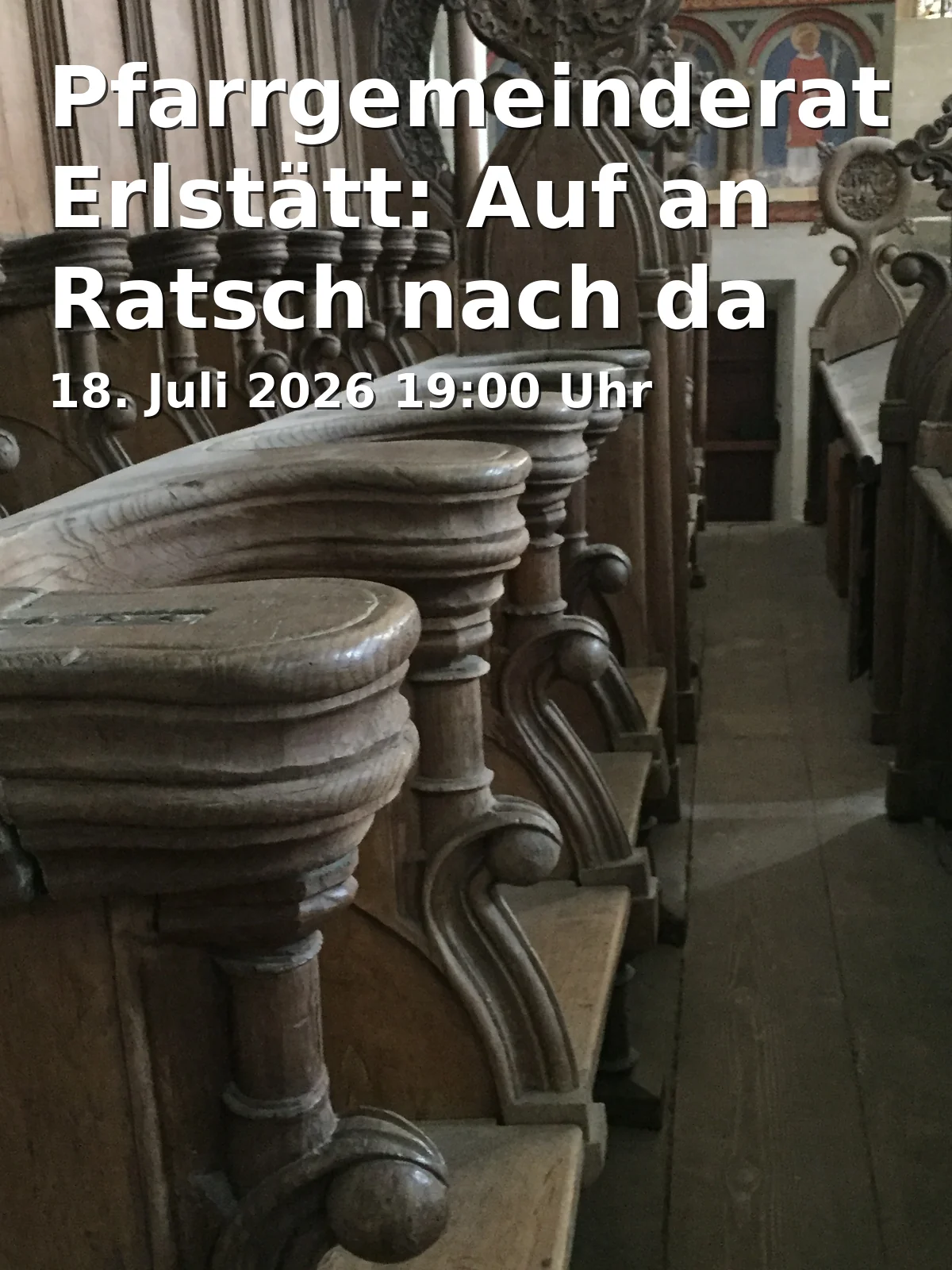
Not only the building structure, but also the interior of the parish church is a real argument for everyone looking for photos, impressions, or art-historical details. The official tourism description names a serious half-figure of Christ from around 1300 as the most beautiful work inside. This is remarkable because a very early artwork is embedded in a later church space, thereby making the long religious continuity of the place visible. Surrounding this figure are Baroque works of saints that shape the space with the typical mixture of solemnity and vividness found in Upper Bavaria. Dominating the high altar are Peter and Rupert, figures of saints closely connected to the place and regional piety. Additionally, the Schächerstein is highlighted in the description as an interesting and remarkable late medieval work. For visitors who are not just looking for “a beautiful church,” but concrete details, this is an important point: The church offers not only an attractive outer appearance but also a surprisingly dense sequence of art and faith symbols inside. The combination of late Gothic structure, Baroque furnishings, and individual older artworks is relevant for those searching for “Baroque furnishings church” or “photos St. Peter and Paul Erlstätt,” as it explains the visual impression before one even arrives on site. Since the church is open daily, this space can be viewed in peace; during services, it additionally unfolds its liturgical effect. Thus, the church is not simply a historical object, but a living space where medieval severity, Baroque imagery, and the presence of a village parish can be experienced simultaneously. ([chiemsee-alpenland.de](https://www.chiemsee-alpenland.de/entdecken/alle-sehenswuerdigkeiten/pfarrkirche-st.-peter-und-paul-im-thale-in-erlstaett-776681eccd))
Services, Patronage, and Church Life
Those searching for “Services Erlstätt,” “Christmas Mass Erlstätt,” or “Patronage St. Peter and Paul” usually want not just a mere description of the building but an insight into the lively parish life on site. Here, it becomes clear that St. Peter and Paul in the valley is more than a historical monument. The regional event calendar documents liturgical highlights such as the Christmas Mass in the parish church on Christmas Eve, the first communion in Erlstätt, and other festive services, including celebrations with the church choir. Such dates show a parish that is marked throughout the year by classic Catholic festivals: Christmas, first communion, patronage, and special Sunday services are visibly part of it. For the search engine, this means that interest in the church is not solely directed at architecture but also at concrete dates and family occasions. Additionally, the diocesan page refers to a monthly service in Schmidham, which will be moved to a Wednesday starting in August 2025; even the patronage in September is explicitly mentioned there. These small but reliable hints are valuable for a local parish profile because they show that the parish remains present in the surrounding districts and that its offerings are not limited to the church building itself. Therefore, those searching for “Parish Office St. Peter and Paul reviews” or “Services Erlstätt” should know: The actual strength of this place lies in the connection between historical church and lived community life. The place is not a museum-like standstill but a space where sacraments, festivals, and everyday pastoral care come together. ([veranstaltungen.chiemsee-alpenland.de](https://veranstaltungen.chiemsee-alpenland.de/region/?dateID=172f33483c36c2ac91eff550207b7236&eventID=405.364024&mode=DT&redirect=1&utm_source=openai))
Access, Parking, and Visiting Hours
For many visitors, access and parking are at least as important as history and service times. The parish church is located in 83355 Grabenstätt, in the district of Erlstätt, and is thus clearly situated in the Chiemsee-Alpenland. According to tourism information, the church is open daily from 8:00 AM to 6:00 PM; additionally, it can be visited during service times, and a visit is also possible upon request through the Catholic Parish Office in Erlstätt. This is particularly convenient for travelers who do not want to be on site only at a fixed appointment but plan a spontaneous detour. Equally important: There are free parking spaces, but only in limited numbers. This is a typical note for village churches in the Alpine foothills, where parking is available but not unlimited. Therefore, those arriving by car should not expect a large parking offer but rather a quiet, compact parking situation directly around the church. This combination of accessibility and scale is attractive for those searching for “parking parish church Erlstätt” or “opening hours parish office Erlstätt.” The address itself is also helpful as it simplifies navigation and avoids confusion with other St. Peter and Paul churches in Germany. Especially since there are many churches and parish offices with the same name, the exact location designation Grabenstätt/Erlstätt is central. Therefore, a short route planning is recommended for a visit, so that nothing stands in the way of a peaceful stay. Especially when combining a church visit, a walk in the village, and a regional excursion, the location is very pleasant: One arrives quickly, has a clear starting point, and still finds a quiet, uncrowded atmosphere. ([chiemsee-alpenland.de](https://www.chiemsee-alpenland.de/entdecken/alle-sehenswuerdigkeiten/pfarrkirche-st.-peter-und-paul-im-thale-in-erlstaett-776681eccd))
Erlstätt in Chiemsee-Alpenland: A Quiet Place for a Short Detour
St. Peter and Paul in the valley is not only interesting as a parish but also as part of a landscape and culturally historically exciting environment. Grabenstätt is described by Chiemsee-Alpenland Tourism as a place with diverse leisure and cultural offerings; particularly mentioned are the Tüttensee, the Roman Museum Grabenstätt, and traces of Roman history in Erlstätt. This makes a church visit easily combinable with a walk, a short tour of the village, or a family outing. Those searching for “photos” also gain a clear visual advantage here: The onion dome, the late Gothic building structure, and the quiet location in the district create a classic image of a Upper Bavarian village church, which is well-suited for a first impression. For people coming out of religious, cultural-historical, or tourist interest, this is an advantage because the place does not need a loud event backdrop to make an impression. The quiet presence of the church is its strong point: It does not appear urban or monumental, but grown, familiar, and down-to-earth. This also fits with the search queries that start with “reviews” and often mean a credible, locally anchored church rather than a show location. Since the current public evaluation base is small, the official tourism description, the diocesan contact details, and the visible historical features are the most reliable indicators for a good assessment. Therefore, those visiting the place do not experience an anonymous address but a genuine village church with history, community life, and regional embedding. This is exactly what makes St. Peter and Paul in the valley of Erlstätt a good destination for all who want to travel more slowly in the region. ([chiemsee-alpenland.de](https://www.chiemsee-alpenland.de/entdecken/region/alle-orte/grabenstaett-2d19f4e148?utm_source=openai))
Sources:
- Archdiocese of Munich and Freising - St. Peter and Paul in the Valley Erlstätt
- Archdiocese of Munich and Freising - Parish Offices in the Parish Association of St. Francis of Assisi
- Chiemsee-Alpenland Tourism - Parish Church St. Peter and Paul in the Valley in Erlstätt
- Chiemsee-Alpenland Events - Christmas Mass in Erlstätt
Show moreShow less
Catholic Parish Office St. Peter and Paul | Erlstätt & Services
The Catholic Parish Office St. Peter and Paul in Grabenstätt-Erlstätt is one of those addresses that people often seek not just for a single appointment, but for a whole bundle of topics: parish office, services, history, photos, opening hours, parking, and the question of what makes the church in the Chiemgau so special. This is exactly why this place is relevant. The parish office belongs to the parish association of St. Francis of Assisi with Bergen, Erlstätt, Grabenstätt, and Vachendorf; at the same time, the parish church of St. Peter and Paul in the valley, which is one of the oldest village churches in the region, is located here. Those looking for a quiet church, an authentic village parish, or a historically significant excursion destination will find a place here that connects faith, architectural history, and regional identity. The official address at Grabenstätter Straße 6 and the office's opening hours make it easy to get in touch, while the church itself is open daily for visitors, making it well-suited for spontaneous visits. ([erzbistum-muenchen.de](https://www.erzbistum-muenchen.de/pfarrei/hl-franz-von-assisi/Kontakt/pfarreien/st-peter-und-paul-im-thale-erlstaett))
Parish Office, Opening Hours, and Contact
For inquiries regarding the parish office, it is especially important to note that the address at Grabenstätter Str. 6 is not just any mailing address, but the officially designated location of the parish office of St. Peter and Paul in the valley of Erlstätt. The diocese lists contact persons, phone numbers, and office hours here and clearly assigns the parish within the parish association. For visitors, this means: Those with questions about baptisms, weddings, first communions, funerals, or general parish matters will find the appropriate contacts here. The opening hours are intentionally kept short and practical, namely Tuesday from 9:00 AM to 12:00 PM and Thursday from 1:00 PM to 4:00 PM. Thus, the parish is not a classic visitor center with a permanent counter, but a typical church office that organizes its work along pastoral and administrative processes. This is particularly important in small places, as seekers often have to distinguish between church, parish office, and parish association. In this case, everything belongs together: The church itself shapes the district of Erlstätt, the parish office coordinates daily life, and the parish association integrates the parish into a larger pastoral structure. So, if you search for “Parish Office Erlstätt,” “Opening Hours Parish Office Erlstätt,” or “Catholic Parish Office St. Peter and Paul,” you will find the right place here. Practically speaking, this means: Before a visit, it is worthwhile to take a quick look at the mentioned office hours, while the church itself is accessible in significantly more generous time frames regardless. ([erzbistum-muenchen.de](https://www.erzbistum-muenchen.de/pfarrei/hl-franz-von-assisi/Kontakt/pfarrbueros/93312))
History of the Parish Church St. Peter and Paul in the Valley
The historical depth of this place is one of the strongest reasons why the parish church of St. Peter and Paul in the valley is repeatedly sought after and visited. According to the regional tourism source, the building dates back to around 1480 and was constructed in the late Gothic style. Thus, the church is one of the oldest village churches in the Chiemgau region and is even highlighted in the description as one of the oldest village churches in the Chiemgau. Such classifications are not only interesting for church lovers but also for people who consciously seek authentic architectural history in the Chiemsee-Alpenland. The church exhibits typical features of the late Gothic flowering of church buildings in this region: The building structure still appears closed and tradition-conscious despite later modifications, the onion dome sets a clear Bavarian accent, and the later added Baroque furnishings show how liturgical spaces change over centuries without losing their core. Particularly exciting is the historical layering, as the church has undergone several changes throughout its existence. This makes it interesting for searches related to “History of the Parish Church Erlstätt” or “Onion Dome Erlstätt”: Here, one does not just see a monument, but a grown religious building with several epochs under one roof. The note that the Erlstätt church was already a cooperative of Haslach for a long time during its establishment further anchors it in the historical parish and pastoral area of the region. Therefore, those who visit this place stand in a space where late medieval, Baroque, and Bavarian village culture overlap to this day. ([chiemsee-alpenland.de](https://www.chiemsee-alpenland.de/entdecken/alle-sehenswuerdigkeiten/pfarrkirche-st.-peter-und-paul-im-thale-in-erlstaett-776681eccd))
Interior, Artworks, and Baroque Furnishings
Not only the building structure, but also the interior of the parish church is a real argument for everyone looking for photos, impressions, or art-historical details. The official tourism description names a serious half-figure of Christ from around 1300 as the most beautiful work inside. This is remarkable because a very early artwork is embedded in a later church space, thereby making the long religious continuity of the place visible. Surrounding this figure are Baroque works of saints that shape the space with the typical mixture of solemnity and vividness found in Upper Bavaria. Dominating the high altar are Peter and Rupert, figures of saints closely connected to the place and regional piety. Additionally, the Schächerstein is highlighted in the description as an interesting and remarkable late medieval work. For visitors who are not just looking for “a beautiful church,” but concrete details, this is an important point: The church offers not only an attractive outer appearance but also a surprisingly dense sequence of art and faith symbols inside. The combination of late Gothic structure, Baroque furnishings, and individual older artworks is relevant for those searching for “Baroque furnishings church” or “photos St. Peter and Paul Erlstätt,” as it explains the visual impression before one even arrives on site. Since the church is open daily, this space can be viewed in peace; during services, it additionally unfolds its liturgical effect. Thus, the church is not simply a historical object, but a living space where medieval severity, Baroque imagery, and the presence of a village parish can be experienced simultaneously. ([chiemsee-alpenland.de](https://www.chiemsee-alpenland.de/entdecken/alle-sehenswuerdigkeiten/pfarrkirche-st.-peter-und-paul-im-thale-in-erlstaett-776681eccd))
Services, Patronage, and Church Life
Those searching for “Services Erlstätt,” “Christmas Mass Erlstätt,” or “Patronage St. Peter and Paul” usually want not just a mere description of the building but an insight into the lively parish life on site. Here, it becomes clear that St. Peter and Paul in the valley is more than a historical monument. The regional event calendar documents liturgical highlights such as the Christmas Mass in the parish church on Christmas Eve, the first communion in Erlstätt, and other festive services, including celebrations with the church choir. Such dates show a parish that is marked throughout the year by classic Catholic festivals: Christmas, first communion, patronage, and special Sunday services are visibly part of it. For the search engine, this means that interest in the church is not solely directed at architecture but also at concrete dates and family occasions. Additionally, the diocesan page refers to a monthly service in Schmidham, which will be moved to a Wednesday starting in August 2025; even the patronage in September is explicitly mentioned there. These small but reliable hints are valuable for a local parish profile because they show that the parish remains present in the surrounding districts and that its offerings are not limited to the church building itself. Therefore, those searching for “Parish Office St. Peter and Paul reviews” or “Services Erlstätt” should know: The actual strength of this place lies in the connection between historical church and lived community life. The place is not a museum-like standstill but a space where sacraments, festivals, and everyday pastoral care come together. ([veranstaltungen.chiemsee-alpenland.de](https://veranstaltungen.chiemsee-alpenland.de/region/?dateID=172f33483c36c2ac91eff550207b7236&eventID=405.364024&mode=DT&redirect=1&utm_source=openai))
Access, Parking, and Visiting Hours
For many visitors, access and parking are at least as important as history and service times. The parish church is located in 83355 Grabenstätt, in the district of Erlstätt, and is thus clearly situated in the Chiemsee-Alpenland. According to tourism information, the church is open daily from 8:00 AM to 6:00 PM; additionally, it can be visited during service times, and a visit is also possible upon request through the Catholic Parish Office in Erlstätt. This is particularly convenient for travelers who do not want to be on site only at a fixed appointment but plan a spontaneous detour. Equally important: There are free parking spaces, but only in limited numbers. This is a typical note for village churches in the Alpine foothills, where parking is available but not unlimited. Therefore, those arriving by car should not expect a large parking offer but rather a quiet, compact parking situation directly around the church. This combination of accessibility and scale is attractive for those searching for “parking parish church Erlstätt” or “opening hours parish office Erlstätt.” The address itself is also helpful as it simplifies navigation and avoids confusion with other St. Peter and Paul churches in Germany. Especially since there are many churches and parish offices with the same name, the exact location designation Grabenstätt/Erlstätt is central. Therefore, a short route planning is recommended for a visit, so that nothing stands in the way of a peaceful stay. Especially when combining a church visit, a walk in the village, and a regional excursion, the location is very pleasant: One arrives quickly, has a clear starting point, and still finds a quiet, uncrowded atmosphere. ([chiemsee-alpenland.de](https://www.chiemsee-alpenland.de/entdecken/alle-sehenswuerdigkeiten/pfarrkirche-st.-peter-und-paul-im-thale-in-erlstaett-776681eccd))
Erlstätt in Chiemsee-Alpenland: A Quiet Place for a Short Detour
St. Peter and Paul in the valley is not only interesting as a parish but also as part of a landscape and culturally historically exciting environment. Grabenstätt is described by Chiemsee-Alpenland Tourism as a place with diverse leisure and cultural offerings; particularly mentioned are the Tüttensee, the Roman Museum Grabenstätt, and traces of Roman history in Erlstätt. This makes a church visit easily combinable with a walk, a short tour of the village, or a family outing. Those searching for “photos” also gain a clear visual advantage here: The onion dome, the late Gothic building structure, and the quiet location in the district create a classic image of a Upper Bavarian village church, which is well-suited for a first impression. For people coming out of religious, cultural-historical, or tourist interest, this is an advantage because the place does not need a loud event backdrop to make an impression. The quiet presence of the church is its strong point: It does not appear urban or monumental, but grown, familiar, and down-to-earth. This also fits with the search queries that start with “reviews” and often mean a credible, locally anchored church rather than a show location. Since the current public evaluation base is small, the official tourism description, the diocesan contact details, and the visible historical features are the most reliable indicators for a good assessment. Therefore, those visiting the place do not experience an anonymous address but a genuine village church with history, community life, and regional embedding. This is exactly what makes St. Peter and Paul in the valley of Erlstätt a good destination for all who want to travel more slowly in the region. ([chiemsee-alpenland.de](https://www.chiemsee-alpenland.de/entdecken/region/alle-orte/grabenstaett-2d19f4e148?utm_source=openai))
Sources:
- Archdiocese of Munich and Freising - St. Peter and Paul in the Valley Erlstätt
- Archdiocese of Munich and Freising - Parish Offices in the Parish Association of St. Francis of Assisi
- Chiemsee-Alpenland Tourism - Parish Church St. Peter and Paul in the Valley in Erlstätt
- Chiemsee-Alpenland Events - Christmas Mass in Erlstätt
Catholic Parish Office St. Peter and Paul | Erlstätt & Services
The Catholic Parish Office St. Peter and Paul in Grabenstätt-Erlstätt is one of those addresses that people often seek not just for a single appointment, but for a whole bundle of topics: parish office, services, history, photos, opening hours, parking, and the question of what makes the church in the Chiemgau so special. This is exactly why this place is relevant. The parish office belongs to the parish association of St. Francis of Assisi with Bergen, Erlstätt, Grabenstätt, and Vachendorf; at the same time, the parish church of St. Peter and Paul in the valley, which is one of the oldest village churches in the region, is located here. Those looking for a quiet church, an authentic village parish, or a historically significant excursion destination will find a place here that connects faith, architectural history, and regional identity. The official address at Grabenstätter Straße 6 and the office's opening hours make it easy to get in touch, while the church itself is open daily for visitors, making it well-suited for spontaneous visits. ([erzbistum-muenchen.de](https://www.erzbistum-muenchen.de/pfarrei/hl-franz-von-assisi/Kontakt/pfarreien/st-peter-und-paul-im-thale-erlstaett))
Parish Office, Opening Hours, and Contact
For inquiries regarding the parish office, it is especially important to note that the address at Grabenstätter Str. 6 is not just any mailing address, but the officially designated location of the parish office of St. Peter and Paul in the valley of Erlstätt. The diocese lists contact persons, phone numbers, and office hours here and clearly assigns the parish within the parish association. For visitors, this means: Those with questions about baptisms, weddings, first communions, funerals, or general parish matters will find the appropriate contacts here. The opening hours are intentionally kept short and practical, namely Tuesday from 9:00 AM to 12:00 PM and Thursday from 1:00 PM to 4:00 PM. Thus, the parish is not a classic visitor center with a permanent counter, but a typical church office that organizes its work along pastoral and administrative processes. This is particularly important in small places, as seekers often have to distinguish between church, parish office, and parish association. In this case, everything belongs together: The church itself shapes the district of Erlstätt, the parish office coordinates daily life, and the parish association integrates the parish into a larger pastoral structure. So, if you search for “Parish Office Erlstätt,” “Opening Hours Parish Office Erlstätt,” or “Catholic Parish Office St. Peter and Paul,” you will find the right place here. Practically speaking, this means: Before a visit, it is worthwhile to take a quick look at the mentioned office hours, while the church itself is accessible in significantly more generous time frames regardless. ([erzbistum-muenchen.de](https://www.erzbistum-muenchen.de/pfarrei/hl-franz-von-assisi/Kontakt/pfarrbueros/93312))
History of the Parish Church St. Peter and Paul in the Valley
The historical depth of this place is one of the strongest reasons why the parish church of St. Peter and Paul in the valley is repeatedly sought after and visited. According to the regional tourism source, the building dates back to around 1480 and was constructed in the late Gothic style. Thus, the church is one of the oldest village churches in the Chiemgau region and is even highlighted in the description as one of the oldest village churches in the Chiemgau. Such classifications are not only interesting for church lovers but also for people who consciously seek authentic architectural history in the Chiemsee-Alpenland. The church exhibits typical features of the late Gothic flowering of church buildings in this region: The building structure still appears closed and tradition-conscious despite later modifications, the onion dome sets a clear Bavarian accent, and the later added Baroque furnishings show how liturgical spaces change over centuries without losing their core. Particularly exciting is the historical layering, as the church has undergone several changes throughout its existence. This makes it interesting for searches related to “History of the Parish Church Erlstätt” or “Onion Dome Erlstätt”: Here, one does not just see a monument, but a grown religious building with several epochs under one roof. The note that the Erlstätt church was already a cooperative of Haslach for a long time during its establishment further anchors it in the historical parish and pastoral area of the region. Therefore, those who visit this place stand in a space where late medieval, Baroque, and Bavarian village culture overlap to this day. ([chiemsee-alpenland.de](https://www.chiemsee-alpenland.de/entdecken/alle-sehenswuerdigkeiten/pfarrkirche-st.-peter-und-paul-im-thale-in-erlstaett-776681eccd))
Interior, Artworks, and Baroque Furnishings
Not only the building structure, but also the interior of the parish church is a real argument for everyone looking for photos, impressions, or art-historical details. The official tourism description names a serious half-figure of Christ from around 1300 as the most beautiful work inside. This is remarkable because a very early artwork is embedded in a later church space, thereby making the long religious continuity of the place visible. Surrounding this figure are Baroque works of saints that shape the space with the typical mixture of solemnity and vividness found in Upper Bavaria. Dominating the high altar are Peter and Rupert, figures of saints closely connected to the place and regional piety. Additionally, the Schächerstein is highlighted in the description as an interesting and remarkable late medieval work. For visitors who are not just looking for “a beautiful church,” but concrete details, this is an important point: The church offers not only an attractive outer appearance but also a surprisingly dense sequence of art and faith symbols inside. The combination of late Gothic structure, Baroque furnishings, and individual older artworks is relevant for those searching for “Baroque furnishings church” or “photos St. Peter and Paul Erlstätt,” as it explains the visual impression before one even arrives on site. Since the church is open daily, this space can be viewed in peace; during services, it additionally unfolds its liturgical effect. Thus, the church is not simply a historical object, but a living space where medieval severity, Baroque imagery, and the presence of a village parish can be experienced simultaneously. ([chiemsee-alpenland.de](https://www.chiemsee-alpenland.de/entdecken/alle-sehenswuerdigkeiten/pfarrkirche-st.-peter-und-paul-im-thale-in-erlstaett-776681eccd))
Services, Patronage, and Church Life
Those searching for “Services Erlstätt,” “Christmas Mass Erlstätt,” or “Patronage St. Peter and Paul” usually want not just a mere description of the building but an insight into the lively parish life on site. Here, it becomes clear that St. Peter and Paul in the valley is more than a historical monument. The regional event calendar documents liturgical highlights such as the Christmas Mass in the parish church on Christmas Eve, the first communion in Erlstätt, and other festive services, including celebrations with the church choir. Such dates show a parish that is marked throughout the year by classic Catholic festivals: Christmas, first communion, patronage, and special Sunday services are visibly part of it. For the search engine, this means that interest in the church is not solely directed at architecture but also at concrete dates and family occasions. Additionally, the diocesan page refers to a monthly service in Schmidham, which will be moved to a Wednesday starting in August 2025; even the patronage in September is explicitly mentioned there. These small but reliable hints are valuable for a local parish profile because they show that the parish remains present in the surrounding districts and that its offerings are not limited to the church building itself. Therefore, those searching for “Parish Office St. Peter and Paul reviews” or “Services Erlstätt” should know: The actual strength of this place lies in the connection between historical church and lived community life. The place is not a museum-like standstill but a space where sacraments, festivals, and everyday pastoral care come together. ([veranstaltungen.chiemsee-alpenland.de](https://veranstaltungen.chiemsee-alpenland.de/region/?dateID=172f33483c36c2ac91eff550207b7236&eventID=405.364024&mode=DT&redirect=1&utm_source=openai))
Access, Parking, and Visiting Hours
For many visitors, access and parking are at least as important as history and service times. The parish church is located in 83355 Grabenstätt, in the district of Erlstätt, and is thus clearly situated in the Chiemsee-Alpenland. According to tourism information, the church is open daily from 8:00 AM to 6:00 PM; additionally, it can be visited during service times, and a visit is also possible upon request through the Catholic Parish Office in Erlstätt. This is particularly convenient for travelers who do not want to be on site only at a fixed appointment but plan a spontaneous detour. Equally important: There are free parking spaces, but only in limited numbers. This is a typical note for village churches in the Alpine foothills, where parking is available but not unlimited. Therefore, those arriving by car should not expect a large parking offer but rather a quiet, compact parking situation directly around the church. This combination of accessibility and scale is attractive for those searching for “parking parish church Erlstätt” or “opening hours parish office Erlstätt.” The address itself is also helpful as it simplifies navigation and avoids confusion with other St. Peter and Paul churches in Germany. Especially since there are many churches and parish offices with the same name, the exact location designation Grabenstätt/Erlstätt is central. Therefore, a short route planning is recommended for a visit, so that nothing stands in the way of a peaceful stay. Especially when combining a church visit, a walk in the village, and a regional excursion, the location is very pleasant: One arrives quickly, has a clear starting point, and still finds a quiet, uncrowded atmosphere. ([chiemsee-alpenland.de](https://www.chiemsee-alpenland.de/entdecken/alle-sehenswuerdigkeiten/pfarrkirche-st.-peter-und-paul-im-thale-in-erlstaett-776681eccd))
Erlstätt in Chiemsee-Alpenland: A Quiet Place for a Short Detour
St. Peter and Paul in the valley is not only interesting as a parish but also as part of a landscape and culturally historically exciting environment. Grabenstätt is described by Chiemsee-Alpenland Tourism as a place with diverse leisure and cultural offerings; particularly mentioned are the Tüttensee, the Roman Museum Grabenstätt, and traces of Roman history in Erlstätt. This makes a church visit easily combinable with a walk, a short tour of the village, or a family outing. Those searching for “photos” also gain a clear visual advantage here: The onion dome, the late Gothic building structure, and the quiet location in the district create a classic image of a Upper Bavarian village church, which is well-suited for a first impression. For people coming out of religious, cultural-historical, or tourist interest, this is an advantage because the place does not need a loud event backdrop to make an impression. The quiet presence of the church is its strong point: It does not appear urban or monumental, but grown, familiar, and down-to-earth. This also fits with the search queries that start with “reviews” and often mean a credible, locally anchored church rather than a show location. Since the current public evaluation base is small, the official tourism description, the diocesan contact details, and the visible historical features are the most reliable indicators for a good assessment. Therefore, those visiting the place do not experience an anonymous address but a genuine village church with history, community life, and regional embedding. This is exactly what makes St. Peter and Paul in the valley of Erlstätt a good destination for all who want to travel more slowly in the region. ([chiemsee-alpenland.de](https://www.chiemsee-alpenland.de/entdecken/region/alle-orte/grabenstaett-2d19f4e148?utm_source=openai))
Sources:
- Archdiocese of Munich and Freising - St. Peter and Paul in the Valley Erlstätt
- Archdiocese of Munich and Freising - Parish Offices in the Parish Association of St. Francis of Assisi
- Chiemsee-Alpenland Tourism - Parish Church St. Peter and Paul in the Valley in Erlstätt
- Chiemsee-Alpenland Events - Christmas Mass in Erlstätt
Frequently Asked Questions
Reviews
Leonard
20. February 2020