
Traunstein
Karl-Theodor-Platz, 83278 Traunstein, Germany
Karl-Theodor-Platz | Parking & Access Traunstein
Karl-Theodor-Platz in Traunstein is not a classic event venue with a stage, ticket counters, and a fixed program calendar, but a historically shaped urban space with a strong everyday function, impressive salt history, and practical significance for visitors. Therefore, those looking for Karl-Theodor-Platz often also mean the parking lot, the historic saltworks, specific house numbers like 1, 4, or 5, and the paths leading to the city center. This very mix makes the place so interesting: here, monument preservation, urban history, mobility, and short distances come together. The square is located south below the high plateau of the old town and is part of the ensemble of the former saltworks, which still visibly shapes the development of Traunstein today. Particularly valuable is the fact that the historical structure is not only described in archives but remains tangible in the urban space. The salt chapel, the preserved salt houses, the reconstructed connection to salt production, and the proximity to today's Salinenpark give the place a clear identity. At the same time, Karl-Theodor-Platz is primarily a centrally located parking lot with quick access to the city center and good connections for cars, trains, and footpaths. ([traunstein.de](https://www.traunstein.de/tourismus-freizeit/das-salz-in-traunstein/schauplaetze-der-saline/karl-theodor-sudhaus/))
Parking at Karl-Theodor-Platz in Traunstein
The strongest search topic around Karl-Theodor-Platz is clearly parking. This is understandable, as the square is designated as P2 Zentrum/Karl-Theodor-Platz in the urban parking system and has 310 parking spaces. The parking lot is open all day and is managed by the city of Traunstein. The fee structure is clear and easy to plan for short visits: from Monday to Friday from 9 AM to 6 PM and Saturday from 9 AM to 12 PM, parking costs 0.10 euros per 10 minutes. Additionally, there is a monthly ticket for 52.50 euros, making the location interesting for commuters, employees, and regular visitors. Those traveling with an electric vehicle with an E license plate can park at Karl-Theodor-Parkplatz for up to three hours free of charge. The respective maximum parking duration still applies, so the parking disc must be set correctly. For longer stays, either another ticket via the app or the classic solution at the machine is available. This makes the square particularly practical for everyday use, as it offers a usable solution for both short errands and longer appointments. ([traunstein.de](https://www.traunstein.de/tourismus-freizeit/einkaufen-shopping/parken-in-traunstein/))
In practice, it is also important that Karl-Theodor-Platz should not be viewed in isolation. According to the city, Traunstein offers around 3,000 centrally located parking spaces in parking garages, underground garages, and parking lots. This relieves city center traffic and creates alternatives if the direct space is fully occupied. The city also points out that there is a maximum parking duration of two hours in the city center and only 30 minutes in the train station area, unless one is parked at Karl-Theodor-Parkplatz. This is precisely where the advantage of the location lies: it combines a central location with a relatively clear, generous parking structure. Additionally, the festival square on Siegsdorfer Straße serves as an additional free option within walking distance to the city center, although restrictions may apply during major events. For search queries like Karl-Theodor-Platz Traunstein parking, parking lot Karl-Theodor-Platz, or Karl-Theodor-Platz Traunstein maps, not only an address is relevant but also the question of how to use the inner-city space efficiently. The square is thus less a place for long stays and more a cleverly located starting point from which the old town, saltworks area, and footpaths can be easily accessed. ([traunstein.de](https://www.traunstein.de/tourismus-freizeit/einkaufen-shopping/parken-in-traunstein/))
Access, Location, and Orientation in the City Center
Access is also one of the dominant search intentions hidden behind the name Karl-Theodor-Platz. According to city information, Traunstein is located about 110 kilometers southeast of Munich and around 50 kilometers west of Salzburg in the Chiemgau region. The A8 Munich-Salzburg with the exits Traunstein/Siegsdorf-East, Bergen, and Siegsdorf-West makes traveling by car easy. Those traveling by train can reach Traunstein via the direct connection Munich-Salzburg. For visitors, this means: the square is not only well positioned in the city center but also accessible from a regional perspective. Furthermore, the city emphasizes public transportation alongside cars, such as the regional transport of Upper Bavaria and the call bus within Traunstein, which serves 59 stops. For orientation on-site, this information is important, as Karl-Theodor-Platz is not located on the outskirts but in the immediate vicinity between the old town, the former saltworks district, and the paths leading to the city center. ([traunstein.de](https://www.traunstein.de/tourismus-freizeit/anreise-informationen/))
The location at the southern edge of the old town explains why so many users search for route, maps, or access. The square is part of an urban space where historical axes and modern traffic routes intersect. The Salinenpark has additionally made this connection visible, as it leads from Reiffenstuelstraße towards Karl-Theodor-Platz via a new diagonal pathway. This not only shortens the route from Bürgerwaldstraße to the city center but also makes it more attractive and barrier-free. This new connection is a good example of how Traunstein connects historical places with contemporary urban development. Therefore, those visiting the square do not just experience a parking lot but a transition between urban history and the present. The proximity to Salinenpark, the old town, and several listed buildings makes the place particularly interesting for walks. Especially for people visiting Traunstein for the first time, Karl-Theodor-Platz is a sensible starting point because it provides orientation, explains the historical depth of the urban landscape, and simultaneously allows direct access to central destinations. ([traunstein.de](https://www.traunstein.de/stadtentwicklung-wirtschaft/stadtentwicklung/salinenpark/))
The History of the Saltworks at Karl-Theodor-Platz
The historical significance of Karl-Theodor-Platz can only be understood when considering the salt history of Traunstein. According to the Bavarian State Office for Monument Preservation, the ensemble of Karl-Theodor-Platz is approximately 6 hectares in size, located south below the high plateau of the old town core, and encompasses the closer area of the former saltworks, which produced salt at this location for about 300 years. The development data are formative for the city: the saltworks operated from 1618 to 1912 and shaped the entire southern city zone. About a dozen structural facilities from this time have been preserved, including the salt chapel, several factory and residential buildings, and other functional buildings. The current perception of the area has even improved after the demolition of the old gymnasium and the redesign of the salt square because the buildings of the Maximiliani-Wilhelmi-Stock now stand out more clearly. For this reason, the square is not merely a traffic area but a monument area with an industrial past. Today, those parking or walking there are in an area that has been focused on production, work, and salt transport for centuries. ([traunstein.de](https://www.traunstein.de/media/9023/anlage-1_kdk-teil-1-text.pdf))
Particularly impressive is the history of the Karl-Theodor-Sudhaus, which was located where the Karl-Theodor-Parkplatz is today. The city of Traunstein states that the Sudhaus was the heart of the saltworks from 1787 to 1912. In this cross-shaped building, brine, i.e., salty water, was processed into salt. The building was approximately the size of today's parking lot and housed eight boiling pans ranging from 42 to 68 square meters. With the additional construction of the Fünferpfanne, coal was used instead of wood, which makes the technical development of the saltworks visible. After the closure of the saltworks in 1912, the massive Sudhaus was blown up. The Fünferpfanne was preserved and now houses apartments. This history explains why Karl-Theodor-Platz is both a modern parking area and a historical memorial site. Today's visitor thus sees a seemingly functional area that is actually located on one of the most important production sites in Traunstein's urban history. This contrast makes the square so exciting for those interested in cultural history. ([traunstein.de](https://www.traunstein.de/tourismus-freizeit/das-salz-in-traunstein/schauplaetze-der-saline/karl-theodor-sudhaus/))
Salt Chapel, Salt Houses, and Historical Buildings
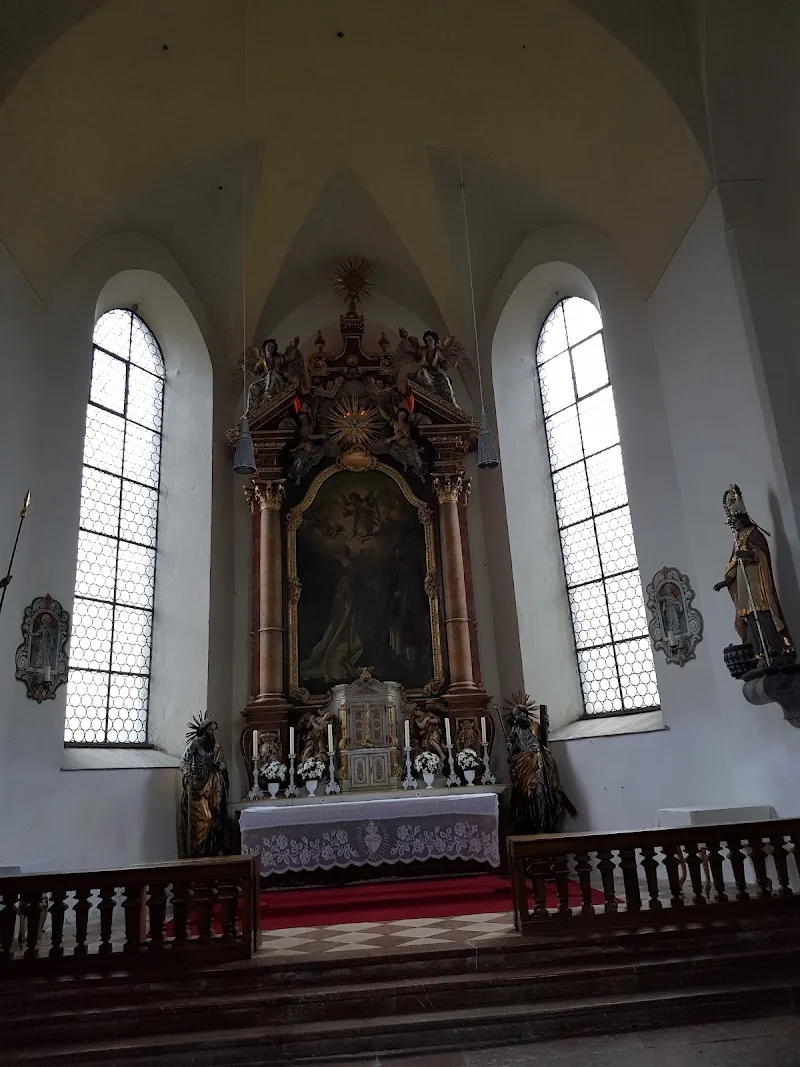
Those searching for Karl-Theodor-Platz 1, 4, or 5 are usually looking for the concrete architectural traces of the former saltworks. The salt chapel at Karl-Theodor-Platz 1 is one of the most important testimonies of this ensemble. The city's monument concept describes it as a conglomerate stone building and places it within the historical structure of the saltworks. In the same document, the chapel is mentioned along with several factory and residential buildings that still convey the history of salt production. These include, among others, the Alberti-Fernandi-Stock, the Marienstock, the Beamtenstock, as well as former functional buildings like the salt barn and timber magazine. Even if not every building is accessible in everyday life, just looking at the address shows how strongly the place is shaped by the saltworks era. The buildings are not randomly distributed but have remained interconnected in a historical order. Therefore, anyone walking around Karl-Theodor-Platz sees not just individual houses but a structured monument area whose architecture directly stems from the production and living world of the salt industry. ([traunstein.de](https://www.traunstein.de/media/9023/anlage-1_kdk-teil-1-text.pdf))
Among the well-known building groups are also the salt houses of Traunstein. The city explains that the factory settlement of the saltworks consisted of several houses named after members of the House of Wittelsbach and were called Wilhelmi-, Maximiliani-, Ferdinandi-, and Alberti-Stock. Each stock combined a Pfieselhaus, salt containers, as well as residential and workshops under one roof. At the back, the wooden boiling sites used to be connected. Today, the place where the salt boiling site stood until 1924 is now the Karl-Theodor-Parkplatz. At the same time, the salt houses themselves and the old well house, where the brine pipeline once ended, have been preserved. This juxtaposition of parking lot, preserved operational buildings, and listed settlement adds to the charm of the address. Additionally, the School of Imagination at Karl-Theodor-Platz 4 offers a well-equipped studio space for children and teenagers. This shows that the historical environment is not museum-like but has been integrated into the everyday life of the city. The square is thus a lively example of how historical substance, cultural use, and mobility can come together. ([traunstein.de](https://www.traunstein.de/tourismus-freizeit/traunsteiner-sehenswuerdigkeiten/salinenhaeuser/?utm_source=openai))
What Makes Karl-Theodor-Platz Practical Today
The practical value of Karl-Theodor-Platz lies not only in parking but also in its function as an intermediate step between urban history and daily use. The Salinenpark makes this connection particularly visible, as it was built, according to the city, to make the architectural testimonies from the saltworks era tangible again. Through the clearing of the property, a new diagonal pathway towards Karl-Theodor-Platz has emerged. The path now leads not only functionally but also pleasantly through the landscape to the city center. Information boards, exhibits, and the reconstruction of brine technology enhance the historical readability of the place, so that Karl-Theodor-Platz is not perceived as merely a leftover space. Those arriving here find an urban context in close proximity that consists of parking space, monument, green space, and pathway. This is an advantage, especially for families, walkers, tourists, and people with short errands, as one can reach different usage areas without detours. The fact that the square is open all day and the city center has additional parking spaces increases its practicality. ([traunstein.de](https://www.traunstein.de/stadtentwicklung-wirtschaft/stadtentwicklung/salinenpark/))
It is also interesting how strongly urban development around Karl-Theodor-Platz is oriented towards the historical structure. Salinenstraße, Reiffenstuelstraße, and the adjacent building groups form a spatial axis that connects the former production site with today's city center. This gives the square a significance that goes beyond the actual parking area. Those parking at Karl-Theodor-Platz can reach old town buildings, paths to the town square, and traces of the former salt business in just a few minutes. At the same time, the place is well referenceable through the existing house numbers and uses, such as for the studio space of the School of Imagination or for historical buildings in the monument area. This mixture explains why users often search for Traunstein maps, routes, or specific house numbers: the square is not just an address but a spatial hub. For search intentions, this means that Karl-Theodor-Platz must be read as both a parking lot and a cultural-historical orientation point. Those who know this place understand Traunstein a little better because here the production history of the city, modern mobility, and the quality redesign of public space converge. ([traunstein.de](https://www.traunstein.de/stadtentwicklung-wirtschaft/stadtentwicklung/salinenpark/))
Practical Tips for Your Visit to Karl-Theodor-Platz
For visitors, Karl-Theodor-Platz is especially attractive when one plans the place pragmatically. Those arriving by car should know that the parking lot is centrally located, well signposted, and accessible all day. For short stays, controlled parking is particularly worthwhile because the fee structure is clear, and electric vehicles can park at Karl-Theodor-Parkplatz for up to three hours free of charge. Those wishing to stay longer can check the monthly ticket or digital solutions. It is also worth looking at the surroundings: the combination of historical ensemble, Salinenpark, and city center makes the place ideal for a half-city walk. Especially when visiting Traunstein for the first time, it makes sense to first use the square and from there head towards the old town, town square, and other attractions. This saves time, avoids unnecessary detours, and allows one to discover the historical depth of the city from a well-accessible starting point. ([traunstein.de](https://www.traunstein.de/tourismus-freizeit/einkaufen-shopping/parken-in-traunstein/))
Those who really want to understand the historical backgrounds should not only view the place as a parking lot but as part of a larger urban landscape. The official city history shows that Traunstein has been strongly shaped by salt, and the development of the city from the town square to the Au has been determined by trade, production, and infrastructure for many centuries. At Karl-Theodor-Platz, this connection becomes particularly vivid because the former industrial use, monument preservation, and today's traffic flow directly intersect. For search queries like Karl-Theodor-Platz Traunstein route or Karl-Theodor-Platz Traunstein parking, the most important recommendation is therefore: arrive early, observe parking rules, keep an eye on house numbers, and take time for the surroundings. The place is particularly well-suited for people who want to see a piece of Traunstein history without needing a long guided tour. If desired, one can combine the visit with a walk through Salinenpark or into the old town, thus experiencing the city from the perspective of its historical salt district. This is precisely where the special charm of this place lies: it is practical, central, historically significant, and at the same time pleasantly unremarkable in the best sense. ([traunstein.de](https://www.traunstein.de/kultur-brauchtum/stadtgeschichte/stadtgeschichte/stadt-im-kurfuerstentum/?utm_source=openai))
Sources:
Mehr anzeigenWeniger anzeigen
Karl-Theodor-Platz | Parking & Access Traunstein
Karl-Theodor-Platz in Traunstein is not a classic event venue with a stage, ticket counters, and a fixed program calendar, but a historically shaped urban space with a strong everyday function, impressive salt history, and practical significance for visitors. Therefore, those looking for Karl-Theodor-Platz often also mean the parking lot, the historic saltworks, specific house numbers like 1, 4, or 5, and the paths leading to the city center. This very mix makes the place so interesting: here, monument preservation, urban history, mobility, and short distances come together. The square is located south below the high plateau of the old town and is part of the ensemble of the former saltworks, which still visibly shapes the development of Traunstein today. Particularly valuable is the fact that the historical structure is not only described in archives but remains tangible in the urban space. The salt chapel, the preserved salt houses, the reconstructed connection to salt production, and the proximity to today's Salinenpark give the place a clear identity. At the same time, Karl-Theodor-Platz is primarily a centrally located parking lot with quick access to the city center and good connections for cars, trains, and footpaths. ([traunstein.de](https://www.traunstein.de/tourismus-freizeit/das-salz-in-traunstein/schauplaetze-der-saline/karl-theodor-sudhaus/))
Parking at Karl-Theodor-Platz in Traunstein
The strongest search topic around Karl-Theodor-Platz is clearly parking. This is understandable, as the square is designated as P2 Zentrum/Karl-Theodor-Platz in the urban parking system and has 310 parking spaces. The parking lot is open all day and is managed by the city of Traunstein. The fee structure is clear and easy to plan for short visits: from Monday to Friday from 9 AM to 6 PM and Saturday from 9 AM to 12 PM, parking costs 0.10 euros per 10 minutes. Additionally, there is a monthly ticket for 52.50 euros, making the location interesting for commuters, employees, and regular visitors. Those traveling with an electric vehicle with an E license plate can park at Karl-Theodor-Parkplatz for up to three hours free of charge. The respective maximum parking duration still applies, so the parking disc must be set correctly. For longer stays, either another ticket via the app or the classic solution at the machine is available. This makes the square particularly practical for everyday use, as it offers a usable solution for both short errands and longer appointments. ([traunstein.de](https://www.traunstein.de/tourismus-freizeit/einkaufen-shopping/parken-in-traunstein/))
In practice, it is also important that Karl-Theodor-Platz should not be viewed in isolation. According to the city, Traunstein offers around 3,000 centrally located parking spaces in parking garages, underground garages, and parking lots. This relieves city center traffic and creates alternatives if the direct space is fully occupied. The city also points out that there is a maximum parking duration of two hours in the city center and only 30 minutes in the train station area, unless one is parked at Karl-Theodor-Parkplatz. This is precisely where the advantage of the location lies: it combines a central location with a relatively clear, generous parking structure. Additionally, the festival square on Siegsdorfer Straße serves as an additional free option within walking distance to the city center, although restrictions may apply during major events. For search queries like Karl-Theodor-Platz Traunstein parking, parking lot Karl-Theodor-Platz, or Karl-Theodor-Platz Traunstein maps, not only an address is relevant but also the question of how to use the inner-city space efficiently. The square is thus less a place for long stays and more a cleverly located starting point from which the old town, saltworks area, and footpaths can be easily accessed. ([traunstein.de](https://www.traunstein.de/tourismus-freizeit/einkaufen-shopping/parken-in-traunstein/))
Access, Location, and Orientation in the City Center
Access is also one of the dominant search intentions hidden behind the name Karl-Theodor-Platz. According to city information, Traunstein is located about 110 kilometers southeast of Munich and around 50 kilometers west of Salzburg in the Chiemgau region. The A8 Munich-Salzburg with the exits Traunstein/Siegsdorf-East, Bergen, and Siegsdorf-West makes traveling by car easy. Those traveling by train can reach Traunstein via the direct connection Munich-Salzburg. For visitors, this means: the square is not only well positioned in the city center but also accessible from a regional perspective. Furthermore, the city emphasizes public transportation alongside cars, such as the regional transport of Upper Bavaria and the call bus within Traunstein, which serves 59 stops. For orientation on-site, this information is important, as Karl-Theodor-Platz is not located on the outskirts but in the immediate vicinity between the old town, the former saltworks district, and the paths leading to the city center. ([traunstein.de](https://www.traunstein.de/tourismus-freizeit/anreise-informationen/))
The location at the southern edge of the old town explains why so many users search for route, maps, or access. The square is part of an urban space where historical axes and modern traffic routes intersect. The Salinenpark has additionally made this connection visible, as it leads from Reiffenstuelstraße towards Karl-Theodor-Platz via a new diagonal pathway. This not only shortens the route from Bürgerwaldstraße to the city center but also makes it more attractive and barrier-free. This new connection is a good example of how Traunstein connects historical places with contemporary urban development. Therefore, those visiting the square do not just experience a parking lot but a transition between urban history and the present. The proximity to Salinenpark, the old town, and several listed buildings makes the place particularly interesting for walks. Especially for people visiting Traunstein for the first time, Karl-Theodor-Platz is a sensible starting point because it provides orientation, explains the historical depth of the urban landscape, and simultaneously allows direct access to central destinations. ([traunstein.de](https://www.traunstein.de/stadtentwicklung-wirtschaft/stadtentwicklung/salinenpark/))
The History of the Saltworks at Karl-Theodor-Platz
The historical significance of Karl-Theodor-Platz can only be understood when considering the salt history of Traunstein. According to the Bavarian State Office for Monument Preservation, the ensemble of Karl-Theodor-Platz is approximately 6 hectares in size, located south below the high plateau of the old town core, and encompasses the closer area of the former saltworks, which produced salt at this location for about 300 years. The development data are formative for the city: the saltworks operated from 1618 to 1912 and shaped the entire southern city zone. About a dozen structural facilities from this time have been preserved, including the salt chapel, several factory and residential buildings, and other functional buildings. The current perception of the area has even improved after the demolition of the old gymnasium and the redesign of the salt square because the buildings of the Maximiliani-Wilhelmi-Stock now stand out more clearly. For this reason, the square is not merely a traffic area but a monument area with an industrial past. Today, those parking or walking there are in an area that has been focused on production, work, and salt transport for centuries. ([traunstein.de](https://www.traunstein.de/media/9023/anlage-1_kdk-teil-1-text.pdf))
Particularly impressive is the history of the Karl-Theodor-Sudhaus, which was located where the Karl-Theodor-Parkplatz is today. The city of Traunstein states that the Sudhaus was the heart of the saltworks from 1787 to 1912. In this cross-shaped building, brine, i.e., salty water, was processed into salt. The building was approximately the size of today's parking lot and housed eight boiling pans ranging from 42 to 68 square meters. With the additional construction of the Fünferpfanne, coal was used instead of wood, which makes the technical development of the saltworks visible. After the closure of the saltworks in 1912, the massive Sudhaus was blown up. The Fünferpfanne was preserved and now houses apartments. This history explains why Karl-Theodor-Platz is both a modern parking area and a historical memorial site. Today's visitor thus sees a seemingly functional area that is actually located on one of the most important production sites in Traunstein's urban history. This contrast makes the square so exciting for those interested in cultural history. ([traunstein.de](https://www.traunstein.de/tourismus-freizeit/das-salz-in-traunstein/schauplaetze-der-saline/karl-theodor-sudhaus/))
Salt Chapel, Salt Houses, and Historical Buildings
Those searching for Karl-Theodor-Platz 1, 4, or 5 are usually looking for the concrete architectural traces of the former saltworks. The salt chapel at Karl-Theodor-Platz 1 is one of the most important testimonies of this ensemble. The city's monument concept describes it as a conglomerate stone building and places it within the historical structure of the saltworks. In the same document, the chapel is mentioned along with several factory and residential buildings that still convey the history of salt production. These include, among others, the Alberti-Fernandi-Stock, the Marienstock, the Beamtenstock, as well as former functional buildings like the salt barn and timber magazine. Even if not every building is accessible in everyday life, just looking at the address shows how strongly the place is shaped by the saltworks era. The buildings are not randomly distributed but have remained interconnected in a historical order. Therefore, anyone walking around Karl-Theodor-Platz sees not just individual houses but a structured monument area whose architecture directly stems from the production and living world of the salt industry. ([traunstein.de](https://www.traunstein.de/media/9023/anlage-1_kdk-teil-1-text.pdf))
Among the well-known building groups are also the salt houses of Traunstein. The city explains that the factory settlement of the saltworks consisted of several houses named after members of the House of Wittelsbach and were called Wilhelmi-, Maximiliani-, Ferdinandi-, and Alberti-Stock. Each stock combined a Pfieselhaus, salt containers, as well as residential and workshops under one roof. At the back, the wooden boiling sites used to be connected. Today, the place where the salt boiling site stood until 1924 is now the Karl-Theodor-Parkplatz. At the same time, the salt houses themselves and the old well house, where the brine pipeline once ended, have been preserved. This juxtaposition of parking lot, preserved operational buildings, and listed settlement adds to the charm of the address. Additionally, the School of Imagination at Karl-Theodor-Platz 4 offers a well-equipped studio space for children and teenagers. This shows that the historical environment is not museum-like but has been integrated into the everyday life of the city. The square is thus a lively example of how historical substance, cultural use, and mobility can come together. ([traunstein.de](https://www.traunstein.de/tourismus-freizeit/traunsteiner-sehenswuerdigkeiten/salinenhaeuser/?utm_source=openai))
What Makes Karl-Theodor-Platz Practical Today
The practical value of Karl-Theodor-Platz lies not only in parking but also in its function as an intermediate step between urban history and daily use. The Salinenpark makes this connection particularly visible, as it was built, according to the city, to make the architectural testimonies from the saltworks era tangible again. Through the clearing of the property, a new diagonal pathway towards Karl-Theodor-Platz has emerged. The path now leads not only functionally but also pleasantly through the landscape to the city center. Information boards, exhibits, and the reconstruction of brine technology enhance the historical readability of the place, so that Karl-Theodor-Platz is not perceived as merely a leftover space. Those arriving here find an urban context in close proximity that consists of parking space, monument, green space, and pathway. This is an advantage, especially for families, walkers, tourists, and people with short errands, as one can reach different usage areas without detours. The fact that the square is open all day and the city center has additional parking spaces increases its practicality. ([traunstein.de](https://www.traunstein.de/stadtentwicklung-wirtschaft/stadtentwicklung/salinenpark/))
It is also interesting how strongly urban development around Karl-Theodor-Platz is oriented towards the historical structure. Salinenstraße, Reiffenstuelstraße, and the adjacent building groups form a spatial axis that connects the former production site with today's city center. This gives the square a significance that goes beyond the actual parking area. Those parking at Karl-Theodor-Platz can reach old town buildings, paths to the town square, and traces of the former salt business in just a few minutes. At the same time, the place is well referenceable through the existing house numbers and uses, such as for the studio space of the School of Imagination or for historical buildings in the monument area. This mixture explains why users often search for Traunstein maps, routes, or specific house numbers: the square is not just an address but a spatial hub. For search intentions, this means that Karl-Theodor-Platz must be read as both a parking lot and a cultural-historical orientation point. Those who know this place understand Traunstein a little better because here the production history of the city, modern mobility, and the quality redesign of public space converge. ([traunstein.de](https://www.traunstein.de/stadtentwicklung-wirtschaft/stadtentwicklung/salinenpark/))
Practical Tips for Your Visit to Karl-Theodor-Platz
For visitors, Karl-Theodor-Platz is especially attractive when one plans the place pragmatically. Those arriving by car should know that the parking lot is centrally located, well signposted, and accessible all day. For short stays, controlled parking is particularly worthwhile because the fee structure is clear, and electric vehicles can park at Karl-Theodor-Parkplatz for up to three hours free of charge. Those wishing to stay longer can check the monthly ticket or digital solutions. It is also worth looking at the surroundings: the combination of historical ensemble, Salinenpark, and city center makes the place ideal for a half-city walk. Especially when visiting Traunstein for the first time, it makes sense to first use the square and from there head towards the old town, town square, and other attractions. This saves time, avoids unnecessary detours, and allows one to discover the historical depth of the city from a well-accessible starting point. ([traunstein.de](https://www.traunstein.de/tourismus-freizeit/einkaufen-shopping/parken-in-traunstein/))
Those who really want to understand the historical backgrounds should not only view the place as a parking lot but as part of a larger urban landscape. The official city history shows that Traunstein has been strongly shaped by salt, and the development of the city from the town square to the Au has been determined by trade, production, and infrastructure for many centuries. At Karl-Theodor-Platz, this connection becomes particularly vivid because the former industrial use, monument preservation, and today's traffic flow directly intersect. For search queries like Karl-Theodor-Platz Traunstein route or Karl-Theodor-Platz Traunstein parking, the most important recommendation is therefore: arrive early, observe parking rules, keep an eye on house numbers, and take time for the surroundings. The place is particularly well-suited for people who want to see a piece of Traunstein history without needing a long guided tour. If desired, one can combine the visit with a walk through Salinenpark or into the old town, thus experiencing the city from the perspective of its historical salt district. This is precisely where the special charm of this place lies: it is practical, central, historically significant, and at the same time pleasantly unremarkable in the best sense. ([traunstein.de](https://www.traunstein.de/kultur-brauchtum/stadtgeschichte/stadtgeschichte/stadt-im-kurfuerstentum/?utm_source=openai))
Sources:
Karl-Theodor-Platz | Parking & Access Traunstein
Karl-Theodor-Platz in Traunstein is not a classic event venue with a stage, ticket counters, and a fixed program calendar, but a historically shaped urban space with a strong everyday function, impressive salt history, and practical significance for visitors. Therefore, those looking for Karl-Theodor-Platz often also mean the parking lot, the historic saltworks, specific house numbers like 1, 4, or 5, and the paths leading to the city center. This very mix makes the place so interesting: here, monument preservation, urban history, mobility, and short distances come together. The square is located south below the high plateau of the old town and is part of the ensemble of the former saltworks, which still visibly shapes the development of Traunstein today. Particularly valuable is the fact that the historical structure is not only described in archives but remains tangible in the urban space. The salt chapel, the preserved salt houses, the reconstructed connection to salt production, and the proximity to today's Salinenpark give the place a clear identity. At the same time, Karl-Theodor-Platz is primarily a centrally located parking lot with quick access to the city center and good connections for cars, trains, and footpaths. ([traunstein.de](https://www.traunstein.de/tourismus-freizeit/das-salz-in-traunstein/schauplaetze-der-saline/karl-theodor-sudhaus/))
Parking at Karl-Theodor-Platz in Traunstein
The strongest search topic around Karl-Theodor-Platz is clearly parking. This is understandable, as the square is designated as P2 Zentrum/Karl-Theodor-Platz in the urban parking system and has 310 parking spaces. The parking lot is open all day and is managed by the city of Traunstein. The fee structure is clear and easy to plan for short visits: from Monday to Friday from 9 AM to 6 PM and Saturday from 9 AM to 12 PM, parking costs 0.10 euros per 10 minutes. Additionally, there is a monthly ticket for 52.50 euros, making the location interesting for commuters, employees, and regular visitors. Those traveling with an electric vehicle with an E license plate can park at Karl-Theodor-Parkplatz for up to three hours free of charge. The respective maximum parking duration still applies, so the parking disc must be set correctly. For longer stays, either another ticket via the app or the classic solution at the machine is available. This makes the square particularly practical for everyday use, as it offers a usable solution for both short errands and longer appointments. ([traunstein.de](https://www.traunstein.de/tourismus-freizeit/einkaufen-shopping/parken-in-traunstein/))
In practice, it is also important that Karl-Theodor-Platz should not be viewed in isolation. According to the city, Traunstein offers around 3,000 centrally located parking spaces in parking garages, underground garages, and parking lots. This relieves city center traffic and creates alternatives if the direct space is fully occupied. The city also points out that there is a maximum parking duration of two hours in the city center and only 30 minutes in the train station area, unless one is parked at Karl-Theodor-Parkplatz. This is precisely where the advantage of the location lies: it combines a central location with a relatively clear, generous parking structure. Additionally, the festival square on Siegsdorfer Straße serves as an additional free option within walking distance to the city center, although restrictions may apply during major events. For search queries like Karl-Theodor-Platz Traunstein parking, parking lot Karl-Theodor-Platz, or Karl-Theodor-Platz Traunstein maps, not only an address is relevant but also the question of how to use the inner-city space efficiently. The square is thus less a place for long stays and more a cleverly located starting point from which the old town, saltworks area, and footpaths can be easily accessed. ([traunstein.de](https://www.traunstein.de/tourismus-freizeit/einkaufen-shopping/parken-in-traunstein/))
Access, Location, and Orientation in the City Center
Access is also one of the dominant search intentions hidden behind the name Karl-Theodor-Platz. According to city information, Traunstein is located about 110 kilometers southeast of Munich and around 50 kilometers west of Salzburg in the Chiemgau region. The A8 Munich-Salzburg with the exits Traunstein/Siegsdorf-East, Bergen, and Siegsdorf-West makes traveling by car easy. Those traveling by train can reach Traunstein via the direct connection Munich-Salzburg. For visitors, this means: the square is not only well positioned in the city center but also accessible from a regional perspective. Furthermore, the city emphasizes public transportation alongside cars, such as the regional transport of Upper Bavaria and the call bus within Traunstein, which serves 59 stops. For orientation on-site, this information is important, as Karl-Theodor-Platz is not located on the outskirts but in the immediate vicinity between the old town, the former saltworks district, and the paths leading to the city center. ([traunstein.de](https://www.traunstein.de/tourismus-freizeit/anreise-informationen/))
The location at the southern edge of the old town explains why so many users search for route, maps, or access. The square is part of an urban space where historical axes and modern traffic routes intersect. The Salinenpark has additionally made this connection visible, as it leads from Reiffenstuelstraße towards Karl-Theodor-Platz via a new diagonal pathway. This not only shortens the route from Bürgerwaldstraße to the city center but also makes it more attractive and barrier-free. This new connection is a good example of how Traunstein connects historical places with contemporary urban development. Therefore, those visiting the square do not just experience a parking lot but a transition between urban history and the present. The proximity to Salinenpark, the old town, and several listed buildings makes the place particularly interesting for walks. Especially for people visiting Traunstein for the first time, Karl-Theodor-Platz is a sensible starting point because it provides orientation, explains the historical depth of the urban landscape, and simultaneously allows direct access to central destinations. ([traunstein.de](https://www.traunstein.de/stadtentwicklung-wirtschaft/stadtentwicklung/salinenpark/))
The History of the Saltworks at Karl-Theodor-Platz
The historical significance of Karl-Theodor-Platz can only be understood when considering the salt history of Traunstein. According to the Bavarian State Office for Monument Preservation, the ensemble of Karl-Theodor-Platz is approximately 6 hectares in size, located south below the high plateau of the old town core, and encompasses the closer area of the former saltworks, which produced salt at this location for about 300 years. The development data are formative for the city: the saltworks operated from 1618 to 1912 and shaped the entire southern city zone. About a dozen structural facilities from this time have been preserved, including the salt chapel, several factory and residential buildings, and other functional buildings. The current perception of the area has even improved after the demolition of the old gymnasium and the redesign of the salt square because the buildings of the Maximiliani-Wilhelmi-Stock now stand out more clearly. For this reason, the square is not merely a traffic area but a monument area with an industrial past. Today, those parking or walking there are in an area that has been focused on production, work, and salt transport for centuries. ([traunstein.de](https://www.traunstein.de/media/9023/anlage-1_kdk-teil-1-text.pdf))
Particularly impressive is the history of the Karl-Theodor-Sudhaus, which was located where the Karl-Theodor-Parkplatz is today. The city of Traunstein states that the Sudhaus was the heart of the saltworks from 1787 to 1912. In this cross-shaped building, brine, i.e., salty water, was processed into salt. The building was approximately the size of today's parking lot and housed eight boiling pans ranging from 42 to 68 square meters. With the additional construction of the Fünferpfanne, coal was used instead of wood, which makes the technical development of the saltworks visible. After the closure of the saltworks in 1912, the massive Sudhaus was blown up. The Fünferpfanne was preserved and now houses apartments. This history explains why Karl-Theodor-Platz is both a modern parking area and a historical memorial site. Today's visitor thus sees a seemingly functional area that is actually located on one of the most important production sites in Traunstein's urban history. This contrast makes the square so exciting for those interested in cultural history. ([traunstein.de](https://www.traunstein.de/tourismus-freizeit/das-salz-in-traunstein/schauplaetze-der-saline/karl-theodor-sudhaus/))
Salt Chapel, Salt Houses, and Historical Buildings
Those searching for Karl-Theodor-Platz 1, 4, or 5 are usually looking for the concrete architectural traces of the former saltworks. The salt chapel at Karl-Theodor-Platz 1 is one of the most important testimonies of this ensemble. The city's monument concept describes it as a conglomerate stone building and places it within the historical structure of the saltworks. In the same document, the chapel is mentioned along with several factory and residential buildings that still convey the history of salt production. These include, among others, the Alberti-Fernandi-Stock, the Marienstock, the Beamtenstock, as well as former functional buildings like the salt barn and timber magazine. Even if not every building is accessible in everyday life, just looking at the address shows how strongly the place is shaped by the saltworks era. The buildings are not randomly distributed but have remained interconnected in a historical order. Therefore, anyone walking around Karl-Theodor-Platz sees not just individual houses but a structured monument area whose architecture directly stems from the production and living world of the salt industry. ([traunstein.de](https://www.traunstein.de/media/9023/anlage-1_kdk-teil-1-text.pdf))
Among the well-known building groups are also the salt houses of Traunstein. The city explains that the factory settlement of the saltworks consisted of several houses named after members of the House of Wittelsbach and were called Wilhelmi-, Maximiliani-, Ferdinandi-, and Alberti-Stock. Each stock combined a Pfieselhaus, salt containers, as well as residential and workshops under one roof. At the back, the wooden boiling sites used to be connected. Today, the place where the salt boiling site stood until 1924 is now the Karl-Theodor-Parkplatz. At the same time, the salt houses themselves and the old well house, where the brine pipeline once ended, have been preserved. This juxtaposition of parking lot, preserved operational buildings, and listed settlement adds to the charm of the address. Additionally, the School of Imagination at Karl-Theodor-Platz 4 offers a well-equipped studio space for children and teenagers. This shows that the historical environment is not museum-like but has been integrated into the everyday life of the city. The square is thus a lively example of how historical substance, cultural use, and mobility can come together. ([traunstein.de](https://www.traunstein.de/tourismus-freizeit/traunsteiner-sehenswuerdigkeiten/salinenhaeuser/?utm_source=openai))
What Makes Karl-Theodor-Platz Practical Today
The practical value of Karl-Theodor-Platz lies not only in parking but also in its function as an intermediate step between urban history and daily use. The Salinenpark makes this connection particularly visible, as it was built, according to the city, to make the architectural testimonies from the saltworks era tangible again. Through the clearing of the property, a new diagonal pathway towards Karl-Theodor-Platz has emerged. The path now leads not only functionally but also pleasantly through the landscape to the city center. Information boards, exhibits, and the reconstruction of brine technology enhance the historical readability of the place, so that Karl-Theodor-Platz is not perceived as merely a leftover space. Those arriving here find an urban context in close proximity that consists of parking space, monument, green space, and pathway. This is an advantage, especially for families, walkers, tourists, and people with short errands, as one can reach different usage areas without detours. The fact that the square is open all day and the city center has additional parking spaces increases its practicality. ([traunstein.de](https://www.traunstein.de/stadtentwicklung-wirtschaft/stadtentwicklung/salinenpark/))
It is also interesting how strongly urban development around Karl-Theodor-Platz is oriented towards the historical structure. Salinenstraße, Reiffenstuelstraße, and the adjacent building groups form a spatial axis that connects the former production site with today's city center. This gives the square a significance that goes beyond the actual parking area. Those parking at Karl-Theodor-Platz can reach old town buildings, paths to the town square, and traces of the former salt business in just a few minutes. At the same time, the place is well referenceable through the existing house numbers and uses, such as for the studio space of the School of Imagination or for historical buildings in the monument area. This mixture explains why users often search for Traunstein maps, routes, or specific house numbers: the square is not just an address but a spatial hub. For search intentions, this means that Karl-Theodor-Platz must be read as both a parking lot and a cultural-historical orientation point. Those who know this place understand Traunstein a little better because here the production history of the city, modern mobility, and the quality redesign of public space converge. ([traunstein.de](https://www.traunstein.de/stadtentwicklung-wirtschaft/stadtentwicklung/salinenpark/))
Practical Tips for Your Visit to Karl-Theodor-Platz
For visitors, Karl-Theodor-Platz is especially attractive when one plans the place pragmatically. Those arriving by car should know that the parking lot is centrally located, well signposted, and accessible all day. For short stays, controlled parking is particularly worthwhile because the fee structure is clear, and electric vehicles can park at Karl-Theodor-Parkplatz for up to three hours free of charge. Those wishing to stay longer can check the monthly ticket or digital solutions. It is also worth looking at the surroundings: the combination of historical ensemble, Salinenpark, and city center makes the place ideal for a half-city walk. Especially when visiting Traunstein for the first time, it makes sense to first use the square and from there head towards the old town, town square, and other attractions. This saves time, avoids unnecessary detours, and allows one to discover the historical depth of the city from a well-accessible starting point. ([traunstein.de](https://www.traunstein.de/tourismus-freizeit/einkaufen-shopping/parken-in-traunstein/))
Those who really want to understand the historical backgrounds should not only view the place as a parking lot but as part of a larger urban landscape. The official city history shows that Traunstein has been strongly shaped by salt, and the development of the city from the town square to the Au has been determined by trade, production, and infrastructure for many centuries. At Karl-Theodor-Platz, this connection becomes particularly vivid because the former industrial use, monument preservation, and today's traffic flow directly intersect. For search queries like Karl-Theodor-Platz Traunstein route or Karl-Theodor-Platz Traunstein parking, the most important recommendation is therefore: arrive early, observe parking rules, keep an eye on house numbers, and take time for the surroundings. The place is particularly well-suited for people who want to see a piece of Traunstein history without needing a long guided tour. If desired, one can combine the visit with a walk through Salinenpark or into the old town, thus experiencing the city from the perspective of its historical salt district. This is precisely where the special charm of this place lies: it is practical, central, historically significant, and at the same time pleasantly unremarkable in the best sense. ([traunstein.de](https://www.traunstein.de/kultur-brauchtum/stadtgeschichte/stadtgeschichte/stadt-im-kurfuerstentum/?utm_source=openai))
Sources:
Upcoming Events
No events found
Frequently Asked Questions
Reviews
No reviews found