
Traunstein
Vonfichtstraße 1, 83278 Traunstein, Deutschland
Campus St. Michael Traunstein | Earth Construction & Events
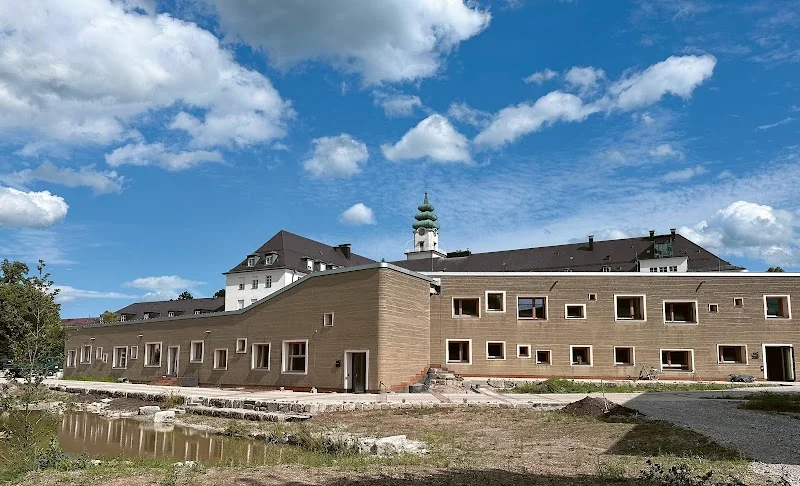
The Campus St. Michael in Traunstein is much more than a single event location. It combines education, encounter, sustainability, and architectural independence into a place where one not only arrives but also immerses oneself in content and atmosphere. Located on Wartberghöhe, the site has evolved from a historic study seminar into an open educational and meeting space where campus management, partner organizations, conferences, tours, and a diverse event program come together. Special attention is given to the new earth house, which, with its materiality and function as the heart of the campus, strongly shapes the perception of the place. Those looking for photos, architecture, earth construction, events, café, or practical information will find an unusually dense overall picture of tradition and future here. This mix makes the Campus St. Michael Traunstein so interesting: The place is quiet and green, yet lively in content, socially connected, and open to very different target groups. For visitors, this means a location with recognition value, where one does not just attend an event but experiences a site where sustainability becomes visibly concrete. ([campus-stmichael.de](https://www.campus-stmichael.de/ueber-campus/))
Earth Construction, Architecture, and Anna Heringer
The strongest search topic around the campus is earth construction. The official presentation emphasizes that the central campus building was created under the leadership of the multiple award-winning architect Anna Heringer and is considered the first partially cantilevered earth construction in Germany. This gives the location architectural significance that extends far beyond Traunstein. Not only the material but also the idea behind it is remarkable: The campus understands architecture here as a visible expression of an ecological and future-oriented attitude. The website describes that the new earth house was planned and built over eight years and today symbolizes sustainable, communal, and future-oriented living and working. This is not just an aesthetic statement but a conceptual approach that brings together education, space, and attitude. Visitors searching for terms like Campus St. Michael Traunstein architecture, earth construction, or Anna Heringer expect exactly this connection of innovation and material honesty. The place is not a museum object but a functioning educational space with rooms for seminars, encounters, and social projects. This gives the earth house an unusual credibility: It is not only talked about sustainable building, but it is lived in daily operation. ([campus-stmichael.de](https://www.campus-stmichael.de/layout/default/))
The architectural details also make the campus unmistakable. In the project description by Lehm Ton Erde, the building is described as approximately 70 meters long and 55 meters wide, with about 1,850 square meters of wall area and a total weight of 1,817 tons. It also mentions massive, approximately one-meter-thick earth walls that support a concrete roof and give the house its special presence. Such details are important for the perception on site because they make the materiality not abstract but concretely experienceable. At the same time, this explains why the campus is so often searched with terms like new building, earth house, special architecture, and photos: The surface, proportions, and natural effect of the material create a strong visual impression. The campus thus becomes an example of how craftsmanship tradition, contemporary architecture, and social responsibility can come together. The earth house is also not to be understood in isolation but as a new centerpiece of a site where seminar rooms, conference rooms, garden areas, and social uses interact. This very multilayeredness is a key reason for the high search relevance of the topic. ([lehmtonerde.at](https://www.lehmtonerde.at/en/projects/campus-st-michael/?utm_source=openai))
Events, Program, and Use of the Campus
Those searching for Campus St. Michael Traunstein and events quickly encounter a very broad program. The official website mentions more than 100 events per year, so the campus presents itself not as an occasional event location but as a continuously used place. This is particularly important from an SEO perspective because search queries like events, program, workshop, tours, or campus tour do not only target a single date but a vibrant structure. Typical formats range from campus tours and lectures on earth construction to repair cafés, garden arts, media weeks, coworking offerings, and events from the Impact Hub Traunstein. A good example is the tour with Anna Heringer, where the earth house is explained with its construction and origin. Campus tours also show that the site itself is part of the experience: Buildings, gardens, and the current use are presented together. Thus, the campus fulfills several expectations of a modern event location: It offers content, quality of stay, and a clear thematic framework around sustainability, education, and the common good. This makes the place attractive for groups, adults, partner organizations, and interested individual visitors. The variety of programs is not an addition but the core of the campus's identity. ([campus-stmichael.de](https://www.campus-stmichael.de/))
From the perspective of conferences and workshops, the campus is also well positioned. The presentation of the conference rooms highlights innovative seminar and event spaces in the new earth house as well as in the historic stone house. Additionally, there are a garden kitchen, courtyards, garden areas, and a rooftop garden that provide not only visual but also functional quality. For organizers, the catering based on seasonal, regional, and organic products, as well as the mix of new and reused furniture, are also interesting. This fits perfectly with search terms like conference rooms, program, event calendar, or sustainable location. The campus explicitly invites individual tours so that interested parties can get to know the rooms on site and plan together with the conference team. For a location page, this is a valuable point because it allows not only the booking scenario but also the experience to be described in advance. Visitors should not just rent a room but understand a place that conveys a certain attitude. That is precisely why events here do not function as loose dates but as a visible part of an overarching concept: Learning, working, experimenting, and networking in an environment that addresses the future and is also spatially convincingly implemented. ([campus-stmichael.de](https://www.campus-stmichael.de/layout/default/))
Café, Opening Hours, and Daily Life in the Earth House
The keyword café leads to the project soterra at Campus St. Michael. On the website, it is described as a café in the earth house, but also as a place under construction. The current status is deliberately stated as open: It is a space where ideas, people, and paths can find each other. Currently, coffee, cake, and cold drinks are mainly mentioned, while the café is to be further developed step by step. For seekers, this is important because not every location offers a fully developed gastronomic operation immediately. At the campus, the development itself is part of the story: The café stands for sustainability, regionality, and social responsibility, but indeed in a phase of growth. Therefore, it is practical not to assume classic fixed café opening hours but to check the current situation before a visit. The official contact page at least provides clear opening hours for the campus team, namely Monday to Friday from 08:00 to 12:00. So anyone with an inquiry about the café, events, or visits can contact the office. This combination of open development and clear accessibility makes the campus trustworthy. It does not sell a finished promise but communicates transparently what is already available and what is still emerging. This is exactly what is more attractive for many guests today than a polished facade. ([campus-stmichael.de](https://www.campus-stmichael.de/ueber-campus/?utm_source=openai))
Around the café and the earth house, it is also worth taking a look at other uses in the same building complex. The Carifant, a second-hand toy store of Caritas, is located in the new earth house on the campus grounds and opens Monday to Thursday from 9:30 AM to 4:00 PM and Friday from 9:30 AM to 1:00 PM. This shows that the earth house does not only function as an architectural exhibit but is sorted as a socially used everyday space. This mix of café, social project, event location, and educational space gives the campus its special everyday usability. Visitors can thus not only participate in a tour but also experience the place as a lively social space. For SEO, this is a strong signal: Those searching for café, opening hours, or earth house expect not only gastronomic information but also usually hints about atmosphere, type of use, and accessibility. The campus meets this expectation by connecting various uses and simultaneously openly communicating that the project is developing further. This makes the place particularly interesting for visitors who appreciate sustainable places that do not seem artificial but visibly grow in real operation. ([campus-stmichael.de](https://www.campus-stmichael.de/projekte/carifant/))
Directions, Train Station, and Parking Options
The journey to Campus St. Michael Traunstein is pleasantly uncomplicated and thus an important search topic for many visitors. The official address is Vonfichtstraße 1, 83278 Traunstein. The contact page also clearly states that the campus is located on Wartberghöhe, one of the most beautiful residential areas of the large district town of Traunstein. Particularly helpful for arriving without a car: According to the website, it takes about ten minutes to walk from the train station to the campus. This is a real plus for events, conferences, and visits because the location is thus not only regionally accessible but also well reachable for train travelers. Those arriving by car are directed via Rupertistraße and Vonfichtstraße to their destination. Additionally, the contact page refers to a campus map with parking options. Thus, the basic practical information is available, even if no exact number of parking spaces is published. For a location page, this combination is very valuable because it covers both public transport and individual travel. Search queries like directions, parking, or address can therefore be meaningfully answered with the real information from the website. The campus scores here not with complicated solutions but with clear, simple accessibility. This is often crucial in the event everyday life because an attractive place only really works well when the paths to it are understandable and quickly planable. ([campus-stmichael.de](https://www.campus-stmichael.de/))
The location on Wartberghöhe also contributes to the perception of the campus. It makes the place quiet, green, and yet close to the city. Those interested in photos or a first impression will quickly find that the location itself is part of the effect: The campus does not stand isolated on a noisy traffic axis but in an environment that is well-suited for concentrated events, walks between appointments, and relaxed arrivals. Additionally, the website refers to a campus map with parking options, which makes orientation easier. For groups, speakers, seminar participants, and visitors, this is a real plus because planning security is paramount. The connection to the train station is also a practical advantage as it encourages spontaneous visits and sustainable travel forms. In a market where many event locations primarily talk about event staging, the campus shows grounding here: It openly describes how to get there, where to arrive, and which paths are sensible. This fits very well with the thematic orientation of the house, which considers sustainability not only thematically but also organizationally. ([campus-stmichael.de](https://www.campus-stmichael.de/))
History, Campus Partners, and Special Places on the Grounds
The history of Campus St. Michael Traunstein goes back a long way. The official website describes the site as a place that has stood for encounter, personal development, and spirituality since 1929. At the same time, it becomes clear that the campus has not stood still: From the former study seminar, i.e., a boarding school for boys, an open, modern, and diverse educational and meeting place has developed in recent years. The change is thus not only structural but also substantive. Particularly interesting is the network of campus partners. These include, among others, the Catholic District Education Center Traunstein, Q3, the Impact Hub Traunstein, the School Pastoral Center, social projects like Carifant, and other actors covering different areas of education, media work, support, and sustainability. This very network ensures that the campus is not a monolithic block but a lively association of offerings and perspectives. For keyword analysis, this is relevant because search terms like history, special features, campus partners, or program are closely linked. The campus is thus not only a location but a system of spaces, people, and ideas. This also explains why many contents on the website explicitly speak of community, future viability, and added value for society and individuals. ([campus-stmichael.de](https://www.campus-stmichael.de/ueber-campus/))
In addition to the spatial dimension, there is an impressive plot size: The surrounding open space is described as 44,000 square meters. On another campus event page, there is even talk of an area of about 4.5 hectares. Specific places are mentioned there that make the campus not only functional but also particularly scenic: flowering meadows, wild hedges, fruit and community gardens, a swimming and nature-friendly pond, and the lush rooftop landscape on the earth house. This is particularly relevant for search queries about photos or highlights because it describes the campus as a visually experienceable place. Those who connect the images in their heads with the information on the website quickly recognize that here not only a building has emerged but a designed living space. The combination of nature, learning, social engagement, and architecture makes the campus a place with recognition value. For this reason, it is well suited for people who are not just looking for an address but a place with character. The search intention behind terms like photos, new building, architecture, or special places is not answered here with advertising language but with a concrete substantive and spatial diversity. ([campus-stmichael.de](https://www.campus-stmichael.de/ueber-campus/))
Photos, Impressions, and Why the Campus Stays in Memory
Those searching for photos of Campus St. Michael Traunstein are usually looking for more than just an exterior view. They seek an impression of how the place feels. Here, the campus scores with a strong visual language: The earth house with its earthy materials, the garden areas, the rooftop garden, the courtyards, and the natural transitions between architecture and landscape create a visual calm that is immediately recognizable in pictures. The website speaks of an inspiring atmosphere, sustainable building, and an educational place that is open and experienceable for all generations. This does not create a sterile conference house but a place that radiates warmth, materiality, and future orientation. For social media and discover content, this is particularly strong because the visual world already conveys the core of the offering: Here it is about sustainability, but not abstractly, rather concretely and visibly. Additionally, the proximity of historical buildings, the new earth house, and green spaces makes the place varied and photographically attractive. A visit thus provides not only content but also memorable motifs. This is precisely why the campus is so relevant for search queries about photos, architecture, and earth house. It is a place that can be seen, understood, and recognized again. ([campus-stmichael.de](https://www.campus-stmichael.de/layout/default/))
Content-wise, the campus also stays in memory because it consistently pursues a message: sustainable living, working, and collaboration are not just buzzwords but lived practice. The campus tours and garden tours show how buildings, landscapes, and projects belong together. The repair café makes the social and ecological thought practically experienceable, the Impact Hub brings entrepreneurial energy, and the café project soterra creates a place of encounter in development. This creates a narrative that is easily understandable for visitors and is well remembered. Thus, those entering the campus experience not only architecture but a design concept that ranges from interior spaces to the outdoor area. This is crucial for the search for a special event location because it gives the place identity. Campus St. Michael Traunstein does not come across as loud but clear. Not overloaded but well thought out. Not arbitrary but with a strong attitude. This very mix makes it particularly attractive for photos, visits, conferences, and events and ensures that the search queries around this location fit so well together. ([campus-stmichael.de](https://www.campus-stmichael.de/))
Sources:
- Campus St. Michael Traunstein - Official Website
- Campus St. Michael Traunstein - About Campus
- Campus St. Michael Traunstein - Contact & Opening Hours
- Campus St. Michael Traunstein - Conference Rooms and Sustainability
- Campus St. Michael Traunstein - Carifant Project
- Anna Heringer - Campus St.Michael
- Lehm Ton Erde - Campus St. Michael
Show moreShow less
Campus St. Michael Traunstein | Earth Construction & Events
The Campus St. Michael in Traunstein is much more than a single event location. It combines education, encounter, sustainability, and architectural independence into a place where one not only arrives but also immerses oneself in content and atmosphere. Located on Wartberghöhe, the site has evolved from a historic study seminar into an open educational and meeting space where campus management, partner organizations, conferences, tours, and a diverse event program come together. Special attention is given to the new earth house, which, with its materiality and function as the heart of the campus, strongly shapes the perception of the place. Those looking for photos, architecture, earth construction, events, café, or practical information will find an unusually dense overall picture of tradition and future here. This mix makes the Campus St. Michael Traunstein so interesting: The place is quiet and green, yet lively in content, socially connected, and open to very different target groups. For visitors, this means a location with recognition value, where one does not just attend an event but experiences a site where sustainability becomes visibly concrete. ([campus-stmichael.de](https://www.campus-stmichael.de/ueber-campus/))
Earth Construction, Architecture, and Anna Heringer
The strongest search topic around the campus is earth construction. The official presentation emphasizes that the central campus building was created under the leadership of the multiple award-winning architect Anna Heringer and is considered the first partially cantilevered earth construction in Germany. This gives the location architectural significance that extends far beyond Traunstein. Not only the material but also the idea behind it is remarkable: The campus understands architecture here as a visible expression of an ecological and future-oriented attitude. The website describes that the new earth house was planned and built over eight years and today symbolizes sustainable, communal, and future-oriented living and working. This is not just an aesthetic statement but a conceptual approach that brings together education, space, and attitude. Visitors searching for terms like Campus St. Michael Traunstein architecture, earth construction, or Anna Heringer expect exactly this connection of innovation and material honesty. The place is not a museum object but a functioning educational space with rooms for seminars, encounters, and social projects. This gives the earth house an unusual credibility: It is not only talked about sustainable building, but it is lived in daily operation. ([campus-stmichael.de](https://www.campus-stmichael.de/layout/default/))
The architectural details also make the campus unmistakable. In the project description by Lehm Ton Erde, the building is described as approximately 70 meters long and 55 meters wide, with about 1,850 square meters of wall area and a total weight of 1,817 tons. It also mentions massive, approximately one-meter-thick earth walls that support a concrete roof and give the house its special presence. Such details are important for the perception on site because they make the materiality not abstract but concretely experienceable. At the same time, this explains why the campus is so often searched with terms like new building, earth house, special architecture, and photos: The surface, proportions, and natural effect of the material create a strong visual impression. The campus thus becomes an example of how craftsmanship tradition, contemporary architecture, and social responsibility can come together. The earth house is also not to be understood in isolation but as a new centerpiece of a site where seminar rooms, conference rooms, garden areas, and social uses interact. This very multilayeredness is a key reason for the high search relevance of the topic. ([lehmtonerde.at](https://www.lehmtonerde.at/en/projects/campus-st-michael/?utm_source=openai))
Events, Program, and Use of the Campus
Those searching for Campus St. Michael Traunstein and events quickly encounter a very broad program. The official website mentions more than 100 events per year, so the campus presents itself not as an occasional event location but as a continuously used place. This is particularly important from an SEO perspective because search queries like events, program, workshop, tours, or campus tour do not only target a single date but a vibrant structure. Typical formats range from campus tours and lectures on earth construction to repair cafés, garden arts, media weeks, coworking offerings, and events from the Impact Hub Traunstein. A good example is the tour with Anna Heringer, where the earth house is explained with its construction and origin. Campus tours also show that the site itself is part of the experience: Buildings, gardens, and the current use are presented together. Thus, the campus fulfills several expectations of a modern event location: It offers content, quality of stay, and a clear thematic framework around sustainability, education, and the common good. This makes the place attractive for groups, adults, partner organizations, and interested individual visitors. The variety of programs is not an addition but the core of the campus's identity. ([campus-stmichael.de](https://www.campus-stmichael.de/))
From the perspective of conferences and workshops, the campus is also well positioned. The presentation of the conference rooms highlights innovative seminar and event spaces in the new earth house as well as in the historic stone house. Additionally, there are a garden kitchen, courtyards, garden areas, and a rooftop garden that provide not only visual but also functional quality. For organizers, the catering based on seasonal, regional, and organic products, as well as the mix of new and reused furniture, are also interesting. This fits perfectly with search terms like conference rooms, program, event calendar, or sustainable location. The campus explicitly invites individual tours so that interested parties can get to know the rooms on site and plan together with the conference team. For a location page, this is a valuable point because it allows not only the booking scenario but also the experience to be described in advance. Visitors should not just rent a room but understand a place that conveys a certain attitude. That is precisely why events here do not function as loose dates but as a visible part of an overarching concept: Learning, working, experimenting, and networking in an environment that addresses the future and is also spatially convincingly implemented. ([campus-stmichael.de](https://www.campus-stmichael.de/layout/default/))
Café, Opening Hours, and Daily Life in the Earth House
The keyword café leads to the project soterra at Campus St. Michael. On the website, it is described as a café in the earth house, but also as a place under construction. The current status is deliberately stated as open: It is a space where ideas, people, and paths can find each other. Currently, coffee, cake, and cold drinks are mainly mentioned, while the café is to be further developed step by step. For seekers, this is important because not every location offers a fully developed gastronomic operation immediately. At the campus, the development itself is part of the story: The café stands for sustainability, regionality, and social responsibility, but indeed in a phase of growth. Therefore, it is practical not to assume classic fixed café opening hours but to check the current situation before a visit. The official contact page at least provides clear opening hours for the campus team, namely Monday to Friday from 08:00 to 12:00. So anyone with an inquiry about the café, events, or visits can contact the office. This combination of open development and clear accessibility makes the campus trustworthy. It does not sell a finished promise but communicates transparently what is already available and what is still emerging. This is exactly what is more attractive for many guests today than a polished facade. ([campus-stmichael.de](https://www.campus-stmichael.de/ueber-campus/?utm_source=openai))
Around the café and the earth house, it is also worth taking a look at other uses in the same building complex. The Carifant, a second-hand toy store of Caritas, is located in the new earth house on the campus grounds and opens Monday to Thursday from 9:30 AM to 4:00 PM and Friday from 9:30 AM to 1:00 PM. This shows that the earth house does not only function as an architectural exhibit but is sorted as a socially used everyday space. This mix of café, social project, event location, and educational space gives the campus its special everyday usability. Visitors can thus not only participate in a tour but also experience the place as a lively social space. For SEO, this is a strong signal: Those searching for café, opening hours, or earth house expect not only gastronomic information but also usually hints about atmosphere, type of use, and accessibility. The campus meets this expectation by connecting various uses and simultaneously openly communicating that the project is developing further. This makes the place particularly interesting for visitors who appreciate sustainable places that do not seem artificial but visibly grow in real operation. ([campus-stmichael.de](https://www.campus-stmichael.de/projekte/carifant/))
Directions, Train Station, and Parking Options
The journey to Campus St. Michael Traunstein is pleasantly uncomplicated and thus an important search topic for many visitors. The official address is Vonfichtstraße 1, 83278 Traunstein. The contact page also clearly states that the campus is located on Wartberghöhe, one of the most beautiful residential areas of the large district town of Traunstein. Particularly helpful for arriving without a car: According to the website, it takes about ten minutes to walk from the train station to the campus. This is a real plus for events, conferences, and visits because the location is thus not only regionally accessible but also well reachable for train travelers. Those arriving by car are directed via Rupertistraße and Vonfichtstraße to their destination. Additionally, the contact page refers to a campus map with parking options. Thus, the basic practical information is available, even if no exact number of parking spaces is published. For a location page, this combination is very valuable because it covers both public transport and individual travel. Search queries like directions, parking, or address can therefore be meaningfully answered with the real information from the website. The campus scores here not with complicated solutions but with clear, simple accessibility. This is often crucial in the event everyday life because an attractive place only really works well when the paths to it are understandable and quickly planable. ([campus-stmichael.de](https://www.campus-stmichael.de/))
The location on Wartberghöhe also contributes to the perception of the campus. It makes the place quiet, green, and yet close to the city. Those interested in photos or a first impression will quickly find that the location itself is part of the effect: The campus does not stand isolated on a noisy traffic axis but in an environment that is well-suited for concentrated events, walks between appointments, and relaxed arrivals. Additionally, the website refers to a campus map with parking options, which makes orientation easier. For groups, speakers, seminar participants, and visitors, this is a real plus because planning security is paramount. The connection to the train station is also a practical advantage as it encourages spontaneous visits and sustainable travel forms. In a market where many event locations primarily talk about event staging, the campus shows grounding here: It openly describes how to get there, where to arrive, and which paths are sensible. This fits very well with the thematic orientation of the house, which considers sustainability not only thematically but also organizationally. ([campus-stmichael.de](https://www.campus-stmichael.de/))
History, Campus Partners, and Special Places on the Grounds
The history of Campus St. Michael Traunstein goes back a long way. The official website describes the site as a place that has stood for encounter, personal development, and spirituality since 1929. At the same time, it becomes clear that the campus has not stood still: From the former study seminar, i.e., a boarding school for boys, an open, modern, and diverse educational and meeting place has developed in recent years. The change is thus not only structural but also substantive. Particularly interesting is the network of campus partners. These include, among others, the Catholic District Education Center Traunstein, Q3, the Impact Hub Traunstein, the School Pastoral Center, social projects like Carifant, and other actors covering different areas of education, media work, support, and sustainability. This very network ensures that the campus is not a monolithic block but a lively association of offerings and perspectives. For keyword analysis, this is relevant because search terms like history, special features, campus partners, or program are closely linked. The campus is thus not only a location but a system of spaces, people, and ideas. This also explains why many contents on the website explicitly speak of community, future viability, and added value for society and individuals. ([campus-stmichael.de](https://www.campus-stmichael.de/ueber-campus/))
In addition to the spatial dimension, there is an impressive plot size: The surrounding open space is described as 44,000 square meters. On another campus event page, there is even talk of an area of about 4.5 hectares. Specific places are mentioned there that make the campus not only functional but also particularly scenic: flowering meadows, wild hedges, fruit and community gardens, a swimming and nature-friendly pond, and the lush rooftop landscape on the earth house. This is particularly relevant for search queries about photos or highlights because it describes the campus as a visually experienceable place. Those who connect the images in their heads with the information on the website quickly recognize that here not only a building has emerged but a designed living space. The combination of nature, learning, social engagement, and architecture makes the campus a place with recognition value. For this reason, it is well suited for people who are not just looking for an address but a place with character. The search intention behind terms like photos, new building, architecture, or special places is not answered here with advertising language but with a concrete substantive and spatial diversity. ([campus-stmichael.de](https://www.campus-stmichael.de/ueber-campus/))
Photos, Impressions, and Why the Campus Stays in Memory
Those searching for photos of Campus St. Michael Traunstein are usually looking for more than just an exterior view. They seek an impression of how the place feels. Here, the campus scores with a strong visual language: The earth house with its earthy materials, the garden areas, the rooftop garden, the courtyards, and the natural transitions between architecture and landscape create a visual calm that is immediately recognizable in pictures. The website speaks of an inspiring atmosphere, sustainable building, and an educational place that is open and experienceable for all generations. This does not create a sterile conference house but a place that radiates warmth, materiality, and future orientation. For social media and discover content, this is particularly strong because the visual world already conveys the core of the offering: Here it is about sustainability, but not abstractly, rather concretely and visibly. Additionally, the proximity of historical buildings, the new earth house, and green spaces makes the place varied and photographically attractive. A visit thus provides not only content but also memorable motifs. This is precisely why the campus is so relevant for search queries about photos, architecture, and earth house. It is a place that can be seen, understood, and recognized again. ([campus-stmichael.de](https://www.campus-stmichael.de/layout/default/))
Content-wise, the campus also stays in memory because it consistently pursues a message: sustainable living, working, and collaboration are not just buzzwords but lived practice. The campus tours and garden tours show how buildings, landscapes, and projects belong together. The repair café makes the social and ecological thought practically experienceable, the Impact Hub brings entrepreneurial energy, and the café project soterra creates a place of encounter in development. This creates a narrative that is easily understandable for visitors and is well remembered. Thus, those entering the campus experience not only architecture but a design concept that ranges from interior spaces to the outdoor area. This is crucial for the search for a special event location because it gives the place identity. Campus St. Michael Traunstein does not come across as loud but clear. Not overloaded but well thought out. Not arbitrary but with a strong attitude. This very mix makes it particularly attractive for photos, visits, conferences, and events and ensures that the search queries around this location fit so well together. ([campus-stmichael.de](https://www.campus-stmichael.de/))
Sources:
- Campus St. Michael Traunstein - Official Website
- Campus St. Michael Traunstein - About Campus
- Campus St. Michael Traunstein - Contact & Opening Hours
- Campus St. Michael Traunstein - Conference Rooms and Sustainability
- Campus St. Michael Traunstein - Carifant Project
- Anna Heringer - Campus St.Michael
- Lehm Ton Erde - Campus St. Michael
Campus St. Michael Traunstein | Earth Construction & Events
The Campus St. Michael in Traunstein is much more than a single event location. It combines education, encounter, sustainability, and architectural independence into a place where one not only arrives but also immerses oneself in content and atmosphere. Located on Wartberghöhe, the site has evolved from a historic study seminar into an open educational and meeting space where campus management, partner organizations, conferences, tours, and a diverse event program come together. Special attention is given to the new earth house, which, with its materiality and function as the heart of the campus, strongly shapes the perception of the place. Those looking for photos, architecture, earth construction, events, café, or practical information will find an unusually dense overall picture of tradition and future here. This mix makes the Campus St. Michael Traunstein so interesting: The place is quiet and green, yet lively in content, socially connected, and open to very different target groups. For visitors, this means a location with recognition value, where one does not just attend an event but experiences a site where sustainability becomes visibly concrete. ([campus-stmichael.de](https://www.campus-stmichael.de/ueber-campus/))
Earth Construction, Architecture, and Anna Heringer
The strongest search topic around the campus is earth construction. The official presentation emphasizes that the central campus building was created under the leadership of the multiple award-winning architect Anna Heringer and is considered the first partially cantilevered earth construction in Germany. This gives the location architectural significance that extends far beyond Traunstein. Not only the material but also the idea behind it is remarkable: The campus understands architecture here as a visible expression of an ecological and future-oriented attitude. The website describes that the new earth house was planned and built over eight years and today symbolizes sustainable, communal, and future-oriented living and working. This is not just an aesthetic statement but a conceptual approach that brings together education, space, and attitude. Visitors searching for terms like Campus St. Michael Traunstein architecture, earth construction, or Anna Heringer expect exactly this connection of innovation and material honesty. The place is not a museum object but a functioning educational space with rooms for seminars, encounters, and social projects. This gives the earth house an unusual credibility: It is not only talked about sustainable building, but it is lived in daily operation. ([campus-stmichael.de](https://www.campus-stmichael.de/layout/default/))
The architectural details also make the campus unmistakable. In the project description by Lehm Ton Erde, the building is described as approximately 70 meters long and 55 meters wide, with about 1,850 square meters of wall area and a total weight of 1,817 tons. It also mentions massive, approximately one-meter-thick earth walls that support a concrete roof and give the house its special presence. Such details are important for the perception on site because they make the materiality not abstract but concretely experienceable. At the same time, this explains why the campus is so often searched with terms like new building, earth house, special architecture, and photos: The surface, proportions, and natural effect of the material create a strong visual impression. The campus thus becomes an example of how craftsmanship tradition, contemporary architecture, and social responsibility can come together. The earth house is also not to be understood in isolation but as a new centerpiece of a site where seminar rooms, conference rooms, garden areas, and social uses interact. This very multilayeredness is a key reason for the high search relevance of the topic. ([lehmtonerde.at](https://www.lehmtonerde.at/en/projects/campus-st-michael/?utm_source=openai))
Events, Program, and Use of the Campus
Those searching for Campus St. Michael Traunstein and events quickly encounter a very broad program. The official website mentions more than 100 events per year, so the campus presents itself not as an occasional event location but as a continuously used place. This is particularly important from an SEO perspective because search queries like events, program, workshop, tours, or campus tour do not only target a single date but a vibrant structure. Typical formats range from campus tours and lectures on earth construction to repair cafés, garden arts, media weeks, coworking offerings, and events from the Impact Hub Traunstein. A good example is the tour with Anna Heringer, where the earth house is explained with its construction and origin. Campus tours also show that the site itself is part of the experience: Buildings, gardens, and the current use are presented together. Thus, the campus fulfills several expectations of a modern event location: It offers content, quality of stay, and a clear thematic framework around sustainability, education, and the common good. This makes the place attractive for groups, adults, partner organizations, and interested individual visitors. The variety of programs is not an addition but the core of the campus's identity. ([campus-stmichael.de](https://www.campus-stmichael.de/))
From the perspective of conferences and workshops, the campus is also well positioned. The presentation of the conference rooms highlights innovative seminar and event spaces in the new earth house as well as in the historic stone house. Additionally, there are a garden kitchen, courtyards, garden areas, and a rooftop garden that provide not only visual but also functional quality. For organizers, the catering based on seasonal, regional, and organic products, as well as the mix of new and reused furniture, are also interesting. This fits perfectly with search terms like conference rooms, program, event calendar, or sustainable location. The campus explicitly invites individual tours so that interested parties can get to know the rooms on site and plan together with the conference team. For a location page, this is a valuable point because it allows not only the booking scenario but also the experience to be described in advance. Visitors should not just rent a room but understand a place that conveys a certain attitude. That is precisely why events here do not function as loose dates but as a visible part of an overarching concept: Learning, working, experimenting, and networking in an environment that addresses the future and is also spatially convincingly implemented. ([campus-stmichael.de](https://www.campus-stmichael.de/layout/default/))
Café, Opening Hours, and Daily Life in the Earth House
The keyword café leads to the project soterra at Campus St. Michael. On the website, it is described as a café in the earth house, but also as a place under construction. The current status is deliberately stated as open: It is a space where ideas, people, and paths can find each other. Currently, coffee, cake, and cold drinks are mainly mentioned, while the café is to be further developed step by step. For seekers, this is important because not every location offers a fully developed gastronomic operation immediately. At the campus, the development itself is part of the story: The café stands for sustainability, regionality, and social responsibility, but indeed in a phase of growth. Therefore, it is practical not to assume classic fixed café opening hours but to check the current situation before a visit. The official contact page at least provides clear opening hours for the campus team, namely Monday to Friday from 08:00 to 12:00. So anyone with an inquiry about the café, events, or visits can contact the office. This combination of open development and clear accessibility makes the campus trustworthy. It does not sell a finished promise but communicates transparently what is already available and what is still emerging. This is exactly what is more attractive for many guests today than a polished facade. ([campus-stmichael.de](https://www.campus-stmichael.de/ueber-campus/?utm_source=openai))
Around the café and the earth house, it is also worth taking a look at other uses in the same building complex. The Carifant, a second-hand toy store of Caritas, is located in the new earth house on the campus grounds and opens Monday to Thursday from 9:30 AM to 4:00 PM and Friday from 9:30 AM to 1:00 PM. This shows that the earth house does not only function as an architectural exhibit but is sorted as a socially used everyday space. This mix of café, social project, event location, and educational space gives the campus its special everyday usability. Visitors can thus not only participate in a tour but also experience the place as a lively social space. For SEO, this is a strong signal: Those searching for café, opening hours, or earth house expect not only gastronomic information but also usually hints about atmosphere, type of use, and accessibility. The campus meets this expectation by connecting various uses and simultaneously openly communicating that the project is developing further. This makes the place particularly interesting for visitors who appreciate sustainable places that do not seem artificial but visibly grow in real operation. ([campus-stmichael.de](https://www.campus-stmichael.de/projekte/carifant/))
Directions, Train Station, and Parking Options
The journey to Campus St. Michael Traunstein is pleasantly uncomplicated and thus an important search topic for many visitors. The official address is Vonfichtstraße 1, 83278 Traunstein. The contact page also clearly states that the campus is located on Wartberghöhe, one of the most beautiful residential areas of the large district town of Traunstein. Particularly helpful for arriving without a car: According to the website, it takes about ten minutes to walk from the train station to the campus. This is a real plus for events, conferences, and visits because the location is thus not only regionally accessible but also well reachable for train travelers. Those arriving by car are directed via Rupertistraße and Vonfichtstraße to their destination. Additionally, the contact page refers to a campus map with parking options. Thus, the basic practical information is available, even if no exact number of parking spaces is published. For a location page, this combination is very valuable because it covers both public transport and individual travel. Search queries like directions, parking, or address can therefore be meaningfully answered with the real information from the website. The campus scores here not with complicated solutions but with clear, simple accessibility. This is often crucial in the event everyday life because an attractive place only really works well when the paths to it are understandable and quickly planable. ([campus-stmichael.de](https://www.campus-stmichael.de/))
The location on Wartberghöhe also contributes to the perception of the campus. It makes the place quiet, green, and yet close to the city. Those interested in photos or a first impression will quickly find that the location itself is part of the effect: The campus does not stand isolated on a noisy traffic axis but in an environment that is well-suited for concentrated events, walks between appointments, and relaxed arrivals. Additionally, the website refers to a campus map with parking options, which makes orientation easier. For groups, speakers, seminar participants, and visitors, this is a real plus because planning security is paramount. The connection to the train station is also a practical advantage as it encourages spontaneous visits and sustainable travel forms. In a market where many event locations primarily talk about event staging, the campus shows grounding here: It openly describes how to get there, where to arrive, and which paths are sensible. This fits very well with the thematic orientation of the house, which considers sustainability not only thematically but also organizationally. ([campus-stmichael.de](https://www.campus-stmichael.de/))
History, Campus Partners, and Special Places on the Grounds
The history of Campus St. Michael Traunstein goes back a long way. The official website describes the site as a place that has stood for encounter, personal development, and spirituality since 1929. At the same time, it becomes clear that the campus has not stood still: From the former study seminar, i.e., a boarding school for boys, an open, modern, and diverse educational and meeting place has developed in recent years. The change is thus not only structural but also substantive. Particularly interesting is the network of campus partners. These include, among others, the Catholic District Education Center Traunstein, Q3, the Impact Hub Traunstein, the School Pastoral Center, social projects like Carifant, and other actors covering different areas of education, media work, support, and sustainability. This very network ensures that the campus is not a monolithic block but a lively association of offerings and perspectives. For keyword analysis, this is relevant because search terms like history, special features, campus partners, or program are closely linked. The campus is thus not only a location but a system of spaces, people, and ideas. This also explains why many contents on the website explicitly speak of community, future viability, and added value for society and individuals. ([campus-stmichael.de](https://www.campus-stmichael.de/ueber-campus/))
In addition to the spatial dimension, there is an impressive plot size: The surrounding open space is described as 44,000 square meters. On another campus event page, there is even talk of an area of about 4.5 hectares. Specific places are mentioned there that make the campus not only functional but also particularly scenic: flowering meadows, wild hedges, fruit and community gardens, a swimming and nature-friendly pond, and the lush rooftop landscape on the earth house. This is particularly relevant for search queries about photos or highlights because it describes the campus as a visually experienceable place. Those who connect the images in their heads with the information on the website quickly recognize that here not only a building has emerged but a designed living space. The combination of nature, learning, social engagement, and architecture makes the campus a place with recognition value. For this reason, it is well suited for people who are not just looking for an address but a place with character. The search intention behind terms like photos, new building, architecture, or special places is not answered here with advertising language but with a concrete substantive and spatial diversity. ([campus-stmichael.de](https://www.campus-stmichael.de/ueber-campus/))
Photos, Impressions, and Why the Campus Stays in Memory
Those searching for photos of Campus St. Michael Traunstein are usually looking for more than just an exterior view. They seek an impression of how the place feels. Here, the campus scores with a strong visual language: The earth house with its earthy materials, the garden areas, the rooftop garden, the courtyards, and the natural transitions between architecture and landscape create a visual calm that is immediately recognizable in pictures. The website speaks of an inspiring atmosphere, sustainable building, and an educational place that is open and experienceable for all generations. This does not create a sterile conference house but a place that radiates warmth, materiality, and future orientation. For social media and discover content, this is particularly strong because the visual world already conveys the core of the offering: Here it is about sustainability, but not abstractly, rather concretely and visibly. Additionally, the proximity of historical buildings, the new earth house, and green spaces makes the place varied and photographically attractive. A visit thus provides not only content but also memorable motifs. This is precisely why the campus is so relevant for search queries about photos, architecture, and earth house. It is a place that can be seen, understood, and recognized again. ([campus-stmichael.de](https://www.campus-stmichael.de/layout/default/))
Content-wise, the campus also stays in memory because it consistently pursues a message: sustainable living, working, and collaboration are not just buzzwords but lived practice. The campus tours and garden tours show how buildings, landscapes, and projects belong together. The repair café makes the social and ecological thought practically experienceable, the Impact Hub brings entrepreneurial energy, and the café project soterra creates a place of encounter in development. This creates a narrative that is easily understandable for visitors and is well remembered. Thus, those entering the campus experience not only architecture but a design concept that ranges from interior spaces to the outdoor area. This is crucial for the search for a special event location because it gives the place identity. Campus St. Michael Traunstein does not come across as loud but clear. Not overloaded but well thought out. Not arbitrary but with a strong attitude. This very mix makes it particularly attractive for photos, visits, conferences, and events and ensures that the search queries around this location fit so well together. ([campus-stmichael.de](https://www.campus-stmichael.de/))
Sources:
- Campus St. Michael Traunstein - Official Website
- Campus St. Michael Traunstein - About Campus
- Campus St. Michael Traunstein - Contact & Opening Hours
- Campus St. Michael Traunstein - Conference Rooms and Sustainability
- Campus St. Michael Traunstein - Carifant Project
- Anna Heringer - Campus St.Michael
- Lehm Ton Erde - Campus St. Michael
Upcoming Events
GROWTH, DEVELOPMENT, GROWN – 8th Bavarian Youth Art School Days
The 8th Bavarian Youth Art School Days offer a creative program with workshops, lectures, and more – ideal for art lovers.
8th Bavarian Youth Art School Days
Experience interactive art workshops and exciting discussions at Campus St. Michael on July 3rd and 4th.
Growth Impulses – 8th Bavarian Youth Art School Days
Creative family time in Traunstein: Workshops, garden arts, and children's ideas make July 3, 2026, special. A day full of wonder, art, and community. #FamilyExperience

Growing in Practice – 8th Bavarian Youth Art School Days
Cultural education meets future topics: In Traunstein, Growing becomes a lively event experience at Campus St. Michael. 04.07.2026, 15 €. #Traunstein #CulturalEducation
Shared Wall Dinner – 8th Bavarian Youth Art School Days
Traunstein becomes a place of enjoyment: At the Shared Wall Dinner, creative cuisine, exchange, and campus atmosphere come together. 04.07.2026, 15 Euros. #Traunstein #Culture
Frequently Asked Questions
Reviews
No reviews found