
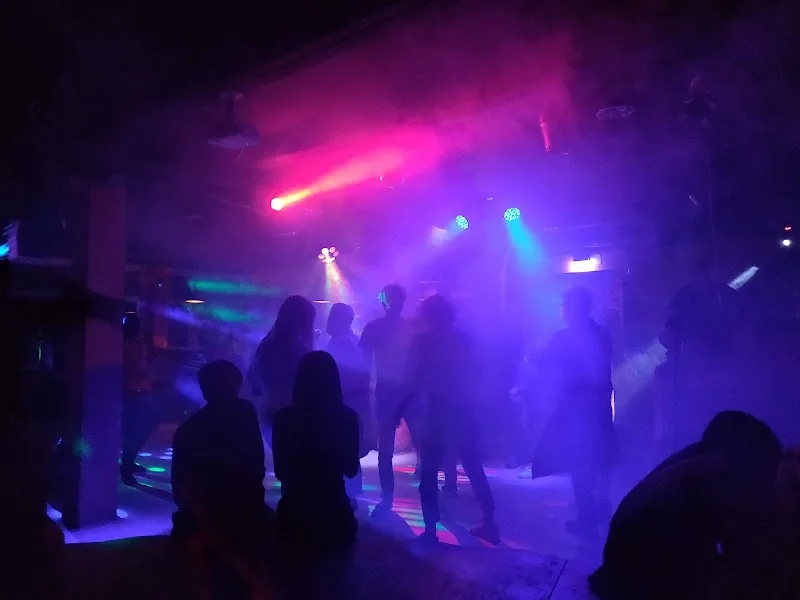
Erich-Weinert-Straße 2, Cottbus
Erich-Weinert-Straße 2, 03046 Cottbus, Germany
STAGE eight | Program & Tickets
The STAGE eight is one of those cultural places that not only describes a building or a stage but carries an entire creative ecosystem. On the BTU central campus in Cottbus, a vibrant meeting point for theater, improvisation, courses, workshops, and student projects has developed from a theater course in 1996. The location is at Erich-Weinert-Straße 2 and is supported by bühne 8 e.V. Today, the STAGE eight stands for an open campus space where students and other interested parties can experiment, co-create, and perform. This mix of initiative, artistic curiosity, and immediate proximity to university life continues to shape the profile of the location to this day. ([buehne8.de](https://buehne8.de/ueber-uns/))
Current Events, Tickets, and Participation Formats
Those searching for stage eight cottbus or stage eight program quickly land at a location that regularly showcases new formats while staying very close to its target audience. The official program page currently lists, among other things, the BTU Writers Club, game night, BTU Retro Gaming Club, and Rabota Karoshi. The homepage announces further dates for early and mid-April 2026, including game night and BTU Writers Club as well as a date for the BTU Retro Gaming Club. This creates a calendar that not only depicts classic theater evenings but also low-threshold, communal, and experimental formats. The STAGE eight thus acts as a mix of stage, workshop, and meeting point, where culture is not only consumed but actively co-created. ([buehne8.de](https://buehne8.de/Programm/))
This is particularly evident in the participation formats on the STAGE eight & You page. It explicitly states that everyone can get involved, on or off stage, in technical support or as assistance at events. The semester program includes, among other things, play space, BTU Writers Club, BTU Retro Gaming Club, game night, improvisational theater, and acting. The play space is aimed at people who want to get to know theater and improvisation, while the Writers Club provides a platform for writing students and welcomes literature in various forms. The Retro Gaming Club, in turn, brings together classic computer games, exchange, and personal projects. The game night complements everything with board games, from strategic games to classics. Those looking for tickets can find current prices of 6 euros or 4 euros reduced for Rabota Karoshi events on the program page. ([buehne8.de](https://buehne8.de/buehne-acht-du/))
The event logic is deliberately open and campus-oriented. Several formats run weekly or biweekly, while others are planned on a semester basis or allow entry at any time. According to the website, courses and workshops are free for students because they are funded; for everyone else, the participation fee is 15 euros, with the game night being an exception. This structure is particularly attractive for a student cultural venue because it keeps access low while still creating commitment. So, anyone looking for stage eight tickets, a current stage eight program, or specific stage eight events will find here not a rigid large stage but a place with a changing calendar, clear community, and plenty of room for participation. ([buehne8.de](https://buehne8.de/buehne-acht-du/))
Directions and Parking at the BTU Central Campus
For those searching for stage eight directions or stage eight parking, the most important information is quite simple: The address is Erich-Weinert-Straße 2, 03046 Cottbus. The STAGE eight is located on the BTU central campus, thus situated in an environment strongly shaped by the university, student life, and other campus offerings. The official website even describes the place as a stage directly below the rehearsal rooms of the student union and near Quasimono, in an environment that closely connects culture and everyday life. This makes orientation easier: Those who know the central campus will find the STAGE eight as part of this larger university space. ([buehne8.de](https://buehne8.de/ueber-uns/))
BTU recommends arriving at the central campus via public transport from Cottbus Central Station. Mentioned are, among others, bus 16 to the stop TU Mensa, bus 15-44 and bus 47 to the Technical University, as well as tram 4 to Zimmerstraße with a subsequent five-minute walk towards the university. For those arriving by car, the university points out the A13 and A15 highways and the Cottbus-West exit and recommends following the signs towards the university. Additionally, the official arrival page states that there are free parking options available on campus. At the same time, the BTU pages caution that there are only limited parking options at certain buildings. Therefore, anyone wanting to arrive without stress should ideally plan some buffer time and use the campus parking areas or public transport. ([b-tu.de](https://www.b-tu.de/careercenter/jobmesse/fuer-aussteller/anreise))
This mix of good accessibility and campus location is part of its uniqueness. The STAGE eight is not organized as an isolated event hall but as a place that is integrated into university life. This is an advantage for visitors arriving by train or tram, but also for people coming from Cottbus itself who are already familiar with the campus. Those who want to return comfortably after an evening of improvisation, reading, or game night also benefit from the clearly described stops and campus paths. For search queries like stage eight cottbus, stage eight directions, or stage eight parking, it is therefore especially important: The way leads to the BTU central campus, the address is clear, and parking is generally provided on campus. ([b-tu.de](https://www.b-tu.de/careercenter/jobmesse/fuer-aussteller/anreise))
Rabota Karoshi and Improvisational Theater
A key part of the identity of the STAGE eight is the improvisational theater Rabota Karoshi. According to the official website, the group was formed after the later founder Ypsi Ciupack saw an improv group at a student theater festival in Karlsruhe in 2007 and thought that this format belonged in Cottbus as well. Together with the then artistic director Mathias Neuber, the first rehearsals were initiated. The first performance as Rabota Karoshi followed in October 2008 at the enrollment ceremony for international students at BTU Cottbus. Since then, the group has rehearsed every Monday and performs at least twice per semester. This makes Rabota Karoshi a fixed anchor point in the stage eight program and explains why the group's name is so frequently searched in connection with the location. ([buehne8.de](https://buehne8.de/buehne8_projekte/rabota-karoshi/))
The improvisational theater itself is clearly described on the STAGE eight website: The actors go on stage without knowing beforehand what will happen, and the audience's suggestions determine the stories. Nothing is staged; each piece is a premiere that cannot be repeated. This creates a special form of tension because the performers react to each other, take risks, and work very directly with the audience. The page also emphasizes that the group's performance takes precedence over individual performance. This idea is central to the STAGE eight brand: It is not about self-presentation but about collective storytelling, the courage to fail, and the joy of building real scenes from spontaneous ideas. Thus, Rabota Karoshi is not only an ensemble but also a living example of how improvisational theater works. ([buehne8.de](https://www.buehne8.de/rabota_karoshi/wasistimpro.html))
Content-wise, the ensemble moves between comedy, long form, and audience-friendly shows. The website states that alongside humorous play forms, more serious, dramaturgically demanding long forms have developed from improvisational theater. Rabota Karoshi thus represents a form of theater that can be both casual, fast, and focused. For visitors, this means: Those attending a Rabota-Karoshi show do not receive a pre-packaged storyline but an evening that grows from suggestions, reactions, and teamwork. This fits excellently with a place that sees itself as a meeting space and understands the stage not as an endpoint but as a shared playing field. For search queries like new stage eight mindful murder or boulevard stage eight mindful murder, it is important to distinguish: The STAGE eight is primarily known for its own student improvisational and theater profile, not for a fixed commercial repertoire house. ([buehne8.de](https://www.buehne8.de/rabota_karoshi/wasistimpro.html))
Courses, Workshops, and Projects to Participate In
For those who want to do more than just watch but also participate, the STAGE eight offers an astonishingly wide range of options. The STAGE eight & You page makes it clear that the offerings are aimed at everyone who wants to get involved, whether on stage, behind the scenes, in technical support, or in organization. According to its own description, the place thrives on the people who shape it. This is an important part of its identity because the location does not see itself as a static event building but as an open project. Particularly interesting is the clear semester structure: Some formats run regularly, others are open for entry, and others are aimed at specific target groups such as students or writing enthusiasts. ([buehne8.de](https://buehne8.de/buehne-acht-du/))
Current formats include the play space, an open course for theater and improvisation that includes movement, voice, and body exercises. The BTU Writers Club offers students a platform for poems, stories, and other literary forms and is even open in every language, according to the website. The BTU Retro Gaming Club is aimed at students who enjoy classic computer games or want to start their own retro projects. The game night takes place every two weeks and is explicitly suitable for newcomers; there are board games on site, and personal games can be brought along. Additionally, there are basic courses in improvisational theater, basic courses in acting, an English improv workshop, and workshops on request if needed. This variety shows that the search intent behind terms like workshops stage eight, courses stage eight, or writers club stage eight is very specifically addressed here. ([buehne8.de](https://buehne8.de/buehne-acht-du/))
Also exciting is the pedagogical line behind the offerings. The courses and workshops are led, unless otherwise stated, by theater educator Katharina Riedel. The basic acting course covers space and body awareness, interplay on stage, voice and speech, and the body as a means of expression. The basic improvisational theater course trains associative ability, trust in one's impulses, and collective storytelling. Thus, the STAGE eight conveys not only performances but also skills that are important for art, communication, and group processes. That students can participate for free and others pay a moderate fee fits into this concept of accessibility. The location is therefore not only a cultural venue but also a learning place where voice, language, movement, writing, gaming, and improvisation coexist. ([buehne8.de](https://buehne8.de/buehne-acht-du/))
History, Profile, and Special Atmosphere
The history of the STAGE eight is particularly valuable for a local cultural site because it brings together several lines of development. According to the official website, the first theater course began in 1996 under the direction of Mathias Neuber; the association bühne 8 e.V. was founded in 1998. This was followed by the cabaret Die Ehrlichen in 2000, the film group 8 in 2005, Rabota Karoshi in 2008, the crime ensemble Krimi a la Karte in 2009, the first feature film Rootstock in 2010, the street theater ensemble Entre vous in 2011, and the renaming of Krimi a la Karte to Krimi Delikat in 2014. In 2016, the inclusion theater Rampenfieber and the 20th anniversary of the STAGE eight were added, followed by a new artistic direction with Patrick Niegsch and Katharina Riedel in 2018. This timeline shows how a theater course could develop into a versatile cultural project over decades. ([buehne8.de](https://buehne8.de/ueber-uns/))
The city of Cottbus also describes the STAGE eight as an integral part of student culture on the BTU Cottbus-Senftenberg campus and points to Rabota Karoshi, other theater performances, courses, and workshops. This classification is important because it makes the role of the location visible beyond the campus. The STAGE eight is relevant not only for students but also for the urban cultural scene, for visitors from the surrounding area, and for people who enjoy free, experimental, and often very direct forms of theater. The official description as a space for art and culture on campus, which remains a meeting space, summarizes this profile very well. For search queries like student theater cottbus, culture campus cottbus, or stage 8, this combination of location, history, and openness is crucial. ([cottbus.de](https://cottbus.de/kultur-und-tourismus/buehnen-ensemble-und-festivals/buehne-acht/?utm_source=openai))
As for the atmosphere, the STAGE eight is particularly strong because it appears low-threshold and yet independent. It is not a highly formalized house with great distance from the audience but a place where one can quickly get close to the people, the ideas, and the processes. The official website implies that the STAGE eight is what you make of it. This is precisely where its charm lies: Those who come experience not just a piece or an evening but a space where student culture, theater experiment, writing club, board game round, and improv show mutually enrich each other. For visitors seeking an authentic, lively, and creative address in Cottbus, this is a clear advantage. The STAGE eight thus appears both young, evolved, and quite distinctive. ([buehne8.de](https://buehne8.de/ueber-uns/))
Sources:
- STAGE eight – Official website with About Us, Program, STAGE eight & You, and Rabota Karoshi. ([buehne8.de](https://buehne8.de/?utm_source=openai))
- City of Cottbus/Chóśebuz – STAGE eight as a cultural venue in the city. ([cottbus.de](https://cottbus.de/kultur-und-tourismus/buehnen-ensemble-und-festivals/buehne-acht/?utm_source=openai))
- BTU Cottbus-Senftenberg – Arrival, campus path, and parking at the central campus. ([b-tu.de](https://www.b-tu.de/careercenter/jobmesse/fuer-aussteller/anreise))
- STAGE eight – Improvisational theater and background on Rabota Karoshi. ([buehne8.de](https://www.buehne8.de/rabota_karoshi/wasistimpro.html))
Show moreShow less
STAGE eight | Program & Tickets
The STAGE eight is one of those cultural places that not only describes a building or a stage but carries an entire creative ecosystem. On the BTU central campus in Cottbus, a vibrant meeting point for theater, improvisation, courses, workshops, and student projects has developed from a theater course in 1996. The location is at Erich-Weinert-Straße 2 and is supported by bühne 8 e.V. Today, the STAGE eight stands for an open campus space where students and other interested parties can experiment, co-create, and perform. This mix of initiative, artistic curiosity, and immediate proximity to university life continues to shape the profile of the location to this day. ([buehne8.de](https://buehne8.de/ueber-uns/))
Current Events, Tickets, and Participation Formats
Those searching for stage eight cottbus or stage eight program quickly land at a location that regularly showcases new formats while staying very close to its target audience. The official program page currently lists, among other things, the BTU Writers Club, game night, BTU Retro Gaming Club, and Rabota Karoshi. The homepage announces further dates for early and mid-April 2026, including game night and BTU Writers Club as well as a date for the BTU Retro Gaming Club. This creates a calendar that not only depicts classic theater evenings but also low-threshold, communal, and experimental formats. The STAGE eight thus acts as a mix of stage, workshop, and meeting point, where culture is not only consumed but actively co-created. ([buehne8.de](https://buehne8.de/Programm/))
This is particularly evident in the participation formats on the STAGE eight & You page. It explicitly states that everyone can get involved, on or off stage, in technical support or as assistance at events. The semester program includes, among other things, play space, BTU Writers Club, BTU Retro Gaming Club, game night, improvisational theater, and acting. The play space is aimed at people who want to get to know theater and improvisation, while the Writers Club provides a platform for writing students and welcomes literature in various forms. The Retro Gaming Club, in turn, brings together classic computer games, exchange, and personal projects. The game night complements everything with board games, from strategic games to classics. Those looking for tickets can find current prices of 6 euros or 4 euros reduced for Rabota Karoshi events on the program page. ([buehne8.de](https://buehne8.de/buehne-acht-du/))
The event logic is deliberately open and campus-oriented. Several formats run weekly or biweekly, while others are planned on a semester basis or allow entry at any time. According to the website, courses and workshops are free for students because they are funded; for everyone else, the participation fee is 15 euros, with the game night being an exception. This structure is particularly attractive for a student cultural venue because it keeps access low while still creating commitment. So, anyone looking for stage eight tickets, a current stage eight program, or specific stage eight events will find here not a rigid large stage but a place with a changing calendar, clear community, and plenty of room for participation. ([buehne8.de](https://buehne8.de/buehne-acht-du/))
Directions and Parking at the BTU Central Campus
For those searching for stage eight directions or stage eight parking, the most important information is quite simple: The address is Erich-Weinert-Straße 2, 03046 Cottbus. The STAGE eight is located on the BTU central campus, thus situated in an environment strongly shaped by the university, student life, and other campus offerings. The official website even describes the place as a stage directly below the rehearsal rooms of the student union and near Quasimono, in an environment that closely connects culture and everyday life. This makes orientation easier: Those who know the central campus will find the STAGE eight as part of this larger university space. ([buehne8.de](https://buehne8.de/ueber-uns/))
BTU recommends arriving at the central campus via public transport from Cottbus Central Station. Mentioned are, among others, bus 16 to the stop TU Mensa, bus 15-44 and bus 47 to the Technical University, as well as tram 4 to Zimmerstraße with a subsequent five-minute walk towards the university. For those arriving by car, the university points out the A13 and A15 highways and the Cottbus-West exit and recommends following the signs towards the university. Additionally, the official arrival page states that there are free parking options available on campus. At the same time, the BTU pages caution that there are only limited parking options at certain buildings. Therefore, anyone wanting to arrive without stress should ideally plan some buffer time and use the campus parking areas or public transport. ([b-tu.de](https://www.b-tu.de/careercenter/jobmesse/fuer-aussteller/anreise))
This mix of good accessibility and campus location is part of its uniqueness. The STAGE eight is not organized as an isolated event hall but as a place that is integrated into university life. This is an advantage for visitors arriving by train or tram, but also for people coming from Cottbus itself who are already familiar with the campus. Those who want to return comfortably after an evening of improvisation, reading, or game night also benefit from the clearly described stops and campus paths. For search queries like stage eight cottbus, stage eight directions, or stage eight parking, it is therefore especially important: The way leads to the BTU central campus, the address is clear, and parking is generally provided on campus. ([b-tu.de](https://www.b-tu.de/careercenter/jobmesse/fuer-aussteller/anreise))
Rabota Karoshi and Improvisational Theater
A key part of the identity of the STAGE eight is the improvisational theater Rabota Karoshi. According to the official website, the group was formed after the later founder Ypsi Ciupack saw an improv group at a student theater festival in Karlsruhe in 2007 and thought that this format belonged in Cottbus as well. Together with the then artistic director Mathias Neuber, the first rehearsals were initiated. The first performance as Rabota Karoshi followed in October 2008 at the enrollment ceremony for international students at BTU Cottbus. Since then, the group has rehearsed every Monday and performs at least twice per semester. This makes Rabota Karoshi a fixed anchor point in the stage eight program and explains why the group's name is so frequently searched in connection with the location. ([buehne8.de](https://buehne8.de/buehne8_projekte/rabota-karoshi/))
The improvisational theater itself is clearly described on the STAGE eight website: The actors go on stage without knowing beforehand what will happen, and the audience's suggestions determine the stories. Nothing is staged; each piece is a premiere that cannot be repeated. This creates a special form of tension because the performers react to each other, take risks, and work very directly with the audience. The page also emphasizes that the group's performance takes precedence over individual performance. This idea is central to the STAGE eight brand: It is not about self-presentation but about collective storytelling, the courage to fail, and the joy of building real scenes from spontaneous ideas. Thus, Rabota Karoshi is not only an ensemble but also a living example of how improvisational theater works. ([buehne8.de](https://www.buehne8.de/rabota_karoshi/wasistimpro.html))
Content-wise, the ensemble moves between comedy, long form, and audience-friendly shows. The website states that alongside humorous play forms, more serious, dramaturgically demanding long forms have developed from improvisational theater. Rabota Karoshi thus represents a form of theater that can be both casual, fast, and focused. For visitors, this means: Those attending a Rabota-Karoshi show do not receive a pre-packaged storyline but an evening that grows from suggestions, reactions, and teamwork. This fits excellently with a place that sees itself as a meeting space and understands the stage not as an endpoint but as a shared playing field. For search queries like new stage eight mindful murder or boulevard stage eight mindful murder, it is important to distinguish: The STAGE eight is primarily known for its own student improvisational and theater profile, not for a fixed commercial repertoire house. ([buehne8.de](https://www.buehne8.de/rabota_karoshi/wasistimpro.html))
Courses, Workshops, and Projects to Participate In
For those who want to do more than just watch but also participate, the STAGE eight offers an astonishingly wide range of options. The STAGE eight & You page makes it clear that the offerings are aimed at everyone who wants to get involved, whether on stage, behind the scenes, in technical support, or in organization. According to its own description, the place thrives on the people who shape it. This is an important part of its identity because the location does not see itself as a static event building but as an open project. Particularly interesting is the clear semester structure: Some formats run regularly, others are open for entry, and others are aimed at specific target groups such as students or writing enthusiasts. ([buehne8.de](https://buehne8.de/buehne-acht-du/))
Current formats include the play space, an open course for theater and improvisation that includes movement, voice, and body exercises. The BTU Writers Club offers students a platform for poems, stories, and other literary forms and is even open in every language, according to the website. The BTU Retro Gaming Club is aimed at students who enjoy classic computer games or want to start their own retro projects. The game night takes place every two weeks and is explicitly suitable for newcomers; there are board games on site, and personal games can be brought along. Additionally, there are basic courses in improvisational theater, basic courses in acting, an English improv workshop, and workshops on request if needed. This variety shows that the search intent behind terms like workshops stage eight, courses stage eight, or writers club stage eight is very specifically addressed here. ([buehne8.de](https://buehne8.de/buehne-acht-du/))
Also exciting is the pedagogical line behind the offerings. The courses and workshops are led, unless otherwise stated, by theater educator Katharina Riedel. The basic acting course covers space and body awareness, interplay on stage, voice and speech, and the body as a means of expression. The basic improvisational theater course trains associative ability, trust in one's impulses, and collective storytelling. Thus, the STAGE eight conveys not only performances but also skills that are important for art, communication, and group processes. That students can participate for free and others pay a moderate fee fits into this concept of accessibility. The location is therefore not only a cultural venue but also a learning place where voice, language, movement, writing, gaming, and improvisation coexist. ([buehne8.de](https://buehne8.de/buehne-acht-du/))
History, Profile, and Special Atmosphere
The history of the STAGE eight is particularly valuable for a local cultural site because it brings together several lines of development. According to the official website, the first theater course began in 1996 under the direction of Mathias Neuber; the association bühne 8 e.V. was founded in 1998. This was followed by the cabaret Die Ehrlichen in 2000, the film group 8 in 2005, Rabota Karoshi in 2008, the crime ensemble Krimi a la Karte in 2009, the first feature film Rootstock in 2010, the street theater ensemble Entre vous in 2011, and the renaming of Krimi a la Karte to Krimi Delikat in 2014. In 2016, the inclusion theater Rampenfieber and the 20th anniversary of the STAGE eight were added, followed by a new artistic direction with Patrick Niegsch and Katharina Riedel in 2018. This timeline shows how a theater course could develop into a versatile cultural project over decades. ([buehne8.de](https://buehne8.de/ueber-uns/))
The city of Cottbus also describes the STAGE eight as an integral part of student culture on the BTU Cottbus-Senftenberg campus and points to Rabota Karoshi, other theater performances, courses, and workshops. This classification is important because it makes the role of the location visible beyond the campus. The STAGE eight is relevant not only for students but also for the urban cultural scene, for visitors from the surrounding area, and for people who enjoy free, experimental, and often very direct forms of theater. The official description as a space for art and culture on campus, which remains a meeting space, summarizes this profile very well. For search queries like student theater cottbus, culture campus cottbus, or stage 8, this combination of location, history, and openness is crucial. ([cottbus.de](https://cottbus.de/kultur-und-tourismus/buehnen-ensemble-und-festivals/buehne-acht/?utm_source=openai))
As for the atmosphere, the STAGE eight is particularly strong because it appears low-threshold and yet independent. It is not a highly formalized house with great distance from the audience but a place where one can quickly get close to the people, the ideas, and the processes. The official website implies that the STAGE eight is what you make of it. This is precisely where its charm lies: Those who come experience not just a piece or an evening but a space where student culture, theater experiment, writing club, board game round, and improv show mutually enrich each other. For visitors seeking an authentic, lively, and creative address in Cottbus, this is a clear advantage. The STAGE eight thus appears both young, evolved, and quite distinctive. ([buehne8.de](https://buehne8.de/ueber-uns/))
Sources:
- STAGE eight – Official website with About Us, Program, STAGE eight & You, and Rabota Karoshi. ([buehne8.de](https://buehne8.de/?utm_source=openai))
- City of Cottbus/Chóśebuz – STAGE eight as a cultural venue in the city. ([cottbus.de](https://cottbus.de/kultur-und-tourismus/buehnen-ensemble-und-festivals/buehne-acht/?utm_source=openai))
- BTU Cottbus-Senftenberg – Arrival, campus path, and parking at the central campus. ([b-tu.de](https://www.b-tu.de/careercenter/jobmesse/fuer-aussteller/anreise))
- STAGE eight – Improvisational theater and background on Rabota Karoshi. ([buehne8.de](https://www.buehne8.de/rabota_karoshi/wasistimpro.html))
STAGE eight | Program & Tickets
The STAGE eight is one of those cultural places that not only describes a building or a stage but carries an entire creative ecosystem. On the BTU central campus in Cottbus, a vibrant meeting point for theater, improvisation, courses, workshops, and student projects has developed from a theater course in 1996. The location is at Erich-Weinert-Straße 2 and is supported by bühne 8 e.V. Today, the STAGE eight stands for an open campus space where students and other interested parties can experiment, co-create, and perform. This mix of initiative, artistic curiosity, and immediate proximity to university life continues to shape the profile of the location to this day. ([buehne8.de](https://buehne8.de/ueber-uns/))
Current Events, Tickets, and Participation Formats
Those searching for stage eight cottbus or stage eight program quickly land at a location that regularly showcases new formats while staying very close to its target audience. The official program page currently lists, among other things, the BTU Writers Club, game night, BTU Retro Gaming Club, and Rabota Karoshi. The homepage announces further dates for early and mid-April 2026, including game night and BTU Writers Club as well as a date for the BTU Retro Gaming Club. This creates a calendar that not only depicts classic theater evenings but also low-threshold, communal, and experimental formats. The STAGE eight thus acts as a mix of stage, workshop, and meeting point, where culture is not only consumed but actively co-created. ([buehne8.de](https://buehne8.de/Programm/))
This is particularly evident in the participation formats on the STAGE eight & You page. It explicitly states that everyone can get involved, on or off stage, in technical support or as assistance at events. The semester program includes, among other things, play space, BTU Writers Club, BTU Retro Gaming Club, game night, improvisational theater, and acting. The play space is aimed at people who want to get to know theater and improvisation, while the Writers Club provides a platform for writing students and welcomes literature in various forms. The Retro Gaming Club, in turn, brings together classic computer games, exchange, and personal projects. The game night complements everything with board games, from strategic games to classics. Those looking for tickets can find current prices of 6 euros or 4 euros reduced for Rabota Karoshi events on the program page. ([buehne8.de](https://buehne8.de/buehne-acht-du/))
The event logic is deliberately open and campus-oriented. Several formats run weekly or biweekly, while others are planned on a semester basis or allow entry at any time. According to the website, courses and workshops are free for students because they are funded; for everyone else, the participation fee is 15 euros, with the game night being an exception. This structure is particularly attractive for a student cultural venue because it keeps access low while still creating commitment. So, anyone looking for stage eight tickets, a current stage eight program, or specific stage eight events will find here not a rigid large stage but a place with a changing calendar, clear community, and plenty of room for participation. ([buehne8.de](https://buehne8.de/buehne-acht-du/))
Directions and Parking at the BTU Central Campus
For those searching for stage eight directions or stage eight parking, the most important information is quite simple: The address is Erich-Weinert-Straße 2, 03046 Cottbus. The STAGE eight is located on the BTU central campus, thus situated in an environment strongly shaped by the university, student life, and other campus offerings. The official website even describes the place as a stage directly below the rehearsal rooms of the student union and near Quasimono, in an environment that closely connects culture and everyday life. This makes orientation easier: Those who know the central campus will find the STAGE eight as part of this larger university space. ([buehne8.de](https://buehne8.de/ueber-uns/))
BTU recommends arriving at the central campus via public transport from Cottbus Central Station. Mentioned are, among others, bus 16 to the stop TU Mensa, bus 15-44 and bus 47 to the Technical University, as well as tram 4 to Zimmerstraße with a subsequent five-minute walk towards the university. For those arriving by car, the university points out the A13 and A15 highways and the Cottbus-West exit and recommends following the signs towards the university. Additionally, the official arrival page states that there are free parking options available on campus. At the same time, the BTU pages caution that there are only limited parking options at certain buildings. Therefore, anyone wanting to arrive without stress should ideally plan some buffer time and use the campus parking areas or public transport. ([b-tu.de](https://www.b-tu.de/careercenter/jobmesse/fuer-aussteller/anreise))
This mix of good accessibility and campus location is part of its uniqueness. The STAGE eight is not organized as an isolated event hall but as a place that is integrated into university life. This is an advantage for visitors arriving by train or tram, but also for people coming from Cottbus itself who are already familiar with the campus. Those who want to return comfortably after an evening of improvisation, reading, or game night also benefit from the clearly described stops and campus paths. For search queries like stage eight cottbus, stage eight directions, or stage eight parking, it is therefore especially important: The way leads to the BTU central campus, the address is clear, and parking is generally provided on campus. ([b-tu.de](https://www.b-tu.de/careercenter/jobmesse/fuer-aussteller/anreise))
Rabota Karoshi and Improvisational Theater
A key part of the identity of the STAGE eight is the improvisational theater Rabota Karoshi. According to the official website, the group was formed after the later founder Ypsi Ciupack saw an improv group at a student theater festival in Karlsruhe in 2007 and thought that this format belonged in Cottbus as well. Together with the then artistic director Mathias Neuber, the first rehearsals were initiated. The first performance as Rabota Karoshi followed in October 2008 at the enrollment ceremony for international students at BTU Cottbus. Since then, the group has rehearsed every Monday and performs at least twice per semester. This makes Rabota Karoshi a fixed anchor point in the stage eight program and explains why the group's name is so frequently searched in connection with the location. ([buehne8.de](https://buehne8.de/buehne8_projekte/rabota-karoshi/))
The improvisational theater itself is clearly described on the STAGE eight website: The actors go on stage without knowing beforehand what will happen, and the audience's suggestions determine the stories. Nothing is staged; each piece is a premiere that cannot be repeated. This creates a special form of tension because the performers react to each other, take risks, and work very directly with the audience. The page also emphasizes that the group's performance takes precedence over individual performance. This idea is central to the STAGE eight brand: It is not about self-presentation but about collective storytelling, the courage to fail, and the joy of building real scenes from spontaneous ideas. Thus, Rabota Karoshi is not only an ensemble but also a living example of how improvisational theater works. ([buehne8.de](https://www.buehne8.de/rabota_karoshi/wasistimpro.html))
Content-wise, the ensemble moves between comedy, long form, and audience-friendly shows. The website states that alongside humorous play forms, more serious, dramaturgically demanding long forms have developed from improvisational theater. Rabota Karoshi thus represents a form of theater that can be both casual, fast, and focused. For visitors, this means: Those attending a Rabota-Karoshi show do not receive a pre-packaged storyline but an evening that grows from suggestions, reactions, and teamwork. This fits excellently with a place that sees itself as a meeting space and understands the stage not as an endpoint but as a shared playing field. For search queries like new stage eight mindful murder or boulevard stage eight mindful murder, it is important to distinguish: The STAGE eight is primarily known for its own student improvisational and theater profile, not for a fixed commercial repertoire house. ([buehne8.de](https://www.buehne8.de/rabota_karoshi/wasistimpro.html))
Courses, Workshops, and Projects to Participate In
For those who want to do more than just watch but also participate, the STAGE eight offers an astonishingly wide range of options. The STAGE eight & You page makes it clear that the offerings are aimed at everyone who wants to get involved, whether on stage, behind the scenes, in technical support, or in organization. According to its own description, the place thrives on the people who shape it. This is an important part of its identity because the location does not see itself as a static event building but as an open project. Particularly interesting is the clear semester structure: Some formats run regularly, others are open for entry, and others are aimed at specific target groups such as students or writing enthusiasts. ([buehne8.de](https://buehne8.de/buehne-acht-du/))
Current formats include the play space, an open course for theater and improvisation that includes movement, voice, and body exercises. The BTU Writers Club offers students a platform for poems, stories, and other literary forms and is even open in every language, according to the website. The BTU Retro Gaming Club is aimed at students who enjoy classic computer games or want to start their own retro projects. The game night takes place every two weeks and is explicitly suitable for newcomers; there are board games on site, and personal games can be brought along. Additionally, there are basic courses in improvisational theater, basic courses in acting, an English improv workshop, and workshops on request if needed. This variety shows that the search intent behind terms like workshops stage eight, courses stage eight, or writers club stage eight is very specifically addressed here. ([buehne8.de](https://buehne8.de/buehne-acht-du/))
Also exciting is the pedagogical line behind the offerings. The courses and workshops are led, unless otherwise stated, by theater educator Katharina Riedel. The basic acting course covers space and body awareness, interplay on stage, voice and speech, and the body as a means of expression. The basic improvisational theater course trains associative ability, trust in one's impulses, and collective storytelling. Thus, the STAGE eight conveys not only performances but also skills that are important for art, communication, and group processes. That students can participate for free and others pay a moderate fee fits into this concept of accessibility. The location is therefore not only a cultural venue but also a learning place where voice, language, movement, writing, gaming, and improvisation coexist. ([buehne8.de](https://buehne8.de/buehne-acht-du/))
History, Profile, and Special Atmosphere
The history of the STAGE eight is particularly valuable for a local cultural site because it brings together several lines of development. According to the official website, the first theater course began in 1996 under the direction of Mathias Neuber; the association bühne 8 e.V. was founded in 1998. This was followed by the cabaret Die Ehrlichen in 2000, the film group 8 in 2005, Rabota Karoshi in 2008, the crime ensemble Krimi a la Karte in 2009, the first feature film Rootstock in 2010, the street theater ensemble Entre vous in 2011, and the renaming of Krimi a la Karte to Krimi Delikat in 2014. In 2016, the inclusion theater Rampenfieber and the 20th anniversary of the STAGE eight were added, followed by a new artistic direction with Patrick Niegsch and Katharina Riedel in 2018. This timeline shows how a theater course could develop into a versatile cultural project over decades. ([buehne8.de](https://buehne8.de/ueber-uns/))
The city of Cottbus also describes the STAGE eight as an integral part of student culture on the BTU Cottbus-Senftenberg campus and points to Rabota Karoshi, other theater performances, courses, and workshops. This classification is important because it makes the role of the location visible beyond the campus. The STAGE eight is relevant not only for students but also for the urban cultural scene, for visitors from the surrounding area, and for people who enjoy free, experimental, and often very direct forms of theater. The official description as a space for art and culture on campus, which remains a meeting space, summarizes this profile very well. For search queries like student theater cottbus, culture campus cottbus, or stage 8, this combination of location, history, and openness is crucial. ([cottbus.de](https://cottbus.de/kultur-und-tourismus/buehnen-ensemble-und-festivals/buehne-acht/?utm_source=openai))
As for the atmosphere, the STAGE eight is particularly strong because it appears low-threshold and yet independent. It is not a highly formalized house with great distance from the audience but a place where one can quickly get close to the people, the ideas, and the processes. The official website implies that the STAGE eight is what you make of it. This is precisely where its charm lies: Those who come experience not just a piece or an evening but a space where student culture, theater experiment, writing club, board game round, and improv show mutually enrich each other. For visitors seeking an authentic, lively, and creative address in Cottbus, this is a clear advantage. The STAGE eight thus appears both young, evolved, and quite distinctive. ([buehne8.de](https://buehne8.de/ueber-uns/))
Sources:
- STAGE eight – Official website with About Us, Program, STAGE eight & You, and Rabota Karoshi. ([buehne8.de](https://buehne8.de/?utm_source=openai))
- City of Cottbus/Chóśebuz – STAGE eight as a cultural venue in the city. ([cottbus.de](https://cottbus.de/kultur-und-tourismus/buehnen-ensemble-und-festivals/buehne-acht/?utm_source=openai))
- BTU Cottbus-Senftenberg – Arrival, campus path, and parking at the central campus. ([b-tu.de](https://www.b-tu.de/careercenter/jobmesse/fuer-aussteller/anreise))
- STAGE eight – Improvisational theater and background on Rabota Karoshi. ([buehne8.de](https://www.buehne8.de/rabota_karoshi/wasistimpro.html))
Frequently Asked Questions
Reviews
Peet Da Pen
23. September 2025
Very nice location.
Anna Karenina
16. June 2022
Home is where the Bühne 8 is.
Preetam Yadav
5. March 2017
Nice
Johannes Wawra
2. March 2025
Stage 8 isn't just a theater for watching; it also offers many opportunities to participate. As a student theater, its offerings are primarily aimed at young people, but the stage is open to all ages, as long as there's a willingness to rehearse more intensively during the final stages of productions. Besides exciting plays, many close friendships are formed, making it a particularly good place for newcomers to Cottbus.
Ja Fi
22. July 2022
Bühne8 was, is, and will remain a place of encounters, of theatrical highlights, be it in drama, improvisational theater, or street theater, and a place of learning with its free, family-like courses and workshops. Thank you all. Please never stop.