
Werner Richard Heymann
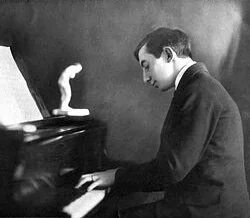
Image from Wikipedia
Image from Wikipedia
Werner Richard Heymann – The Sound Magician of German Talkies
A composer who transformed the cinema hit into an art form
Werner Richard Heymann was one of the defining German composers of the 20th century and a key figure bridging operetta, cabaret, talkies, and Hollywood. Born on February 14, 1896, in Königsberg and died on May 30, 1961, in Munich, he combined musical elegance with popular immediacy, creating melodies that remained known well beyond their time of creation. His name represents the rise of the talkie operetta and a style that unites lightness, precision, and emotional depth. (kulturstiftung.org)
Early Years: A Musical Wonder from Königsberg
Heymann grew up in an educated middle-class environment and stood out early due to his extraordinary musical talent. According to the Heymann Archive, he was already sitting at the piano at age three, began violin lessons at six, and wrote his first notated compositions at eight. By the age of twelve, he was already a member of the Philharmonic Orchestra, and at sixteen, he completed his first orchestral work – an artistic precocity that would shape his entire career. (heymann-musik.de)
The early stages of his biography reveal a musician who did not distinguish between so-called serious music and entertainment but thought of both together from an early age. He studied music theory and counterpoint, composed his first songs and orchestral pieces, and established himself as a teenager in an environment where concert halls, cabarets, and theaters were closely intertwined. This versatility would later become his strongest artistic currency. (heymann-musik.de)
Berlin, Cabaret, and Stage: The Path to Modernity
In Berlin, Heymann found the resonance space where his talent flourished fully. He worked for Max Reinhardt, Karlheinz Martin, Bertolt Viertel, as well as for the literary cabaret with Rosa Valetti and Trude Hesterberg, in those circles where musical modernity and social observation came together. This work sharpened his sensitivity to language, timing, and stage presence – qualities that made his later film compositions unmistakable. (heymann-musik.de)
His early steps in film music were also decisive. Heymann worked as an assistant to Ernö Rapée at UFA, later took on musical leadership roles, and wrote for silent films, stage works, and early talkie projects. The transition from the orchestra pit to the cinema hall was not a break for him but a consistent expansion of his musical horizons. (heymann-musik.de)
The Breakthrough: Major Talkie Successes of the 1930s
Heymann's actual breakthrough came with the early talkies of the late 1920s and early 1930s. A turning point is considered to be the music for Liebeswalzer in 1929, but it was the rapidly following productions that made him a name recognized by the audience. Particularly, Die Drei von der Tankstelle, Bomben auf Monte Carlo, Der Kongress tanzt, Der Sieger, and Ein blonder Traum made his melodies central to German-speaking entertainment culture. (kulturstiftung.org)
Together with lyricist Robert Gilbert, Heymann created songs that quickly became hit classics: “Ein Freund, ein guter Freund”, “Liebling, mein Herz läßt dich grüßen”, “Das ist die Liebe der Matrosen”, “Das gibt’s nur einmal”, “Hoppla, jetzt komm ich”, and “Irgendwo auf der Welt” are among the most well-known titles of this era. The cultural-historical significance of these songs lies in the fact that they not only accompanied film music but also entered the collective memory independently. (kulturstiftung.org)
Musical Signature: Between Elegance, Melody, and Dramaturgy
Heymann’s compositional style combines catchy melodies with clear formal discipline. His arrangements often employ buoyant rhythms, pointed harmonies, and an orchestral transparency that never overshadows but rather supports the vocals. This balance proved ideal especially in talkies: His music immediately anchors characters, situations, and emotions in memory and gives even light scenes remarkable dramatic precision. (heymann-musik.de)
The works of Heymann also showcase a special ability for stylistic mediation. Between cabaret, operetta, chanson, and symphonic music, a soundscape emerges that feels popular without being banal. The official catalog of works documents song compositions, stage music, film works, and later adaptations, revealing the breadth of Heymann’s oeuvre. (heymann-musik.de)
Exile, Hollywood, and International Career
After the Nazis took power, Heymann left Germany and continued his work in exile. Initially active in Paris, he later moved to Hollywood, where he composed for more than forty talkies, including several productions for Ernst Lubitsch. This phase shows Heymann not only as a resilient exile artist but as a composer whose style also found resonance within the American studio system. (heymann-musik.de)
His international career demonstrates remarkable adaptability. In Hollywood, he worked on stories that reflected the transition from European musical theater to the American film industry while still preserving his melodic core. The film Caravan and later works show that Heymann’s music also functioned outside the German-speaking world due to its clear themes, elegant modulations, and a secure relationship to the scene. (heymann-musik.de)
Return to Europe and Later Years
In 1951, Heymann returned to Europe and worked again on stage and film music. Among his later works is the music for a stage adaptation of Professor Unrat in 1952, which connects back to German theater and film history. His later activities also demonstrate that he remained a composer who infused themes with musical dramaturgy while always maintaining an eye for theatrical detail. (heymann-musik.de)
His death on May 30, 1961, in Munich did not mark the end of his impact but the beginning of a lasting reception. The Heymann Archive in Berlin, the catalog of works, and later editions and recordings keep his legacy alive and demonstrate that his music continues to hold scientific, artistic, and historical relevance. (heymann-musik.de)
Discography, Reception, and Cultural Impact
A classic discography in the pop sense does not exist for Heymann; his works spread across film soundtracks, stage music, song releases, and later reconstructions. Particularly significant are the hits from Die Drei von der Tankstelle, Der Kongress tanzt, Ein blonder Traum, and other successful films, which remain present today in concerts, new recordings, and compilation releases. Recent musical interpretations, such as a 2023 album featuring Heymann's songs, also demonstrate the enduring appeal of these compositions. (heymann-musik.de)
The music-historical reception regards Heymann as a central architect of the German film chanson. Sources from the cultural foundation, the archive, and music historical databases highlight his influence on the talkie operetta and the popularization of film hits. His cultural value lies not only in individual hits but in the construction of a sound language that brings together modern cinema, entertainment, and musical quality. (kulturstiftung.org)
Conclusion: Why Werner Richard Heymann Continues to Fascinate Today
Werner Richard Heymann remains intriguing because his music possesses something rare: apparent lightness combined with high craft discipline. He wrote melodies that immediately grab attention, while also creating scores that are intricately crafted in detail. Anyone wanting to understand how film, song, and stage art can create an unmistakable cultural tone cannot overlook Heymann. (heymann-musik.de)
His legacy continues through classics, archival materials, reinterpretations, and the lasting presence of his songs in collective memory. Those wishing to experience Heymann live encounter him today primarily in concerts, song programs, and musical tributes, where his works shine with renewed freshness. That is where his greatness lies: His music is both history and present. (heymann-musik.de)
Official Channels of Werner Richard Heymann:
- Instagram: No official profile found
- Facebook: No official profile found
- YouTube: No official profile found
- Spotify: No official profile found
- TikTok: No official profile found
Sources:
- The Composer Werner Richard Heymann (1896-1961) – Official Website
- Werner Richard Heymann – Biography on heymann-musik.de
- Werner Richard Heymann – Catalog of Works on heymann-musik.de
- Cultural Foundation – Heymann, Werner Richard
- Catalog of Works by Werner Richard Heymann – PDF
- Wikipedia: Werner Richard Heymann – Image and Text Source