
Walter Kempowski
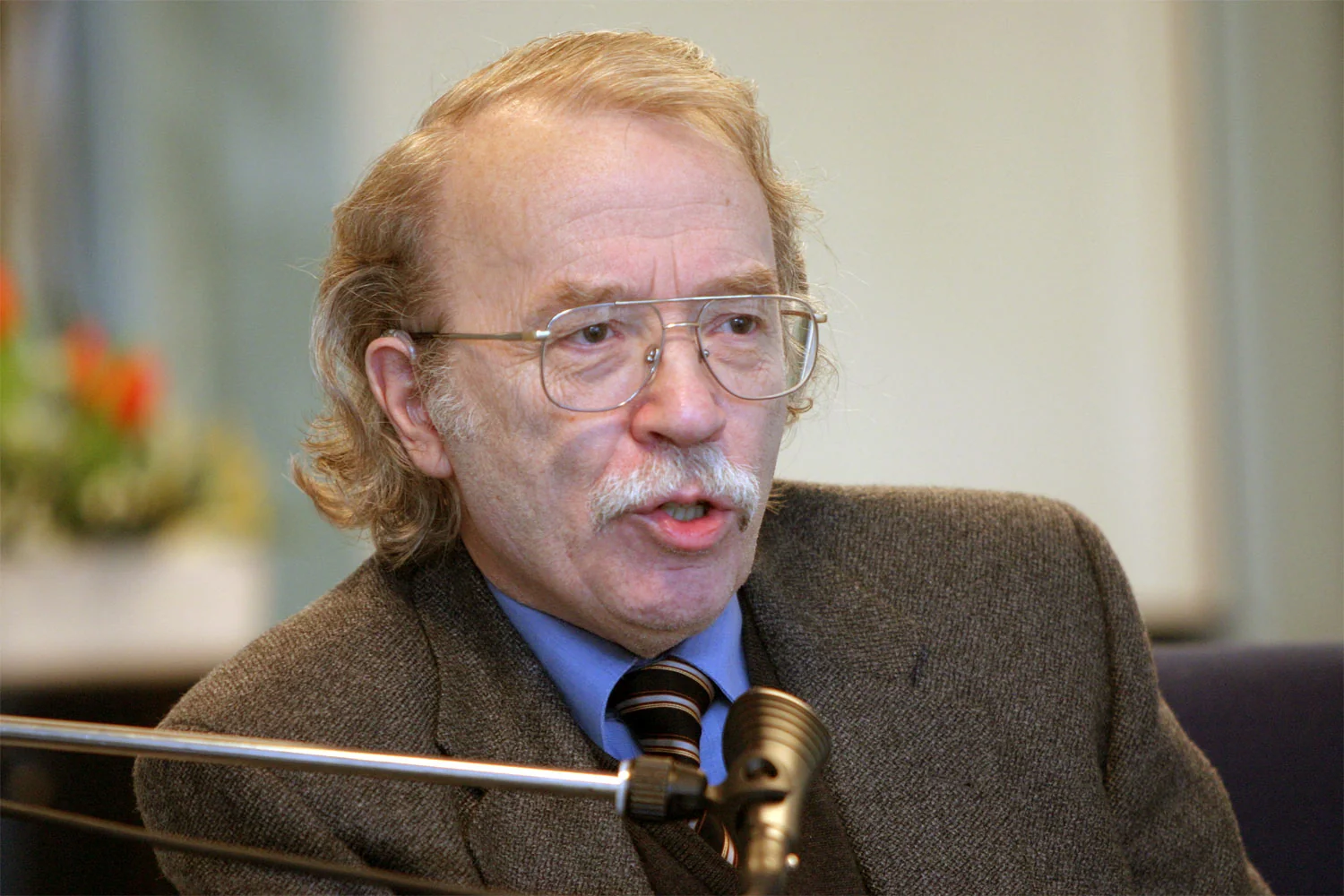
Image from Wikipedia
Image from Wikipedia
Walter Kempowski: Chronicler of German Memory Culture and Master of Literary Montage
An Author Between Family Novel, Documentation, and Collective Memory
Walter Kempowski is one of the most significant voices in German-speaking post-war literature. Born on April 29, 1929, in Rostock and died on October 5, 2007, in Rotenburg an der Wümme, he developed a work of exceptional density from personal experience, historical injury, and meticulous collection. He is particularly known for the nine-volume Deutsche Chronik and the monumental project Das Echolot, in which he mounted letters, diaries, and other testimonies into literary time images. ([projekte.adk.de](https://projekte.adk.de/kempowski/walter-kempowski_biografie.html?utm_source=openai))
Biography: Origins, Break, and Literary Renewal
Kempowski grew up in Rostock in a bourgeois environment, which later became a central resonance space for his writing. His schooling ended prematurely; he initially worked as a messenger and then began a commercial apprenticeship in a printing house. The biographical turning point occurred through imprisonment and political persecution in East Germany, which deeply shaped his further life and literary perspective. ([projekte.adk.de](https://projekte.adk.de/kempowski/walter-kempowski_biografie.html?utm_source=openai))
After his release from Bautzen prison in 1956, he moved to the West, completed his high school diploma in Göttingen, and studied primary education. From this late academic reorientation, he did not retreat into the scholarly but rather adopted a literary approach to everyday history, family memory, and social reality. Kempowski worked on a form of literature that intertwines personal experience, documentary material, and historical consciousness. ([deutschlandfunkkultur.de](https://www.deutschlandfunkkultur.de/impressionen-aus-dem-gelben-elend-100.html?utm_source=openai))
The Breakthrough with the “Deutsche Chronik”
The literary breakthrough was marked by the Deutsche Chronik, a nine-volume series of novels and interview books. With works like Tadellöser & Wolff and Schöne Aussicht, Kempowski depicted the fate of a family while simultaneously illustrating the societal changes of the German bourgeoisie in the 20th century. The series established him as an author who combined autobiographical storytelling with a precise observation of historical mentalities. ([literaturport.de](https://www.literaturport.de/lexikon/irene-diwiak/?utm_source=openai))
It was precisely the combination of memory, irony, and precise social depiction that garnered broad attention for his novels. Kempowski wrote not in the gesture of grand ideological interpretations but in the tone of an attentive collector, placing private experience alongside collective history. This attitude made his prose accessible to readers while remaining literarily demanding. ([welt.de](https://www.welt.de/kultur/article1236998/Nachruf-Kempowskis-Leben-als-Sammler-und-Dichter.html?utm_source=openai))
Das Echolot: Montage as a Literary Grand Project
With Das Echolot, Kempowski created perhaps his most famous and radical work. The project is based on an enormous collection of letters, diaries, and everyday documents that he gathered over the years, condensed into a collective voices archive. The literary idea was not the classic narrative but the simultaneous presence of many perspectives, from which history is composed like individual sound particles. ([de.wikipedia.org](https://de.wikipedia.org/wiki/Das_Echolot?utm_source=openai))
Particularly impressive is the form of montage: Kempowski did not simply let documents, memories, and testimonies stand alongside each other but organized them into a polyphonic text body. This method gave the work enormous cultural-historical significance, as it not only tells the story of the Second World War but makes visible the experiential space of different social and political voices. Thus, Das Echolot is regarded as a central work of German memory literature. ([deutschlandfunkkultur.de](https://www.deutschlandfunkkultur.de/kempowski-nachlass-splitter-der-erinnerung-100.html?utm_source=openai))
Writing Style, Tone, and Literary Technique
Kempowski's style thrives on precision, distance, and a unique form of empathy. His texts connect autobiographical threads with documentary material, with montage becoming the aesthetic principle. As a result, novels and chronicles emerge that rely less on dramatic tension and more on the patient reconstruction of life worlds. ([de.wikipedia.org](https://de.wikipedia.org/wiki/Das_Echolot?utm_source=openai))
His work shows a pronounced sensitivity to voices, social roles, and historical breaks. It is precisely in the intertwining of family history and contemporary history that the lasting fascination of his literature lies. Kempowski succeeds in neither glamorizing nor simplifying German history but instead stages it as a contradictory weave of the private, political, and everyday. ([welt.de](https://www.welt.de/kultur/article1236998/Nachruf-Kempowskis-Leben-als-Sammler-und-Dichter.html?utm_source=openai))
Critical Reception and Cultural Influence
Literary critics honored Kempowski as a chronicler of German history and as an author who was able to expand the form of the novel. Der Spiegel described the Deutsche Chronik as a breakthrough, referring to Kempowski's self-understanding as a collector of simultaneity, while Deutschlandfunk Kultur categorized his work repeatedly as a singular literary archival achievement. His rank thus rests not only on popularity but also on the independence of his aesthetic method. ([spiegel.de](https://www.spiegel.de/kultur/literatur/chronik-kempowskis-wichtigste-werke-a-509648.html?utm_source=openai))
Kempowski also left significant marks institutionally. His work is intensively processed in archives, research projects, and literary studies publications, and the Kempowski Society keeps interest in his biography and complete works alive. Ongoing research shows that Kempowski remains not only an author of the past but also continues to raise important questions about memory, testimony, and form of narration. ([kempowski-gesellschaft.de](https://www.kempowski-gesellschaft.de/?utm_source=openai))
Current Relevance and Ongoing Readability
Even though Walter Kempowski has not lived since 2007, his work remains present in literary discourse. New research, editions, and cultural-historical debates keep his books on the agenda because they address questions of sources, perspectives, and individual memory in ways that feel highly relevant today. Especially in a time when authenticity, documentation, and narrative are constantly being renegotiated, Kempowski's method possesses remarkable contemporaneity. ([kempowski-gesellschaft.de](https://www.kempowski-gesellschaft.de/?utm_source=openai))
His texts invite readers to perceive German history not as a rigid sequence of dates but as a complex weave of voices and traces of life. This makes his work intriguing for readers even today: it offers not only historical insight but also a literary form that provides order to the chaos of the past without smoothing it over. Those who read Kempowski encounter an author who shaped literature of lasting radiance from memory. ([deutschlandfunkkultur.de](https://www.deutschlandfunkkultur.de/kempowski-nachlass-splitter-der-erinnerung-100.html?utm_source=openai))
Conclusion: Why Walter Kempowski Remains Important Today
Walter Kempowski is compelling because he transformed biographical injury, historical accuracy, and literary power into a distinctive body of work. His novels and documentary projects offer a view of Germany in the 20th century that is simultaneously intimate, critical, and polyphonic. Those who appreciate literature as a living art of memory will find in Kempowski an author of extraordinary depth. ([projekte.adk.de](https://projekte.adk.de/kempowski/walter-kempowski_biografie.html?utm_source=openai))
His texts deserve renewed reading because they make the private visible in the historical and let the historical resonate in the private. It is precisely in this that the lasting power of his work lies: it not only tells history but makes experiential spaces palpable. Walter Kempowski should not only be read but rediscovered repeatedly. ([deutschlandfunkkultur.de](https://www.deutschlandfunkkultur.de/kempowski-hoerspiel-der-krieg-geht-zu-ende-neun-stunden-die-100.html?utm_source=openai))
Official Channels of Walter Kempowski:
- Instagram: No official profile found
- Facebook: No official profile found
- YouTube: No official profile found
- Spotify: No official profile found
- TikTok: No official profile found
Sources:
- Wikipedia: Walter Kempowski
- Akademie der Künste – Walter Kempowski: Biography
- Deutschlandfunk Kultur – Impressions from the "Yellow Misery"
- Deutschlandfunk Kultur – Kempowski Estate: Fragments of Memory
- Deutschlandfunk Kultur – Kempowski Audio Play "The War is Coming to an End"
- Kempowski Society e.V.
- Hinstorff Verlag – Walter Kempowski
- DER SPIEGEL – Chronicle: Kempowski's Most Important Works
- WELT – Obituary: Kempowski's Life as a Collector and Poet