
Pelemele
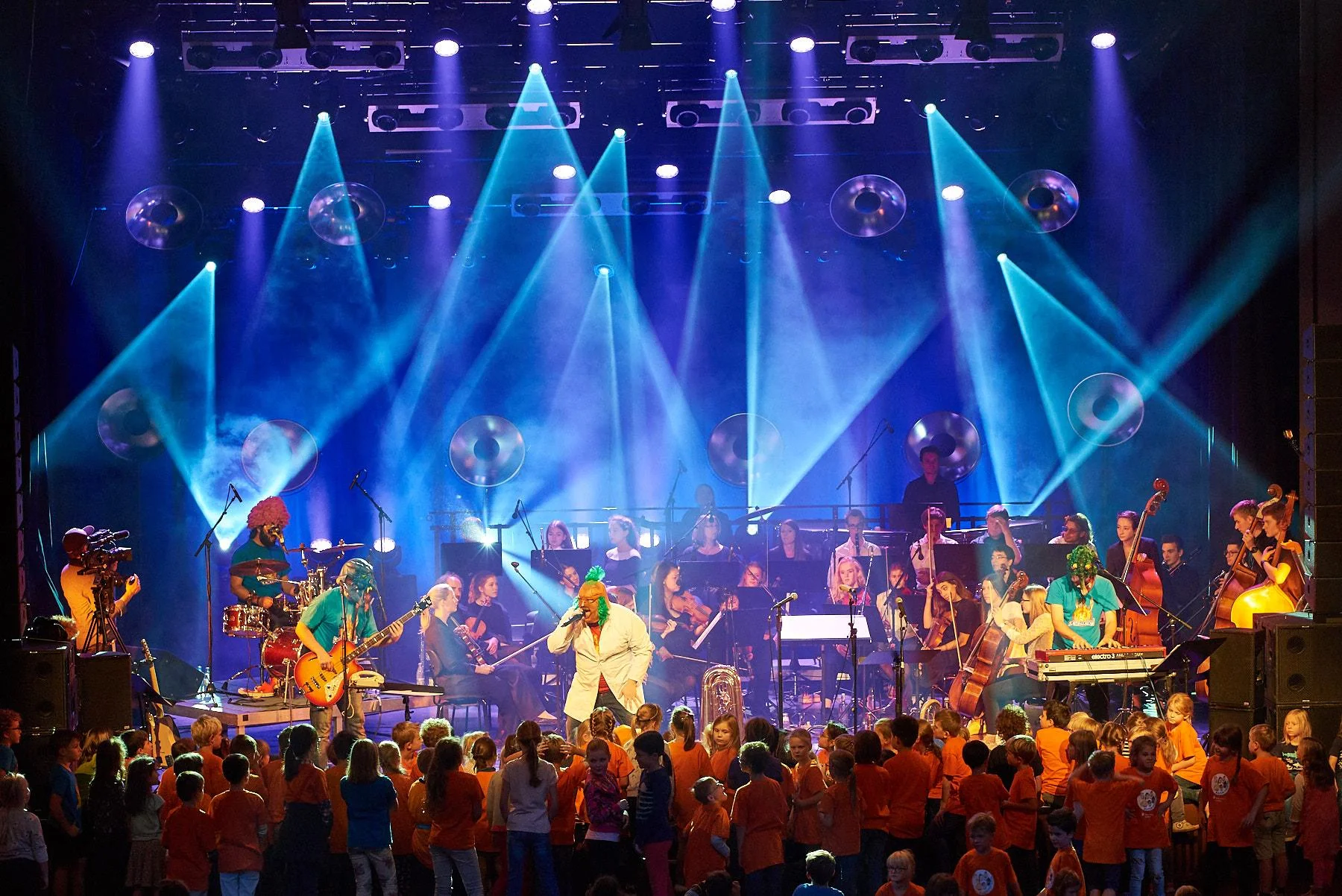
Image from Wikipedia
Image from Wikipedia
Pelemele: The Cologne Children's Rock Band with Heart, Humor, and Plenty of Stage Energy
When Rock Music for Children Becomes a Real Live Experience
Pelemele has been one of the most distinct names in German children's rock since 2001. The Cologne-based band combines rock music, children's songs, and the joy of playful chaos into their own recognizable sound. The name derives from the French "pêle-mêle," which already hints at the group's principle: a cheerful mishmash of humor, energy, and musical directness. ([de.wikipedia.org](https://de.wikipedia.org/wiki/Pelemele?utm_source=openai))
The band was founded in Cologne and evolved from a group that initially played well-known children's songs into a self-sufficient children's party band with its own repertoire. From the very beginning, it was not about a pedagogical finger of authority, but rather about musical joy. This is exactly where the appeal of Pelemele lies: The songs take children seriously without losing their lightness, and they bring adults on board with a wink and a rock accessory. ([de.wikipedia.org](https://de.wikipedia.org/wiki/Pelemele?utm_source=openai))
The Beginnings in Cologne: From Children's Songs to Children's Rock
The story of Pelemele begins with five musicians who came together in Cologne in 2001: Paulus Müller, Nino Kann, Andreas Ostricki, Florian Bergmann, and Andreas Niemann. From a shared interest in rock music for children, a project emerged that consciously set itself apart from polished family entertainment. Instead of mere imitation, the band quickly developed its own songs and a form of children's music that emphasizes guitar riffs, sing-along choruses, and vibrant stage moments. ([de.wikipedia.org](https://de.wikipedia.org/wiki/Pelemele?utm_source=openai))
Even their early orientation shows a clear artistic idea: Pelemele wanted to sound child-appropriate not in the sense of small, tame, and simplistic, but rather in a manner that is understandable, energetic, and exhilarating. This attitude has shaped the band to this day. Those who regard children's rock as a niche will quickly recognize a group that takes the genre seriously and endows it with its own aesthetic. ([de.wikipedia.org](https://de.wikipedia.org/wiki/Pelemele?utm_source=openai))
House Band of the Children's Carnival Session and a Firm Fixture in Live Scene
An important milestone in Pelemele's career was their role as the house band for the "Kinderstunksitzung," which they have held since 2003. This not only made the band visible locally but also connected them closely with the Cologne carnival culture and a lively family stage. This anchoring in the Rhineland cultural landscape gave Pelemele an additional closeness to the audience. ([de.wikipedia.org](https://de.wikipedia.org/wiki/Pelemele?utm_source=openai))
Additionally, they performed in live broadcasts for public children's radio programs such as Lilipuz from WDR. These formats show that Pelemele not only functions on stage but is also perceived as a reliable voice for high-quality children's music in the broadcasting context. Over the years, the band has developed a music career that confidently oscillates between concert halls, family festivals, and media presence. ([de.wikipedia.org](https://de.wikipedia.org/wiki/Pelemele?utm_source=openai))
Musical Development: From Home Studio to Studio Album
The first two albums were produced at home before the first studio album was recorded in 2005 at the Doghouse Studios near Cologne. The next two albums were also produced there. This path is typical for a band that has developed organically: first the ideas, then the sound, followed by refinement in the studio. Particularly in children's music, such a development is important because arrangement, precision, and clarity significantly shape the impact of the songs. ([de.wikipedia.org](https://de.wikipedia.org/wiki/Pelemele?utm_source=openai))
Over the years, Pelemele increasingly shifted from pure children's entertainment to a professionally organized live and recording band. The music remained handmade, but the production became more structured and the stage format larger. This is also reflected in the addition of a three-member brass section, which as "trumpets" expanded many concerts sonically and added extra dynamism to the repertoire. ([de.wikipedia.org](https://de.wikipedia.org/wiki/Pelemele?utm_source=openai))
Personnel Changes and New Energy from 2008
2008 marked an important turning point: Nino Kann left the band to start a solo project. Christoph Fröhlich joined as the new bassist while Andi Ostricki took over the guitar. These personnel changes did not lead to a break but rather to a refocusing of the band's sound. Pelemele remained in motion, demonstrating a rare stability in creative renewal. ([de.wikipedia.org](https://de.wikipedia.org/wiki/Pelemele?utm_source=openai))
In 2012, Paulus Müller and Andi Ostricki-Liebel left the formation in favor of child, family, and career. Christoph Fröhlich took over the lead vocals in addition to playing bass, and a new guitarist, David Mirche, joined. The fact that Pelemele not only survived this change but also played numerous concerts across Germany in 2013 attests to the band's resilience and strong live identity. ([de.wikipedia.org](https://de.wikipedia.org/wiki/Pelemele?utm_source=openai))
Discography: From “FC-Pelemele” to “Der Wëcker”
Pelemele's discography shows a continuous development over two decades. Among the albums are "Pelemele" (2003), "Häppchen" (2004), "FC-Pelemele" (2005), "Wackelzappel" (2007), "Rockwürste" (2009), "Rockcircus" (2011), "Nimm uns mit!" (2014), "Et Beste op Kölsch" (2016), "Ausrasten" (2017), and "Der Wëcker" (2021). They also released the children's music audio play "Pelemele und der Geschenkefluch." ([de.wikipedia.org](https://de.wikipedia.org/wiki/Pelemele?utm_source=openai))
The titles themselves already reveal much about the band's signature style: humorous, playful, locally rooted, yet open to broader pop and rock gestures. Particularly, "Rockcircus" and "Rockwürste" represent the connection of children's themes, rock aesthetics, and stage fun. The fact that the band's shop continues to carry several CDs from the catalog underscores the longevity of these releases and their relevance in the band's cosmos. ([de.wikipedia.org](https://de.wikipedia.org/wiki/Pelemele?utm_source=openai))
Awards and Recognition in the Music Scene
Pelemele has received multiple awards, including the "Leopold" prize from the Association of German Music Schools, WDR3, and the Federal Ministry for Family Affairs. The band was honored in 2009 for "Rockwürste," in 2011 for "Rockcircus," and in 2015 for "Nimm uns mit!" They have also received placements at the Nürnberger Nachrichten award and awards at the WDR Children's Song World. ([de.wikipedia.org](https://de.wikipedia.org/wiki/Pelemele?utm_source=openai))
These awards are more than decorative footnotes. They show that Pelemele is not only popular in children's music but also recognized in professional circles. The combination of audience-friendly rock sound, careful songwriting, and clear family orientation gives the band authority in a field that is often underestimated. ([de.wikipedia.org](https://de.wikipedia.org/wiki/Pelemele?utm_source=openai))
Current Releases and New Impulses
On the official website, the band currently presents the single "Einladung des Grauens." It is described as a Halloween party single for children and continues the line of songs like "Monsterjäger" and "Monster gesucht." The tone remains typically Pelemele: playful, theatrical, rhythmic, and designed for sing-alongs and celebrating together. ([pelemele.de](https://pelemele.de/))
In the merchandise and shop area, the band's current activity is also evident. There, T-shirts and CDs are offered, including "Der Wëcker," "Ausrasten," "Et Beste op Kölsch," "Rockcircus," "Der Geschenkefluch," "Rockwürste," "Wackezappel," and "FC Pelemele." This presence signals that Pelemele continues to operate as a vibrant brand and active children's rock band. ([shop.pelemele.de](https://shop.pelemele.de/?utm_source=openai))
Style, Sound, and Cultural Influence
Pelemele represents a children's music that understands rock not as a style quote but as an attitude. The sound relies on driving rhythms, catchy melodies, clear choruses, and a stage presence that gets the audience moving. In this sense, the band is more than just a children's song project: it translates rock energy into a family format without diluting the musical core. ([de.wikipedia.org](https://de.wikipedia.org/wiki/Pelemele?utm_source=openai))
Culturally, Pelemele is primarily rooted in the Rhineland, yet has also been present nationwide, such as at performances at the Kieler Woche, the Breminale, and in the Rote Salon Berlin. The band thus connects regional identity and national reach. Pelemele has found a place in German-language children's music that lies between live entertainment, pedagogical accessibility, and true pop culture. ([de.wikipedia.org](https://de.wikipedia.org/wiki/Pelemele?utm_source=openai))
Conclusion: Pelemele remains exciting because the band combines children's music with true rock attitude, Cologne's down-to-earth nature, and years of stage experience. The mixture of humor, handmade production, and intergenerational live energy makes this group a permanent fixture in German children's rock. Anyone wanting to experience music with playfulness, punch, and family closeness should see Pelemele live. ([de.wikipedia.org](https://de.wikipedia.org/wiki/Pelemele?utm_source=openai))
Official Channels of Pelemele:
- Instagram: no official profile found
- Facebook: no official profile found
- YouTube: no official profile found
- Spotify: no official profile found
- TikTok: no official profile found