
Paul Klee
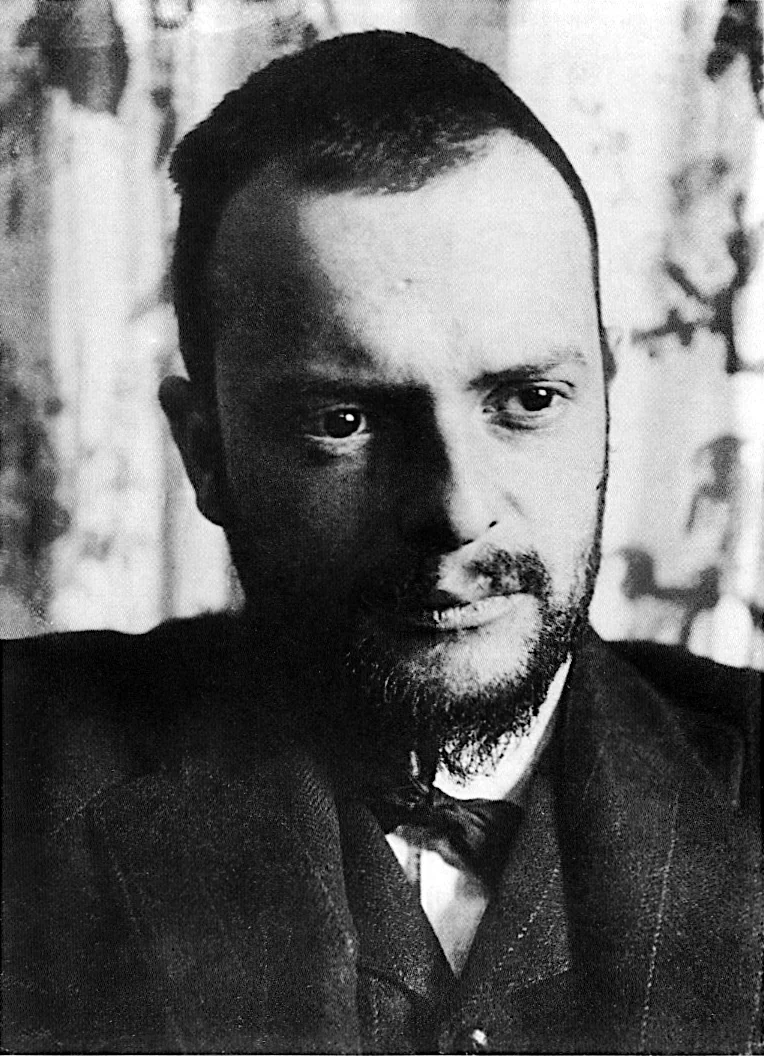
Image from Wikipedia
Image from Wikipedia
Paul Klee: The Poetic Modernity Between Line, Color, and Musical Thought
An Artist Who Reinvented Modernity
Paul Klee is one of the most influential visual artists of the 20th century. His work combines drawing, color, rhythm, and intellectual precision into a language that remains unmistakable to this day. As a painter and graphic artist, he developed an artistic signature that can be associated with Expressionism, Constructivism, Cubism, Primitivism, and Surrealism. ([bauhauskooperation.com](https://bauhauskooperation.com/wissen/das-bauhaus/koepfe/biografien/biografie-detail/person-624?utm_source=openai))
Born on December 18, 1879, in Münchenbuchsee near Bern, Klee grew up in a culturally open environment shaped by both German and Swiss influences. His career took him through the avant-garde centers of classical modernity, through the Bauhaus and the Kunstakademie Düsseldorf, before returning to Switzerland, where an extensive late body of work emerged despite serious illness in his later years. ([bauhauskooperation.com](https://bauhauskooperation.com/wissen/das-bauhaus/koepfe/biografien/biografie-detail/person-624?utm_source=openai))
Biographical Origins and Early Artistic Influence
Paul Klee did not emerge from the clamor of the art world, but rather from a quiet, highly focused observation of the world. His early path was initially marked by graphic works in which line, form, and ironic distance played a central role. It was this graphic sensitivity that later became the foundation of his painterly language. ([bauhauskooperation.com](https://bauhauskooperation.com/wissen/das-bauhaus/koepfe/biografien/biografie-detail/person-624?utm_source=openai))
The early phase of his work shows an artist who could not be confined to a single genre. Drawing, watercolor, graphics, and experimental image creations were in a productive tension from the very beginning. This very openness made Klee a key figure in classical modernism. ([anthrowiki.at](https://anthrowiki.at/Paul_Klee?utm_source=openai))
The Breakthrough: The Tunis Journey of 1914
The decisive artistic turning point came in 1914 with the Tunis journey alongside August Macke and Louis Moilliet. This journey is considered historically significant in art because Klee deepened his engagement with color fundamentally and transformed from a predominantly graphic artist into a painter of international renown. The breakthrough did not rely on a single image, but rather on a radical expansion of his perception. ([bauhauskooperation.com](https://bauhauskooperation.com/wissen/das-bauhaus/koepfe/biografien/biografie-detail/person-624?utm_source=openai))
From that moment on, color gained a new autonomy in Klee's work. His paintings became not just representations of objects, but constructions of mood, rhythm, and inner order. This connection of spontaneity and composition made him an exceptional figure between abstraction and pictorial poetry. ([bauhauskooperation.com](https://bauhauskooperation.com/wissen/das-bauhaus/koepfe/biografien/biografie-detail/person-624?utm_source=openai))
In Dialogue with the Avant-Garde: The Blue Rider and Modernity
Klee was in close contact with the editorial community of Der Blaue Reiter and exhibited graphic works at their second exhibition in 1912. This inclusion in the avant-garde was not a marginal event but a sign of his early presence in the crucial debates of modernity. Klee was part of a network where art was envisioned not just as form, but as a spiritual attitude. ([bauhauskooperation.com](https://bauhauskooperation.com/wissen/das-bauhaus/koepfe/biografien/biografie-detail/person-624?utm_source=openai))
His closeness to Wassily Kandinsky and other protagonists of modernity positioned him within a circle that brought together art, theory, and spiritual renewal. Klee did not act as an isolated eccentric but as an intellectual co-creator of an aesthetic that broke open classical pictorial order. His art remained independent and unmistakable throughout. ([bauhauskooperation.com](https://bauhauskooperation.com/wissen/das-bauhaus/koepfe/biografien/biografie-detail/person-624?utm_source=openai))
Bauhaus Years: Teaching, Theory, and Artistic Authority
From 1921, Klee taught at the Bauhaus in Weimar and later in Dessau. There, he influenced an entire generation of students with his ideas about form, structure, and artistic freedom. His teaching was not a mere sideline but a central part of his historical impact. ([bauhauskooperation.com](https://bauhauskooperation.com/wissen/das-bauhaus/koepfe/biografien/biografie-detail/person-624?utm_source=openai))
Particularly important are his art theoretical writings, including Creative Confessions from 1920 and the Pedagogical Sketchbook from 1925. These texts portray Klee as a reflective thinker who linked artistic practice, theory, and teaching into a coherent stance. His thoughts on line, movement, and composition became a reference point for modern art education. ([bauhauskooperation.com](https://bauhauskooperation.com/wissen/das-bauhaus/koepfe/biografien/biografie-detail/person-624?utm_source=openai))
Professor in Düsseldorf and the Turning Point of Nazi Persecution
In 1931, Klee became a professor at the Kunstakademie Düsseldorf. However, the political situation in Germany abruptly ended this phase: after the National Socialists came to power, he was dismissed. The disruptions of these years mark not only a professional but also a biographical turning point of great historical significance. ([bauhauskooperation.com](https://bauhauskooperation.com/wissen/das-bauhaus/koepfe/biografien/biografie-detail/person-624?utm_source=openai))
Back in Bern, a later phase of his life began, overshadowed by uncertainty, burden, and illness. Nevertheless, from 1934 onwards, an extensive body of late work emerged, often considered some of the strongest and most dense of his career. In this phase, Klee condensed his visual language to a silent, almost compositional intensity. ([bauhauskooperation.com](https://bauhauskooperation.com/wissen/das-bauhaus/koepfe/biografien/biografie-detail/person-624?utm_source=openai))
Style, Technique, and Visual Language
Paul Klee's style eludes any simple categorization. His works traverse between abstract order and poetic suggestion, between geometric construction and intuitive gesture. It is within this spectrum that his great significance lies: Klee created images that are simultaneously intellectual, playful, and deeply atmospheric. ([bauhauskooperation.com](https://bauhauskooperation.com/wissen/das-bauhaus/koepfe/biografien/biografie-detail/person-624?utm_source=openai))
His art shows an extraordinarily fine sensitivity to composition, rhythm, and color harmony. The line in Klee's work possesses not only a graphic but almost musical quality; the surface becomes a space for movements, pauses, and tensions. This proximity of visual structure and musical thought is one of the most fascinating aspects of his work. ([markt-kom.com](https://www.markt-kom.com/de/markom/business/zentrum-paul-klee-feiert-20-jahre-mit-einem-jahr-voller-kuenstlerischer-hoehepunkte/?utm_source=openai))
Discography in a Broader Sense: Work Groups, Reception, and Cultural Impact
Paul Klee does not have a classical discography, but his work possesses a comparable density and recognizability to that of a great musician. The most frequently highlighted phases of his work include the early graphic works, the watercolors from the Tunis journey, the Bauhaus period, and the late works from Bern. These creative phases form something like the central "albums" of his artistic development. ([bauhauskooperation.com](https://bauhauskooperation.com/wissen/das-bauhaus/koepfe/biografien/biografie-detail/person-624?utm_source=openai))
His cultural influence is enormous. Klee not only shaped art history and art theory but also the public understanding of modern visual language. Museums like the Zentrum Paul Klee still dedicate specific focuses to his connection of art and music, underscoring his lasting relevance to interdisciplinary cultural history. ([zpk.org](https://www.zpk.org/20?utm_source=openai))
Current Reception, Research, and Museum Presence
Even in 2024 and 2025, Paul Klee remains a lively reference point in art education. The Zentrum Paul Klee continues to emphasize Klee's relationship with music, visual culture, and his presence in exhibitions and educational formats in its programs. This ongoing engagement demonstrates that Klee is not only historically significant but remains present in today's cultural discourse. ([zpk.org](https://www.zpk.org/20?utm_source=openai))
Scientific and publishing publications continuously deepen the perspective on his work. Biographical and art historical research particularly highlights the connection between life, teaching, and work and portrays Klee as an artist whose significance stems from complexity and inner consistency. ([press.uchicago.edu](https://press.uchicago.edu/ucp/books/book/chicago/M/bo3612725.html?utm_source=openai))
Conclusion: Why Paul Klee Continues to Fascinate Today
Paul Klee fascinates because he not only shaped modernity but also gave it its own poetic grammar. His work is both analytical and dreamlike, intellectual and sensual, strict and free. Those who look at Klee experience art as a space for thought, feeling, and open form. ([bauhauskooperation.com](https://bauhauskooperation.com/wissen/das-bauhaus/koepfe/biografien/biografie-detail/person-624?utm_source=openai))
It is precisely this mixture of intellectual depth, artistic boldness, and inexhaustible inventiveness that makes Paul Klee perpetually compelling. His works invite viewers to read modernity anew and discover the fine resonance of line and color with their own eyes. A visit to a Klee exhibition is always worthwhile, as each encounter with his work reveals new layers. ([zpk.org](https://www.zpk.org/20?utm_source=openai))
Official Channels of Paul Klee:
- Instagram: No official profile found
- Facebook: No official profile found
- YouTube: No official profile found
- Spotify: No official profile found
- TikTok: No official profile found
Sources:
- Wikipedia – Paul Klee
- Bauhaus Kooperation – Klee, Paul: Biography
- Zentrum Paul Klee – 20 Years of Zentrum Paul Klee and Creaviva
- Zentrum Paul Klee – Media Dossier Annual Preview 2025
- Kunstmuseum Bern / Zentrum Paul Klee – Annual Report 2024
- ByteFM – Paul Klee, A Look into the Fruitland
- Frölich & Kaufmann – Paul Klee: Life and Work
- University of Heidelberg – Boris Friedewald: Paul Klee: His Life - His Art
Upcoming Events
In the Footsteps of Paul Klee