
Modest Petrowitsch Mussorgski
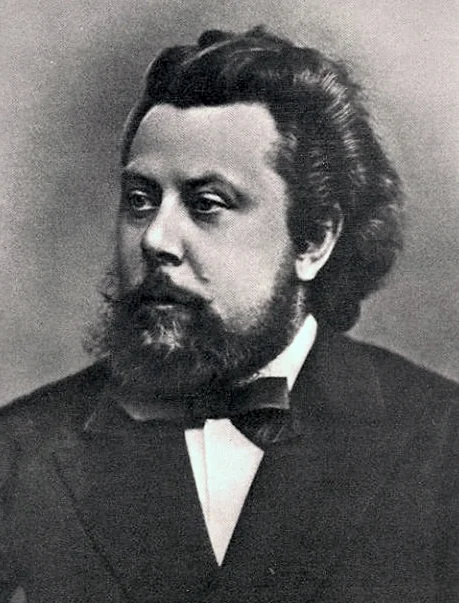
Image from Wikipedia
Image from Wikipedia
Modest Petrowitsch Mussorgsky – The Uncompromising Sound Poet of Russian Music
A Composer Between Folkloric Truth, Dramatic Power, and Radical Independence
Modest Petrowitsch Mussorgsky is one of the great names in music history, whose work continues to resonate like an electric pulse today. The Russian composer, born on March 21, 1839, in Karevo and died on March 28, 1881, in Saint Petersburg, is best known for his operas, songs, and the piano cycle Pictures at an Exhibition. His art represents a fearless, language-driven, unembellished musical style that helped shape an independent Russian musical culture. ([britannica.com](https://www.britannica.com/biography/Modest-Mussorgsky?utm_source=openai))
Biography: From Landowner's Son to Radical Innovator
Mussorgsky grew up as the son of a landowner and received early piano lessons, initially from his mother and later through musical training in Saint Petersburg. Although he was initially directed toward a military career by the cadet school, music increasingly became the center of his life. Through Mily Balakirev and the circle of Russian national composers, he connected with an aesthetic movement that sought a genuinely Russian musical language. ([staatsoper.de](https://www.staatsoper.de/biographien/mussorgski-modest))
This development led him away from the army and into an artistic environment characterized by national ideas and musical self-assertion. Mussorgsky became part of the so-called "Mighty Handful," a group of composers who wanted to create a Russian school beyond Western models. This attitude made him both an outsider and a key figure in the music of the 19th century. ([britannica.com](https://www.britannica.com/topic/The-Five))
Career: The Breakthrough with a New Idea of Musical Truth
His artistic breakthrough occurred not through smooth virtuosity or courtly elegance, but rather through music with strong character, linguistic precision, and dramatic directness. In the 1860s, Mussorgsky matured into a distinctive voice; Britannica cites 1866 as the year of his artistic maturity with songs about ordinary people and Night on Bald Mountain. These works already showcase his ability to combine psychological tension with folk closeness in an unyielding sound language. ([britannica.com](https://www.britannica.com/biography/Modest-Mussorgsky))
In 1874, Boris Godunov premiered, a work that is still considered his operatic masterpiece. The premiere was well received in Saint Petersburg, although the criticism was mixed. Mussorgsky relied on his own librettos, dramatic intensity, and a monumental choral treatment that provided a new musical stage for the people, history, and questions of power. ([britannica.com](https://www.britannica.com/biography/Modest-Mussorgsky))
Musical Development: Language, Color, and Untamed Form
Mussorgsky's music appears so modern because it takes the natural prosody of the Russian language seriously. Deutsche Grammophon describes his musical language as irregular, unpredictable, and "earthy," marked by the rhythmic peculiarities of language and folk tradition. This attitude makes his work still feel immediate and unapologetic today. ([deutschegrammophon.com](https://www.deutschegrammophon.com/en/composers/modest-petrovich-mussorgsky/biography))
His compositional style often existed in the tension between artistic radicalism and formal incompleteness. Deutsche Grammophon points out that he often struggled with the structure of his works and left many projects unfinished; out of six opera projects, he completed only Boris Godunov fully. These tensions are not a flaw in the conventional sense but part of his artistic signature: Mussorgsky sought emotional truth over perfect smoothness. ([deutschegrammophon.com](https://www.deutschegrammophon.com/en/composers/modest-petrovich-mussorgsky/biography))
Discography and Key Works: Between Opera, Piano Cycles, and Song Art
Some of Mussorgsky's most famous works include Boris Godunov, Khovanshchina, Pictures at an Exhibition, Night on Bald Mountain, as well as the song cycles Sunless and Songs and Dances of Death. The Bavarian State Opera also highlights Songs and Dances of Death and Sunless as central to his oeuvre. His work thus covers opera, piano music, and art song equally, showcasing an extraordinary stylistic range. ([staatoper.de](https://www.staatsoper.de/biographien/mussorgski-modest))
Pictures at an Exhibition was created in 1874 as a musical reaction to the death of his friend Viktor Hartmann. This work is among the most performed piano cycles in music history and later became famous worldwide through Maurice Ravel's renowned orchestration. The story of its creation illustrates how Mussorgsky transforms visual impressions into sound and shapes a dramatic listening experience from memory. ([britannica.com](https://www.britannica.com/topic/Pictures-at-an-Exhibition?utm_source=openai))
Khovanshchina remained unfinished and was completed by other composers after Mussorgsky's death, particularly Nikolai Rimsky-Korsakov. These interventions long influenced the reception of his work, as many listeners knew Mussorgsky for decades only through revised versions. Only later editions made the unembellished original language of his scores more visible. ([britannica.com](https://www.britannica.com/biography/Modest-Mussorgsky))
Critical Reception: From Misunderstood Outsider to Classic of Modernity
After his death, Mussorgsky was long regarded as technically imperfect, even as compositionally crude. Deutsche Grammophon notes that other composers appreciated his works but often considered them poorly crafted, leading to numerous revisions. This very contradiction is part of his reception history: what was once seen as disorder now appears as boldly calculated expressiveness. ([deutschegrammophon.com](https://www.deutschegrammophon.com/en/composers/modest-petrovich-mussorgsky/biography))
Britannica emphasizes how unusually original and independent Mussorgsky's style was and how small his output appears in relation to his influence. His songs are characterized by an extraordinary observation of Russian everyday life; his operas link individual characters with the fate of the people and history. For this reason, Boris Godunov is considered a masterpiece because it merges musical characterization and political drama in a confined space. ([britannica.com](https://www.britannica.com/biography/Modest-Mussorgsky))
Cultural Influence: A Foundation for Russian Musical Identity
Mussorgsky's impact extended far beyond his short lifetime on the development of Russian music. As a member of the "Mighty Handful," he helped shape a national school that explicitly distinguished itself from the dominance of Italian opera and German song traditions. This cultural self-assertion made him a historically key figure in Russian music discourse. ([britannica.com](https://www.britannica.com/topic/The-Five))
His works continue to live on not only in the concert hall but also in the history of opera and repertoire. Even in 2025, productions of Boris Godunov and Khovanshchina were staged on major European stages, underscoring the lasting relevance of his dramatic thinking. Mussorgsky's music thus remains not a museum sound but a living testing ground for expression, power, and the human abyss. ([klassik-begeistert.de](https://klassik-begeistert.de/die-mittwoch-presse-23-april-2025/?utm_source=openai))
Current Projects and Releases: The Presence of His Music
As a historical composer, Mussorgsky naturally has no new albums or personal projects in the contemporary sense. However, his works remain present in contemporary musical life, such as in opera productions, orchestral programs, and new arrangements, which are expected to resonate in 2025 and 2026. This shows that his music is not only preserved but continually reinterpreted and tested for its timeless intensity. ([klassik-begeistert.de](https://klassik-begeistert.de/die-mittwoch-presse-23-april-2025/?utm_source=openai))
Conclusion: Why Mussorgsky Continues to Electrify Today
Modest Petrowitsch Mussorgsky fascinates because he prioritized musical truth over academic perfection. His operas, songs, and piano cycle Pictures at an Exhibition combine psychological depth, Russian history, and a distinctive musical language. Those who want to understand how national ideas, personal pain, and artistic risk transform into timeless music will find one of the great answers of classical music in Mussorgsky. His works fully unfold their impact live – where their dramatic power, orchestral color, and emotional directness shine the brightest. ([britannica.com](https://www.britannica.com/biography/Modest-Mussorgsky))
Official Channels of Modest Petrowitsch Mussorgsky:
- Instagram: No official profile found
- Facebook: No official profile found
- YouTube: No official profile found
- Spotify: No official profile found
- TikTok: No official profile found
Sources:
Upcoming Events
Mini Concert "Pictures at an Exhibition"