
Mo Asumang
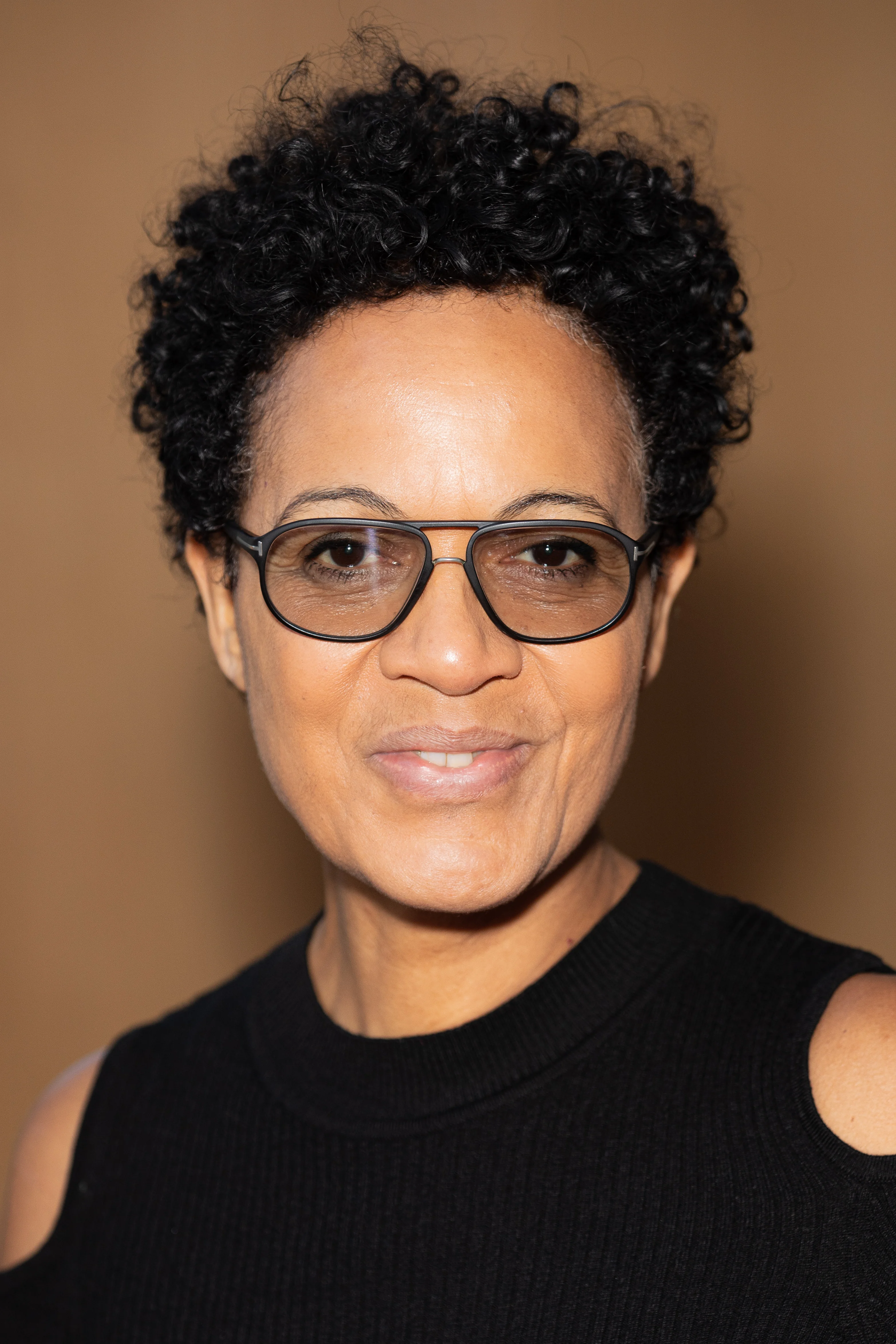
Image from Wikipedia
Image from Wikipedia
Mo Asumang
Between Stage and Encounter: How Mo Asumang Engages in Debates with Artistic Presence, Cinematic Precision, and Dialogical Courage
Mo Asumang is one of the most influential voices in the German cultural landscape. As a film director, television host, author, actress, and singer, she combines her music career, documentary style, and public impact into a rare mix of artistic development, social responsibility, and impressive stage presence. Born on June 13, 1963, in Kassel, she became known as one of the first prominent Afro-German women on television—and has since consistently addressed issues such as racism, identity, discrimination, and democratic resilience in film, literature, and discourse work.
Her international recognition is rooted in her uncompromising research work in documentaries like "Die Arier" and "Roots Germania," in incisive moderation, precise storytelling, and a sensitivity to music, along with an approach based on exchange and listening. This resolute attitude was honored in 2019 with the Federal Cross of Merit on Ribbon. Today, she passionately teaches and conducts research, establishes dialogical formats, and remains highly present in cultural and media practice.
Early Years, Education, and Initial Artistic Impulses
Growing up in Kassel, Mo Asumang studied Visual Communication—a foundation that clearly shapes her later work in directing, composing the film space, and arranging complex material. During this phase, she developed a keen sense for image dramaturgy, rhythm, and the musical structure of narratives. An early connection to music—including vocal studies—sensitized her to timbre, vocal direction, and the performative dimension of language, which continues to influence her interviewing style and presence in front of the camera to this day.
In the 1990s, she established herself as a moderator while simultaneously transitioning into acting and production roles. This multifaceted positioning refined her understanding of the entire production chain—from material development to production and presentation. Her perspective on composition, editing, and sound design thus became not only a technical but an artistic guiding principle of her works.
Moderation and TV Breakthrough: "Liebe Sünde" and More
Her breakthrough in reaching audiences came with the moderation of the TV format "Liebe Sünde" (1997–2000). Here, Asumang sharpened tonalities and timing in on-air dialogue, intertwining form awareness with thematic openness—an interplay that would shape her later documentary handwriting. Simultaneously, her activity expanded into magazine formats, special broadcasts, and reports, allowing her to reach audiences across pop culture, society, and politics.
This phase also established her style as a host: appreciative, precise, with a narrative arc and dramatic economy. The shift between investigative approaches and empathetic listening became her trademark—and the starting point for a documentary oeuvre that connects attitude with curiosity.
Documentary Film and Directorial Signature: "Roots Germania," "Road to Rainbow," and "Die Arier"
As a director, Asumang first presented herself with "Roots Germania" (2007)—a cinematic foray that explores the tension of origin, attribution, and self-empowerment. In 2010, she followed up with "Road to Rainbow," a powerful travel narrative leading up to the World Cup in South Africa, intertwining political transformation processes, everyday realities, and cultural vibrations. The dramatic composition of both films showcases Asumang's sensitivity to timing, rhythm, and the interplay of interview, observation, and montage.
She achieved international acclaim in 2014 with "Die Arier," a documentary that addresses racism where it radicalizes. Asumang seeks conversations with neo-Nazis in Germany as well as with Ku Klux Klan members in the USA. The artistic development here emerges as an ethical choreography: an arrangement of closeness and distance, where editing, score, tone, and gaze facilitate discourse without smoothing over controversies. Critics praised the film for its courage, accuracy, and resonant power; awards and festival honors emphasized the work's relevance.
Book, Readings, and Teaching: A Voice in Public Discourse
With "Mo und die Arier. Alone Among Racists and Neo-Nazis," Asumang transformed her documentary research into literary form—precisely composed, clearly arranged, with an analytical eye on language, ideology, and the psychological mechanisms of dehumanization. Readings and discussion panels at schools, universities, and cultural institutions anchor the content in educational processes and create experiential engagement.
As an educator, she combines production practice, theoretical knowledge, and artistic development. Positions at international universities—augmented by a distinguished professorship at HFF Munich in the field of "Hybrid Narrative Forms"—demonstrate authority and depth. Her seminars on dialogical competence, narrative ethics, and mental strength translate cinematic craft into competencies suitable for democracy.
Artistic Development and Style: Composition of Dialogue
Asumang's style is based on a consciously set dramaturgy of dialogue. She balances narrative arcs, phrases questions like musical motifs, and works with condensation rather than overwhelm. In production, she relies on clear image compositions, precise sound work, and editing that reveals contrasts rather than concealing them. This signature stands for documentary integrity and simultaneously for a stage presence that enables closeness without sacrificing critical distance.
Her experience as a moderator and singer sharpens the prosody of her interviews: tempo, pauses, quiet intensities. Thus, cinematic spaces emerge where conversational partners—even radicals—slide from posturing into reflection. This precision makes "Die Arier" and other works reference points for documentary storytelling.
Impact, Responsibility, and Cultural Influence
The cultural impact of Asumang's work lies in the combination of artistic excellence and democratic responsibility. She establishes a style of engagement that melds conflict capability with listening—a counter-model to polarization. Schools, media houses, and universities receive her films and lectures as instruments of political education and psychological empowerment against fear and hatred.
Awards, festival resonance, and a broad media debate attest to this influence. Asumang has shaped the public discourse on racism in Germany and beyond—showing that artistic practice, scholarly reflection, and civic engagement can mutually reinforce each other.
Current Projects and Presence 2025–2026
Recently, Mo Asumang reached a wide audience with the 3sat documentary series "Mo Asumang und …". In six thematically focused episodes—from "The Thoughts of the Right" to "Fundamental Christianity"—she explores the fringes of the spectrum of opinion without abandoning the dialogical middle ground. The series continued to air in the spring of 2026 and is visible through accompanying platforms. Meanwhile, Asumang continues her educational and lecture work, including screenings, discourse events, and university series.
Her engagement also includes workshops and projects of her organization mo:lab e.V., which develops dialogue-oriented concepts against anti-democratic attitudes. Additionally, she participates in academic contexts and interdisciplinary forums, such as in the USA and at German universities, thus strengthening the sustainable embedding of her methodology in education and culture.
Awards, Professorship, and Institutional Anchoring
For her long-term commitment against racism and for civil society dialogue, Mo Asumang received the Federal Cross of Merit on Ribbon in 2019—a recognition that cements her authority in discourse. As a distinguished professor at HFF Munich, she is responsible for the field of "Hybrid Narrative Forms," combining research, teaching, and practice. Festival awards and nominations for "Die Arier" as well as earlier mentions for the Adolf Grimme Award attest to artistic quality and societal relevance.
These institutional connections—university professorship, festival presence, media collaborations—establish Asumang as a trusted figure in a culture that unites art, science, and public discourse. Her work thus fulfills a central principle of cultural practice: authority born from proven expertise and local experience.
Musical Influence and Appearances
Although Mo Asumang is primarily received as a filmmaker, moderator, and author, her training in singing and musical experience are part of her profile. This musicality is evident in the rhythmic disposition of her films, in her vocal delivery on stage, and in the finely tuned soundtracks of her productions. An official discography in the narrower sense does not exist as a standalone album; however, her musical signature continuously flows into performances, lectures, and media appearances.
For music lovers, this transfer is particularly interesting: how musical thinking—timing, dynamics, phrasing—shapes the dramaturgy of complex materials and conveys socio-political themes sonically, linguistically, and emotionally. Asumang's artistic development thus remains a case study of interdisciplinary work between music, film, and societal discourse.
Voices of Fans
Fan reactions clearly show: Mo Asumang inspires people around the world. On Instagram, one fan writes: “Your conversations give me the courage to show my own clear stance.” Another voice comments: “The way you ask questions—calmly, respectfully, but with determination—changes my perspective on debates.” Such feedback reflects how stage presence, artistic development, and documentary care contribute to personal empowerment and public debate culture.
Conclusion: Why You Should Experience Mo Asumang Now
Mo Asumang unites the precision of a director, the warmth of a moderator, and the energy of a performer. Her works are composed spaces of insight: cinematically independent, ethically clear, and dialogically strong. Those who wish to understand the current fault lines of our time experience in her a school of conversation—with attitude, without mockery. Her approach transforms confrontation into communication and encourages one to find their voice.
Recommendation for fans of culture and engaged storytelling: Experience Mo Asumang live—at readings, screenings, discussion formats. Her presence on stage, her finely balanced arrangement of closeness and analysis, and her courage to encounter resonate long after the final applause.
Official Channels of Mo Asumang:
- Instagram: https://www.instagram.com/mo.asumang
- Facebook: No official profile found
- YouTube: No official profile found
- Spotify: No official profile found
- TikTok: No official profile found
Sources:
- Mo Asumang – Official Website
- MA Motion – Mo Asumang Meets Dissenters (Production/Info)
- Science and Art Bavaria – Prof. Mo Asumang (HFF Munich)
- Netzwelt – Mo Asumang and...: Broadcast Dates 2026
- Tagesspiegel – "Die Arier": Encounters up to the Ku Klux Klan (2014)
- Federal Agency for Civic Education – "Die Arier" (Film Info)
- Dartmouth College – Harris Distinguished Visiting Professor (2024)
- Wikipedia – Mo Asumang (Background Information)
- Mo Asumang Management – Vita and TV/Moderation
- University of Bayreuth – AfriKaleidoskop: "Die Arier" 2025
Upcoming Events
E-Workshop 'Become a Dialogue Ambassador' (Online)